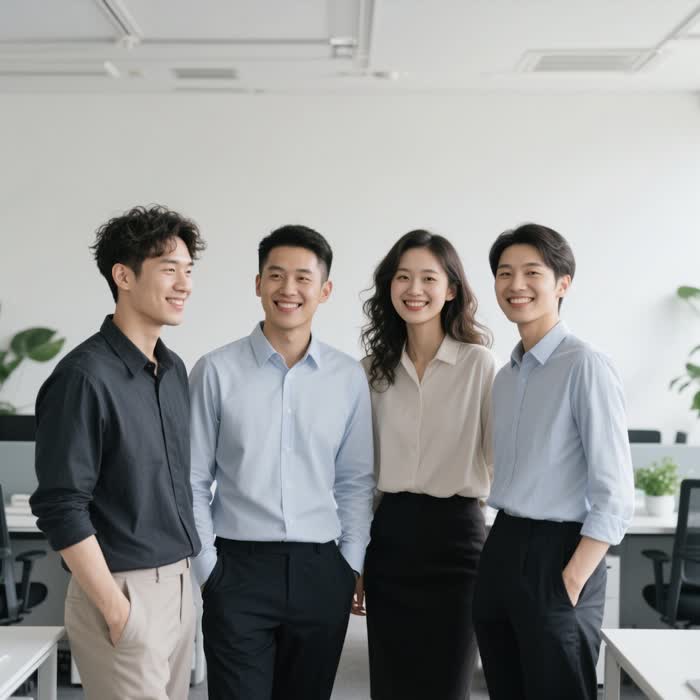

SHE DUMPED THE HOMELESS UBER DRIVER AT OUR REUNION—BUT THE ROYAL SEAL ON MY FINGER MADE THEM BEG
I raised a single finger and the ballroom held its breath.
The gold crest of the ring pressed into my skin like a brand. The Attorney General’s counsel stood just over Lieutenant Trent Sterling’s right shoulder, his cufflinks flashing like twin stoplights. The DJ had his hand hovering over the mic, waiting to pour gasoline on whatever I did next. The chandelier hummed. Ice sighed in glasses.
Tiffany Vale’s smile was falling apart one muscle at a time. Champagne had spilled over the rim and coated her hand, pearls of cool fizz sliding down, landing on the back of her other hand like rain on a windshield. People leaned toward her without leaning. Phones lifted. The carpet swallowed footsteps—the only sound was air moving in and out of chests that suddenly took the act of breathing very seriously.
Lieutenant Sterling’s hand had slipped off his belt, though the habit was a hard one for him. His jaw was still clenched like it had a job to do.
“My call?” I said, eyes still on him. “All right.”
No one exhaled. The room might as well have been a courtroom.
I stepped closer until I could see the pulse hiccuping in his neck. The badge on his chest had fingerprints on it that weren’t his.
“You wanted me to step outside,” I said. “I’ll give you that. We can step outside.”
He didn’t move.
“What happens outside?” his voice came, just a shade thinner.
“Adult conversation,” I said. “Away from the choir.”
The Attorney General’s counsel shifted, subtle as a tap on a fishbowl. “Lieutenant Sterling, a word outside would be best.”
He glanced at Tiffany. That pulled a thread. In the mirror behind the bar, I caught dozens of eyes jumping like minnows. The banner that read Welcome, Ridgeview High—15 Years—fluttered from the AC like it had caught a fever.
I slid the ring against my knuckle and felt the crest catch skin.
“Also,” I said over my shoulder to the hotel GM. “Turn off the music. Hold the bar for ten minutes. No tabs get closed. No one posts anything until we’re back.”
He nodded like I’d asked him to keep a hammer steady. “Yes, sir,” he said to me, forgetting that two minutes ago I was a problem with a rideshare app.
The DJ set the mic down, a soft bump like a heartbeat returning to baseline.
I let my finger drop. Sterling swallowed. Then we moved.
The hallway carpet outside the ballroom had that hotel cleanliness that smelled like lemons and bleach and money. Big framed photos of black-and-white city skylines leaned over us like old vaudeville stars.
Trent Sterling squared himself like a man who refused to not be squared. He faced me, two feet of safety between us, uniform creaking like it was made of discipline.
His eyes flicked to the Attorney General’s counsel, then back to me. He didn’t like having two audiences. He liked to select the one.
“You humiliated me in there,” he said, low, knuckles flashing as he flexed them.
“Did I?” I asked. “I think the room did that. You handed them the knife.”
“You think a ring and a title make you somebody,” he said. “You’re a chauffeur with a prop.”
“Tonight,” I said, keeping my voice even, “I’m the state’s Special Receiver for Westline Hotel Group under the Governor’s emergency commission. That ‘prop’ makes me the man with the keys.”
The counsel cleared his throat. “Lieutenant Sterling, I advise you to refrain from interfering with state action.”
“Interfering?” Sterling snapped, then calmed like he’d trained his temper to double-time. “I was escorting an uninvited guest from a private event.”
“He showed his invitation,” the counsel said, a little note of dry there. The hotel GM, hovering because his job was to hover, swallowed and found an interesting smudge on the floor.
Sterling looked back at me. “You used to sleep in your car behind the old laundromat on Sixth,” he said. He said it with a cop’s smile, one that tried to be a friend while counting your sins. “You think we didn’t notice? You think we didn’t tap the window with a flashlight and tell you to keep it moving? You think you’re the first hard luck case to get a fancy ring and a grudge?”
Behind my sternum, something moved—old gravel shifting under old tires. I saw again the rectangle of light on fogged glass. The officer’s shadow. The shame, the way it got in your hair and your clothes and didn’t shake off.
“You’re right,” I said. “I did sleep there.”
He waited for the waver. It didn’t come.
“You want to talk about that night you ‘checked on’ me?” I asked.
He blinked and didn’t say no. He remembered. They always do.
“You made me pop the trunk,” I said. “Shined the light over the neatly folded shirts my girlfriend bought me. You flipped through the glove box and found old job applications. You told me it was a bad idea to ‘linger where you can’t afford to breathe’ and then you circled the block twice that night to make sure I kept moving. You remember what you laughed when you came back?”
His lips held the memory like something sour. He didn’t answer.
“You said, ‘People get used to sleeping where they don’t belong. Then they think it’s home. Then they get mad when they’re told the truth.’”
A vein jumped near his temple. His mouth made a line like a scar.
“Tonight,” I said, soft, “I’m telling you a different truth. The hotel, the ballroom lease your department stamped, the debt on The Foundry around the corner—it’s in my hand. The state eagle on this ring? It’s not a prop. It means I can decide if you keep your badge after what Internal Affairs sent me this afternoon.”
Sterling’s gaze widened a notch. He didn’t blink. There it was—that thin sheen of fear when a man sees that something has already been put in motion.
“What did IA send?” he asked, voice flat. “You fishing?”
“I brought a cooler,” I said. I pulled a folded paper from my inner pocket. The counsel glanced at me like we were doing a magic trick. It wasn’t magic; it was paperwork.
A photocopy of a complaint. The names redacted except the date and the incident number and an initial IA case number scrawled like a caution sign. The counsel had slipped it to me in the car half an hour ago, the interior smelling like winter and leather and opportunity.
Sterling didn’t reach for the paper. He stared like if he didn’t move, the paper wasn’t real.
I didn’t make him ask. “Allegation is that you accepted gratuities from several businesses in exchange for selective enforcement and extra patrols. One of the names happens to be the old manager of The Foundry.” I paused. “And for cutting people like me a little thinner than necessary.”
The hallway tightened. The gold-framed skyline photos leaned a little harder.
“You’re not IA,” he said. “I don’t answer to you.”
“You’re right,” I said, and slid the paper back. “You answer to the department and the city. You answer to the people who trained you and to the law printed on the bumper stickers you hand out at Fourth of July. Tonight, you answer to your own sense of what’s decent.”
“Don’t sermonize me,” he said. “Get to it.”
“Here’s my call. You walk back in there and you apologize to me for how you spoke to me in front of our class. You apologize to the bartender you tried to squeeze last year when The Foundry was bleeding. You apologize to Tiffany Vale for using her moment to puff your chest. Then you take a two-week leave, voluntarily, while IA does their work. You let the chips fall.”
“And if I don’t?”
“You can stay on duty. You can walk back in there like you own the room. You can keep your chin up and your jaw tight,” I said. “And tomorrow morning I step into a press conference with the Attorney General and I ask the same question in front of cameras. I list incident numbers.”
He closed his eyes.
“You asked me to step outside,” I said softly, almost to myself. “Sometimes I do. Sometimes I step back inside.”
We stood in lemon-scented silence. Somewhere, down the corridor, a housekeeping cart rattled like a small parade.
When Sterling’s eyes opened, they looked older. He stared at the door to the ballroom like it was a mouth.
“I’ll speak,” he said. “Once.”
“That’s all it takes,” I said.
We pushed the ballroom doors open and the room's attention snapped back like a stretched band. The DJ’s hand hovered, then withdrew. The hotel staff had lined up by training, half hidden behind columns, wearing smiles like helmets. The Ridgeview banner caught a lazy toss of air and fluttered.
Trent Sterling didn’t go to the stage. He went to the bar.
Nick looked up, napkin in one hand, glass in the other. He had a face that gave away everything if you watched long enough. Tonight, his eyebrows had climbed up his forehead and stayed there.
Sterling put his hands on the bar rail like he was taking oath. He looked at Nick instead of the crowd.
“The night two summers ago,” Sterling said. “The night you closed early because someone smashed a bottle in the alley and you didn’t want the trouble spilling in? I came by and told you to keep it open, that I’d keep an eye on things. You handed me an envelope when I left. I should’ve handed it back. I didn’t. I’m sorry.”
Nick blinked. You could see the words hit him where he kept his nighttime thoughts. He nodded once, more to himself than to Trent.
Sterling turned, found Tiffany with his chin. She had retreated a foot behind her power and her dress.
“I shouldn’t have used your moment,” he said to her. “I shouldn’t have talked like that to him.” He nodded at me. “I got too used to being the loudest voice.”
Tiffany’s mouth wasn’t sure which shape to assume. Pride made it want to still be a star. Hurt made it want to be small. He’d stolen the spotlight even now—by giving it back.
He came to me last. The room made a little space like waves around a rock.
“I don’t respect how you made your entrance,” he said. There was a ghost of a smile that said he couldn’t help the jab. “But I respect what you’re holding. And I’m sorry for how I talked to you out of habit.”
People looked at me because the universe loves symmetry. They wanted to see the shot. The dunk. The public end of an old imbalance.
I let those expectations sit next to me like eager dogs.
“Thank you,” I said to him.
A few heads tilted, dissatisfied. The Attorney General’s counsel’s mouth pulled down at one corner—approving, maybe. Or he had gas. It was hard to tell with lawyers.
“Take your leave,” I said. “Not because you’re caught, but because it’s right.”
Sterling nodded, like his neck wasn’t used to that motion. He looked at the counsel, who gave the smallest incline of his head. And then he walked out of the ballroom the way some men walk out of a church—nothing left to prove to the walls.
Air returned in a rush. Conversation started in thin threads. The DJ reached for a less cynical playlist.
The hotel GM had made his way to me like a tide, all urgent calm.
“Sir,” he said, and corrected himself, because accuracy mattered tonight, “Mr. Mercer.”
“Mm,” I said.
He held out a stack of papers, crisp as a haircut. “The Westline transfer documents. We… we have counsel in the lobby.”
“We’ll get there,” I said. “But first, the lease.”
“Of course.” He produced the addendum like a magician palming a coin.
I glanced down the line of tables at Tiffany. She stood very still, scanning the room for a safe place to put her eyes. There wasn’t one. There never is after you pull a pin from a grenade and it decides to sit quietly in your own palm instead.
The Attorney General’s counsel leaned close. "You can sign here," he murmured, "and take possession of the ballroom lease under the emergency provision. You could also revoke it."
“I won’t ruin their night,” I said. “I’ll fund it.”
The counsel’s eyebrows did a small hop. "Generous."
"Strategic," I said.
I took the pen. My fingers remembered other pens, cheaper ones, used to fill out grocery lists at three a.m. in a car fogged by my own breath. The ring flashed as I signed, and the first fracture line of the evening became a shape.
“Send your staff home early,” I told the GM. “Pay them double for the shift. Put the tab on my desk. And get Nick a decent espresso machine for The Foundry tomorrow.”
Nick looked up at his name with the expression of a man overhearing an angel talking recipes. “I—what?”
“You’ll need it,” I said.
Laughter broke out in a dozen different seats. Not mean. Relieved. Humanity came back into the room like someone had opened a window.
Then, because justice doesn’t really live on a stage, I left the stage.
You always think you can outrun a place, but the place knows your gait.
Ridgeview High was a box of a building wearing new trim. The reunion committee had ordered a banner, a hashtag, two photo booths that printed pictures with cartoons of your teenage face. The football star had a receding hairline he pretended was ironic. The girl who always wore headphones now ran a pilates studio and a podcast. The class clown had a tiny startup that watched you sleep. Everyone had a story to try. They rehearsed them on the way in, stood behind them like shields.
I wasn’t supposed to be there. Not if you asked the list of people who cared about neat narratives and clean hierarchies. Tiffany had wanted to be seen pruning her past—like a woman with a sharp pair of scissors cutting dead stems.
In high school, her laugh had been a currency. Her hair caught light even on cloudy days. She dated the boy with a motorcycle who had a GPA that didn’t love him back. I’d loved her from three lunch tables away. Then senior year she was sitting in my car, legs tucked up, trying to learn the names of the constellations I was making up because one day I wanted to be someone who knew them for real.
After high school, I tried to be tangible. I went to work at a logistics company with a warehouse near the river. I had a gift for finding patterns in chaos. I thought that made me safe. Then a friend turned business partner took the company to a casino table I didn’t know we had.
The last month in that job was a slow tidal suck. Papers gone missing. A bank account that coughed air. The feel of betrayal is a particular shape. You never forget it. Your body remembers it before your mind does. You see it in delayed ways—in a barista’s change count, in the slant of a neighbor’s lid, in the way your girlfriend squints at you over a receipt. Every lid slips eventually. Sometimes it slips you into the back seat of your own car, looking at your breath on glass.
I drove through the night and the evenings and the mornings after—rideshare to pay rent that didn’t want to be paid and to carve time, like a thief, to grow something else. I listened to everyone in the back seat of my car: drunks who loved the wrong person in the right dress, brokers who whispered the words “liquidity event” like a password, girls calling their dads, men chewing their nails down to where nerves start. You can learn a city that way. You can learn people. You can learn how things move. That’s what I did.
In the winter there’s a particular cold that gets inside the vehicle, no matter how loud you run the heat. Ice chips live under your tires. The road glints like it’s made of teeth. That night Sterling came around and tapped on my glass, it was that cold. He thought he was giving me advice, the kind that keeps the edges neat. Maybe he even believed it.
Tiffany had texted less. I could see her making her own math every time we had dinner in places where the room smelled like truffle salt and I ordered the cheapest thing that would keep the plate from looking empty. She was always careful about the residue of a scene. She wanted to be the kind of woman who could say she stayed. She wanted—like everyone—to love a story that made her proud.
Then came the day I saw a cuff with a crest in a photo on my phone and got a call I didn’t expect. The Attorney General’s counsel asking me to come downtown. There’d been a collapse at Westline—fraud, waste, negligence. The hotel group that had owned half the city’s hospitality was suddenly a rotten tree. The state needed a civilian with a reputation for pulling order out of wreckage and making creditors eat what they cooked.
My reputation existed in whispers in back seats and in three projects I’d helped salvage for men too stubborn to ask for help. I’d taken notes in the dark. I’d left invoices under doors. I’d kept my name small and my percentages clean. I’d kept my head down, because a man who has slept in his car knows that roofs are negotiable.
The AG’s counsel had a smile like a staple. “You’ll have authority,” he’d said. “Not just a title. You’ll have to gut a thing that thinks it’s alive. You’ll make enemies. You’ll save jobs. Can you use what’s ugly in you to do something good?”
I had looked down at my hands, rough from a steering wheel, and thought about the way you can both love a person and want to break their mirror. “I think so,” I had said.
They gave me the ring with the crest. It felt like a joke on my finger, then like a collar. Then, if you keep your wrist steady, like a tool.
Tonight, in the Ridgeview hotel, the past tried to reassert itself. I let it and then I didn’t.
There is a particular joy in reclaiming the exact space that humiliated you. It’s not about applause. It’s about oxygen.
I went back to the bar where Tiffany stood. Her chest was rising fast. Her eyes were operating independently, each scanning for a different exit.
“Can we talk?” I said quietly, in a tone designed not to give the room confetti.
“You haven’t stopped doing that,” she said, chin sharp. It was the tone you use when the teacup is already broken. “Talking like everything is yours to arrange.”
“You announced a breakup with a microphone,” I said. “I’d call that arranging.”
Her throat worked. I felt the eyes of a graduated class hover, curious or hungry or both.
“Let’s step out,” I said.
She nodded, barely. People parted because they wanted the story but they also wanted deniability. The carpet outside took us like it always had—underfoot, understated.
We stood under one of the big framed photos—a bridge in winter, steel rib cage in snow.
“You couldn’t wait,” I said.
“I didn’t know,” she said. “You know that.”
“You didn’t ask,” I said.
“You said we’d talk after,” she said. “I thought if I waited you’d lay something on me in a way I couldn’t climb out of. I thought if I did it first, I’d be honest.”
“You wanted to be first at something that felt like the end,” I said. “I get that.”
Her chin trembled once, then arrested. “Do you?”
“I get revenge too,” I said. “I get the part of me that wanted to make the room regret its part in a story it didn’t have to know. I get making it official so you aren’t tempted to stay. I get fear.”
A passing housekeeper slowed and then kept moving. It was just the two of us in the lemon-bright hall.
“You used to sleep two blocks from here,” she said. “I found out from someone else, not from you. Do you know what that feels like? That I was loving you and you were sleeping by yourself in a car like some… like some stray.”
“I knew what it felt like to be seen as less,” I said. “Less than the story you wanted. I knew your laugh was a currency you had to protect.”
“I’m not a currency,” she hissed, then softened. “I did love you. Maybe I didn’t love the part of you that used a steering wheel as a pillow. Does that make me a monster?”
“It makes you human,” I said. “It makes you like the rest of them.” I tipped my head toward the ballroom.
She wrapped her arms around herself in a way that made the sequins on her dress sound like whispering rain. “You bought the room,” she said. It wasn’t a question. “Jesus, Jake.”
“I bought the company that thought it owned the city,” I said. “We’re going to do better with it.”
“Who is ‘we’?” she asked.
“Me,” I said. “And people you’d call the wrong kind of friends.”
She looked at the ring. “You’re not one of them,” she said, meaning the men who held gavels without hammers.
“I’m something else,” I said.
She inhaled. “You going to go on Instagram and make me a villain? You going to show the video and ruin my job and tell everyone about the shirts and the parking and the…” She laughed once without humor. “Charity.”
“I don’t need to ruin your job,” I said. “You can do that yourself in half a glass of prosecco. I’m going to do something narrower.”
Her brows rose. She was waiting for the drop.
“I’m going to ask you a question on stage,” I said. “And I’m going to make sure you don’t answer it for the room. Only for me. And I’ll live with what I hear.”
She breathed out like a sigh that had been folded too tightly and was finally allowed to expand.
“What question?” she whispered.
“Did you do it to hurt me? Or to avoid being hurt?”
Her eyes wet. “Don’t,” she said.
“Okay,” I said. “Not now. Later. Coming days. In a blank text. No emojis.”
She laughed despite herself. It sounded less like a blade.
“Give me your hand,” I said.
“What?” she said. “No.”
I reached. She didn’t pull away. I turned her palm up. I placed the ring there for a second. The weight surprised her.
“It’s heavier than it looks,” she said.
“That’s the trick,” I said. I slid it back onto my finger. “Go drink some water. Eat a roll. The kind with butter.”
She nodded once, twice, and walked away like she was leaving a courtroom where she’d suddenly realized innocence was a slippery thing.
I watched her go and listened to the echo of napkin folding. Then I went to do what I had come to do.
The lobby smelled of furniture polish and unspent money. A pair of wide wooden doors led to a conference room. A lawyer in a navy suit smiled at me like a man easing a dog away from a bone. The conference table looked like it had been hewn from the optimism of a better decade. In the center was a stack of documents, thick and serious.
The Attorney General’s counsel paged through. “We have Westline’s signatures, such as they’re worth. We have the state court’s emergency order. We have the keys,” he said, and actually put a heavy ring of metal keys on the table. It felt too symbolic. I wanted to leave them there, let them do their jangling.
The Westline CFO—thin hair, thin lips—sat at the end of the table looking like he had been told to stay and had obeyed because he didn’t know how not to. He had the look of a man who had been good at numbers and then bad at himself.
“You’re going to burn it down,” he said to me, voice flat. “You’re going to grandstand. You’re going to take a company that took thirty years to build and set it on fire because you like the heat.”
“We’re going to put it on blocks,” I said. “We’re going to strip off the parts that tried to steal food. We’re going to give the mechanics who know how to fix the engine the tools you never bought them.”
“You’re not a mechanic,” he said. “You’re a driver.”
“I’ve been both,” I said.
We signed. There were the obligatory handshakes, the obligatory non-handshakes. The counsel nodded at me like a teacher acknowledging the kid who’d turned in the paper on time. The CFO left first, his shoulders carrying his head like it was a suitcase. The keys remained on the table. The rooms belonging to them now belonged to me.
The GM hovered. He had already sent the note to his staff to go home early on double pay. He looked at me like maybe his kid would get braces.
“Tomorrow,” I said to him, “we meet with your floor managers. We find out which corners were cut. We decide what gets replaced immediately and what we fake until we can afford the real thing.”
“Yes, sir,” he said, and again the word slipped out of him like a long-held truth.
“Stop calling me sir,” I said. “Call me Jake.”
“Yes, s—Jake,” he corrected. “We’ll bring the coffee. Unless you want The Foundry to—”
“Bring the coffee,” I said. “And cinnamon rolls. The kind from that bakery that always has a line.”
He smiled, surprised I knew the bakery. He didn’t recognize that you learn more about a city when you drive it than when you buy it. He would.
When I came back into the ballroom, the DJ had the volume down to a level that let people pretend they were somewhere else when they talked. Laughter lived in corners. Phones had been put away half-heartedly. The air had loosened but it still had an edge. The night had not decided what shape it would take.
I went to Nick. He had his elbows on the rail and his hands loose and he didn’t look up at me. That was his way of being polite after years of watching working men ruin each other.
“You bought my debt,” he said to the glass he was polishing.
“I bought the note,” I said. “Not the debt.”
He snorted once. “Same difference from where I stand.”
“Maybe,” I said. “Maybe not.”
He slid me a beer I didn’t ask for. The habit of fitting liquid to mood is an art. This one wasn’t about celebration. It was about making your mouth busy so you wouldn’t say anything stupid.
“I met with your bank last week,” I said. “They were getting ready to call your loan and list your place. They wanted to sell the note to a guy who would pretend he was doing you a favor until he owned your bar and your name.”
He put the glass down. “Who?”
“It doesn’t matter,” I said. “I bought it first.”
“Why?” His eyes still didn’t come up.
“Because you slide me fries when I don’t ask. Because you don’t cut people off when they’re crying even if it screws your pour count. Because I like the way your bar smells on Sunday mornings. Because the city needs a place that remembers its own laugh.”
He shook his head. “You always talk like it’s a movie,” he said, finally looking at me. “You going to be the hero and forgive the debt? Give me back my life just like that? Ride off with the girl and a soundtrack?”
“I’m going to do something better,” I said. “I’m going to restructure it. I’m going to cut the rate. I’m going to tie your payment to your actual weekly take instead of to a fairy tale. I’m going to give you a year breathing room if you hire two kids from the shelter on Sixth and train them.”
“You’re making me a condition,” he said, half a smile in it.
“I’m making you an offer to be part of something bigger than your kitchen,” I said. “And I want a booth.”
He laughed now all the way. “You get a booth.”
I lifted the beer. It went down like a small mercy.
The night moved forward because nights are designed to. The class did what classes do—they told each other their own stories and they tested those stories against the person who remembered their braces.
A little crowd gathered around me not because I had asked them to but because that is what we do when we smell something on fire and want to see if we can control it by looking.
“Jake,” said Owen Kant, who had a startup in sleep surveillance and wore a hoodie like an amulet. “Dude. That was insane. You need to let me put a tagline on that. I mean… ‘He slept in his car and now he owns the hotel.’ The algorithm could—”
“Don’t,” I said. He laughed, a soft high sound, and put his hands up like he’d been shot with a Nerf gun.
“Jake Mercer,” said a woman with short hair and a diamond the size of a frozen tear. “You look good.”
“Mara,” I said. She’d been the class treasurer and had a way of making money ask for permission to exist.
“You always were the one who could keep your face still,” she said, smiling. “Is it weird having real power?”
“What’s ‘real’ power?” I asked.
She considered. “The kind where you sign and the room changes shape.”
I looked at the pen in my pocket. “It’s heavy,” I said. “Everything is heavier than it looks.”
“God,” she said. “That’s sexy.”
I laughed. She laughed. Then she went to tell someone else she’d shared a line with me. We were still high schoolers in that way.
Near the stage, the DJ had found a song from senior year. It made people lift their arms and remember their shoulders. You could see them slipping into old clothes—the captain walking like a captain, the shy girl stealing her own moment, the weird kids finding each other again like magnets that had only ever been mislaid.
I caught sight of Tiffany at the edge of the dance floor, hands in fists like she was saying a prayer to the music. She opened her eyes and saw me and didn’t look away. That was progress. That was a kind of brave. She came toward me and didn’t wobble. Heels, yes, but not unreadiness.
“Did the papers make you feel like a king?” she asked.
“They made me feel like a janitor,” I said. “Kings move their fingers. Janitors move chairs.”
She studied me. “Would it have hurt less if I’d done it in a quieter way?”
“I don’t know,” I said. “Pain has volume control. It’s hard to know where to set it.”
She nodded. “Do you want me to leave?” she asked.
“No,” I said. “I want you to dance to our stupid prom song and watch me talk to a man who used to try to copy my homework.”
She closed her eyes like gratitude had bit the inside of her cheek. Then she laughed. “Don’t be nice,” she said.
“I’m not,” I said. “I’m being decent.”
It’s not the same thing. The room had learned that.
By eleven, the heat had grown. The room was a rolling boil that didn’t bother with the simmer. Laughter came easy. Tears came too, on the peripheries, like dimes dropped and not chased.
The Attorney General’s counsel motioned discreetly from the lobby doors. He looked like a man who wanted to be home before his dog forgot him. I slipped out.
“The press is smelling something,” he said in a low voice. “Some blogger got a tip about the transfer. They’ll be here in twenty minutes if we don’t head them off.”
“Let them come,” I said.
“They’ll ask about Sterling,” he said. “They’ll ask about the cars downstairs.”
The cars. Outside, the line of vehicles waited—unmarked, engines patient. They had the baseline hum of real authority. The city liked to see that; it made the air cleaner or dirtier depending who you asked.
“Let them ask,” I said. “We’ll tell them the state acted because it had to. We’ll tell them we saved jobs with a signature in a room full of bad decisions and old jerseys.”
“You’re making yourself the story,” he said.
“I don’t want to be,” I said. “I want the bar tomorrow to be open. I want the ballroom to get new carpeting that doesn’t chew shoes. I want the employees to see that it’s possible to run a thing without hiding the silverware in your briefcase.”
He rubbed the place between his eyes where days settle. “You’re going to make enemies, Mr. Mercer. The ones who lost their perks. The ones who got used to calling The Foundry when they needed a quiet table for a loud deal. The ones who liked Sterling as their hammer. They won’t just tweet about you.”
“They can come by my car,” I said. “They know where I park.”
He smiled despite himself. “You’re an idiot.”
“I’ve heard worse,” I said.
He made a note to himself and slipped it into a folder like he was feeding a finicky animal.
“You want a podium?” he asked.
“Tonight?” I shook my head. “Tonight is theirs. I’m just a man with a ring and a past.”
“Aren’t we all,” he said, and actually looked like he meant it.
Near midnight, the room thinned. People who had paid babysitters texted apologies and promises. The punch line of the night kept writing itself in minds that would try to tell it at breakfast tomorrow and fail because the timing would be gone. The wasabi peas on the bar looked like ammunition.
I walked through it like a swimmer moving through a fresh layer of water. People touched my elbow and told me their own version of me. I nodded to each, storing the useful bits, letting the rest slide off like confetti at a wedding you didn’t attend.
On the mezzanine, the hotel band previewed a jazz number for no one. The hallways down to the ballrooms had quieted. The posters advertising brunch looked honest. The night had found its final shape and it looked, surprisingly, like relief.
It could’ve ended there. A lesson, neat as a folded napkin. It didn’t.
The elevator dinged. Two men stepped out who didn’t belong to this night. Their suits were cut by people who knew how to feed a man’s hunger for his own shadow. Their hair was the kind that required product and a minute alone. Their eyes swept and calculated. They were not invited guests. They were the kind of men who thought they were invited everywhere.
I watched them clock the room and then split the way boys do when they think the house is undefended. The Attorney General’s counsel saw them too, brows narrowing. He didn’t know their names yet but he would.
The first slid toward the GM. The second paused, changed course, and made for me. He had a smile that could be mistaken for friendly if you were drunk or twelve. I was neither.
“Mr. Mercer,” he said. “Congratulations.”
“You are?” I asked.
“An admirer,” he said. “And a problem-solver.”
“You sell pest control,” I said. “Metaphorically.”
He laughed. “You’re clever. You should come to dinner at my club. There are people who’d like to say welcome officially to the world of owning things with sharp edges.”
“This is a public hotel,” I said. “You can put your overture in an email.”
“My friends don’t send emails,” he said, then corrected himself with an honest chuckle. “They do, but they use different verbs.”
“And what verb are you using tonight?”
“Prevent,” he said. “Prevent mess. Prevent discomfort. Prevent your learning curve from including a fall.”
“Generous,” I said.
“Calculating,” he corrected.
He stepped closer, not too close. He put a hand on my arm the way a man touches a dog to prove he isn’t afraid.
“Westline has creditors you don’t know about yet,” he said softly. “The kind without paper. They’re going to be angry that you put yourself between them and their expected slice. They might ask you to reconsider the meaning of ‘ownership’ in a physical way.”
“Ah,” I said. “And you prevent that.”
“I cushion,” he said. “But a cushion costs.”
“An envelope,” I said. “Under a bar or under a boardroom table, same shape.”
“If you want to call it that,” he said. His eyes were actually honest around the rim. “You’ve embarrassed someone who liked their quiet. They’ll call a different kind of cop. The boy with the badge was just practice.”
Here’s where the old Jake, the one with frost on his moustache in the back seat, might have looked down. Might have decided it was smarter to bow a little. Age teaches you the ways to survive. But a different thing had bloomed under my ribs. It wasn’t arrogance. It was a kind of marrow.
“Tell them I’m not looking for a fight,” I said. “Tell them I’d rather keep the hotels open and the dishes clean and the linen company paid.”
He nodded like I’d passed a test he used to decide which kind of smile to put on. “And if they insist on a dance?”
I let the silence hang long enough for him to hear the shape of it.
“Then tell them I taught myself to hear footsteps when I slept where you could see your breath. Tell them I know the sound a car makes when someone leans into a hood that isn’t theirs. Tell them I’ll be ready,” I said. “And tell them I have friends now who know how to use a phone in a way that doesn’t show. Tell them saving restitution receipts won’t save their wrists.”
He smiled wider. “You’re a delight,” he said. “I’ll see you soon.”
He left as cleanly as he arrived. The AG’s counsel, who had been hovering behind a pillar like a lamppost with ears, stepped out.
“Friends of yours?” I asked.
“They thought so,” he said. “You handled it.”
“We’ll see,” I said.
We always see.
The hotel lobby at one in the morning is its own country. The concierges speak a language that exists only between two and three a.m. The belts of security guards become looser. The lights dim just enough that your eyes make decisions for you. The carpet lines look like pathways drawn by a child.
I walked the floors. If you’re going to inherit a machine under warranty and duress, you learn the rattle and hum in person. The tenth floor had a leak in the ceiling near the ice machine, the stain like a slow bruise. The seventh smelled like a room had been smoked in with a towel under the door and a fan pointed at a lie. The third had a couple arguing in whispers. I stood outside their door and listened to cadence, not words, and decided they’d be all right. The staff elevator needed a key card you had to convince; it delayed a second longer than dignity demanded.
The ring kept reminding me it was there the way a new pair of shoes insists on being felt. It weighed my hand until the weight became part of how I carried my arm.
On the service level, a man a decade older than me was leaning against a stacked crate of coffee filters. His name tag read RAY. His eyes flicked up like he’d been expecting a version of me and was cross-checking for accuracy.
“You the new boss?” he said, not unkindly.
“For now,” I said.
“You get tired tonight?” he asked.
“Only when the quiet came,” I said.
He grinned. “That’s when it gets you.”
He gestured with his chin at the ring. “Looks heavy,” he said.
“Everyone’s a critic,” I said.
He laughed, then went serious. “We never had enough linens on Saturdays,” he said. “They always told us to figure it out. We put two sheet sets in a room and told ourselves no one would need three when the weekend happened. You going to buy us more linens?”
“Yes,” I said. “Before afternoon check-in.”
He nodded. “Good,” he said. “And the ovens do this thing where they run hot on one side and the pastry gets mad. People think pastry is a sweet thing. She’s not. She’s a lady who wants what she wants and won’t tell you twice.”
“I’ll get you a new oven,” I said. “You still going to stick around?”
He lifted his shoulder. “I like the work,” he said. “I don’t like getting yelled at for not being a miracle.”
“I can promise you fewer miracles,” I said. “And fewer yellers.”
He nodded, once, in a way that meant he’d give me a try. You can’t buy that nod. You earn it. You earn it by not lying about being tired.
By the time I stepped outside, the night had melted into the kind of cold that feels like quiet, not cruelty. The line of cars had trimmed itself. A couple remained, patient.
I walked to the spot two blocks over where the laundromat’s sign still flickered. The back alley smelled like wet cardboard and old cigarettes and the kind of leaf mush that never dries. I stood for a minute and let my body remember being smaller, and then I walked back to where I belonged now, which was uncomfortable and exact.
The morning showed up like a lawyer—on time, unworried, carrying a stack of expectations.
I hadn’t slept. I didn’t want to. I had cleaned a stain off a chair with the kind of attention you usually reserve for faces. I had signed three emails and declined two invitations and stared at a crack in the baseboard until it looked like a phone number.
By nine, the GM and the managers were in a circle in a side room off the lobby. They smelled like deodorant and dread and coffee. Their faces were the faces of people who had kept a place standing by leaning their bodies against whatever part was about to buckle.
“We need linens,” Ray said. “And an oven that knows its own mind.”
“We need a wine list that doesn’t read like a resume,” said the F&B director, a woman in a blazer that had been ironed with anger. “We need to stop telling our staff to smile at abuse.”
“We need to shut down the ninth floor HVAC for a day,” said the maintenance lead, a man with forearms like commitments. “We need permission to do that without losing our jobs.”
“You have it,” I said. “We’ll comp the rooms. We’ll tell the truth.”
“The truth,” murmured the GM, like he was tasting a foreign spice. “We can serve that?”
I looked around the circle. Some eyes were bright. Some were cautious. Some were walls with a window they hadn’t opened yet.
“We’re going to serve it with cinnamon rolls,” I said. “And apologies when we mess up.”
“You’re going to be here,” said the housekeeping manager, a woman with a braid like a rope. She didn’t phrase it as a question.
“Here,” I said. “Or at The Foundry. Or at City Hall. Or in court. Or in the back seat of a car I refuse to sell because it taught me how to breathe.”
They laughed. It wasn’t unkind.
“Why us?” the GM asked. “Why this hotel?”
“Because of the letters on the sign,” I said.
He frowned. “W-E-S—”
“Ridgeview,” I said. “Because I went to school five miles away. Because I know what it feels like to think the city belongs to someone else. Because I know how to check in, and I’m trying to learn how to stay.”
“That’s corny,” said the F&B director. “But I believe you.”
“Corn keeps you full,” I said, and they laughed again.
The first threat came disguised as a favor. That’s how they prefer it. You’re more likely to swallow it that way.
A man in a gray suit with a chin that looked like it was good at surviving told the hotel GM that he could expedite permits for a kitchen renovation we hadn’t applied for, if the kitchen staff could find a way to “lose” a food eco score for a competing hotel. He said it softly, in a corridor, with the smell of lemon still in the air.
The GM told me. That earned him a handshake I meant. The AG’s counsel wrote something down and called a man who wore shoes I couldn’t afford if I kept my humility.
The second threat arrived as a note shoved under The Foundry’s door. The handwriting was neat. The message said that sometimes accidents happen to places that change hands without showing respect. It was signed with a symbol that tried very hard to look like it had always meant something.
Nick slid the note across the bar to me without looking at it. “You got enemies,” he said, wiping an already clean spot like it owed him money.
“I do,” I said. “You got a lock on that side door?”
“New one,” he said. “And a bat.”
“Put the bat down,” I said.
“Why?” he said. “You my dad now?”
“Because they want you to use it,” I said. “And because I like you with your knuckles intact.”
He looked at me, weighed the advice, shrugged, and put the bat on a shelf below the gin like it was just another bottle.
“You called the cops?” I asked.
“I called Trent,” he said, surprising both of us.
I pictured Sterling at home on his couch, his badge in a drawer, his wife or his dog or his TV flickering at him. Him trying to not be a cop for two weeks. Him failing at it. Him answering Nick’s call because some lines don’t cut just because you are told to go on vacation.
“He said he’d swing by,” Nick said. “You good with that?”
“I’m good with making amends mean something,” I said.
The third threat broke somebody else’s window. A competing club’s, three blocks away. The rumor ran two minutes behind the glass. The owners blamed me because that’s how rumor saves itself—by attaching to the latest gravity.
I went to see the window. A square of plywood where glass had been. Duct tape like badges. The owner, a man who wore pink shirts even when he wasn’t selling brunch, stood with his hands on his hips and looked at the hole like it had offended his mother.
“You bring drama,” he said the second he saw me. No hello.
“I bring earplugs,” I said. “And extra boards.”
He didn’t laugh.
“You think I did this,” I said. “Because I want the hotel full and my bar full and your place empty.”
“I think you caused a ripple,” he said. “And ripples hit the closest boats first. I think you don’t understand that some of us can’t absorb even a little wave.”
“I do,” I said. “You want a security camera system at cost and a bartender on loan for a week?”
He blinked. “Why?”
“Because if they start with your window, they aim next at mine,” I said. “And I’m not interested in the kind of movie where we shoot at each other while someone else writes the script.”
He snorted. It was close enough to acceptance. He stuck out his hand. We shook like we were both trying not to squeeze.
Three days after the reunion, the press had made their own story. It had all the parts they like: the fall, the rise, the ex on stage, the ring, the cars, the apology from the cop. They put headlines on it I had not written.
I stood in The Foundry on a quiet afternoon and read the comments under a video and felt the old itch to disappear. You can’t always hide in plain sight. Sometimes the plain sight comes and drags you by the hair.
My phone buzzed. A text with nothing in it but a period. Then another. Then, finally, a sentence with no emojis.
I did it to avoid being hurt.
I read it twice. The period, the finality. Tiffany. The blank I had left for her to fill in came back filled.
I typed back nothing. I put the phone on the bar and turned it face down like a card.
“You look like a man who forgot a birthday,” Nick said, sliding an espresso my way. The machine hissed like a snake that had decided to make peace.
“Someone answered a question,” I said.
“Did you like the answer?” he asked.
“Not really,” I said. “But it wasn’t a lie.”
He nodded like a priest who had traded his collar for a bar towel. “Truth’s like espresso,” he said. “Strong and rude. You still drink it.”
The door opened and Trent walked in. He had on jeans that didn’t look comfortable, a t-shirt that said he owned a lawn, and a face that had practiced being humble for three days and wasn’t skilled at it.
Nick made a move to reach under the bar for the bat he had already moved. Caught himself. Huffed.
Trent slid onto a stool at the far corner, explicitly not next to me. Smart. He nodded at Nick. He didn’t look at me.
“You got something to say or you want a beer?” Nick asked.
“Coffee,” Trent said. “I’m off-duty.”
Nick looked at me like the world had turned a clever shade. Then he poured the coffee.
Trent wrapped his hands around the mug like something in him needed permission to be held.
“I got a call,” he said, to the air. “IA wants to talk. They say it won’t be a firing if I cooperate. They say you might say a thing or not say a thing that nudges one way or the other.”
“IA doesn’t need me to say anything,” I said.
“But it helps,” he said. “Is that in your power plan? Letting a man keep his job because he did three sentences in a ballroom?”
“You think you did the hard part in there,” I said.
He looked at me now. “What’s the hard part then?”
“Going to the places you got the envelopes from and giving the money back,” I said. “Even if they don’t want it. Going to the kid on Sixth you told to move along and asking if he needs a sandwich. Sitting in the back of a church for an hour and not getting up when your skin starts crawling. Going to IA and telling them the names without waiting for them to ask. Go do that,” I said. “Then I’ll tell IA I think you’re tired of being the loudest voice in the room.”
He stared. Then he nodded, a slow bow. He drank the coffee like he had to earn it by making his hands not shake.
“You going to tell me you bought his debt too?” he asked Nick, jerking his chin at the espresso machine like it owed him an explanation.
“Jake saved my bar,” Nick said. “He wants a booth named after him. He says he’ll settle for the one by the bathroom.”
I smiled despite myself.
Trent smirked. Then he sobered. “I don’t like you,” he said. “You should know that.”
“I don’t need you to,” I said.
He stood. Left money on the bar that was exactly the price of the coffee, no tip. It was a petty thing and he did it because he could. Habit takes longer to break than a jaw.
Nick picked up the cash and flicked it back at him. “Coffee’s on us,” he said. “Go do your homework.”
Trent caught the bill. He tucked it back into his pocket. He left.
We watched him go like he was a weather system.
“You’re rough,” I said to Nick.
“He’s got a job to earn,” he said. “He doesn’t get to empty his pockets here yet.”
Westline didn’t want to go quietly anywhere. It assembled its board like a Greek chorus and told me I was making a mistake.
“You’re cutting relationships,” one said.
“The ones where the other guy steals your wallet while he tells you your shoes are nice?” I asked.
“You’re re-negotiating contracts that we spent years cultivating,” another said.
“Cultivating,” I said. “Like mold.”
“You’re pissing off the wrong people,” another said.
“All the right ones,” I said.
A woman from HR who had a backbone like rebar and a smile like a dentist said, “Our front-line staff wants to know if their shifts will shift and if their health insurance is safe.”
“Shifts will probably change,” I said. “Insurance stays. Upgrades if I can find a way to do it without breaking a window.”
She nodded. She didn’t thank me. She kept the thanks for when a thing was performed, not promised. I liked her on sight.
“You’ve made us a headline,” a man from communications said with a pout in his voice.
“The city did,” I said. “I’m just wearing the ring in the photo.”
They glowered. A few watched me like they were trying to decode the true currency, the one I’d hidden in a cuff or a glove. There wasn’t one. My currency was a stack of favors owed in places where the light doesn’t get good enough to show the stains.
After, we broke. The woman from HR lingered.
“My brother slept in his car for a year after his divorce,” she said. “He won’t talk about it. He got good at cooking in a tiny stove that folds. He hates anyone who tells him he’s strong.”
I nodded. “I won’t tell him that,” I said.
She nodded back and left.
Friday night, The Foundry was full in the way that makes you think a floor can be trusted. People laughed, which is what you measure. They leaned. They touched the backs of each others’ hands. They took pictures and forgot to post them. The jukebox—actual, old-school, like a piece of friendly furniture—played songs that made old couples dance slow and young people pretend not to company.
I sat in the booth Nick had half-jokingly named The Ring. He had cut a little brass plate and screwed it in at an angle that made it look like the booth itself had earned it.
Tiffany came in near nine. A dress that knew its job but didn’t audition for any. Hair pulled back in a way that said busy, not desperate. She scanned for me the way you look for a landmark when you aren’t sure the map is right.
She slid into the booth without asking. The plate made a soft metallic sound under her hand.
“You get this for life?” she asked, tapping the brass.
“Until the screws loosen,” I said.
Her mouth made a shape that wasn’t a smile but wanted to be. “You saw the thing I sent,” she said.
“I did,” I said.
“You have questions.”
“I have one,” I said.
“You’re relentless,” she said. “Ask.”
“When you looked at me on that stage,” I said. “Did the part of you that wasn’t afraid of being hurt recognize the part of me that would forgive you someday?”
She swallowed. “You see too much,” she said.
“I see how you walk,” I said. “I recognize the way your heels hesitate before they make a sound.”
She looked away. She wiped under one eye with a precision that came from habit.
“I’m sorry,” she said. “Not for what I did. For how I did it. For making you small in front of a room that didn’t deserve to know your size.”
I exhaled. “I don’t need a sorry,” I said. “I need—” I caught myself. I realized, with a small twist, that even now my instinct was to ask her to be the good version of herself I’d made in my mind.
“What?” she pushed.
“I need you to not narrate me in your next party,” I said. “Leave me out of your story.”
Her mouth softened. “Done,” she said. “I’ll ruin some other man with a ring.”
We both laughed and it felt like the first laugh we’d had that wasn’t bought.
“You happy?” she asked, after a beat that held the weight of a hard hour.
“I’m tired,” I said. “And I want a cinnamon roll. And I want to stop being the main character in a city that likes to roll its eyes.”
“Then stop,” she said.
“Soon,” I said. “After the window guys and the oven and the linens.”
“You going to let Sterling off the hook?” she asked.
“He’s on his own hook,” I said. “I’m just not going to pull it.”
“You’re gentler than I gave you credit for,” she said.
“You’re crueler than I gave you credit for,” I said. “We both learn.”
She looked at me for a long second, then looked away like the look had embarrassed her. “I’m leaving the city,” she said. “New job. New hair. New story.”
“You’ll be good,” I said. “You always were at telling a room what it wanted to hear.”
She flinched. Gentleness can still be a hit.
“Goodbye, Jake,” she said.
“Bye, Tiff,” I said, and the old name landed between us like a coin we both chose not to pick up.
She left. She didn’t look back. That’s her way of being brave.
Nick came over with a plate wrapped in a napkin. He set it down with ceremony.
“Cinnamon roll,” he said.
“You’re a saint,” I said.
“I’m an opportunist,” he said. “People cry easier if they’re chewing sugar.”
The courtyard of the hotel was full of cameras. The podium had been set. The seal did what seals do—it turned everyone into their most formal self. The Attorney General himself had come this time. He shook my hand in front of lenses, the same way a groom shakes the best man’s hand—like it matters and doesn’t.
He spoke words that were true within the rules of public speech: transparency, accountability, stabilization, community. He motioned at me at the right point. I stepped forward, the ring heavy and the day brighter than was decent.
“Most of you know my name now,” I said. “You didn’t last week, and that’s fine. I slept two blocks from here a winter ago. I drove people who said things they might not want to repeat in the morning. I listened. Now I’m here with a title and a task. Both will end. What matters is the building doesn’t.”
They liked that. Cameras are like horses—they can smell a stable sentence.
“You’ll ask me if I’m going to punish those who made mistakes,” I said. “You’ll ask me if I’d like to make a list. I won’t. The list makes itself when you look at numbers and listen to people. You’ll ask me about the cop. Lieutenant Sterling is on leave. He apologized. He’ll face his review. That’s not my headline. My headline is this: the staff here gets back pay. The ovens get fixed. The linens get ordered. The shelter on Sixth gets a stipend for every kid one of our businesses trains and keeps for six months. Westline pays back what it owes, not with excuses but with bricks, with services, with checks that clear.”
The AG eyed me like he was trying to decide whether to be grateful or nervous. The crowd liked the part with the checks.
A reporter with a bob cut as severe as county lines asked, “Mr. Mercer, isn’t it… convenient that you get to play hero at your own high school reunion while assuming control of a portfolio of assets worth—”
“More than I can count without getting dizzy?” I said. The laugh came because I’d invited it. “Yes. Convenient,” I said. “Also expensive. Also dangerous. Also necessary.”
“You’re a stories guy,” she said, squinting. “There’s a story about a man with a ring who couldn’t bear to be humiliated. There’s another about a man who loves his city. Which are you?”
“Ask the man on Third who gets a new job,” I said. “Ask the woman who runs housekeeping whether she can schedule shifts without lying to faces. Ask my ex if she’s the villain. Ask the bartender if he can breathe. Don’t ask me.”
She stared at me like she was trying to find my seams. Then she turned to find the next angle. Cameras turned off with little sighs, disappointed or not, who can say.
After, the AG walked with me to the edge of the courtyard where the light felt less performative.
“You’re good at that,” he said.
“Talking?” I asked.
“Not lying,” he said. “That’s rare.”
“I’m tired of lying,” I said.
“Get used to tired,” he said.
Two weeks after the reunion, IA called me to ask if I wanted to add anything. They were polite in a way that felt like they were wearing gloves. I asked to meet in person.
The room they put me in had chairs that were designed to be uncomfortable so you didn’t get too cozy with your own story. Sterling sat across from me. He had shaved. He had slept some but not enough. He wore the kind of shirt you wear to prove to yourself that you can be a person without a uniform.
The IA investigator had an expression he could rent out. He watched with an immovable calm.
“You’ve been cooperative,” he said to Sterling. “You’ve returned money where you could. You’ve made calls. Some of the people you called hung up. Some asked for a ride.”
Trent looked at his hands. “I gave one,” he said.
I studied him. “Why didn’t you before?”
“I thought discipline had to be iron,” he said. “I didn’t know it could be traffic cones.”
The investigator didn’t laugh, but his mouth twitched.
“We can recommend a suspension and a demotion,” the investigator said. “With conditions.”
Trent’s shoulders sagged, then set. “I’ll take it,” he said.
He looked at me. “You got your pound of flesh,” he said, not unkindly.
“No,” I said. “I got a man who might stop thinking he’s the loudest voice.”
He nodded. “I’ll be a quiet one now,” he said, and something in that sounded sad and honest. You don’t build a life around a megaphone and then not feel its absence like a missing tooth your tongue keeps worrying.
Outside, in the air that tasted like rain and phones, he stopped me. “You and me aren’t done,” he said. “I’ll teach you how to talk to a radio when it’s dying. You’ll teach me how to drink coffee that isn’t a gas station accident.”
“Deal,” I said. We shook like men who had survived a fire that didn’t burn them all the way.
The ovens arrived. The linens came in stacks that looked like the promise of smooth beds. The Foundry got crowded on Tuesdays in a way that made the floor hum. The bartender from the pink-shirted place came to borrow lemons and dropped off a bottle of whiskey in thanks and we didn’t write anything down because we were men who had known ledgers and also knew when to ignore one.
Tiffany sent me a photo of a beach that wasn’t ours. The caption had no punctuation. I didn’t respond. She didn’t either. Sometimes the clean thing is silence.
The man with the pest control smile came back, once, and only once. He sat at the far end of the bar and ordered water and smiled at everyone. Then he left. He was a move in a game that had more pieces than I could see. Fine. I kept my eyes on the board I could.
The AG’s counsel called me more than he had before. We had become attached in a way that men do when they carry the same bag for a while. He had a daughter who asked about my car because children aren’t impressed by rings. I told him I would teach her how to parallel park on a hill. He agreed and told me to bring cinnamon rolls.
On a Sunday, I went, for the first time since buying the note, to sit in my old parking space by the laundromat. A new car was there. Inside it, someone was asleep. Their breath had drawn stars on the glass. I didn’t knock. I left a bag on the hood with a sandwich and a card that had my number and the hours that The Foundry would open for interviews. I stood a minute. Then I left because I didn’t want to be seen playing God.
There is a kind of quiet that doesn’t belong to sadness or to relief. It’s the one you get when the plates in your life stop shifting. It’s tentative. It’s suspicious. You don’t trust it not to be a trick.
On a Wednesday, I woke up and realized I hadn’t had a crisis scheduled. I made coffee. I looked at the ring on my dresser and decided to put it in my pocket instead of on my hand. The authority had become a thing I could carry without needing to show.
At The Foundry, Nick had hung a photo behind the bar. It was the reunion night, caught in a moment of blur. The banner in the background. The DJ’s hand floating. My mouth open, a sentence that had become a hinge. Tiffany’s face turned toward me, not away. Sterling’s profile like an old statue. The hotel GM’s tie askew. It looked like a painting of a city deciding something.
“You want me to take it down,” Nick said, “just say.”
“Leave it,” I said. “Let it be a mirror. Let drunk people see themselves.”
He grinned. “They love that.”
A couple came in and asked if the booth with the brass plate was available. I said it was. I watched them sit and touch each other’s hands under the table like maybe they needed a new story and they were willing to pay for it with a burger and a beer and the chance that the universe would nod.
When the sieve of customers slowed, I went outside. The sky had the color of a television tuned to a channel that didn’t commit. A bus went by with a billboard on its side that made me tired.
I put my hand in my pocket and felt the ring. I put my fingers around it. I felt the crest. I let it cut the pad of my thumb just a little. I liked the sting. It made me feel like something had happened and would again.
Then I went back inside and thought about ordering more lemons. The bar smelled like soap and pepper and possibility. The floor had scuff marks that told you exactly where the laughter had been. I looked at the brass plate on the booth and thought that one day I’d take it down and put it in a drawer and forget which drawer. That was the goal. That was the strange, low, generous goal—to let the dramatic thing become just a piece of metal with a few scratches.
There used to be a man outside the bus station who sold gum from a cardboard box. He wore a hoodie that hid whether he was frowning. He had hands that were older than his face. His gum was always a little stale, which is what gum should be when you buy it from a man like that. He wasn’t there anymore. Something about that made me deeply happy and irrationally sad.
I rented an apartment near The Foundry, not because I loved the way the light fell in the mornings—it fell like a debt—but because I wanted to know that if something happened in the night, I could walk there in socks. The couch was old and honest. The kitchen had a stove that believed in itself. The bedroom had a window that was different every day because the city isn’t capable of repetition.
I didn’t hang pictures for a month. Then one night I hung one. It was a photo of the state seal, printed from some website, framed cheap. It wasn’t a trophy. It was a reminder that authority is a treadmill; you have to keep moving or you fall.
On Friday nights, I still liked to drive. I took the old car out and let the city be the playlist. I picked up a ride or two, quietly, with no screenshot. A woman who’d had a fight with her mother. A man who’d just proposed and was now certain he’d made a mistake and then certain he hadn’t. A banker who needed to say the words “I am afraid” in the darkness between stops. I let them talk. I learned. You never stop learning the anatomy of a place if you keep your ears good.
Sometimes a dispatcher would go, “Wait, is this…?” and I’d say, “No,” and laugh, and that would be that. A ring in your pocket doesn’t make you too big to do what got you here.
On a Saturday, I drove two kids from the shelter to The Foundry. They looked like kittens that had been washed. They were quiet until they weren’t. They got hired. They learned how to say “behind” when they passed each other. They learned how to hold a tray like it was an extension of their palm. They learned how to look a customer in the eye without wanting to hop out of their own skin. I watched and felt something like pride that didn’t have my name on it.
That night, late, I climbed the stairs to my apartment and sat on the floor by my couch. I took the ring out of my pocket and put it on the coffee table. I stared at it until the gold looked like a hole. I didn’t put it on my finger. I let it sit like a pet I was trying to train.
In the morning, I woke up to a bar calendar reminder titled stupidly: life. It was just a list I’d made: order lemons; call oven guy; check in with Trent; text AG about cinnamon roll delivery; send Nick the photo someone took where he looked like a butcher and a saint; write to Mara and say yes to being on her podcast if she promised not to ask about my hair.
I worked the list.
They invited me back to the high school, because of course they did. They asked me to talk to seniors about resilience and about entrepreneurship and about the ring and the night and the apology and the movie they thought their lives could be.
I stood in front of a set of faces that made my chest weird. They were different faces, but they were the same eyes. Ridgeview High had replaced the auditorium seating and installed a sound system that was probably nicer than anything I’d ever owned as a kid. They gave me a microphone and told me to say something that would make their kids want to go to college. I wanted to say: “You might not need to. But learn something. Learn a trade and how to be a person and how to show up and how to clean a table so it shines.”
I told them about the room that night. I told them about the moment the DJ put the mic down. I didn’t tell them about the cars. That part felt like a private poem.
They were kind. They clapped. Some of them rolled their eyes in that healthy way fresh humans do. A few looked at me like I was something they could be if they found the right road. I wanted to hand them my map with the stains and the doodles and the tear in the corner. I wanted to say, “I have no idea where I’m going.” Instead I said, “It’s okay to enjoy a good reversal. Just don’t make that your only trick.”
After, a kid in the front row waited for everyone to leave and then said, “I sleep in my cousin’s car.” His voice was steady. He looked at the ring on my finger like you look at a bus schedule. “You think I’m going to be okay?”
“You already are,” I said. “You’re alive and asking questions.”
He nodded, said, “Okay,” with that simple acceptance teenagers have of big truths when they’re hungry. I wrote my number on his notebook. I told him I’d get him an interview with Nick. I told him he’d have to be on time and not steal. He said, “I can do that.” We looked at each other like two people teaching the other to believe that was true.
Everything big becomes slow eventually. Crisis is a sprint. Fixing is a walk. Living is sitting down on a curb with your hands on your knees, breathing.
The hotel became a place you didn’t have to apologize for. The Foundry became what it already was with the volume turned up a notch—friendly, stubborn, honest. Sterling became a man who smiled a little less like a threat and a little more like a neighbor. Tiffany became a picture in my head that had bright spots without spikes. The AG’s counsel became a man who would text me photos of his dog in hats and then ask about a clause in a lease that might be a trap.
And me? I became a person who could take the ring off and put it back on without feeling like it was going to grow into my bone. That felt like a kind of win.
Sometimes people would come into The Foundry and point at the brass plate and ask me to tell the story. I would say, “Buy a drink for the person behind you and I’ll tell you one part.” They’d do it. I’d tell them the part with the ice in the glasses and the way a room goes quiet when it smells something it thinks it understands. They’d leave satisfied. They’d make me larger when they told it at home. I tried to shrink again after.
You can’t control a story once it leaves your mouth. You can only live in a way that makes the ending something you can sleep near.
On the anniversary of the reunion, Nick put a candle in an onion ring and set it in front of me like he was proposing marriage. “Make a wish,” he said.
I looked at the ring on the table and the brass plate on the booth and the photo that had caught a night in a frame that would tarnish if we were lucky.
I closed my eyes.
“Done,” I said.
“What’d you wish?” he asked.
“To never earn a public apology again,” I said. “And to not need one.”
He rolled his eyes. “You’re impossible,” he said.
“Stay with me,” I said.
He grinned. “I got rent,” he said.
We ate the onion ring. It tasted like salt and grease and the exact right amount of wrong.
When I think of the moment I raised my finger and the room held its breath, I don’t think about the power like a flame in my mouth. I think about the silence that fell like a blessing. I think about the way time slowed enough that I could decide not to ruin someone who wanted me to. I think about the sound of Sterling’s apology, the small, true sound of it. I think about the way Tiffany’s hand shook with the champagne on it and how that’s the detail I hope she forgets.
The ring is still heavy. It probably always will be. But the weight translates into muscle if you lift it with your own arm long enough.
One night, late, I drove past the laundromat and saw a kid sleeping in a different car. I left a bag again. I added a note with a different sentence: You do not have to become the way they treat you.
There are men who will always be loud because they think that’s safety. There are women who will always cut first because they think that’s wisdom. There are cities that will always chew on you to see if you’re real.
We get to choose what to be in a room that knows our worst year. We get to choose to listen. We get to choose to wait. We get to choose when to raise a finger and when to keep our hands in our pockets and let a room breathe while it resets its own spine.
Everything else is paperwork. And the small, satisfying sound of a pen as it writes a different ending than it had last week.
Disclaimer: Mention of any brand or trademark is for identification only and does not imply partnership or endorsement
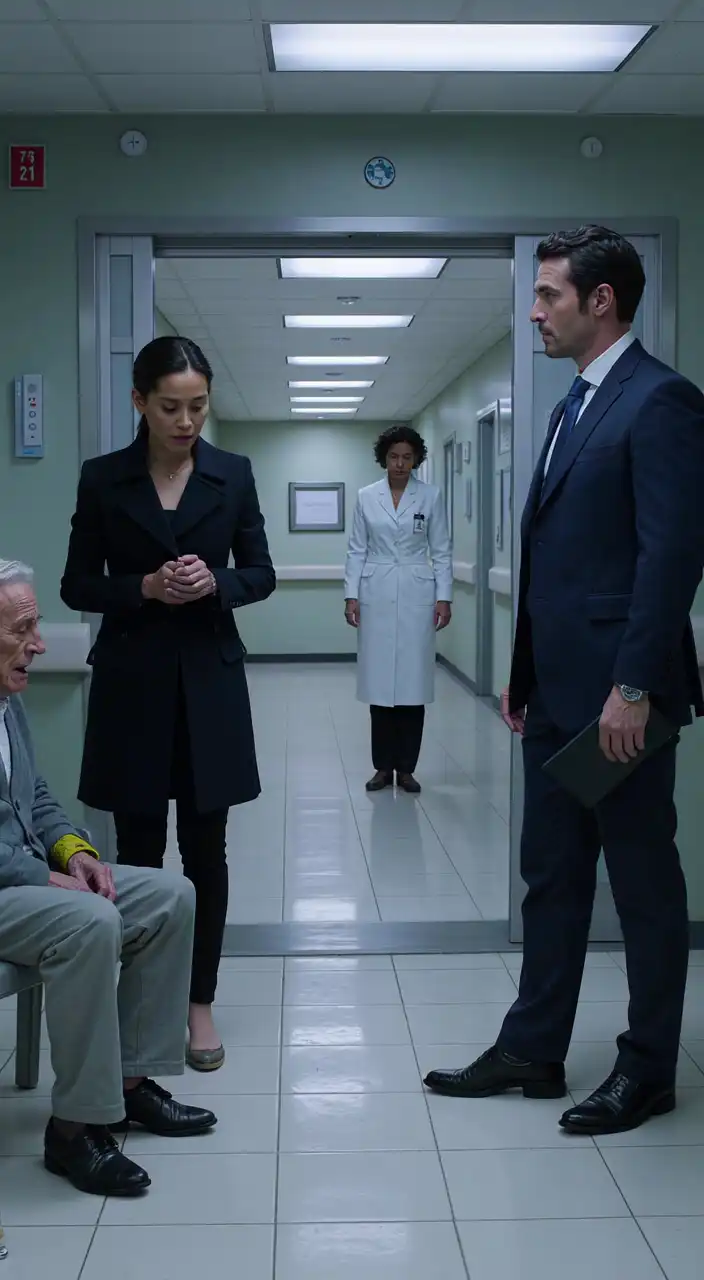
MY FATHER STARTED SHAKING OUTSIDE TRIAGE WHILE A CLINIC ADMINISTRATOR BLOCKED THE DOOR AND SAID HE NEEDED FAMILY PERMISSION FIRST.
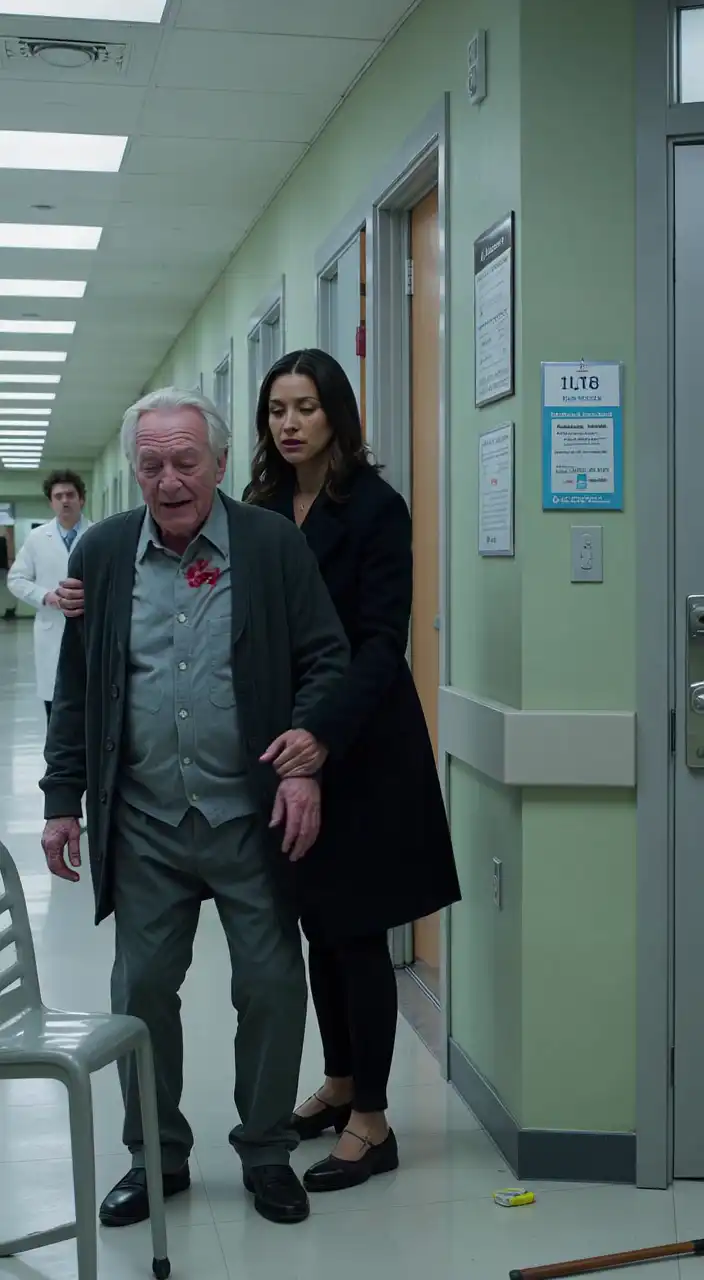
MY FATHER STARTED SHIVERING SO HARD HIS SURGICAL BANDAGE BLED THROUGH, AND THE CLINIC ADMINISTRATOR STILL BLOCKED THE TRIAGE DOOR.
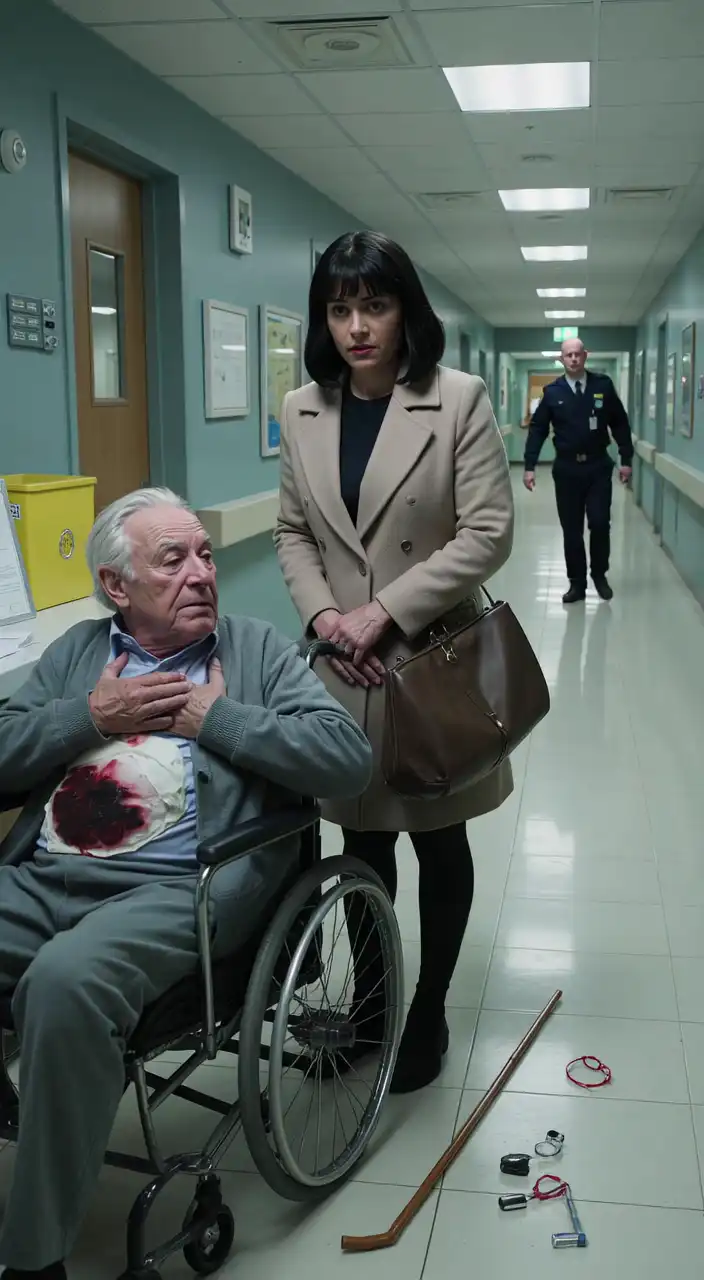
MY FATHER STARTED SHAKING IN THE HOSPITAL HALLWAY, AND THE WOMAN WHO CLAIMED TO BE HELPING HIM WOULD NOT LET TRIAGE TOUCH HIM.