
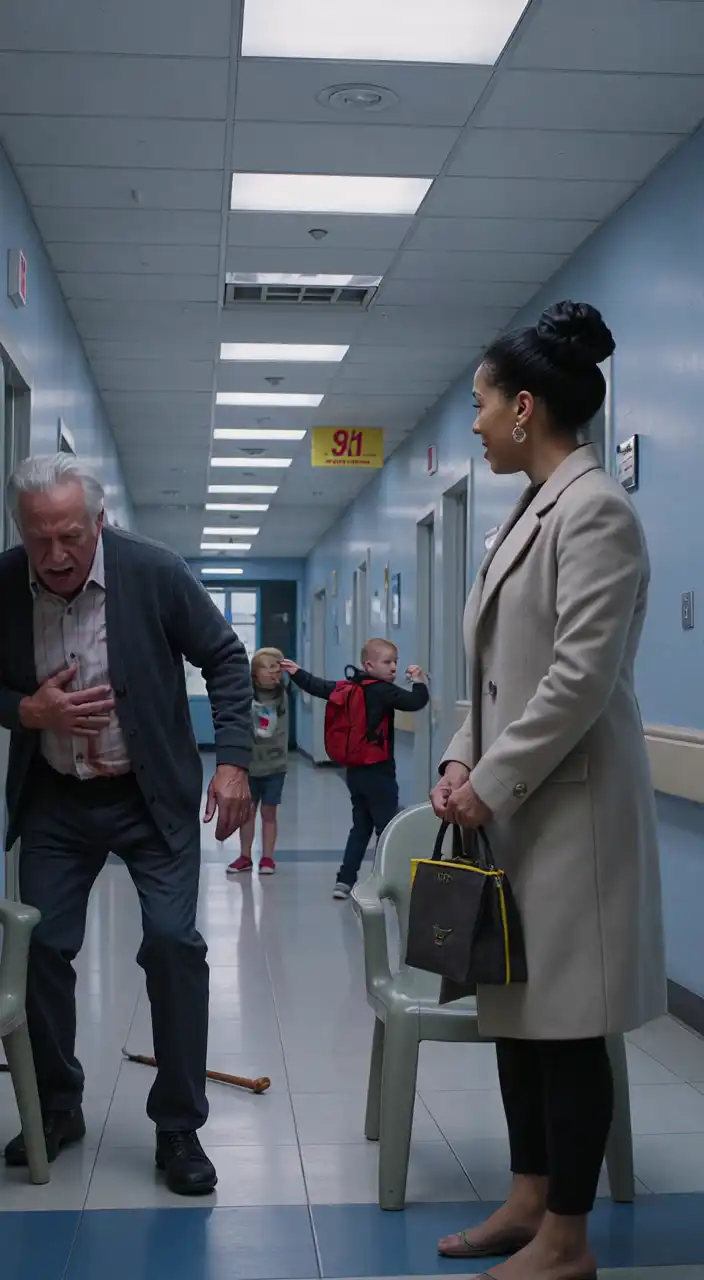
Natalie's smile held for one second too long.
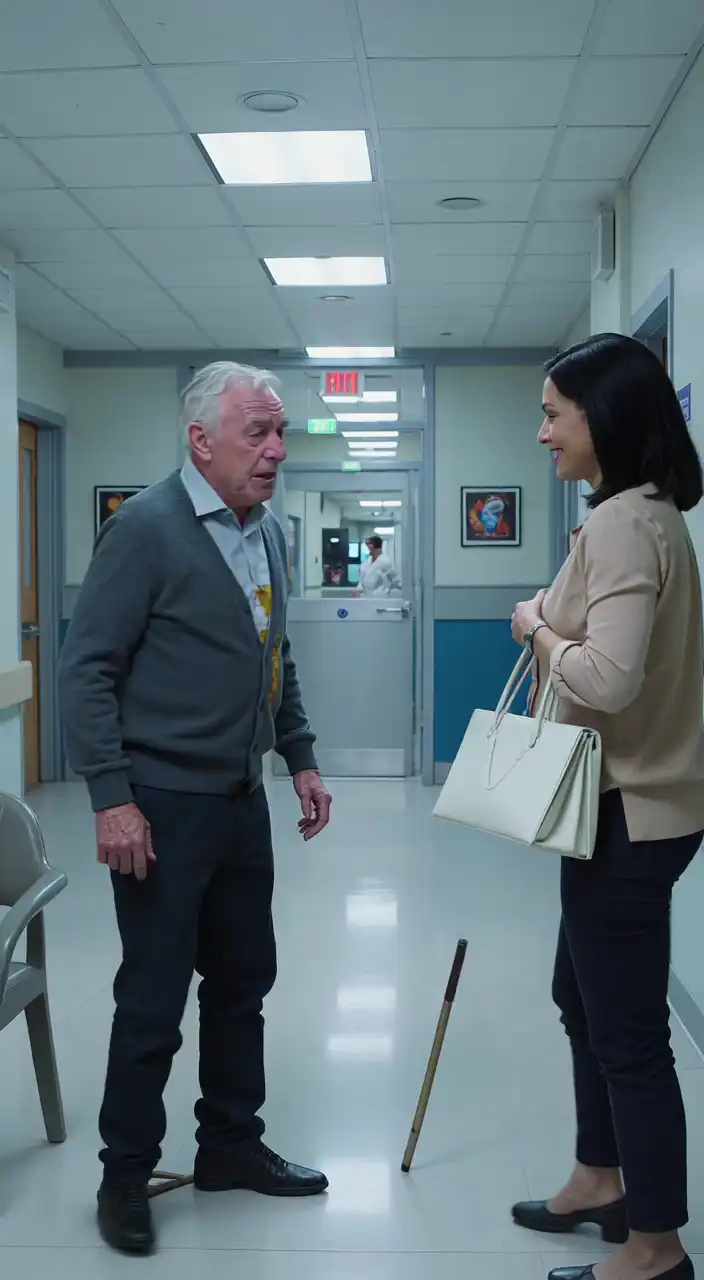
It was the kind of smile people use when they think calm can outrun facts. She kept one hand on her purse and the other half raised, like Dr. Avery had embarrassed her in public over nothing. "Doctor, this is a misunderstanding," she said. "My father has been overmedicated all week. He gets paranoid."
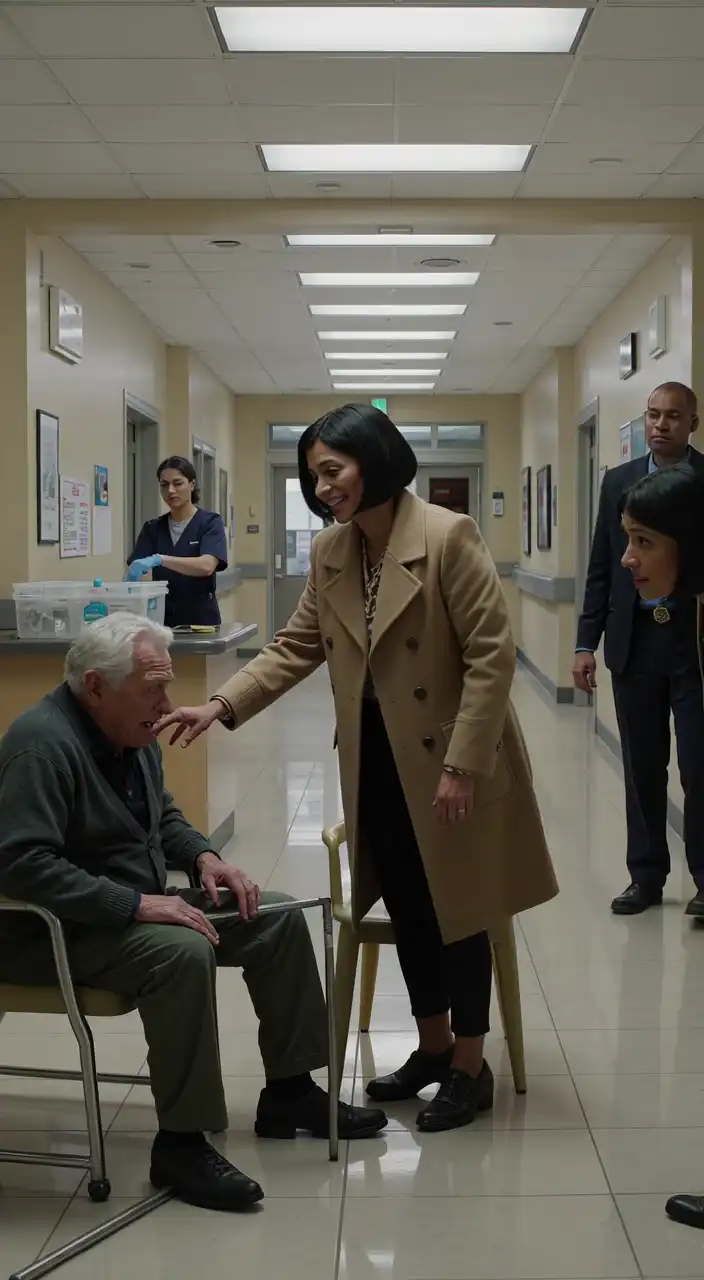
Leon swayed where he stood. Dr. Avery moved past Natalie before the sentence ended and put a steady hand under his elbow. "Mr. Leon, can you tell me your full name?"
He did, though his voice shook so badly the last syllable blurred. That was enough. Dr. Avery looked over her shoulder and called toward the doors, "Wheelchair, now. Triage bay two. And security to the front hall."
Natalie's posture changed at once. The practiced daughter act slipped, and something harder showed underneath. "You can't just take him," she snapped. "I am his caregiver."
Leon flinched at the word caregiver.
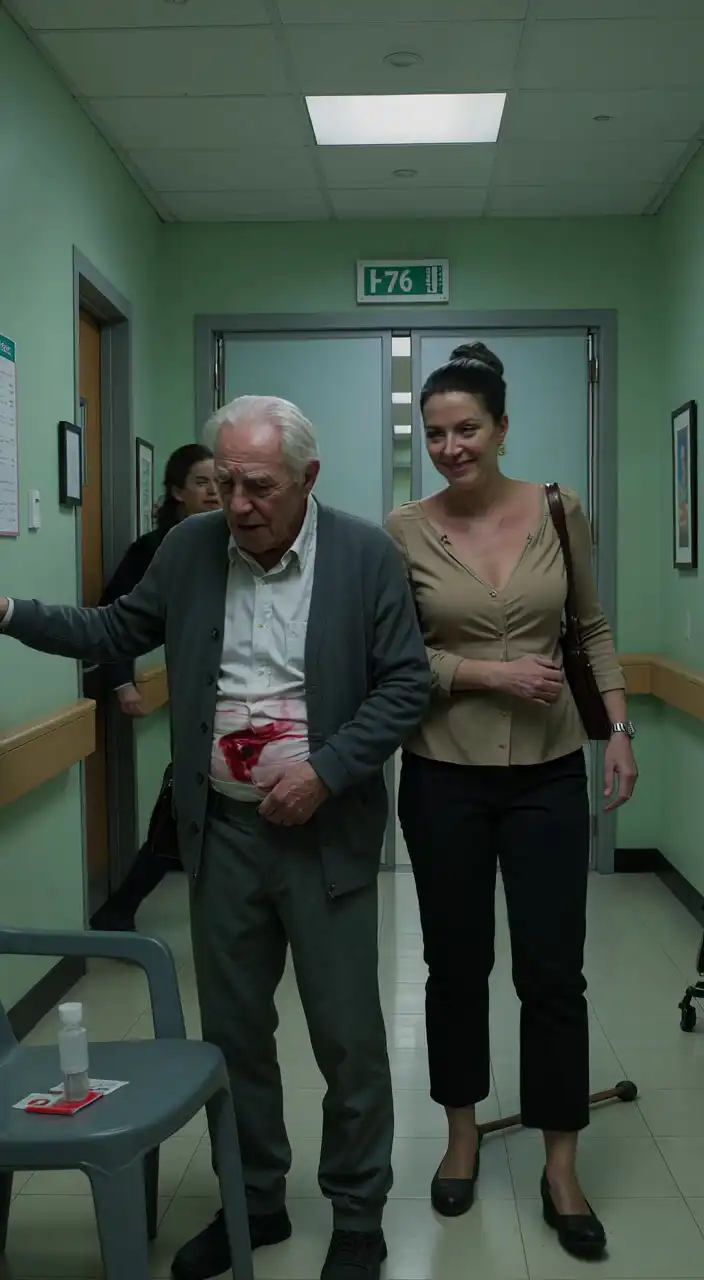
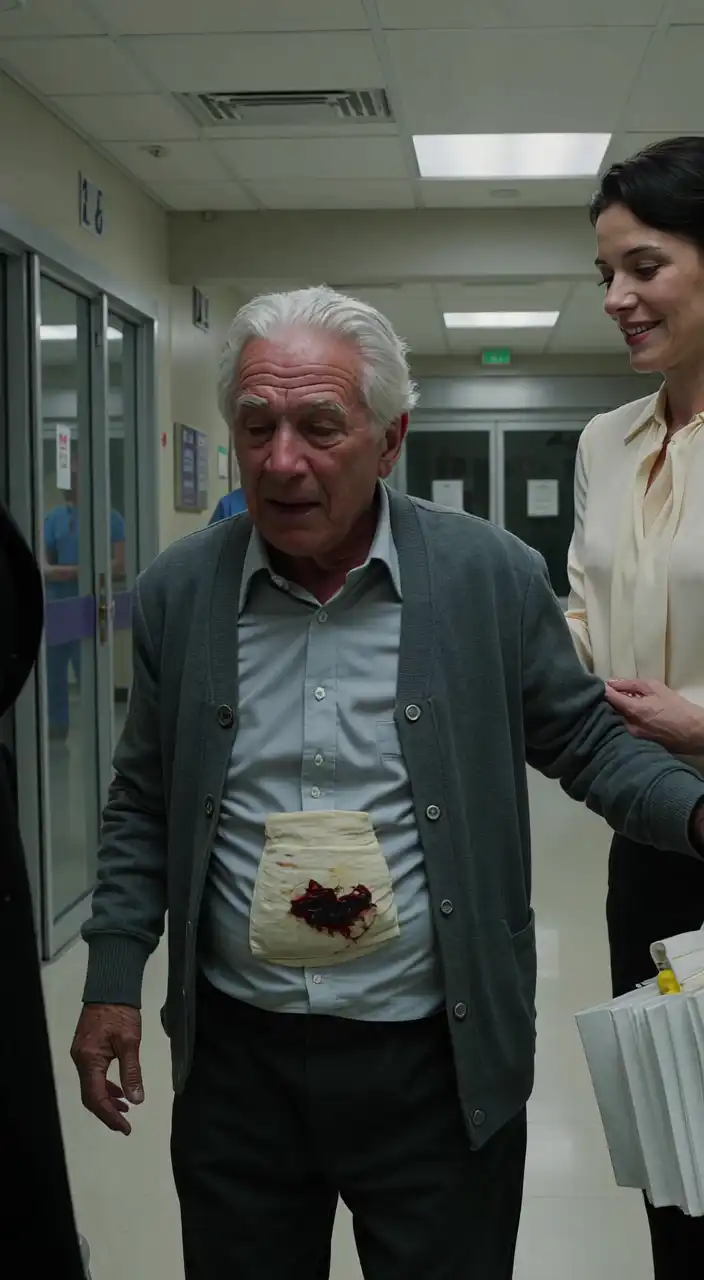
I did not know him. I only knew what I had seen: the dropped cane, the stain on the bandage, the way he had whispered about the papers as if they mattered more than dignity. My son, Mateo, pressed closer to my side, still waiting to be called for his own chest X-ray. He whispered, "Mom, that man looks really sick." I nodded and told him to stay seated.
The boy with the empty spacer had sunk against the wall by then, breathing with that awful narrow whistle. His mother was still fumbling with the locked purse and insisting he had taken his medicine already. Dr. Avery cut her eyes in that direction too, reading both emergencies at once.
A nurse arrived with a wheelchair. Leon's knees folded before he could turn, and he nearly fell. The nurse and doctor got him down into the chair while Natalie reached for the handles. Dr. Avery blocked her with one arm. "Not you."
That one small sentence landed louder than anything else.
Security came from the side hall, two officers in gray uniforms. Natalie lifted her chin. "This is ridiculous. He lives with me. He had surgery three days ago. He's been dramatic since discharge because he hates taking antibiotics."
Dr. Avery's gaze sharpened. "What antibiotics?"
Natalie hesitated.
Leon answered first, weak but clear. "They changed them. Told me come back if fever. She said tomorrow."
Dr. Avery held out her hand. "Purse."
Natalie gripped it tighter. One officer stepped closer. "Ma'am, please comply."
The little boy started coughing so hard he gagged. His mother finally jerked the purse open, and a rescue inhaler rolled inside under a wallet, clearly there all along. Dr. Avery's jaw flexed. She pointed to another nurse. "That child goes straight back too. Now." The nurse scooped the inhaler, got the first puffs into the boy, and his shoulders began to drop in tiny, desperate stages.
That should have been enough to make every adult in that hallway tell the truth. It wasn't.
Natalie shoved the folded papers halfway deeper into the bag. One yellow page slid free and fluttered to the floor beside Leon's cane. I bent instinctively and picked it up before anyone stepped on it. Across the top, in large print, I saw DISCHARGE INSTRUCTIONS. Lower down, one line was circled in thick blue ink.
Return to the ER immediately for fever over 101, shaking chills, increasing drainage, confusion, or worsening pain.
I looked up. Natalie saw that I had read it and reached out. "Give me that. That's private."
Dr. Avery took the paper from my hand instead. Her voice stayed level, but it had iron in it now. "Thank you, ma'am."
Natalie switched tactics instantly. Tears came to her eyes with shocking speed. "I am trying to take care of him alone," she said to the hall, to security, to anyone who might become her audience. "He refuses medication. He accuses me of stealing. He wanders. I haven't slept in days."
For one second I almost believed her. Exhaustion can make people ugly. Caregiving can break good people. Even Dr. Avery's expression did not dismiss that possibility. But then Leon reached into his cardigan pocket with trembling fingers and pulled out a hospital bracelet, not from today but from his surgery admission, still snapped around itself. Inside it was a tiny folded square of paper, damp from sweat.
"Phone number," he whispered. "I hid it."
Dr. Avery unfolded it. It was a home health line and the surgeon's on-call number, both written in block letters by some nurse trying to make sure an older patient had help after discharge. Under the numbers was another note: Daughter instructed on wound care. Pick up new prescription today. Do not delay if drainage turns dark.
A pressure moved through the hallway, invisible but unmistakable. Natalie's story had cracks in it now.
She saw it too. "He doesn't know what he's saying," she said. "He has been confused. Ask them. Ask the floor nurse. He pulled his own dressing off in the car."
Leon turned his head toward Dr. Avery. "She said co-pay too high."
No one spoke for a beat.
Hospitals hear every excuse money can force out of a family. But there was something colder in the way Natalie had hidden the papers, in the way she had tried to leave before triage, in the way Leon had hidden those phone numbers like contraband. Dr. Avery crouched to Leon's eye level. "Did you ask to come back sooner?"
His mouth worked before the answer came. "Last night. And this morning."
Natalie took a sudden step backward.
Security noticed. One officer moved to block the hall. "Ma'am, stay where you are."
The triage doors slid open again. Another nurse called, "Bay two ready." Dr. Avery stood. "Take him in."
As they wheeled Leon through the doors, he twisted enough to catch sight of his cane still on the tile. Mateo jumped up and handed it to the nurse before I could stop him. Leon looked at my son with wet, fever-bright eyes and whispered, "Thank you, buddy."
That should have been the end of my place in it. My own child had finally been called. But Dr. Avery turned back once before disappearing into triage.
"Ma'am," she said to me, meaning me, "please don't leave yet. I may need a witness statement about what you heard."
Natalie stared at me then, really stared, and all the tears disappeared. Her face became smooth, blank, dangerous in a quiet way. "You don't know anything," she said.
I believed her on one point. I did not know enough yet.
Then one of the security officers asked for Natalie's ID, and as she opened the purse again, a pharmacy bottle tipped out and rolled in a slow circle across the floor.
Dr. Avery, halfway through the triage doors, turned back at the sound. She stooped, picked up the bottle, and read the label.
The room changed again.
It was not Leon's name on it.
It was a child's.
And half the pills were gone.
Dr. Avery looked from the bottle to Natalie, then to the little boy now being rushed inside with his inhaler.
"Whose medication is this?" she asked.
Natalie did not answer.
The officer's hand moved toward his radio as Dr. Avery's voice went flat with urgency. "No one lets her leave this hallway."
The next half hour split in two directions at once, and both of them led back to Natalie's purse.
Mateo was taken for his chest X-ray, and because he was stable, I was able to stay in the waiting area outside triage where security had asked me to remain. Through the open-and-close rhythm of the sliding doors, I caught fragments: "temp 103.4," "surgical site saturated," "get blood cultures," "call the surgeon," "possible sepsis." I did not need a medical degree to hear how bad that sounded.
Natalie stayed in the hall between the two officers, all outrage now. "That bottle is from my nephew," she said. "I was carrying it because my sister forgot it in my car."
One officer, a middle-aged woman with braids tucked neatly under her cap, asked, "Then why is it mixed in with hospital discharge papers for your father?"
Natalie crossed her arms. "Because I have a purse. Things go in purses."
The officer did not react. "And the locked inhaler?"
"Not my child."
"Yet you spoke for that woman too," I said before I could stop myself.
Natalie turned on me. "Mind your business."
The other mother, whose son had the empty spacer, had been taken back with him. There was no easy alliance there, no grand reveal yet, just separate emergencies that had brushed together in one ugly hallway. But the bottle mattered. Dr. Avery came back out after getting Leon settled, still in gloves, and held the pharmacy label under the security light.
"It is prednisolone," she said. "Liquid substitute tablets, pediatric dose. Different patient, different prescribing doctor, filled this morning. Why do you have this?"
Natalie licked her lips. "I told you."
Dr. Avery's eyes did not leave her face. "Prednisolone is often given for severe asthma flare support after ER treatment. The child in that hallway had an empty spacer and no rescue inhaler available. This bottle being in your purse is either coincidence or part of a pattern I need explained right now."
Natalie laughed once, without humor. "Are you accusing me of stealing a sick kid's medicine because my father wants attention?"
"I am saying your father may be septic because someone interfered with his post-op care," Dr. Avery said. "And I am saying I watched another adult delay a child's breathing medication in the same ten-foot stretch of hallway. So yes, details matter."
The female officer asked me quietly to tell her exactly what I had heard before Dr. Avery stepped out. I gave my statement: Leon saying, "My papers. She took my papers." Natalie saying he does this for attention when bills show up. The smell from the bandage. The way she blocked him from the desk. The officer wrote everything down, then asked Mateo too, gently, about the cane and whether he heard Leon ask for help. My son nodded solemnly and said, "He looked scared to talk."
Those six words hit me harder than all the medical language. Scared to talk. That was exactly it.
A nurse from inside approached Dr. Avery and murmured something. I caught only one phrase: "surgeon says they told family to return yesterday if the drainage got darker." Dr. Avery's expression closed even tighter.
She turned back to Natalie. "Did you call the surgeon's office after discharge?"
"Yes."
"What time?"
"I don't know. Morning."
"Which morning?"
Natalie's throat moved. "Yesterday."
Dr. Avery held out the damp note Leon had hidden in his bracelet. "Then why was he carrying emergency numbers hidden on his person like he couldn't access them?"
Natalie exploded. "Because he is dramatic! Because he likes making me the villain! Do you have any idea what it costs to take care of him? I missed work for this surgery. My brother sends thoughts and prayers from Atlanta and I get stuck changing dressings and emptying drains and listening to him whine every hour."
There it was, the first honest thing she had said. Not innocence. Resentment.
The female officer's voice softened, but only slightly. "Being overwhelmed does not give you the right to block care."
Natalie looked away.
That might still have stayed in the lane of neglect and denial if not for what came next. A clerk from registration hurried over with a thin chart sleeve and spoke to Dr. Avery. "Doctor, surgeon's office faxed the discharge summary and post-op call log."
Dr. Avery scanned the papers standing right there. Then she looked up sharply. "He was prescribed a different antibiotic because the first one caused a rash. The new script was sent electronically to a pharmacy near his house at 4:12 yesterday."
She lifted her eyes to Natalie. "Was it picked up?"
Natalie said nothing.
The clerk, uncomfortable but factual, added, "The pharmacy noted not collected."
Leon had never even started the replacement antibiotic.
Dr. Avery closed the chart sleeve. "That could have advanced an infection fast."
Natalie suddenly switched back to tears. "I was going to get it tonight."
"After trying to leave the ER?" Dr. Avery asked.
Natalie looked trapped for the first time. "He gets confused in hospitals. He wanted to come because he panics. I thought rest was better."
The officer with braids asked, "Did he ask you to bring him yesterday?"
Natalie's silence answered.
Inside triage, a monitor alarm sounded. Through the gap in the doors I saw staff moving around Leon's bed. Dr. Avery turned at once, but before she went in she said to security, "Hospital social work and adult protective services need to be notified. And I want that purse inventoried."
Natalie took a step back. "You can't search my things."
The officer said, "We can secure them pending investigation on hospital property with your consent, or law enforcement can be called if a vulnerable adult's medical care has been obstructed. Choose."
Natalie hugged the purse to her chest, calculating. Then, maybe thinking cooperation would still save her, she thrust it at the officer.
The inventory began right there at the desk.
Wallet. Cosmetics. Keys. The discharge papers. A folded pharmacy receipt from the unclaimed antibiotic. Two sealed drain sponges. A bottle of Leon's pain medication. A second bottle with three tablets left. And at the very bottom, under a packet of tissues, an inhaler with a pharmacy sticker peeled halfway off.
Not the little boy's current rescue inhaler brand, but still a child's inhaler.
Dr. Avery stopped in the doorway. "Where did that come from?"
Natalie looked stricken for exactly one unguarded second.
Then she said the worst possible thing. "You people are acting like medicine is gold."
No one answered.
Because in that hallway, for one elderly man fighting infection and one little boy gasping for air, it was.
A social worker named Dana arrived with a legal pad and tired kind eyes. She took one look at the setup, at security, at the inventoried purse, at me waiting with Mateo, and understood this was not routine. She began with me, then Mateo, then the officer statements. While she wrote, she asked careful questions about timing, words, and physical positioning. She wanted specifics, not outrage. That alone made me trust her.
Inside, Leon was moved from triage to an actual room. A nurse passed carrying IV fluids and broad-spectrum antibiotics. Another rolled by with what looked like a portable ultrasound. The urgency was moving upward.
Dana then asked to speak with Natalie in private, but Natalie refused unless security stayed in sight. "Fine," Dana said. "Then answer here."
At first Natalie's story got smoother. She claimed Leon had always exaggerated symptoms, that he had once gone to an urgent care for heartburn and "made a scene," that she had hidden the discharge papers only because he would obsess over complications and work himself into a panic. It was plausible enough to make you stop and think. Caregivers do sometimes ration information when elders spiral. Families are messy. Fear is messy. Dana did not dismiss any of it.
Then she asked, "Why wasn't the replacement antibiotic picked up?"
Natalie said, "I forgot."
"Why did you say he had already been cleared to rest when the instructions said return immediately for fever and dark drainage?"
"I thought they overstate everything."
"Why did he hide emergency numbers in his bracelet?"
Natalie stared at a point over Dana's shoulder. "Because he's manipulative."
Dana wrote that down too.
The contradiction came from somewhere small. It usually does.
The female security officer had set the purse contents in neat rows on the counter. Among them was the pharmacy receipt the clerk had noticed. Dana picked it up. "This shows the uncollected antibiotic at Parkside Pharmacy yesterday evening."
Natalie nodded too quickly. "Yes. I couldn't get there before closing."
Dana turned the receipt over. On the back was another receipt stapled to it. Different store. Same evening. A home goods chain three doors down from the pharmacy. Decorative candles, throw pillows, picture frames.
Natalie saw Dana reading it and said, "So what? I had errands."
Dana's face did not change, but the room seemed to lean in.
"You had time to shop next door," Dana said, "but not pick up the antibiotic?"
Natalie folded her arms harder. "I said I forgot."
This time even she heard how thin it sounded.
Dr. Avery emerged long enough to update everyone that Leon's blood pressure was dropping and they were waiting on labs, fluids running wide open. "He should have been seen sooner," she said, not to anyone in particular, which made it land on everyone.
Natalie tried to move toward the triage doors then. "I need to talk to my father."
Dana stepped in front of her. "Not yet."
"Why?"
"Because right now he needs treatment without being spoken over."
Natalie's whole body tightened. "You are turning him against me."
Dana answered quietly, "No. I think he's been trying to speak for himself for a while."
That was when the first major reversal began to show itself, though none of us understood it fully yet.
A call came to the social work desk. Dana answered, listened, asked two questions, then covered the receiver and looked at Dr. Avery. "This is Parkside Pharmacy. They say the daughter did come yesterday."
Natalie lifted her head as if vindicated.
Dana kept listening. Her expression changed. "And?"
She waited, then thanked the caller and hung up.
"What?" Dr. Avery asked.
Dana looked directly at Natalie. "You were there at 5:07 p.m. You did not forget the antibiotic. You asked the pharmacist whether there was a cheaper over-the-counter substitute because your father was 'probably overreacting.' When they said no, you left without it."
Natalie's mouth opened, then closed.
Dana continued, "You also asked whether his pain medication could be stretched by cutting tablets in half."
The silence after that felt physical.
Natalie recovered enough to say, "I was trying to make sure I could afford everything."
Dr. Avery said, "Then you call the surgeon's office, the case manager, the hospital financial counselor, anybody. You do not suppress instructions and block emergency evaluation."
Dana added, "And you do not tell him he was cleared when he was not."
Natalie sank into one of the plastic chairs at last. For the first time she looked less like a strategist and more like someone cornered by her own choices. She rubbed both hands over her face. "You don't understand," she said. "He gave my brother money. He sold the house and promised we'd split it. Then he moved in with me after surgery with a drain hanging out and a list of rules and no plan. My rent is due. My job cut hours. I can't keep carrying everyone."
It was still not an answer to why she had hidden papers. It was motive.
Dana heard it the same way. "Did you want him to go back to the hospital because you were worried about cost," she asked, "or did you want him not to go back because you needed access to his money?"
Natalie's head jerked up. "What money?"
Dana did not blink. "You tell me."
Natalie laughed bitterly. "He acts broke."
A small detail from earlier returned to me then: Leon saying, "She said co-pay too high." Not because he believed it, but because she had used money to stop him. Money had been in the room all along.
The second contradiction arrived by accident. Leon's phone had been missing from everything security inventoried. Dana asked where it was. Natalie said he must have left it at home. The officer checked the keys from the purse and found a car key with a little silver inhaler charm on the ring. A child's charm. Maybe from a dollar bin, maybe from a gift, but impossible not to notice after the inhalers already on the counter.
"Your nephew's?" the officer asked.
Natalie snatched the keys back. "Yes."
Dr. Avery was already half turned to go back inside when a young nurse hurried out holding a clear belongings bag. "Doctor, this was under the patient's blanket."
Inside was Leon's cell phone, powered off.
Dana looked at Natalie. "You said he left it at home."
Natalie's voice flattened. "I forgot."
The nurse added, "He asked us to charge it. First thing he said when he was more alert was, 'Don't let my daughter take my phone again.'"
That moved the case from overwhelmed caregiving into something far darker. Taking instructions could be panic. Delaying a prescription could be neglect. But taking the patient's phone, hiding emergency numbers, and powering it off while preventing him from returning for fever looked like control.
Dana asked the nurse, "Did he say why?"
The nurse nodded. "He said because she checks his bank alerts."
Natalie stood up so fast the chair scraped loud enough to make Mateo jump. "This is insane."
But no one was looking at her the same way anymore.
Hospital security called local police at Dana's request, not because everyone suddenly knew a crime had happened, but because too many warning lights were on at once. While we waited, Dana asked if I could stay another twenty minutes in case formal statements were needed. Mateo, brave and bored and now mostly fascinated by the serious machinery of adults, leaned against me and whispered, "Is the grandpa going to be okay?" I told him I hoped so.
A respiratory therapist passed with the little boy and his mother on the way to pediatrics. The boy's color had improved. He clutched the now-full spacer with two hands. His mother wouldn't meet anyone's eyes. I wondered if she and Natalie knew each other or if desperation just rhymed across strangers. Before they turned the corner, the little boy looked back at the counter where the second inhaler sat. His gaze stuck there for one confused second, then moved on. Dr. Avery saw that too.
She asked the officer quietly to note the child's reaction.
Then she went back to Leon.
The police officer who arrived was a deputy assigned to the hospital detail, a patient man named Ruiz who looked like he had learned not to rush stories just because they came wrapped in tears. He listened to Dana first, then security, then me. He asked for exact wording wherever possible. When I repeated, "He does this for attention when bills show up," he wrote it down carefully. When Mateo repeated, "He looked scared to talk," Ruiz wrote that down too.
Natalie asked if she was under arrest.
Ruiz said, "Right now I am investigating possible neglect of a vulnerable adult and possible interference with medical care. Sit tight."
She crossed her legs and said, "My father lies."
Ruiz answered, "Then facts will help you."
Facts did arrive, but not all at once.
Dr. Avery called Dana and Ruiz into Leon's room and, after a beat of hesitation, asked whether I would be willing to wait outside a little longer because Leon had requested "the woman with the boy" stay nearby. That surprised me enough that I agreed. Maybe he wanted a friendly witness. Maybe he simply wanted proof that someone from the hallway had remained real.
While they were inside, another planted detail came back into play: the medicine smell on Leon's dressing. A nurse carrying a sealed specimen cup mentioned to another, not realizing I could hear, that the drainage had an unusual odor and color and they were sending cultures. Dr. Avery came out a few minutes later and headed straight for the counter where Leon's pain medication bottle still lay.
"How many tablets should be left?" she asked security.
The officer handed her the discharge sheet. Dr. Avery checked the date and dosage instructions, did quick math, and frowned. "Too many are missing."
Dana looked up. "Could he have overused them?"
"He says Natalie managed his doses and would not let him keep the bottle," Dr. Avery said. "He also says she made him unusually sleepy before bringing him here."
Ruiz asked, "Drugging him?"
Dr. Avery was careful. "I am saying sedation could explain why he seemed confused in the hall. We need toxicology before anyone jumps ahead."
Natalie heard every word. "Now you're making me a poisoner too?" she barked.
Dr. Avery did not raise her voice. "No one made your father feverish, but someone may have made him easier to control."
Natalie stood up again. Ruiz motioned her back down. She sat, glaring at all of us as if we had built this around her on purpose.
Half an hour later, Dana returned from Leon's room with a bank envelope in her hand.
"Where did that come from?" Ruiz asked.
"His sock," Dana said. "He asked me to hold it."
The envelope contained a cashier's check stub and a folded deposit slip. Sale proceeds from a house, yes, but mostly gone. There had been a recent transfer out, authorized by online banking, to cover "care expenses." Leon told Dana he had not understood the transfer and thought it was for surgery billing because Natalie had handled his phone and bank app while he was recovering.
Ruiz rubbed a hand over his jaw. "So now we may have financial exploitation too."
Dana nodded. "He says when he asked questions, she got angry and said he owed her."
Natalie stared at the envelope like it had betrayed her personally. "He did owe me."
There are sentences people cannot take back. That was one.
Ruiz asked, "Did he owe you enough to deny him antibiotics and return instructions?"
"I didn't deny him anything."
Dana raised the powered-off phone in a clear evidence bag. "You took his phone."
"He was obsessing."
"You hid the discharge papers."
"He was panicking."
"You left the pharmacy without the antibiotic after asking for a cheaper substitute."
"I was coming back."
Ruiz nodded toward the triage doors. "And tonight, you tried to leave with a feverish post-op patient before evaluation."
Natalie looked around as if seeking one person still willing to rescue her from the pattern. There wasn't one.
Then the biggest reversal of the night arrived from a source no one expected.
The mother of the asthmatic boy came back from pediatrics with a nurse beside her. Her face was pale, ashamed, and angry in equal parts. She pointed at Natalie before she spoke.
"That's my cousin," she said.
Every head in the hall turned.
The nurse led her to the counter. The woman took one breath and then another, still shaken from her son's attack. "She told me if I checked him in, CPS might get called because we had already been here last month. She said she'd hold his inhaler and papers while I parked because triage takes forever and they judge you if you look disorganized."
Dr. Avery's face hardened in a way I had not seen before. "She took his inhaler?"
The woman nodded, crying now. "She said if he looked too okay after a puff, they'd send us home and I'd get another bill. Then she got on the phone and I thought she still had my purse strap because I was carrying him. I didn't realize she had moved the inhaler and steroid bottle to her own bag until he started wheezing harder."
Natalie shot to her feet. "That's not what happened."
But the cousin kept going, words tumbling out with the force of panic finally turning into truth. "She said hospitals don't care unless it looks serious. She said make them pay attention. I didn't mean..." She broke off, hands over her mouth. "I didn't mean to let it go that far."
No one in that hallway was breathing easily anymore.
Dr. Avery stepped toward Ruiz. "That child could have decompensated in the lobby."
Ruiz nodded slowly. "And she coached the mother to delay treatment."
The cousin looked at Natalie with horror, like she was only now seeing what had been standing next to her all evening. "You said you knew how to work the system."
Natalie looked back at her with pure fury. "You said you couldn't afford another visit."
What had seemed like two separate emergencies were connected after all, not by coincidence but by Natalie's private logic: care was a game, crisis a leverage point, medication a bargaining chip. She was not only minimizing danger. She was manipulating it.
The social worker sent the cousin back to her child with instructions that someone from pediatrics would talk with her in detail. Ruiz asked another officer to secure Natalie's belongings formally. Security tightened the perimeter around her, but the actual final obstacle was still inside the ER.
Leon's blood pressure dropped again.
A nurse came out at a run for a second IV pump. Dr. Avery followed, speaking fast to someone on the phone. "Yes, I know he's post-op day three. Fever, hypotension, purulent drainage, delayed antibiotic start. I need surgery down here now."
Purulent. The ugly word made every earlier delay feel heavier.
Dana turned to me. "If you need to leave with your son, you've done more than enough."
I looked at Mateo. He looked back and whispered, "Can we stay until they help him?" So we stayed.
Ruiz asked to speak with Leon as soon as he could, but Dr. Avery said, "Not yet. He is becoming less stable."
Through the small glass panel in the triage door I saw a blur of movement around Leon's bed. They were not panicking, which was somehow scarier. Experienced people moving quickly is its own kind of alarm.
Natalie watched that door too, and some of the fight went out of her face. "I didn't think it was this bad," she said, almost to herself.
Dr. Avery heard her. "He told you it was bad."
Natalie pressed her lips together. "He always says everything is bad."
"And sometimes he is right," Dr. Avery said.
The surgeon arrived in scrubs with a cap shoved into his pocket, read the chart standing up, then disappeared into Leon's room. Minutes later Dana came out and said Leon had likely developed a post-surgical infection serious enough that he might need another procedure if imaging showed a fluid collection. They were transferring him deeper into the ER and possibly up to ICU depending on response.
There it was: the edge of the threshold. Not just delayed care, but delayed care almost too long.
Natalie suddenly tried one last move.
"I need to talk to him before you poison him with whatever story he tells," she said, stepping around the chair and toward the door.
Ruiz blocked her cleanly. "No."
"He's my father."
"And he's a patient."
She pointed at me. "This stranger gets to stay and I don't?"
Dana answered before I could. "He asked that a witness remain nearby. He did not ask for you."
That landed.
Natalie's shoulders rose and fell once. Then she made a decision I think she believed was smart. She lowered her voice and said to Ruiz, "If I cooperate, can I at least explain about the money before my brother gets involved?"
Ruiz studied her. "You can explain now."
So she did. Not all of it, but enough.
She admitted using Leon's phone "a few times" while he was sleepy after surgery to move funds she said he had promised her for caregiving. She admitted he became upset when he saw the balance change. She admitted turning off his phone because "he kept trying to call people and make me look like a thief." She admitted telling him the surgeon's office had said to wait until morning when, in fact, the nurse had told her to monitor closely and return if the fever continued. She stopped short of admitting she knowingly endangered him. But the pattern was complete.
Dana asked, "Why hide the discharge papers?"
Natalie stared at the floor. "Because if he read the list, he'd insist on coming back right away."
"And he should have," Dr. Avery said from the doorway.
No one had seen her approach. She looked exhausted now, but there was relief mixed into it. "His lactate is improving with fluids. We caught this before septic shock fully set in. CT suggests an infected fluid pocket but no catastrophic rupture. Surgery is evaluating whether they can manage with drainage and IV antibiotics tonight."
A breath moved through all of us, one collective inch of release.
Mateo smiled into my sleeve. I realized I had been holding my own breath too.
Natalie started crying for real then, not the polished tears from earlier. "I didn't mean..." she began.
Dr. Avery cut in, not cruelly. "Meaning less harm does not undo blocked care."
That was the moral center of the whole night, spoken in one sentence.
Ruiz informed Natalie that, based on statements and evidence, she was being detained pending further investigation for elder neglect and possible exploitation, with additional questions relating to the child's medication interference. He did not dramatize it. He simply did his job. The officer with braids gently took Natalie's wrists and secured them.
Natalie looked stunned, as if consequence itself were rude.
She turned her head toward the triage doors one last time. "He needs me," she said.
Dana answered, "No. He needs honest care."
After they led Natalie away, the hallway changed. It did not become peaceful. Hospitals never do. But the pressure of one person blocking everything was gone, and you could feel the space around the truth opening.
The ending did not come all at once. It arrived in working pieces.
Leon was admitted, started on strong IV antibiotics, and taken for drainage of the infected pocket under imaging guidance rather than full emergency surgery. Dr. Avery came back to the waiting area after midnight, gloves gone, shoulders finally lowered. She sat beside Mateo so she wasn't towering over him and said, "Your cane delivery probably helped me get him talking. Good job."
Mateo beamed like she had handed him a medal.
Then she turned to me. "He asked me to thank you for staying."
I asked if he was going to make it.
She nodded once. "I think so. He was close to becoming much sicker. A few more hours could have looked very different."
That sentence stayed with me long after.
Dana returned with forms, referrals, and practical next steps that were still treated like human events, not paperwork. Leon's brother in Atlanta had been reached and was already trying to book a flight. Adult protective services would meet Leon in the hospital in the morning. The bank fraud unit had been contacted from his room with a hospital advocate present because he did not want Natalie handling his phone ever again. A nurse had cut off the old surgery bracelet he had hidden the emergency numbers inside, but Dana had tucked the damp note into a belongings envelope because he wanted to keep it. "Proof I wasn't crazy," he had said.
That broke my heart more than the arrest.
Before we left, Dr. Avery asked if I wanted to step into Leon's room for a minute since he had requested it. I hesitated, then said yes. Mateo came too.
Leon looked smaller in the bed than he had in the hallway, but also somehow more solid now that people were listening to him. Fresh dressings covered his abdomen. IV lines ran from both arms. His fever had not fully broken, but his eyes were clearer.
Mateo held out the cane again because none of us knew what else felt right. Leon smiled weakly. "Keep that by the bed," he said. "I plan on needing it."
"Good," Mateo said seriously.
Leon looked at me. "I thought if I spoke, she'd get louder. I thought if I waited until morning, maybe..." He stopped, exhausted.
"You don't have to explain," I said.
"Yes, I do." He swallowed. "People think old folks don't notice when help turns into control. We notice. We just get ashamed."
I had no answer good enough for that.
He looked toward the little belongings bag hanging on the chair. Inside it, I saw the folded note and the old bracelet. "That nurse wrote the numbers big because my hands shake," he said. "I hid them because she checked my pockets."
Planting and payoff, all in one tired glance. The hidden note had mattered. The powered-off phone had mattered. The stain and smell had mattered. Even the little inhaler charm on the key ring had mattered because it pointed toward a child nearly used as leverage.
A pediatric nurse later told Dr. Avery within our hearing that the little boy was stable after treatment and observation. His mother had admitted letting fear about billing and child welfare cloud her judgment, but she had also told the truth about Natalie coaching her. The child got the care he needed. The system she feared did not sweep him away. Instead, it documented what had actually happened: an overwhelmed mother, a manipulative relative, and a near miss that could have gone much worse.
By the time Mateo and I finally left, the fluorescent hallway looked exactly the same as when we had arrived. Plastic chairs. sliding doors. Nurses calling names. But I could not see it the same way. I kept thinking how close care had been for Leon all along, close enough to see, and still almost unreachable because one person controlled the story.
Two weeks later, Dana called me to ask one follow-up question for documentation, and she gave me the update I had secretly wanted. Leon had improved on antibiotics, the drainage procedure worked, and he had been discharged to a rehab facility, not back to Natalie's apartment. His brother came, and there was a temporary protective order in place while investigators sorted through the financial records. Hospital legal and APS were involved. The bank transfer was being contested. None of it was magically simple. But it was exposed. That mattered.
A month after that, Mateo and I ran into Leon outside a physical therapy clinic by chance. He had his cane, a clean cardigan, and a new phone case in bright red because, as he told Mateo with a grin, "Harder to lose, harder for other people to borrow." He looked older than before and stronger too.
He thanked us again, but then he surprised me. He said Dr. Avery had told him something after the worst part passed. She had said, "The moment you grabbed my sleeve, you changed your own outcome." He repeated it like he had been carrying it around.
Not because rescue should depend on bravery. It shouldn't. People in pain should not need perfect words. But sometimes one small reach, one hidden note, one witness who stays, one doctor who notices a stain, one child who says "He looked scared to talk" - sometimes that is the chain that breaks a blockade.
Leon told us Natalie had been charged, though the final legal path was still moving. He did not sound triumphant. He sounded sad and relieved in the same breath. "She needed help long before I needed surgery," he said. "But I still needed saving from what she chose."
That felt true too.
As we said goodbye, he tapped the side of his new phone. On the lock screen, in large letters, were three contacts labeled ICE, SURGEON, and DANA SOCIAL WORK. Under them was a note in even larger type:
If I ask for help, let me ask.
He laughed when he saw me reading it. "No more hidden papers," he said.
And that, more than the handcuffs, more than the statements, more than the evidence bags on the counter, felt like the real ending. The doors to care were no longer being guarded by the wrong person. The story was back in the patient's own mouth. The next time he reached for help, there would be no purse closing over the truth, no phone going dark, no smile pretending danger was drama.
Just the right people hearing him in time.
Disclaimer: Mention of any brand or trademark is for identification only and does not imply partnership or endorsement
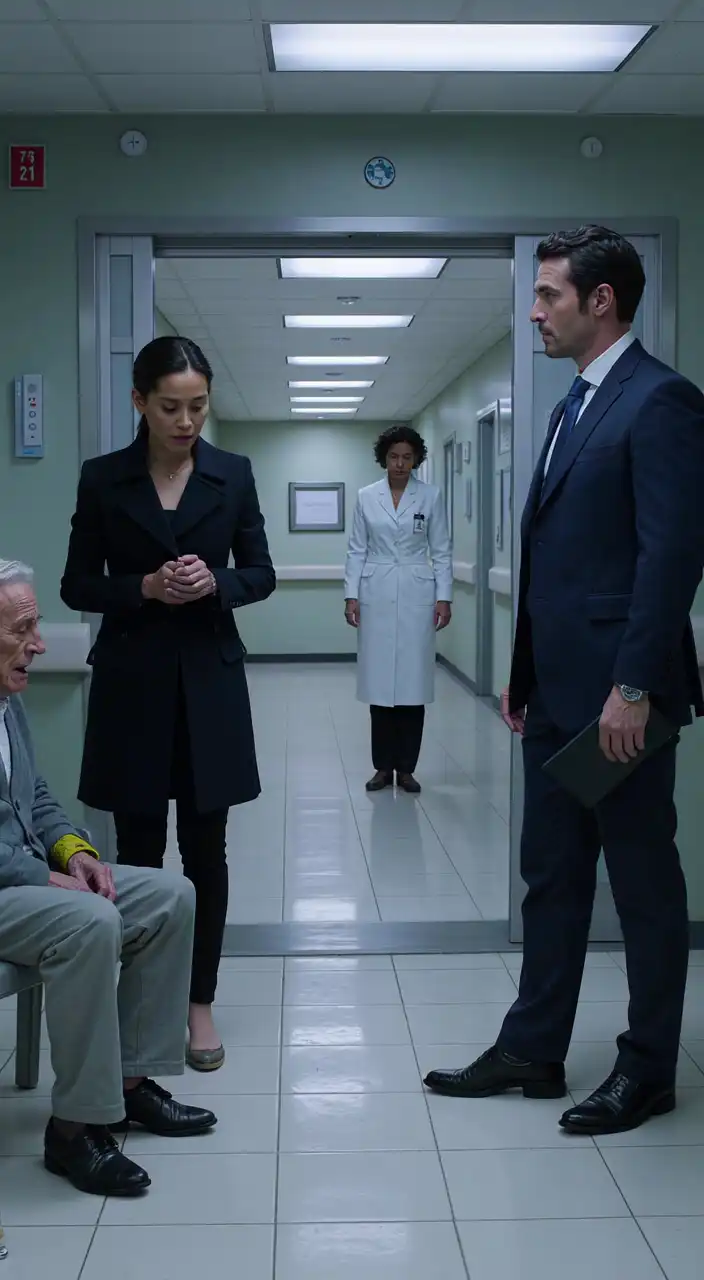
MY FATHER STARTED SHAKING OUTSIDE TRIAGE WHILE A CLINIC ADMINISTRATOR BLOCKED THE DOOR AND SAID HE NEEDED FAMILY PERMISSION FIRST.
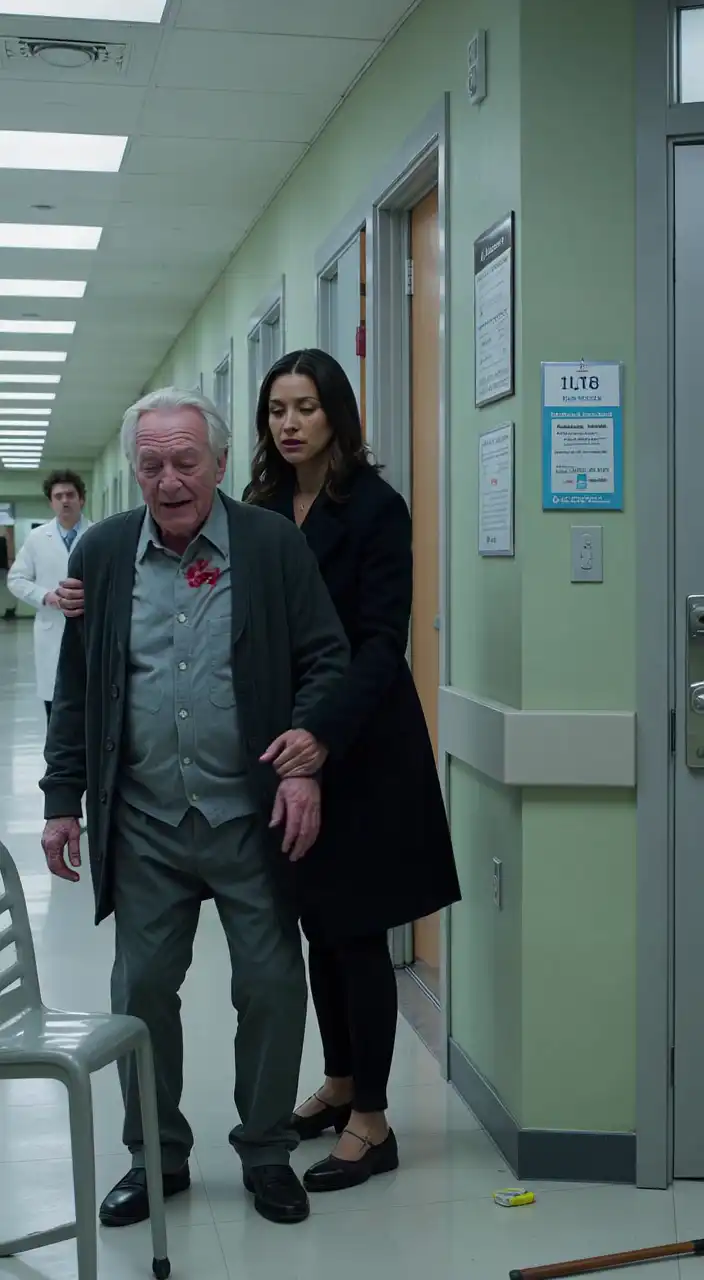
MY FATHER STARTED SHIVERING SO HARD HIS SURGICAL BANDAGE BLED THROUGH, AND THE CLINIC ADMINISTRATOR STILL BLOCKED THE TRIAGE DOOR.
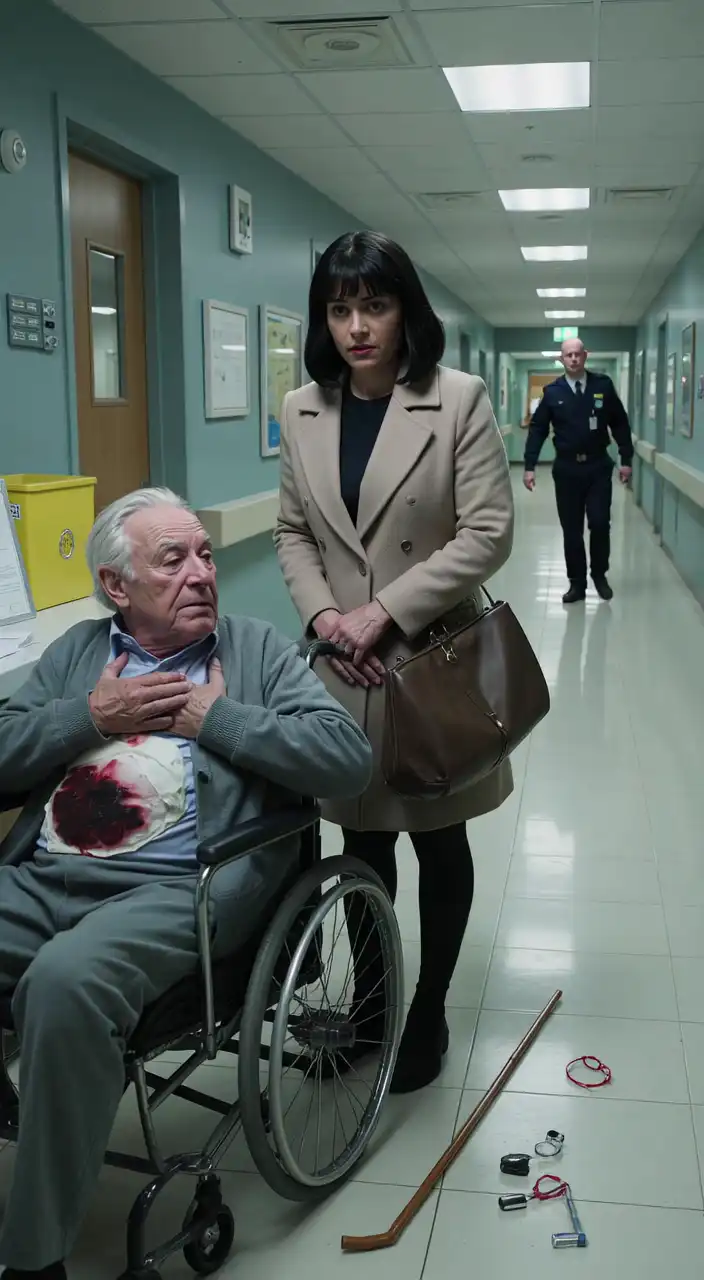
MY FATHER STARTED SHAKING IN THE HOSPITAL HALLWAY, AND THE WOMAN WHO CLAIMED TO BE HELPING HIM WOULD NOT LET TRIAGE TOUCH HIM.