
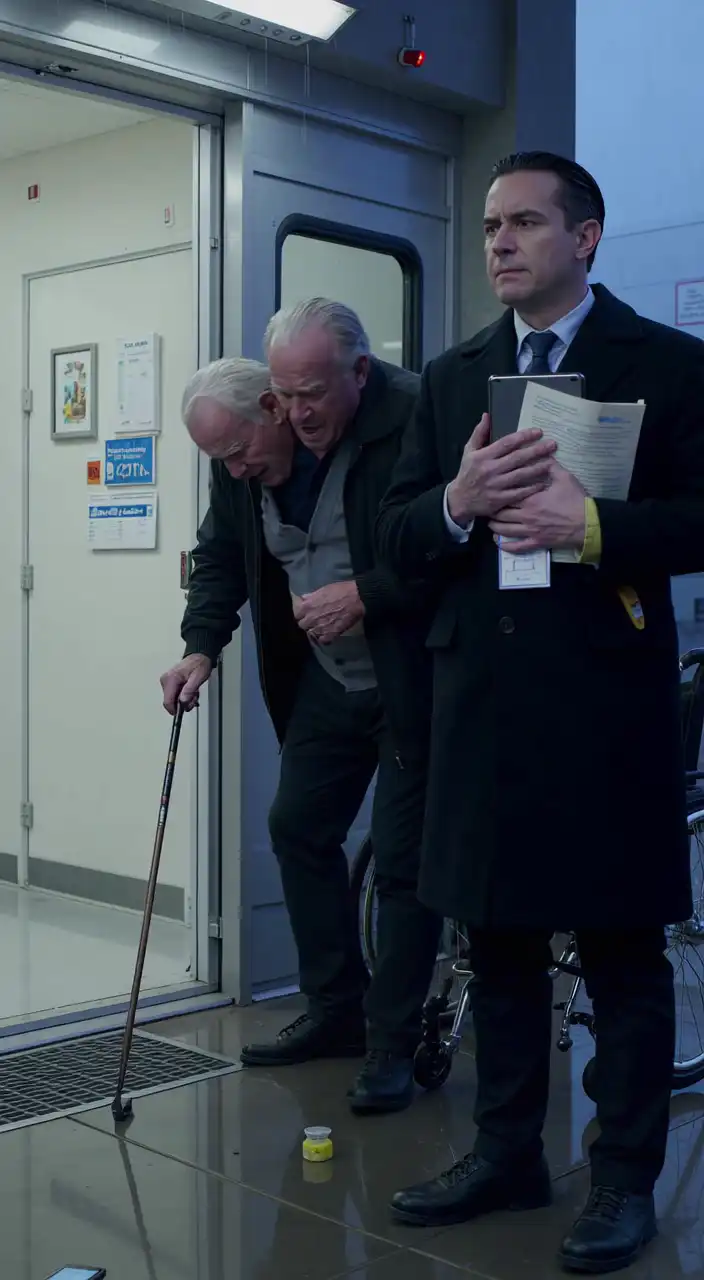
Marcus did not raise his voice, but everything changed when he said it.
The administrator's hand went to his coat so fast I knew he had forgotten what was in it. The amber chirp sounded again, muffled under the fabric. My father swayed beside me, one hand pressed to his abdomen, the other reaching blindly for the cane that had slid almost to the curb. Rain blew in through the gap each time the ambulance bay doors opened. Marcus set down his orange bag, caught Dad by the elbow, and lowered him onto a transport chair without waiting for anybody's permission.
"I need room," he said.
The administrator recovered enough to square his shoulders. His badge swung against the tablet as he stepped closer. "This patient has already been discharged. We are handling it internally."
Marcus did not even look at him. He wrapped a pulse ox around Dad's finger, clipped a blood pressure cuff in place, and asked, "Sir, what's your name?"
"Benjamin," my father said. His voice sounded thin and winded. "Benjamin Hart."
"Benjamin, can you tell me where your pain is?"
Dad pressed harder against his dressing and winced. "Belly. Hot. Dizzy."
The pulse ox blinked, then steadied lower than I wanted to see. Marcus looked up at me. "You made the call?"
"Yes. He got worse in the car before we even left. They told us to go home. Then he started shaking and leaking through the bandage and he almost fell."
The administrator cut in. "His son became agitated. The patient declined further evaluation."
My father lifted his head with visible effort. "I did not."
That should have been enough. It wasn't, not right away. A nurse from farther down the hall had turned at the amber alarm, but she stopped when she saw the administrator. The social gravity around men like him is real. He had the clean shoes, the badge, the tone that says policy before person. For one ugly second, everyone waited to see which authority would count more.
Marcus reached into the inside pocket of his jacket and touched the radio mic clipped there. "Engine Twelve, keep moving in. Possible post-op complication at ambulance bay threshold. Delayed access." Then he looked straight at the administrator. "You can explain your process after I assess the patient."
The man's face tightened. "This is private property."
"So is an ambulance," Marcus said. "And if he decompensates while you're talking, you'll want a very good reason in writing."
He peeled back the edge of Dad's bandage just enough to inspect the stain. The outer dressing was damp with a watery pink that had spread wider than when we left. Dad shivered so hard the chair rattled. Marcus took his temperature with a temporal scanner and muttered, "One-oh-two point eight."
The nurse came closer then. She was in navy scrubs, maybe late thirties, hair pulled into a tired knot. Her eyes dropped to the stain on Dad's sleeve. "What's that yellow?"
Before I could answer, the administrator said, "Nothing relevant. He spilled a supplement during discharge counseling."
My father shut his eyes. "I told them I didn't take it."
The nurse glanced at Marcus, then at me. "What did he mean by that?"
I bent to retrieve the cane and saw the yellow bottle cap still tucked near the baseboard by the wheelchair rack. I picked it up. It had a pharmacy sticker torn across one side, but the cap itself was distinctive, stained around the rim like it had dripped. Marcus held out a gloved hand and I passed it over.
The administrator took one step forward. "That item is not part of the clinical record."
Marcus finally gave him a full stare. "Did I ask you?"
No one answered. The monitor chirped again from inside the administrator's coat. This time the nurse heard exactly where it came from. Her brows went up.
"Why do you have his transport monitor?" she asked.
The administrator touched the pocket reflexively, then seemed to realize he had no clean explanation ready. "It was handed to me during the confusion."
"My dad never handed you anything," I said. "You took his papers too."
His face changed then, just a little. Not panic. Calculation.
The nurse stepped nearer Dad and read the discharge bracelet still looped around his wrist. "Mr. Hart was on remote post-op monitoring after release?" she asked Marcus.
"He was if that's what's chirping in your administrator's pocket," Marcus said.
She looked at the administrator. "Why was monitoring removed before the patient left the bay?"
"It wasn't medically active. Family was arguing."
That word family hit me wrong because it exposed the real thing under all this. My father wasn't married. My sister, Elena, handled his finances because she had power of attorney after his surgery. She was out of town at a donor event for the hospital foundation. The administrator wasn't protecting my father. He was protecting the family account attached to her name, and whatever complaint or cost a return admission would trigger.
Marcus got a blood pressure reading and his expression flattened into that professional seriousness that is scarier than panic. "Benjamin, I'm going to ask you a few things and I need you to try to answer. Did anyone give you medication after discharge?"
Dad licked dry lips. "Cup. Yellow liquid. Said it would settle my stomach before the drive."
"Who said that?"
Dad opened his eyes and looked toward the administrator, then away. "The young aide brought it. He was standing there."
The nurse took a sharp breath. "There is no discharge protocol for a mystery cup."
The administrator straightened. "Watch your language. He is febrile and confused."
Dad's hand found my sleeve. His grip was weak, but urgent. "No. Not confused."
Marcus listened to his abdomen quickly, then palpated around the dressing. Dad sucked in air and nearly folded over. Marcus was done being polite. He pressed his radio. "I need a stretcher to the entrance now. This patient is returning through the ED."
The administrator stepped directly between Marcus and the inner doors. "He cannot be re-registered without consent from the listed responsible party."
Marcus stood. He was not a large man, but authority gathered around him because he never spent words he didn't need. "He can if he wants treatment, and he does."
The administrator turned to my father. "Mr. Hart, if you are capable, say clearly whether you are refusing transport."
My father looked at him with raw misery. For a second I was terrified he would fold the way he had all week whenever anyone in scrubs sounded certain. Then he lifted his wrist with the bracelet, the one they had not bothered to remove, and said through shaking teeth, "Help me."
That was the first crack in the whole wall.
The nurse moved to the door panel and slapped the access button. "Bring him in."
The administrator caught her forearm. It was quick, not violent enough to look dramatic, just enough to stop her. But everyone saw it. Marcus saw it. I saw it. So did the security camera above the bay.
"Take your hand off her," Marcus said.
He did. Immediately. That was how practiced he was. Everything reversible by half an inch.
The doors opened because the stretcher crew was already inside. As they rolled out, the nurse leaned toward me and said under her breath, "What's your name?"
"Daniel."
"I'm Tessa. Stay with him. And don't let anyone take that cap."
They shifted Dad from the chair to the stretcher. He cried out once when the wheels jolted. I climbed alongside until a tech stopped me to move equipment. The administrator tried one more angle.
"You are making assumptions based on a difficult family situation," he said to Marcus, to Tessa, to anyone within earshot. "The daughter has legal authority. We were waiting for her call."
I said, "Waiting while he spikes a fever on the pavement?"
He ignored me. Men like that can erase a voice just by choosing not to hear it.
Tessa touched the stain on Dad's cuff with a gloved finger, then held it to the light. "This is not from a supplement." Her eyes narrowed. "It smells medicinal."
Marcus asked, "Sweet or bitter?"
"Bitter."
Dad heard that and whispered, "Made my mouth numb."
The stretcher crew started through the doorway. That's when the real contradiction arrived.
A woman in an evening dress under a raincoat came hurrying down the corridor from the main lobby, wet hair clinging to her cheeks, high heels in one hand, phone in the other. Elena. My sister. Her eyes found our father, then me, then the administrator.
"Why is he still here?" she demanded.
The administrator visibly relaxed. "Ms. Hart, thank God. Your brother escalated the situation. We were trying to stabilize communication before any unnecessary readmission."
She stared at him for one hard second, then at the chirping pocket of his coat. "You told me he was already home."
Everything stopped again, but for a different reason now. The administrator had expected cover. Instead, my sister walked past him to the stretcher, saw the wet bandage, the gray in our father's face, and said in a voice I had never heard from her, "Dad, who gave you that yellow stuff?"
He looked at her with exhausted confusion and said, "I thought you knew."
That was the moment I realized none of us understood how deep this had gone, and the administrator knew it.
Inside the emergency intake hall the air changed from damp exhaust and rain to cold antiseptic and fluorescent glare. Tessa pushed the stretcher hard enough that the wheels rattled over the threshold seam. Marcus walked beside my father, one hand steadying the IV start kit on the rail as another paramedic caught up behind us. Elena kept pace on the other side, trying to touch Dad's shoulder without getting in anyone's way. I followed with the cane, the yellow cap in my pocket, and a sick new awareness that my sister's arrival had not solved anything.
The administrator did not leave. He trailed us, talking into his phone in a low, urgent voice that I could not make out. Every time I glanced back, he stopped moving his lips and put on the neutral face of a man who considered himself indispensable.
At triage, a resident with dark circles under his eyes reached for the admission tablet. Tessa cut him off. "Post-op abdominal surgery, fever one-oh-two point eight, tremors, wound drainage, delayed return due to access obstruction, possible undocumented medication given after discharge."
The resident looked up sharply at the phrase delayed return. "Who obstructed?"
Marcus jerked his chin toward the hall. "Ask admin when you're done helping the patient."
That was enough to trigger a change in posture all around us. An ED nurse pulled a curtain bay open. Another fetched blood culture kits. A third slipped an emesis bag near Dad's hand just as he turned his face and gagged dryly. The resident started asking questions in a rapid but controlled rhythm.
"When did the pain increase? Any vomiting? Any confusion? What surgery? Any allergies?"
My father answered what he could. Elena answered some because she had been the one handling his paperwork this week. I answered the rest because I had been physically there for the discharge. None of us gave a smooth story because none of us had the same pieces. That, more than anything, made me feel the shape of the trap. Confusion helps the person who wants to control the room.
"Who has medical power of attorney?" the resident asked.
"I do for incapacity," Elena said instantly. "Not to block care. He is capable unless you determine otherwise."
The resident nodded and addressed Dad directly. "Mr. Hart, do you want evaluation and treatment?"
Dad's eyes were glazed with pain, but his answer was immediate. "Yes."
That should have shut the administrative argument down for good. Instead, it opened another one.
The administrator stepped to the curtain entrance with a solemn expression, as if he'd been invited. "Doctor, there are significant family disagreements regarding treatment expectations and billing accountability. We need to verify consent pathways before-"
The resident did not even look at him. "Not my lane. Please step out."
The man didn't move. Tessa did.
She planted herself between him and the bed. "You heard him."
He gave her a smile that never reached his eyes. "You are overstepping."
Tessa folded her arms. "Then report me after the labs."
The administrator withdrew, but not far. He remained just outside the curtain, visible through the gap, his spotless shoes angled toward us like a threat made of posture.
Blood cultures were drawn. A second nurse scanned Dad's bracelet and frowned. "Why is his remote monitor logged as declined by family?"
Elena's head snapped up. "What?"
The nurse turned the screen toward the resident. "See? Four forty-two p.m. Family declined continued post-discharge monitoring and accepted symptom management instructions."
Elena took one step closer. "I never declined anything. I was in a board session until six. And my father doesn't use the portal."
I felt the first hot surge of anger that cut cleanly through fear. The chirping device had come out of the administrator's coat by then, placed on a side counter with a tangle of leads. Its display showed amber icons and a patient ID number matching Dad's bracelet. Someone had documented that monitoring was declined while physically removing the monitor and the papers needed to prove what happened.
The resident looked from Elena to me. "Did either of you sign a refusal?"
"No," I said.
"Absolutely not," Elena said.
Dad whispered, "He said I was all set."
The resident's expression hardened. He ordered broad-spectrum antibiotics after speaking quickly to the surgical service, then asked for a wound check tray and a lactate draw. Infection was now not just a fear but an active working diagnosis. Dad squeezed his eyes shut when they cut away the outer dressing. I watched the edge of the incision without wanting to, searching for clues in every line of red and yellow. The nurse muttered, "Drainage, warmth," and covered it again with fresh gauze.
Then came the plausible explanation, the one that almost fit.
A young aide in pale green scrubs appeared at the curtain entrance with a supply tote clutched too tightly to his chest. He looked maybe twenty-two. He did not enter until Tessa nodded. "He says he was involved in discharge," she told the resident.
The aide swallowed. "I brought the patient juice and liquid acetaminophen because he complained of nausea and pain before leaving. That's all."
Liquid acetaminophen. Yellow. Plausible. Safe enough sounding to calm a room.
The resident asked, "Ordered by whom?"
The aide hesitated. "I thought by the charge nurse."
"Thought?"
"He told me to do it," the aide said, and his eyes flicked toward the hall where the administrator stood.
The administrator spoke from outside the curtain in a controlled tone. "This is becoming inappropriate. An inexperienced support staff member is being pressed beyond his memory."
The aide flushed. "You said if the family saw him getting more medication they might demand a new admission."
Silence. Even the monitor seemed louder.
The explanation still wasn't complete. Liquid acetaminophen could account for yellow staining, maybe some taste, but not why the monitor had been removed, why the papers had been taken, or why a chart entry claimed family declined care. It was a half-truth offered by a scared kid trying not to drown alone.
Elena stepped toward him. "Did you see my father swallow it?"
He looked miserable. "No. He gagged. Some spilled on his sleeve."
That lined up with the cuff stain. It also failed to explain the numb mouth comment. Tessa held up a hand before any of us could bombard him.
"Did you give him anything else?" she asked.
"No."
"Did anyone hand you a cup from somewhere not labeled?"
His face changed. Not yes. Not no. Fear.
The resident noticed too. "If there was another medication and he aspirated or was sedated, this matters now."
The aide shook his head too quickly. "I just... I just brought what was at the desk."
"What desk?"
Again, his eyes went toward the hall.
Elena turned on the administrator. "Why was my father's monitor logged declined? Why were his discharge papers in your coat? And why did you tell me he was already in the car when he was still collapsing at the doors?"
He drew himself up. "Because your brother was shouting, your father was anxious, and I was trying to reduce further distress. The declined monitoring selection was entered during a rushed conversation. If there was a clerical mistake, we'll review it."
Clerical mistake. I wanted to hit him for the size of that lie.
Marcus came back from making his report and heard the last sentence. "Funny thing about clerical mistakes," he said. "They don't usually grab your wrist when you reach for a door."
The resident looked at him. "Document that."
Marcus nodded once.
Dad moaned and curled slightly despite the pain. The resident checked his abdomen again and swore under his breath. "Surgery's on the way. We need imaging if he can hold still."
Elena leaned down. "Dad, stay with us."
He opened his eyes and looked at her strangely. "Why'd you send him?"
She froze. "Who?"
"The man from your office," he whispered. "The one who said not to bother you."
I felt Elena's body go rigid beside the bed.
"I didn't send anyone," she said.
That was the contradiction that blew the easy story apart. Someone had used my sister's authority before she ever arrived, and my father had believed it because the message came wrapped in the one thing he trusted this week: family permission.
The aide backed away from the curtain like he wanted to disappear. The resident told security to stay nearby. Tessa quietly took the yellow cap from me and sealed it in a specimen bag with the time written on the label. The administrator's face remained composed, but a muscle in his jaw had started ticking.
Then a woman from risk management appeared at the bay entrance asking for the administrator by name, and he did something I still think about. Instead of stepping toward her, he looked at the side corridor that led toward same-day surgery offices and briefly measured the distance.
He was thinking about leaving.
Security must have seen it too, because one officer shifted into the hall before the administrator moved. He smiled tightly and stayed where he was. But in that half-second, I understood something important. Men like him only run when the truth is not administrative. It is personal.
The CT porter arrived. Surgery wanted Dad upstairs after imaging if he remained stable enough to move. Elena and I were told to wait while they rolled him toward the scanner. As the stretcher disappeared, Dad lifted a weak hand from beneath the blanket. I touched it for one second before they turned the corner. His palm was hot and dry.
The hall felt larger after he was gone. The adrenaline that had carried me from the ambulance bay started to thin, leaving behind a shaking weakness of its own. Elena sat hard in one of the plastic chairs and put both hands over her mouth. Her mascara had begun to run. She looked less like the composed daughter with power of attorney and more like the exhausted oldest child she had always been.
I stayed standing because if I sat, I was afraid I would not get back up.
"You really didn't know?" I asked.
She dropped her hands. "Know what? That he was this sick? No. He texted me at three that he was sore but okay. Then Matthew called at five ten and said there had been some agitation at discharge, that you were upset about aftercare instructions, but Dad was on his way home and just needed quiet."
"He lied to you."
"Yes."
The word came out with no defense in it. That mattered.
For years Elena had been the family translator with institutions. Dad trusted her with forms, money, signatures. I resented it sometimes. She thought I was impulsive. I thought she was too comfortable letting men in offices decide what counted. Both things had some truth. Tonight none of that old friction helped.
A soft voice interrupted us. It was the aide in green scrubs, standing at the end of the chair row with his supply tote hanging limp at his side.
"My name's Owen," he said. "I shouldn't have stepped back there."
Elena looked at him sharply. "Then why did you?"
His eyes were red-rimmed. "Because he told me if I contradicted his report I'd be named in the incident and lose my position."
I said, "What report?"
Owen swallowed. "The one he was writing before you arrived. That your dad became combative about billing, refused observation, and family elected home symptom management."
Elena stared at him. "There was no billing discussion with my father. He has Medicare supplemental coverage and my authorization on file."
Owen nodded miserably. "I know."
"So why would he-"
"Because your account is one of the foundation accounts," Owen said. "Everyone knows your family donates. If a donor relative has a bad discharge and gets readmitted right away, it becomes a quality review, and if there was a bed issue..." He stopped.
"What bed issue?" I asked.
Owen looked around to make sure the administrator was not in earshot. "They needed post-op beds for two private surgical cases coming in from the outpatient center. Mr. Matthew was under pressure all afternoon."
Elena went white. "Are you telling me my father was pushed out to clear a bed?"
"I don't know that exactly," Owen said quickly. "I'm saying there was talk. He kept saying, 'Do not let this become a bounce-back under a donor name.'"
It should have shocked me, but by then my brain had started filing horrors by how immediately useful they were. This was motive. Ugly, believable motive.
Tessa joined us carrying a small paper cup of water for Elena and a sealed evidence bag for someone else. "Surgical resident is reviewing his scan as soon as it posts," she said. Then, seeing our faces, she lowered her voice. "You got more."
Owen nodded once.
"Then tell it to the right person," she said. "Not just us."
"Who?"
She pointed with her chin toward the glass office at the end of the hall where a woman in a charcoal suit was speaking to a hospital security supervisor. "Patient relations and risk are both here now. If there's falsified charting, they need your statement before anybody rewrites the story."
Owen looked stricken. "He'll know it was me."
Tessa's expression softened, but not much. "He already knows you're scared. That's why he picked you."
A porter rolled by with fresh linens. The ordinary hospital noise felt surreal against the fact that our father might be heading back into surgery because someone had cared more about optics than infection.
Elena took the water but didn't drink it. "There was someone else," she said suddenly.
Tessa turned. "What do you mean?"
"When Dad was admitted two days ago, an outside care coordinator called me from a number I didn't recognize. He said he was helping streamline discharge planning for donor families. I thought he was just another hospital liaison. He knew my office address, my calendar assistant's name, and the phrase my father uses when he doesn't want to be a burden." She looked up at me. "He said, 'Mr. Hart hates fuss. We'll keep this smooth.'"
I remembered what Dad had whispered in the bay: I thought you knew.
"Can you find the number?" I asked.
She was already opening her phone. Her hands were shaking now too. She scrolled through calls, then held the screen out. Unlisted, but saved by her after the first conversation as "Care Coord - donor." Tessa photographed it with the hospital tablet she carried for incident notes.
"That phrase matters," Tessa said. "The exact wording. Little things matter."
There were our planted details collecting weight: the bracelet still on Dad's wrist, the monitor taken too soon, the yellow stain, the phrase about not being a burden, the cap from the floor. Every small thing the administrator had treated as manageable clutter was becoming a trail.
A surgical resident in blue scrubs came briskly toward us from CT. He looked barely older than Owen, but his expression was all business. "Family for Mr. Hart?"
We both stood.
"He has a fluid collection near the incision and signs concerning for infection. We need to take him upstairs, likely for intervention tonight. He's stable enough right now, but we're not sitting on this."
My stomach dropped and steadied at the same time. At least now there was movement.
"Did he get something he shouldn't have?" Elena asked.
The resident exhaled. "I can't answer that yet. Toxicology wasn't initially ordered because the first concern was sepsis and post-op complication. But the attending added a basic screen after the nurse reported the unusual liquid and the mouth numbness comment. We may not get a clean answer depending on timing and what it was."
Not enough. Always not enough.
"Can we see him before he goes up?" I asked.
"Quickly."
We followed him to pre-op holding, where Dad lay under warm blankets with IV antibiotics running. His face had more color, but he looked profoundly tired. The fresh dressing over his incision was clean for the moment. The bracelet was still there. I was absurdly grateful for that thin strip of plastic, as if it proved the system had not fully swallowed him.
Elena bent low. "Dad, they're taking care of you now."
He looked at her, then me. "I made trouble."
"No," I said. "They did."
His eyes filled. "I didn't want to cost more."
That phrase struck Elena physically. She put her forehead against the bed rail for one second before straightening again. "Who told you that?"
He hesitated. "The man from your office. He said if I went back in, your foundation gift would be in the papers and you'd be embarrassed."
Elena closed her eyes.
I said, "What did he look like?"
Dad frowned, digging through fever and pain. "Blue tie. Sharp teeth when he smiled. Said Matthew sent him to help."
The resident had stopped pretending not to listen. He wrote that down.
A minute later transport arrived. As they wheeled Dad toward the OR elevator, he caught my wrist. "Danny."
"I'm here."
"The cup wasn't from the aide. It was waiting on the counter. Matthew said, 'Just enough so he can get through the ride.'"
The resident heard that too.
When the elevator doors closed, Elena and I stood with the empty air of aftermath in front of us. Then we both turned in the same direction: back toward the hall where the administrator was still trying to manage what would become of him.
By the time we returned to the ED corridor, the administrator had shifted tactics. He was no longer looming near our bay. He was in active conversation with the charcoal-suited risk manager and a hospital attorney who had materialized from nowhere, their voices low, faces carefully blank. Security remained within easy reach. Owen sat in a chair nearby wringing his badge on its clip like he wanted to tear it off.
Tessa intercepted us before we got close. "They're going to try to compartmentalize this first," she said quietly. "Patient care issue. Documentation issue. Personnel issue. You need to keep the through-line clear: delayed care while symptomatic, monitor removed, family authority misrepresented, possible unlogged medication."
Elena gave a bitter little laugh. "Do you do this often?"
"Often enough."
The risk manager looked up and saw us. She excused herself from the cluster and approached with the tight sympathy of someone who has been trained to sound humane and noncommittal at the same time.
"I'm Karen Sloane with patient relations and risk. Mr. Hart is receiving appropriate care. We'd like to gather information about what occurred so we can understand-"
"Then let's start with why your administrator told me my father was home while he was still at the doors," Elena said.
Karen's smile thinned. "I understand emotions are high."
"My father may be septic because emotions were not high enough an hour ago."
That landed. Good.
Karen folded her hands. "I've requested the discharge timeline, monitor logs, and any relevant camera footage."
"Include the ambulance bay audio if it exists," Marcus said, appearing at my shoulder. I had not seen him return. "And my CAD record from the interrupted 911 call. Dispatch heard enough to classify obstruction concern."
Karen looked at him in a way that said she had hoped the external record would stay external. "Of course."
Marcus continued in the same calm voice. "Also note that the patient's capacity to request treatment was clear when I assessed him."
The hospital attorney, a soft-featured man with silver hair, joined her then. "We appreciate everyone's cooperation. We also need to avoid speculative accusations while facts are under review."
"Speculation?" I said. "He had Dad's monitor in his pocket."
The attorney turned to me with a practiced expression. "And there may be an explanation for chain-of-custody confusion during a complex discharge."
Marcus let out a short breath through his nose. "You lawyers really do work with the material you've got."
Karen shot him a warning look. He did not care.
Then a new voice cut through from down the corridor. "There isn't going to be any chain-of-custody explanation that fixes this."
A woman in navy scrubs and a white coat was walking toward us with the force of a storm contained in a person. Mid-fifties, clipped gray hair, reading glasses in one hand. Everyone in the hall seemed to recognize her. The attorney straightened. Karen looked relieved and worried at once.
"This is Dr. Hall," Tessa murmured. "Chief medical officer tonight."
Dr. Hall did not waste time on introductions. She looked at the administrator first. "Matthew, did you personally access this patient's discharge pathway?"
He opened his mouth with the confidence of a man who had always been able to talk his way back onto stable ground. "I intervened during a difficult family escalation to preserve safety and maintain proper authorization channels."
She held up a hand. "Wrong answer. Did you access it?"
"Yes."
"Did you document that family declined remote monitoring?"
"Based on the understanding conveyed at the time-"
"Did you remove the device before transport from the bay?"
He hesitated one beat too long. "Yes, because the patient was no longer admitted."
Dr. Hall turned to Karen. "Suspend his system access now."
The hall went very quiet.
Matthew's composure cracked for the first time. "This is outrageous. I was acting in the institution's interest."
"No," Dr. Hall said. "You may have been acting in someone's interest. We are about to find out whose."
There was the moral reversal the night had been building toward. The institution he had hidden behind was finally facing him as a liability instead of a shield.
Karen signaled security. One officer stepped closer to Matthew, not touching him, simply occupying the space where escape would have to happen. The attorney began, "Let's be measured-"
Dr. Hall snapped back, "Measured was before a post-op patient with a fever was left at my ambulance bay threshold while an administrator rewrote the record."
She turned to Elena. "Ms. Hart, I need to ask directly: did anyone from our facility or any affiliated donor office imply your father's return to care would create public embarrassment or affect your philanthropic relationship?"
Elena inhaled slowly. "Yes."
Dr. Hall nodded once. "Write that down," she said to Karen.
Matthew recovered enough to try one more version of the truth. "This family has had internal conflict all week. The son is estranged from the account holder. The patient was highly suggestible. We attempted to avoid a scene that would have further distressed him."
The words stung because there was some truth in them. I had been angry all week. Elena and I had argued over rehab, home support, schedules. Dad was suggestible when frightened. But truth weaponized against a weaker person is still abuse.
Owen stood up suddenly. His face was pale, but his voice held. "He told me to bring the liquid because if Mr. Hart looked sleepy, transportation would go easier. He said donor families hate readmissions and this one especially couldn't have one tonight."
Matthew whipped toward him. "Be very careful."
Owen flinched, then kept going. "And he told me if anyone asked, Ms. Hart had approved symptom management and no recheck."
Karen's pen stopped. The attorney closed his eyes briefly as if calculating disaster.
Dr. Hall looked at Matthew with visible disgust. "You used family authority to suppress a clinical reassessment."
"It was not suppression. It was temporary de-escalation."
Marcus said, "I think we all heard what he called it."
A clerk from admitting hurried over carrying printouts. "Dr. Hall, these just came off the monitor log."
She handed them over. Dr. Hall scanned the pages, then read aloud with hard precision. "Four thirty-nine p.m., remote monitor detached manually. Four forty-two p.m., patient education completed. Four forty-two p.m., family declined continued observation. Four forty-three p.m., note entered under proxy extension login." She lifted her eyes to Elena. "Was your account ever used from inside the hospital this afternoon?"
Elena shook her head. "I was at a fundraiser twenty miles away. I have witnesses and my phone location."
Dr. Hall handed the page to Karen. "Then lock all access logs. Now."
The attorney started to say something about preserving due process. Dr. Hall cut him off with one sentence.
"And call compliance before someone higher up decides this can be solved with flowers."
That should have been the peak of the hall confrontation. It wasn't. Movement four needed the larger emotional reversal, and it came from a place no one expected: my sister.
Elena took off the gold foundation bracelet she wore to donor events, a thin engraved band with the hospital's campaign motto on the inside. She looked at it for one second like she was seeing it for the first time, then set it on the counter beside the printouts.
"I want this in the record too," she said. "If my family's donations were used as leverage against my father, every board member and every local paper can hear it from me directly."
Karen blinked. The attorney looked physically pained. Matthew looked stunned, as if he had built his entire confidence on the assumption that wealth always chose the institution over the vulnerable person.
Dr. Hall's face softened by half a degree. "Let's get your father through surgery first."
Elena nodded. "Fine. But after that, no closed-door cleanup. No donor call smoothing. No saying this was a misunderstanding between siblings."
I had spent years assuming Elena's instinct would always be to protect the polished version of things. Instead, under pressure, she chose Dad. That was the second reversal, and it changed me more than I admitted that night.
Karen guided us into a consult room to formalize statements. It was colder than the hall and smelled faintly of stale coffee. Marcus stayed long enough to give his timeline from the open 911 call: partial audio of me requesting help, a male voice saying not to create a liability event, the abrupt interruption, his response dispatch because the line had remained active enough to ping location. He repeated it the same way each time, which made it stronger.
Tessa joined with her observations: yellow stain, bitter odor, administrator physically impeding door access, monitor alarm sounding from his coat, patient directly requesting help. Owen, trembling, gave his piece too. Each statement added another plank across the same gap.
Then Karen's phone buzzed. She glanced at it and went still.
"What?" Elena asked.
Karen looked up. "The camera footage from the bay is missing four minutes."
No one spoke.
The attorney, who had reentered quietly, said too quickly, "Cameras sometimes buffer during weather interruptions."
Marcus laughed once, humorless. "Of course they do."
Dr. Hall, standing in the doorway, held out her hand. "Give me the phone."
Karen passed it over. Dr. Hall read, then asked, "Which four minutes?"
Karen answered softly. "The exact interval between discharge from transport chair and EMS arrival."
Matthew had not had to run. He had had access.
The room changed shape around that fact. Missing footage meant active concealment while the patient was still in danger. Whatever happened next would be harder now, not easier. A man who could alter logs and lose video while a patient decompensated would not stop at one lie.
Dr. Hall looked at security. "No one from IT or administration touches any recording system without compliance and outside review present."
The security supervisor nodded.
Then my phone buzzed in my pocket. Unknown number. Normally I would have ignored it. Something made me answer.
"Daniel Hart?" a male voice asked.
"Who is this?"
A pause. Then, very softly, "If you want your father treated without delay, tell your sister to stop making threats."
The line went dead.
I stared at the screen. No caller ID. My hand had started shaking again.
Elena stood up so fast the chair legs scraped. "Who was it?"
I looked at Dr. Hall, at Karen, at Marcus. "Someone who knows we're in this room."
The consult room emptied all at once into action. Security took my phone number and had me repeat the words exactly. Karen called the operator to pull any internal routing anomalies if the call had originated on hospital lines. Dr. Hall's face became frighteningly still. The attorney no longer looked like a man calibrating reputational risk. He looked like a man realizing the crisis had crossed into intimidation while a patient was in surgery.
"Is he still in the building?" I asked, meaning Matthew.
Security answered first. "Yes."
"Then no one speaks to him alone," Dr. Hall said. "And no one warns him."
The final obstacle rose from there, because if someone inside was threatening us while Dad was being prepped upstairs, then the person cornered by evidence still believed he had leverage.
By the time we were moved to the surgical waiting area, the hospital had split into two realities. In one, ordinary families sat under muted televisions waiting for routine updates. In the other, every badge, every closed office door, every phone call felt charged. Rain streaked the high windows above the parking deck. The coffee kiosk had closed. A volunteer with a candy-striped vest had gone home hours ago. It was close to midnight.
Elena and I sat together for the first time all night without arguing. Neither of us was calm. We were simply too focused now to waste energy on old roles.
She stared at my phone where security had asked me not to delete anything. "He thinks surgery can be delayed."
"Can it?"
She looked toward the OR desk. "Not if Dr. Hall keeps a hand on this. But tests can lag. Orders can get questioned. Transport can get rerouted. In a hospital, obstruction doesn't always look like a locked door."
That was the truth I hated most. Rescue could still be blocked from within the system that was finally pretending to help us.
An OR nurse called the desk and spoke quietly with the clerk. The clerk looked over at us, then at Dr. Hall, who had stationed herself half in and half out of the waiting room like she had no intention of leaving until Dad was in recovery. The clerk waved her over. Dr. Hall listened, asked one question, and her jaw tightened.
She came to us. "Anesthesia paused because a consent discrepancy popped in the chart."
Elena was on her feet instantly. "What discrepancy?"
"A note entered under proxy extension says the patient wished to avoid further invasive intervention and preferred comfort management if complications arose."
For one blank second I could not process the words. Then all the pieces clicked together so hard it made me dizzy. The fake family decline. The donor embarrassment line. The yellow liquid to make transport easier. If Dad had worsened at home, it could have been written as natural decline and patient preference. This wasn't just a bed issue anymore. It was a prepared exit route.
"That is false," Elena said. Her voice was low and lethal. "He never said that. He signed for surgery because he wanted to recover."
Dr. Hall nodded. "I know. But anesthesia won't proceed with a contradiction in the record until it's cleared."
There it was: movement five's final threshold. Dad was closest to danger not only because of infection, but because one poisoned chart note could stall the very intervention meant to save him.
Marcus, who should have been long gone but hadn't left, said, "Can the patient answer for himself?"
"He's sedated for pre-op prep but not fully under yet," Dr. Hall said. "If we move fast."
Elena did not wait. "Take me to him."
The OR clerk began the usual rules about sterile zones and timing. Dr. Hall cut through them. "One family witness, one physician, one nurse. Now."
I started after them, but the clerk stopped me. "Only one."
Elena turned back, gripped my arm once, and said, "Get Karen. Get security. And get that phone statement in writing."
Then she was gone through the restricted door with Dr. Hall.
Waiting may be the cruelest form of inaction because your body keeps preparing to move and cannot. I stood there with adrenaline burning nowhere to go. Karen arrived with a compliance officer whose face I had not seen before and a folder already too thick for one evening. Security pulled the administrator from whatever office they had placed him in and escorted him to a monitored conference room. Through the waiting room glass, I caught one glimpse of him passing the corridor. He looked less smooth now, but not broken. He still thought systems were habitable terrain for him.
The compliance officer introduced herself as Reva and asked me to repeat every direct quote I could remember. She did not interrupt. When I told her about the unknown call, she wrote the exact wording, then asked, "Has anyone outside this building known your father was heading to surgery?"
"Only family friends, maybe if Elena texted, but no one who would talk like that."
She nodded. "Then assume internal access."
Marcus handed over his card and the CAD incident number. "Dispatch audio is preserved externally," he said. "If your internal stuff vanishes, ours doesn't."
That was the warmest thing anyone had said all night.
Owen appeared at the edge of the room looking hunted. "IT asked me where the discharge workstation was used," he said to Reva. "I showed them station C by the bay desk. The browser cache was cleared."
Reva's eyes sharpened. "By whom?"
"I don't know."
Security muttered, "Convenient."
A few minutes later Tessa came in, still working, still moving on coffee and outrage. She held out a small clear specimen bag. Inside was not just the yellow cap, but a folded med cup label peeled from a trash liner.
"I found this in the bay waste bin before environmental could swap it," she said. "Name smudged, but med code partly visible."
Reva took it carefully. "What is it?"
Tessa looked at me, then at Marcus. "Not acetaminophen. If the code is what I think it is, it's oral promethazine."
I knew the name only vaguely. Marcus translated. "Nausea medication. Can sedate. Can make you sleepy, dizzy, dry-mouthed."
Dad had said numb. Sleepy transport. Just enough to get through the ride.
"It's still not a poison," Karen said, almost reflexively, as if trying to shrink the disaster back into a manageable size.
"No," Tessa said. "It's worse in a way. It's ordinary enough to hide, and inappropriate enough to matter if used to suppress reassessment."
That was the causal weight of the clue at last. The yellow stain was not melodrama. It was the practical tool of control.
The restricted OR door opened. Elena emerged with her face wet and furious and relieved all at once. Dr. Hall came behind her.
"He answered," Elena said before anyone asked. "Dr. Hall asked him directly if he wanted the procedure to address the infection and he said yes. He said, 'Please fix me. I want to go home alive.'"
Every muscle in my body loosened so suddenly I had to grab the back of a chair.
Dr. Hall added, "The false comfort-management note has been quarantined in the record and flagged for forensic review. Surgery is proceeding."
Reva closed her folder with one hard motion. "Then we're past the final obstruction."
Not quite, though. Not until Matthew tried one last move.
A security officer approached Reva and murmured something. She swore softly. "He requested access to counsel and attempted to place a call from the conference room to a donor board member."
Elena laughed once without humor. "Of course he did."
Dr. Hall's voice went cold enough to frost glass. "Suspend all outgoing administrative lines tied to this incident cluster. He can have counsel through official channels."
Karen looked stunned that such things could be done so bluntly. Reva answered her without being asked. "Patient safety event with evidence preservation concerns. Yes, it can."
And just like that, the social machinery that had protected him all evening finally shifted the other way. Not because systems are noble. Because too many witnesses now existed outside his control.
Surgery lasted a little over two hours. Those hours were heavy but cleaner than what came before because the question had changed from whether Dad would be allowed care to whether his body could accept it in time. Marcus left only after making sure I had his card and after telling me, "He asked for help. That's in my report. Don't let anyone blur it later." Then he squeezed my shoulder and went back into the wet dark to whatever emergency waited next.
Near two-thirty in the morning, the surgeon came out still wearing his cap. "We cleaned the infected collection and addressed a leak near the incision site. He came in when he needed to. Another delay would have been bad."
Not poetic. Just true. Sometimes plain truth carries the whole weight.
Elena sat down and cried then, quietly and completely. I sat beside her and put an arm around her because there was nothing else to do.
Dad reached recovery before dawn. His voice was rough, but he knew us. The first thing he said when he saw Elena was, "Did I make the paper?"
She laughed through tears. "No, Dad."
"The man said-"
"I know what he said," she answered. "He lied."
Dad looked at me next. "You called anyway."
"Yeah."
"Good."
The ending, when it came, did not arrive as one dramatic arrest or one speech in a lobby. It came as a sequence of exposed care replacing blocked care.
By morning, compliance had pulled the proxy login trail and confirmed Elena's authorization had been accessed from a hospital station while her phone was geolocated elsewhere. The missing four minutes of bay footage were not recoverable from the local server, but the external ambulance bay camera owned by city EMS had a partial angle that showed the administrator holding Dad's discharge packet and stepping between Marcus and the doorway. Marcus's open 911 dispatch audio preserved the interrupted call and the words liability event. Tessa's med cup label linked the yellow residue to promethazine dispensed from a discharge cart without a matching administration record. Owen signed a full statement after Reva guaranteed anti-retaliation protocol and told him, bluntly, that staying silent would not save him.
Most important, Dad's chart was corrected while he was still alive to confirm it. Dr. Hall had him interviewed by an independent patient advocate once his fever dropped. He stated clearly that he wanted treatment, had not declined monitoring, had not authorized comfort-only care, and had felt pressured not to "be a burden." That phrase came back again, exactly as Elena remembered. It would matter later.
Matthew was placed on immediate administrative leave before noon. By evening, hospital security had escorted him from the building. Whether criminal charges would come was a slower question, but the event was no longer containable as a donor-family misunderstanding. Reva told us the state health department would be notified because falsified documentation and delayed emergency reassessment crossed mandatory lines. She did not promise outcomes. She promised process with witnesses, which was more than we had when the night began.
Elena kept her word about the board. She did not wait for polished summaries. She called the foundation chair herself from the recovery room hallway and said, "If anyone uses my family's giving to smooth over what happened to my father, I will resign publicly and tell them why." For once, money became useful not as leverage over the vulnerable, but as a shield turned back toward the truth.
Dad stayed in the hospital six more days. Recovery was not magical. He had pain, weakness, embarrassment, the deep exhaustion that follows infection and fear. But now every ordinary act of care felt almost sacred. A nurse answering a call light quickly. A fresh dressing changed without argument. Water chips offered after nausea eased. A physical therapist placing his cane within reach instead of somewhere "out of the way." Dignity restored in small increments.
One afternoon he touched the corrected bracelet on his wrist and said, "I kept thinking maybe I was overreacting. Everybody seemed so sure."
Tessa, who had come by off shift just to check on him, answered, "Sick people are allowed to need help before they're perfect witnesses."
He looked at her for a long moment, then nodded. I think that sentence healed something in him that antibiotics couldn't.
As for Elena and me, we changed too. Not overnight into saints, just into siblings who had seen the cost of leaving all authority to polished voices. She admitted she had trusted access too much. I admitted I had mistaken anger for strategy. We both learned to ask for names, times, printed copies, and direct patient answers. We learned that a bracelet, a stain, a cap on the floor, and one exact phrase can hold a life together if someone bothers to notice.
A month later, Dad walked out of a follow-up appointment with his cardigan buttoned, his cane steady, and a fresh scar healing the way it should have from the beginning. The rain had finally broken for good. As we passed the same ambulance bay entrance, he slowed and looked at the doors.
"You know what I remember most?" he asked.
I thought he might say the pain, or the fear, or Matthew's voice.
He said, "The paramedic kneeling down and talking to me like I was the person in charge of my own body."
That was the center of it. Not revenge. Not headlines. Rescue.
Blocked care had become exposed care because one open 911 line stayed open, one nurse trusted what she smelled, one aide chose fear and truth in the right order, one sister stopped protecting appearances, and one exhausted man on a stretcher found enough breath to say, "Help me."
Sometimes that is the whole threshold. Someone hears it, and this time they do not let the door stay closed.
Disclaimer: Mention of any brand or trademark is for identification only and does not imply partnership or endorsement
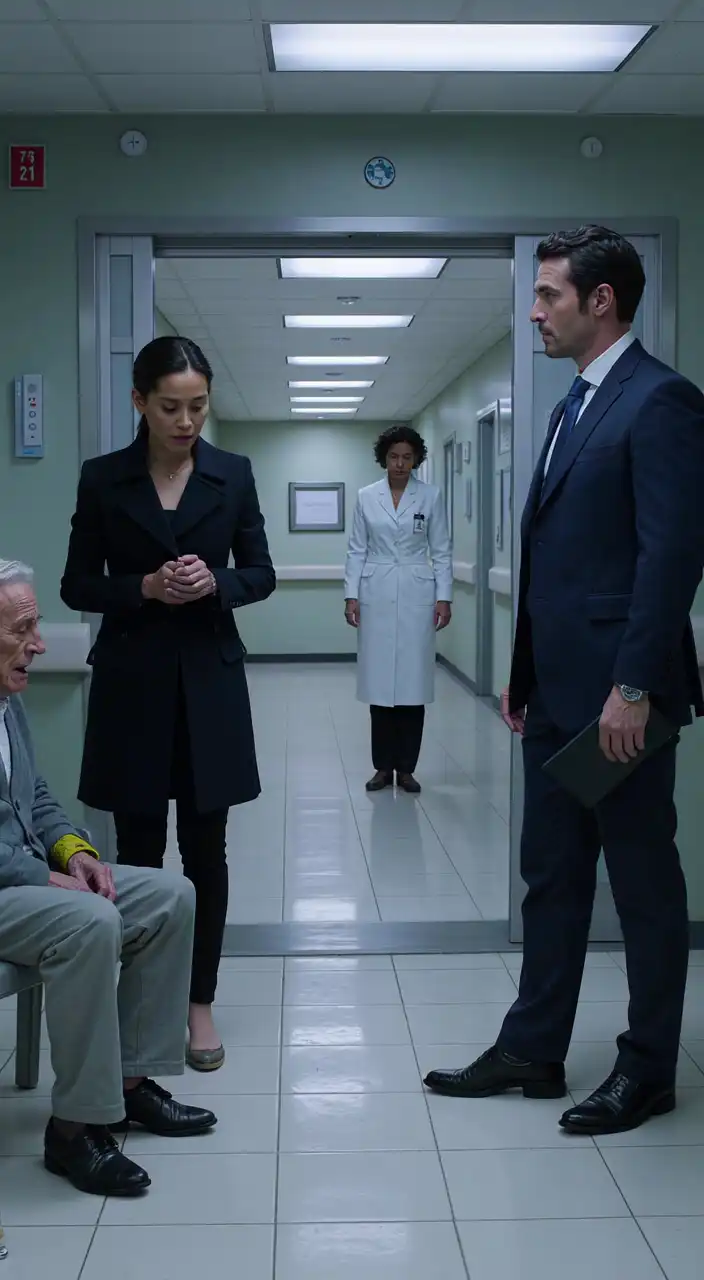
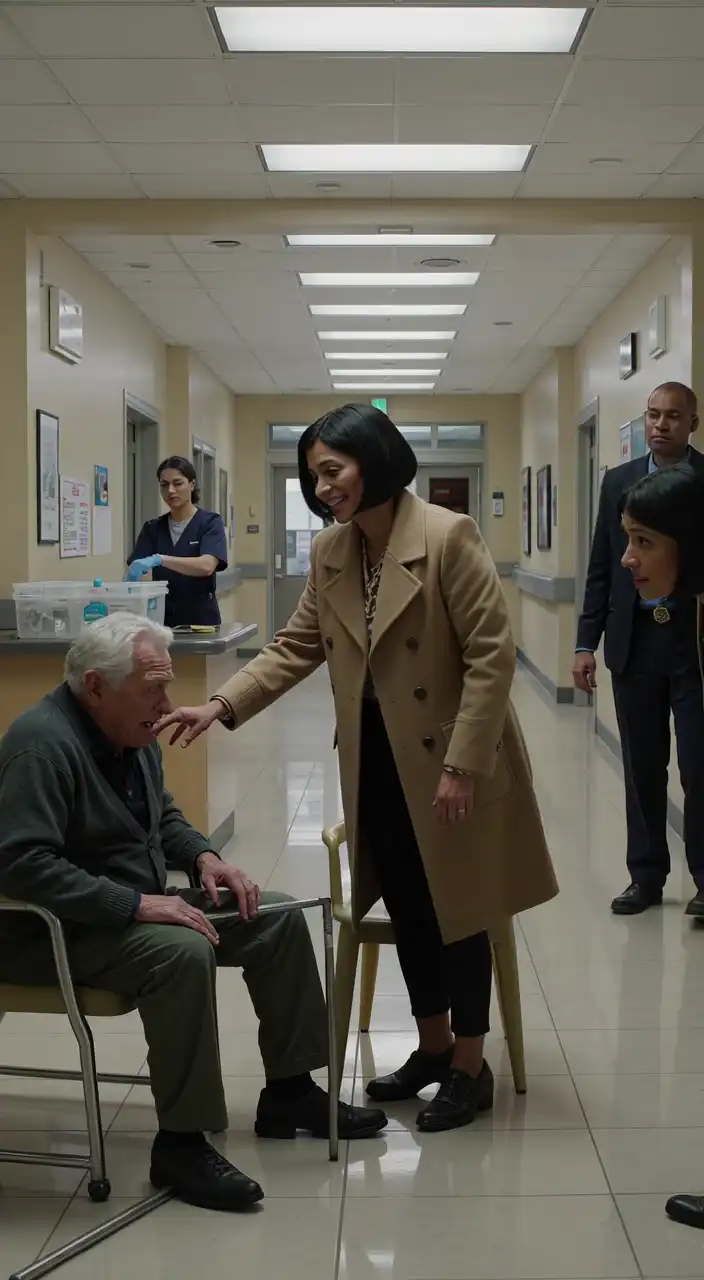
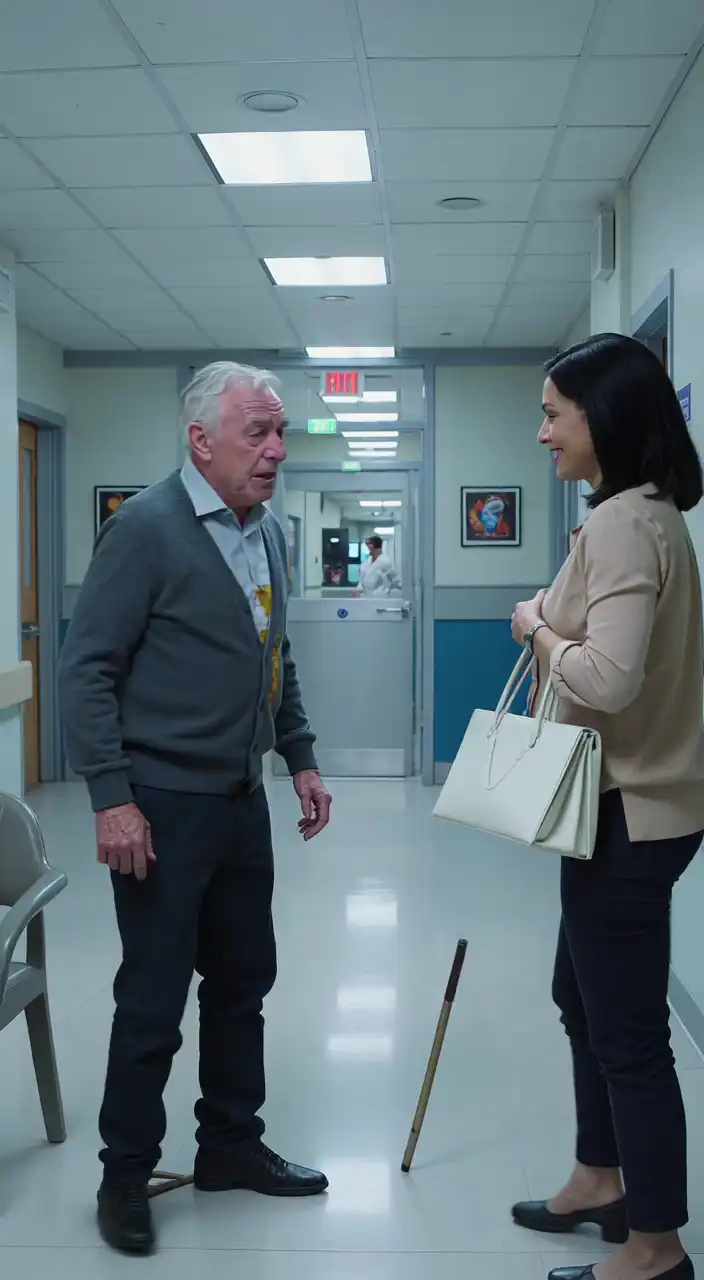
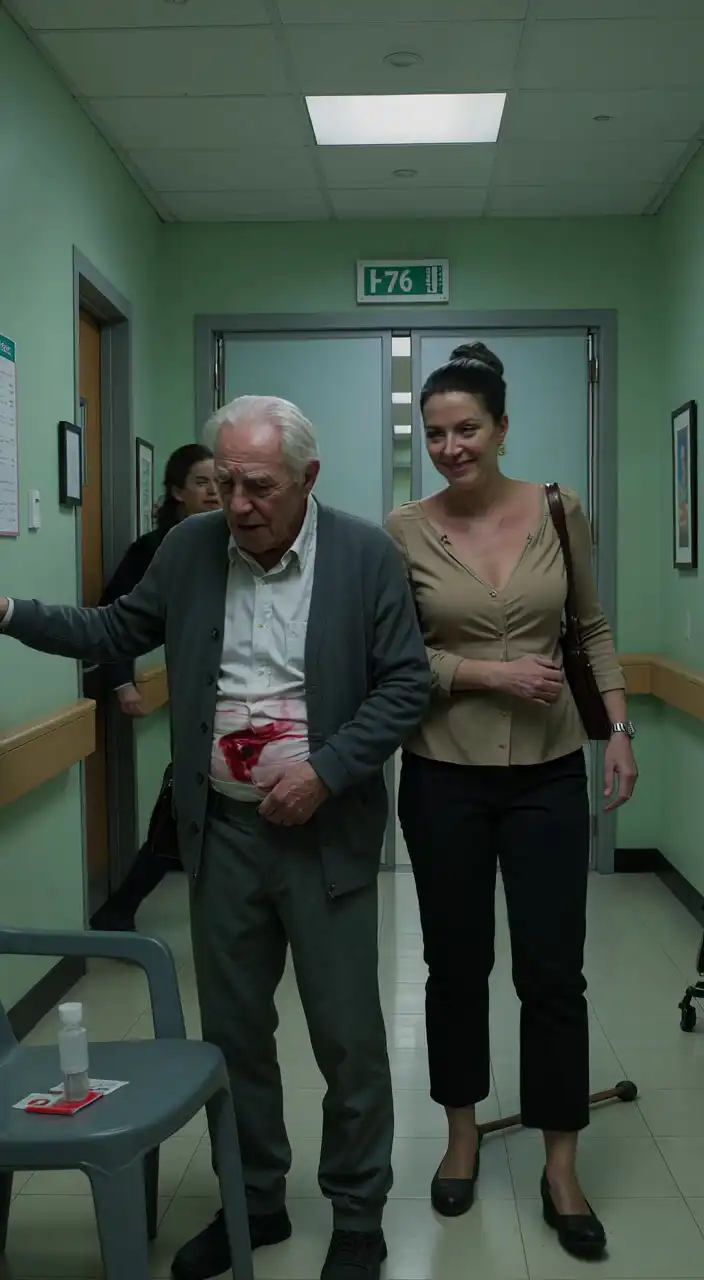
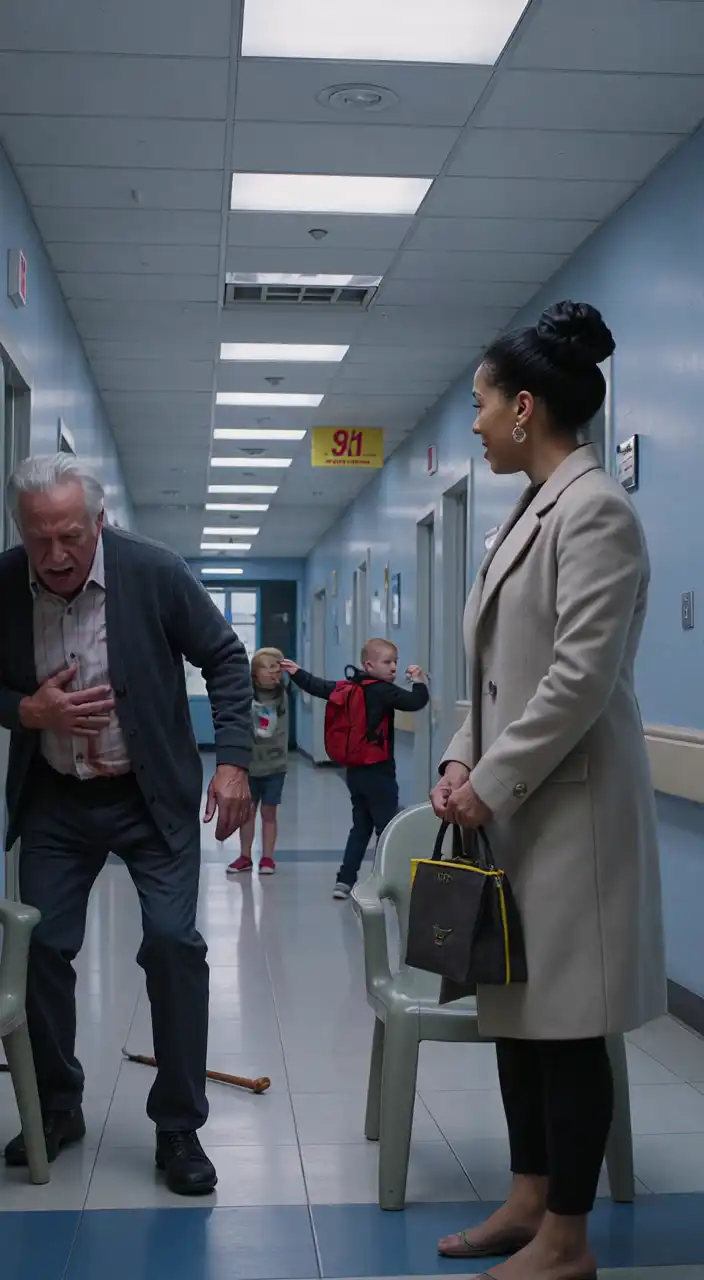
MY FATHER STARTED SHAKING OUTSIDE TRIAGE WHILE A CLINIC ADMINISTRATOR BLOCKED THE DOOR AND SAID HE NEEDED FAMILY PERMISSION FIRST.
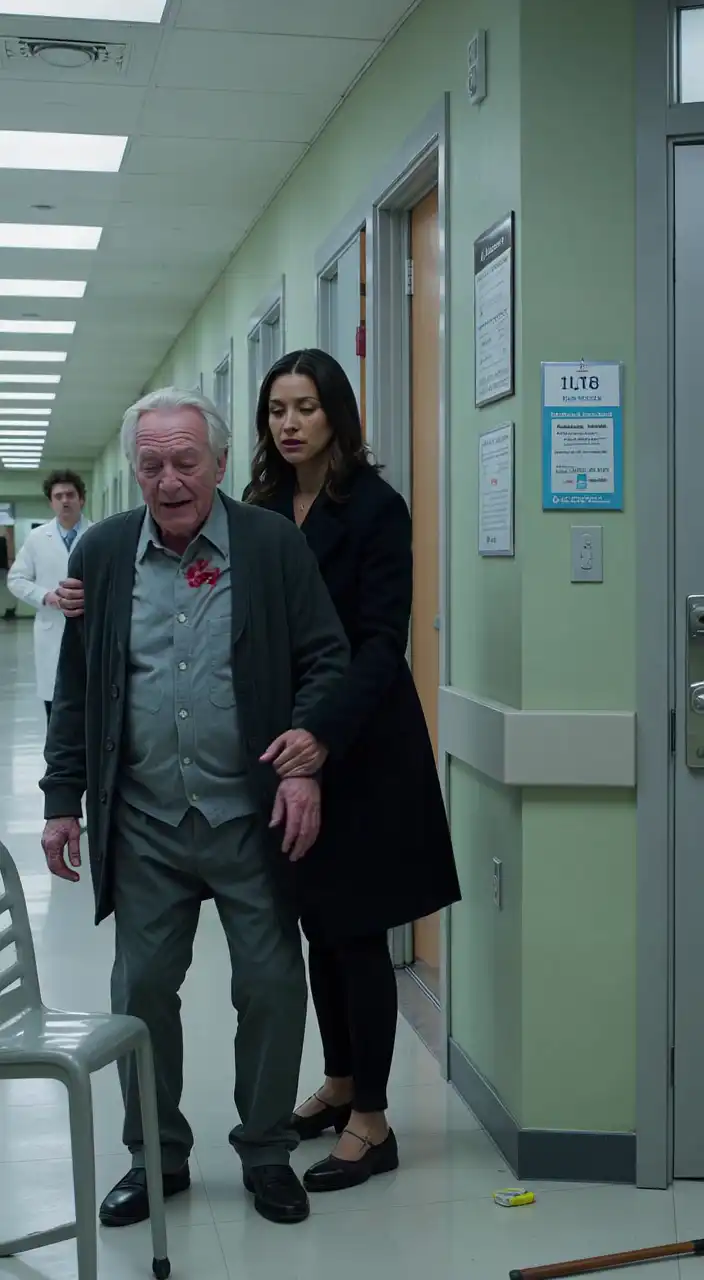
MY FATHER STARTED SHIVERING SO HARD HIS SURGICAL BANDAGE BLED THROUGH, AND THE CLINIC ADMINISTRATOR STILL BLOCKED THE TRIAGE DOOR.
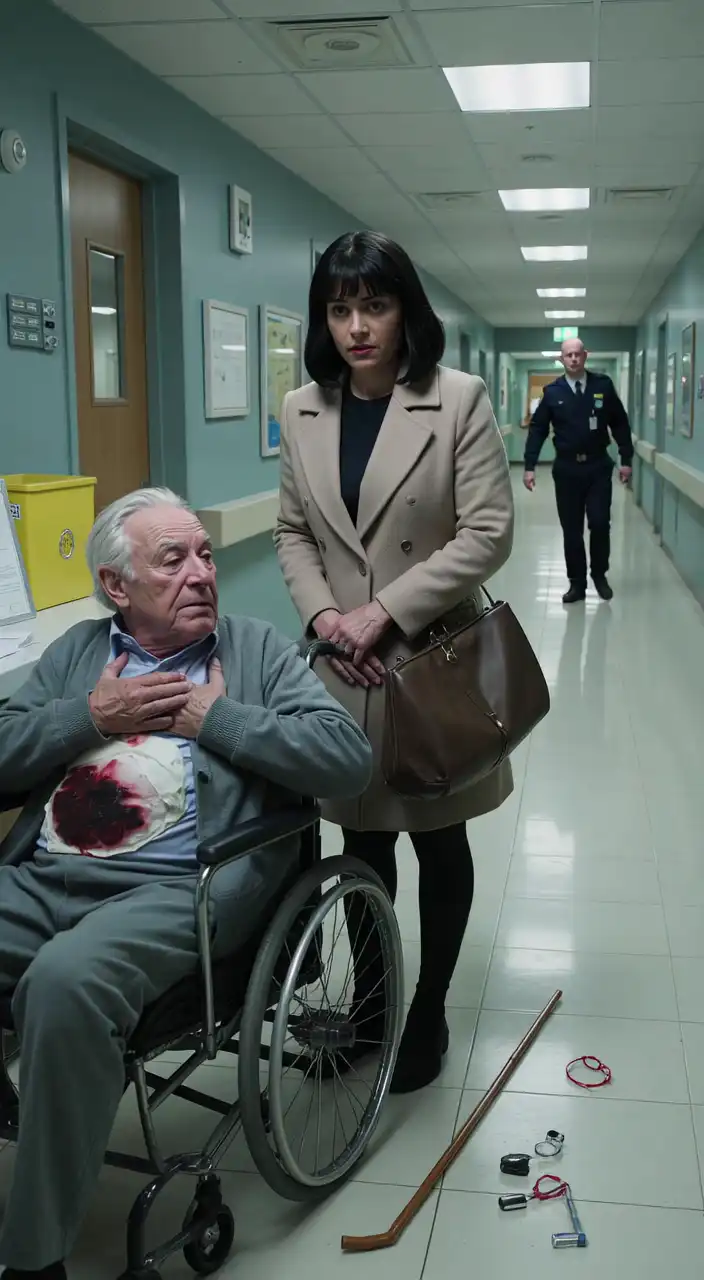
MY FATHER STARTED SHAKING IN THE HOSPITAL HALLWAY, AND THE WOMAN WHO CLAIMED TO BE HELPING HIM WOULD NOT LET TRIAGE TOUCH HIM.