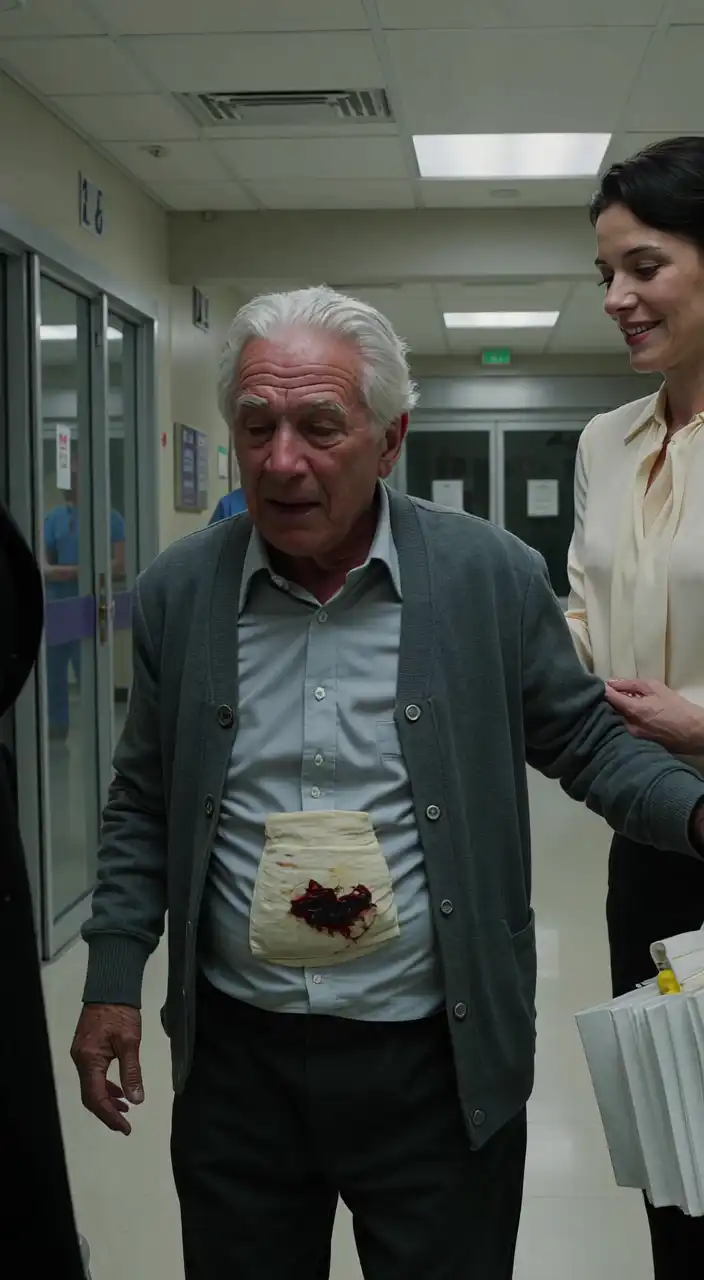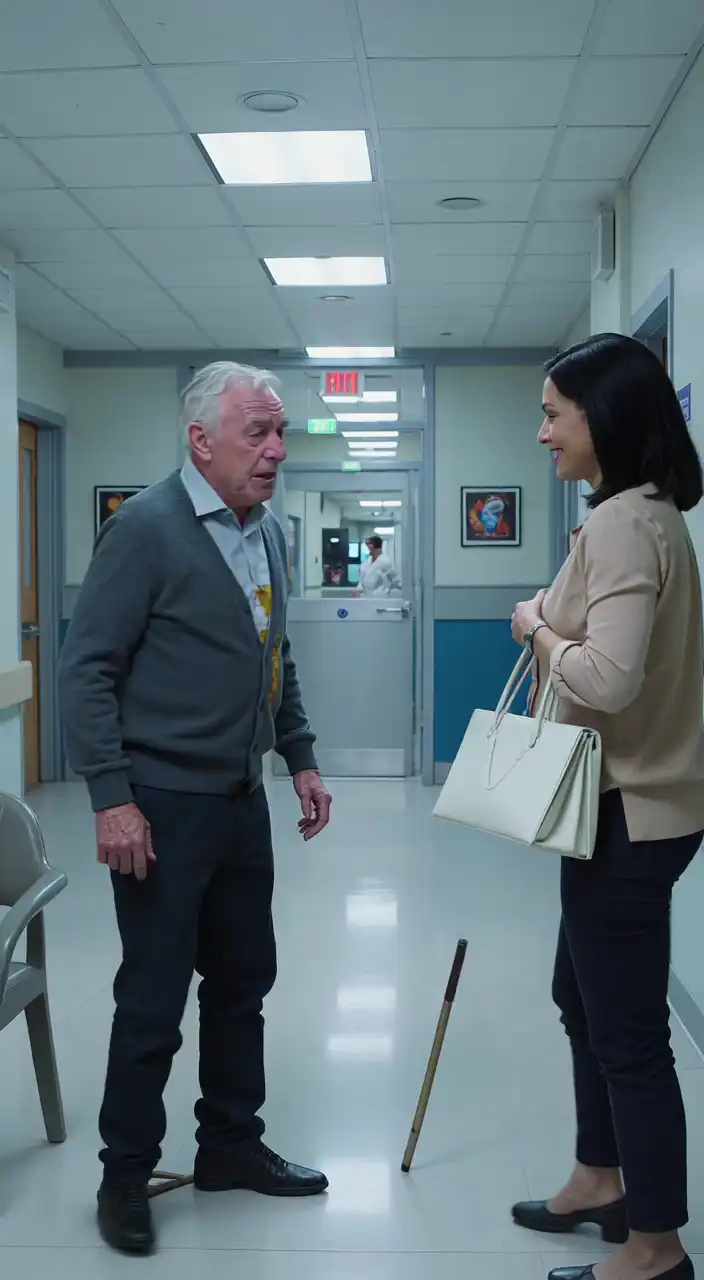
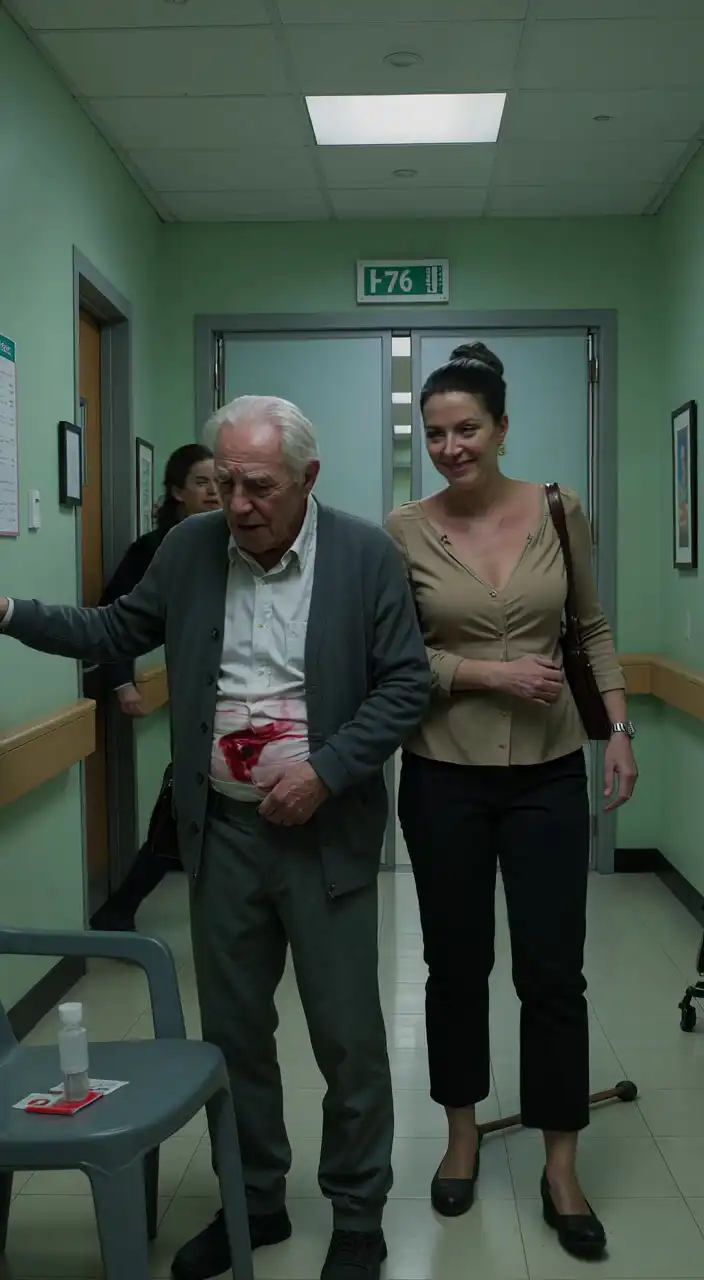
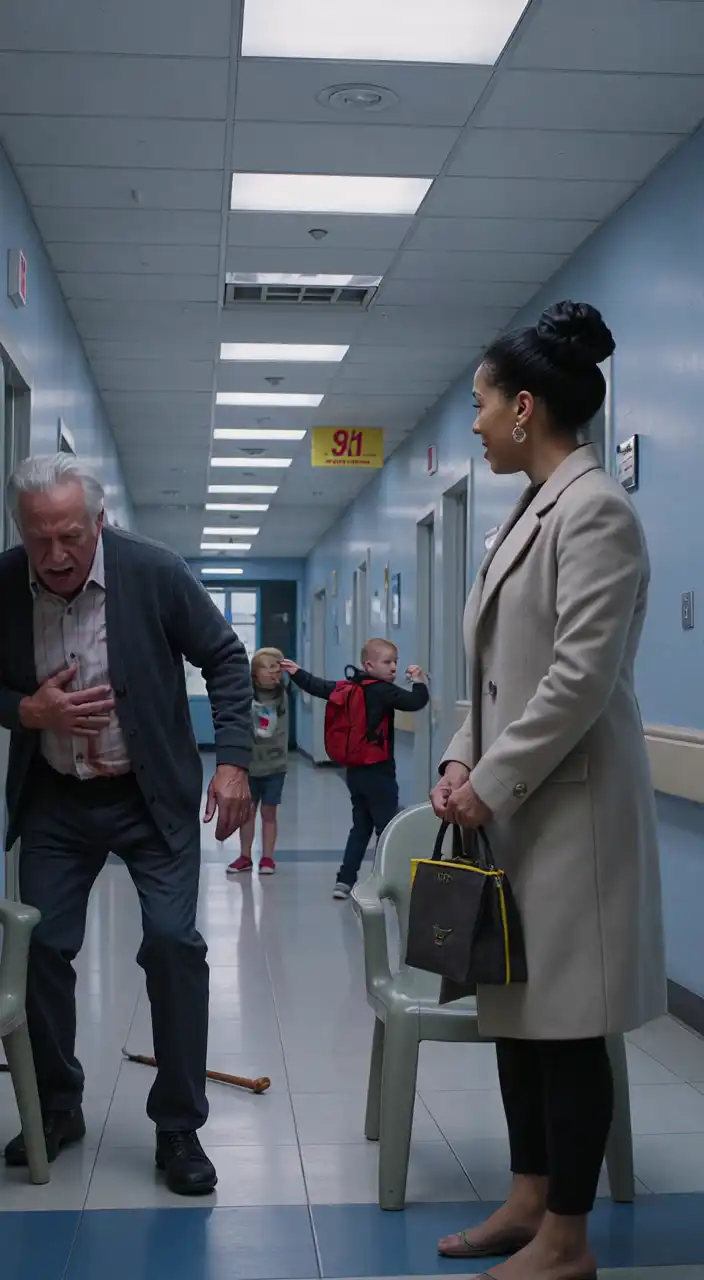

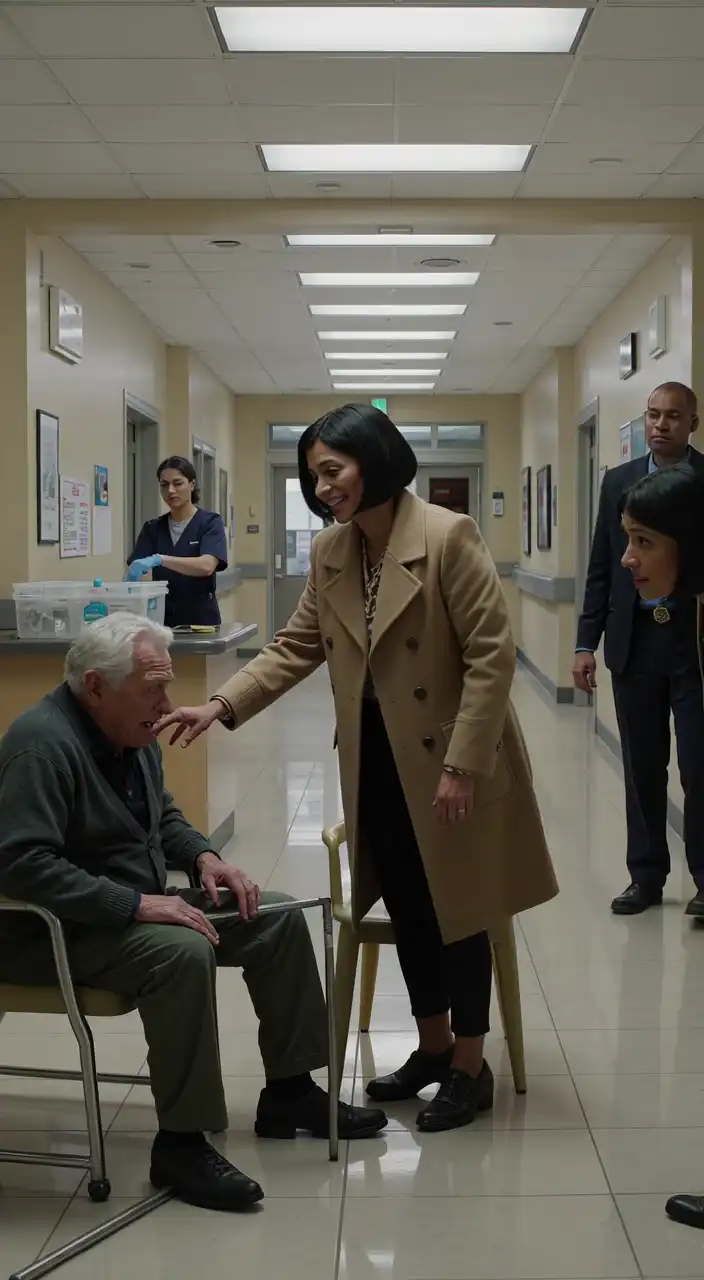
Andrea laughed first.
It was the wrong sound for that hallway, too light and too practiced, and it cracked in the middle when nobody joined her. The triage nurse had already clipped the pulse ox on my father's finger. The amber light kept blinking, then steadied, then flashed faster. My father slumped hard enough that his shoulder hit the wall. The security supervisor, the one with the silver at his temples and an earpiece tucked behind one ear, moved one half-step closer.
"I am his caregiver," Andrea said. "He gets confused after anesthesia. He does this."
My father swallowed. "No," he said, but the word scraped out thin and dry.
The nurse looked up from the monitor. "Sir, can you tell me your name?"
"Ethan Cole."
"Mr. Cole, can you tell me where your pain is?"
He pressed a shaking hand over the lower right side of his abdomen. His bandage had a dark wet bloom at the edge, not bright blood but something murky under the tape. His skin looked waxy. His jaw was fluttering with chills.
Andrea leaned forward like she was helping. "He had routine surgery. They said some drainage and fever can happen. We were told to go home and push fluids."
My father shut his eyes as if even listening cost him strength. I knew that look. He did it when he was trying not to contradict someone in public. He had spent his whole life smoothing things over, thanking bad mechanics, apologizing to telemarketers, telling me to let it go when somebody cheated him because "peace is worth something too." But his fingers were clutching at his cardigan now, and he was trying to pull it open away from that soaked dressing.
The security supervisor crouched enough to meet my father's eye line. His badge said Elijah Moran. His voice stayed even. "Mr. Cole, do you want medical evaluation right now?"
My father opened his eyes and looked at me before he answered, as if asking permission for the trouble. "Yes," he whispered.
Andrea's smile disappeared. "He doesn't understand billing. He panics when anyone says 'admit.'"
The nurse touched the side of my father's neck, then his forehead. "He's burning up."
A second nurse was already pushing through the triage door with a wheelchair. Things began to move with the swift, ordinary competence that comes when a hospital stops debating whether you're a problem and starts treating you like a patient. Andrea reached for the wheelchair handle before they could lower it. Elijah's hand came up between hers and the chair.
"Ma'am. Step back."
"You don't get to keep family away from him."
"I'm not keeping family away from him," Elijah said. "I'm preventing interference with an unstable patient."
That word, interference, landed harder than shouting would have. Andrea's eyes flicked to the floor, to the yellow cap by the baseboard. She bent fast, maybe to pick it up, maybe to kick it farther under the chair. Elijah saw it too. He shifted his shoe over it before she could touch it.
"Please leave that where it is."
"It's trash."
The nurse ignored both of them. "Mr. Cole, on three. One, two-"
When they lifted him into the chair he cried out, not loudly, but with a stunned little gasp that made my stomach drop. My father almost never made noise when he hurt. He gripped my wrist so hard I felt his nails through my sleeve.
"Don't let her sign," he said.
Andrea straightened so quickly her handbag swung off her shoulder. "He's delirious."
The nurse paused. "Sign what?"
But my father had sagged back against the chair. The monitor tone changed, a little more urgent now. More staff looked over from the desk.
I stepped in close. "Dad, what papers?"
His eyes moved under half-lowered lids. "Home papers. She said I was too tired. She took them."
Andrea's face went flat. "This is exactly why I handle his appointments. His daughter lives forty minutes away and thinks she can blow in and accuse people because she feels guilty."
That one hit where she intended. I had been late. Not by choice, but late all the same. I got off work to three missed calls from my father, then one from an unknown number that turned out to be the volunteer desk, saying an older gentleman in the front hall had asked them to call "Maya, his daughter" because the person with him wasn't letting him use his phone. By the time I drove there, Andrea had him halfway to the exit instead of back to triage. Guilt flared so hot I could barely think.
Elijah looked at me. "Are you next of kin?"
"I'm his daughter."
"Do you know if there is a healthcare proxy in place?"
"No. He handles his own decisions. He still drives. He did before the surgery, anyway."
"He is alert enough to request evaluation," Elijah said. "That is enough for this moment."
He turned to the nurses. "Take him."
Andrea moved again, not at the wheelchair this time but at my father himself, gripping his forearm. "Ethan, tell them you don't want all this fuss."
My father flinched. It was small, but everyone saw it.
Elijah's voice hardened. "Ma'am, remove your hand now."
She let go. "Fine. Fine. But I am not staying here to be accused because somebody's child has unresolved issues."
She reached for her handbag and took one step back. Another alarm sounded from somewhere behind the triage doors, then one of the nurses called, "Need a room now." The wheelchair rolled. I started after them.
Elijah stopped me with a raised palm, not blocking, just directing. "You can go with him. But first answer one thing. Did he come in with discharge paperwork, medication list, or post-op instructions?"
"Yes," I said. "At least he should have. He always keeps every paper in a manila envelope."
My father's eyes opened a little. "Blue folder," he murmured.
Andrea said too quickly, "He lost it."
Elijah's gaze flicked to her handbag. It was large, structured, cream-colored, spotless except for a faint mustard smear near the zipper seam. The same yellow as the stain on Dad's cuff.
I saw him see it.
"So," he said, "before anybody leaves, we're going to sort out where those instructions went."
Andrea clutched the bag to her side. "You cannot search me without cause."
"No one's searching you," Elijah said. "I'm instructing staff to delay departure from the immediate area while a vulnerable adult complaint is assessed."
She gave a short incredulous breath. "A what?"
The phrase changed the air around us. The front desk clerk looked up. A transporter slowed. The triage nurse pushing my father through the doors turned her head just enough to catch it. My father tried to lift his head but couldn't.
Andrea saw she was losing the audience she had been managing. She shifted tactics at once. Her eyes filled, almost on command. "I took three days off to care for him. I slept in a chair. He refuses medicine, then everyone blames the woman doing the work."
If she had only lied, maybe it would have been simpler. But that part was true enough to sound real. She had driven him. She had slept at the hospital. She had fetched blankets and answered nurses and posted smiling updates for church friends. She had become necessary in a way I never fully understood until that second, when I realized half the staff probably already knew her as the attentive caregiver.
And my father, because he was my father, looked pained by her tears.
"Dad," I said, leaning to him. "Did you want to leave?"
His lips barely moved. "No."
That should have been enough. It should have snapped everything cleanly into place. Instead, Andrea bent close and said in a low urgent tone meant only for him, "If they readmit you, they will blame your incision care. Do you want that? Do you want Maya hearing all of it?"
My father went still.
I felt a cold line run down my back. She wasn't afraid of a bill. She was afraid of information.
The nurses wheeled him through the triage doors. I followed so close the chair clipped my shin. Behind me, Elijah said, "Ma'am, stay where you are."
When I looked back once, Andrea had one hand inside her handbag, fingers moving fast around something hidden, and Elijah was already reaching for his radio.
The room they pushed my father into was small, curtained, and too bright. The smell of antiseptic hit me first, then the beeping from the bedside monitor. A nurse cut away the edge of his bandage while another got his blood pressure. His temperature was high enough to make both of them exchange a look they tried to hide from me.
"Mr. Cole," one said, "what surgery did you have and when?"
"Colon resection," he said, then grimaced. "Four days."
"Any allergies?"
He told them. He knew the answers. He was not delirious. He was sick.
They exposed the dressing enough for me to see the stain had spread beyond the tape. There was a sour medicinal smell under the sharper smell of disinfectant. One nurse frowned at the sleeve of his cardigan. "What got on this?"
My father turned his head weakly toward me. "Bitter," he said.
"What was bitter?"
He swallowed. "Drink."
Before I could ask anything else, Andrea's voice rose outside the curtain. Not loud enough to be called shouting, but sharp enough to cut through the unit. "You are illegally detaining me over a sick old man's confusion."
Elijah answered, calm and close. "No one is detaining you. We are documenting a welfare concern connected to a medical event."
Then another voice, female and brisk: "What's the concern?"
A nurse at the foot of the bed muttered, "Charge nurse."
The curtain shifted. Elijah did not come in, but I saw his clipboard and the edge of his dark blazer. "Caregiver attempted to remove patient from triage against patient request. Contradictory statements regarding discharge instructions and medication administration. Visible unknown yellow residue on patient sleeve and bag. Possible concealment of paperwork."
The charge nurse's expression changed from annoyance to attention in one beat. "Has he been seen by a physician yet?"
"He's being roomed now."
My father reached for my hand again. His skin was burning and clammy at once. "Blue folder," he said. "In her bag. And my phone."
"She has your phone?"
He blinked once.
The nurse at the computer looked up. "If he says his belongings are being withheld, that needs to go in the note."
I heard keys tapping at once.
Then my father did something he hadn't done in years. He squeezed my fingers and said, with awful effort, "Maya, I'm sorry. I thought she was helping."
I bent close enough that my forehead almost touched his. "You can be sorry later. Right now you just stay here."
Outside the curtain, Andrea said, "Ask him who skipped half his appointments before I came around."
A doctor's voice answered from the doorway before I even saw him. "I will ask him myself."
He stepped in, middle-aged, quick-eyed, already pulling on gloves. His gaze moved over the monitor, the fever reading, the dressing, the tremor in my father's hands. Then it caught on the yellow stain at the cuff.
He paused.
"What medicine was spilled on him?" the doctor asked.
My father looked confused. "She said it was tea."
The doctor's head turned toward the curtain, where Andrea's shadow had frozen on the other side.
"Do not let anyone leave," he said, and reached for the stained sleeve like he had just found the first real answer.
The doctor lifted the edge of my father's cuff carefully, not touching the wettest part with his bare glove. Up close the stain was not just yellow. It had a tacky shine, and at the seam of the cardigan there was dried residue where something had run down and pooled before soaking in. He brought it near his face, not to smell deeply, just enough to register it.
"Not tea," he said.
He looked at the nurse by the computer. "Document unknown yellow residue on clothing. We need the contaminated garment bagged. Get me his med list from the surgery discharge. If no discharge paperwork is available, call the surgical floor, call the pharmacy, call whoever discharged him. Now."
"We don't have his papers," I said. "She took them."
The charge nurse came fully through the curtain. "Who took them?"
"My caregiver," my father whispered, then corrected himself with effort. "Not caregiver. Friend from church. Andrea."
The doctor nodded once, fast. "Mr. Cole, did she give you any medication after discharge?"
My father shut his eyes as if trying to line up the hours. "Cup. Orange juice maybe. Bitter. Said surgeon wanted me sleepy so I wouldn't pull at dressing."
Every person in that room sharpened.
The nurse at the IV cart said, "Do we know what he was actually prescribed?"
"No," the doctor said. "And until we know, we assume possible inappropriate dosing, possible contamination, and definite post-op complication. CBC, CMP, lactate, blood cultures, coags, type and screen, urinalysis, blood gas if needed. Start fluids. Broad-spectrum antibiotics after cultures. Get surgery on the phone and ask for immediate eval. He may be septic, and I do not like that incision."
My father looked at me, embarrassed by the sudden intensity gathering around him. "I didn't want trouble."
"You have trouble," I said, my throat tight. "That's why we're here."
Outside the curtain Andrea's voice rose again. "This is absurd. I am calling his insurance case manager."
Elijah answered, closer now, his tone lower. "You may make a call after you return property belonging to the patient."
There was a pause. Then Andrea said, "I don't have anything of his."
My father opened his eyes. "Phone. In side pocket."
The charge nurse heard that too. She stepped back out into the hallway. I could not see her face, but I could hear the flatness in her voice. "Ma'am, if you are in possession of this patient's phone, discharge papers, or medication bottles, you need to surrender them immediately."
My father's monitor began to chirp faster. The amber warning became a more insistent pattern. The nurse adjusting the pulse ox frowned. "Sir, stay with me. Take a deep breath."
He tried. The effort became a cough that hit his whole abdomen. He cried out and folded around it as much as the bed rails allowed.
The doctor peeled back more of the bandage.
I will never forget the expression that crossed his face. It was not panic. It was the grim recognition of someone whose suspicion has just become certainty. Beneath the dressing, at the lower edge of the incision, the skin was angry red and swollen. There was drainage I knew should not be there, thick and darkly yellow-brown.
"Okay," he said, too calm. "We are not waiting. Page surgery stat. And I want another set of vitals now."
The nurse at the computer was already speaking into the phone. "Post-op patient, four days from colon resection, febrile, hypotensive, possible wound infection, possible inappropriate ingestion, physician requesting stat surgery callback."
My father's hand found mine again, then lost it as his arm started shaking harder. At first I thought it was chills. Then I saw the tremor was wrong, irregular, too forceful through his wrist and fingers.
The doctor saw it too. "Mr. Cole, can you keep your eyes on me? What exactly did she give you? Pill, liquid, powder?"
My father licked his dry lips. "Plastic cup. Said antibiotics. Not from bottle. Poured from thermos."
A clue. A worse one than the stain.
The doctor looked at me. "Did he have anyone else helping him at home?"
"Mostly her for the last two months," I said. "Since the surgery was scheduled. She started organizing meals, rides, medications. She made herself necessary."
"How long have you known her?"
"About a year. Through his church. She volunteered with older members."
The doctor gave a short look toward the curtain. He did not need me to explain what I was only just starting to understand.
Outside, the tension snapped.
"You are not touching my bag," Andrea said sharply.
Then Elijah, no longer just calm: "Ma'am, put the bag on the chair. Right now."
A scuffle of shoes on tile. The curtain shivered from the movement in the hall. The charge nurse stepped in halfway and said, "Security needs another person up front."
Elijah's voice came over his radio a second later. "Need supervisor assist to triage bay three. Possible property concealment, possible vulnerable adult exploitation."
My father's eyes fluttered. "She's taking checks," he murmured.
I stared at him. "What checks?"
He swallowed. "Mail. Said she'd sort it."
The emotional floor dropped out from under me. This had not begun tonight. It had only reached its visible edge tonight.
The doctor heard it too, but he did not chase it. He stayed with the body failing in front of him. "Sir, look at me. Did you eat? Have you kept fluids down? Have you vomited?"
"Little soup," my father whispered. "Throwing up. She said normal."
The nurse got the IV into his arm on the first try. Fluid started running. Another clipped leads to his chest while the first nurse repeated the blood pressure manually and frowned deeper.
"Eighty-eight systolic," she said.
The doctor swore under his breath. "He is circling. Move."
Things accelerated in a way that made seconds feel narrow and sharp. Blood tubes filled. Someone slid oxygen under his nose. Someone else brought a second machine. The curtain was pushed wider and a resident came in, followed almost immediately by a surgeon in scrubs with a badge still swinging from being clipped on in a hurry.
"I'm Dr. Kwan, surgery," the woman said. "What do we have?"
The ER doctor gave a crisp handoff. "Colon resection four days ago, discharged this morning according to caregiver, now febrile, hypotensive, tremulous, altered but responsive, wound concerning for infection or leak, unknown yellow liquid on sleeve, patient reports bitter drink from caregiver, discharge paperwork missing, possible vulnerable adult abuse and financial exploitation."
Dr. Kwan's eyes flashed once at the abuse part, then settled on the incision. She did not waste a word. She examined him quickly and efficiently, pressing around the abdomen while he winced and gasped.
"Peritonitic?" the resident asked.
"Some guarding. Hard to know because he's trying not to move. We need imaging if he can tolerate it, but if he tanks further we may not wait." She looked at my father. "Mr. Cole, did you have worsening pain before you left the hospital?"
A long pause.
"Yes," he said.
"Did you tell anyone?"
Another pause, and shame flooded his face before he spoke. "Andrea said if I complained they'd keep me. She said hospitals infect people more than homes do."
Dr. Kwan stood up. "All right. We are done letting him minimize this."
That sentence was not cruel. It was almost merciful.
Outside the room came a hard sound, handbag hardware striking tile. Then a chorus of voices at once.
"Stop."
"Ma'am."
"Do not remove items from the bag."
A plastic crackle followed. Then the charge nurse: "I've got bottles. Multiple unlabeled travel bottles and one prescription vial with a torn label."
My whole skin went cold.
Elijah said, "Document exactly where found."
Andrea answered with furious control breaking apart at the edges. "Those are supplements. He asked me to carry them because his hands shake."
The charge nurse did not respond to her. She responded to the room. "Doctor, security and I have possible meds recovered from caregiver bag."
The ER doctor stepped to the curtain. "Do not open anything else. Bring pharmacy and chain of custody."
For one second Andrea appeared in the gap, held at a distance by Elijah's presence rather than by force. Her hair was still perfect. Her smile was gone. What replaced it was something colder than panic, pure calculation under pressure. She looked directly at me.
"You think you know your father?" she said. "Ask him who called me crying because you were too busy."
It landed. She knew exactly where to cut.
Before I could answer, my father made a sound I had never heard from him, not pain exactly, not fear exactly, but refusal. "Enough," he said, and though it was weak, everyone heard it.
Andrea's face changed.
Because until then, even sick, even cornered, he had still been the man who let people speak over him to avoid conflict. That one word was him stepping out from under her.
Elijah turned slightly, placing himself between her and the curtain. "You need to stop talking to the patient."
She laughed again, but this time there was no performance left in it. "You have no idea what he'd be like without me."
My father opened his eyes wider than he had since entering the room. "I'd have my phone," he said.
The silence after that was brief but total.
Then a hospital pharmacist hurried up, followed by a second security officer and a woman in a gray blazer carrying a tablet who introduced herself from the doorway as social work. Evidence was no longer just a feeling. It had started to move into official hands.
The pharmacist accepted the bottles on a clean pad held by the charge nurse. "One prescription vial, partial label. One travel bottle with yellow residue around the rim. One blister pack. No patient name visible on the travel bottle." He peered at the torn label. "This may be tramadol or trazodone. Need better light."
The social worker stepped to me first, speaking low and direct. "I'm Celia. I need to know whether your father has current decision-making capacity and whether he has designated anyone to make medical decisions for him."
"He makes his own decisions," I said. "No proxy that I know of."
My father moved his head a little. "No proxy."
"Do you want Andrea making medical decisions for you?" Celia asked him.
His answer was immediate. "No."
She entered it into the tablet without breaking eye contact. "Do you consent to us limiting information release to her until this is reviewed?"
"Yes."
That should have made me feel relieved. Instead I felt a terrible mix of relief and grief, because hearing him say it out loud meant hearing how much he had already been pushed.
Another nurse came with a portable scanner to get his ID bracelet on. "Need his date of birth."
He gave it.
The pharmacist looked up from the bottles. "The travel bottle residue is sticky. Could be syrup, liquid med, crushed med in liquid, or a supplement slurry. We need tox guidance if ingestion is suspected."
The doctor nodded. "Call poison control. Tell them post-op elderly male, fever, tremor, hypotension, unknown bitter yellow liquid given by non-family caregiver, possible oversedation earlier but now septic picture too. We need interaction concerns and whether any common meds could produce staining like this."
Poison control. Hearing that phrase inside a hospital room is different from hearing it in abstract. It made what was happening undeniable.
Dr. Kwan was already writing orders. "CT abdomen and pelvis with contrast if pressure tolerates transport. If not, we prepare OR. He may have an anastomotic leak or deep wound infection. Blood pressure?"
"Still soft. Ninety over fifty after fluid start."
"Hang another liter."
A lab tech stepped in to draw more blood and glanced at the hall. "Police have been requested?"
Elijah answered from outside, "Not yet. Waiting for physician and social work report, but it's leaning that direction."
Andrea snapped, "Leaning? On what? A stain and some old-man confusion?"
My father gathered himself with visible effort. "She hid the papers. She said I signed already. I didn't."
Another clue. Another door opening.
Celia looked up sharply. "You did not sign your discharge?"
"I don't remember signing. She took clipboard. Said she'd help."
Dr. Kwan stopped writing. "If someone signed discharge instructions or transport forms on his behalf without authorization, records needs to lock that chart segment."
The charge nurse was already moving. "I'll call registration and med records."
Conflict hit again from the hallway. Andrea had apparently realized the center of gravity was shifting away from charm and toward documentation. "I am leaving," she said.
Elijah's response was immediate. "Not with patient property and not before your identity is confirmed."
"You said I wasn't detained."
"You are not free to remove disputed property tied to a welfare complaint."
"That is detention."
"Then stay and cooperate while administration and, if needed, law enforcement clarify it."
I heard a heel scrape, then the second security officer saying, "Ma'am, don't."
The curtain opened wider and the gray-blazer social worker stepped partly out. "Elijah, if she attempts to leave with evidence or patient property after being instructed not to, call police now."
Andrea's voice broke at last into real anger. "Evidence of what? Caring too much? Taking care of a man his own daughter abandoned?"
I wanted to lunge through the curtain and answer, but my father tightened his fingers weakly around mine. It took me a second to understand. He was not holding me because he needed me not to leave. He was holding me because he needed me not to explode.
So I stayed.
The poison control callback came faster than I expected, on speaker for the physician and pharmacist. A calm voice asked targeted questions. What color exactly? Did the patient have pinpoint pupils? Excess sleepiness? Any diarrhea? Any medication list from surgery? Any access to liquid antibiotics, iron supplements, codeine syrup, crushed sedatives? The doctor answered what he could. The pharmacist added likely categories. Poison control said the residue alone could not identify the agent, but the combination of tremor, weakness, altered behavior, and unknown administration justified preserving clothing, obtaining tox screens where useful, and assuming mixed exposure until proven otherwise.
Then poison control asked, "Any concern this was given to suppress pain reporting or facilitate transport?"
The room got quiet.
"Yes," Dr. Kwan said.
While they discussed labs, the charge nurse returned with another development. "Records says there is a discharge acknowledgment scanned under his chart at 2:14 p.m. Signature does not visually match prior consents. Registration flagged a support person signing line but no legal proxy listed."
Celia looked at me. "Did your father usually sign his own forms?"
"Always."
My father whispered, "She said my hand was shaking. Took pen."
The social worker's jaw set. "All right."
That was the reversal I had not expected. Up to that moment, the story in the hall could still have been spun as a misunderstanding by an overbearing helper. A falsified signature transformed it into something else. Something that would survive beyond tonight.
A transporter arrived for CT just as my father's blood pressure dipped again. The nurse looked at the monitor and said, "I don't love moving him."
Dr. Kwan made the call in one breath. "We try. If he destabilizes in scanner, abort and come back. I want to know if we're looking at a leak before I open him, but not at the cost of losing him in a hallway."
That hallway line hit me because we had almost lost him in one already.
They switched him from the triage bed to a more mobile stretcher. When they rolled him, he let out a low moan and clutched his abdomen. The stained cardigan was cut free and bagged in clear evidence plastic by a nurse under pharmacy guidance. The bottle cap from the wall had also been retrieved and placed into a separate small bag with time and location written on it. I watched every movement because it felt like if I looked away, something would be missed and everything would slide backward into Andrea's version of events.
As they started toward radiology, the curtain opened fully and I saw the scene in the hallway.
Andrea stood beside a plastic chair with her bag on it, now unzipped and partially emptied under observation. Elijah was at an angle that blocked the exit. The second security officer stood near the wall. The charge nurse held a clipboard. Celia had her tablet up. And Andrea, who had run this corridor less than twenty minutes earlier with smiles and smooth explanations, looked boxed in by fluorescent light and facts.
On the chair were my father's blue folder, creased but unmistakable. His phone. A checkbook register. Two envelopes already opened. The sight of those ordinary private things sitting exposed like confiscated contraband made my stomach turn.
My father saw them too as the stretcher passed. His face tightened, not in surprise but in hurt. Quiet humiliation, the kind that had no sound.
Andrea followed his gaze and did something almost clever enough to work. She softened. Her shoulders dropped. Her eyes shone with hurt rather than anger.
"Ethan," she said gently, "I was protecting you. You know that."
It was maybe the most dangerous tone she had used all night, because it sounded like the voice he must have heard at home when no one else was there.
He stared at the ceiling for a second. Then, very slowly, he turned his head away from her.
That was all. But it landed harder than accusation.
We moved toward CT. Elijah called after us, "We'll be right here."
As if hearing him gave permission for the next thing to happen, Andrea twisted suddenly, snatched one of the opened envelopes from the chair, and bolted toward the side corridor.
Everything surged at once.
"Stop her," Celia shouted.
The second security officer lunged and missed the envelope but caught the strap of her bag. Papers flew. Elijah moved with startling speed for a man his age, cutting off the corridor angle before she got three strides. Andrea tried to shove past him. The envelope tore in her hand. Something white and stiff scattered across the tile.
Checks.
My father's checks.
Patients and visitors turned. A volunteer gasped. Someone at the desk said, "Code gray triage."
Andrea froze only when two more staff members appeared from the side station and Elijah said, in a voice that carried down the whole hall, "Do not move. Police are being called now."
The exposure was complete. There is no graceful explanation for a fistful of another person's checks on a hospital floor.
But there was no time to savor that, because my father's monitor alarm sharpened into something uglier as we reached the CT doors.
The nurse looked at the screen. "Pressure's dropping again. He's more tachy now."
My father was suddenly less responsive. "Dad?" I said. "Dad, stay with me."
His eyelids barely lifted. His skin had gone ashy under the fever flush.
Dr. Kwan made the decision instantly. "No scanner. Back. We are not doing this here. He goes to resus and we prep for OR."
Reversal again. No answer from imaging. Only more danger.
We turned the stretcher hard and ran it back, wheels rattling over seams in the tile. Staff parted for us. Behind us I could hear the continued chaos around Andrea, radio traffic, the beginning of another authority layer arriving. In front of me was only my father and the beeping that seemed both too fast and not fast enough.
Back in the room, more people appeared. A rapid response nurse. Another resident. An anesthesiologist called down early. Blood pressure cuff cycling over and over. The ER doctor spoke in clipped commands. Dr. Kwan scrubbed cleaner over my father's abdomen with one hand while signing consent discussion notes with the other.
"Mr. Cole," she said clearly, bending close. "You likely have a serious infection from your surgery, and possibly a leak inside the abdomen. You are getting sicker. I recommend emergency surgery. Do you understand?"
He looked at her with effort. "Fix it."
"I will try. Do you consent?"
"Yes."
She looked at me. "Witnessed."
"Yes," I said, because my voice had to work even if everything else in me was shaking.
Celia leaned in. "He has explicitly refused Andrea as decision-maker and information contact. I have that documented."
"Good," Dr. Kwan said. "Chart hard stop. No updates to her."
The nurse hung another bag of fluid. The pharmacist returned with a preliminary read from the torn prescription vial. "Likely oxycodone from old script, but the torn label makes that uncertain. The blister pack appears to be diphenhydramine. Travel bottle still unknown."
Old script. Benadryl. Unknown liquid. Sedation, confusion, suppression. Not proof of one thing, but enough to sketch intent in cruel outline.
The police arrived while anesthesia was assessing him. I only know because I heard a new male voice in the hallway asking for the complaining party and because Elijah's answer was formal in a way it had not been before. The officers did not come crowd the room. That restraint made me trust them more. Instead, one spoke with Celia and another with the charge nurse while evidence bags were listed out loud. Blue folder, patient cell phone, checkbook register, opened mail, three checks torn from envelope, travel bottle with yellow residue, prescription vial with torn label, blister pack, yellow cap recovered from baseboard, stained cardigan cuff section.
Evidence movement. Every item anchored.
Then the officer asked the question I dreaded. "Has the patient made a statement?"
Celia answered, "He has made several, but he is medically unstable. You can request a brief one if the physician approves, otherwise we preserve current staff documentation and wait."
Dr. Kwan didn't hesitate. "No interview now. He needs the OR. If he is lucid enough for one sentence, it goes to medical consent, not police."
I was grateful enough to almost cry.
Instead I signed where they pointed. Blood consent. Surgery acknowledgment. Property inventory witness. One nurse asked if I knew his medications. Another asked his pharmacy. Another asked whether he had dentures, hearing aids, jewelry. In the middle of that barrage, a young resident handed me a clear bag containing his wallet and house keys and said, "Keep these with you."
The trust of that tiny act nearly broke me.
As they prepared to move him upstairs, my father pulled at my sleeve. I bent close.
"Desk drawer," he whispered.
"What?"
"Home. Top desk drawer. Bank letters. Don't let her go there."
I nodded hard. "I won't."
He swallowed. "I was ashamed."
That was the emotional reversal I had not prepared for. I had spent the whole evening angry, frightened, ready to defend him from her. In that moment I saw the other side of it: he was not only endangered, he was humiliated. People like Andrea do not just take control by force. They build it out of someone's loneliness, pride, and reluctance to admit they need help. He had not simply been fooled. He had been made to feel grateful while parts of his life were quietly taken.
I put my forehead to his for one second. "You do not need to be ashamed with me."
He closed his eyes.
Then they rolled him out.
The hallway looked different now. Not because the lights had changed, but because the story controlling it had changed. Andrea was no longer standing at the center managing perception. She was seated in one of the plastic chairs under direct watch, her hands visible, a police officer beside her. Her bag and the recovered items were on a separate rolling tray. Elijah stood with a clipboard and a kind of contained fury that looked almost paternal and absolutely immovable.
When my father's stretcher passed, Andrea tried once more.
"Maya," she called. "Think carefully before you let them make this bigger than it is. He begged me not to leave him alone."
I stopped. Not because I believed her. Because I wanted one clean answer.
"You don't get to use his loneliness as a defense," I said.
For the first time all night, she had nothing ready.
The officer beside her wrote that down.
They took my father to pre-op holding because the OR was being turned over. Those twenty minutes were the longest of my life. A nurse named Rina stayed with us, efficient and unexpectedly kind. She warmed his blankets. She cleaned dried residue from his hand where something yellow had gotten under his nails. She checked his wristband three times. She explained every delay so I would not imagine he had been forgotten. In crisis, kindness becomes a form of rescue too.
While we waited, Celia found me outside the bay and gave me the first outline of what came next. Adult protective services report. Incident report. Potential fraud flag with registration. Suggested police welfare escort to my father's house after surgery if there was concern about missing financial documents. Recommendation to change locks if Andrea had keys. Recommendation to contact his bank first thing in the morning and freeze unusual check activity.
"Do you think she took money?" I asked.
Celia's face stayed careful. "I think we have enough signs to be concerned she may have been controlling access, information, and possibly finances. We do not need to prove the full picture tonight to start protecting him."
That sentence steadied me. Protection first. Explanation later.
Elijah joined us a few minutes later, hatless now, reading glasses perched low while he reviewed forms. Up close he looked tired, but his eyes were still sharp. "Police recovered the rest of the envelope contents from the hallway. There are also two unsigned checks in the blue folder and one endorsed deposit slip from your father's account. The officers are preserving everything."
My mouth went dry. "Did she say why she had them?"
"She said she was helping pay his bills." He gave me a look that made clear what he thought of that claim. "She also said he gave verbal permission for everything."
"My father loses arguments with telemarketers," I said. "That is not consent."
Elijah gave the smallest nod. "I know."
Then he added, more quietly, "He asked for help by name. The volunteer desk logged that. That matters."
I had not known that. Tears hit before I could stop them. Not because it was dramatic, but because it meant there was a point, somewhere before I arrived, where my father had reached the end of his ability to smooth this over and had chosen me anyway.
Rina came out then. "They're taking him in."
I went back to the bedside. The anesthesiologist introduced himself, asked my father to confirm his name and procedure. He could barely keep his eyes open now, but he answered. Dr. Kwan leaned over him one last time.
"We're going to take care of this," she said.
My father looked at me, then past me toward the open bay where the hallway glow showed. "Don't let her in," he whispered.
"I won't."
They rolled him through the OR doors.
After they disappeared, the hospital did not become calm. It became procedural. Which, in that moment, was its own kind of mercy. There were statements to give. Property forms to sign. A brief interview with the officer, who took only the timeline and my father's exact words as I remembered them. The yellow stain. The missing papers. The phone. The bitter drink. The checks. The nonmatching discharge signature. He did not ask me to interpret motive. He asked what I saw. I appreciated that.
Celia sat with me while I called my husband, then my aunt, then my father's bank emergency line, where a tired fraud representative placed a temporary alert and told me what branch number to call at opening. Elijah arranged for one officer to follow me to my father's house later if surgery ran long enough and the medical team felt he would be admitted for days. Registration put a password on his chart. The charge nurse added a no-info note and restricted visitor access. Every system that had nearly failed him at the threshold now seemed to be waking up around him.
But rescue is never clean. About an hour into surgery, another consequence arrived.
A police officer approached with Celia and asked if I knew whether Andrea had ever been inside my father's home unsupervised. I said yes, often. He exhaled through his nose.
"She had a key," he said. "Found on her ring with a hand-labeled tag. Also had a folded note in her wallet with what appears to be his banking PIN or a partial number sequence. We need to secure the residence as soon as feasible."
The world shifted again. This was bigger than checks in a hallway. Bigger than one discharge. It had roots.
"Can she be charged?" I asked.
"We're not there yet," he said. "Tonight we're preserving evidence and preventing further access."
That should have been enough, but the need for justice had finally reached me. Fear had come first. Then triage. Then surgery. Now the anger had room to breathe. "She gave him something," I said. "She kept him too weak to argue."
The officer's face remained neutral, but not dismissive. "The medical findings will matter a lot."
An hour later Dr. Kwan came out still in cap and mask hanging loose. I stood before she had spoken.
"We found an anastomotic leak," she said. "A small one, but enough. Significant infection beginning in the abdomen. We washed out contamination, repaired what we could, and placed drains. He came in sick, very sick, but he made it through surgery."
I grabbed the back of the chair because my knees stopped cooperating.
"Is he alive?" I said stupidly.
"Yes."
Sometimes that one word is the whole universe.
She continued. "He will go to ICU overnight because he needed blood pressure support and close monitoring. The delay mattered. Another several hours at home could have been catastrophic."
I sat down because there was nowhere for that sentence to go inside me.
Dr. Kwan softened a little. "You got him back when you did. And whatever happened with the caregiver, your insistence changed the trajectory."
"No," I said, shaking my head. "He asked for help."
"Then both things are true."
That felt important.
ICU would not let me in immediately, so the next phase of rescue happened without the visual proof of him breathing in front of me. I went with the officer and another hospital liaison to my father's house. We did not go inside until they had photographed the lock and noted the key. The top desk drawer was exactly where he said. Inside were bank letters, a reorder form for checks, one statement with several withdrawals circled in my father's own shaky pen, and a notepad where he had written Andrea's name beside dates and amounts with question marks after them.
A clue left by someone who had started doubting his own helper before he knew how to stop her.
In the kitchen there was a stainless steel thermos in the sink with yellow residue at the lip.
The officer bagged it.
In the trash under coffee grounds there were shredded discharge instruction copies, some still readable. One line clearly said call immediately for fever over 101, shaking chills, worsening pain, foul drainage, or confusion.
The officer bagged that too.
I had expected the house to feel violated. It did. But it also felt like my father had been trying, in his quiet way, to leave a trail. Circled withdrawals. Notes. The desk drawer warning. He had not been as passive as he looked. He had been gathering pieces while trapped in the role of grateful patient.
When we returned to the hospital near dawn, the consequences had widened. Adult protective services had accepted the report. Police had taken Andrea for formal questioning after she gave inconsistent statements about the checks, the phone, and the discharge paperwork. The hospital had placed an administrative hold on portions of the discharge record pending review of the signature issue. Pharmacy was waiting on more tox results. Security had preserved camera footage from the front hall, triage, and the corridor where she ran. The volunteer desk had saved the call log showing my father's request that I be contacted because he could not use his phone.
Exposure was no longer just emotional. It was institutional.
At six in the morning, ICU finally let me in for three minutes.
My father was pale, lined with tubing, and more fragile looking than I had ever seen him. But he was alive. The machines made him look like part of the room, but when I touched his hand he squeezed back once.
"They told me surgery went okay," I said.
His eyes opened a little.
"Andrea?" he whispered, rough from the tube.
"She can't come near you."
He closed his eyes again, and for the first time since the hallway, the lines in his forehead eased.
Then he opened them once more and asked the question that told me exactly who he still was beneath all of this.
"Did I make a mess?"
I laughed and cried at the same time. "An enormous one."
"I'm sorry."
"No," I said. "No more apologizing for surviving."
He looked at me for a long second, and I saw the emotional reversal complete itself. The embarrassed sick parent in the hallway, asking permission to be trouble, was gone. In his place was a man who had finally seen the cost of silence and was too tired to carry it anymore.
His lips moved. I bent close.
"I thought being easy to help made me safe," he said.
It was one of the truest things I have ever heard.
I kissed his forehead. "We'll do this differently now."
When I stepped back out into the ICU corridor, sunrise was starting to bleach the windows. Elijah was there off shift but not yet gone, coffee in one hand, incident file tucked under his arm. He nodded toward the ICU door.
"How is he?"
"Alive," I said.
He let out a breath. "Good."
I thanked him, and he accepted it the way people do who know exactly how close something came to ending badly. Not modest. Not grand. Just honest.
Before he left, he said, "A lot of these cases turn on whether anyone believes the first small contradiction. The stain. The missing paper. The too-calm story. People think rescue starts with force. Usually it starts with somebody deciding not to ignore what doesn't fit."
After he walked away, I sat in the waiting room with my father's bagged phone in my lap and the blue folder beside me, and for the first time all night I allowed myself to imagine what would have happened if the monitor had not been clipped on, if Elijah had not noticed the cap, if the doctor had accepted "just anxious," if my father had not whispered one sentence before she got him out the door.
Ten steps from triage had almost been the difference between life and death.
Instead, the hallway itself became the witness. The stain. The cap. The bag. The checks. The signature. The alarm. The words he finally said out loud.
And because those things moved into the hands of people willing to act, my father was upstairs breathing, Andrea was no longer controlling the story, and the damage she had wrapped in help was finally visible enough to fight.
Disclaimer: Mention of any brand or trademark is for identification only and does not imply partnership or endorsement
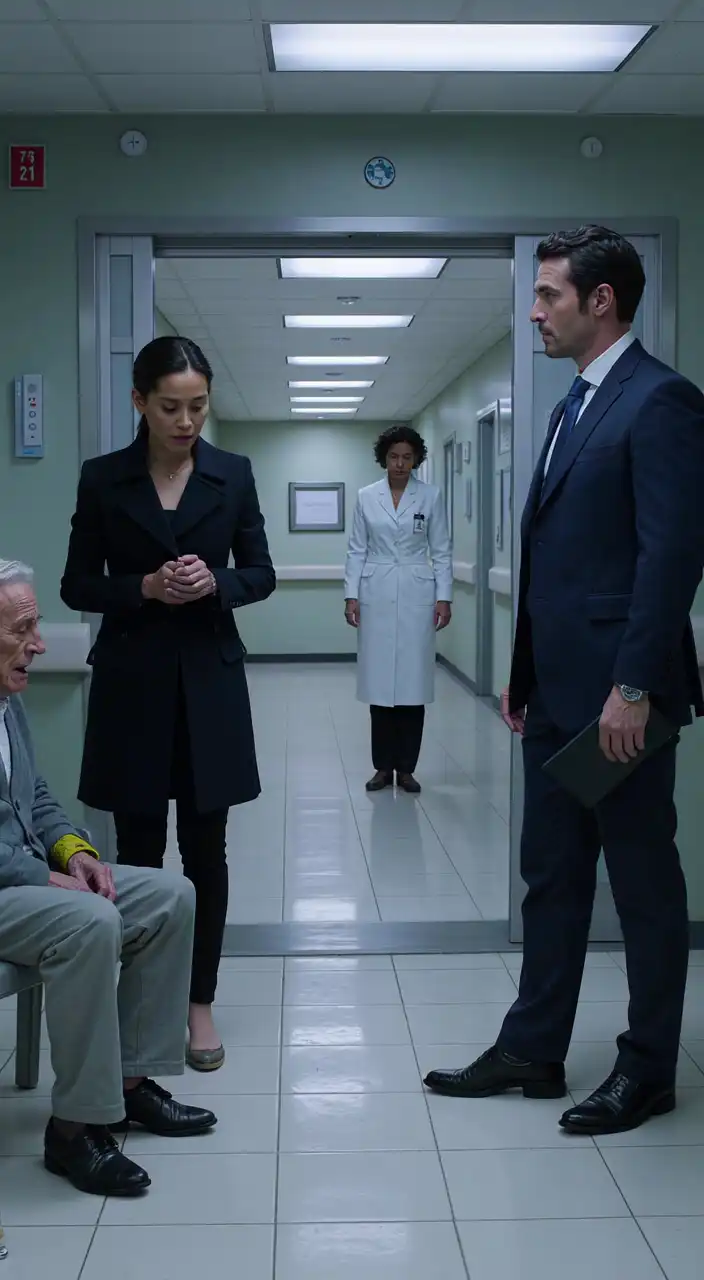
MY FATHER STARTED SHAKING OUTSIDE TRIAGE WHILE A CLINIC ADMINISTRATOR BLOCKED THE DOOR AND SAID HE NEEDED FAMILY PERMISSION FIRST.
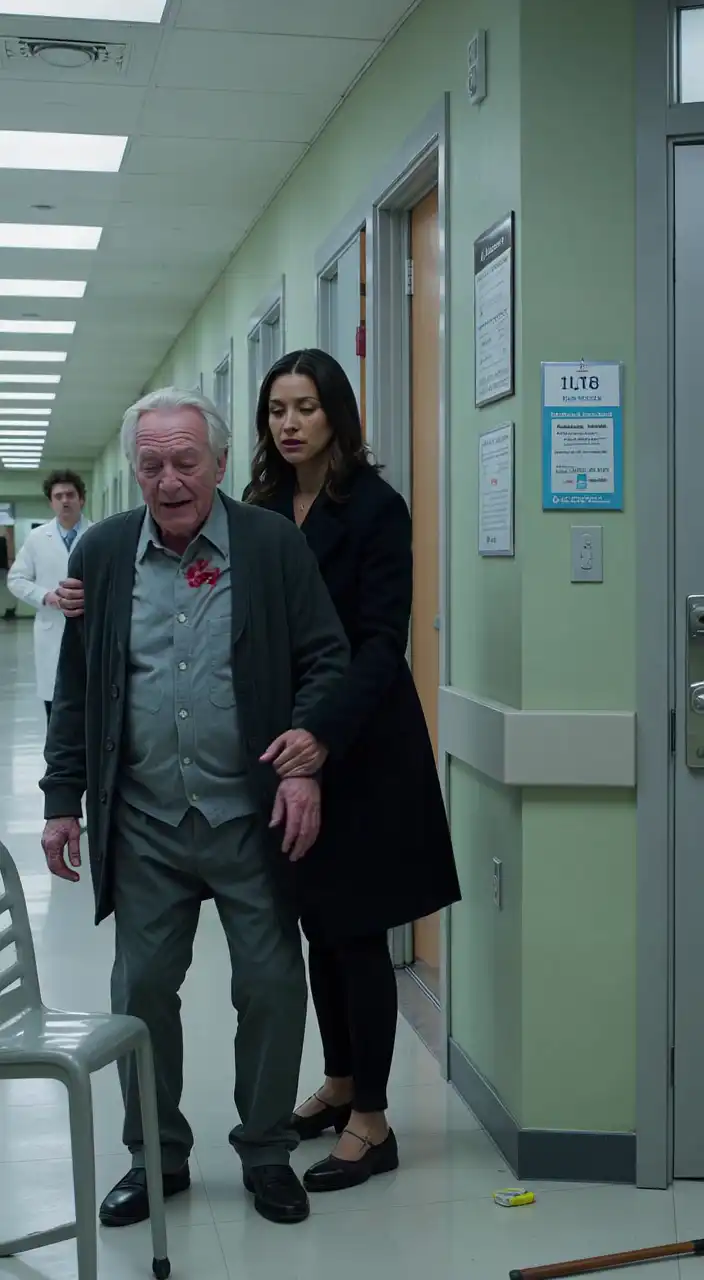
MY FATHER STARTED SHIVERING SO HARD HIS SURGICAL BANDAGE BLED THROUGH, AND THE CLINIC ADMINISTRATOR STILL BLOCKED THE TRIAGE DOOR.
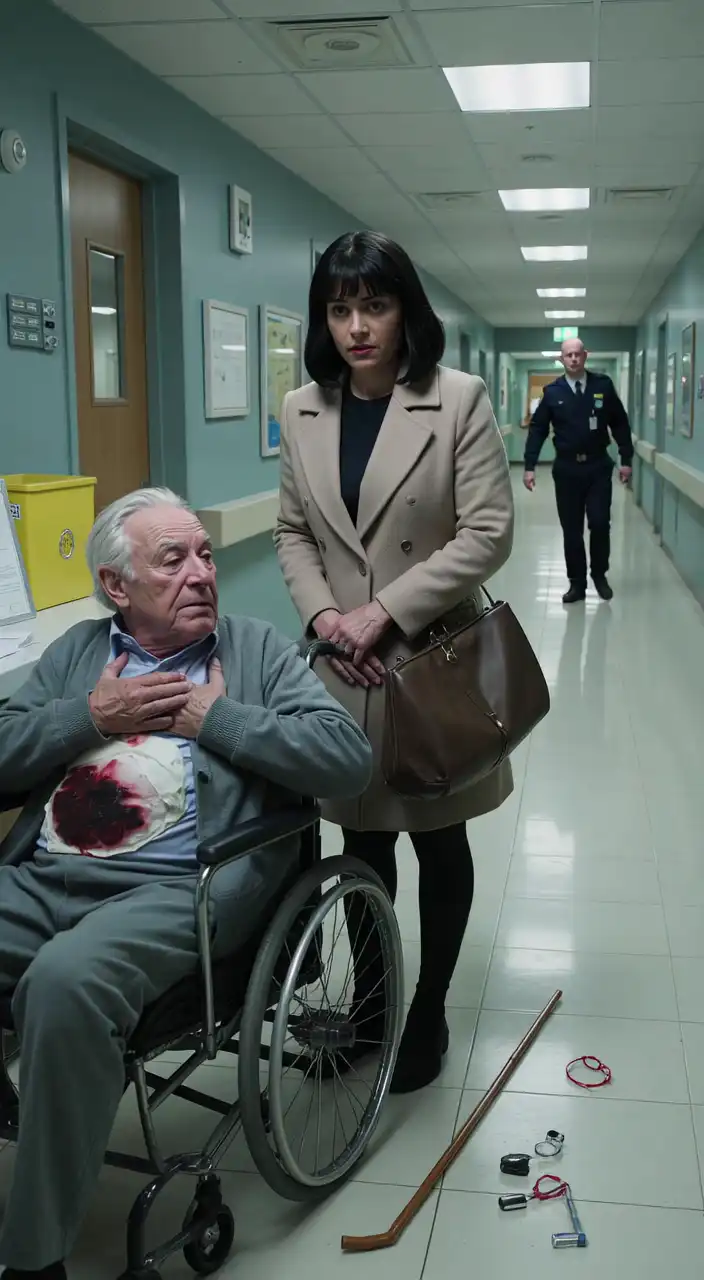
MY FATHER STARTED SHAKING IN THE HOSPITAL HALLWAY, AND THE WOMAN WHO CLAIMED TO BE HELPING HIM WOULD NOT LET TRIAGE TOUCH HIM.