
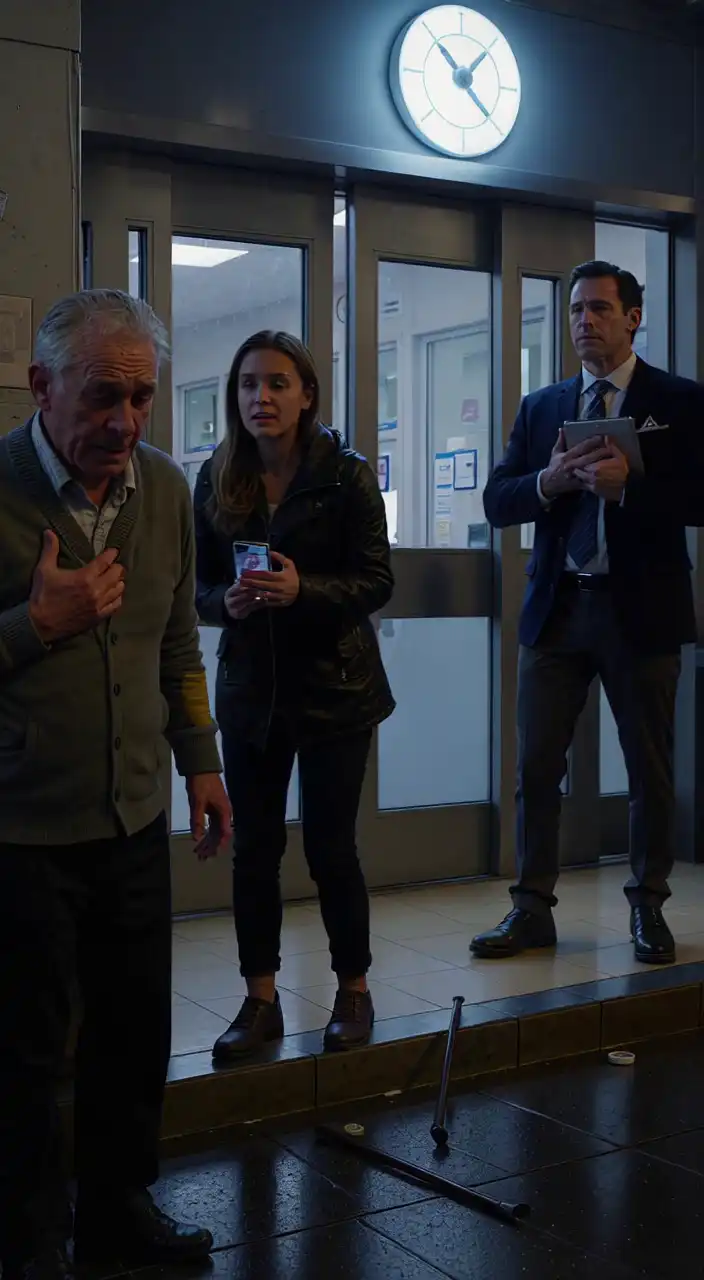
Paramedic Michael dropped to one knee in front of my father so fast David barely had time to shift his shoes out of the way.
"Sir, can you tell me your name?" Michael asked, already clipping a pulse ox onto Dad's finger.
"Thomas," my father whispered. His voice sounded dry, scraped out. "Cold. I can't get warm."
Michael looked up at me. "Who stopped the call?"
"I did not stop medical care," David cut in before I could answer. "This is an administrative misunderstanding. He was properly discharged. Family is creating disruption."
The other paramedic, a younger woman with a dark braid tucked under her cap, stepped around us and reached for the cane on the pavement. When she set it against the wall, she spotted the half-hidden bottle cap near the chair leg and glanced at it without touching it. Her face didn't change, but I saw her clock it.
Michael pressed the back of his hand lightly against the edge of Dad's cardigan, right where the bandage heat was radiating through. "He's burning up." He checked Dad's blood pressure and then looked at the oxygen reading. "Mr. Keller, have you taken any medication since discharge?"
Dad blinked at him as if the question had to travel a long way. "My son gave me... something. Said it was for nausea."
My stomach dropped. My brother Evan had driven Dad home that morning because I was at work. Evan had texted me around noon saying Dad was "resting great" and not to fuss. Then at four he stopped answering. At five I got a call from Dad, barely coherent, saying he was outside the hospital and didn't know why.
David straightened his badge lanyard. "Again, this can all be addressed after billing and family authorization."
Michael finally looked at him fully. Calm. Flat. "Sir, if you are not this patient's treating physician, step back."
David didn't move.
The younger paramedic stood and spoke into her radio. "Adult male, post-op, febrile, altered, possible wound complication, possible medication issue. Requesting security to ambulance bay entrance. We have obstruction."
David's face changed then, not to guilt exactly, but to panic that the scene had become public inside his own workplace.
"I am the clinic administrator on duty," he said. "This patient belongs to a premium post-surgical account, and there are directives-"
Dad made a sound I had never heard from him before, low and involuntary, and folded inward over his abdomen. Michael caught him before he slid down the wall. The movement pulled his cardigan open enough for all of us to see the surgical dressing: one corner had lifted, and there was a damp yellow-brown bloom spreading through the gauze.
Michael's voice sharpened. "We are moving now."
David reached out, actually put a hand on the stretcher as the second crew rolled it through the door. "You need the account holder's consent. There is a family directive attached to-"
"My father is the patient," I said. I was shaking so hard my words came out ragged. "And he told me on the phone he didn't agree to go home."
Dad's eyes flickered toward me. For one second they were fully clear. "I said I felt wrong," he whispered. "Evan signed. Said I'd embarrass everyone if I stayed."
That sentence hit me harder than the fever. Dad had always hated being "trouble." After Mom died, he had gotten even quieter, especially around Evan, who treated every problem like something to be managed before anyone else saw it.
The younger paramedic said, "We need him inside. Now."
Hospital security finally arrived from the corridor beyond the sliding doors, two officers in gray jackets moving fast but careful. David's shoulders tensed when he saw them. He turned toward them with immediate confidence, the kind people wear when they expect rank to save them.
"This family is unstable," he said. "The daughter is making allegations. The patient has been discharged."
Michael didn't even raise his voice. "Patient is febrile, altered, likely septic or trending there, with possible inappropriate medication administration and an interrupted emergency call. He is coming in."
The word septic made the whole bay feel colder.
One security officer, a middle-aged woman with silver at her temples, looked at Dad, then at the open dressing, then at David's hand still too close to the stretcher rail. "Sir," she said to David, "step away from the patient."
For one beat he held still. Then he smiled tightly and took one smooth step back, as if he'd chosen dignity over conflict. But I saw his eyes cut toward my phone.
He had heard the dispatcher. He knew there was a recording.
Michael and the crew got Dad onto the stretcher. As they lifted him, his left sleeve slid up again. The bright yellow stain spread across the cuff like paint, and beneath it there was a faint sticky residue on his skin. Michael sniffed once, quick and professional, then looked at the younger paramedic. She gave the smallest nod.
"What was the medication?" he asked me.
"I don't know. Evan handled his discharge. I wasn't here."
Dad swallowed hard. "Cup. Bitter." His eyes moved unfocused toward the doorway. "He said just drink it."
David jumped in. "Post-op antiemetics can discolor. This is irresponsible speculation."
Michael ignored him and turned to the silver-haired security officer. "We need chain on the visible items there." He pointed with two fingers. "Bottle cap by the baseboard. And no one touches the patient's clothing until ED can document."
David's control cracked for the first time. "This is absurd. Do you have any idea who this family is? Do you understand what kind of donation relationship this clinic-"
The security officer's expression flattened. "I understand that you're interfering with emergency care."
Dad gripped my wrist as they started rolling him through the doors. His hand was hot and trembling. "Don't let Evan sign anything else," he said.
I walked beside the stretcher while Michael called report ahead. "Fifty-six-year-old male, post-op three days, recent discharge, fever, tremors, wound drainage, altered mentation, possible unauthorized medication administration, interrupted 911, possible coercive discharge. Security notified."
Coercive discharge. I had never heard those words together before, but they landed with sickening precision.
Inside the emergency corridor, bright lights hit Dad's face and made him wince. A triage nurse met us at the threshold with a wheelchair and then instantly waved it off when she saw how unstable he was. "Trauma two," she said.
David started after us. The younger security officer blocked him with an arm. "Not beyond this point."
"I need to review the charting immediately," he snapped.
"You can wait."
I should have followed Dad straight in, but Michael touched my elbow. "Ma'am, I need your phone. Just for a second. The dispatcher may still be connected."
My screen was streaked with rain and fingerprints. The call timer was still running. When Michael raised it, the dispatcher answered at once.
"EMS on scene?" she asked.
"Yes," Michael said. "Patient contact made. Obstruction at hospital ambulance bay by facility administrator. Can you preserve the line and note statements regarding cancellation request and family account concerns?"
"Already flagged," she said. "Law enforcement can request audio. Caller, are you safe now?"
I looked through the open trauma room doors. Nurses were cutting away Dad's bandage. He was trying not to groan. "I don't know," I said honestly.
The dispatcher softened. "Stay where staff can see you."
That should have reassured me. Instead, it made me realize how strange this already was. Not just medical urgency. Not just a bad discharge. Something had been arranged around my father, and people with badges were trying to hold the shape of it together.
A nurse approached with a clear plastic belongings bag. "We need his personal items documented. Was he carrying paperwork?"
"No," I said. "My brother had the discharge packet."
Before she could answer, a voice came from behind me.
"He didn't have it because it was never given back to him."
I turned and saw a transport aide I vaguely recognized from one of Dad's earlier appointments, a thin man in blue scrubs with tired eyes and rain still darkening his shoulders. He looked over his own words as if expecting punishment. "I saw the packet," he said quietly. "It was folded into Administrator David's coat after the son left."
For a second no one spoke.
Then the silver-haired security officer, who had followed us inside, said, "You need to come with me and repeat that."
The aide swallowed. "I will. But check the coat now, before he gets rid of it."
That was the first hard proof that this wasn't confusion.
Security moved at once, but before they disappeared back toward the entrance, David's voice erupted from down the corridor, louder than before, carrying one sentence all the way to us:
"You don't understand. The son said if this gets reported, the old man will ruin all of them."
The old man.
Not patient. Not Mr. Keller. Not post-op complication.
Just the old man.
Michael came out of trauma two long enough to hand me a pair of blue disposable booties because my shoes were soaked and leaving water on the floor. It was such a small practical gesture that I nearly cried.
"He's being assessed," he said. "Likely infection. Possibly more. Did your father usually make his own decisions?"
"Yes. Always."
"And the son who gave the medication?"
"My brother Evan."
Michael held my gaze for a beat. "Then if your father says he didn't consent, keep saying that clearly to every person who asks. It matters."
I nodded, but my chest had started to tighten for a different reason. Evan wasn't just controlling. He was careful. If he had pushed Dad out of care, if David had helped him, there had to be something they thought another night in the hospital would reveal.
The trauma room monitor began alarming in a rapid cluster. Nurses moved faster. I took one step toward the door, but a doctor in green scrubs was already inside, leaning over my father's exposed incision with a look that made my skin go cold.
Then she said, "Get me the surgeon on call and a tox screen. And where is the discharge medication list, because what I'm seeing here does not match a routine release."
That should have been the moment things got simpler.
Instead, it was when my brother walked into the emergency corridor with my father's leather folder under one arm and a lawyer already on speakerphone.
He saw me, saw security at the far end, and stopped smiling. "Mara," he said, too calm, "hang up your phone and stop making this worse before Dad says something he'll regret."
I stared at the leather folder. It had our father's name stamped in gold at the corner. Evan had carried school forms in it when we were kids, then tax papers, then finally anything he didn't want anyone else opening. It was a family object that meant order and silence.
Now it held whatever they had hidden.
"Give me the papers," I said.
Evan tucked the folder tighter under his arm. "No. Dad was confused. He needed to come home. David was helping us manage the account."
"Us?" I said. "Or you?"
His jaw tightened, almost imperceptibly. "You have no idea what you're talking about."
From inside trauma two, I heard my father cry out once, sharp and helpless, and all the old sibling patterns in me snapped like rotten wire. I took a step toward Evan, but Michael moved between us, not aggressively, just enough to make it clear this was no longer a private family argument in a parking lot.
"Sir," Michael said, "do not approach the treatment room."
Evan looked at him with immediate contempt. "This is my father."
Michael's face didn't change. "Then act like it."
Evan's phone crackled, and a male voice from speaker mode said, "Do not surrender any documents without reviewing authority. If there are capacity concerns-"
The silver-haired security officer came back into view with another officer and a supervisor from risk management trailing behind. In her hand was a clear evidence bag. Inside it, folded thick and damp at one edge, was a set of discharge papers.
She looked straight at Evan. "Your administrator's coat had a duplicate packet. Why?"
That was the first time my brother looked truly afraid.
He covered it fast. "Because this place makes mistakes. We requested copies."
The risk manager, a woman in navy with a badge clipped to her belt, reached for the bag but did not open it. "And why was an emergency call being canceled at the bay while a post-op patient with fever and drainage was denied entry?"
Evan said nothing.
The lawyer on speaker tried again. "My client is under no obligation-"
The risk manager muted the phone with one firm tap of her finger against Evan's device screen. "Actually," she said, "if your father is the patient and this discharge is under question, your obligation right now is to stop interfering."
She turned to me. "Ms. Keller, I need to know who is listed as medical power of attorney, if anyone."
"No one," I said. "Dad never signed one. He said he wasn't dead yet."
For the first time all night, despite everything, a near-laugh rose in my throat. It was exactly the kind of dry line he would use.
Evan's mouth went flat. "He was going to. We were in the process."
"Were you?" the risk manager said.
He didn't answer.
A nurse stepped out of trauma two holding a specimen cup and a sealed bio bag. "Tox screen sent," she said to Michael. Then she saw the cluster of us and lowered her voice. "Doctor wants the medication reconciliation immediately. There is a mismatch between the charted doses and what family reported."
The words hit the corridor like another alarm.
Michael looked at Dad's yellow-stained sleeve in the belongings bag now at his feet. "Can you test residue from clothing if chain is maintained?" he asked.
The nurse nodded. "If the physician orders it."
The risk manager turned sharply to security. "Nobody leaves."
Evan let out a short laugh that sounded nothing like amusement. "Over what? Nausea meds? Billing confusion? My father is rich, disoriented, and impossible after anesthesia. You all are turning this into some abuse fantasy because my sister likes drama."
That was almost enough to make me doubt myself. Almost. Because it was Evan's oldest trick: make everyone else's emotions look messy enough that his control seemed reasonable.
Then the transport aide in blue scrubs appeared again, escorted now, and said, "He wasn't disoriented when he said he wanted to stay."
Every head turned.
The aide's name tag read Luis. His hands were shaking, but his voice steadied as he kept talking. "I was outside room 418 this morning with another transport. Mr. Keller told the nurse his pain had gotten worse and he felt feverish. The son told him if he missed discharge today, there would be financial consequences and family embarrassment. Then Administrator David came in and said the same thing, just dressed up nicer."
Evan's face hardened. "You are lying."
Luis flinched but did not back down. "I heard it."
The risk manager asked, "Did you hear discussion of medication?"
Luis hesitated. "Not exactly. But after discharge, near the side exit, the son had a paper cup and said, 'Drink this, then you'll sleep in the car.' I remember because the patient said he didn't want to feel foggy again."
Michael and I exchanged a look.
Sleep in the car.
Dad had called me sounding half-drowned, words slipping. I had assumed pain meds, fatigue, fever. Maybe it was all three. Maybe it was more.
The doctor from trauma two came out then, peeling off gloves. She was in her forties, hair pulled back so tightly it sharpened her expression. "Who is the daughter?" she asked.
I raised a hand.
"Your father has a significant postoperative infection and likely needs admission, IV antibiotics, and possible return to surgery depending on imaging." She looked at the group and seemed to instantly understand there was a bigger mess attached. "He also has a level of sedation inconsistent with the amount of pain medication charted at discharge."
Evan stepped forward. "He was given anti-nausea medication."
"By whom?" the doctor asked.
He opened his mouth. Closed it.
"Exactly," she said.
The risk manager drew a slow breath. "Doctor, are you documenting concerns regarding capacity and outside medication administration?"
"I already have."
That was movement, finally, from institution to record. Not just spoken concern. Written concern. The kind people like David and Evan feared.
Evan's speakerphone, still in his hand, began vibrating with incoming calls. He silenced it one after another.
Then came the first reversal I had not seen coming.
The silver-haired security officer took the duplicate discharge papers from the evidence bag, careful at the edges, and held them under the corridor light without fully unfolding. "Ms. Keller," she said to me, "is this your father's usual signature?"
I stepped closer.
The signature line looked like Dad's name, but wrong in the way a familiar face is wrong in a dream. The T in Thomas was too tall. The final r in Keller hooked backward. My father had hand tremors on bad days, but his signature had one consistent habit from thirty years of signing school excuses and birthday checks: he always put a hard dot after the initial T, from when he used to sign T. Keller at work.
There was no dot.
"That's not his," I said.
Evan's whole body went still.
The risk manager took the papers from security and opened them enough to show the consent page and discharge acknowledgment. "There are two signatures here," she said. "Patient acknowledgment and witness."
"Who witnessed?" Michael asked.
She turned the page and her mouth tightened.
"Administrator David."
The corridor seemed to narrow around that one fact.
Evan found his voice first. "He asked me to help hold the pen. Dad was tired."
"Tired isn't the legal standard," the risk manager said.
The doctor folded her arms. "And tired patients with active fever should not be marched out because a family account is uncomfortable."
Evan looked suddenly less polished, less like the oldest child who always knew what room to dominate. More like a man who had expected private systems to stay private.
I said, "What account were you protecting?"
He didn't answer me. He spoke to the floor. "You don't understand how much this was going to cost if he stayed."
The words came out before he could stop them.
The risk manager's eyes sharpened. "What exactly was going to cost how much?"
Evan rubbed a hand over his face. "The post-acute package, the donor commitments, the family office-"
"Stop," Michael said quietly. "Use plain language."
Evan looked up at all of us and realized plain language was the one thing he had avoided all day because plain language makes people hear the cruelty.
"My father set up his estate so releases happen in stages," he said. "If he has a reported complication tied to noncompliance or prolonged care review, the family office freezes distributions until an external audit is done."
I stared at him. "You tried to push him out of care because you were afraid your money would be delayed?"
"It wasn't just money!"
"Then what?"
His answer came too fast. "Control."
He knew as soon as he said it that he'd told the truth by accident.
No one moved.
Then the doctor said, "Your father is going to CT. You can keep having whatever conversation this is with security and administration, but if either of you obstructs care again, I will personally put it in the chart."
She turned and went back into trauma two.
For one terrible second, I thought Evan might still run. Not physically. Socially. Legally. Through language. But Luis, the aide who had spoken up, pointed suddenly toward the leather folder under Evan's arm.
"If the medication list in there matches the chart, then why are you holding it?" he asked.
A simple question. Honest. Brutal.
Evan gripped the folder tighter.
The silver-haired officer said, "Give me the documents."
"No."
"Then I am detaining the folder pending patient safety review."
He backed up a step.
Michael was watching him now the way he had watched Dad's vitals: not dramatic, just precise. "Sir," he said, "if there is anything in that packet that affects current treatment, every second you hold it is on you."
Something in that landed. Maybe because Michael wasn't trying to win. He was naming weight.
Evan slowly set the leather folder on the counter by the wall. "Fine," he said. "Read it. But when this gets ugly for the hospital, don't say I didn't warn you."
The risk manager opened it.
Inside were discharge instructions, medication reconciliation sheets, a copy of Dad's insurance supplement, and a separate typed document clipped at the back.
At first I thought it was financial. Then I saw the heading:
Capacity Concern Addendum.
The risk manager's face changed as she scanned.
"What is it?" I asked.
She looked at me, then at Evan. "It states the patient demonstrated confusion, agitation, and poor insight into postoperative planning. It recommends family-supervised discharge and notes that independent refusal of family guidance may indicate cognitive decline."
My father had never been diagnosed with cognitive decline.
Michael said, "Who wrote that?"
The risk manager turned the page over. "Unsigned draft. Not filed in the chart."
Luis whispered, "I saw David printing something before the son came back."
There it was: not just a pushed discharge, but a plan to recast my father as unreliable in case he protested.
And if that document had been filed later, any complaint he made tonight could have been dismissed as confusion.
I felt physically sick.
The risk manager closed the folder. "This is now an internal investigation and a patient safety matter."
Evan straightened, trying one last time to sound important. "You file that, and the family foundation pulls funding by morning."
The silver-haired officer gave him a look so level it stripped all drama out of the threat. "Then morning can make its own decisions."
Just then a nurse hurried out again. "Doctor wants family now. He asked repeatedly for his daughter, not his son."
Evan turned toward the room automatically.
The nurse blocked him. "I said daughter."
I went in on unsteady legs and found Dad being wheeled toward imaging, his face gray with pain but clearer than before. Michael had been right to keep saying consent mattered. It had reached him like a rope.
"Dad," I said, taking his hand.
He squeezed weakly. "Did he bring the folder?"
"Yes."
His eyes closed briefly. "Check the back pocket. Estate letter."
"What estate letter?"
He swallowed. "I changed things. Last month. Told the lawyer if anybody pressured care for money, they're out."
I stared at him.
He opened his eyes again, and despite everything, there was a flicker of grim humor in them. "Evan found out this week."
The second major reversal hit me standing there beside the CT doors.
This wasn't just about greed in the abstract. Dad had already seen something in my brother. He had changed his estate because of it. And Evan had panicked.
The nurse began rolling him away. Dad caught my fingers one last moment and whispered, "Don't let them make me sound crazy."
"I won't," I said.
But when I stepped back into the corridor, the next obstacle was already forming.
David was gone.
And so was his coat.
For half a second no one around me understood what I had just understood. They were still processing the unsigned capacity addendum, the duplicate packet, the forged-looking signature, the doctor pushing Dad to CT.
Then the silver-haired security officer saw my face and turned toward the far corridor.
"Where is Administrator David?"
The younger officer looked toward the ambulance entrance. "He was here two minutes ago."
"He had a dark wool coat," I said. "The papers were in it."
The risk manager swore under her breath and was already walking. "Lock the bay exit. Call loading dock. If he leaves the property with any original documents, I want camera pulls now."
Everything sped up again.
A unit clerk behind the desk grabbed a phone. Security radios crackled all at once. Michael, who should have been free to clear the scene by then, did not move away. He looked at me and said, "Did your father say estate letter in the folder, or in David's coat?"
"In the folder back pocket."
"Then check it now."
My hands were shaking so badly I nearly tore the leather. There was a stitched flat compartment I had not noticed before. Inside it sat a sealed envelope with my father's handwriting on the front.
If anything happens to my medical decisions, open this.
The words tilted for a second before my eyes. I looked at the risk manager. "Can I open it?"
"If your father directed it and you're next of kin present, yes. Especially if it affects care and representation."
I broke the seal.
Inside was a one-page letter on heavy paper and a copy of an email printout. The letter was in Dad's handwriting, slow but unmistakable.
To any treating facility or reviewer: I, Thomas Keller, am of sound mind and I do not authorize either of my children to override my medical decisions unless I am declared incapacitated by two treating physicians. If my son Evan presents urgency around finances, schedules, optics, or family embarrassment, that is not my instruction. He has recently pressed me to sign revisions I refused. If concerns are raised that I am confused, please review whether those concerns appeared before or after I disagreed with him.
Below that was his signature, with the hard dot after the T.
The email printout was from his estate attorney confirming receipt of an updated directive review appointment and noting that no power of attorney had yet been assigned because Mr. Keller wanted independent witnesses.
The risk manager read both pages and went very still. "Make copies immediately," she said to the unit clerk. "And scan to patient risk file now."
That was evidence movement in real time. No more folder under someone's arm. No more one version of events stuck in a coat pocket. Copies, file stamps, institutional trail.
Evan saw the letter in my hands and lunged before he could stop himself.
Michael intercepted him with a forearm to the chest, not striking, just holding. "Do not."
"It's private," Evan snapped.
"It became less private when you started trying to decide whether your father got emergency care," I said.
He looked at the letter and all color drained from his face. "He wasn't supposed to-"
He stopped.
The silver-haired officer was back at his side instantly. "Wasn't supposed to what?"
He swallowed. "Nothing."
But it was not nothing anymore. Every unfinished sentence was a footprint.
Overhead, one of the security radios crackled. "Administrator last seen moving toward south service stairwell. Coat no longer visible. Repeat, no coat visible."
The risk manager said, "Check offices and any shred bins on that route."
I had never in my life heard a hospital talk about shred bins like crime scene evidence, and the fact that I was hearing it now made my pulse jump. David had not run because he was embarrassed. He had run because some version of the paperwork still mattered.
A respiratory therapist pushing equipment past us slowed and looked at the cluster of staff. "What happened?"
"Patient safety review," the risk manager said briskly, the kind of answer that was both true and a barrier.
Evan laughed again, brittle this time. "You all are overreacting to one bad discharge. My father gets dramatic when he feels pain."
Luis, the transport aide, spoke before anyone else could. "He got dramatic when you told him he'd ruin the family if he stayed."
Evan spun on him. "You were eavesdropping."
"I was transporting another patient," Luis shot back. His fear was still there, but anger had started to replace it. "You were loud."
Conflict snapped again right there in the corridor. Not huge, not physical, but enough to change the temperature. Other staff had begun noticing. A phlebotomist slowed. An environmental services worker with a mop cart paused near the alcove and pretended to arrange towels while listening. Visibility was becoming pressure.
The risk manager pointed at Evan. "You need to sit down and stop speaking to witnesses."
"I'm not a criminal."
"No one asked you to label yourself."
That landed hard enough that he actually sat, though he did it with the posture of a man trying to make sitting look temporary and strategic.
The copies of Dad's letter slid out from the printer. I took one. The risk manager took the other and handed a third to security. "Chain this with the packet."
A nurse came from radiology. "CT is moving. Labs are ugly. Lactate elevated, white count high. Physician says likely OR consult after scan."
My mouth went dry. "How bad?"
She gave me the look medical people give when they are trying to be honest without making promises they cannot keep. "Serious. But he is in the right place now."
Now. After all that.
A police officer arrived then, not sirens, not drama, just a county uniform guided in by hospital security. The dispatcher had clearly done what she said she would do and flagged the interrupted 911 call. He introduced himself as Officer Harlan, asked for the scene lead, and the silver-haired officer gave him a clipped version: obstructed emergency access, possible coercive discharge, possible forged documentation, possible improper medication administration.
As she talked, Evan's expression changed again. Fear gave way to calculation. He stood.
"I want an attorney before I answer anything."
Officer Harlan shrugged once. "Then don't answer. I still need names."
He collected them calmly: mine, Evan's, Michael's, Luis's, security's, risk management's. When he got to the issue of the phone call, he asked me to state exactly what I had heard David say about canceling EMS.
I repeated it word for word: If EMS brings him in, this becomes a reportable incident for the family account.
Officer Harlan wrote it down without editorial comment, then asked, "And the patient said he had never agreed to go home?"
"Yes."
"Patient said the son signed?"
"Yes."
He made another note.
Evan cut in. "My father was sedated."
Officer Harlan looked up. "By whom?"
Silence.
That was the problem now. Every road led back to the same hole.
An emergency physician I had not met, a tall man with glasses and a clipped beard, stepped into the corridor scanning a chart on a tablet. "Who is family for Thomas Keller?"
"I am."
"Come with me. Briefly."
I followed him into a consult room no bigger than a closet. He shut the door. "Your father has a postoperative abdominal infection with signs concerning for early sepsis. Imaging suggests a fluid collection near the surgical site. Surgery has been paged. We are treating aggressively with IV antibiotics and fluids, and he may need a procedure tonight."
I put my hand on the chair back to steady myself. "Is he going to die?"
"We are trying to prevent that outcome," he said. Direct, not cruel. "The delay mattered. But he is talking, his pressure is responsive, and we are moving quickly."
Delay mattered. The plain language hit harder than any euphemism.
He glanced through the narrow glass pane in the door toward the corridor. "I am also ordering full toxicology and asking lab to preserve clothing residue if possible. We found sedation level inconsistent with recorded discharge meds, as you've been told."
I nodded.
He lowered his voice. "If there is anyone else in the family who might try to remove him, sign over him, or pressure staff, tell me now so I can restrict access appropriately."
"My brother. And maybe whoever he used to manage money. I don't know who else."
"Fine. We can put a no-information hold except approved contacts." He paused. "Who do you approve?"
No one had asked me that all day. Everyone had been deciding around us. The question almost undid me.
"Only me for now," I said.
He nodded. "Done."
When I came back out, Officer Harlan was looking at the yellow-stained sleeve in the belongings bag while a nurse labeled a separate evidence envelope. The bright color against the pale cardigan looked obscene under fluorescent light.
Michael saw me and said, "Lab can swab the cuff and test broad classes. Might not tell us everything tonight, but if someone gave him more than prescribed, it helps."
Across the corridor, Evan was on his phone again, speaking low and furious. "No, I don't care what David says. Find him. If he dumps those originals before they log them, we can still argue administrative confusion."
He saw all of us hearing him and ended the call.
Officer Harlan stepped closer. "Who were you speaking to?"
"My attorney."
"Name?"
"Privileged."
Harlan gave him a tired look. "Phone records aren't privileged because you say the word."
That was another small reversal. Evan kept trying to invoke systems that had always bent around him. Here, tonight, enough people had seen enough that the usual shortcuts were failing.
A tech rolled by with a portable monitor. Somewhere nearby, a child started crying behind a curtain. A trauma pager sounded overhead. The whole emergency department kept functioning while my life split open in one corridor.
Then another clue arrived from somewhere I never would have expected.
The environmental services worker with the mop cart, a woman maybe in her sixties with sharp eyes and pink gloves, cleared her throat and looked at security. "I don't know if this matters, but I emptied the family lounge trash near the side exit an hour ago. There was a little paper medicine cup with yellow streaks inside. I left the tied bag in the utility room because the bin wheel was jammed."
Every head turned to her.
Officer Harlan said, "Can you show us?"
She nodded immediately. "If no one touched it, yes."
The risk manager moved fast. "Go with her. Now. Preserve the bag."
Within seconds the younger security officer, Harlan, and the EVS worker were gone.
Evan swore softly. His composure had developed cracks all over it.
Luis looked at me and whispered, "He thought no one notices support staff."
He was right. Men like Evan and David only counted the people they thought outranked them. Everyone else blurred into the background. Tonight the background was speaking.
About twenty minutes later, which felt like two hours, the surgeon arrived. A woman with stern eyes, wet umbrella, and the kind of compressed energy that means someone has been called away from dinner and is already operating mentally before they touch the patient. She skimmed the chart on a workstation, then asked, "Where is family?"
I stood.
She walked me a few steps aside. "Your father likely has an anastomotic leak or infected postoperative collection. He needs intervention tonight. We are taking him for urgent washout and evaluation as soon as anesthesia clears him."
I heard the words but needed a second to understand. "Urgent surgery."
"Yes."
My knees went weak enough that I had to brace on the counter.
She continued, "He is lucid enough to consent at this moment, but I need to know whether there is active dispute around who may speak for him if that changes in the next hour."
I handed her the copy of Dad's letter. She read it in fifteen seconds flat.
"This helps," she said. "A lot."
Another movement of evidence into authority.
She folded the copy and slid it into the chart sleeve. "I'm putting this in his operative packet. If anyone tries to claim he wanted nonmedical discharge or family override, they can argue with me later."
For the first time all night, I felt something like an ally with actual power.
She started to turn away, then looked back. "One more thing. Based on his infection markers and the delay, he's at higher risk. If he asks for you, stay available."
I nodded because I couldn't trust my voice.
When she left, Evan rose again as if he could still insert himself. "I need to talk to the surgeon."
The risk manager blocked him this time. "No."
"I'm his son."
"And he requested his daughter."
"He was manipulated."
Officer Harlan said, "By whom?"
Again, that unbearable silence.
The younger security officer returned carrying a sealed biohazard bag inside a larger evidence sack. The tiny paper cup was visible through the plastic, stained with the same strange yellow residue. The bottle cap from the bay had also been bagged and tagged. Harlan came behind him and said, "Utility room secured, item recovered. Also found a torn pharmacy leaflet in the same trash bag."
The risk manager asked, "For what medication?"
He held up the leaflet in another clear sleeve. "Not fully readable. But enough to see warning language. Strong sedative. Not a standard anti-nausea med."
Michael exhaled through his nose. "There it is."
Evan stood so abruptly the chair legs screeched. "That proves nothing. It could belong to anyone."
Officer Harlan met his eyes. "Sure. Which is why lab, records, and statements all get to work together."
The suspense hook tightened right there. We had a cup, residue, clothing stain, a hidden packet, an unfiled capacity addendum, a witness, an open 911 recording, and now likely sedative literature. But we still did not have David, and we still did not know where the original signed documents were.
As if summoned by that thought, one of the security radios burst alive. "Subject located. South stairwell level B. Attempted exit through service corridor. Coat recovered from trash compactor room. Request supervisor and police."
The corridor froze.
"David?" the silver-haired officer asked.
"Affirmative."
Officer Harlan was already moving. "Don't question him without me."
He and security went at a run.
Evan took one instinctive step toward the opposite direction.
Michael saw it. "Don't."
"I'm going to the bathroom."
"Take an officer."
"I don't need a babysitter."
The silver-haired woman said, "Tonight you do."
He stopped.
I wanted to follow the officers. I wanted to see David dragged back with whatever was in that coat. Instead I was pinned by the only part that truly mattered: a nurse was wheeling Dad past on the way to pre-op.
His skin looked waxy under the lights. His lips were dry. But when he saw me, his eyes found mine immediately.
"Mara."
I walked beside the gurney. "I'm here."
He glanced once past me, searching. "Not him."
"He's not coming in."
Dad gave the smallest nod. "Good."
The pre-op nurse adjusted a line. "We need to keep moving."
Dad squeezed my fingers weakly. "I thought if I went quiet, it'd pass."
My throat closed. "I know."
"I was wrong."
It was such a simple sentence, and it broke something open in me because my father had built his whole life around smoothing conflict before it hardened. Seeing him admit that quiet had failed him felt like grief and relief at once.
"You are not crazy," I said. "Do you hear me? They found the papers. They found the cup. People heard what happened."
His eyes shone suddenly, not from fever this time. "Luis?"
"Yes."
He shut his eyes for a moment. "Good man."
The gurney kept rolling. At the operating doors, he pulled enough breath to whisper one more thing. "If I come out... no more family management."
I leaned down so close my forehead almost touched his. "No more."
Then they took him through.
The doors swung closed. I was left staring at my own reflection in the narrow glass.
When I turned back, the corridor had shifted again.
David was being escorted in from the service elevator, hands visible, coat bagged, face slick with sweat and fury. Not handcuffed, not yet, but held tightly enough that dignity was no longer part of his options. A tear in the side seam of the coat had exposed papers stuffed into the lining.
The risk manager's expression went from grim to stunned. "He sewed documents into his coat?"
Officer Harlan answered, "Looks that way."
No one had to say what that meant. Panic had crossed over into concealment. Procedure had become evidence tampering.
David saw me and tried one last posture. "This has been catastrophically misread."
The silver-haired officer took the bagged coat and set it on the counter. Through the clear plastic we could all see at least three folded forms, one pharmacy printout, and what looked like a signed witness sheet tucked into the ripped lining.
Harlan said, "You can explain all of that after we inventory it."
David's voice sharpened. "The family requested discretion."
"The patient requested care," Michael said.
That silenced him more than the police presence had.
Then came the emotional reversal I had not expected: Evan looked at David not with alliance, but with naked betrayal.
"You said this would just keep him home overnight."
David stared back. "You said he only needed to sleep."
A terrible quiet dropped between them.
Officer Harlan looked from one to the other. "Say that again."
Neither man spoke.
But they did not need to. The truth was suddenly standing fully lit in the corridor. Whatever their arrangement had been, it had not stayed tidy. Evan had wanted Dad suppressed, sedated, discharged, controlled. David had wanted the donor account shielded from a reportable postoperative crisis. Each had assumed the other would absorb the risk.
Now both were exposed.
The risk manager pointed at them in turn. "Separate them. Separate statements. No contact."
Security moved immediately, taking Evan toward one consult room and David toward another. As David passed, the bagged coat brushed the counter edge and one folded paper slipped within the plastic enough for the top line to show.
Discharge Against Medical Advice.
My father had not left against medical advice. He had been pressured out while febrile.
And someone had prepared an AMA form.
I pointed at it. "There."
Harlan saw it. "Photograph before opening."
The younger officer took pictures with a facility evidence tablet. Timestamped. Logged. More trail. More anchors.
A little while later, maybe forty minutes, maybe a century, the first consequence outside the corridor arrived. A local representative from the family foundation called the hospital operator demanding to know why "incident reporting language" had appeared in an internal donor portal. The risk manager, to her credit, took the call in front of me and said, "A donor relationship does not supersede emergency care or patient rights." Then she documented the call.
Authority pressure had now climbed above the floor level. Wealth was reaching down. The hospital, perhaps for once because too many witnesses and too much audio already existed, was pushing back.
Officer Harlan came out from David's room with a face that said he had heard enough to stop being patient. "He admitted the son asked him not to route the readmission through the standard ED intake because of a 'financial freeze concern.'" He rubbed the bridge of his nose. "He claims he did not know what was in the paper cup."
"And Evan?" I asked.
"He says he gave your father something left from a prior prescription because your father was anxious."
"What prescription?"
"He stopped answering."
Michael, still somehow not gone, muttered, "Anxious people don't usually stain sleeves and lose time into a septic collapse."
Lab called next. The nurse who took the message looked up sharply. "Prelim screen on urine positive for a sedative not listed in discharge meds."
No one spoke for a second.
I heard the words, understood them, and then had to sit because my body could not hold itself upright anymore.
Michael crouched in front of me, orange bag still at his side, same kneeling posture from the threshold where this started. "Breathe," he said quietly. "In through your nose."
I did. Barely.
The nurse added, "Clothing residue pending. Cup testing pending. But this is enough for the physician to note concern for outside administration."
Rescue and exposure had fully crossed. Dad was not just being treated. The thing done to him now had a name in the chart.
Hours stretched.
The surgeon sent word from the OR waiting line: source control underway, infection severe, patient unstable but responding. Not done yet. Keep family available. I clung to each fragment like rope.
Sometime after midnight, Luis came back with a paper cup of bad coffee for himself and a sealed water for me. He looked exhausted.
"You didn't have to stay," I told him.
He gave a tired shrug. "I know. But if I left, I'd think about whether I should have said more."
I looked at him for a long time. "Thank you."
He stared into his coffee. "My dad got steamrolled in a rehab place once because everyone said he was confused when he was really just hard of hearing. After that I notice things."
That nearly undid me all over again.
Near one in the morning, the surgeon finally came out still in cap and mask hanging loose at her neck. I stood so fast the chair tipped.
"Your father is out of immediate danger," she said.
I think I stopped breathing.
"We found an infected postoperative leak and significant contamination. We cleaned it out, repaired what we could, placed drains, and he is going to ICU for close monitoring. The delay made this worse. But he came to us in time."
In time.
It was not a guarantee. It was not a fairy-tale ending. It was enough to make my knees buckle with relief so violent it felt like pain.
I covered my face and cried standing up. Not gracefully. Not privately. Just all at once.
When I could hear again, the surgeon was still speaking. "He was intermittently lucid before anesthesia and repeated twice that his daughter was to receive information and that he did not consent to leaving earlier. I documented it."
Of course she did. Another record. Another wall against revision.
"Can I see him?"
"In ICU, briefly, once they settle him."
She hesitated, then added, "Officer Harlan asked me to let you know that based on the chart, the toxicology prelim, and the recovered documents, they are treating the interference seriously."
"Seriously" was such a clean word for something so filthy. But I understood what she meant.
By dawn, the consequences were rippling in every direction.
David had been suspended on the spot pending investigation and escorted from patient areas under police interview hold. The hidden coat documents included the unfiled capacity addendum, an unsigned AMA form, two versions of the discharge instructions with different medication notations, and a witness sheet prepared before the alleged patient signature time. Evan's phone had been seized under warrant request after the open-line 911 recording and witness statements established urgency around evidence. The family foundation had frozen not Dad's distributions, but any discretionary contact by Evan pending legal review once they learned there might be exploitation allegations. The hospital's compliance office arrived before sunrise.
And me, I sat in ICU beside a machine-breathing tangle of lines and drains and watched my father sleep under clean blankets instead of shivering on wet pavement.
His hand looked older there. Smaller. Tape on the knuckles, pulse ox glowing red.
A night nurse adjusted a pump and said softly, "He's very sick, but he's where he needs to be now."
I nodded.
After she left, Dad stirred. His eyes opened only a slit, but he found me anyway. He tried to speak around the dryness and the leftover anesthesia.
"Still here?"
"Yes."
A faint squeeze touched my fingers.
"Did they... believe me?"
The question was so quiet I almost missed it.
I bent close. "Yes. They did. And they have proof."
His face loosened in a way I had not seen in months. Not happiness. Not exactly. Relief so deep it was almost surrender.
"Good," he whispered.
He slept again.
When morning light finally pushed gray across the ICU blinds, Officer Harlan came by in plainclothes under his jacket, notebook in hand but hat off, softer somehow than he had looked all night.
"I wanted you to hear this directly," he said. "The call recording, witness statements, the document concealment, and preliminary tox findings are enough that this is no longer being treated as a misunderstanding. Adult protective services has been notified. We are also preserving the possibility of charges related to obstruction, evidence tampering, and vulnerable adult exploitation, depending on the final medical findings."
I looked at my father, then back at him. "Will Evan be able to get to him?"
"Not here. Not without your father's approval when he is able, or a court order. And given what's on record now, that would be a steep hill."
I closed my eyes for one second.
Officer Harlan added, "Your father may have saved himself by calling you when he did."
I thought of that broken call at five, the confusion in his voice, the automatic doors close enough to hear but not to enter, the open 911 line no one managed to kill.
"No," I said. "A lot of people saved him."
He nodded once toward the hall where staff moved shift-to-shift, mostly anonymous if you were not looking closely. "That's usually how it works."
After he left, I watched the monitors trace my father's recovery one heartbeat at a time.
The story people like Evan tell is that control is the same as care, that smooth paperwork matters more than pain, that if you can keep the right doors closed for eight more minutes, the truth will miss its window.
They were wrong.
The call stayed open. The stain got seen. The aide spoke up. The cleaner remembered the cup. The paramedic asked who stopped the call. The doctor wrote it down. The surgeon put his words in the chart. The coat tore. The papers came out. And my father, who had spent years trying not to embarrass anyone, lived long enough to watch silence fail and help arrive anyway.
Disclaimer: Mention of any brand or trademark is for identification only and does not imply partnership or endorsement
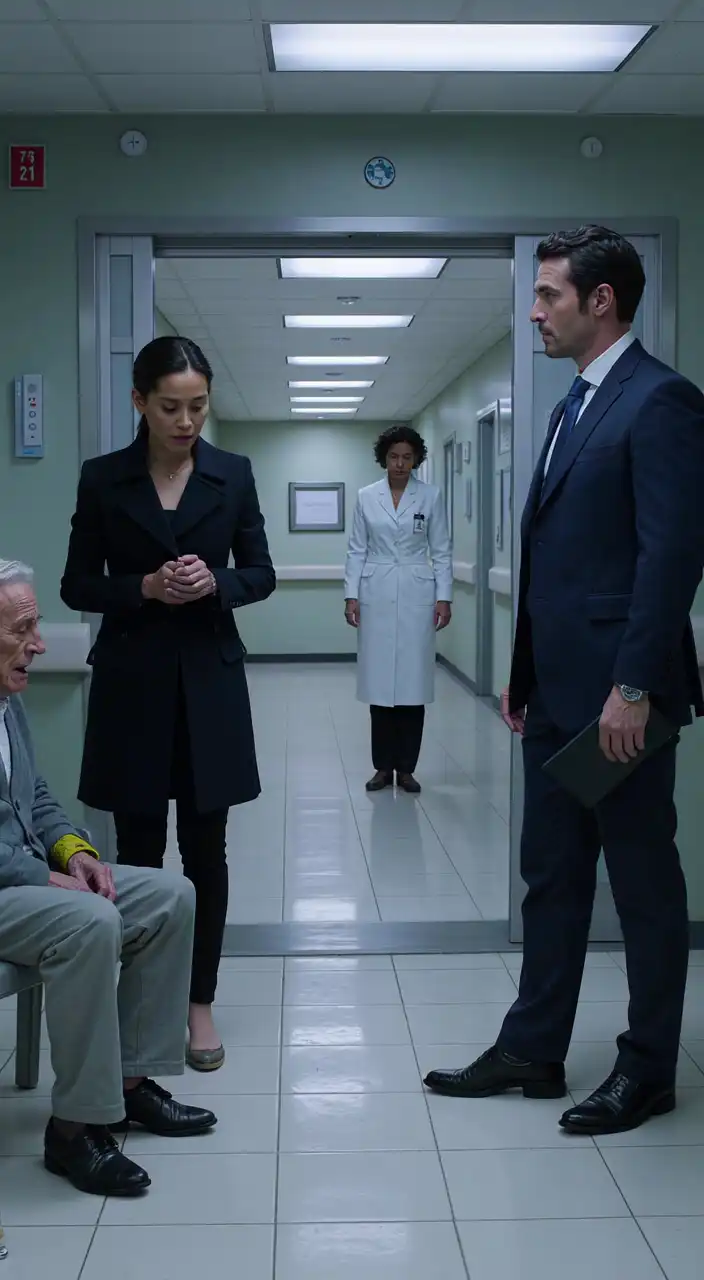
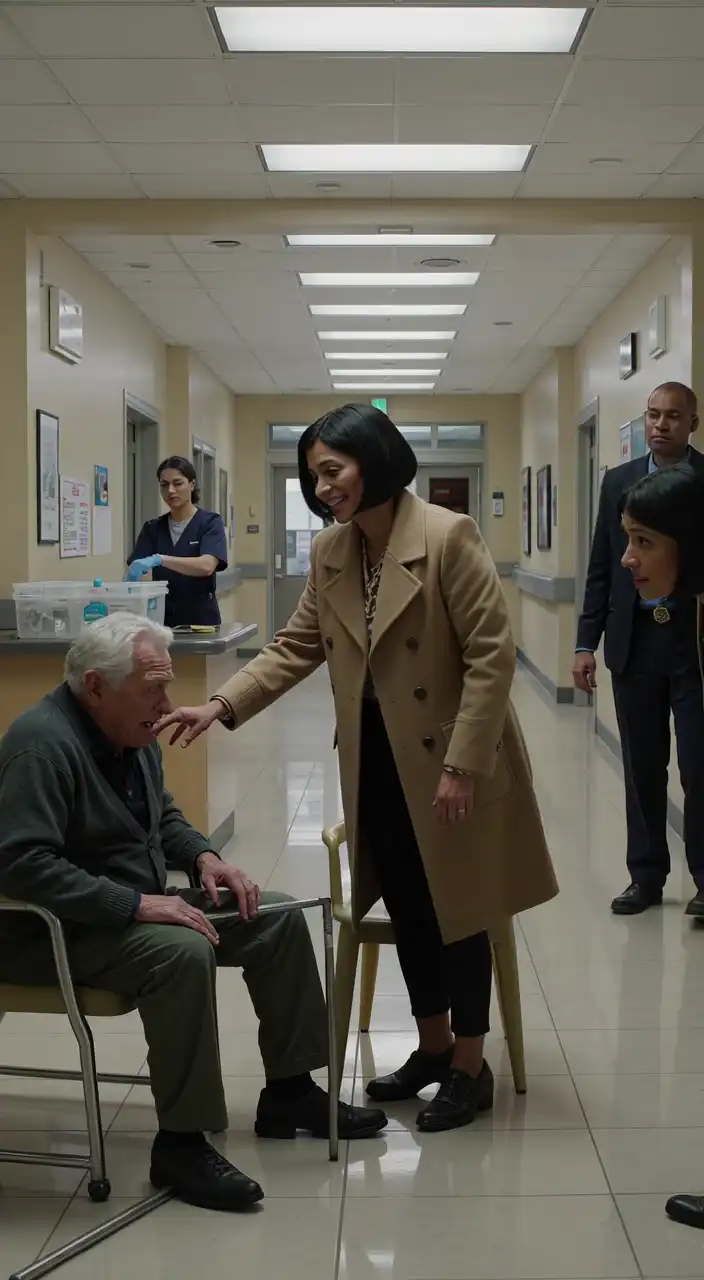
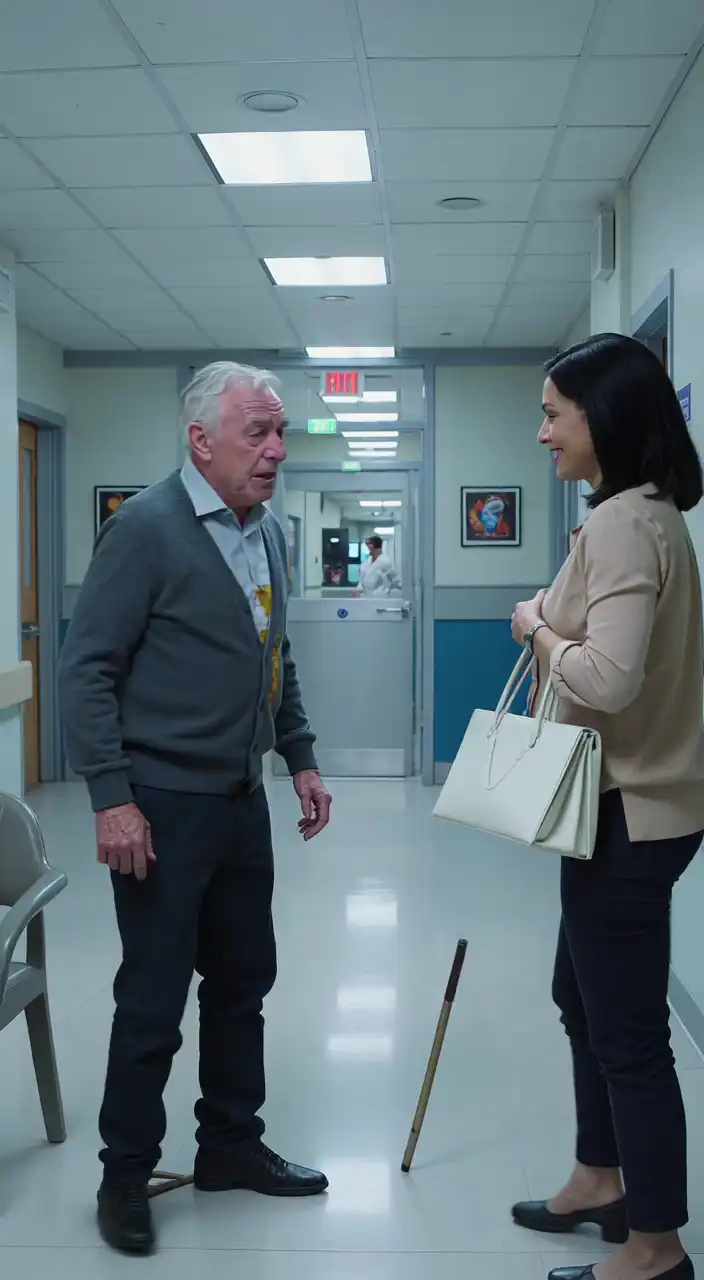
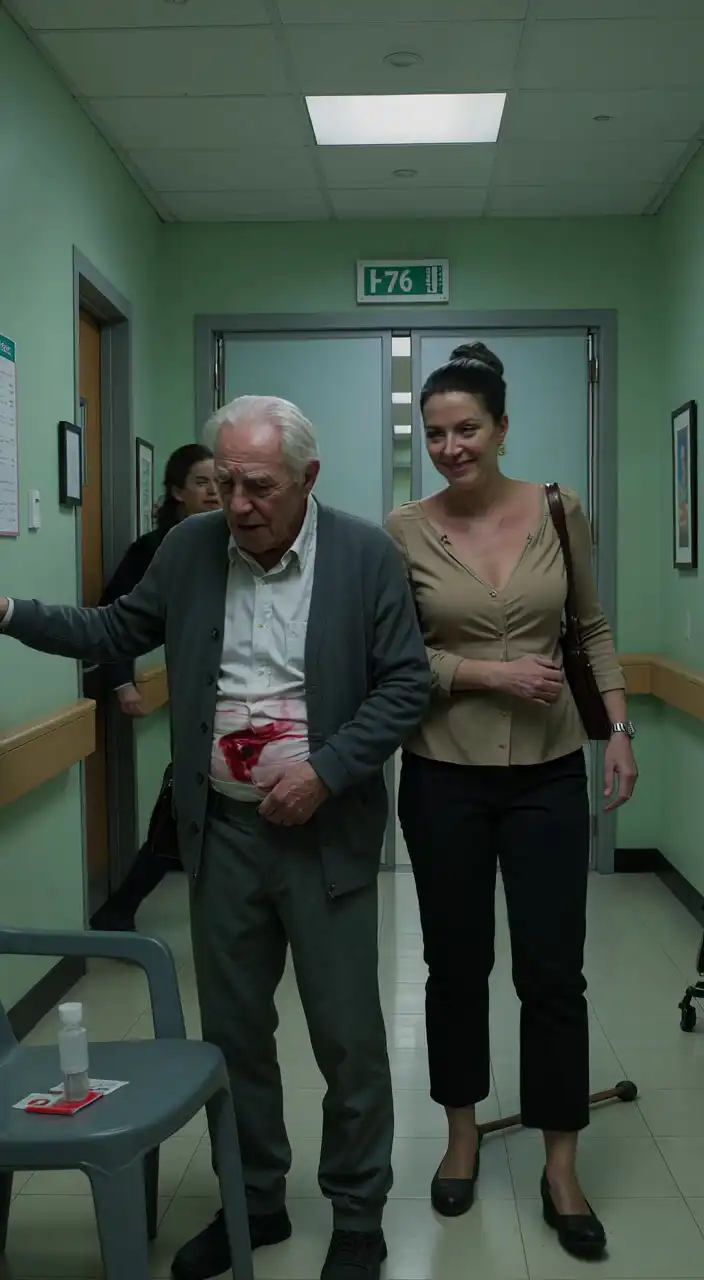
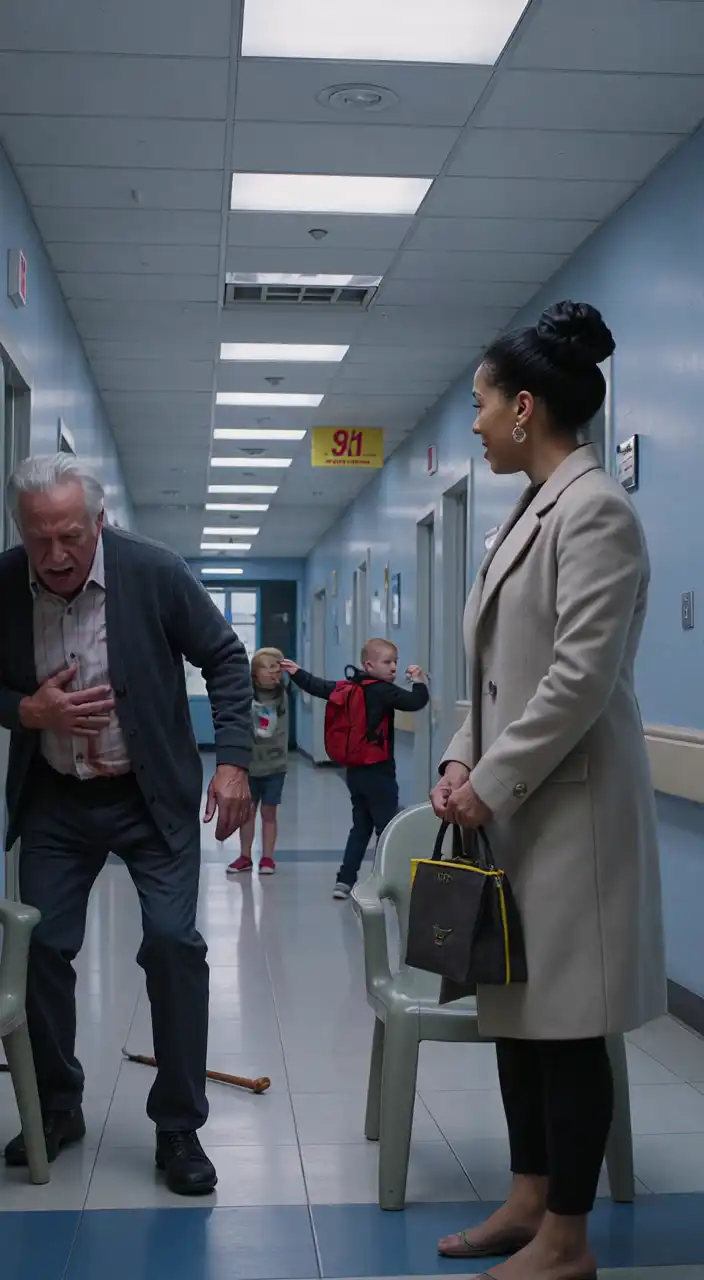
MY FATHER STARTED SHAKING OUTSIDE TRIAGE WHILE A CLINIC ADMINISTRATOR BLOCKED THE DOOR AND SAID HE NEEDED FAMILY PERMISSION FIRST.
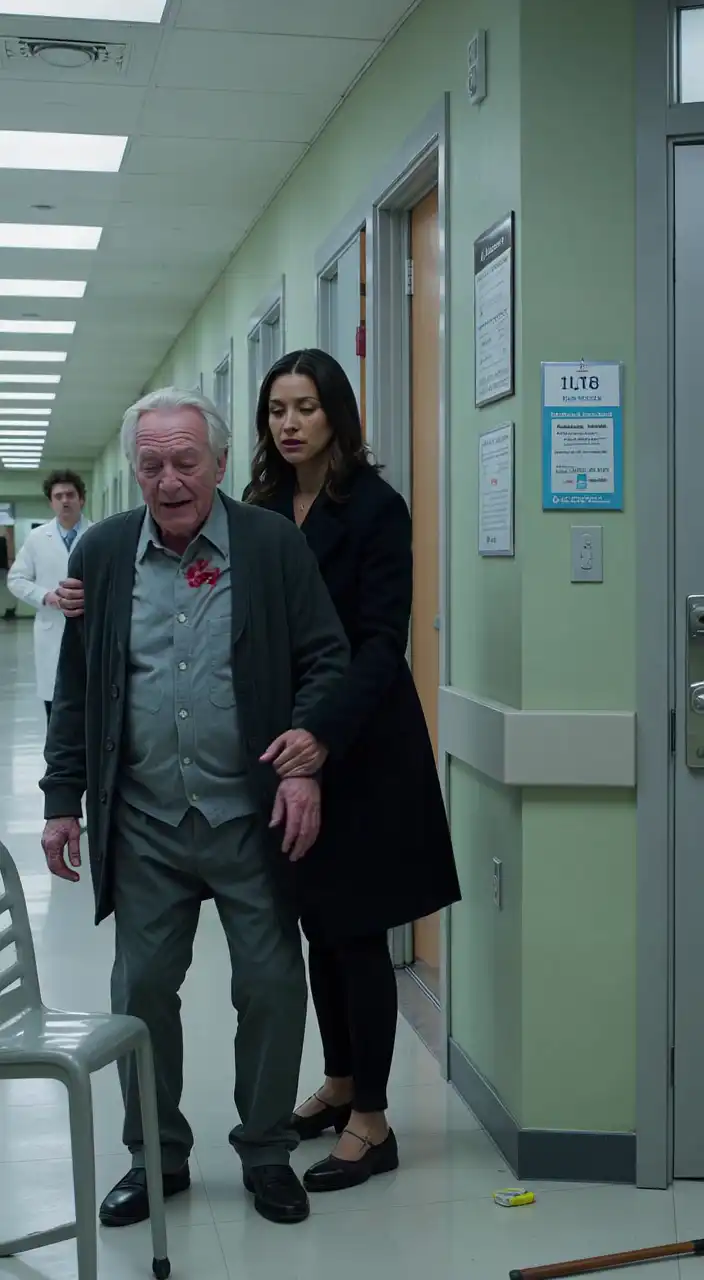
MY FATHER STARTED SHIVERING SO HARD HIS SURGICAL BANDAGE BLED THROUGH, AND THE CLINIC ADMINISTRATOR STILL BLOCKED THE TRIAGE DOOR.
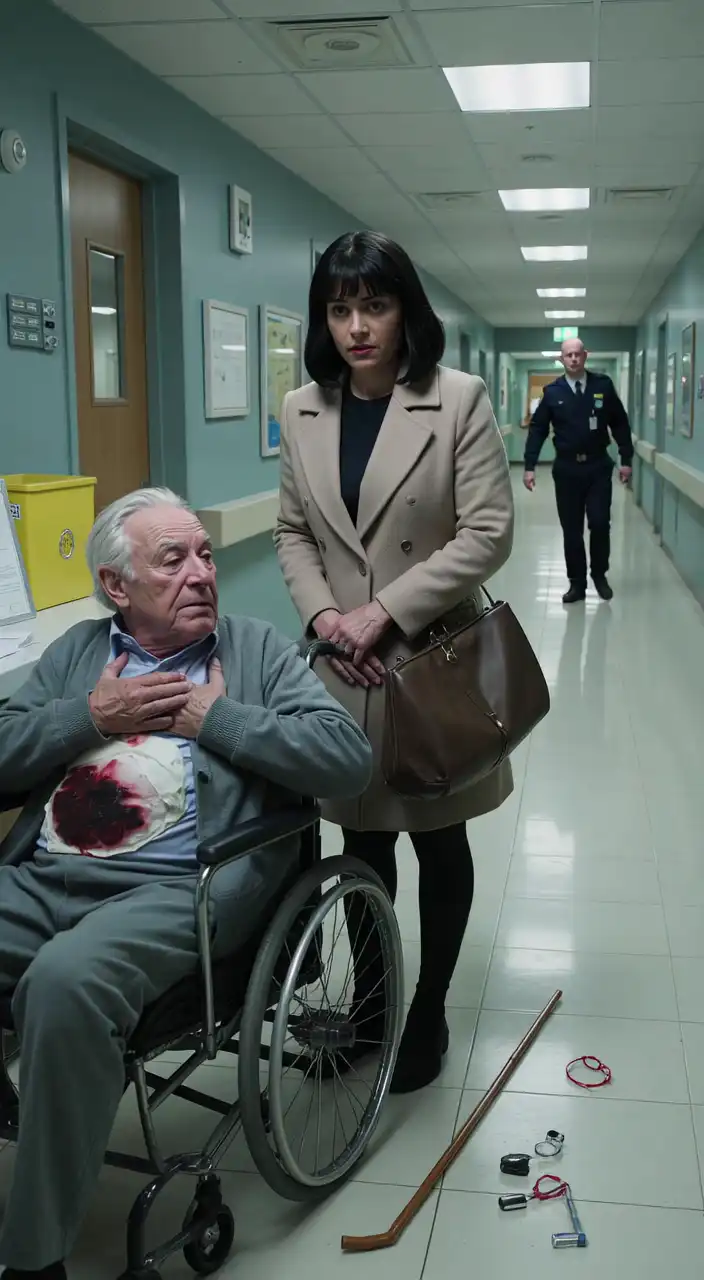
MY FATHER STARTED SHAKING IN THE HOSPITAL HALLWAY, AND THE WOMAN WHO CLAIMED TO BE HELPING HIM WOULD NOT LET TRIAGE TOUCH HIM.