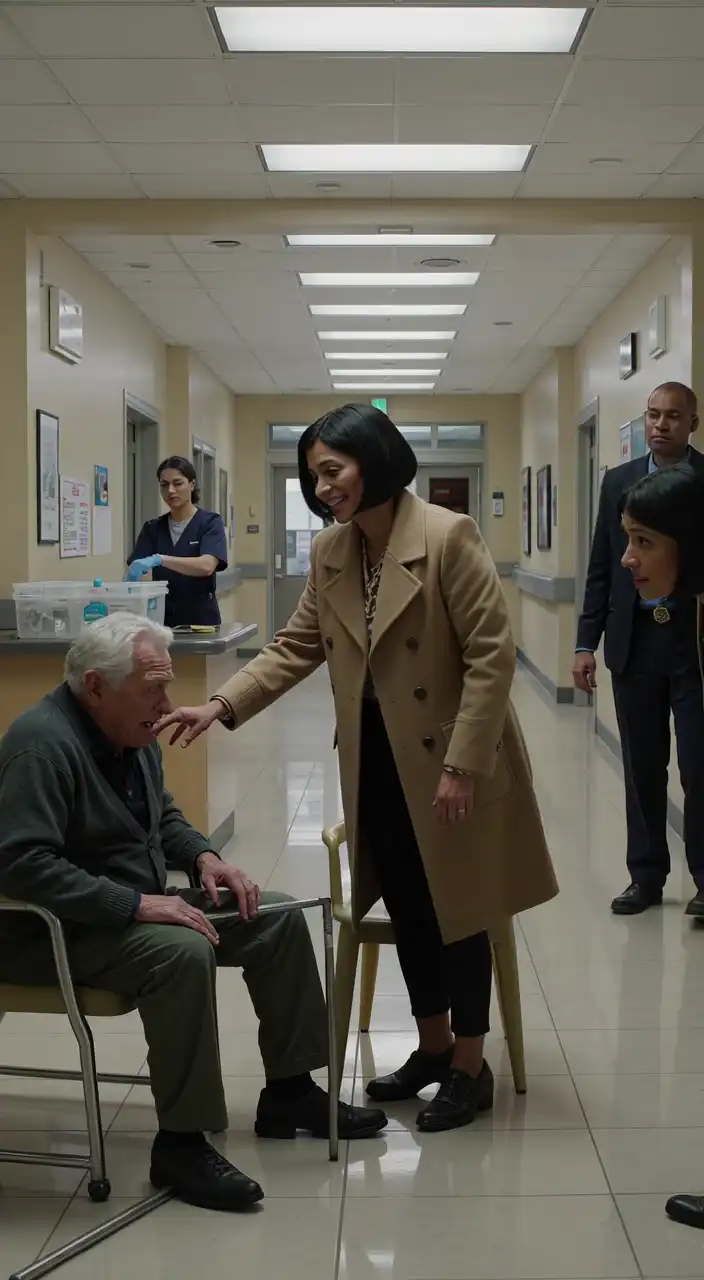

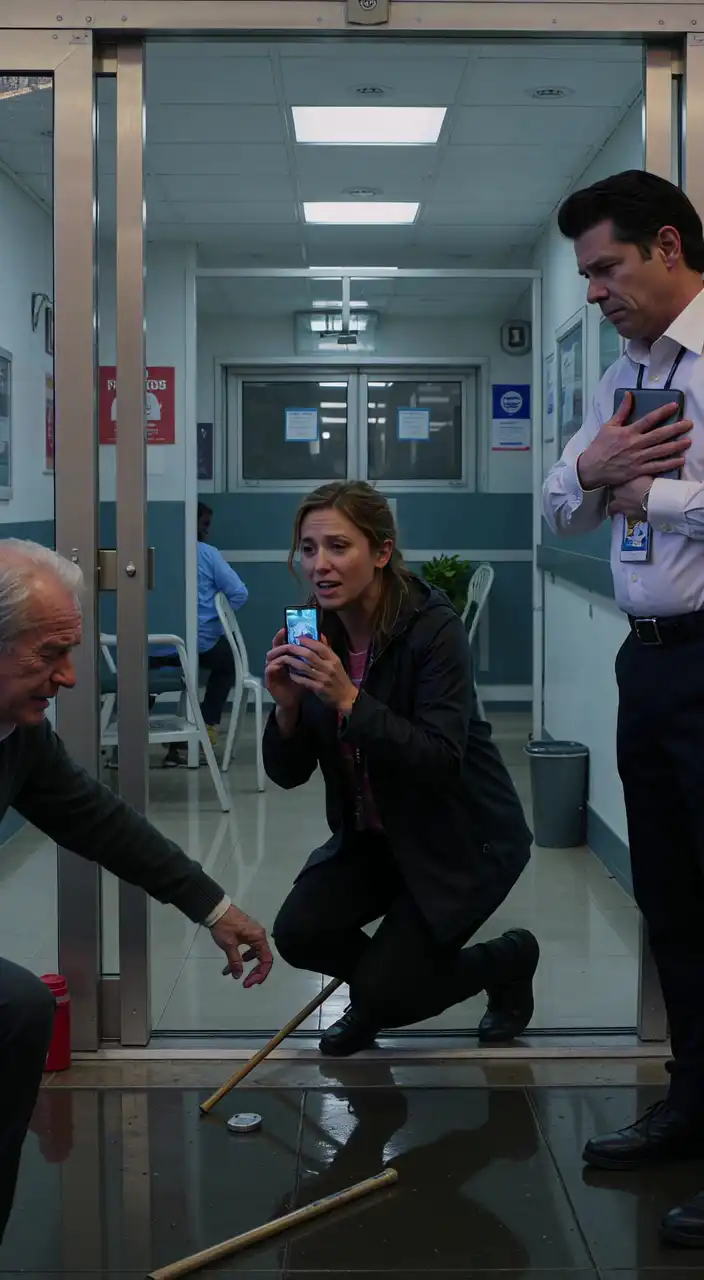
Matthew's face changed so fast it almost looked like fear before he forced it back into something flat and official.
"I do not have to show internal documents to security," he said. He shifted his coat closer against his body, and that was when I saw the corner of folded paper pressing out from the inside pocket. The discharge papers were in there. My father's hand twitched toward him without strength, as if he still believed there was some mistake and the right explanation would make all of this stop.
Victor did not raise his voice. He stepped one pace closer, enough to place himself between Matthew and the parking lane. "You are standing in an ambulance receiving zone, blocking re-entry for a symptomatic post-op patient during an active 911 call. You can hand me the papers now, or I can have this handled as an interference incident."
On my phone, the dispatcher said, "Sir, are you still with your father?" Her voice snapped me back. "Yes." I pressed speaker closer to my mouth. "He is shivering harder. He's answering, but slow."
"Stay with him. EMS is six minutes out. Do not give him anything to eat or drink. If there is any bottle or medication nearby, don't move it unless staff tell you to."
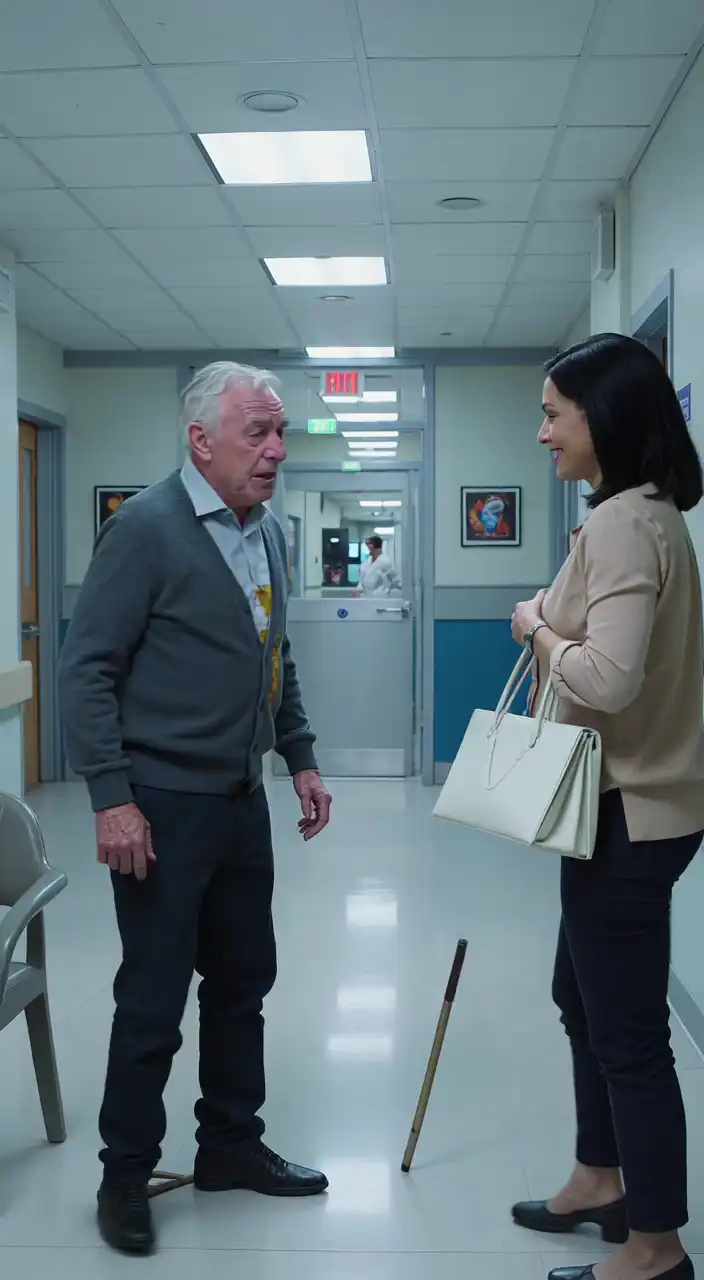
Bottle. Medication. I looked down again. The yellow stain on my father's sleeve had dried at the edges in a strange sharp ring, brighter than anything that would have come from soup or tea. The little cap by the baseboard was pale plastic with a childproof ridge. It looked dropped in a hurry.
My father leaned against me and whispered, "Nora."
I bent close. "I'm here."
His breath smelled sour and medicinal. "He told me your brother approved it."
"My brother?" For a second I didn't understand. Then my stomach dropped. Evan. My older brother handled Dad's investment accounts after Mom died. He also loved reminding everyone that he was "keeping things organized." Dad had been fighting with him for months about selling the lake house.
"What did Matthew tell you?" I asked.
Dad swallowed with effort. "That the family account holder said no readmission unless I signed transfer papers tomorrow. Said I was just confused from anesthesia. Said they gave me something for the nausea."
Victor heard enough to turn his head slightly. "What transfer papers?"
Matthew snapped, "This is not the time to interrogate a patient in distress."
"No," Victor said. "This is exactly the time."
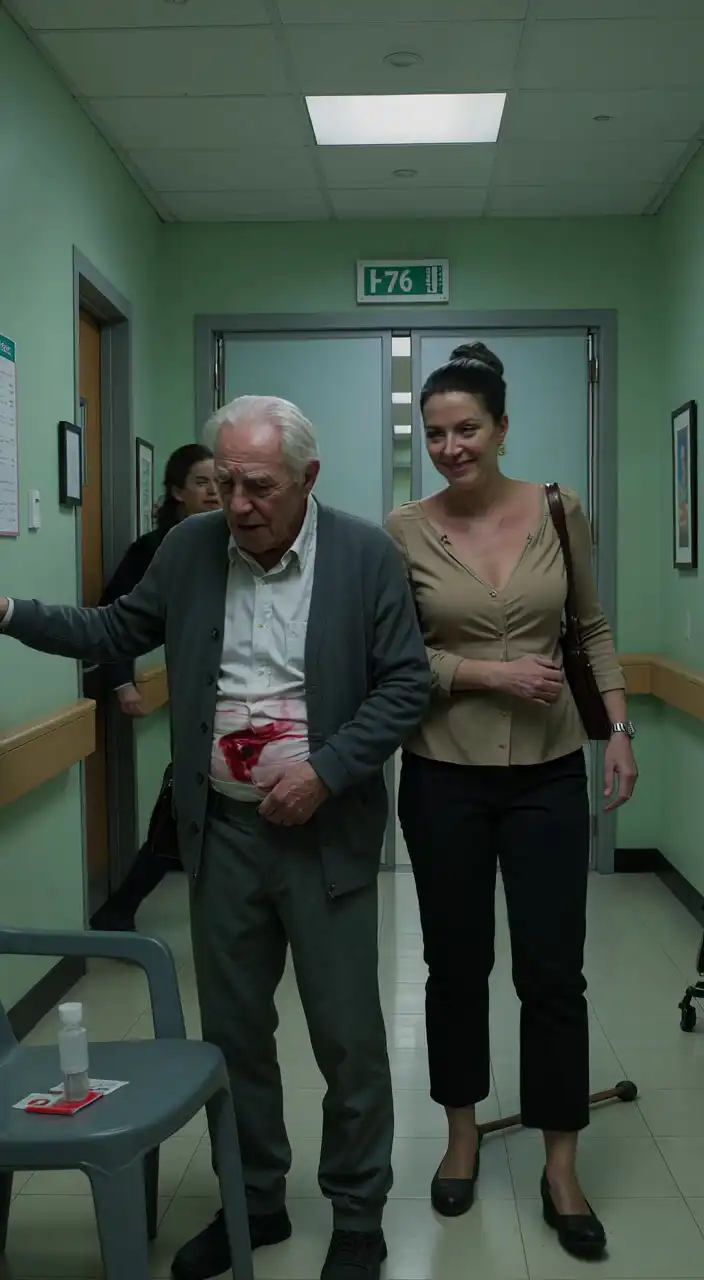
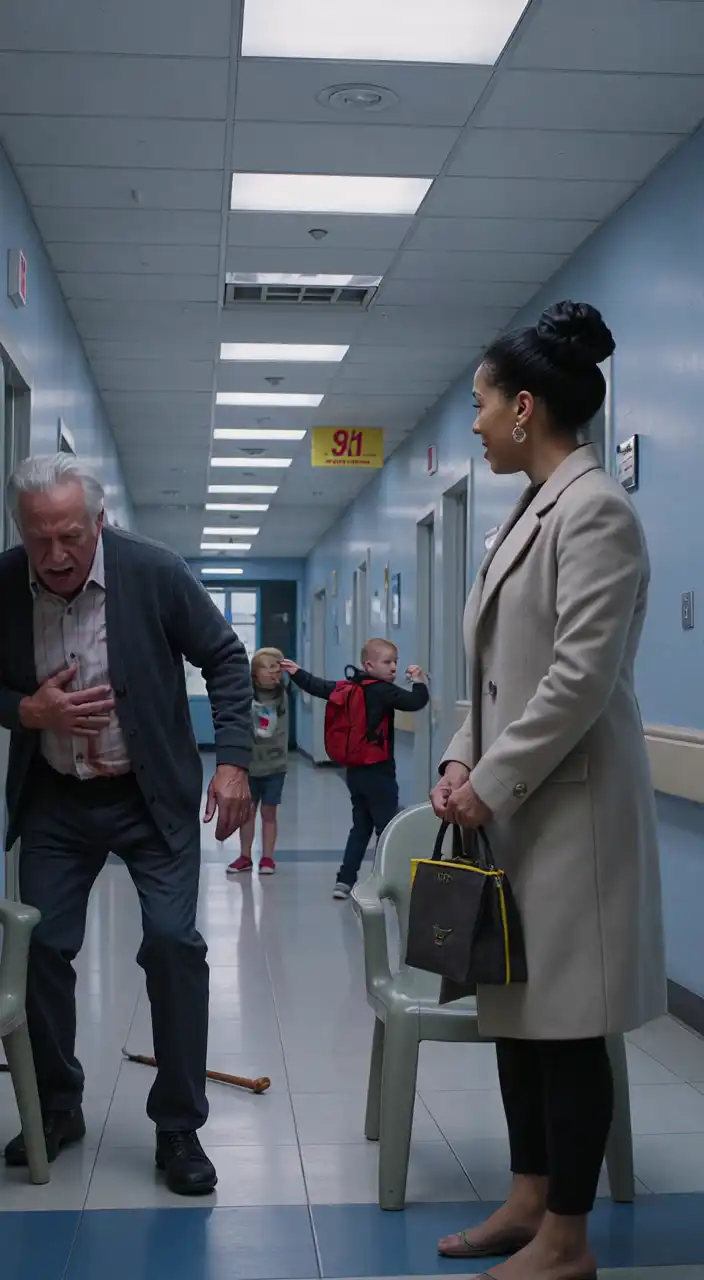
The automatic doors hissed open behind us and a triage nurse I didn't know looked out, taking in the chair, the bandage, the wet pavement, Matthew planted in front of the entrance. Before she could ask anything, my father gave a low sound and folded forward, one hand clamped over his abdomen. The edge of the dressing showed through his cardigan, and a dark wet patch had spread bigger than when we'd left home.
"Sir, don't bend like that," the nurse said, hurrying forward.
Matthew stepped sideways to block her. "He's already discharged. EMS is responding. We need to keep the entry path clear."
Victor's controlled expression vanished. He put a forearm across Matthew's chest and moved him back with one hard, practiced motion. "Move."
It was not dramatic. That almost made it worse. Victor did it like this was a line he had seen crossed before.
The nurse crouched by my father, touched the dressing, then looked up at me sharply. "How long has he had fever?"
"Since late afternoon. He started shaking in the car. He said the pain was worse than this morning."
"Did he receive any meds after discharge?"
"I don't know." I pointed at the stain. "There's something on his sleeve, and that cap-"
She saw both in one glance. "Don't touch the cap."
Matthew tried to recover. "The stain is turmeric from cafeteria soup. This family has been agitated and noncompliant all day."
My father lifted his head just enough to stare at him. Even in pain, the humiliation on his face was worse than the trembling. Dad had always been formal, private, exact with words. He hated scenes. He hated needing help where strangers could watch. To hear himself described like a problem was stripping him in public.
"I was not in the cafeteria," he said hoarsely.
That landed harder than if he had shouted.
The nurse put two fingers against his wrist, then said to Victor, "He needs inside now." She glanced at Matthew. "Who discharged a febrile bowel surgery patient with active drainage?"
"Post-op instructions were reviewed," Matthew said too quickly. "The caregiver acknowledged them."
"What caregiver?" I asked.
He did not answer.
Victor held out his hand. "Documents."
Matthew looked past him toward the lot as if calculating whether he could simply walk away. My phone screen flashed the map the dispatcher had sent, little red digits counting down the ambulance ETA. Five minutes. The numbers reflected in the wet tile under the awning.
Then Matthew did the dumbest thing he could have done. He pulled his tablet awake and started tapping with his thumb. Victor saw it. So did I.
"Are you canceling the call?" I said.
"I'm updating the incident to family transport refused," Matthew said.
The dispatcher came through the speaker loud enough for all of us to hear. "Do not terminate or alter the 911 response. Units are committed."
Victor took the tablet from Matthew's hand before he could react. "Now we're done playing administration."
Matthew lunged for it, then stopped himself when two more security officers came through the doors behind Victor. His breath was short now, the polish gone. "You are making a liability issue into a spectacle because you don't understand the account."
My father flinched at that word. Account. Not patient. Not man. Account.
The nurse looked at his chart on Matthew's tablet screen before Victor angled it away. Her expression changed. "There is an antiemetic charted here at 5:42. There is no nurse sign-off."
"Maybe because he wasn't on the unit then," I said.
No one answered me, but they all heard it.
The cap on the floor had become the center of the world. Such a small thing. Pale plastic near a dirty baseboard. But now the nurse was asking for a specimen bag. Victor was asking for camera pull on the ambulance bay corridor. The dispatcher was staying on the line until EMS took over. And my father, who had spent his life trying not to inconvenience anyone, was finally being looked at as if he mattered more than the paperwork around him.
The paramedics arrived with a stretcher and a burst of cold air. One knelt by my father, checked his vitals, and swore under his breath when the temperature reading came up. The other listened while the nurse gave a compressed report: post-op discharge, fever, active drainage, possible undocumented medication administration, delayed re-entry, possible interference.
Matthew tried once more. "He has a pending financial hold and an authorized family representative-"
The paramedic looked up at him without patience. "Is that representative his blood pressure?"
That would have made Dad laugh on another day. Tonight he only closed his eyes.
As they lifted him, the folded discharge papers slipped partly out of Matthew's coat pocket and fell to the pavement. I saw my father's name. I saw a bold line near the bottom. Disposition: home with family observation. Under that, in handwriting, Caregiver confirmed understanding.
The signature was not mine.
I picked up the papers before the rain could hit them. The signature was an ugly fast scrawl that looked enough like my brother's to count if no one asked questions. Tucked behind the instructions was a second page on different stock, not hospital letterhead, with a heading that made my throat go dry: Temporary Capacity Concern - family consult recommended.
My father grabbed my wrist with surprising force. "Don't let Evan sign anything," he whispered.
Then the paramedic peeled back the edge of the bandage, his face tightened, and he said, "We need a room now. This man is septic until proven otherwise."
Victor heard that, looked at the paper in my hand, then at Matthew, and said, "Nobody leaves."
Inside the emergency department, movement swallowed everything.
They pushed my father through triage so quickly that the waiting room barely existed. A tech cut away the damp bandage. A nurse drew blood while another started fluids. Someone clipped a new bracelet onto his wrist, and the plastic snapped closed with a sound that hit me harder than I expected. Earlier that day his discharge bracelet had been cut off like he was done, safe, handled. This new one meant the opposite. It meant the crisis was real enough to restart the whole machine.
Victor stayed near the doorway with one of his officers, not crowding the room, just present. Matthew was somewhere outside with administration and security, no longer in charge of the air around us. I could breathe enough to stand still.
A doctor in navy scrubs came in, looked at the chart, then at my father. "Mr. Hale, I'm Dr. Brennan. You had bowel surgery this morning?"
Dad nodded weakly.
"Fever started when?"
"Car ride home," I answered. "Shaking got worse around dinner. He said they told him nausea was normal. Then he got confused."
Dr. Brennan pressed gently around Dad's abdomen. Dad sucked in a breath and cursed under it, which for him was almost screaming. The doctor checked the dressing and the stain on the cardigan I was still holding.
"Where did this yellow substance come from?"
"I don't know," I said. "There was a cap on the floor outside. A nurse bagged it."
Dad opened his eyes. "Bitter." His voice was papery. "They gave me something bitter."
Dr. Brennan looked at him sharply. "Who gave it to you?"
He stared at the ceiling, trying to pull the memory through fever. "Not nurse. Man in gray coat. Said it would settle my stomach before discharge."
Victor stepped closer to the doorway. "Gray coat."
Matthew had been wearing a charcoal blazer.
Dr. Brennan did not comment on that. He moved fast, ordering cultures, broad-spectrum antibiotics, imaging, lactic acid, repeat vitals. Then he paused over the papers in my hand. "What is that second form?"
I passed it over. He read it, jaw setting tighter with every line. "This isn't a standard inpatient form."
"What does it mean?" I asked.
"It means somebody created a document suggesting your father lacked decision-making capacity and needed a family consult before further treatment decisions." He tapped the bottom. "No attending signature. No psychiatry consult. No time stamp in the electronic system, if this wasn't scanned in properly."
Dad turned his head toward me. Fever had made his eyes too bright. "Evan told me yesterday I'd get confused after surgery. Kept saying I shouldn't review house papers until next week."
There it was, the shape of something ugly beneath all this. The lake house. Dad's surgery had become a window.
Dr. Brennan looked from my father to me. "Is there family conflict over property or medical decision-making?"
I laughed once, because if I didn't I was going to break something. "Yes."
He nodded like that answer fit too well. "For now, the priority is his infection and whether he has a post-op leak or wound complication. But no one should have blocked his return for care. And no one should be creating unofficial capacity paperwork around a fresh surgical patient."
A woman from patient relations appeared, followed by a risk manager whose face said he wished he were literally anywhere else. Victor spoke quietly with them in the hall. I could hear only pieces: 911 audio... attempted cancellation... concealed discharge documents... possible falsified caregiver acknowledgment.
Dad drifted in and out while fluids ran. He kept touching the new bracelet as if he needed proof he was admitted again. At one point he looked at me and asked, with painful dignity, "Did I make a fool of myself outside?"
I leaned close. "No. They did."
His mouth tightened. He hated kindness almost as much as pity, but he took my hand.
The scan tech came for him, and for ten minutes I was left in the room with the cardigan, the papers, and my own thoughts. I spread the discharge packet on the chair and went through every page. Standard instructions. Follow-up numbers. Medication list. Then, tucked deep in the back, a photocopied page from admissions with a note handwritten across the top: Family billing contact updated per Evan Hale.
My brother had updated himself to primary.
I called him before I could think better of it. He answered on the second ring sounding annoyed, not worried.
"Nora, I'm in the middle of something."
"Dad's back in the ER with sepsis, and Matthew hid the discharge papers in his coat."
Silence, then a sharp exhale. "Don't be dramatic."
"He also had a fake capacity form. Do you want to explain that before security asks you?"
"You don't understand how fragile Dad is right now."
That phrase sat there between us. Fragile. Not sick. Not hurting. Fragile, as in manageable.
"What did you authorize?" I asked.
"I authorized a discharge because the surgeon said recovery would be smoother at home with supervision."
"Then why block readmission?"
"He panics in hospitals. You know that. And every extra day turns into another round of him changing his mind."
"About the lake house?"
He did not answer quickly enough.
"Nora," he said, dropping his voice into the patient tone he used on clients and old girlfriends, "Dad agreed in principle before surgery. He said he was tired of maintaining it and wanted me to handle the sale. Then this morning he got sentimental and confused. I was trying to protect him from making irrational reversals under medication."
I stared at the wall. "So you had a clinic administrator keep him out while he was shaking with fever."
"Matthew was supposed to make sure no one let you stir him up until I got there."
The words were so nakedly awful that I almost missed the significance buried inside them.
"Until you got there?" I said. "You're coming here?"
He hung up.
That was the mini-hook the night needed. Not because I wanted to see him. Because now I knew he had expected to arrive before anyone inside learned what had happened. He thought this was still manageable.
When Dad came back from imaging, his teeth were chattering despite warmed blankets. Dr. Brennan returned with results moving across his screen. "There is a fluid collection near the surgical site and signs concerning for infection. Surgery is being called to evaluate whether this needs drainage tonight."
Dad closed his eyes. "Another operation?"
"Possibly a procedure, maybe not a full operation. We'll know more after surgery reviews the scan."
His hand searched the blanket until it found mine again.
Victor stepped into the room just enough to speak privately. "Ms. Hale, the bottle cap outside matches a liquid anti-nausea medication kept in discharge prep. Pharmacy says the formulation can leave a yellow stain if spilled. It should only be dispensed by documented staff. There is no record your father received it at discharge. Also, corridor footage shows Matthew entering your father's bay after transport, carrying a paper cup."
Dad heard that through the fog and whispered, "Bitter."
A fair explanation briefly existed: maybe Matthew had tried to help with nausea and failed to chart it. Maybe this was incompetence plus arrogance. It would not explain the fake form. It would not explain the blocked re-entry. But for a moment, everyone in the room could feel the institution searching for the least damning version.
Then Dr. Brennan flipped to the medication reconciliation and frowned. "That's odd."
"What?" I asked.
"The antiemetic in discharge prep is colorless."
Victor looked at the cardigan sleeve.
Dr. Brennan pointed to another line lower in the list. "The only oral liquid in his post-op pathway that leaves a yellow residue is lactulose. That wasn't prescribed to him today."
"Lactulose?" I said.
"It can cause diarrhea and cramping. Not sepsis. But in a fresh bowel surgery patient, unnecessary dosing could muddy symptoms and make abdominal distress look less alarming or easier to dismiss."
The room went still again. Not poisoning in some melodramatic sense. Something uglier and more believable. A dose that could confuse the picture. A bitterness Dad remembered. A yellow stain no one expected a trained eye to question.
And if someone wanted a weak, embarrassed patient hurried out and then written off as overreacting, that mattered.
Dad's voice was barely there. "He said if I wanted to keep my dignity, I should stop calling my daughter."
I looked at him. He had not told me that outside. Maybe he couldn't. Maybe he had saved it because saying it aloud made it real.
Victor's controlled anger hardened. "Then this just moved beyond policy."
The surgeon on call came in, reviewed the scan, and said there would need to be a drainage procedure within the hour if labs confirmed what they suspected. Dad gripped the blanket, terrified now in a way he had hidden outside under embarrassment.
I bent close. "You're not leaving with anyone but me."
He nodded once.
Then patient relations returned with one more shock. "Your brother is downstairs insisting he has authority to direct care," she said. "He brought paperwork."
Victor answered before I could. "He can wait. And if those papers are fraudulent, he can wait with me."
They were not done with us yet. The conflict had just moved upstairs.
Evan arrived in the family consult room wearing a rain-darkened wool coat and the expression of a man inconvenienced by other people's lack of perspective. He had always been handsome in a polished, reassuring way. That face had gotten him money, clients, and second chances. Tonight, it made him more dangerous because everyone who did not know him wanted to assume reason lived behind it.
Victor stood by the door with his clipboard. A social worker named Denise sat near me with a laptop open. Dr. Brennan had insisted any discussion of authority happen away from Dad's bedside, and for that alone I could have hugged him. Dad needed antibiotics and a surgeon, not a courtroom.
Evan laid a leather folder on the table and pushed it toward Denise. "I am my father's financial power of attorney and designated family billing contact. He is emerging from anesthesia, septic, and not in a position to make coherent choices. My concern is that my sister is emotional and escalating this for personal reasons."
I did not answer right away. Denise had the kind of calm that can stop a room from being hijacked. She opened the folder, scanning each page in order. "Financial POA does not equal medical authority," she said. "Do you have healthcare power of attorney?"
"He refused to finish that packet after our mother died."
"So at present, absent a court order or incapacity determination, your father directs his own care."
Evan leaned back. "That is exactly the issue. He does not currently have capacity for major decisions."
Denise slid the temporary capacity concern form out from under the rest and set it flat. "This is not valid. We checked."
For the first time, he looked rattled. Barely. But enough.
He recovered by turning to me instead of Denise. "Nora, listen to yourself. You were always dramatic around hospitals. Dad hates scenes. Matthew was trying to manage an agitated discharge while I drove over."
"You told him to keep Dad from calling me," I said.
"I told him to reduce confusion."
Victor made a note. The scratch of his pen sounded loud.
Evan noticed and smiled thinly. "Are we seriously treating a security note as evidence of abuse now?"
Victor met his eyes. "We're treating interference with emergency care as exactly what it is."
The calm broke for a second. "Nothing was interfered with," Evan snapped. "An ambulance was already on the way."
"After your father was blocked from re-entry," Denise said.
He shifted tactics again. "My father gets fixated. He was upset about the property discussion and started insisting everyone was against him. Matthew knows our family through the foundation board. He was trying to keep things orderly, not exploit anyone."
There it was: the motive dressed as community. The wealthy family account Matthew had been protecting was Evan's institutional donor world. He had relationships here. He was counting on them to soften language and buy time.
I put my father's new wrist bracelet on the table. I had unclipped the old cut one from the discharge packet and kept it by reflex. It still had adhesive on it. "Dad wasn't fixated when they cut this off and sent him home with a fever. He wasn't fixated when someone gave him a bitter liquid not charted in his record. He wasn't fixated when Matthew hid the discharge papers in his coat."
Denise looked at the old bracelet, then at the timestamp printed on it. Another planted detail finding its use. "This bracelet shows discharge completed at 5:51 p.m. The antiemetic entry on the tablet was 5:42 with no sign-off. Security footage has Matthew entering the bay with a cup after 5:55. That sequence doesn't support a normal nursing administration."
Evan said nothing.
Victor added, "And the attempted update to classify family transport refusal was made while 911 was active. We have that too."
For one sharp moment, the room tilted toward the truth. Then came the plausible-but-incomplete explanation, offered like a life raft.
Evan spread his hands. "Fine. Maybe Matthew overstepped trying to settle my father before I arrived. Maybe he gave him an over-the-counter laxative because Dad complained of constipation and pain. Stupid, yes. Sinister, no. But none of that caused infection. The medical emergency is separate. Let's not invent criminal intent because everyone is upset."
It was clever. It used the same thing Dr. Brennan had said: the yellow medicine was not the source of sepsis. It tried to shrink the wrong into a procedural mistake.
Denise did not take it. "Intent matters less than obstruction right now. Why were unofficial capacity papers prepared?"
Evan looked at the form as if seeing it for the first time. "Matthew mentioned a precaution. My father was saying contradictory things about selling assets and discharge planning. I said if there were concerns, make a note. I didn't draft it."
"Who did?" I asked.
He turned to me with real irritation. "Do you think I have time to micromanage every staff interaction? Dad asked me to protect him from his own reversals. He said if he got scared, he'd run to you because you indulge panic instead of practical decisions."
That was a lie with a hook in it because part of it had once been true. After Mom died, Dad did call me when fear got too loud. Evan handled papers; I handled midnight. He had always treated that division like proof I wasn't serious. The old guilt rose anyway. What if I had left the hospital too soon this morning? What if I should have fought discharge before any of this happened?
Denise must have seen my face. "None of this is on you," she said, firmly enough to stop my spiral. "Your father sought help. It was delayed."
A nurse came to the doorway and beckoned Dr. Brennan, who had just joined us. He stepped out, returned thirty seconds later, and addressed me directly. "The surgical team wants to place a drain tonight. He understands and is consenting. He specifically named you as the person he wants updated."
Evan laughed once through his nose. "Under sepsis and narcotics? That's shaky."
Dr. Brennan's eyes chilled. "He answered orientation questions appropriately, restated risks and benefits, and clearly declined your involvement. That's not shaky. That's documented."
Reversal. Evan had built his strategy on Dad being too weak to speak. Dad had just spoken in the one way that counted most right now.
Evan's jaw moved. "Then I want to see him."
"No," I said before anyone else could. "Not tonight."
He ignored me and looked to the doctor. "I have a right to reassure my father."
Victor finally stepped in fully. "Given the allegations and the active interference review, any contact will be supervised and only if the patient agrees."
The doctor nodded. "And only after the procedure."
Evan stood. "This is absurd. A family dispute is being turned into an abuse narrative because a fever patient got confused."
The phrase struck something in Dr. Brennan. "A fever patient with fresh bowel surgery was denied immediate re-evaluation at a hospital threshold. That's not family drama. That's a safety event."
Silence followed that. Institutional language, but with moral weight.
Evan collected his papers, slower now. As he slid them into the folder, one extra page stuck and half-fell onto the table. I caught the heading before he snatched it back: Listing Preparation Timeline - Lake House.
Dates. Projected sale windows. One line circled: best signed before post-op recovery volatility resolves.
He saw me see it.
So did Denise.
There was no dramatic confession. Only that one exposed sentence, planner-clean, colder than anger. He had not just wanted the house sold. He had wanted it signed while Dad was vulnerable enough to doubt himself.
Denise said quietly, "Leave that document here."
"It's irrelevant."
"It goes directly to motive."
He held onto it. Victor held out his hand. "Sir."
For a second I thought he might bolt. Instead he let out a breath and released the page. "You people are insane."
"No," I said. "You just ran out of polished words."
The surgeon's resident came for me then. Dad was heading to interventional radiology for drainage, not open surgery yet. Good news relative to terrible news. They needed me to walk with them because he was asking where I was. I stood, and Evan moved like he might follow.
Victor blocked him with one step. This story had a human wall now, not a procedural one.
In the hallway, Dad was on the transport bed under warm blankets, shivering less now that fluids and antibiotics had started. He looked smaller under hospital lights than he ever had at home. The cut bracelet from earlier was still in my pocket. The new one glowed white under the scanner as the transporter checked his ID.
Dad opened his eyes when he heard me. "Is he here?"
"Yes," I said. "No, he isn't coming in."
He nodded once. "Good."
"You need to rest."
His fingers brushed my sleeve. "In my coat pocket at home... blue envelope."
"What is it?"
"Revised will. Unsigned." He swallowed. "I stopped trusting the timing of things."
Another planted detail, another hook. A blue envelope waiting at home. Proof he had known pressure was building before tonight, but had not realized how far it would go.
The resident interrupted gently. "We need to move."
As they rolled him away, he looked more embarrassed than afraid, and that broke my heart again. People think elderly parents become children in crisis. They don't. They remain themselves, carrying decades of pride into rooms where strangers lift them. Dad wasn't just hurting. He was trying not to be reduced.
Denise touched my arm after the bed disappeared around the corner. "Do you have a safe place to stay tonight?"
The question startled me. "At home, yes."
"Is your brother on the property?"
"He has a key to Dad's house."
Victor, still nearby, heard that. "Then don't go alone for anything important."
I thought of the blue envelope. Of the listing timeline. Of Evan saying Matthew was supposed to hold things until he got there. A chill unrelated to the hospital swept through me.
Before I could answer, Victor's earpiece crackled. He listened, then looked at me. "Cameras show Matthew tried to access records after being removed from the bay. IT locked him out. He also made an outgoing call to your brother two minutes before you called 911."
Evan's story about driving over after the fact just cracked in another place.
The pressure point at the end of that movement came with a simple fact and a simple choice. Dad was heading into an urgent procedure. Evan had motive, relationship leverage, and possibly access to the one thing Dad had hidden because he feared exactly this kind of pressure. And I could not be in two places at once.
I asked Victor, "Can security meet me at my father's house after the procedure starts?"
He answered without hesitation. "Yes. If that envelope matters, we get there before your brother does."
The drainage procedure took forty minutes and felt like four hours.
I waited in a small family alcove outside interventional radiology with bad coffee going cold in my hand and the old discharge bracelet cutting into my palm. Denise sat with me longer than she had to, updating notes and occasionally explaining what would happen next in plain language. Cultures would take time. Surgery would watch him closely overnight. If the infection source was controlled early, that improved everything. If not, they would escalate. It was procedural information, but it landed like story pressure because every phrase contained a threshold: if this, then that, and each branch carried risk.
When the resident finally returned, he looked tired but not alarmed. "The drain is in place. We got infected fluid. He's going to a monitored bed. Blood pressure has improved some."
I closed my eyes. It wasn't safety, not yet. But it was movement toward it.
"Can I see him?"
"In a minute. He's groggy. The attending wants to speak with you first."
The attending surgeon was younger than I expected and all business. He showed me the scan images and where the collection had formed. "This likely developed over hours, not days. Returning when he did was absolutely appropriate."
The sentence mattered more than he probably knew. Appropriate. A trained person putting a clean word over the fog of doubt everyone else had tried to create.
"He told us someone at discharge gave him a bitter liquid for nausea," I said.
The surgeon nodded. "That would not create this infection. But masking symptoms or delaying reassessment in a fresh post-op patient can absolutely worsen the situation."
There it was again. The larger emotional reversal building: the yellow stain wasn't a murder clue. It was almost worse. It was a humiliation tool, a confusion tool, a delay tool. Something small enough to be denied, but dangerous because it bought time against a vulnerable person.
After I saw Dad sleeping with the drain in place and fresh monitors tracing steadier lines, Victor met me at the elevators with another officer and a sheriff's deputy hospital liaison named Keene. I hadn't asked for law enforcement yet. Victor had. "Because if documents are being removed from the residence, we may need chain of custody," he said.
Outside, the rain had thinned to a mist. The drive to Dad's house took nineteen minutes. Long enough for me to imagine all the ways we could already be too late. Dad lived in a quiet development lined with maples and low stone walls, the kind of place people assume means safety. One lamp was on in the front room.
"Evan?" I said.
Victor parked without blocking the driveway. "Stay behind us until we know who's inside."
The front door was unlocked.
That detail hit me as hard as anything in the ambulance bay. Dad locked his front door even to water the plants. Unlocked meant haste or confidence. Neither was good.
We entered to the smell of lemon cleaner and damp wool. No signs of forced entry. The living room looked normal except for one dining chair pulled away from the table and a drawer hanging open in the sideboard. A mug sat half-full near a stack of listing brochures from a realtor Dad had thrown out weeks ago.
Victor moved through rooms efficiently, calling clear corners out of habit. The deputy photographed the open drawer. I went straight to Dad's bedroom because I knew where he hid important things: not the obvious safe, which everyone knew about, but the cedar chest under the window where he kept old sweaters and Mom's Christmas linens.
The blue envelope was not there.
I stood frozen, staring at the indentation where it had been.
"Nora?" Victor's voice came from the doorway.
"It was here."
He took in the open chest, the disturbed stacks. "What exactly are we looking for?"
"Draft will. Maybe notes. He said revised. Unsigned."
The deputy said, "Unsigned won't control anything."
"Maybe not legally yet," I said, "but if it names what he intended, it matters."
Victor crouched by the chest. "Did your father keep copies of correspondence?"
"Sometimes in the office."
We moved there next. The office was neat except for one thing: the printer light blinking red and a paper jam halfway torn out. On the floor beneath the desk lay torn strips of what looked like a photocopy. Another planted detail announced itself. Phone screen, bracelet, yellow stain, and now printer light. Nothing dramatic, just traces of rushed cleanup.
The deputy gloved up and collected the strips. I checked the trash. Buried under junk mail was a thick white envelope from an estate attorney, opened that afternoon.
Inside was a cover letter to Dad enclosing a revised will draft and a note requesting signature only after a final review of transfer-on-death language for the lake property. Attached was a sticky note in Dad's handwriting: Do not sign until after surgery meds are gone.
I sat down hard in Dad's desk chair.
Victor read over my shoulder. "He knew he was being pressured."
"Yes."
The deputy stepped into the hall where the office camera system panel was mounted. "There's an indoor camera by the front room. Is it active?"
Dad had installed a simple home security system after a break-in down the street years ago and mostly forgotten it existed. Another quiet detail coming due. "I think so," I said.
We checked the app on Dad's desktop because my phone did not have his login saved. Last clip, twenty-three minutes earlier.
The image loaded in grainy color. Evan entered with his key. He went straight to the sideboard drawer, took out a folder, then paced while on the phone. No audio. Then he crossed to the bedroom hall. Minutes later he reappeared holding the blue envelope. Before leaving, he stopped at the table, opened it, scanned pages, and visibly swore. He pulled out his phone, took pictures, then shoved papers back inside. Instead of taking the envelope with him, he bent and stuffed it somewhere low near the built-in bench under the front window. Then he left.
I blinked. "Why would he hide it here instead of taking it?"
Victor answered first. "Because maybe he heard we were coming. Or because taking it creates possession problems if stopped. Hiding it gives him a chance to come back."
We found the envelope taped under the bench in less than a minute. Inside were the draft will, handwritten notes, and one more page that changed the shape of everything.
It was a signed letter from Dad's attorney dated two weeks earlier, confirming that Dad had expressly declined granting Evan healthcare authority and had requested that all significant property decisions be delayed until after recovery from surgery because he felt "subjected to repeated urgency by my son."
Not suspicion. Not family interpretation. Dad's own words, dated and signed while fully well.
The deputy photographed each page.
Then my phone buzzed. Unknown number. I answered.
A quiet female voice said, "This is Lena from discharge prep. I got your number from the risk office. I think I need to tell someone I saw Matthew give your father a cup after transport was arranged. He told me not to chart it because it was 'family supplied.' And your brother was on speaker."
My grip tightened. "Why call me now?"
"Because they told us security was pulling cameras, and I remembered the phrase your brother used. He said, 'Just keep him calm until I get the papers signed tomorrow.' I didn't realize how sick your dad was. Matthew said he was just anxious."
This was the movement where the authority seed widened into moral reversal. Not one bad administrator freelancing. A staff culture deferential enough to money that a worker heard a dangerous instruction, doubted it, and still looked away.
"Lena," Victor said when I put him on speaker, "are you willing to make a statement tonight?"
Her voice shook. "Yes."
While he arranged that, I scanned the blue envelope further. Beneath the attorney letter was another note from Dad, written to himself in the sharp block print he used when he wanted no ambiguity later: If I get confused after surgery, do not let Evan rush me. Nora first.
I started crying then. Not because it surprised me. Because Dad had known enough to fear this and still had to depend on the same system that gave Evan access.
The final turn of the movement came as we prepared to leave. Headlights swept across the front curtains.
Evan's car rolled slowly into the driveway.
He must have thought we'd be gone by now.
Victor held up one hand for silence. The deputy moved to the side of the entry. My pulse pounded so hard I could hear it in my ears.
The front handle turned.
Evan had his own key in the lock when the door opened onto security, a deputy, and me holding the blue envelope against my chest.
He did not back up. He smiled.
"Good," he said softly. "Now we can stop pretending this is about Dad's health."
That sentence was so monstrous in its honesty that for a second no one moved. Then Victor said, "Sir, step inside and keep your hands visible."
Evan looked at the envelope and made his choice.
He lunged.
The deputy caught his arm before he reached me, and the folder he was carrying burst open across the floor. Pages slid everywhere, including a fresh document with a notary tab and my father's forged initials beside a listing authorization.
The rescue had become harder, and uglier, and impossible to call a misunderstanding now.
Evan's struggle lasted maybe three seconds before the deputy turned him into the wall and cuffed one wrist. He wasn't fighting for freedom. He was fighting for paper. That may be the most revealing thing I will ever see in my life.
"Careful!" he shouted as if we were the reckless ones. "Those are legal documents."
"No," I said, my voice steadier than I felt. "They're not."
The notary page on the floor had my father's initials in the wrong style. Dad always made his O like a clean circle and his H with a high bar. These looked copied by someone who knew the letters but not the rhythm. A small thing, but once you know a person's hand, forgery announces itself in tiny betrayals.
The deputy secured Evan and read him the basic warning about not interfering. Victor knelt to gather the pages without smearing anything. There were listing agreements, a draft declaration that Dad wanted Evan managing "all hospitalization matters," and a typed note for a witness signature line left blank. In the corner of one page was the logo of the same private notary service Evan used for his business closings.
Another page turned up something almost absurd in its pettiness: a reimbursement worksheet estimating "avoidable extended care costs" if Dad remained admitted. He had reduced my father's night of sepsis to a spreadsheet.
Evan leaned against the wall and switched back to polished. "I came to secure sensitive financial documents from my unstable sister."
Victor did not even look at him. "Save it."
The deputy asked if anyone else had keys to the house. I said only me, Dad, and Evan. The deputy requested permission to remain while I changed the locks in the morning and advised me not to stay there alone tonight. I hadn't realized until then that my hands were still shaking.
At the hospital, Lena gave her statement to risk management and the deputy before dawn. She was younger than I'd imagined, maybe twenty-four, with scrub marks on her wrists and the expression of someone replaying a small choice that grew teeth later. She described seeing Matthew hand Dad a paper medicine cup at discharge prep after transport had already been arranged. She heard Matthew say, "Your son just wants you settled so you don't get yourself readmitted." Then she heard a man's voice through the phone speaker laugh and say, "Exactly. Keep him calm till I get there."
Matthew had signed no med administration note because he wasn't authorized to administer one. He had taken a sample from a prep cart where staff occasionally left patient education supplies and common discharge items. He later told Lena it was "just lactulose" and "not worth charting."
By itself, that still wasn't sepsis. But placed next to the fake capacity form, hidden papers, blocked doorway, attempted 911 interference, and forged listing documents, it became part of a coherent act: keep an embarrassed post-op father unstable enough to doubt himself, uncomfortable enough to be dismissed, and delayed long enough for pressure to continue.
Hospital administration moved faster once the story was impossible to localize as one bad interaction. Matthew was suspended pending investigation before sunrise. Risk management told Victor they were preserving all footage and access logs. IT confirmed unauthorized chart viewing attempts after the bay confrontation. Denise arranged for a formal abuse and exploitation consult, because this was no longer just a property issue. It was coercion wrapped around medical vulnerability.
Dad woke in his monitored room after dawn, pale and sore but clearer. The antibiotics had taken some of the glassy fever sheen out of his eyes. His drain line coiled beside him like an ugly lifeline. He looked at it with disgust, then at me with apology.
"Sorry," he said.
I laughed because I couldn't help it. "For being septic?"
"For causing... all this."
"No. For surviving in a way that inconvenienced manipulative men? Absolutely not."
That got the smallest real smile.
I told him only what he needed first: the drain was in, the infection was being treated, he was back under proper care, and Evan would not be allowed to direct anything. I left out the driveway confrontation until Dr. Brennan had assessed his morning orientation and blood pressure. Once the doctor confirmed he was lucid and stable enough for a difficult conversation, Dad asked the question himself.
"What did Evan do at the house?"
So I told him. The blue envelope. The camera clip. The forged listing papers. The attorney letter we recovered. Lena's statement. Matthew's suspension. I watched each fact land like a separate injury.
Dad closed his eyes. "I kept trying to believe he was only impatient."
That was the hidden secret becoming emotional fact. Not that Evan was greedy. We had all known he was controlling. The dangerous part was that Dad had been collaborating with his own denial because loving a child makes people edit what they can bear.
"He knew I was scared before surgery," Dad said quietly. "He sat by the bed talking about signatures like I was already halfway gone."
I took his hand. "Then he doesn't get access to you again without your say."
Dr. Brennan returned with morning updates and made a point of addressing Dad directly at every turn. "Your blood pressure is improving. Cultures are pending. We need another day to see how the source control works." Then, after checking if Dad wanted me present, he added, "Hospital administration has flagged your chart. No outside family member can alter contacts or give direction without your direct consent while you are alert."
Dad stared at him, then nodded. "Thank you for saying that plainly."
Victor visited later in civilian calm, though his earpiece still hummed. He explained next steps in human terms, not legal fog. There would be incident reports, statements, and likely charges related to forged documents and interference. Adult Protective Services would likely be notified because exploitation of a medically vulnerable elder intersected with care obstruction. Dad listened without flinching, then asked the one thing that mattered most to him.
"Will this make trouble for the nurses who did nothing wrong?"
Victor shook his head. "The goal is to identify who acted and who was pressured to stay quiet. Not punish everyone standing near it."
Lena came by after her shift ended, hesitant, carrying the bagged bottle cap receipt number as if she still needed a prop to justify entering. She apologized to Dad directly. "I should have spoken up sooner."
Dad, exhausted as he was, looked at her with more mercy than I felt. "You did speak," he said. "You did now. That matters."
She cried at that. So did I, once she left.
The final obstacle came not from Evan this time but from Dad's own body. By afternoon his fever spiked again. The monitor alarmed, nurses flooded in, and for twenty minutes every relief I had built collapsed into raw panic. Another scan was ordered. Surgery worried the drain might not be enough. Dad gripped the rails and muttered, "Not again, not again," and I had to stand there while medicine did what love couldn't.
This was movement five's threshold, the closest edge. The whole story could still be emotionally satisfying and medically cruel if his body failed to turn.
Dr. Brennan met me in the hall after the repeat scan. "There's still inflammation, but the collection is decreasing. We think this spike may be the system reacting as treatment kicks in. We're escalating antibiotics and monitoring closely. He is not crashing. Stay with him."
Not crashing. I lived on those words for the next six hours.
Dad was more frightened after that than he had been in the ambulance bay. Pain strips dignity fast, but fear strips the performance of dignity. He stopped apologizing and finally asked what he had been swallowing all night. "Am I dying?" "Did they make me worse on purpose?" "Was I foolish not to see it?" I answered each as honestly as I could.
"No." "Some people made wrong choices for their own reasons." "You were not foolish. You were trying to trust family."
Near midnight, when the fever finally bent downward and his hand unclenched around the blanket, he said, "Get my lawyer tomorrow."
That was the line of return. Not just to safety, but to self.
The ending unfolded over three days, not one dramatic hour.
Cultures confirmed a postoperative infection sensitive to the antibiotics they had started. The drain worked. Dad did not need a second surgery. Each day he looked less gray and more annoyed, which was the best sign of all. He complained about broth, noise, and the television remote. I could have kissed every petty objection.
Adult Protective Services sent a caseworker who did not talk to Dad like a child. She asked clean questions. Dad gave clean answers. Denise sat in for support. Victor provided incident documentation. The 911 audio, preserved camera footage, Lena's statement, the hidden discharge papers, and the forged listing documents all moved into one factual chain. No one had to inflate anything. The truth was bad enough.
Hospital administration barred Matthew from patient-facing duties immediately and later terminated him pending the outcome of the investigation. I heard through Denise that he had been under pressure to keep certain donor families "satisfied" and had started acting like policy was a private service menu. That explained him. It did not excuse him.
As for Evan, the deputy's report turned the driveway scene into more than a family argument. Possession of forged documents, attempted interference, and exploitation concerns brought real scrutiny fast. His lawyer called before he did. Then he called from a new number and left me a voicemail saying this had all been "a misunderstanding driven by grief and urgency." I saved it and did not answer.
Dad listened to the voicemail once, face expressionless, then asked me to delete it. "If he wants to speak to me," he said, "he can do it through counsel after I am standing."
His attorney came the next afternoon with a witness and a revised packet. Dad reviewed every page slowly, fully alert, no morphine on board, reading glasses low on his nose. He removed Evan as billing contact, barred him from acting in any healthcare role, and formalized what had lived for years in practice: if Dad wanted comfort, honesty, and a person who would get loud at the right door, he wanted me.
I did not cry then. Dad would have hated that. I simply passed him pages, uncapped pens, and steadied the clipboard when his hand trembled.
The blue envelope went back into a new folder, no longer hidden. The old discharge bracelet and the new admission bracelet sat beside it for a second before I tucked the old one away. A reminder of one line crossed and another reclaimed.
On the day Dad was finally moved out of monitored care, Victor stopped by in street clothes, off shift. He had no clipboard, no earpiece, just a paper cup of coffee and the look of a man checking on a promise he had made in the rain.
Dad held out his hand. "You were the first person who treated me like I belonged back here."
Victor shook it. "You did belong back here."
That simple correction undid something in Dad. After Victor left, Dad stared at the closed door a long time and said, "I thought needing help would make people own me."
"It doesn't," I said. "It shows who thinks they can."
We brought him home a week later with proper antibiotics, home health instructions, and a direct number to call if fever returned. No one else held his paperwork. No one else answered for him. The front door had new locks. The sideboard drawer was repaired. The realtor brochures were gone.
Lena mailed a note a month later saying she had transferred to another unit and was taking a course on patient advocacy. Dad wrote back in his careful hand: Thank you for choosing the patient when it became hard.
The lake house did not sell that summer. Dad asked me to drive him there once he was strong enough. We sat on the porch with blankets over our knees while he looked at the water and admitted he might sell one day, but not because someone timed it against his weakness.
As for Evan, the family part of the damage remains complicated in the way real things do. There was no cinematic courtroom speech in this story. There were interviews, evidence reviews, lawyers, silence, and the slow hard work of naming betrayal without letting it become your whole life. Dad did not romanticize reconciliation. He set conditions. He required truth. He stopped protecting his son from consequences.
The social-justice feeling people want from stories like this isn't really about punishment. It's about the line being redrawn in public. A recovering elder shivering at a hospital threshold is not an account. Not a signature opportunity. Not a billing problem. Not a private family asset dispute waiting to be managed. He is a patient. If he says he is in pain, if his bandage stains, if his fever rises, if his daughter calls 911, the correct response is care.
I still keep two things in my desk now: the old cut bracelet from the discharge that should never have happened and a copy of Dad's note from the blue envelope.
If I get confused after surgery, do not let Evan rush me. Nora first.
He is stronger now. Strong enough that he teases me for hovering over every cough. Strong enough that when he tells the story, he skips the fear and gets irritated all over again at the phrase "family authorization." Strong enough to say, with dry contempt, "Turns out sepsis was easier to treat than entitlement."
But when he says goodbye after appointments, he always checks that I have the papers before we leave.
And I always do.
Disclaimer: Mention of any brand or trademark is for identification only and does not imply partnership or endorsement
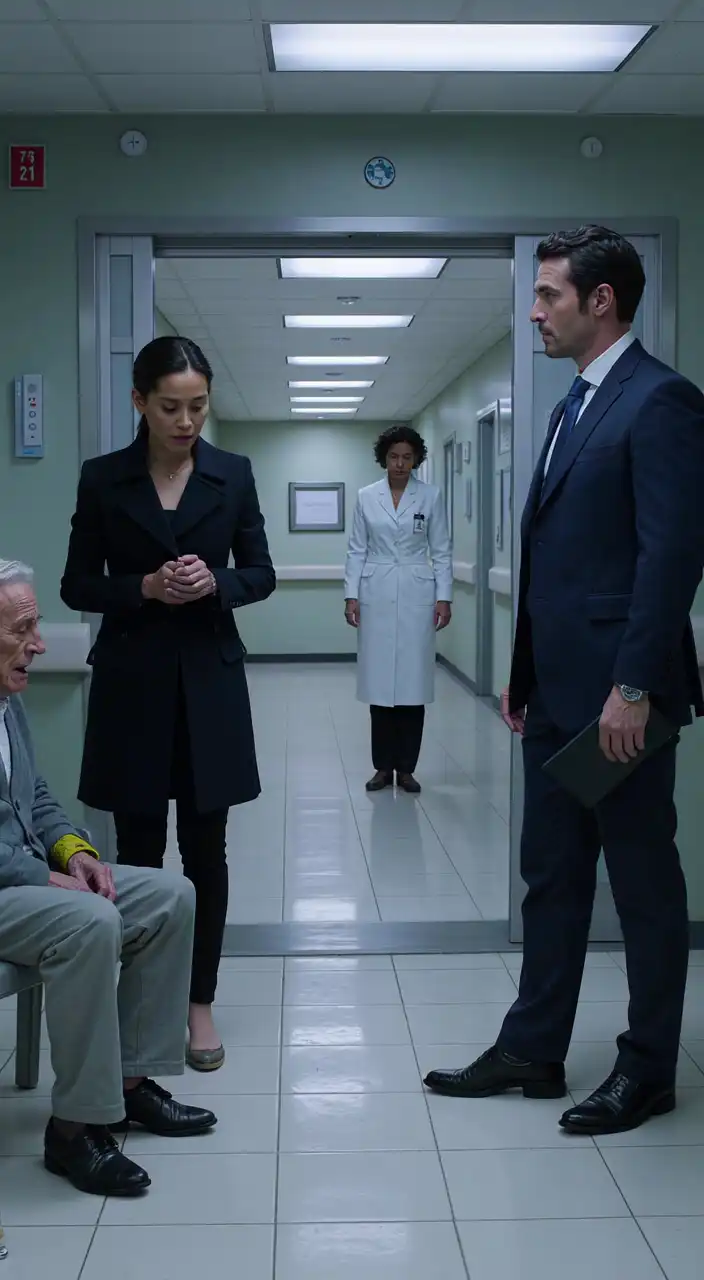
MY FATHER STARTED SHAKING OUTSIDE TRIAGE WHILE A CLINIC ADMINISTRATOR BLOCKED THE DOOR AND SAID HE NEEDED FAMILY PERMISSION FIRST.
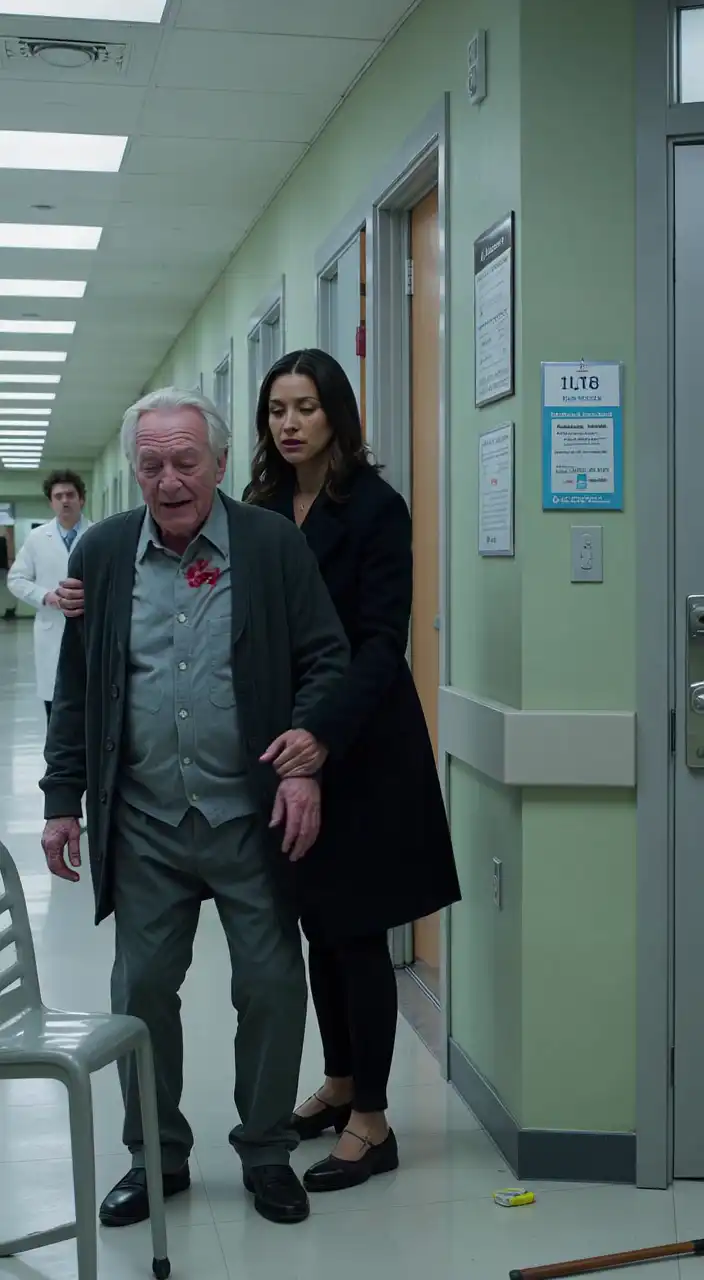
MY FATHER STARTED SHIVERING SO HARD HIS SURGICAL BANDAGE BLED THROUGH, AND THE CLINIC ADMINISTRATOR STILL BLOCKED THE TRIAGE DOOR.
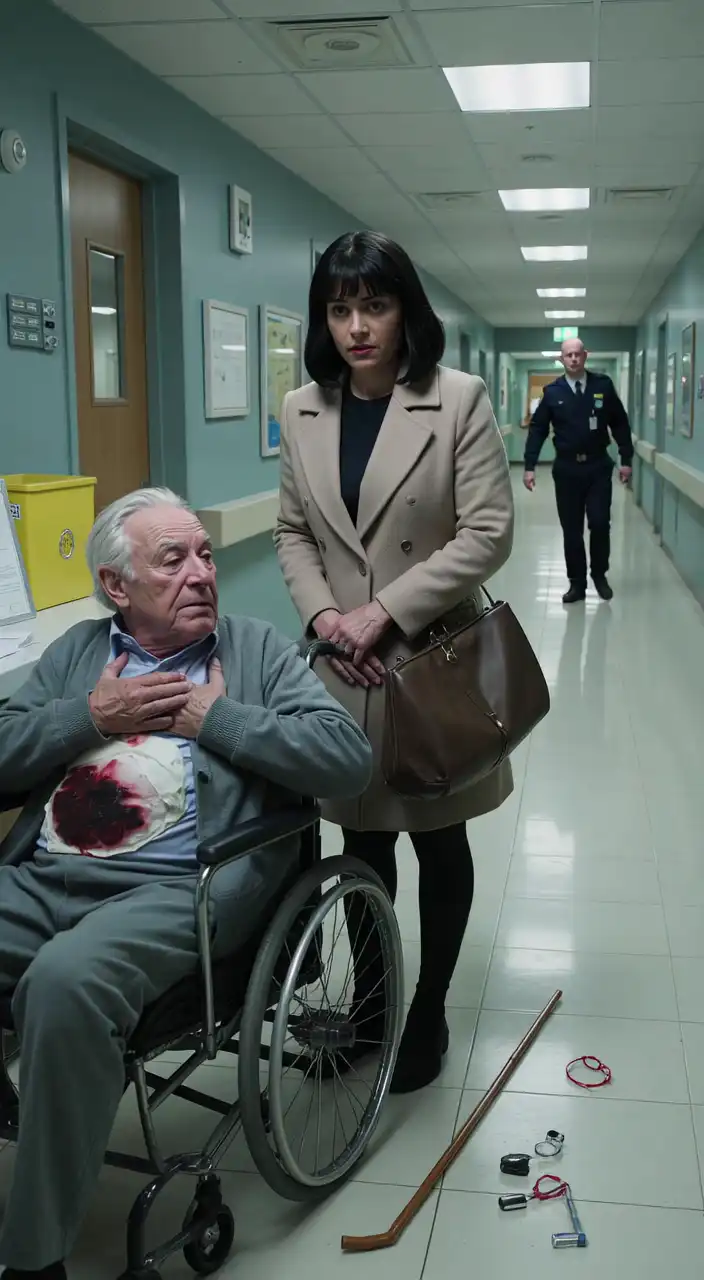
MY FATHER STARTED SHAKING IN THE HOSPITAL HALLWAY, AND THE WOMAN WHO CLAIMED TO BE HELPING HIM WOULD NOT LET TRIAGE TOUCH HIM.