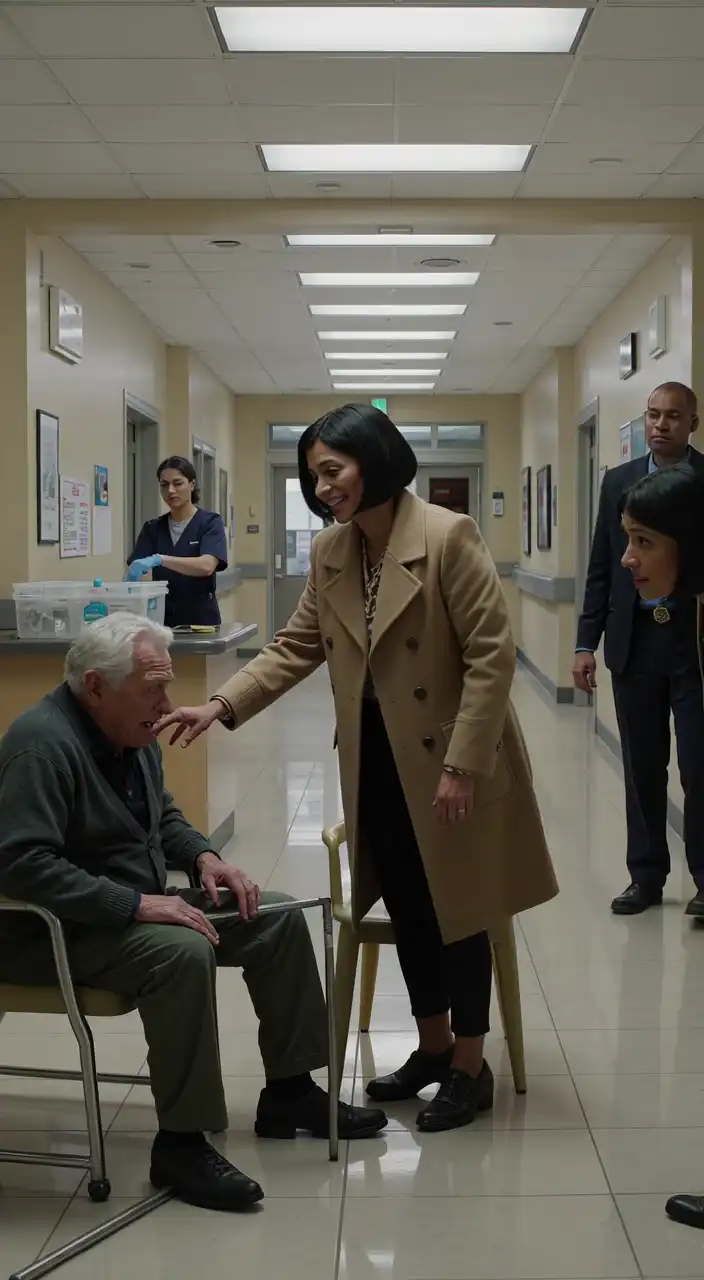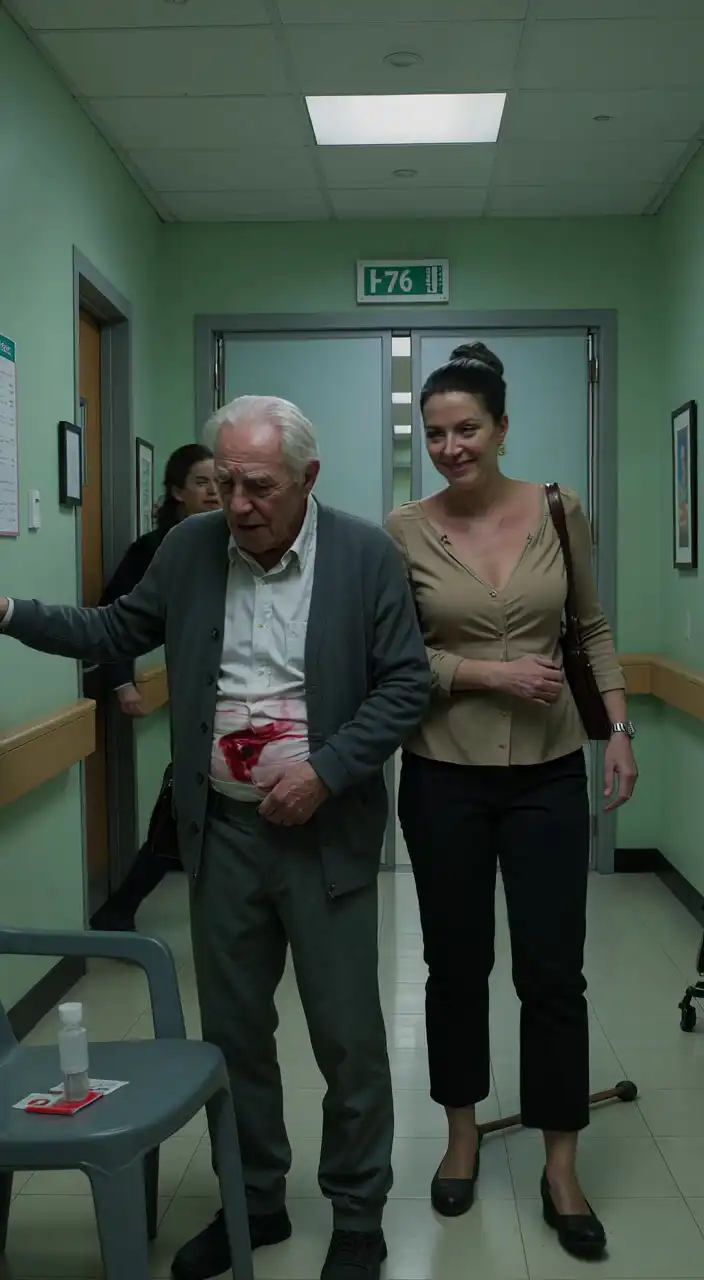
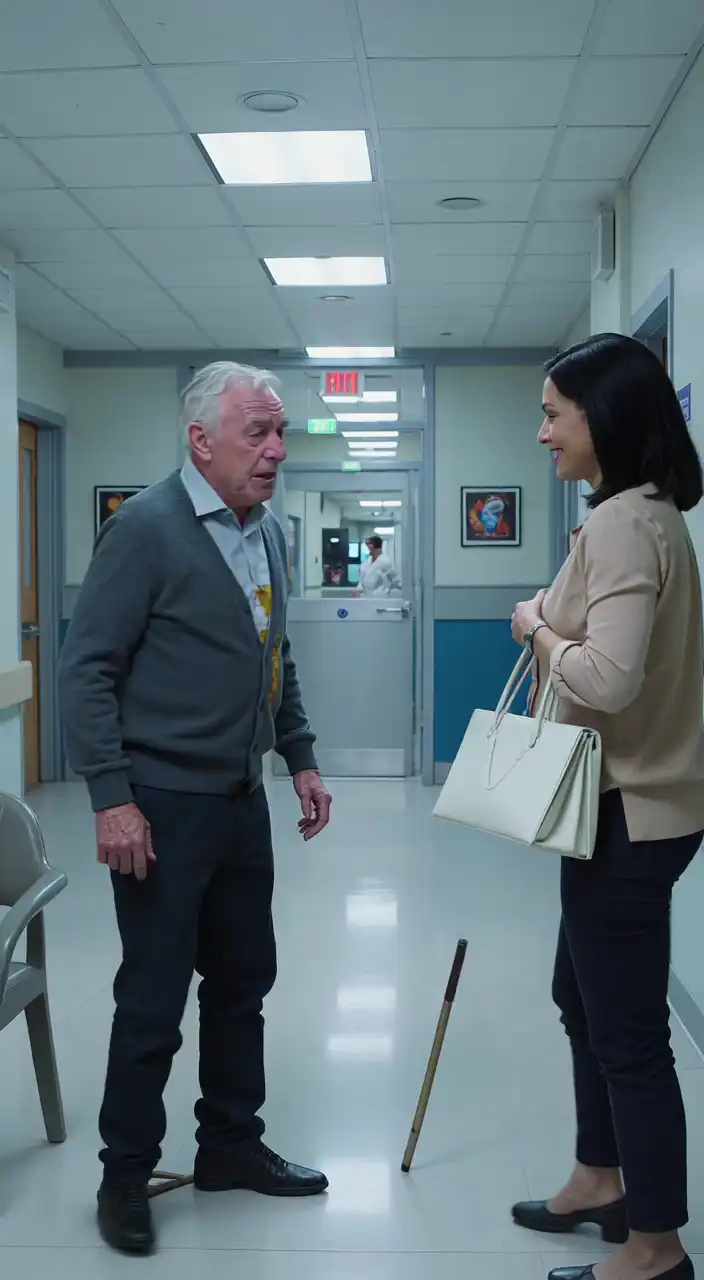
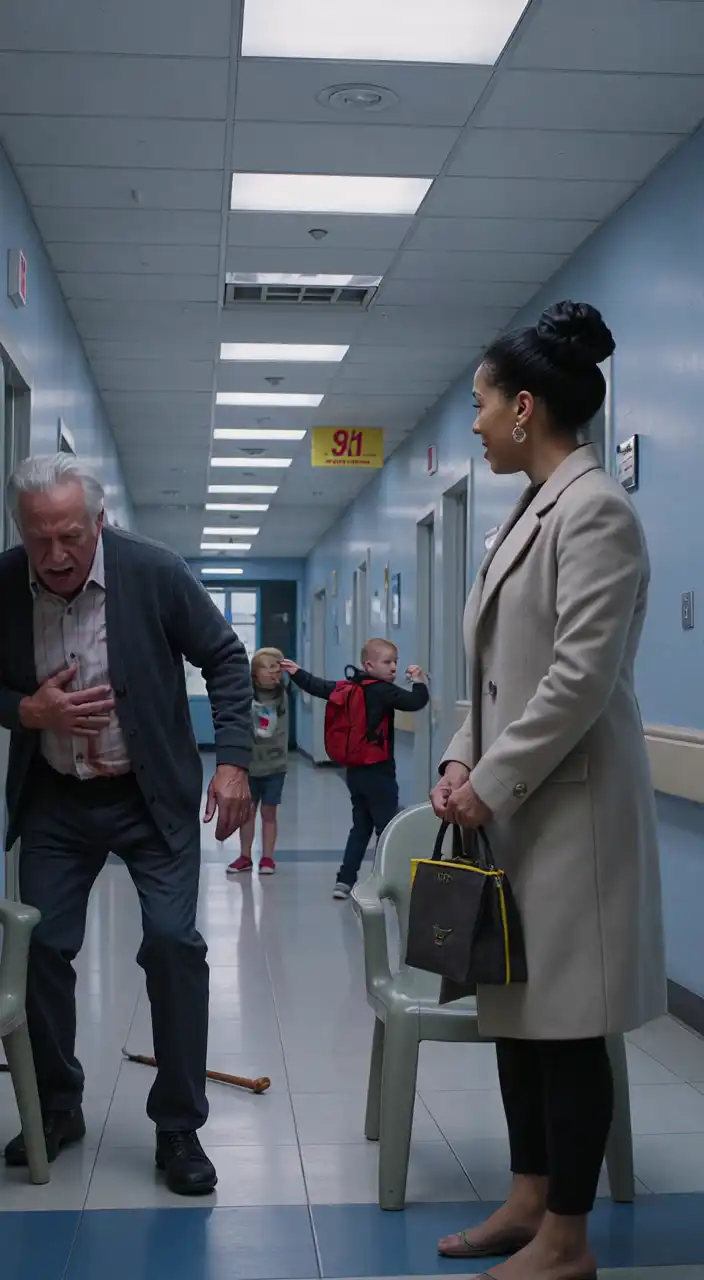

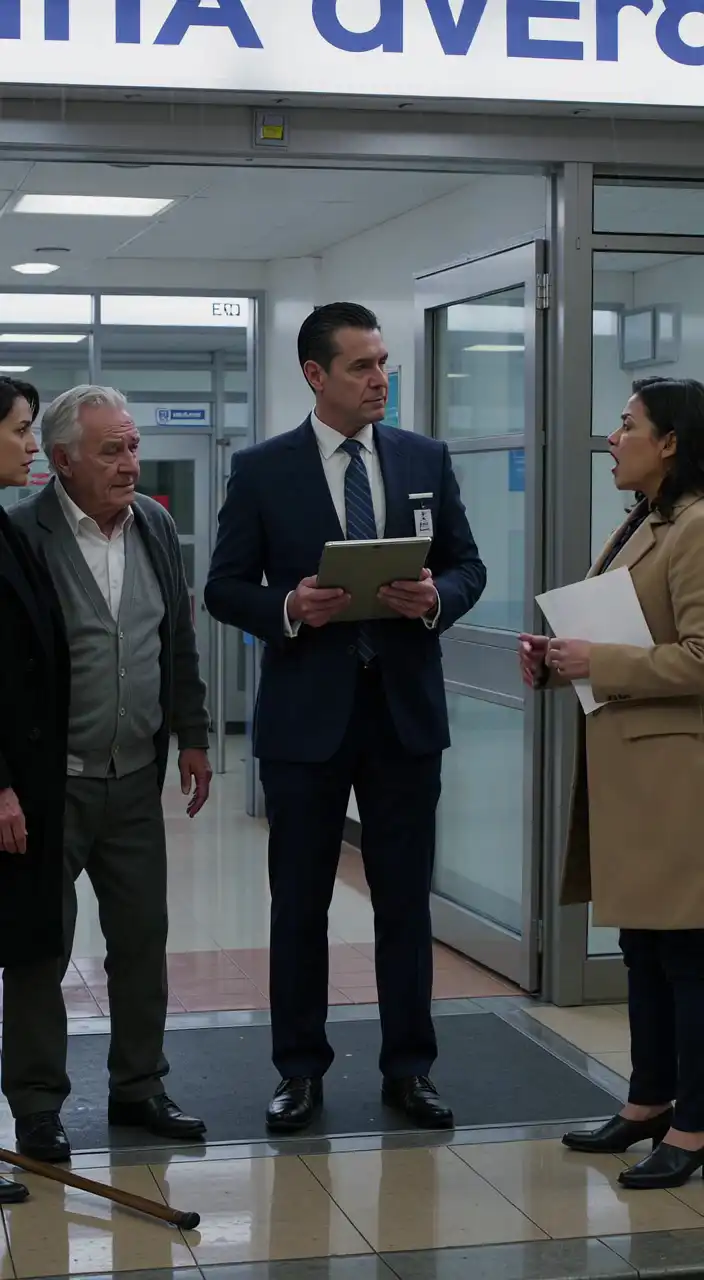
Ryan did not hurry the way panicked people hurry. He crossed the tile with that controlled speed that made everyone around him move without realizing they had been told to move. By the time he reached us, he had already looked at Grandpa's face, the dropped cane, my mother's grip on his elbow, the administrator's stance, and the puddle spreading under Grandpa's shoe.
"Sir, step away from the patient," he said to the administrator first.
The administrator lifted his tablet slightly, like a shield. "This is a billing and authorization issue. Family is taking him home. Security isn't needed."
Ryan's eyes didn't leave Grandpa. "He is not standing on his own, he's post-op, he's febrile on visual assessment, and he almost collapsed at an emergency entrance. Security is needed now."
Grandpa swayed against me. His skin felt wrong through his cardigan, a hot dryness on his neck while his hands shook cold. "I need back in," he whispered, as if asking permission to exist. "Something's wrong."
My mother spoke over him. "He's upset because they discharged him too early and now he's dramatic. We've been handling it. We just came to ask a question."
"You came to ask a question at the ambulance bay?" Ryan asked.
She hesitated half a second. That was all.
A nurse inside the doorway had already turned at Ryan's voice. He lifted one hand and called, "Wheelchair and triage now. Possible post-op complication."
The administrator moved quickly, trying to recover control. "You cannot bring him through until registration verifies responsible party and current coverage. He was discharged under family supervision. I have documentation."
Ryan finally looked at him. "Then bring the documentation with you after the patient is in care."
"It's not that simple."
"It is from where I stand."
The sliding doors opened again, letting in a blast of wet wind. Grandpa flinched like the cold had teeth. The nurse rolled a wheelchair out onto the slick concrete, but before she reached us my mother tightened both hands on Grandpa's arm and pulled him backward.
"He said he's fine to go home," she snapped. "Oliver, tell them."
Grandpa looked at the doors, then at my mother. Fear crossed his face before words did. Not confusion. Fear. "Don't take me back there," he said.
My mother went pale. The administrator's jaw tightened, and he stepped toward the wheelchair as if he could physically redirect it. Ryan shifted between him and the chair without touching him. "Ma'am, release him."
"I am his daughter."
"Then help me keep him upright while he is evaluated."
"He doesn't consent."
Grandpa's hand found my wrist with surprising force. "I do."
That changed everything in a single breath. The nurse moved in from the other side, and together we lowered him into the wheelchair. He winced the whole way down, one hand pressing against his side under the cardigan. The compression bandage showed for a moment, and a yellowish dampness had soaked through near the edge. Not bright blood. Something thinner. Something wrong.
Ryan glanced down, then to the floor where the administrator had nudged the bottle cap under the bench. He crouched, plucked it free, and held it between two fingers. It was from a medicine bottle, child-resistant, with a yellow crust around the rim.
"Whose is this?" he asked.
No one answered.
My mother said too fast, "Probably trash."
Ryan handed it to the nurse. "Bag that if risk management wants it. Keep chain if possible."
The administrator's calm voice cracked at the edges. "You are escalating a family misunderstanding into a formal incident."
Ryan's answer came flat. "No. A family misunderstanding does not involve blocking a symptomatic elder from triage at the ambulance entrance."
He turned to me. "You came with him?"
"Yes."
"Did you drive him?"
"My mother did. I met them here because she said he had a follow-up. Then she parked at the ambulance bay instead of the clinic lot, and he could barely get out of the car."
Ryan nodded once. "Stay with him."
As the nurse pushed the wheelchair through the doors, Grandpa kept hold of my sleeve. The yellow stain on his hand and mine was tacky now, with a bitter medicinal smell that finally cut through the rain. Somewhere behind us my mother began talking rapidly about legal exposure, family rights, confusion after anesthesia, do-not-overreact wording that sounded polished because she'd practiced it before. Ryan stopped listening. He pressed two fingers to his earpiece and said, "Medical abuse alert at south ambulance entrance. Hold departing vehicle if family attempts removal. Notify ER charge."
The words "medical abuse alert" hit me harder than anything else. They made the scene real in a new way.
Inside, the ER was warm and overlit and moving too fast. The nurse wheeled Grandpa into triage while another clipped a pulse ox to his finger. It beeped, then flashed low enough to make the nurse frown. A second nurse cut through his cardigan sleeve where the stain had spread. Under the fabric his skin was clammy, and the surgical dressing on his side was edged with yellow and pink seepage.
"What surgery?" the triage nurse asked.
"Colon resection," I said. "Three days ago."
"When did fever start?"
My mouth opened and closed. "I don't know exactly. He looked tired yesterday, but today he was shaking."
My mother had followed us to the threshold, still talking. "He had no fever this morning. He took his regular meds. He gets anxious in hospitals."
Grandpa forced his eyes open. "No regular meds," he said. "Different bottle."
The triage nurse looked up sharply. "Different how?"
He swallowed hard. "Bitter. Made me sleep."
The nurse exchanged a glance with the other nurse. Ryan was still at the doorway now, not inside the care space, but close enough to hear. The administrator had not come farther. He stood beyond the line where staff and authority ended and optics began.
"Temp 103.4," the second nurse said.
The room changed speed. Someone called for a monitored bed. Someone else asked for the surgeon on call, blood cultures, lactate, CBC, abdominal imaging, medication reconciliation. Grandpa's eyes rolled briefly and focused again.
My mother tried one last time. "He's saying random things. He gets stubborn when he's tired."
Grandpa turned his face toward the triage nurse with visible effort. "She had my papers."
It was such a small sentence, but it landed like a door slamming. The nurse looked at my mother's coat. One corner of folded paperwork still showed from the inside pocket.
"Ma'am," the nurse said, "I need all discharge instructions, medication lists, and prescriptions now."
My mother covered the pocket instinctively. "Those are family documents."
"No," Ryan said from the door. "They are part of current medical care."
The administrator stepped in at last, voice smooth again. "I can clarify. There was a misunderstanding during discharge. We offered appropriate instructions. The patient was stable-"
"The patient is septic until proven otherwise," the triage nurse snapped, no longer interested in polish. "If you are not treatment staff, move out of my lane."
A tech arrived with a gurney. As they transferred Grandpa from the wheelchair, he gasped and clutched at the side rail. His bracelet, the hospital one from surgery, slid out from under his cuff. It was bent and damp, but intact. I don't know why that hit me, maybe because it proved he had not wandered in from nowhere, had not become an inconvenience by magic. He belonged to this place, and this place had let him be taken.
Ryan's gaze dropped to the bracelet too. "He still has his surgical ID band."
The administrator said, "Some patients keep them on."
Ryan answered, "Most families don't hide discharge papers from a patient still wearing one."
My mother reached for the coat pocket. Ryan raised a hand. "Do not remove anything."
For the first time, she looked afraid.
A physician assistant arrived, then the ER attending. They lifted the dressing enough to inspect around the incision. The attending's expression shifted from concern to anger kept under tight control.
"When was this changed?" he asked.
My mother said, "This morning."
Grandpa's voice came out ragged. "Not since yesterday."
The attending looked at the stain on the sleeve. "What medication leaked here?"
No one answered.
He leaned closer, sniffed, then looked at the nurse. "That's not from the wound. It smells like liquid antibiotic or compounded suspension. Pull pharmacy records and compare to discharge meds."
The administrator said immediately, "I can help with records access."
The attending did not look at him. "You can wait outside."
That should have ended it, but the small reversal came from Grandpa himself. As the nurses wheeled him deeper into the ER, he pulled weakly at my sleeve and whispered, "Phone."
"My phone?"
He shook his head. "Her phone. Blue case. Recordings."
Before I could ask what he meant, the gurney turned the corner toward a monitored room, and Ryan, hearing only the last word, looked straight at my mother's coat pocket where a blue-cased phone was half visible beside the folded papers. Her hand went to cover it.
Ryan's controlled anger became something colder. "Ma'am," he said, "do not touch that phone."
She bolted.
Ryan was faster.
He caught the swinging door before it slammed and took off after her into the corridor toward the lobby, while behind me Grandpa disappeared into treatment with a nurse calling for fluids, broad-spectrum antibiotics, and the surgeon now.
And for the first time since the rain started, I understood that getting him through the door had only been the easiest part.
When I reached the corridor, Ryan already had my mother's wrist in one hand and the blue-cased phone in the other. He hadn't twisted her arm or thrown her down. He had simply blocked the exit and let her own speed stop against his planted stance. The administrator was ten feet away, talking into his own phone and trying very hard to look like he belonged in the middle of a family emergency.
"You're assaulting me," my mother shouted.
Ryan released her wrist the second she stopped reaching for the phone. "No, ma'am. You attempted to remove potential evidence during an active medical abuse alert. Hospital policy allows temporary retention pending supervisor and clinical review."
"Evidence of what?" she demanded. "My father has an infection. That's tragic, not criminal."
The administrator stepped in before Ryan could answer. "I strongly advise that we avoid inflammatory language. There is no basis for that label. The family has existing account concerns and was frustrated at discharge. This can be de-escalated."
Ryan looked at him as if he were finally seeing the shape of the problem. "Why were you personally at an ambulance bay to discuss account concerns with a post-op elder in a storm?"
A pulse jumped in the man's jaw. "I was asked to assist a donor family."
There it was. Not guilt exactly, not yet. But motive.
My mother heard herself implicated and turned on him. "You said this would be private."
He answered without missing a beat. "It still can be, if everyone cooperates."
Ryan's eyes narrowed. "With care?"
No one answered.
A woman in navy scrubs hurried toward us with a clipboard and an expression that said she had been told just enough to be furious. "I'm Lena, house supervisor. Ryan, what's the hold?"
He gave a compressed summary: post-op elder, fever and tremors, family obstruction at triage, hidden discharge papers, possible medication inconsistency, possible recordings on the phone, administrator interference. Lena's face tightened by the second.
"Bring the phone to risk management lockup," she said. "And I want registration, pharmacy, and discharge logs frozen. No edits."
The administrator spread his hands. "That is unnecessary and damaging."
Lena cut him off. "If it turns out to be unnecessary, the records will show that. If it turns out not to be, you'll be grateful no one touched a timestamp."
That line visibly landed. He took one step back.
My mother, sensing the ground shift, changed tactics. Tears came suddenly, expertly. "He begged us not to come back. He said they rushed him out. He was humiliated. I was trying to spare him another ordeal."
The awful thing was, part of that was probably true.
Lena looked at me. "Are you the grandson?"
"Yes."
"Did he ever refuse care to you directly?"
"No. At the bay he said he needed back in. He said he never got his papers back. Then he said someone changed the bottle."
Lena wrote nothing. She just held my gaze long enough that I understood she was deciding who in this hallway had noticed reality. Then she said, "Stay available. Do not leave the floor."
She and Ryan moved my mother and the administrator into a small consult room with glass walls. From where I stood, I could see shapes and sharp hand gestures but not hear words. The blue-cased phone stayed with Ryan. The discharge papers were taken from my mother's coat and put into a clear specimen bag because it was the nearest sealable thing someone could find fast. That detail felt absurd and deadly serious at once.
I was still staring at the bag when a young resident appeared beside me. "Family for Mr. Oliver Dane?"
"Yes."
"I'm Dr. Patel. Your grandfather is getting fluids and antibiotics. His blood pressure dropped a little when we got him back, but he's responding. We are worried about infection from the surgical site, but there are also some medication questions."
"Is he going to die?" I asked.
Dr. Patel didn't flinch. "Right now, we are treating something we should have been allowed to assess earlier. The sooner we clarify what he was given at home, the better."
The word "allowed" burned.
He led me to a monitored room. Grandpa looked smaller in the hospital bed than he had in the wheelchair, though maybe it was the white sheets and all the wires. The pulse monitor glowed green and steady but too fast. His lips were dry. An IV ran into one arm, and a nurse was hanging a second bag. The cut sleeve of his cardigan lay on a chair, the yellow stain brighter under fluorescent light.
He saw me and tried to lift his hand. I took it.
"They mad?" he asked.
"Not at you."
A weak breath that might have been a laugh escaped him. "Good."
Dr. Patel pulled a stool over. "Mr. Dane, I need to ask some short questions. Can you tell me what medicine you took today?"
Grandpa frowned in concentration. "Round white in morning. Capsule after lunch. Then she brought liquid." He swallowed. "Said surgeon changed it."
"Did you see a label?"
"Yellow. Bitter. Made room swim."
That matched the stain enough to make my stomach drop.
"Who gave it to you?" Patel asked.
Grandpa's eyes shifted to me and then away. "Mara."
My mother. Hearing her first name in his mouth made it stranger and sadder.
"Did anyone else handle your medication?"
A pause. "Man from hospital came yesterday."
Patel looked up immediately. "Can you describe him?"
"Nice shoes," Grandpa whispered.
The image was so precise it chilled me. Spotless shoes at the ambulance bay. Nice shoes in Grandpa's house.
Patel wrote fast now. "Did he bring medication?"
Grandpa shut his eyes. "Talked to her in kitchen. Said no need to scare me with papers. Said billing mistake, temporary issue. Said keep me quiet till Monday."
Outside, thunder rolled against the glass. The storm was worsening, rattling the windows hard enough to make the IV pole tremble.
Patel stood. "I need pharmacy and attending in here."
When he left, Grandpa squeezed my fingers with surprising urgency. "Closin' road?"
"What?"
"Bridge road. Heard weather. That's why she rushed."
He was right. The storm-blocked road. If the county bridge closed, the larger trauma center across town would be cut off for hours. If he deteriorated and this hospital couldn't manage a surgical complication, transfer options would narrow. The delay at home had not just been cruel. It had been timed against geography.
A nurse came in to draw blood cultures. While she worked, I noticed the bent surgical bracelet again. The print was smudged, but the date was visible. Three days ago. He should still have been inside some orbit of postoperative protection. Instead, he had been managed like a bill.
The small conflict at the end of that hour came from pharmacy. An older pharmacist named Denise entered carrying a printout and the sealed bottle cap in an evidence bag. She did not bother to lower her voice much.
"The discharge medication list contains no liquid antibiotic in yellow suspension," she said. "He was sent home with tablets, not liquid. The cap bagging was smart. This style fits a compounded oral sedative we stock only for limited inpatient use and for one affiliated home-care practice."
"Sedative?" I said.
Denise looked at me, then at Grandpa, then back at Patel. "I said fits. Not proves. But if residue testing confirms, somebody put hospital-dispensed liquid where it did not belong."
Grandpa opened his eyes at the word "sedative." His face changed, not to surprise but to grim recognition. "Sleep medicine," he murmured. "Wouldn't let me keep watch."
Patel asked quietly, "Keep watch over what?"
Grandpa's eyes filled, and for one suspended second I thought he might slip away before he answered.
"My papers," he said. "And my money."
That should have widened the story into a simple elder fraud case. Instead, it made it messier, because now there was a plausible incomplete explanation for everything. Maybe my mother was not trying to kill him. Maybe she and the administrator were trying to control decisions, accounts, signatures, and discharge timing around a wealthy family account and Grandpa's finances. Maybe the blocked care was neglect in service of money, not murder in service of secrecy.
But the contradiction sat right there on the bagged bottle cap and the yellow stain. You do not sedate a post-op elder with a fever to settle a billing problem.
Before anyone could follow that thought, Ryan appeared at the door. His expression told me the hallway battle had changed shape again.
"The phone is locked," he said. "But emergency notifications are visible on the screen. There are three missed calls from a number saved as 'North Bridge Home Care,' and one voicemail preview reads, 'Do not bring him back until Dr-' then cuts off. Also, ma'am is now claiming the phone belongs to the administrator."
Denise looked from him to the bottle cap bag and back. "That home-care group is the affiliate I was talking about."
The room went very still.
Patel said, "Can they legally be contacted now?"
Ryan answered, "They already are. House supervisor made the call."
Grandpa's fingers tightened around mine. "Don't let her take me," he whispered.
I leaned close. "She won't."
I meant it. But through the glass wall behind Ryan, I could see my mother in the consult room, no longer crying. She was sitting very straight, watching us with a fixed look I knew from childhood. It was the look she used when she had decided a story would go her way no matter what truth had to be cut out of it.
And then the administrator put his hand over the mouthpiece of his phone, looked directly at her, and mouthed one word that I could read even through glass.
"Delete."
Ryan saw it too.
That was the moment the story stopped being about a frantic daughter making bad choices. It became something planned.
Ryan moved before I could. He turned, left the doorway, and strode back toward the consult room. Through the glass I saw him point at the administrator's phone and demand it. The administrator smiled tightly and held it away.
"I'll need a warrant for my personal device," he said, loud enough this time for me to hear through the partly open door.
"You may," Ryan replied. "But you don't need a warrant to stop using it in an active internal investigation."
Lena arrived at the same time with a man in a gray suit from hospital legal and another security officer. The administrator's confidence shifted again, this time toward irritation. He was used to being the one who knew the rules in a room. He started citing policy, donor relations, privacy obligations, and overreach. Ryan let him talk until he contradicted himself twice.
First he said he had only encountered the family at the bay by chance. Then he said he had been assisting them since the prior day's discharge. Lena did not interrupt either claim. She simply wrote both down on a yellow legal pad and underlined the times he attached to them.
Inside the room, Dr. Patel's attending, Dr. Romero, stepped in with sharper eyes than anyone else so far. He examined the incision more thoroughly, asked for a stat CT, and requested the original operative notes. While he worked, Denise returned with another printout.
"The inpatient sedative in question requires dual sign-off when dispensed in take-home quantities," she said. "There is no legitimate take-home order under Mr. Dane's chart."
Dr. Romero took the paper from her. "Can it be dispensed under another patient?"
"Yes, if someone were abusing access. Also under the affiliated home-care physician group if they generated an outside order."
"Who oversees that group?"
Denise's pause was answer enough before she spoke. "The same executive umbrella that signs donor-family special accommodations."
The phrase sounded bloodless, but the meaning wasn't.
Grandpa had gone quiet, his eyes half closed while the fluids ran. I worried he was slipping, but the monitor still showed fight in him. Dr. Romero checked his pupils, then looked at me. "We think he has a significant postoperative infection. Delay matters. The possible sedative could have masked deterioration and reduced intake. We need imaging and maybe surgery again if there is a leak or abscess."
"Because they kept him home?"
He held my gaze. "Because he did not get timely reassessment when symptoms started."
I appreciated that he was precise. It made the blame heavier, not lighter.
The next reversal came from the discharge papers. Lena brought the bagged packet to Dr. Romero and me after having copies made. "Take a look at page three," she said.
Buried in the standard instructions was a note typed in a different timestamped block: family agrees to return immediately for fever over 100.4, drainage change, confusion, weakness, or inability to maintain hydration. In other words, exactly what had happened. But there was also a checkbox marked "teaching completed with patient and responsible family member," followed by an electronic signature from Grandpa that looked nothing like his handwriting now.
Grandpa peered at it and frowned. "Didn't sign that."
"Are you sure?" Lena asked gently.
He gave her a dry old-man look despite everything. "I've been signing my name eighty years. That ain't it."
The forged signature changed the room again. Delay, obstruction, possible sedation, hidden papers, and now false discharge acknowledgment.
Ryan came back from the consult room with the administrator's phone at last. "He surrendered it after legal advised him refusal would trigger employment hold and immediate escort," he said. "But he claims patient family pressured him for exceptions."
My mother was trying the opposite line now, according to Lena. She said the administrator pressured her, frightened her about bills, told her a readmission without advance approval would destroy Grandpa's account and put a lien on the house. It sounded self-serving, but not impossible. More important, it split them. The blocker and the family were no longer a united front.
That mattered because secrets leak fastest when partners start saving themselves.
Dr. Romero sent Grandpa for CT through a side route because the main corridor was jammed with storm-related arrivals. The rain had become a pounding wall on the windows, and somewhere over the intercom a voice announced road conditions and possible transfer delays. The bridge road Grandpa mentioned was under monitoring. If it closed and he needed a higher-level ICU bed, options would collapse.
I walked beside his bed as transport took him down the hall. He was more lucid with fluids running but still drifting. At the elevator, he touched my wrist. "Drawer," he whispered.
"What drawer?"
"Kitchen. Red band."
The bracelet. Another planted detail becoming a key.
"What red band?"
He struggled, frustrated by the slowness of his own mind. "Rubber band. Papers. Not bank. Other papers."
Transport had to move. "We'll come back to it," I said.
He shook his head, angry now. "If she gets home-"
"I won't let her."
That promise locked me into the next decision before I had consciously made it.
CT took him away for twenty minutes that felt like an hour. In that gap, Lena asked me to sit with a social worker, but I couldn't. My thoughts kept circling the kitchen drawer, the red rubber band, and the storm. If the hidden papers were at the house and my mother had any chance of leaving, they could vanish before morning.
Ryan solved part of it. He came into the waiting area where I was pacing and said, "Your mother is not free to remove patient property from the premises right now. She is not under arrest, but she is being held for clinical and administrative review. Local law enforcement has been notified because of the forged discharge signature."
"And the administrator?"
"Same status, plus employment suspension."
That should have relieved me. Instead, I thought of someone else. "What if there was another person? Grandpa mentioned home care. If someone knows records are being looked at-"
Ryan gave me a long look. "You're thinking about that drawer."
I nodded.
He exhaled once. "I can't send staff to a private home on a hunch. But if the patient identifies urgent medical records being concealed, law enforcement can use that."
As if summoned by the words, Dr. Romero returned with the CT results and a face that made the whole hallway quiet around him.
"There is a postoperative abscess," he said. "Possibly a small leak. He needs procedural drainage tonight, maybe the OR depending on interventional radiology and surgery consensus. We can manage here for now, but no more delays."
For now. The words had edges. The storm was tightening, and if anything worsened, our margin would disappear.
Grandpa came back from imaging more awake because pain had sharpened him. Dr. Romero asked him directly, in Ryan's presence, "You mentioned papers in a kitchen drawer. Are those medical papers?"
Grandpa nodded. "Discharge packet. Prescription. Note from nurse. She hid them. Red band around envelope. Top drawer by stove."
"Anything else?" Ryan asked.
Grandpa looked embarrassed, then stubborn. "Copy of power-of-attorney forms she wanted me to sign. I didn't."
Lena and Ryan exchanged a glance. There was the larger emotional reversal: this had not begun tonight. The blocked care sat inside an older campaign to control his decisions. The medical crisis became useful to people who wanted him compliant.
Ryan called the deputy line from the doorway and requested a welfare evidence assist due to possible concealment of active medical records tied to elder endangerment. He used calm, boring words, but underneath them I heard urgency. So did the deputy on the other end, because Ryan's expression changed.
"What do you mean the bridge checkpoint is closing in twenty?" he said.
The storm had finally reached the county's threshold. If deputies didn't get across before closure, no one would search the house until morning.
Movement five of the night arrived all at once. Grandpa needed a procedure immediately. The only road to the house was about to close. My mother, from the consult room, began pounding on the glass and demanding a lawyer. And the administrator, now cornered, asked to make one private call because, as he put it, "there are donor-sensitive implications that will explode if you mishandle this."
Ryan covered the phone and looked at me. "If the papers matter, this is the window."
I looked through the room door at Grandpa on the bed, IV line trembling with each bump of the rail as staff prepped him for procedure. He saw my face and understood enough to speak before I could.
"Go," he whispered. "But come back."
I wanted to say no. Wanted to stay where my promise could be literal. But staying would not protect him from a lie already built. Sometimes rescue means not leaving the bedside. Sometimes it means running toward the paperwork people think is more important than a pulse.
"I'll come back," I said.
Ryan had already made his choice too. He handed the deputy line to Lena, told the second security officer to remain on the consult room, and said to me, "You're riding with me."
Rain hammered the parking deck so hard it blurred the world beyond the windshield into white streaks. Ryan drove an unmarked hospital SUV, and every few minutes his radio crackled with road updates and curt acknowledgments from county deputies. We had maybe fifteen minutes before the bridge shut to non-emergency traffic, maybe less if the creek rose.
"Why are you doing this yourself?" I asked over the wiper thrum.
"Because if those papers disappear, everyone suddenly remembers less by morning."
His calm had not vanished, but I could hear the anger under it now. Preventable delay. Controlled humiliation. A man with a fever turned into a problem of consent and billing because someone thought he had nowhere else to stand.
We met Deputy Sanders at the bridge checkpoint. He was already in rain gear, broad-shouldered and soaked, with a flashlight clipped to his vest. Ryan briefed him in under thirty seconds: hidden medical documents, possible forged signature, possible drug diversion, vulnerable elder in procedure. Sanders looked at me. "You know the drawer?"
"Top drawer by the stove. Red rubber band around an envelope."
He nodded. "You stay with us and don't touch anything until I say."
The house smelled like stale coffee and lemon cleaner when Sanders opened the door with my spare key. Everything looked normal, which was almost the worst part. A blanket folded over Grandpa's chair. His reading glasses on the side table. A pill organizer closed neatly on the counter. The ordinary room of a person being slowly overruled.
The kitchen drawer stuck halfway, as always. I pulled once, then stopped myself. Sanders opened it. Right on top, under takeout menus and a grocery circular, was a manila envelope bound with a red rubber band.
Inside were the discharge instructions, original prescription printouts, a nurse's handwritten note saying "Return to ER immediately for fever, shaking, increased drainage, confusion, or weakness," and photocopied power-of-attorney forms with sticky notes marking signature lines. There was also a small receipt from North Bridge Home Care for "medication counseling visit," yesterday, signed with initials that were not my mother's.
Ryan took photos while Sanders bagged the documents. Then Ryan opened the cabinet under the sink after noticing a bitter medicinal smell stronger than the cleaner. Tucked behind trash bags was a brown pharmacy bottle with a yellow-dripped label and no patient name on the front, only a partial lot sticker. Child-resistant cap missing.
The same cap.
The same stain.
The same smell.
Sanders bagged that too. "Now we've got something."
I thought we were done. Then Ryan noticed the baby monitor on the kitchen shelf.
Grandpa's house did not have a baby. He had started using the monitor after surgery because my mother said she needed to hear him at night from the guest room. It was still plugged in beside the microwave. A tiny green light blinked.
Ryan looked at the base station. "Does this thing record?"
"I don't know."
He pressed a menu button. Audio archive.
For one second nobody moved.
Sanders said, "If that's active, don't play it here without documenting."
Ryan used his phone to record the screen as Sanders navigated to the latest file. The sound came crackly but clear enough.
My mother's voice: "He keeps asking for the papers."
A man's voice, smooth and annoyed. The administrator. "Then tell him the surgeon amended instructions. He only needs to make it through the weekend."
"What if the fever gets worse?"
"He sleeps if you use the liquid. Ten milliliters, no more. We cannot have a readmission before billing review and signatures are complete."
My mother's voice again, smaller now. "This wasn't what you said."
The man's answer came cold. "Do you want the account frozen or not?"
The recording ended with a chair scraping and Grandpa in the background, faintly asking for water.
No one in that kitchen spoke for several seconds. It was all there now: the motive, the delay, the dosing, the coercion, the blocked care. Not poison in the melodramatic sense, but a real and dangerous withholding of help enforced with sedating medication and financial threats.
Then Sanders' radio erupted. "Bridge closure immediate. Water over approach."
We were cut off.
My first thought was not about getting stuck. It was about getting back to Grandpa before he woke up scared and alone.
Ryan was already on his phone with Lena, voice sharp. "We have audio. Repeat, we have audio. Secure the mother and administrator for law enforcement interview now. And tell OR or IR whatever they're doing with Mr. Dane, they need to know the delay and sedation are documented."
Lena's reply was too muffled for me to hear, but Ryan's face changed. "What do you mean his pressure dropped?"
Everything in me went cold.
By the time we made it back to the hospital after the water receded enough for emergency return, the sky was turning that washed-out gray that comes before dawn. Grandpa was not in the ER anymore. A nurse at the desk pointed us to post-procedure recovery with the grave briskness that means she cannot reassure you yet.
I ran.
Dr. Romero met us outside the recovery bay, cap still on, fatigue showing at the corners of his eyes. "They got the abscess drained," he said before I could ask. "He was sicker than he looked at the entrance. Another few hours and this could have gone very differently."
I had to grab the wall once before my knees would lock again. "Is he awake?"
"On and off. Blood pressure is stabilizing. We also sent residue from the bottle for toxicology confirmation through the lab, but given the recording, law enforcement won't need to wait to act."
Ryan handed him copies of the photos and audio chain notes. Sanders had stayed to process the house and interview my mother and the administrator separately. According to a text Ryan showed Lena, the administrator asked for counsel the moment he heard the baby monitor audio existed. My mother cried, then blamed him, then admitted she had hidden the papers because he told her a readmission would bankrupt Grandpa and that "the liquid would keep him calm." She insisted she never meant to hurt her father. I believed that and still could not forgive what she had chosen.
Inside recovery, Grandpa looked terribly old and terribly alive. His skin had lost the burning flush. The monitor light cast a soft green arc over the bent surgical bracelet still around his wrist. Someone had cleaned his hand, but a faint trace of yellow remained near one knuckle, like a bruise left by bad judgment.
He opened his eyes when I touched the rail. "Back?"
"I'm back."
"Told you drawer."
I laughed and cried at the same time. "You did."
Ryan stood at the foot of the bed, giving us distance while still finishing the report on his clipboard. Grandpa noticed him and frowned slightly. "Security fellow."
"Ryan," he said.
"You were mad."
"Yes, sir."
Grandpa gave the weakest little nod. "Good."
That made Ryan smile for the first time all night.
The days after were not a neat victory parade. They were the kind of aftermath that proves a story is real. Grandpa spent five more days in the hospital on IV antibiotics while surgery monitored him for any worsening leak. A social worker and adult protective services came, not with speeches but with questions, forms, and hard practical choices. Grandpa, still humiliated by needing any of it, answered every one.
The baby monitor audio, the forged discharge signature, the hidden discharge packet, the bottle and cap, the pharmacy discrepancies, and the administrator's access trail built the case piece by piece. North Bridge Home Care froze internal accounts. The hospital suspended two employees beyond the administrator pending investigation into improper medication release and donor-related pressure. Billing records showed repeated notes on Grandpa's file marked for "executive review" because of a wealthy family account tied not to him, but to a trust my mother had been trying to position herself to manage.
That was the second major reversal: the account the administrator was "protecting" wasn't some charitable donor relation detached from us. It was money orbiting Grandpa himself. He had more assets than I knew, and my mother had convinced herself that controlling his decisions was the same as protecting the family. The administrator saw that vulnerability and turned policy into leverage. He wasn't shielding the hospital from risk. He was helping steer an old man through a fog until signatures landed where they needed to.
Grandpa heard all of that in fragments over several days. Every fact wounded his pride more than his incision ever did. Once, when we were alone, he stared at the window for a long time and said, "Raised her after your grandmother died. Thought being needed was the same as being loved."
I didn't know what to say, so I said the truest thing I had. "She still had a choice."
He nodded. "So did I. I kept letting other people hold my papers."
When he was strong enough, he asked for a lawyer of his own. Not the family one my mother liked. His own. Lena helped bring in a patient advocate, and from there decisions began shifting back toward him in visible ways. New medical proxy. Revocation of prior draft forms. Passwords changed. A locked folder put in my backpack at discharge only after he read every page and signed with a hand steadier each day.
The folded discharge papers that had once been hidden in my mother's coat were replaced by a clean packet reviewed line by line at Grandpa's bedside with me and a nurse present. This time the instructions were read to him, then to me, and then he made the nurse pause while he repeated the fever thresholds back in his own words. "If I shake, leak, burn up, or get foggy," he said, tapping the page, "I don't ask permission. I go in."
The nurse smiled. "Exactly."
My mother was not allowed to take him home. Adult protective services made that plain before he was discharged. She called me three times from an unknown number and left one voicemail that I listened to only once. She said she was scared, that she had believed the administrator, that she thought she was buying time. Maybe all of that was true. None of it changed the sound on the baby monitor of Grandpa asking for water while they talked about keeping him quiet through the weekend.
The administrator was escorted out of the hospital two days after the incident. Ryan did not tell me that with triumph. He told me because Grandpa asked whether "nice shoes" was still walking the halls. There were law enforcement interviews after that, and talk of elder endangerment, fraud, and unauthorized medication handling. I do not know where every charge landed in the end. I know enough did.
What mattered more in our house was smaller. I installed a lockbox for documents. Ryan, off duty, stopped by once with a community elder safety checklist and pretended it was routine. Denise from pharmacy sent over a printed medication schedule with color coding because she didn't trust anyone's memory after what happened. The baby monitor went in a drawer for a while. Then Grandpa asked me to bring it back out.
"Why?" I asked.
He looked embarrassed. "Like hearing someone if I call."
So I set it up in his room again, but this time the receiver stayed by my bed when he stayed with me after discharge. The green light no longer looked sinister. It looked like a promise that if he called, someone would answer.
Weeks later, when the rain had passed into late fall cold and the incision had finally begun to heal cleanly, Grandpa wore the same neat cardigan to a follow-up appointment. The yellow stain was gone. The old surgical bracelet, bent and dried out, sat in his top desk drawer because he wouldn't throw it away. "Reminder," he called it.
Of what, I asked once.
He tapped the bracelet, then the folder of his current papers. "That a door can be ten feet away and still too far if the wrong person speaks for you."
At that follow-up, Ryan happened to be near the outpatient hall on another matter. Grandpa saw him, straightened with his cane, and crossed the lobby at his own pace. Dignity restored not by pride, but by use.
"Security fellow," he said again.
"Ryan," he corrected, smiling.
Grandpa held out his hand. "Thank you for being rude."
Ryan laughed. "You're welcome, sir."
I watched them there under ordinary hospital lights, no rain, no storm closure, no blocked doorway. Just an old man who had almost been managed out of his own rescue standing exactly where he chose to stand. And I thought about how close it came to being otherwise, how the clues had all been small enough to miss: a yellow stain, a bent bracelet, a hidden packet, a blinking monitor light. Quiet proofs. Quiet cruelties. Quiet people finally refusing both.
Grandpa squeezed my shoulder on the way out. "Next time I tell you something's off," he said, "don't wait for the dramatic part."
"There better not be a next time."
He gave me that dry look again. "There'll always be a next time. That's life. The trick is getting to the right door before someone talks you out of it."
This time, when the sliding doors opened, nobody stood in his way.
Disclaimer: Mention of any brand or trademark is for identification only and does not imply partnership or endorsement
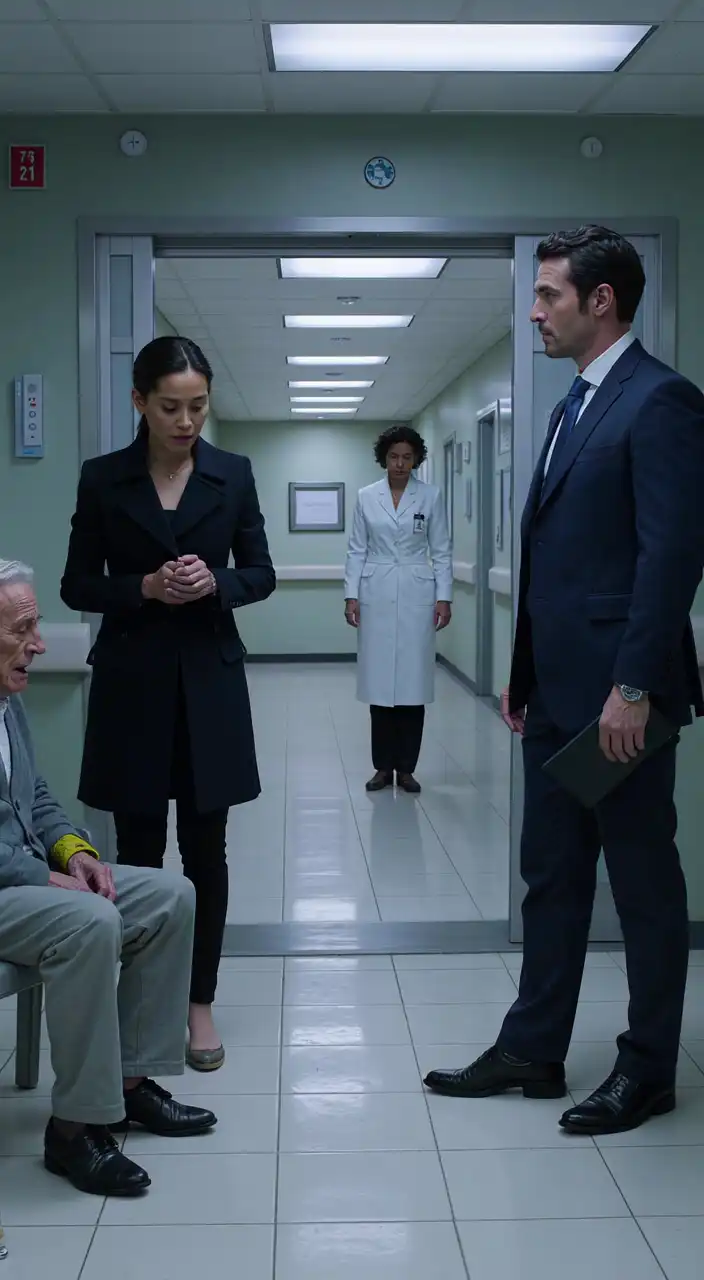
MY FATHER STARTED SHAKING OUTSIDE TRIAGE WHILE A CLINIC ADMINISTRATOR BLOCKED THE DOOR AND SAID HE NEEDED FAMILY PERMISSION FIRST.
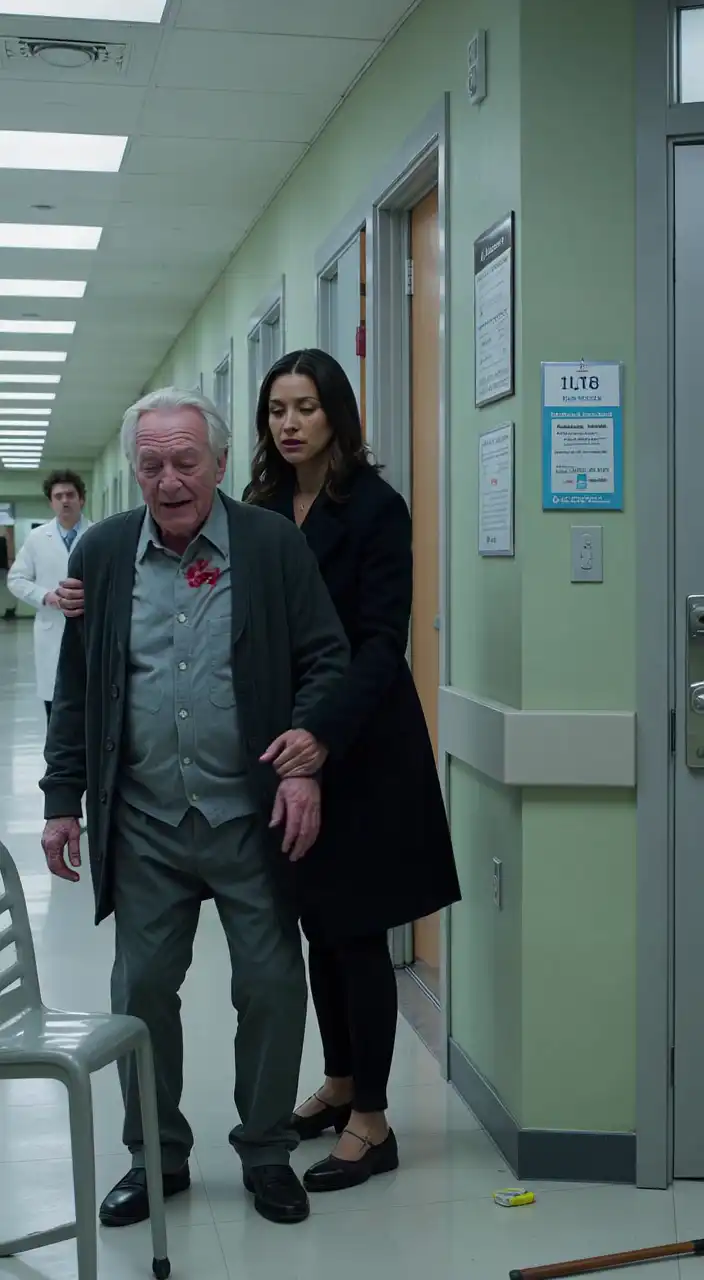
MY FATHER STARTED SHIVERING SO HARD HIS SURGICAL BANDAGE BLED THROUGH, AND THE CLINIC ADMINISTRATOR STILL BLOCKED THE TRIAGE DOOR.
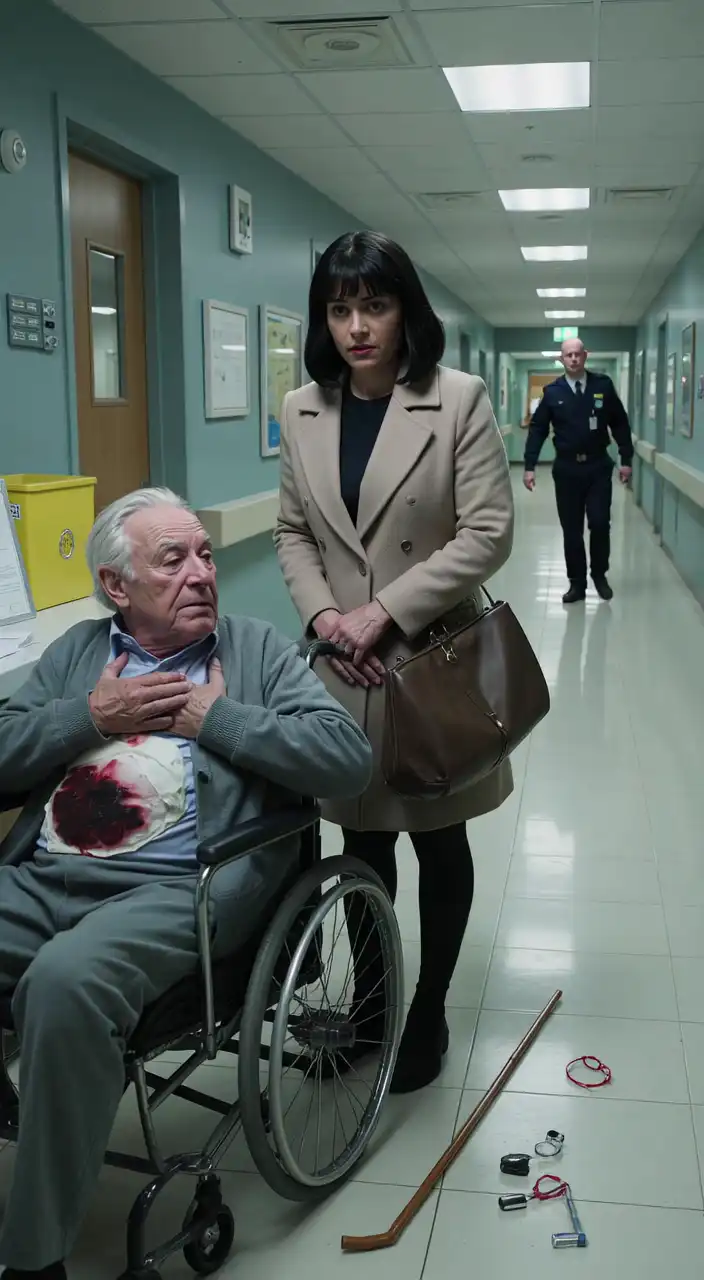
MY FATHER STARTED SHAKING IN THE HOSPITAL HALLWAY, AND THE WOMAN WHO CLAIMED TO BE HELPING HIM WOULD NOT LET TRIAGE TOUCH HIM.