
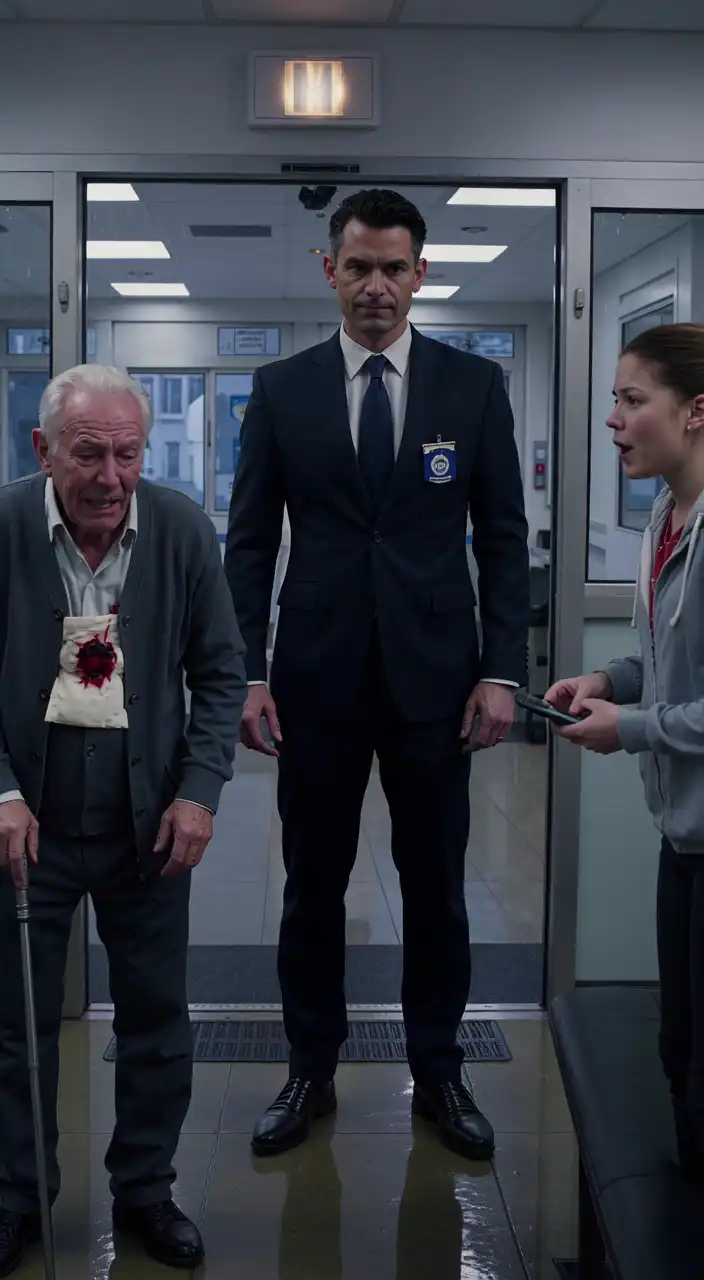
"Move."
Dr. Harper did not raise her voice. She did not need to. The tone landed harder than a yell because it carried no uncertainty at all.
Jack turned toward her with the polished smile administrators use when they expect deference. "Doctor, this family has already been discharged. There are consent and account issues-"
"I said move." She was already stepping past him, crouching beside the bench, and pulling the cracked phone out of the rain with a gloved hand. The emergency screen was still lit, call duration frozen at forty-three seconds. She glanced at it once, then at my grandfather's bandage, then at the tremor running through his shoulders. "Oscar, can you tell me your full name?"
Grandpa swallowed. "Oscar Bennett."
"And do you want medical care right now?"
He looked from her to Jack and then to me. Shame flickered across his face first, the reflex of a man who had spent his life avoiding inconvenience to other people. Then pain won. "Yes," he said, almost whispering. "Please."
That one word changed the whole shape of the scene.
"Good," Dr. Harper said. "Then this is over." She stood and pointed to the nearest security officer, a broad man in a blue jacket who had been hovering uncertainly under the overhang. "Wheelchair. Now. And call triage. I want a septic workup, post-op complication, active bleeding, possible delayed intervention. If no chair is here in ten seconds, use the transport gurney."
Jack put a hand out, not touching her but trying to interrupt the current she had started. "Doctor, there are protocols. He left the facility. Family authorization is pending and-"
Dr. Harper cut him off without looking at him. "An adult patient who is awake and asking for emergency care does not need a wealthy relative's permission to be evaluated. If anyone has told him otherwise, that becomes my concern."
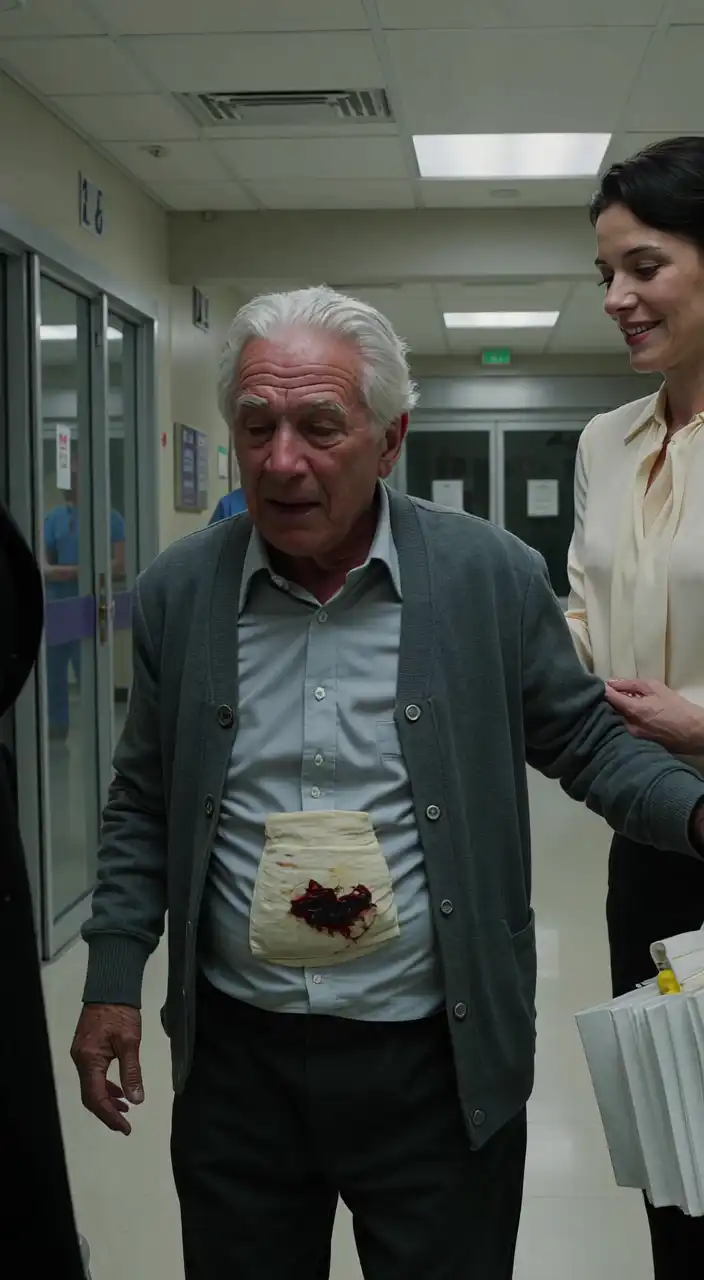
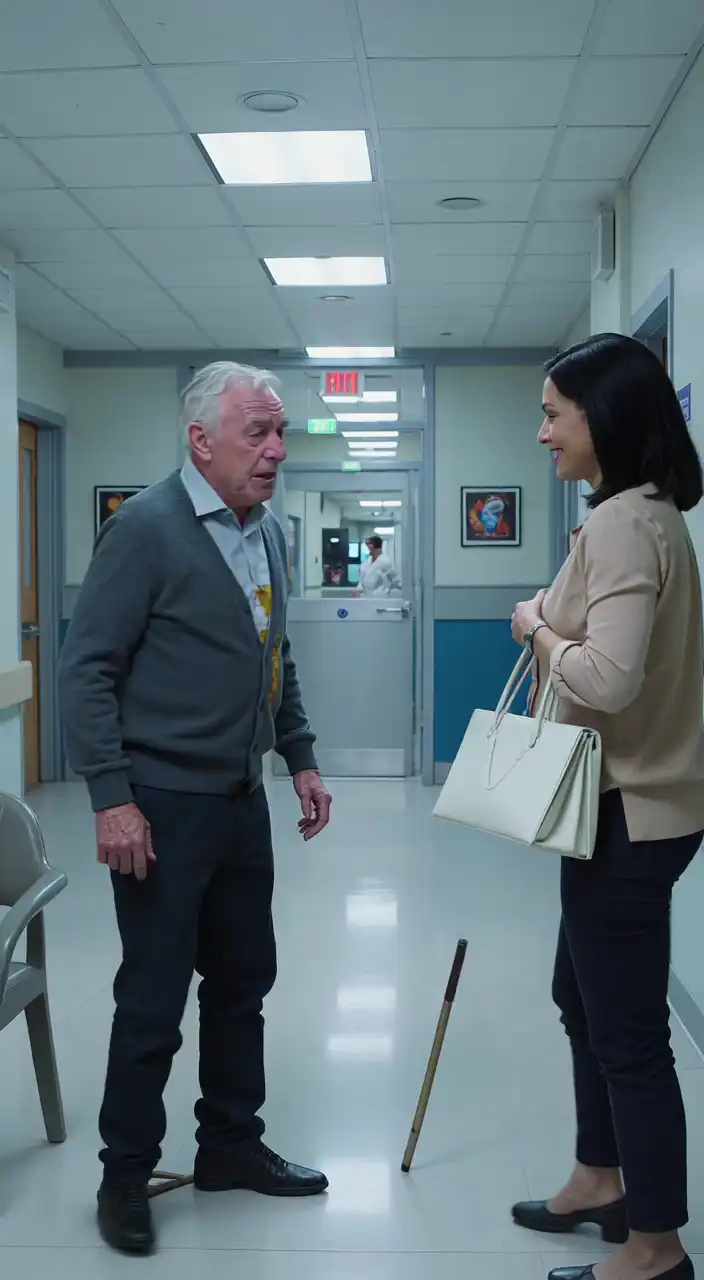
The security officer moved fast then, maybe because he heard the words the way I did: not just instruction, but a line being drawn. Another staff member came running with a wheelchair. I bent to help Grandpa and felt heat through his cardigan, heat that made my own chest tighten. The rain had soaked his sleeve, and under the damp wool I saw a yellowish medicine stain I had thought came from antiseptic earlier. Dr. Harper noticed it too. Her fingers paused over the cuff before she lifted his arm gently.
"What was put on this dressing?" she asked.
Jack answered before I could. "Standard post-op topical care. We can pull the chart when billing clears."
She turned on him then, finally giving him her full attention. "You are not speaking for this patient. Not one more word."
Grandpa tried to sit straighter as they got him into the wheelchair, but the effort made him gasp. His cane clattered to the ground. I grabbed it and followed while security held the automatic door open. Jack took one quick step as if to keep pace with us, maybe still trying to control the story, but the second security officer arrived at that exact moment and blocked him with more politeness than welcome.
"We'll need you to remain here, sir."
The look on Jack's face was tiny, but I saw it. Not anger first. Fear.
Inside the ER entrance, everything became brighter, louder, and colder. Triage did not pause for dignity. They moved Grandpa under fluorescent light, cut away the damp edge of the bandage, got blood pressure, pulse ox, temperature. Fever: 103.1. Heart rate high. Pressure dropping. The nurse's expression sharpened the instant she peeled back the outer dressing. I could not see the incision clearly from where I stood, but I saw her look at Dr. Harper and then silently hand over a pair of scissors.
"Who discharged him?" the nurse asked.
Jack had apparently followed close enough to be heard from the threshold. "This is a misunderstanding. His son is account guarantor. There were instructions-"
"Out," Dr. Harper said, and this time security physically escorted him back beyond the red line at the entry hall.
Grandpa grabbed my wrist while they worked. "Don't call your father yet."
I looked at him, stunned. "Why not?"
His eyes were cloudy with fever, but not confused. "Please."
I wanted to argue. My father was his oldest child. If Grandpa was crashing, he should know. But something in the way Grandpa said it, not defiant, not dramatic, just scared, made me stop. I had grown up believing my father handled everything because he had the money and the confidence and the easy voice people listened to. But in the ambulance bay, when Jack kept asking for family permission, he had asked specifically for my father. Not for any relative. Not for next of kin in general. For him.
Dr. Harper ordered blood cultures, broad-spectrum antibiotics, fluids, imaging, a surgical consult. Then she asked me to step aside while they transferred Grandpa to a stretcher. I should have felt relief, but now that action had finally started, my mind went jagged with all the parts that did not fit. Why had Jack been so invested in keeping him outside? Why had he said billing and consent like the words could outweigh fever and bleeding? Why was Grandpa afraid of me calling my father?
A nurse with kind eyes and a blunt manner guided me toward a plastic chair near the station. "Sit. Drink this." She pushed a paper cup of water into my hand. "How long was he worse before they brought him back?"
"They didn't bring him back," I said. "We were leaving. He started shaking in the bay."
"How long had he been discharged?"
"Maybe fifteen minutes."
She nodded once, but I could tell that answer made her more concerned, not less. She lowered her voice. "Did anyone tell you what to watch for after the procedure?"
"Fever, redness, drainage. Pain getting worse." I heard myself reciting it, then frowned. "Actually..." I stopped. There had been papers. My father had taken them before we left the clinic room, folded them, and tucked them inside his raincoat. He had said he would keep them dry while I got Grandpa to the car. Then his office called, and he vanished down the hall to take it. He had never handed the papers back to me. By the time Grandpa started shaking, all I knew was that we needed help.
The nurse saw my face change. "Actually what?"
"My dad had the discharge papers."
She held my gaze one beat longer. "Do you have them now?"
"No."
Before she could ask another question, one of the monitors near the trauma rooms began chiming in a fast repeated tone. Down the hall, Dr. Harper called for another bag of fluids. Not panicked, but urgent. It was enough to make the cup shake in my hand.
Twenty minutes later she came back out, stripped her gloves, and stood in front of me. "He has a serious post-surgical infection, and he may have been sent out too early or with warning signs that weren't addressed. We're stabilizing him, and surgery is being paged."
My throat closed. "Is he going to die?"
"I'm not telling you that." She leaned slightly closer, her voice lowering. "I am telling you that getting him back inside when you did mattered."
Then she held up my phone in a clear evidence bag. "And this matters too. Security pulled camera footage from the bay because of the interrupted 911 call and the contact with your wrist. I need you to tell me exactly what happened from the moment he stood up to leave."
So I did. The shaking. The stain spreading. Jack's words. The phone falling. My father's missing discharge papers. Every sentence made the scene sound more unbelievable, but Dr. Harper never interrupted except to pin down times and exact phrases. When I repeated "family consent and billing clearance before re-entry," she wrote it down herself.
A deputy from hospital security joined us halfway through, not a police deputy but the former county guy type they hire when they want competence without the lights. He asked if my wrist hurt where Jack grabbed me. I said it didn't matter. He said, "It does if someone interfered with an emergency call."
That was the first moment I understood this might become bigger than one bad encounter at a doorway.
Then my father's name flashed on my screen.
I stared at it until the call stopped. A second later a text came through: Where are you? Do not say anything to anyone until I get there.
The nurse beside me read my face before I showed her the message. "That's him?"
I nodded.
She looked toward the trauma rooms and then back at me. "Save everything."
By the time my father arrived, the storm had worsened. Rain hit the glass hard enough to blur the ambulance lights outside into red smears. The road alert on the waiting room TV had shifted from flood advisory to possible closure on Route 8, the one we would have taken home. If Jack had delayed us another twenty minutes, we might have been trapped between a sick old man and a closed road.
My father came in damp, composed, expensive raincoat still buttoned. He did not look panicked enough for a son whose father had just been rushed back into the ER. He looked irritated at losing control of the room.
"Where is he?" he asked me, low and tight.
"In treatment."
He exhaled, once. "Good. Then listen to me carefully. You are upset. You misunderstood what happened outside. Jack was following policy."
I just stared at him. "Policy for what? Letting Grandpa collapse in the ambulance bay?"
His jaw shifted. "This isn't the time."
Dr. Harper chose that exact moment to step into the waiting area. "You're the son?"
My father turned smoothly. "Daniel Bennett. Oscar's medical proxy."
Dr. Harper's eyes did not soften. "Oscar Bennett answered questions, requested care, and is currently being treated. If you have paperwork, my staff will review it. If you have opinions, they can wait."
My father opened his raincoat enough to reach the inner pocket. For one strange second I thought he was finally pulling out the discharge documents. Instead he took out a leather wallet and a folded card. "I donate to this hospital foundation," he said. "I'd like to speak with administration before any accusations get out of hand."
Dr. Harper did not even look at the card. "What I'd like is the discharge paperwork your family left with."
The tiniest pause. Barely there. Then my father said, "I don't have it."
It was the first direct lie I had caught him telling that night.
I knew because the corner of white paper was visible inside his raincoat pocket, just above the seam, warped slightly from the rain.
Dr. Harper followed my eyes. She saw it too.
And my father quietly buttoned the coat over it.
Dr. Harper's face did not change, but something in the air did. It went from confrontation to procedure, and somehow procedure felt more dangerous for my father than anger would have.
"Mr. Bennett," she said, "do not remove or destroy any document related to your father's discharge, medication, consent, or transport. Security is already preserving footage from the ambulance bay. Risk management has been notified. If you are holding paperwork, you will surrender it now."
My father gave a soft incredulous laugh, the kind he used in meetings when he wanted everyone else to feel unsophisticated. "With respect, doctor, you're overreacting. My father is ill, emotions are high, and this family does not need theatrics."
From behind him, the former county deputy from hospital security stepped into the waiting area with a younger guard and a woman in navy scrubs carrying a clipboard. "This isn't theater," he said. "This is chain of custody."
My father's eyes narrowed. "Excuse me?"
The deputy held out his hand, not aggressive, just immovable. "The paperwork, sir."
The waiting room television murmured over the weather map. Route 8 flashed red. Road closure likely in thirty minutes. Somewhere deeper in the ER a monitor alarm burst into life, then cut off. My stomach dropped at the sound, and I turned instinctively toward the treatment hall.
Dr. Harper noticed. "He's still with us," she said to me, quickly, before I could ask. Then she returned her attention to my father. "Don't make this harder than it already is."
My father looked at me, and for a split second I saw naked fury beneath the polished surface. Not grief. Not fear for Grandpa. Fury that I was witnessing this. Fury that the room no longer obeyed him.
"You've said enough tonight," he told me.
"I haven't even started," I said.
That surprised both of us.
The deputy repeated, "The paperwork."
My father kept his hand on his coat. "I will provide any relevant documents to counsel."
"Counsel can meet us after triage review," said the woman with the clipboard. "I'm from patient relations and emergency compliance. If those papers include discharge instructions or warnings not given to the patient at the point of discharge, they are part of the immediate clinical record."
My father shifted tactics instantly. "Fine. I have copies. I was only trying to keep them dry." He drew the folded packet from his coat pocket with a reluctant elegance, as if handing over a receipt after being insulted by a cashier. Water had curled the outer edges. The woman took it without comment and slid it into a clear evidence sleeve.
Dr. Harper glanced at the top page, then flipped one sheet, then another. Her expression sharpened. "Who gave him this antibiotic?"
"I don't know what you're implying," my father said.
She ignored him and looked at me. "Did Oscar start any medication after discharge? Anything oral or topical? Any cream, ointment, powder, leftover pills from home?"
I tried to think through the blur of the afternoon. "At the clinic room, no. At home, we never made it home." Then another memory flashed, small and ugly. "In the elevator your coat pocket leaked. I thought it was rain. It smelled... medicinal. Strong. Bitter."
My father cut in fast. "He is confused."
I looked right at him. "I am not confused."
Dr. Harper separated one page and held it so only the compliance woman and the deputy could see. "This says wound wash only. No topical antibiotic under the compression dressing because of documented prior sensitivity."
My mouth went dry. "Sensitivity?"
She nodded once. "A reaction history. Not always life-threatening on its own, but enough to worsen tissue irritation and mask signs if someone applied the wrong thing. It also says return immediately for fever, drainage, increasing pain, or tremors."
All the air seemed to leave the room. Return immediately. The words landed with brutal clarity. Grandpa had done exactly that. And Jack had blocked him at the door.
The deputy asked, "Who signed him out?"
The compliance woman scanned the page. "Discharging nurse initials here. Surgeon note pending. Administrator clearance note appended after timestamp." She frowned. "That's odd."
My father heard it too. "What's odd?"
"An addendum entered after discharge stating family will monitor at home and re-evaluation may be deferred pending guarantor communication." She looked up. "That does not belong in a clinical return instruction."
Jack.
As if summoned by his name, the doors near registration opened and he came back into view from the administrative corridor, no longer trying to smile. He was carrying his tablet and speaking to someone on a headset, stopping short when he saw the group around my father.
"There you are," my father said, relief and warning tangled together. "Can we stop this nonsense and focus on getting my father a room?"
Jack's eyes flicked to the evidence sleeve in the compliance woman's hand. The color in his face changed. "Those are private records."
"So is the camera footage you're not supposed to edit," the deputy said.
Jack squared his shoulders. "I did not touch any footage."
Dr. Harper took one step toward him. "Then answer this. Why is there an administrative addendum telling family to monitor at home and defer re-evaluation, on a patient whose written discharge instructions clearly say return immediately for these symptoms?"
Jack's mouth opened, then closed. "That note reflects a conversation with family."
"Which family?" the deputy asked.
Jack looked at my father.
No one missed it.
The compliance woman's pen stopped moving. The younger guard looked from one man to the other. Rain hammered the glass again, and the road alert on the television shifted to emergency closure for low-lying sections. The storm was sealing the world outside while the truth inside started to rise.
My father recovered first. "I spoke with him because my father panics after procedures and overuses emergency services. I said I would call if there was a real change."
I felt something hot and sick twist through me. "He wasn't panicking. He was bleeding."
"He has always dramatized discomfort," my father snapped. Then, noticing the room, he smoothed his tone. "Look, my father hates hospitals. We were trying to avoid unnecessary readmission."
"By stopping a 911 call?" the deputy said.
"I did not stop any call."
"You told Jack not to let him back in," I said.
My father turned slowly. "Be very careful."
The old reflex in me flinched. For years that voice had ended arguments at family tables, in cars, at graduations, at funerals. But the reflex met the memory of Grandpa shivering in the rain, trying not to inconvenience anyone while my father discussed overuse of emergency services.
So I said, "No."
It was a tiny word, but it felt like stepping onto a bridge I had been told all my life would collapse under me.
Jack tried to retake control. "This is becoming hostile. For everyone's benefit, perhaps we should continue in a private office."
Dr. Harper said, "No. We continue where witnesses already are."
The deputy lifted his radio and spoke quietly into it. "Need IT audit on admin notes tied to Oscar Bennett discharge, all access logs from fourteen hundred onward, and lock the record."
Jack took an involuntary step forward. "You can't lock an active administrative account on my authorization level."
The deputy looked at him. "Watch us."
That landed. Jack's composure cracked enough for me to see the status anxiety under it, exactly what he had hidden behind policy at the door. This was not only about one patient. This was about his connection to someone richer, more important, more dangerous to disappoint than a wet old man with a cane.
The compliance woman asked my father, "Did you request that the return instructions be altered?"
"No."
"Did you request that staff contact you rather than evaluate the patient if symptoms appeared?"
"I requested to be informed."
"Did you tell the administrator your father's account would move elsewhere if there was an unnecessary admission?"
My father lifted his chin. "I told him this institution has become alarmist."
Jack said too quickly, "He never threatened to move funds."
Too quickly. Too defensive.
The deputy's expression changed, a quiet sort of satisfaction. He had heard enough lies to know when one person accidentally confirms another person's leverage.
Down the treatment hall, sudden motion drew my eye. A nurse hurried past pushing blood products. Another called for ultrasound to bay three. Dr. Harper half turned at once, all focus going clinical again. She caught a passing resident by the shoulder. "Tell surgery I want them in now. If pressure drops again, we're not waiting."
My body went cold. "Is that Grandpa?"
She looked at me for one heartbeat, then answered honestly. "Yes. He is getting sicker."
The room blurred at the edges. "Can I see him?"
"Not yet." Her voice softened by one degree. "But listen to me. He is in the right place now. That matters."
Then she was gone, striding back through the double doors.
The waiting area seemed suddenly obscene in its normalcy: vending machine hum, damp umbrellas, a child asleep against her mother's shoulder. My father used that moment to shift close to me and lower his voice.
"You need to stop talking," he said. "You have no idea what is at stake."
"My grandfather's life is at stake."
"I am not talking about tonight."
That chilled me in a different way. "Then what are you talking about?"
He glanced toward the others, calculating. "Your grandfather's finances are complicated. His post-op course was already causing issues. If he is readmitted under certain codes, everything freezes until a review is complete. His facility transfer, the trust distributions, the sale of the lake property. He agreed we needed a clean discharge."
I stared at him. "He agreed? Grandpa could barely stand."
"He was lucid earlier."
"Did he agree to be left outside while he had a fever over one hundred and three?"
My father looked away first.
That was my answer.
The compliance woman was pretending not to listen, but her knuckles tightened on the clipboard. The deputy had heard enough too. He stepped closer. "Sir, are you saying you discouraged immediate care because of financial consequences?"
My father snapped back into polished mode. "I am saying families make difficult decisions. My father wanted privacy."
A thin, shaking voice behind us said, "No I did not."
Every head turned.
Grandpa Oscar was not in a room. He was on a rolling stretcher at the mouth of the hall, half propped, oxygen under his nose, gown open at the neck, cardigan gone, his hair damp with sweat. A nurse and an orderly flanked him because he was clearly not supposed to be there alone, but somehow he had insisted his way forward long enough to speak. He looked weak enough to disappear and stubborn enough to hold the building upright by refusing to lie back down.
"Sir, you need to return to bay three," the nurse said gently.
"In a second," he whispered.
My father crossed toward him instantly. "Dad, you shouldn't be out here."
Grandpa's eyes moved past him to me first. "Did they hear you?"
My throat closed. "Yes."
He nodded once, as if checking off a task. Then he looked at Dr. Harper's absent doorway, found only the deputy and compliance woman, and settled on them. "He told me not to come back in if I got chills," Grandpa said, each phrase thin but precise. "Said we'd be trapped in paperwork. Said Jack would help us leave the fast way. He took the papers because he knew I'd read them."
My father went pale. "Dad, you're septic. You are not thinking clearly."
Grandpa's whole face changed at that. Fever and weakness were still there, but underneath them came something older, steadier, and far more dangerous to my father than any accusation from me.
"I am clearer than I have been in months," he said.
The nurse put a hand on his shoulder. "Mr. Bennett, please. You need to conserve your energy."
Grandpa shook his head almost imperceptibly. "No. He always counts on time running out."
The waiting room went silent enough to hear rain ticking against glass.
My father tried another approach, softer now, almost tender. "Dad, this is not how to do this. We can sort family business later."
Grandpa gave a weak laugh that turned into a grimace of pain. "Later is your favorite word."
The deputy stepped toward the stretcher. "Mr. Bennett, if you can answer, did anyone tell staff to delay or deny care tonight?"
Grandpa's eyes found Jack. Jack had stopped moving entirely, tablet held against his chest like a shield.
"Yes," Grandpa said. "They talked like I wasn't there. Daniel said no readmission. Jack said he could note family preference and clear us through discharge. I told them I felt sick before we even got to the elevator." He swallowed. "Daniel said if I went back in, everything would blow up."
My father looked stricken now, but not with remorse. With exposure.
The compliance woman said, "What would blow up, sir?"
Grandpa looked at me again, and I saw shame there, deep and old. "My son moved money."
My father barked, "Stop."
Grandpa kept going, because once men like him finally begin, sometimes all the years of silence come out as one long debt being paid. "He had me sign things after surgery. Too many things. I was foggy. Property transfer, power forms, account changes. He said it was temporary for convenience. Then he didn't want a second admission because another attending might question the signatures, the timing, the capacity review."
My pulse thundered in my ears. The lake property. Trust distributions. Clean discharge. It all clicked together so hard it made me feel sick.
The deputy raised his radio again. "Need local law enforcement liaison and elder protection consult to ER waiting. Possible coercion, record tampering, interference with emergency services."
Jack finally found his voice. "This is absurd. He is delirious."
Grandpa turned his head and fixed Jack with a look so tired and contemptuous that it struck harder than any shout. "You asked if the foundation wing would hear about your promotion if you helped us leave quietly."
Jack's spotless shoes seemed rooted to the tile.
The compliance woman's expression shut down into something professional and severe. "Mr. Jack Chen, do not access any workstation, device, or charting terminal. Surrender your tablet now."
He did not move.
The younger guard stepped up. "Tablet, sir."
Jack's grip tightened. Then, seeing the room had turned against him, he let go. The guard took it.
My father said, "You cannot do this on the basis of an old man's confusion and a child's hysteria."
"I am twenty-six," I said automatically, because some stupid part of me still needed to correct him.
Grandpa gave me the faintest ghost of a smile.
Then his body folded around a surge of pain. The monitor clipped to his finger erupted in rapid beeps. The nurse swore under her breath. "Pressure's dropping."
Everything exploded at once. The orderly shoved the stretcher backward. The nurse called down the hall, "We're crashing in the corridor, moving now." Another nurse appeared as if conjured, pushing meds. Dr. Harper came through the doors at a run, eyes snapping from the monitor to the dressing to Grandpa's face.
"What happened?"
"He insisted on making a statement."
"Of course he did," she said, but there was no irritation in it, only fierce urgency. She grabbed the rail and moved with the stretcher. "Back to bay three. Call OR, tell them if surgery wants to argue they can argue over an open abdomen. Daniel Bennett, do not follow. Security, keep this hall clear."
Grandpa caught my sleeve for a fraction of a second as they rushed him past. "Don't let him fix it," he whispered.
Then he was gone through the doors.
For three full seconds no one in the waiting room moved.
Then my father did exactly what Grandpa feared he would do. He reached for his phone and walked away from the cluster toward the windows, already speaking before the call even fully connected.
"I need legal here now," he said. "And get ahead of this. Hospital, police, whoever. It is a confusion event. My father is unstable and my daughter is emotional."
I followed him. "I heard that."
He turned his back on me and kept talking. "Also contact Wells and Harker. Freeze outbound communication on the trust until-"
The deputy intercepted him mid-sentence and held out a hand. "End the call."
My father covered the receiver. "Do not touch me."
"End. The. Call."
"I am speaking to counsel."
"You are potentially coordinating witness interference during an active medical emergency investigation."
My father stared at him, then slowly lowered the phone. But before he could disconnect, a voice faintly crackled through the speaker loud enough for all of us to hear.
"Daniel? We already have a problem. Nora says she found another envelope in Oscar's study. Signed before the surgery date but notarized after. It doesn't match-"
My father stabbed the screen dead.
No one said anything for a beat.
Then the deputy quietly said, "Thank you."
My father realized what had just happened. The color drained from him so fast it was almost visible.
The compliance woman was already writing. "Please preserve that device."
He laughed again, but this time it sounded frayed. "You people think hearing one sentence gives you a case?"
"No," said the deputy. "Your behavior gave us one. That sentence gave us direction."
The storm outside boomed, close enough to rattle the glass. Lights flickered once, held, then steadied on generator-backed power. Somewhere deeper in the ER, doors slammed open and shut as staff moved quickly. The building had the tense feeling of a ship in bad water, every corridor carrying emergency in different forms.
A uniformed city police sergeant arrived within minutes, soaked at the shoulders, followed by a woman in a dark county jacket marked Adult Protective Services. They took in the wet floor, the security presence, my father's coat still dripping beside his polished shoes, Jack standing rigid without his tablet, and they understood immediately that this was not a simple family disagreement.
The sergeant introduced himself to me first, which I noticed. Maybe because I was the one still holding the evidence-bag receipt for my phone. Maybe because everyone else looked like they already had stories ready.
"I need the basics," he said.
So I gave them again. The bay. The shaking. The stain. The blocked doorway. The interrupted 911 call. Jack grabbing for me. My father taking the papers. The texts telling me not to say anything. While I spoke, APS asked careful questions about Grandpa's living situation, who managed his accounts, whether he had seemed afraid before tonight. Each answer pulled more old memories into the light. Missed calls that my father had explained away. Grandpa saying he was not sure which papers he had signed after anesthesia. Checks he did not remember writing. A canceled lunch because "Daniel was handling everything." The kind of things families dismiss one by one until one night the pattern stands up all at once.
When they questioned Jack, he tried procedure first.
"The patient had been formally discharged. There were unresolved guarantor matters and a family request to coordinate return through account review."
The sergeant said, "So to be clear, a man with a fever, post-surgical bleeding, and visible tremors sought re-entry, and you blocked it over money and family preference?"
"I paused the process pending clarification."
"You blocked the door," I said.
Jack looked at me with open dislike now. "I maintained order at a congested access point."
The deputy said, "And the interrupted 911 call?"
Jack's jaw set. "The phone fell."
"After you reached for the caller," I said.
"I did not intend-"
"Did you make physical contact?"
Silence.
"Did you?" the sergeant repeated.
"His wrist was moving erratically and I was attempting to de-escalate."
The sergeant wrote that down in a way that made it sound exactly as ugly as it was.
Then they questioned my father. He did better at first. Calm voice, expensive words, concern for patient privacy, concern over overburdened emergency resources, concern over confusion under stress. But every polished answer peeled open under specifics. Why keep the discharge papers? Why tell me not to talk? Why discuss trust distributions while your father was in treatment? Why tell the administrator there would be consequences for readmission? Why did another person on the phone mention envelopes, signatures, and notary dates?
He tried to answer each thing separately. The problem was that they were no longer separate.
The first major reversal came from a person none of us expected to matter.
A valet attendant.
He was brought in by security because someone remembered he had been under the entrance awning when everything happened. He was maybe nineteen, soaked through, hair plastered down, carrying a paper cup of coffee like he had walked into the wrong movie. He kept apologizing for interrupting. Then he looked at my father and Jack and swallowed.
"I don't know names," he said, "but I saw the old guy by the bench before the doctor came out. He was asking for the phone. The man with the badge said, 'Not until your son gets here.' Then the older man said, 'No, he'll make me leave.'"
The sergeant's pen stopped. "You're certain?"
The valet nodded hard. "Yeah. I remember because it sounded weird. And because the kid -" He pointed at me. "You were trying to get under the bench for the phone. Then the old man almost fell."
Jack said, "This is a parking employee in a storm. Hardly reliable."
The valet flushed red. "I also picked up your shoe protector packet when it blew away. It had your office label on it."
The deputy almost smiled.
The clue shifted everything. Until then, my father and Jack could still hide behind confusion about policy. But if Grandpa had specifically asked for the phone and specifically said my father would make him leave, then this was no misunderstanding. It was a trapped patient trying to reach help.
The sergeant separated Jack and my father after that, moving them to different corners of the waiting room with officers near each. Watching them lose the ability to coordinate in real time was like seeing two stage actors suddenly trapped in different plays.
While they were occupied, APS sat beside me and asked softly, "Has your grandfather ever told you he was afraid of your father?"
I thought of Grandpa's reflexive apologies. The way he looked to other people before answering basic questions. The way "Don't call your father yet" had come out like a survival instinct. "Not in those words," I said. "But yes."
She nodded. "That is in those words."
Another hour passed, maybe more. Time in the ER became elastic. The storm worsened; roads closed; the lobby thinned as people were rerouted or bedded down where they sat. Hospital maintenance rolled out absorbent mats. A volunteer distributed blankets. Through all of it, bay three remained a closed universe I could not enter.
Then came the next reversal.
The compliance woman returned with a hospital IT specialist carrying printouts. They went straight to the sergeant, the deputy, and APS. Their low conversation sharpened the room's tension almost instantly.
"What?" I asked when the deputy approached me.
He hesitated, then said, "The administrative addendum in Oscar's chart wasn't just inappropriate. It was entered from Jack's credentials after the official discharge, but from a terminal in a family consult room, not his office."
My eyes widened. "My father was with him."
"Looks that way."
The deputy handed the printout to the sergeant. A timestamp sat beside a location code. Another log showed that Oscar's chart had been opened before surgery by someone using a temporary proxy access tied to family documentation. There had also been scans added from an outside folder. Signatures. Financial forms.
"Can they prove he used the computer?" I asked.
"Maybe not by keystroke," the deputy said. "But the room has hallway cameras. If he and Jack were the only two in and out during that time window, and the chart was altered there, it helps."
The sergeant's face hardened. "Get that footage locked too."
Jack heard enough from across the room to know the wall was closing. He asked for a lawyer. My father did too, though he phrased it as, "I think prudence now requires counsel." No one cared how elegant the sentence sounded.
But a request for counsel did not end the consequences already in motion. Hospital administration had arrived by then: chief nursing officer, legal liaison, and a vice president whose tie was still crooked from being pulled in at home. They spoke briefly with Dr. Harper when she emerged from the treatment hall, splattered at one cuff with something rust-colored and moving too fast to entertain anyone's institutional discomfort.
I stood up before she reached me. "Please."
Her face gave me the answer before her words did. "He's in the OR."
My knees almost gave out.
She caught my arm. "Listen. Surgery took him because imaging and exam suggested a deep wound complication with active internal spread. He became unstable. We started pressors. We got him upstairs in time."
"In time," I repeated.
"Yes." She made me say it back before she let go. "In time."
The vice president tried to draw her toward some administrative question, and she cut him off with flat contempt. "You can have me after the patient is closed and your compliance failure is contained."
Then she looked at the sergeant, the deputy, and APS. "If you are asking whether delay worsened his condition, my preliminary medical opinion is yes. Document that exactly."
My father closed his eyes briefly at those words. It was the first sign I saw that he understood medical language could now do what money could not stop.
The vice president, to his credit or self-preservation, turned immediately toward damage control. Jack was suspended on the spot pending investigation. His badge was taken. He protested once, then saw no one in the room would shield him and fell silent.
My father was not an employee, so the hospital could not suspend him. But the sergeant informed him that because of the physical interference allegation, the interrupted emergency call, the possibility of elder coercion, and the chart tampering investigation, he was not free to wander. Not arrested yet. Not free either.
That word mattered. He heard it.
He asked to use the restroom. An officer went with him to the hall and waited outside the door. He returned whiter than before, hands damp despite the cold. The man who had dominated every family room I had ever known was beginning to look not smaller exactly, but badly lit, as if the structure of him depended on angles and favorable conditions now gone.
Around two in the morning the next conflict hit.
The roads were fully closed to general traffic. A rumor swept through the waiting room that backup generators in another wing had failed. A trauma from the highway came in with half the county rerouted to us. The ER tightened into disaster mode. People were moved, reassigned, redirected. In that chaos, my father made his move.
He was sitting near the windows under the watch of one officer when a call came over the police radio about a separate disturbance at the ambulance entrance. The officer half turned. At the same moment a volunteer tripped with a box of blankets, several people stood, and my father simply walked.
Not ran. Walked.
By the time I realized what he was doing, he had reached the administrative corridor leading toward the elevators, coat over his arm and head down like a man late for a meeting. It was an old trick. Most people do not stop a person who behaves as though he belongs.
"Hey!" I shouted.
The deputy moved first, but my father was faster than I had ever seen him. He pushed through a side door and vanished into a dim service hall.
The waiting room detonated into motion. Security split in two directions. The sergeant swore into his radio. I should have stayed put. Every sensible person would have stayed put. Instead I ran after them because there was one thing in my father's life he would still think he could fix if he got to it first.
Grandpa's papers. Whatever else existed. Anything in a room, office, or locker tied to tonight.
The service hall smelled like bleach and damp cardboard. Fluorescents buzzed overhead. Rain rattled somewhere through a vent. I caught a glimpse of my father at the far end turning toward the old imaging wing, where consult rooms and records overflow storage sat half dark after midnight.
"Daniel!" the sergeant yelled.
My father did not look back.
He hit the stairwell door instead of the elevator, smart enough to avoid cameras if he could. By the time I reached the stairwell, the door was still swinging. The deputy beat me there and shoved it open. The clang echoed up concrete.
We found my father one floor above, not climbing farther but crouched beside a wall cabinet in a disused family lounge near surgical prep. Its door hung open. Inside were hospital forms, clipboards, printer paper, and one locked shred bin. My father had a white envelope in his hand and another half under his shoe, as if he had dropped one while trying to choose.
The sergeant drew up short. "Hands where I can see them."
My father straightened slowly. "I was looking for a private place to call counsel."
The deputy looked at the cabinet. "In a supplies lounge?"
My father held up the envelope. "I found this on the floor."
The envelope had Grandpa's name on it.
My chest went hollow. "How did you know it was here?"
He did not answer.
The sergeant took the envelope. The flap was already torn. Inside were photocopies of notarized forms, one dated the day after surgery, one bearing a signature so shaky it did not look like Grandpa's usual hand at all. There was also a handwritten note on hospital letterhead: Capacity discussion deferred, family requests expedited discharge.
Not clinical handwriting. Administrative.
Jack's.
The deputy exhaled through his nose. "Well."
My father said, "Those are drafts. Nothing final."
"Why were you hiding them?" I asked.
"I was protecting this family."
"From what? The truth?"
His face snapped. "From ruin. Your grandfather has no idea what it takes to preserve what he built. He would have signed over management eventually anyway. I accelerated an inevitable process."
The words were so cold, so impatient, that they finally stripped away every last excuse I had carried for him. Not just tonight's excuses. Decades of them. Stress. Responsibility. Pressure. Good intentions expressed badly. No. He had looked at weakness and called it efficiency.
The sergeant cuffed him then. Not with drama. Not loudly. Metal clicked in the concrete hall and settled the whole thing into reality.
"You are being detained pending charges related to obstruction, possible evidence tampering, and investigation into elder exploitation," he said. "You can save the speech for counsel."
My father looked at me while the cuffs went on, disbelief giving way to something like hatred. "You are doing this."
"No," I said, shaking. "You did."
He was led away down the stairwell, one officer in front, one behind. For one savage second I thought he would say he was sorry. He did not. He only said, "You have no idea how ugly this gets."
When the echo of their steps was gone, the deputy bent and retrieved the second envelope from the floor. It contained the original discharge instructions, clean copy, unsigned by patient acknowledgment. On the back, in my father's handwriting, were three words:
Do not readmit.
The deputy held it up and looked at me. "That's bad."
I laughed once, not because anything was funny but because language had run out.
Back in the waiting room, APS took custody copies of the forms while the hospital legal liaison looked physically ill. The vice president stopped trying to use reassuring corporate phrases and started using plain ones like "failure," "exposure," and "immediate reportable incident." Jack was removed through a side exit to avoid the main lobby, which only made it look more like what it was.
But the night still belonged to the operating room.
Every new clue and authority action crashed against the same fact: Grandpa was upstairs being cut open because people with power had delayed him. All exposure, all evidence, all the legal machinery in motion could still end with me alone in a chair and him gone.
That emotional reversal hit me hardest around three-thirty. Adrenaline ebbed. Anger drained. I sat wrapped in a donated blanket under the television's silent weather radar and started to shake so hard a nurse thought I was sick too. She brought me tea I could not taste. APS sat near enough to be present but not close enough to trap me. The deputy spoke in low tones to the sergeant. Hospital cleaning staff mopped the tracks of the night as if the building always knew how to digest human disaster.
And then a woman I had never seen before approached with cautious steps and red-rimmed eyes.
"Nora?" I said before I knew why the name came.
She nodded. "I'm your grandfather's housekeeper."
She looked mortified to be there and determined anyway. The sergeant joined us immediately. Nora clutched her purse with both hands and spoke in a rush.
"I heard on the phone there was trouble. Mr. Daniel's office called me by mistake first. They told me not to touch anything in the study until they arrived. So I touched everything." Her mouth trembled once. "I am sorry. But your grandfather told me last month if anything ever felt wrong, I was to go to the blue desk drawer."
From her purse she pulled a ring of keys and a stack of photocopied pages folded into a grocery receipt envelope. "I made copies before I drove, before the roads closed. The originals are still hidden at the house under the sewing machine case."
The sergeant's brows went up. "What are these?"
"Bank transfers. Property amendments. A letter he started writing but never finished. And a list of every time Mr. Daniel brought papers after medication."
My vision blurred. "Grandpa kept a list?"
Nora nodded. "He kept pretending he was forgetful because it made Mr. Daniel careless."
That sentence almost broke me. All night I had seen Grandpa as trapped and humiliated, and he had been. But he had also been fighting in the only ways still open to him. Quietly. Patiently. Building a record in the cracks left by people who underestimated him.
The sergeant took the envelope like it was explosive. In a way it was.
Nora sat beside me after that and told me things in fragments while officials copied the pages. Grandpa had asked her twice in the past month whether certain signatures looked uneven. He had hidden one bank statement in a cookbook. He had changed where he kept his spare cane because my father searched predictable spots. He had told her, "If I get too sick to argue, make sure someone louder sees me."
I cried then, finally, right there in the humming ER waiting room while stormwater pooled on the other side of the glass and strangers pretended not to notice.
Around dawn, the final reversal of the night arrived in green surgical scrubs.
The surgeon looked exhausted, irritated, and honest, which turned out to be exactly what I needed. He pulled down his mask and said, "Oscar Bennett is out of immediate danger."
I stood so fast the blanket slid to the floor.
"We found a deep wound infection with significant spread and a concealed bleed," he continued. "We cleaned it out, controlled the source as best we could, placed drains, and he is going to ICU. The delay did not help him. Another delay might have killed him."
Might have killed him. The sentence hit with a delayed force, because it carried both horror and rescue in the same breath.
"Can I see him?" I asked.
"Soon. Briefly. He'll be sedated."
The surgeon glanced toward the knot of officials still clustered nearby. "And for the record, before anyone asks me to be diplomatic, this should never have reached an ambulance bay standoff."
No one asked him to be diplomatic.
When they finally let me into ICU, the storm had weakened to a gray drizzle against the high windows. Grandpa looked smaller under the blankets and larger than life all at once, because surviving had made him both fragile and monumental in my eyes. Tubes, monitors, drains, oxygen, a line of numbers proving he was still here. His hand was warm when I touched it.
His eyelids fluttered. I thought he was too sedated to know I was there, but his fingers closed faintly around mine.
"Did you stop him?" he whispered.
"Yes."
A rough little breath left him that might have been relief. "Good."
I wanted to tell him everything then, all of it, but the ICU nurse gave me the look that says choose life over explanation. So I said only, "You're safe."
His eyes opened just enough to find me. "For now," he said.
It sounded pessimistic at first. Then I understood. He was not talking about medical monitors. He was talking about after. Police reports. Courts. Accounts. Family fallout. Exposure does not end danger. It changes its shape.
And he was right.
By noon the story had escaped the hospital.
Not because I posted anything. Not because staff leaked for gossip. Because too many formal systems were now involved at once for secrecy to hold: police incident logs, mandatory adverse event reporting, APS emergency petition, internal compliance action, and, fatally for the hospital, scanner traffic from a blocked 911 call and an administrator detained on site. A local reporter called the hospital before lunch. Another called the Bennett office. Someone from the foundation board called the vice president. Lawyers multiplied.
The hospital moved fast to get in front of it. The chief executive came down in person, eyes lined from no sleep, and apologized to me in carefully chosen human language rather than crafted institutional language. He promised full cooperation, independent review, preservation of all records, and protection from retaliation. I believed maybe half of it and appreciated the other half anyway.
APS filed for emergency temporary protective oversight for Grandpa's finances and living decisions until capacity and coercion could be assessed cleanly. Because Grandpa was alive and intermittently lucid, his own statement carried weight. Because he had already hidden records and named concerns before tonight, it carried even more.
Nora became unexpectedly central. So did the valet. So did the nurse who had handed me water. So did the security deputy who knew the legal significance of an interrupted emergency call. Rescue, I learned, is rarely one dramatic hero. It is a chain of people who decide not to look away.
Jack was terminated by late afternoon. The hospital announced it internally before the public statement, but news traveled faster than memos. Staff whispered in the halls. Some looked shocked. Others looked like they had been waiting years for someone to challenge the polished cruelty of men who confuse access with authority.
My father was released pending formal charging after counsel arrived, but not before his phone was seized under warrant application based on the stairwell evidence and the overheard call. He left through a back entrance and still managed, somehow, to send me one message through another number.
You have destroyed this family.
I stared at the screen for a long time before showing it to the sergeant and adding it to the pile.
Then I blocked the number and felt, for the first time since the ambulance bay, a flicker of something that was not fear.
Not peace. Not yet.
Space.
The consequences kept unfolding in waves. The bank froze suspicious transfers. The county clerk flagged property documents for review. A notary listed on one of the forms denied witnessing Grandpa in person on the date shown. Another clue surfaced from housekeeping: they had found a medicine-stained towel in the family consult room trash the night before, tucked beneath coffee cups. Lab later matched residue to a topical medication specifically contraindicated on Grandpa's discharge instructions. Whether my father applied it, whether someone else did at his urging, whether it was incompetence or concealment layered over greed, I did not yet know. But the stain on the cardigan had not been imagined. It had traveled. Evidence has a way of moving when people panic.
That evening Dr. Harper visited ICU after her shift should have ended. She stood at the foot of Grandpa's bed reading the chart, then looked at me with tired eyes and said, "He made it through the first wall. There are others. Infection, blood pressure, kidney stress. But he made it through the first wall."
I said, "Because of you."
She shook her head. "Because he said yes when asked if he wanted care. Because you called. Because a screen on the floor still glowed. Because enough people took the next step." Then, after a pause: "And because men who rely on silence always eventually miscalculate in public."
Grandpa woke more fully on the second day. Not strong. Not comfortable. But undeniably himself. He asked for ice chips, complained about the ICU lights, and requested his own reading glasses before any priest, lawyer, or specialist. When APS explained the temporary protective order in gentle terms, he listened, then said, "About time."
When the sergeant asked if he wanted to give a recorded statement from the bedside, Grandpa said yes. He told it cleanly. Surgery fog. Papers pushed under his hand. Daniel speaking too quickly. Jack promising discreet handling. Chills beginning before discharge. Return instructions hidden. A phone out of reach. Rain. Shame. The whole humiliating threshold of it.
Then he surprised everyone, especially me, by asking for my father to be allowed one thing.
"No jail cell photo while I'm in ICU," he said. "He'd hate that. I don't need revenge confusing the record."
The sergeant blinked. "You're protecting him?"
Grandpa turned his head on the pillow. "No. I'm protecting the truth from becoming spectacle."
That was the emotional reversal I never expected. After everything, he still refused to become cruel. He would expose. He would testify. He would freeze accounts and unwind signatures and let the law look straight at what his son had done. But he would not become his son in order to win.
I sat there realizing that dignity, the thing Jack and my father had stripped from him in the rain, had not actually been theirs to take. They had only delayed it. In ICU, with drains in his side and bruises on his arms, he had more of it than either of them.
The public consequences came next. Local news ran with the blocked re-entry angle first because it was simple and visual: elder man with post-op fever denied emergency care steps from the ER. Then came the interrupted 911 call. Then the chart addendum. Then "sources familiar with the investigation" started using phrases like financial coercion and possible exploitation. The hospital's foundation board went into panic mode because my father's donations had bought him too much access for too long. Jack, it turned out, had cultivated exactly that kind of family relationship as career currency.
A formal complaint portal opened for other patients who believed emergency return had been delayed for nonclinical reasons. Within forty-eight hours, three staff members and two families had contacted investigators. Different details, same pattern: gatekeeping dressed up as policy. What happened to Grandpa became exposure larger than us.
That should have felt triumphant. Mostly it felt exhausting.
I slept in a chair the second night and woke to lawyers in the hall and a social worker gently telling me to shower. Nora brought clean clothes. The nurse with kind eyes from the ER found me in ICU and slipped me an extra coffee without asking. Tiny rescues, one after another.
By the third day, Grandpa asked for a legal pad. His hand shook, but his mind did not. He started making lists. Real ones this time, not hidden in drawers. Who had witnessed what. Which accounts to freeze. Which attorney he actually trusted. Which relatives should be told directly before they heard nonsense from Daniel's side. At the top of page one he wrote, in block capitals:
NO MORE PRIVATE CONVERSATIONS.
He underlined it twice.
When I laughed, he looked pleased with himself. "I was too polite for too long," he said.
"Yeah," I said. "You were."
He studied me for a moment. "You don't have to be polite to your father anymore."
That sentence hurt more than I expected, maybe because it gave permission to a grief I had not named. The exposure had not only rescued Grandpa. It had collapsed my last usable version of my father. There would be hearings, charges, strategy, denials, settlement offers, ugly relatives, maybe years of cleanup. But the old arrangement, where he was difficult yet somehow still the one in charge, was over.
I asked Grandpa, "Did you know it would go this far if you spoke in the hall?"
He closed his eyes. "I hoped. I was afraid I'd die if I didn't." Then he opened them again. "And I was afraid I'd live and he would still win."
That was the real threshold. Not just the ambulance bay. The line between surviving quietly and surviving with the truth attached.
A week later, when he was stable enough to leave ICU for a guarded step-down room, the rain had finally cleared. Sunlight fell across the hospital floor in a pale square near the window. It looked impossible that the same doors, the same walls, the same institution could contain both that storm night and this calmer afternoon. But that is what consequences do. They force a place to remember what happened there.
As transport came to move Grandpa upstairs, he asked me to stop the bed near the corridor junction where patients could see the ambulance bay through a slice of glass.
He looked at the wet-black pavement now drying in the light. "That bench," he said.
"The one where the phone was?"
He nodded. "Keep the picture of it. If they ever start calling this a misunderstanding, show them the bench."
I had not taken a picture. But security had, and the reporter probably had too by now. The cracked phone under the bench, emergency timer frozen. The visual truth of help attempted and blocked. Evidence moves. Sometimes it moves farther than anyone can control.
"I will," I said.
He rested back. "Good. Now let's go somewhere with worse coffee and fewer administrators."
As they rolled him away, I followed with his cane in one hand and the new stack of official documents in the other. This time the papers belonged where they should have from the start: with the patient, in the light, carried by someone who would let him read every line.
Disclaimer: Mention of any brand or trademark is for identification only and does not imply partnership or endorsement
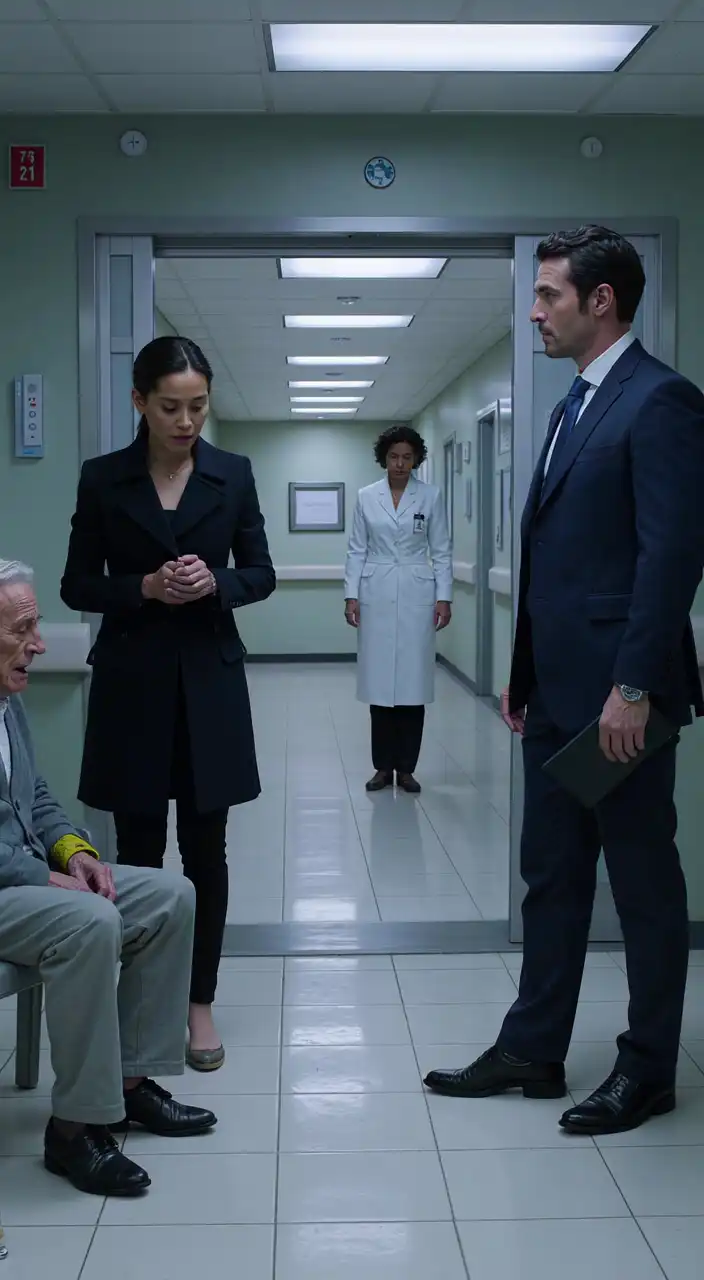
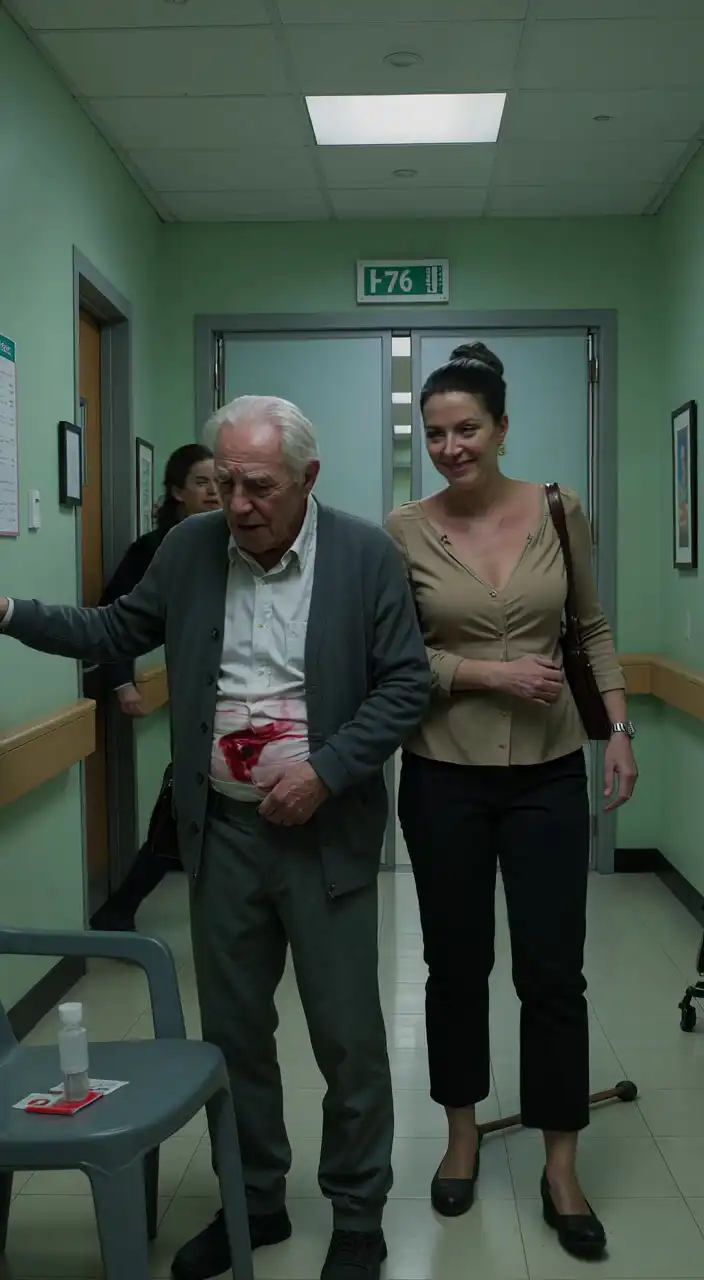
MY FATHER STARTED SHAKING OUTSIDE TRIAGE WHILE A CLINIC ADMINISTRATOR BLOCKED THE DOOR AND SAID HE NEEDED FAMILY PERMISSION FIRST.
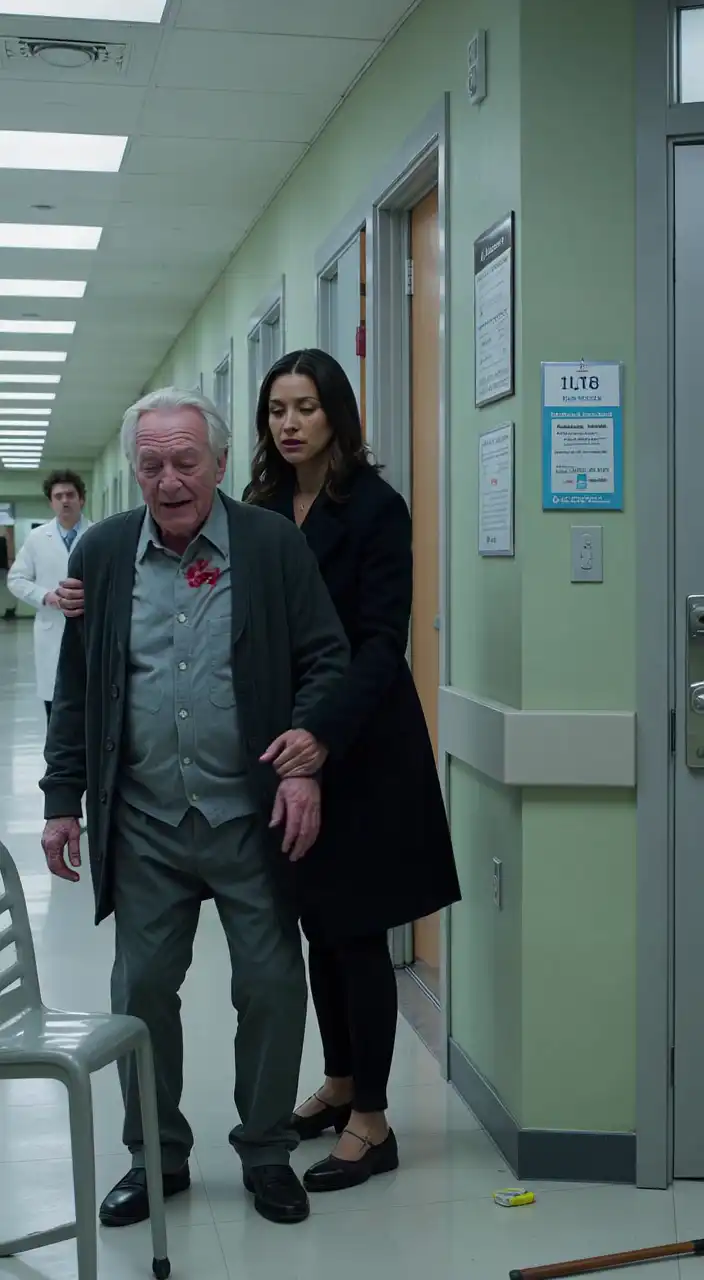
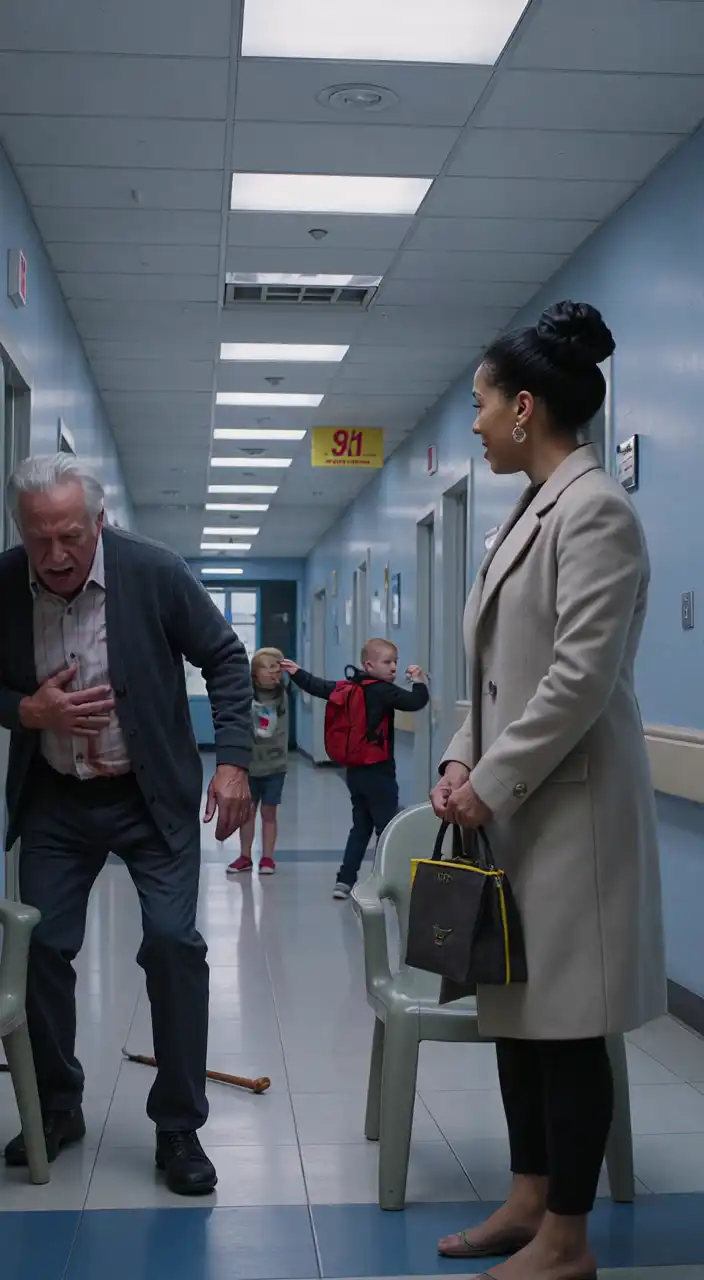
MY FATHER STARTED SHIVERING SO HARD HIS SURGICAL BANDAGE BLED THROUGH, AND THE CLINIC ADMINISTRATOR STILL BLOCKED THE TRIAGE DOOR.
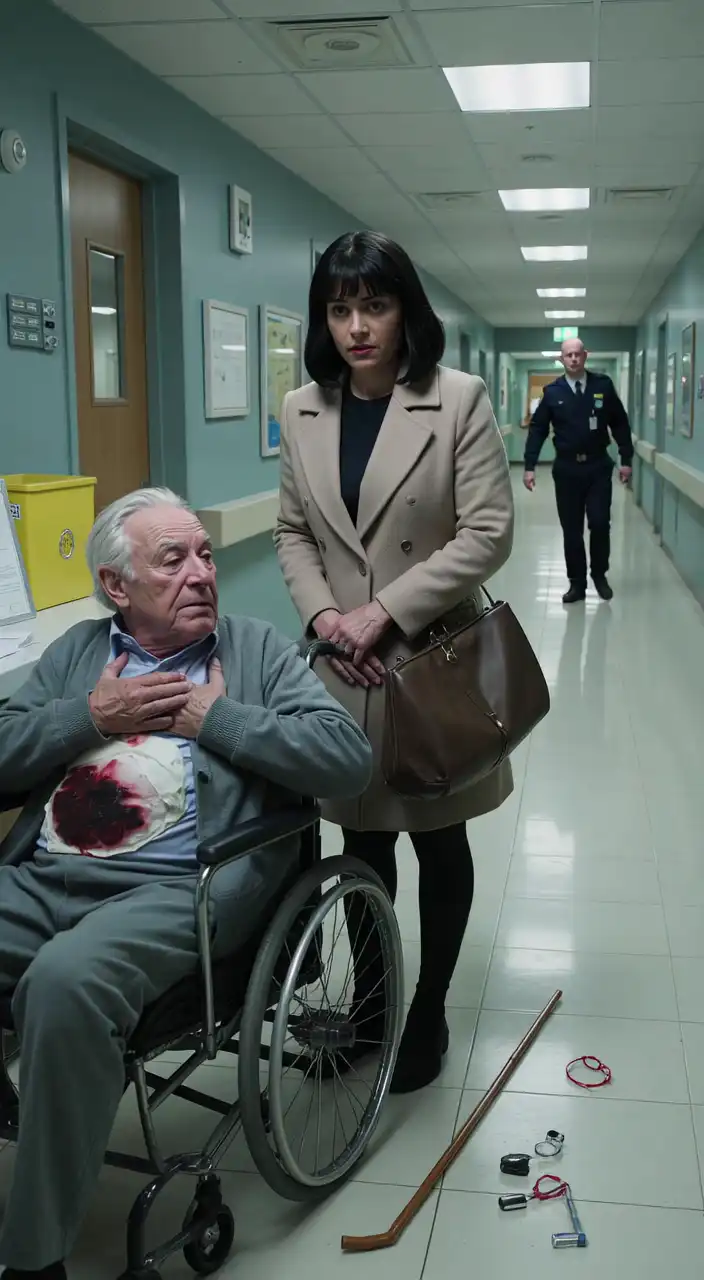
MY FATHER STARTED SHAKING IN THE HOSPITAL HALLWAY, AND THE WOMAN WHO CLAIMED TO BE HELPING HIM WOULD NOT LET TRIAGE TOUCH HIM.