
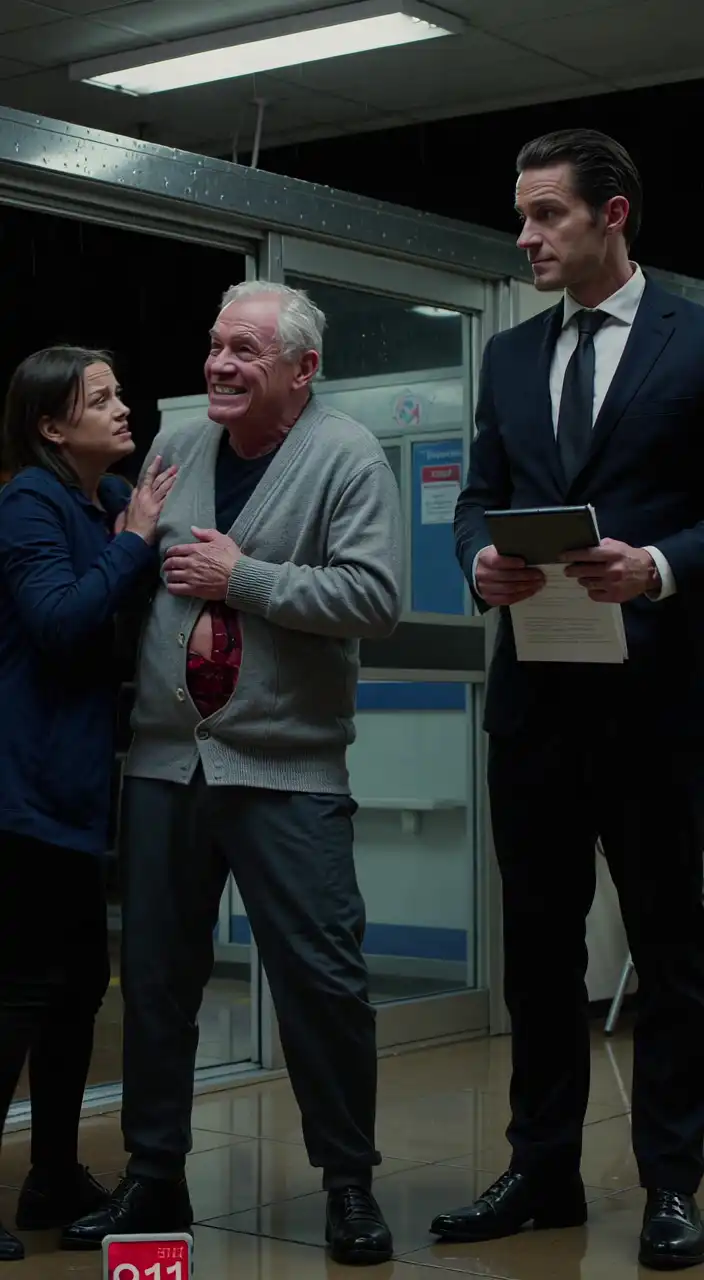
Nathan answered too fast.
"No one stopped anything," he said, shifting his tablet against his chest like it was a shield. "The family is upset. The patient was discharged in stable condition."
The paramedic ignored him at first. He set his orange bag down on the wet tile and reached for my father's wrist. "Sir, can you hear me?"
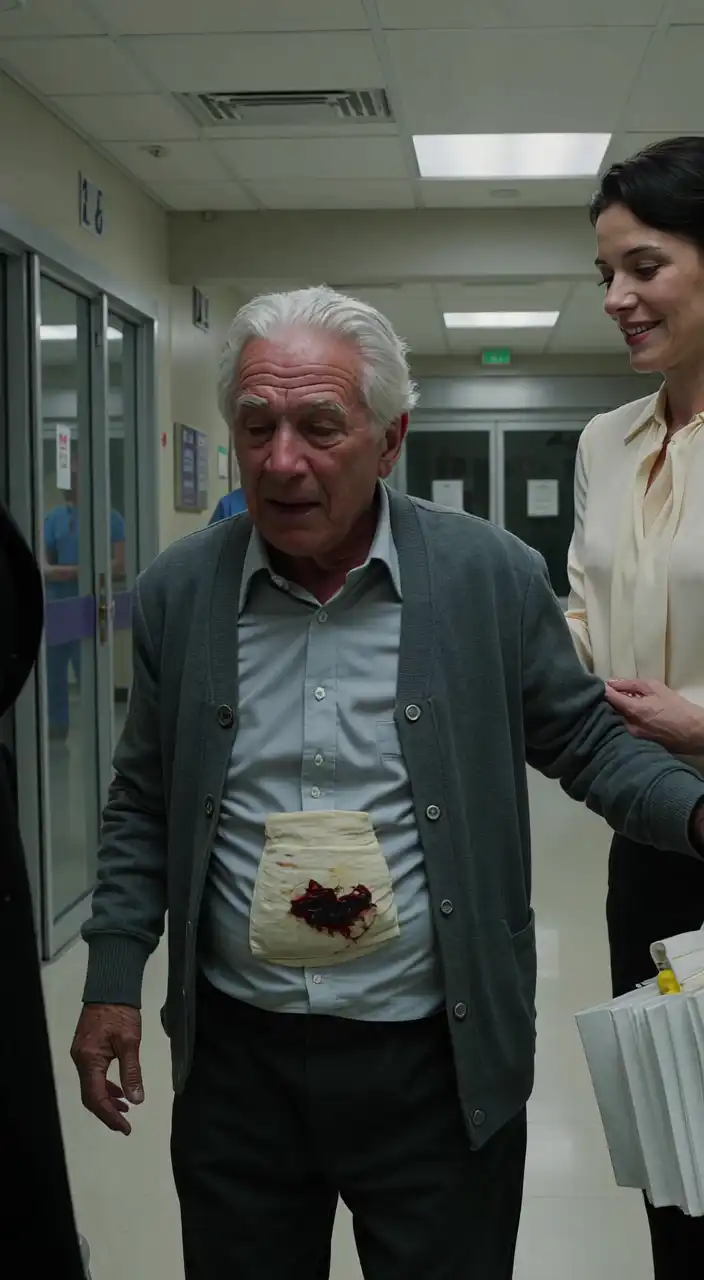
Dad gave the smallest nod. His skin had gone that pale, waxy color that made every age line stand out. Up close I could hear the roughness in his breathing and smell the sharp, sour scent of sweat under the hospital-clean smell still clinging to his cardigan.
"My name's Owen," the paramedic said. "I'm checking you now. Stay with me."
I slid the cracked phone out from under the chair and showed him the screen. The call was still active, timer frozen, my cheek print and a smear of rain across the glass. "I called when he started shaking. Somebody knocked it away."
Owen looked at the call timer, then at Nathan. "We got an open line with distress sounds and no verbal disconnect. Dispatch kept hearing movement, a male voice saying cancel, and another male saying please. That's why we rolled hot."
Nathan's mouth tightened. "Then this is a misunderstanding. He was being transported to his private vehicle, not denied care."
"He collapsed at your entrance," I said. "He asked to go back in. You blocked the door."
Dad's hand groped weakly for my sleeve. "Eli," he whispered.
"I'm here."
Owen cut the compression bandage enough to inspect the edge without tearing the whole dressing. The stain wasn't bright red, but it had spread farther than it should have. Dad flinched and sucked air through his teeth.
"Temp?" Owen called over his shoulder as his partner hustled in with the stretcher.
The second paramedic, a woman with rain on her sleeves, pressed a scanner to Dad's forehead. "One-oh-three point seven."
"BP is dropping," Owen said after the cuff cycled. "Sir, when did the shaking start?"
Dad's eyes fluttered. "In the car. Then... worse."
"He started hurting before we even got to the curb," I said. "His discharge papers disappeared, and this man kept saying he needed clearance."
Nathan took one step back, but not because he was ashamed. He was calculating. I saw it in the way his eyes went from Owen to the doors to the SUV where a driver still sat pretending not to watch. "This facility serves several managed accounts," he said carefully. "Sometimes family members disagree over readmission and transport responsibility."
I stared at him. "What does that even mean? He's sick."
"It means," Nathan said, with a patience that felt practiced, "there may be a legal decision-maker other than you."
That landed like a slap because for one horrible second I thought maybe Dad had signed something while I was in the pharmacy earlier that afternoon. My older half-sister Marissa had flown in from California the day before. She always arrived with confidence and legal language and expensive luggage, and hospital people somehow treated that as authority. She'd stepped out to "handle billing" before discharge. Since our mother's funeral three years ago, she'd managed to make every family conversation sound like a board meeting.
But Dad had called me, not her, when the pain got bad after surgery. Dad had moved into the apartment above my garage six months ago because his balance wasn't good and he hated being alone at night. He liked routine, old jazz, exactly one teaspoon of sugar in his coffee, and pretending he needed less help than he did. He had not once said he wanted Marissa making his medical decisions.
Owen looked from me to Dad. "Sir, who do you want speaking for you right now?"
Dad's lips moved. At first I thought he couldn't get it out. Then he clenched my wrist with more strength than I'd felt from him in the last ten minutes. "My son."
Nathan cut in. "He's febrile and confused."
Dad opened his eyes at that. The humiliation in them was almost worse than the pain. He pulled a breath together and said, very slowly, "I am not confused."
That did more than any shout would have done. Owen gave one sharp nod to his partner. "Let's move."
Nathan stepped into the path of the stretcher. He didn't touch anyone, because men like him know exactly how to obstruct without leaving a mark. He just angled his body and lifted a hand toward the doorway. "This bay is not your admitting entrance. We need verification before internal transfer. If there is a payment dispute-"
Owen straightened to his full height. His voice stayed calm, which somehow made it harder than if he'd yelled. "He has fever, post-op complications, and unstable vitals. We are not asking your permission to assess and transport. Move."
For a second I thought Nathan would actually force the issue. The radio on Owen's shoulder crackled, dispatch asking for status on the open-line patient. The sound seemed to break the spell. Nathan stepped aside by two inches, not enough for the stretcher.
Then the glass doors parted behind him and a security guard appeared, drawn by the radio traffic and my shouting. I had never been so grateful to see a bored middle-aged guard in my life.
"Problem?" the guard asked.
"Medical transport," Owen said. "Door access blocked."
The guard looked at Dad on the floor, at the blood edging the bandage, at Nathan's polished shoes planted where a stretcher needed to go. Whatever office hierarchy existed here, even he knew how bad it looked. He keyed his badge and pulled the inner panel wide.
As they lifted Dad, his cardigan sleeve slid back. I saw the yellow hospital wristband still on him from discharge, bent and damp. There was another band beneath it, half-hidden, a red allergy bracelet. I had not seen that earlier. Dad hated bracelets and usually ripped them off the minute a nurse said he could. This one was still there because he'd been weak, or because no one had told us it mattered.
Owen noticed it too. He caught my eye, then touched the red band with two fingers. "Do you know what this is for?"
"No."
Dad whispered, "Cipro."
The name snagged in my memory. I had heard it once in pre-op, maybe twice. An antibiotic. A nurse had asked him about allergies and he'd joked that after seventy-two years his body had finally developed opinions.
Owen's expression changed just slightly. Not panic. Focus.
He rolled Dad inside and his partner hung saline while walking. Nathan followed at a distance, already on his phone. I heard just enough to know he was not calling a nurse. "She's going to want to know they're taking him back," he murmured. "No, the son is here. Yes, he made contact with EMS."
I stopped dead in the hallway.
"Who's she?" I asked.
Nathan covered the phone with one manicured hand. "Family liaison."
The lie was clean, but not clean enough. He didn't look at me when he said it.
Owen glanced over from the moving stretcher. "If you have his meds list or discharge paperwork, bring it now."
"I don't have it," I said. "It was in his pocket."
Dad's fingers twitched against the blanket. "Gray coat."
Nathan turned away so quickly it was almost an admission.
The coat was his. The expensive charcoal one hanging over his arm when we first came to the bay. Folded inside someone else's coat. Dad had seen it happen.
The guard heard too. His eyes flicked to Nathan's arm, then to the coat draped over the nearby waiting chair where Nathan must have dropped it when the paramedics came in. A white corner of paper poked from an inner pocket.
Before I could move, Nathan snatched the coat up.
"Administrative documents," he said.
The security guard held out his hand. "Sir."
Nathan smiled with all his teeth and none of his face. "You are overstepping."
But the guard had seen enough, and so had I. He stepped closer. "If that's patient paperwork, you don't walk off with it."
Owen's partner called from the triage room, "We need his med list now."
The hallway went still for one impossible second.
Then Nathan pivoted toward the side exit.
I lunged for the coat as the security guard grabbed his elbow, and a sheaf of papers spilled across the tile. Dad's discharge summary slid faceup. So did a medication sheet with one line circled in yellow highlighter.
CIPROFLOXACIN START TONIGHT.
And underneath, clipped to it, was a consent form with Marissa's signature where my father's should have been.
Nathan stopped fighting.
Not because he was caught with the papers.
Because footsteps clicked hard down the corridor behind us, and when I turned, my sister was already there.
Marissa looked immaculate in a cream raincoat, not one dark hair out of place, as if she had stepped into a conference instead of a medical emergency. Her gaze landed on the papers on the floor, then on our father disappearing behind the triage curtain, then on me kneeling beside the mess.
For half a heartbeat, she looked scared.
Then she became composed.
"What did you do?" she asked me.
I laughed once because it was so upside down I couldn't help it. "What did I do? Dad's bleeding and burning up, and your guy hid his papers."
Marissa's eyes moved to Nathan. He had gone quiet in a way that told me this wasn't just a billing relationship. This was chain of command.
She crouched and picked up the discharge summary before I could. "Give me those."
The security guard reached down first and collected the medication sheet. "No, ma'am."
"That is my father's protected health information."
"I'm his son," I said. "And he just named me to EMS."
She stood. "He's febrile and vulnerable to suggestion. We discussed his post-discharge management this afternoon."
"You discussed it with who? Him? Or the administrator you pay to keep your family account happy?"
Her jaw flexed at that. "You have no idea what you're talking about."
Maybe I didn't. Not yet. But I knew this much: my father had been shivering in the rain while an administrator blocked care, and my sister had arrived just in time to pretend there was a misunderstanding. There was a shape to that. A deliberate shape.
The triage curtain snapped shut on Dad. I saw only his socked foot for a second before it vanished. That glimpse nearly undid me. Everything else was politics. That foot was my father.
Owen came back out, stripping gloves. "He needs bloodwork, imaging, and likely IV antibiotics. Surgeon has been paged." His attention fixed on the papers in the guard's hand. "I need the med list."
The guard handed them over. Owen scanned the page, then looked at the red bracelet note. "Who approved this discharge with cipro?"
Marissa answered before anyone else. "His attending wrote the discharge."
Owen didn't move. "He has a documented allergy."
"It's not a severe one," Marissa said. "He had stomach upset years ago. They said the note was probably outdated."
I felt something go cold in my chest. Dad did not describe an allergy as "my body developed opinions" to a nurse and then forget to mention that the drug had once sent him into the ER. He was mild about everything, but not careless. And why was Marissa talking like she had been in the room for the medication discussion?
Owen folded the paper once and slipped it into his pocket. "I'm going to need nursing on this."
Nathan found his voice again. "This can all be clarified through administration."
"Good," Owen said. "Because right now it looks like a post-op patient with fever was discharged on a medication flagged by his allergy band, then physically delayed from re-entry while EMS was on an open line."
No one in that hall had a good answer to that.
Marissa's face stayed controlled, but I saw her thumb rubbing against the edge of her phone case over and over, a tiny nervous motion from childhood she could never suppress. She only did it when she was about to lie big.
"Dad wanted to go home," she said. "He hates hospitals. He told me not to let Eli drag him back over every little setback."
That one hurt because there was a shadow of truth in it. Dad did hate hospitals. He did try to protect everyone from worry by minimizing pain. But he had whispered please at the door.
"Then why didn't he tell the paramedic that?" I asked.
Marissa looked me dead in the face. "Because you coached him."
The security guard actually made a sound, half scoff, half disbelief. Even Nathan shifted uncomfortably. It was too much, too fast.
A nurse pulled the curtain and called, "Family for Noah? He keeps asking where his son is."
I started forward, but Marissa put a hand out like she could stop me with old authority. "We need to settle decision-making first."
The nurse looked at all of us, then at Owen, then at Nathan, then back at me. "The patient asked for his son."
That should have ended it, but Nathan stepped in. "There are capacity concerns."
From inside the room, weak but unmistakable, my father raised his voice.
"Eli."
Not loud. Not dramatic. Just my name, worn down to the bone. The kind of call a child could hear in a crowd. Every part of me moved toward it.
Marissa said, "Dad, please, you're upset."
Then he said something none of us were ready for.
"Do not let her sign anything."
The nurse's face changed first. Then Owen's. Then mine.
Marissa went white.
The hallway had been tense before. After that, it became a crime scene in human form.
The nurse stepped fully into the doorway, body turning just enough to block Marissa's line inside. "Sir, are you asking for your son and refusing your daughter as decision-maker right now?"
My father was out of sight from where I stood, but his answer carried. "Yes."
The word was thin, but it landed like a hammer.
Marissa recovered quickly, too quickly. "He's delirious. He spikes fevers when he's stressed. Last month he thought my dog was still alive."
"My dog is alive," I said automatically.
She blinked once. Tiny mistake. "Exactly. That's what I mean."
Owen looked at me for a beat, then at the nurse. We all heard it: she had reached for a proof that didn't exist. If she'd spent less time controlling things and more time remembering them, she might have chosen a better lie.
The nurse held the curtain wider for me. "Come in."
I stepped past Marissa before she could grab my arm. Dad lay on the stretcher under bright triage lights, looking smaller than he ever had in his life. They'd cut back the bandage enough to expose inflamed skin around the incision line. Tubing ran from his arm. A monitor blinked green over his shoulder in a rhythm that was too fast. That monitor light would burn into my memory forever, clean and steady while everything else was chaos.
He reached for my hand without opening his eyes. "Papers," he murmured.
"We got them."
He tightened his grip. "No more papers with her."
I leaned close. "Okay."
His lashes lifted. Fever made his eyes shiny, but he was in there. Scared, embarrassed, angry. Dad almost never showed anger. "She told them I was confused," he said. "She told them she handles things better."
The nurse, whose badge read Tessa, came to the bedside with a tablet. "Mr. Noah, I need to ask you a few quick orientation questions." She asked his name, date of birth, where he was, what surgery he had. He got every answer right, slowly but clearly. Then she asked, "Who do you want involved in your medical decisions tonight if you are unable to answer for yourself?"
"Eli."
"Anyone you do not want?"
He swallowed. "Marissa."
Tessa documented it right there. No drama. No speeches. Just fingers tapping into the chart. I almost cried from relief at the ordinariness of it.
Outside the curtain, Marissa's voice rose. "You cannot let him do this in his condition. He was discharged under my coordination because he asked me to protect him from my brother's interference."
Tessa didn't even look up. "He has decision-making capacity for this question."
Dad's pulse kicked up on the monitor. He was hearing her. I squeezed his hand. "Don't spend your strength on her."
He looked at me then, and I saw something worse than pain. Shame. "I thought if I let her take over, she'd stop."
"Stop what?"
He glanced toward the curtain. "Pushing."
Before he could explain, the surgeon on call came in, a tired man in navy scrubs named Dr. Patel. He scanned the chart while Tessa gave a clipped update: fever, post-op abdominal pain, hypotension, possible allergic medication issue, delayed re-entry, EMS involvement, family dispute. Her tone on those last two words told me she was already done with all of us.
Dr. Patel examined the incision and frowned. "We need labs, cultures, and CT. This could be infection, reaction, or leak. What antibiotic did he take at home?"
"Dad?" I asked.
He shut his eyes. "The pill she gave me in the car."
My head snapped up. "What pill?"
Marissa answered from just outside the curtain. "His discharge antibiotic. He didn't want to swallow it here because he was nauseated."
Dr. Patel pushed the curtain open wider and looked directly at her for the first time. "Which antibiotic?"
"Cipro."
He looked down at the red bracelet still on Dad's wrist. "Who told you to give that?"
"It was on the discharge list."
"Who told you it was safe with his allergy flag?"
Marissa's voice flattened. "A nurse said the note was probably old."
Dr. Patel turned to Tessa. "Pull the discharge audit and med reconciliation now."
Nathan appeared at the edge of the opening, trying to reclaim relevance. "Doctor, administration can assist with-"
"No," Dr. Patel said, without heat and without hesitation. "Administration can wait."
That tiny dismissal hit Nathan harder than yelling would have. For the first time, his shoulders lost that polished certainty.
While labs were drawn, Dad drifted in and out. In one of the clearer moments he whispered, "She wanted me to sign over temporary authority."
"For what?"
"Recovery management. Accounts. House." He looked toward the monitor instead of me. "Said it was practical after surgery."
The room seemed to shrink. Dad had money, not crazy money, but enough from the house sale, retirement, and an investment account to make a certain kind of person call themselves practical. He had also been lonely since Mom died and vulnerable to anyone who spoke with enough certainty. Marissa was good at certainty.
"When?" I asked.
"Before surgery. Again today. Said if I got groggy, things would be easier."
That explained why Nathan had spoken in the language of legal decision-makers. Not random overreach. They had expected a piece of paper.
I thought of the black SUV idling outside. The folded discharge papers in Nathan's coat. The way Marissa arrived exactly when EMS challenged the obstruction. This was not a hospital misunderstanding. This was a managed path.
Tessa returned with a printout and something guarded in her face. "Doctor, the original discharge med entered post-op was doxycycline. At 4:12 p.m., it was changed to cipro under verbal clarification. The note says 'per family liaison report, allergy non-anaphylactic, patient prefers simplified regimen.'"
"Who entered that?" Dr. Patel asked.
Tessa looked down. "A float nurse co-signed, but the family liaison field lists Marissa Cole."
I felt my ears ring.
Marissa stepped into view because hiding was now worse optics than facing it. "That wasn't manipulation. I clarified an old reaction. He needed to get home, and everyone was overcomplicating things."
Dr. Patel's voice stayed level. "Family members do not rewrite post-op antibiotics."
"It wasn't rewritten. It was clarified."
Dad made a broken sound that was half laugh, half despair. "You always do that."
Marissa turned to him sharply. "Do what? Handle things when no one else can?"
There it was. The family engine under the medical one. Marissa had built an identity around being the competent fixer. When our mother got sick, Marissa learned to control logistics because control felt safer than fear. The problem was that over time, she stopped distinguishing between helping and taking over. Wealth, influence, and expensive language turned that flaw into a weapon.
But even then, none of it explained Nathan.
Dr. Patel ordered cipro listed as a severe allergy pending review and had Benadryl and stronger antibiotics started while imaging was arranged. Dad's blood pressure improved a little with fluids. Not enough to relax anyone, but enough that his voice came back in short fragments.
"She said if I came back inside, they'd ask questions," he whispered.
"Who said?" I asked.
"Nathan. At the door. Said if I stayed calm and went home, he'd smooth it over."
That made Tessa stop typing. "Smooth what over?"
Dad turned his head away, like the answer itself was humiliating. "The wrong medicine."
So Nathan had not just blocked care for billing. He had tried to keep a reaction from becoming an incident. A wealthy family account, a family liaison, a discharge audit with a changed antibiotic, and a patient told to go home before anyone looked too closely.
Owen, who had been in and out coordinating with the ED team, stepped back into the room just then. "Dispatch supervisor is preserving the 911 audio," he said. "Because of the interruption and the obstruction allegation."
He wasn't talking only to me. He was making sure the room heard it.
Marissa's thumb started rubbing the phone case again.
Then Dr. Patel got the first lab results and his expression shifted in a way no family member ever wants to see. "White count is high. Lactate's up. This may not be just a drug reaction."
The room went dead quiet.
He looked at me. "There may be a post-surgical infection or leak. If CT confirms it, he may need another procedure tonight."
Everything inside me dropped.
For one second Marissa's face lost all strategy and became something rawer. Fear. Real fear. Not for money. For him.
And that changed the story again, because if she had pushed all this and still looked that scared, then maybe she had not understood how badly wrong it could go.
Or maybe she had.
CT took twenty-three minutes that felt like a season. I walked beside the transport bed holding Dad's hand because he kept waking just enough to search for me. In the scanner room, they made me wait outside with Tessa while contrast was explained and consent was confirmed.
Marissa hovered at the far wall, contained now by two facts she could not argue with: Dad had named me, and the chart reflected it. Nathan was nowhere in sight. That worried me more than if he'd stayed. Men like him vanish to rearrange narratives.
Tessa leaned against the counter, arms folded. "Your sister has been in his chart all afternoon."
"How?"
"Not in the system. In the room. At the desk. With staff. Some people hear expensive confidence and stop asking whether the patient actually said yes."
I let that sit. "Do you think she meant to hurt him?"
Tessa chose her words carefully. "I think intent and harm part ways all the time."
When Dad came out of CT, he looked wrung out. His lips were dry. I got a swab to wet them and he murmured, "The bracelet."
"What about it?"
"She told me take it off. Said red scares people."
I stared at him. "When?"
"In the car. Before the bay." He grimaced. "Couldn't undo it."
The red allergy bracelet. Another planted detail, another small thing that had nearly vanished because his fingers were weak. If he had managed to remove it, the cipro might have looked like a routine discharge choice instead of a glaring contradiction.
Dr. Patel called us into a consultation room when the scan was read. Tiny room, fake wood table, tissue box no one touched. The kind of room built for bad news.
"There is no major bowel leak," he said first, and I almost collapsed from relief before hearing the rest. "But there is a developing infection at the surgical site and significant inflammation. Combined with the antibiotic issue and delay in treatment, he is septic enough that we are admitting him. If he responds to IV meds and drainage, we may avoid another surgery. If he worsens, we go back in."
Dad closed his eyes.
Marissa sat down hard in the nearest chair. "Delay in treatment" landed on her like a direct accusation because it was one.
Dr. Patel continued, "I also reviewed the med reconciliation. The cipro change should never have been driven by family preference, and certainly not over an active allergy flag without physician review. Risk management will be involved."
Marissa found her voice. "Then involve them. I told the nurse what Dad said had happened before, and she acted like it was minor. I was trying to simplify his meds because he gets confused with schedules."
Dad opened his eyes and looked at her with a grief I had not expected. "You always call me confused when I don't agree with you."
It silenced her. Not because she had no answer, but because this one came from him in full view of people she could not talk around.
I wanted to hate her cleanly. The truth was messier. She had absolutely done dangerous things. She had also spent years believing competence gave her permission. Maybe she thought if she pushed hard enough, she could force life into neat outcomes. Maybe rich clients and private administrators had taught her that rules bend for people who sound certain. But in that room, with sepsis and blood cultures and a second surgery on the horizon, her competence looked like what it had become: control without humility.
The next pressure point came from a place I had almost forgotten. The black SUV driver.
As Dr. Patel left to admit Dad upstairs, security came to the consultation room. It wasn't the same guard from the bay. This was a supervisor with a grim face and a printed incident form.
"We need statements," he said. "And we need to let you know the outside driver who brought your father in left after EMS arrived."
Marissa looked up sharply. Too sharply. "So?"
"So," the supervisor said, "our camera caught Administrator Nathan placing something in that vehicle through the rear passenger window before he returned to the entrance."
My mind went immediately to the discharge papers, but we had those. So what else had needed to disappear?
The supervisor set a still image on the table. Grainy, timestamped, taken from the ambulance bay camera. Nathan leaning into the SUV. A white pharmacy bag in his hand.
Dad saw it and made a sound I hadn't heard from him since I was a child and he was waking from a nightmare. "The bottle."
"What bottle?" I asked.
He looked from me to the photo. "I only took one pill. There was another in the bag. Different label."
A reversal clicked into place so fast it made me dizzy. The danger might not just be that Marissa pushed the wrong discharge antibiotic into the chart. There had been another bottle. Another medication. And Nathan had removed it the moment EMS showed up.
Tessa looked at the image, then at me. "If that bag had his original prescription, somebody knew there was a problem before anyone admitted one."
Marissa stood up. "This is insane."
"Then tell us what was in the bag," I said.
She looked at the still image and for the first time since arriving, she truly had no script. "I don't know."
Maybe she didn't. That was the terrible new possibility. Nathan might have been protecting the family account, yes, but he might also have been protecting the clinic from a medication error bigger than her meddling. An original script switched, removed, concealed. Dad had been turned into a problem to route away before the wrong eyes saw it.
Security said Nathan was no longer answering his phone and had left the building through a staff exit.
That was the moment the story widened from family coercion to institutional panic.
And upstairs, in a room smelling of antiseptic and rain-damp wool, my father spiked to one hundred four again while the man who had blocked the door disappeared with the missing bottle.
Dad was admitted to a step-down room just after midnight. The green monitor light followed us there, steady and accusing. Every beep felt like proof that minutes mattered and had been stolen.
They started broad-spectrum IV antibiotics and fluids, and by then he was exhausted enough that speech came in fragments. I sat in the recliner by his bed while Tessa transferred report to the floor nurse and Owen stopped by one last time before his shift moved on.
He handed me a card with the EMS incident number written across the back. "Dispatch supervisor flagged the audio. If anyone tries to frame this as a canceled call, they won't get far."
"Thank you," I said, and the words felt too small.
He shrugged a little. "Open lines tell the truth more often than people do." His eyes flicked to Dad, then back to me. "Your father kept trying to apologize at the door. Don't let him carry that."
After he left, I looked at Dad asleep under the thin hospital blanket and thought about how many old people spend their final strong years apologizing for needing care. The shame of becoming inconvenient gets taught to them one paper form and one brushed-off symptom at a time.
At 12:40, risk management arrived before I had even thought to ask for them. That alone told me how seriously the hospital was taking the optics, if not yet the facts. The woman introduced herself as Dana and spoke in careful, practiced sentences that would have irritated me if Dad hadn't been dozing. She wanted a timeline. Names. The bay location. The paperwork. The mention of the missing pharmacy bag. She also wanted the interrupted 911 evidence and the security still.
While I gave my account, Marissa sat by the window silent, arms crossed, raincoat folded with exactness over her lap. She had stopped trying to dominate and moved into something colder: containment. It wasn't guilt exactly. It was damage control in a different key.
Dana turned to her. "Ms. Cole, did you represent to staff that you held medical power of attorney?"
Marissa hesitated. Tiny. Telling. "I said my father wanted me handling details."
"That is not what I asked."
"No. I did not have signed power of attorney."
"Did you request changes to his discharge medication?"
"I discussed simplifying it."
Dana's pen paused. "Did you tell anyone his documented allergy was minor?"
Marissa looked at Dad. "Yes. Because that's what he said years ago."
Dad's eyes opened. He had not been fully asleep. "I said it almost put me in the ER."
Marissa's head turned toward him. "You said it made you feel awful."
"It made my throat tight," he said. "I told the pre-op nurse."
Dana wrote that down.
The next turn came from the floor nurse, a brisk man named Colin, who entered carrying a clear belongings bag. "Security recovered this from the bay chair after the incident. It was under the coat."
Inside were Dad's wallet, his glasses case, and an envelope with his name. I took the envelope and opened it. Two pages slid out. One was a copy of his discharge instructions. The other was a typed temporary authorization for "post-operative financial and residential coordination," naming Marissa as decision-maker over access to his accounts and home during recovery.
Unsigned.
My stomach dropped anyway, because at the bottom, in pen, was my father's shaky partial signature. Just the N and the start of an o before the line went wild.
Dad saw it and turned his face away.
Marissa spoke before I could. "He started signing and then got tired. I told him we could finish later."
"Why is this with his discharge papers?" Dana asked.
"Because I was trying to help him organize everything."
"Why was it hidden in an envelope under an administrator's coat?"
Marissa had no answer to that one. Neither did I, except the obvious one: because someone wanted it nearby, but not visible, while Dad was weak enough to be pushed.
Dana asked if Dad would consent to speaking with patient advocacy and social work in the morning. He said yes. Then she asked if he wanted any visitor restrictions overnight.
Dad looked at me. Then at Marissa.
No son wants to be the reason a family breaks in a hospital room. No father wants to say the words out loud. But some thresholds only move in one direction. Dad's voice shook. "No sister. No administrator. Only my son."
Marissa stood up so abruptly her chair legs scraped. "You are letting him poison this against me."
Dad startled at the word poison. So did I. And maybe she heard it too, because she pressed her lips together as if she'd said more than she meant.
Colin stepped between her and the bed with professional politeness. "Ma'am, I need you to lower your voice."
She pointed at me instead. "He wants Dad dependent. That's the truth. He moved him into that garage apartment and plays hero every time anything goes wrong."
I almost answered. Then I saw Dad's pulse climbing on the monitor and forced myself still.
"What I want," I said, "is for him to live through tonight."
She looked like she wanted to strike me with words hard enough to bruise. Instead she gathered her raincoat and left the room with more dignity than the moment deserved. At the door she stopped without turning around. "Nathan is not my guy," she said. "He's the liaison assigned to our family office after my donor committee work. I used him because he gets things done."
Then she walked out.
That mattered. Not because it cleared her, but because it redrew the lines. She had influence with the hospital through philanthropy or donor networks. Nathan was attached to that ecosystem. She had weaponized access. But his panic about the missing bottle might still be his own.
At 2:15 a.m., Dad's blood pressure dipped again and his fever surged despite meds. Colin called the rapid response nurse for reassessment. The room filled with fresh urgency, not dramatic but sharp: another lactate draw, more fluids, closer monitoring. Dr. Patel came back and told me if the next set of numbers worsened, interventional drainage might not be enough. Surgery would reopen the question by dawn.
That was the physical threshold of Movement Five beginning to form, though I didn't know it in those terms then. All I knew was Dad was sliding toward the edge where second chances narrow fast.
And then the hidden secret became more dangerous.
At 2:40, my phone buzzed with an unknown number. I almost ignored it, but something made me step into the hall and answer.
A man's voice said, "You don't know me. I drive for Ms. Cole's family office. I left the bay because Mr. Nathan told me to, but I still have the pharmacy bag."
Every hair on my arms lifted.
"Why are you calling me?" I asked.
"Because the old man looked sick, and this feels wrong. Mr. Nathan put it in the car and told me to drop it at a private address. I checked the name on the prescription label first. It belongs to your father."
"What's on it?"
A beat of hesitation. "Not cipro."
"What is it?"
He exhaled. "Flagyl. And another paper says 'replace discharge packet.' I took photos before deciding whether to drive on."
For a second I had to lean against the wall.
Flagyl. The original second antibiotic maybe, or part of the intended regimen. Replace discharge packet. Not an accident. A concealment plan.
"Send me everything," I said.
"I'll text from this number. But if anyone asks, I wasn't in the car."
When the photos came through, the first showed the pharmacy bottle with Dad's name and dosing instructions for metronidazole. The second showed a folded note on plain white paper in Nathan's hand or someone's close to his: Family requests revised packet. Remove duplicate bottle from visible discharge set.
Duplicate bottle.
Not substitute. Duplicate. Meaning the correct medication may have been in the bag all along while the chart was altered to reflect something simpler, cleaner, safer for convenience on paper and deadly in practice.
I walked back into Dad's room with my pulse hammering.
Colin saw my face. "What happened?"
I showed him the photos.
He swore under his breath and immediately called Dr. Patel back.
When the doctor arrived and looked at the image, the emotional and moral reversal fully clicked into place. Marissa had likely pushed for simplification and minimized the allergy, yes. But Nathan or someone within discharge processing had then physically removed the original antibiotic bottle and hidden the evidence that the packet had been changed. Maybe to spare embarrassment. Maybe to protect donor relations. Maybe because once the wrong pill was swallowed and the patient got sick, the easiest move was to keep him away from scrutiny.
Dr. Patel said what everyone was thinking. "This is now bigger than a family dispute."
Dana from risk management returned within fifteen minutes, no longer careful in the same way. Focused, yes. Polished, yes. But under that, alarmed. Security looped in hospital legal. The 911 audio was requested formally. A nursing supervisor came to interview Dad if he was able.
He was able enough for one more truth.
"The man at the door," Dad said, eyes on the ceiling, "told my daughter if EMS came in, billing would freeze and review would start. He thought I couldn't hear."
Marissa had not been there for that line, unless she'd returned to the hall earlier unseen. Either way, Dad's memory put motive to obstruction: not medicine, not compassion, not confusion. Review. Exposure.
At 3:30 a.m., another lab came back worse.
Dr. Patel didn't sugarcoat it. "We're taking him for drainage now. If the source is more extensive than imaging suggests, we'll escalate."
Dad's hand found mine again. "Don't let me wake up to more paperwork."
I bent over his bed and laughed through tears. "You won't."
As they rolled him toward procedure, the wheels rattling over the threshold seam, I noticed his red allergy bracelet still snug on his wrist and his yellow discharge band still hanging beneath it, bent and damp from the rain. The two bands together looked like the whole story: warning ignored, release rushed.
In the waiting area outside interventional radiology, I sat alone until 4:10, when Marissa came back.
Not polished now. Her mascara had finally smudged. She stood three feet away and said, "I didn't know about the second bottle."
I believed her. That was the problem. I believed she had done enough harm without even knowing the full extent of what her access had enabled.
"You still told them he was confused."
"I thought he was getting overwhelmed."
"You thought disagreement meant incapacity."
She sat across from me and stared at the floor. "Do you know what it was like after Mom got sick? If I didn't force decisions, nothing moved. Everyone wanted feelings. I wanted action."
I almost told her feelings are what stop action from becoming cruelty. But she already looked near shattered.
"Did you ask Nathan to keep Dad out if there was a problem?" I said.
"No." She swallowed. "I asked him to make sure there wasn't another delay over insurance, because Dad panics when bills get discussed. He said he could smooth discharge and avoid unnecessary readmission drama."
Unnecessary readmission drama. That was how systems translated danger when money and status stood close enough.
The procedure took ninety minutes. Long enough for me to imagine every possible ending. When Dr. Patel came out, his cap still on, he looked tired but not wrecked.
"They drained an infected collection near the incision," he said. "No return to full surgery tonight. We got output, cultures, and his pressure is responding."
The relief was so violent it hurt.
Marissa cried first. Quietly, hand over mouth. I stayed upright by force and asked the practical questions because somebody had to: ICU? sepsis protocol? length of stay? next six hours? Dr. Patel answered them all, and then, before leaving, he said, "Security has located Administrator Nathan."
That was the final obstacle lifting into view.
"Where?" I asked.
"In an off-site parking structure. With hospital documents and your father's medication bag."
He had not escaped. He had stalled.
By sunrise, patient advocacy, security, and a deputy from the county sheriff's office had all rotated through some part of our orbit, not because this was a criminal trial now, but because obstruction of emergency care, concealed patient documents, and a live 911 line tend to pull authority toward themselves. Dad was not out of danger, but the direction had changed. Care was no longer blocked. Care was swarming him.
They brought him back from drainage pale and groggy but more stable. The fever began, slowly, to break. When he woke enough to focus, the first thing he did was look for my face. The second was lift his wrist.
"Still there," he murmured, touching the red bracelet.
"Yeah," I said. "We're keeping that one."
He almost smiled.
Later that morning, after social work documented his wishes and formal restrictions were placed, Dana returned with an update. Nathan had admitted removing the pharmacy bag and papers "to prevent confusion during donor-sensitive discharge escalation." He had also admitted telling bay staff to hold re-entry pending family coordination. He kept using words like confusion and coordination, as if a man shaking with sepsis at an ambulance door had been a scheduling inconvenience. The hospital suspended him on the spot and began a formal investigation into the discharge chain, medication alteration, and donor influence.
Marissa was not arrested, not dragged out, not transformed into a cartoon villain. Real life rarely gives that clean an ending. What happened instead was sharper. She had to sit in a social work room and hear our father, fully oriented now, revoke her involvement in his care until he chose otherwise. She had to listen while patient advocacy explained that donor status does not confer decision-making rights. She had to sign a statement acknowledging she had represented preferences she was not authorized to make. She had to face the fact that her version of helping had become dangerous enough that strangers had protected her father from her.
I watched her absorb that. Some people break into rage. Marissa broke into quiet. It frightened me more because quiet is where real reckoning sometimes starts.
For Dad, the recovery was not instant. Infection and sepsis take their due. He spent four days in step-down, then another five on a regular floor. There were drains, repeat scans, cultures, medication adjustments, and the exhausting humiliation of needing help to stand, turn, wash, and ask for a urinal. But every day after the drainage, there was more of him. More appetite. More irritation. More opinions about terrible coffee. More life.
Three planted details kept returning like witnesses.
The cracked phone became evidence. EMS gave us a copy of the open-line record. On the audio you could hear my voice calling for help, Dad saying "please," a scrape across tile, and Nathan's voice saying, "Cancel the call, this is family transport." That recording did what outrage alone never can: it ended argument.
The red allergy bracelet became the hinge of the internal review. Nurses said if it had been removed as suggested, the chart discrepancy might have taken longer to catch. A stupid little strip of plastic Dad was too weak to peel off became the thing that made everyone stop saying misunderstanding.
And the folded papers in Nathan's coat pocket led to the donor office connection no one wanted to discuss. Not because philanthropy is evil, but because institutions can become cowardly around money. The hospital later informed us, in language scrubbed clean by legal review, that certain "concierge communication channels" were being suspended pending policy overhaul. Translation: too many people had learned to let the well-connected stand too close to medical decisions.
There was one more reversal, smaller but deeply human. A float nurse named Sierra came to Dad's room on day three in tears. She was the one who had co-signed the cipro change after Marissa insisted the allergy was minor and Nathan vouched that the family office had reconciled it with discharge planning. Sierra admitted she had trusted the wrong confidence at the wrong moment on a crushing shift. She expected Dad to yell.
He didn't.
He said, "Next time trust the bracelet."
She laughed while crying. So did he. It was the first time I heard his real laugh after all of it.
When discharge finally came again, Dr. Patel himself reviewed every medication at the bedside. Two nurses checked each bottle against the chart. Patient advocacy brought a witness copy. Security did not stand at the door this time, but somehow the whole floor felt like witness enough.
Dad looked at the paperwork and then at me. "You keep these."
"I was planning on it."
Marissa called that afternoon while we were loading his bag into my truck. Dad let it ring. Then he said, "Not forever."
I looked at him.
He settled carefully into the passenger seat, thinner than before, slower than before, but no longer trembling. "She's still my daughter. But not with papers."
That was as much mercy as he had to offer yet, and maybe enough. Boundaries are not vengeance. Sometimes they are the first honest form of love left.
At home, in the apartment above my garage, I set his meds on the counter and taped the dosing schedule where we could both see it. He pointed to the phone charger by the chair and said, "Keep your cell on you from now on."
"Yes, sir."
A week later, the sheriff's deputy called to say the matter was still under review, that the 911 obstruction, missing documents, and medication concealment had created a complicated file. We never got some dramatic courtroom ending on screen. What we got was more ordinary and, in its way, more satisfying: Nathan lost his position, the hospital changed policy, the donor liaison pathway was audited, and Dad lived long enough to tell exactly what happened in his own voice.
The best part came one evening a month later. We were sitting on the porch outside his apartment. He had his cane beside him, a blanket over his knees, and a neat row of pill bottles he now insisted on checking himself. The sunset was doing nothing cinematic. The neighbor's dog barked. A lawn mower droned two houses over. Real life, stubbornly plain.
Dad touched the faint scar where the allergy bracelet had rubbed his wrist raw. "I kept thinking I was causing trouble."
I said, "You were asking for care."
He nodded slowly, like he was relearning the difference.
Then he looked at me with that old embarrassed tenderness fathers get when they know they nearly slipped past their children before they were ready. "Thank you for not letting them make me polite enough to die."
I didn't answer right away because there wasn't one.
I just reached over, picked up his folded discharge folder from the table, and put it in my lap where no one else could take it.
Disclaimer: Mention of any brand or trademark is for identification only and does not imply partnership or endorsement
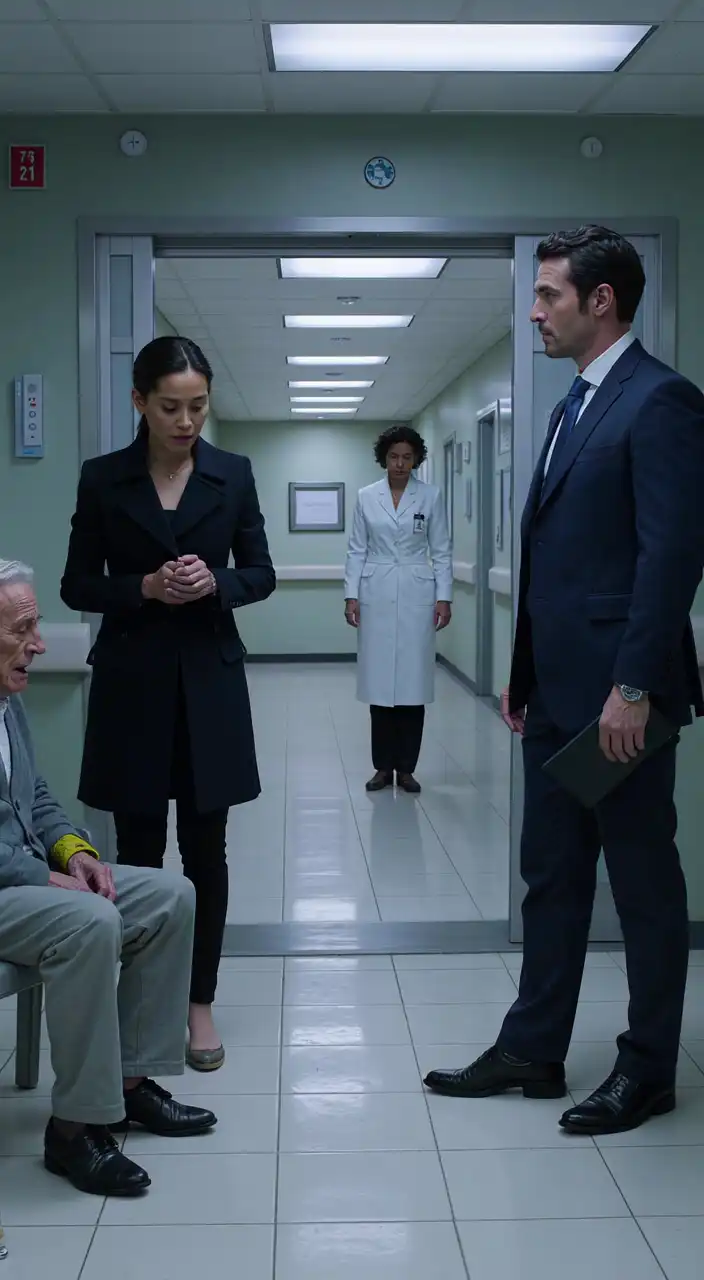
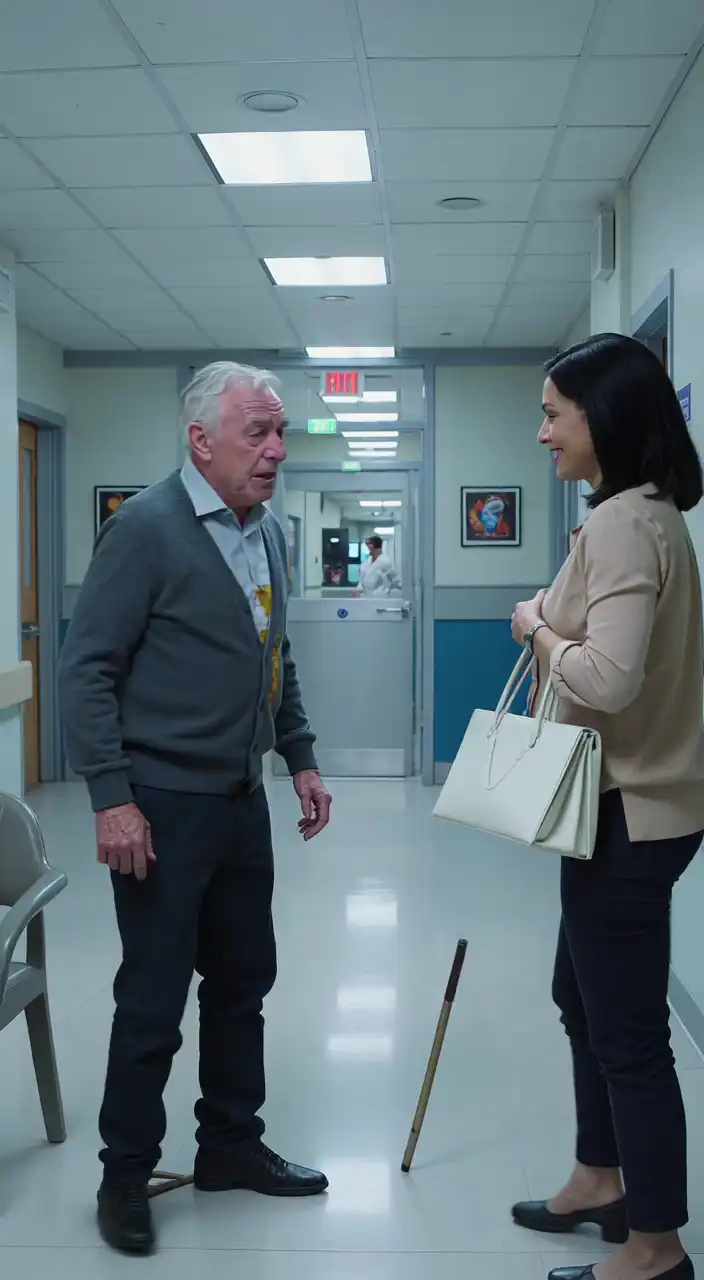
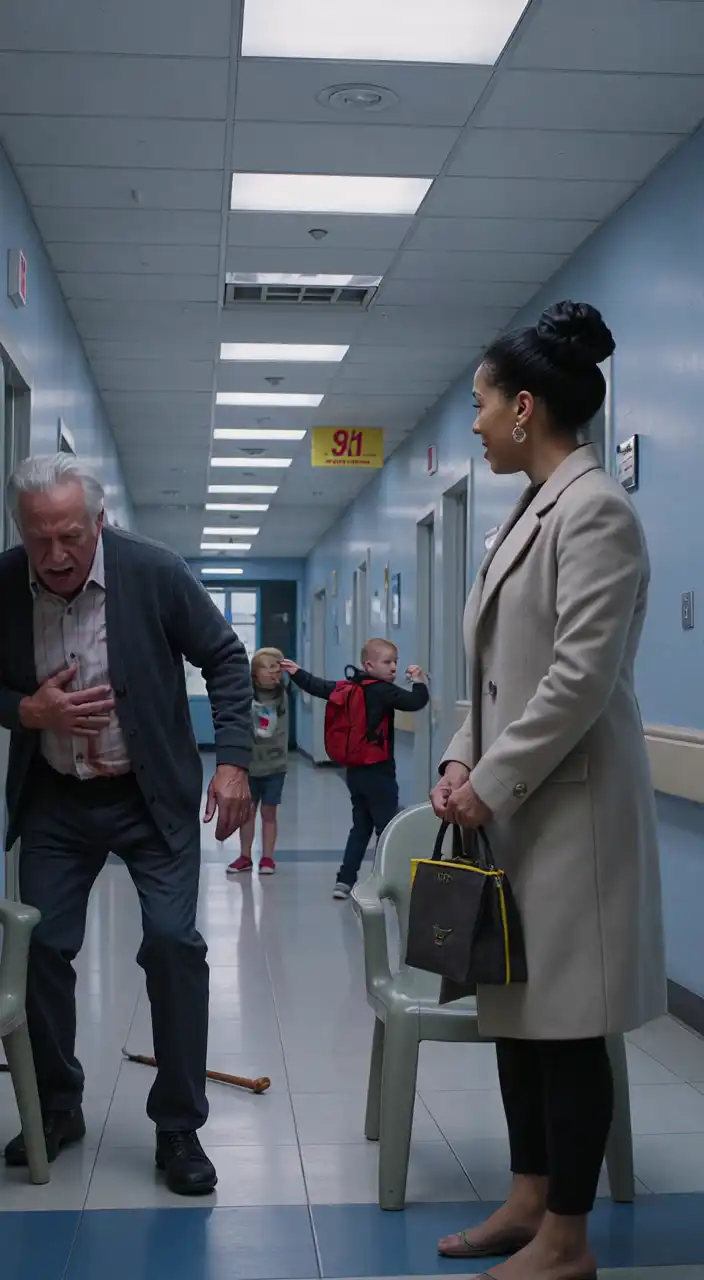
MY FATHER STARTED SHAKING OUTSIDE TRIAGE WHILE A CLINIC ADMINISTRATOR BLOCKED THE DOOR AND SAID HE NEEDED FAMILY PERMISSION FIRST.
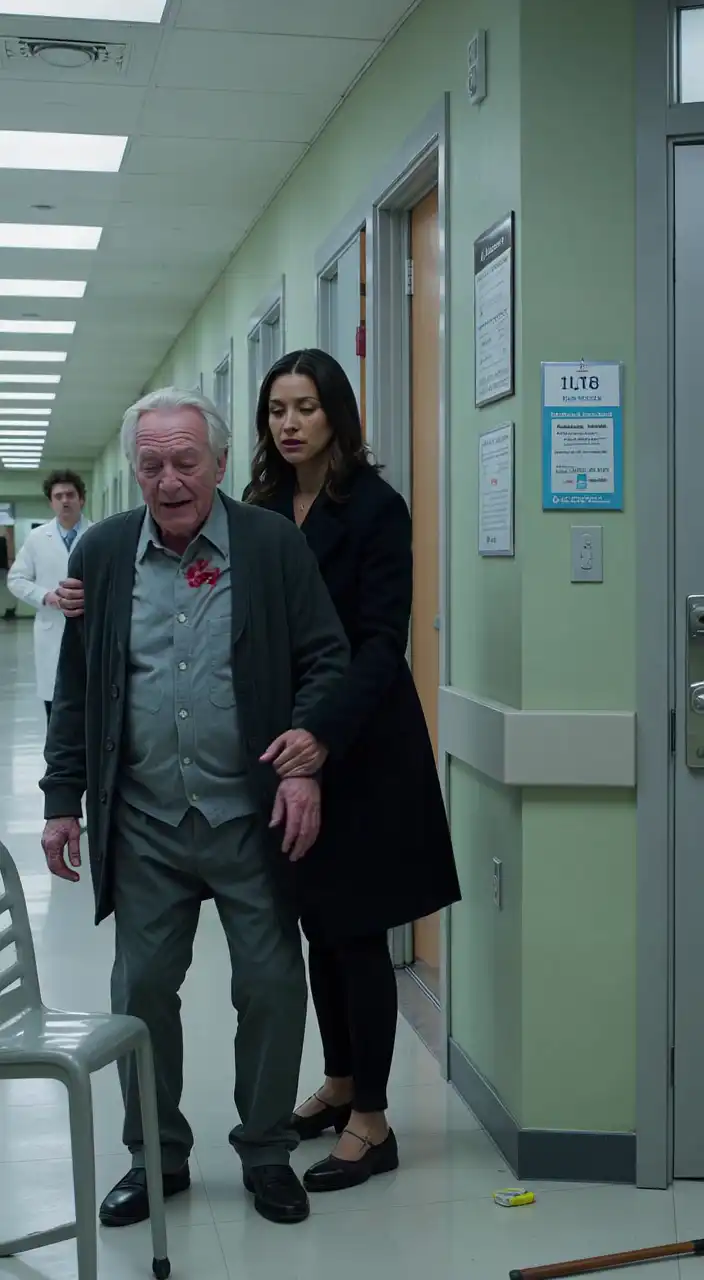
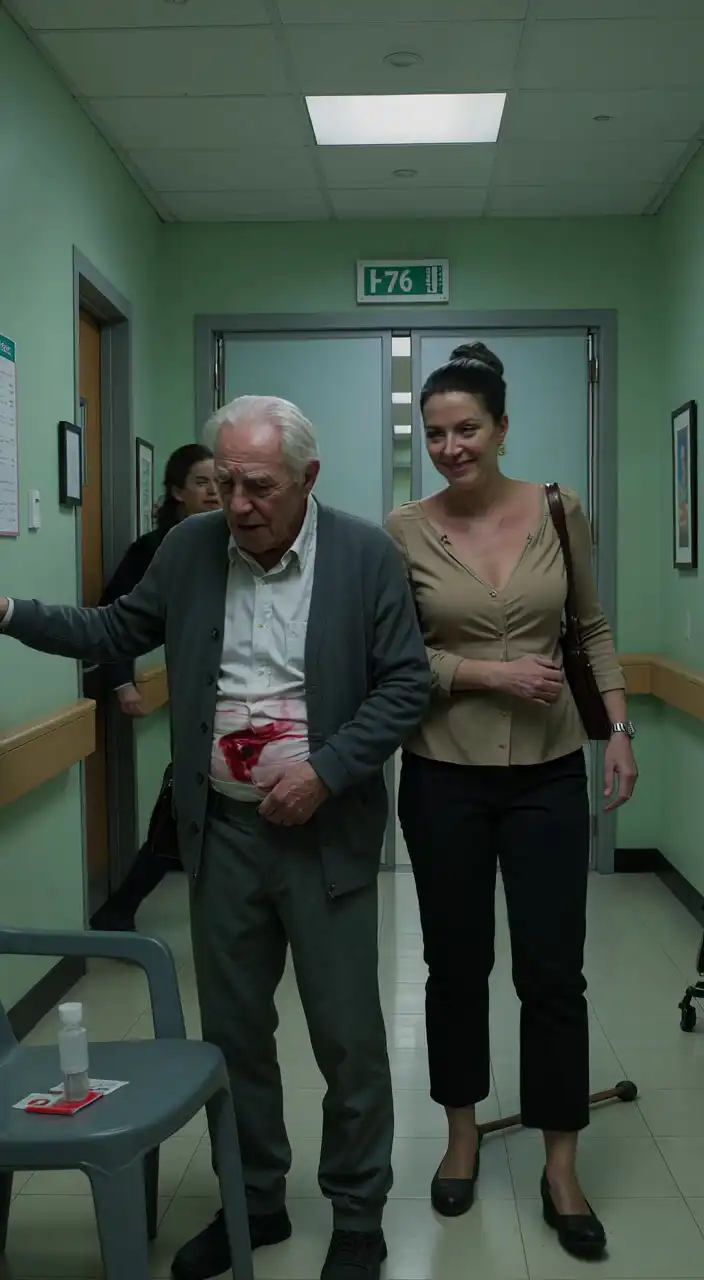
MY FATHER STARTED SHIVERING SO HARD HIS SURGICAL BANDAGE BLED THROUGH, AND THE CLINIC ADMINISTRATOR STILL BLOCKED THE TRIAGE DOOR.
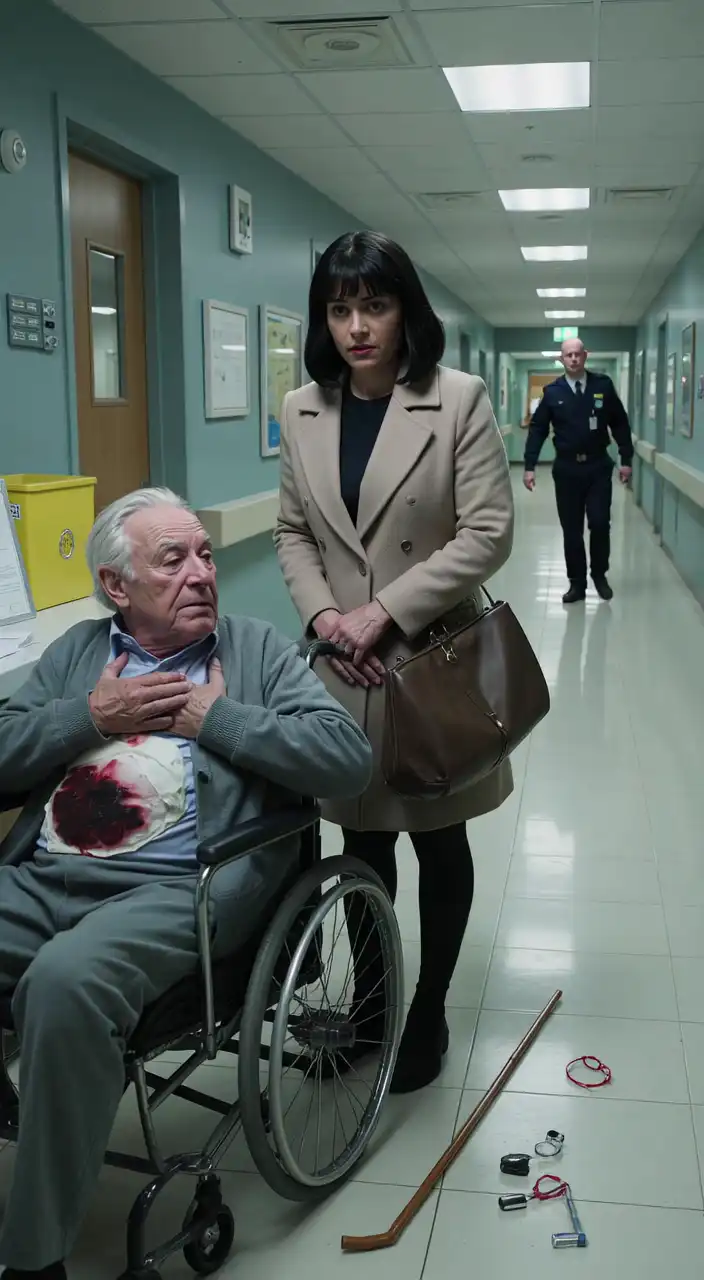
MY FATHER STARTED SHAKING IN THE HOSPITAL HALLWAY, AND THE WOMAN WHO CLAIMED TO BE HELPING HIM WOULD NOT LET TRIAGE TOUCH HIM.