
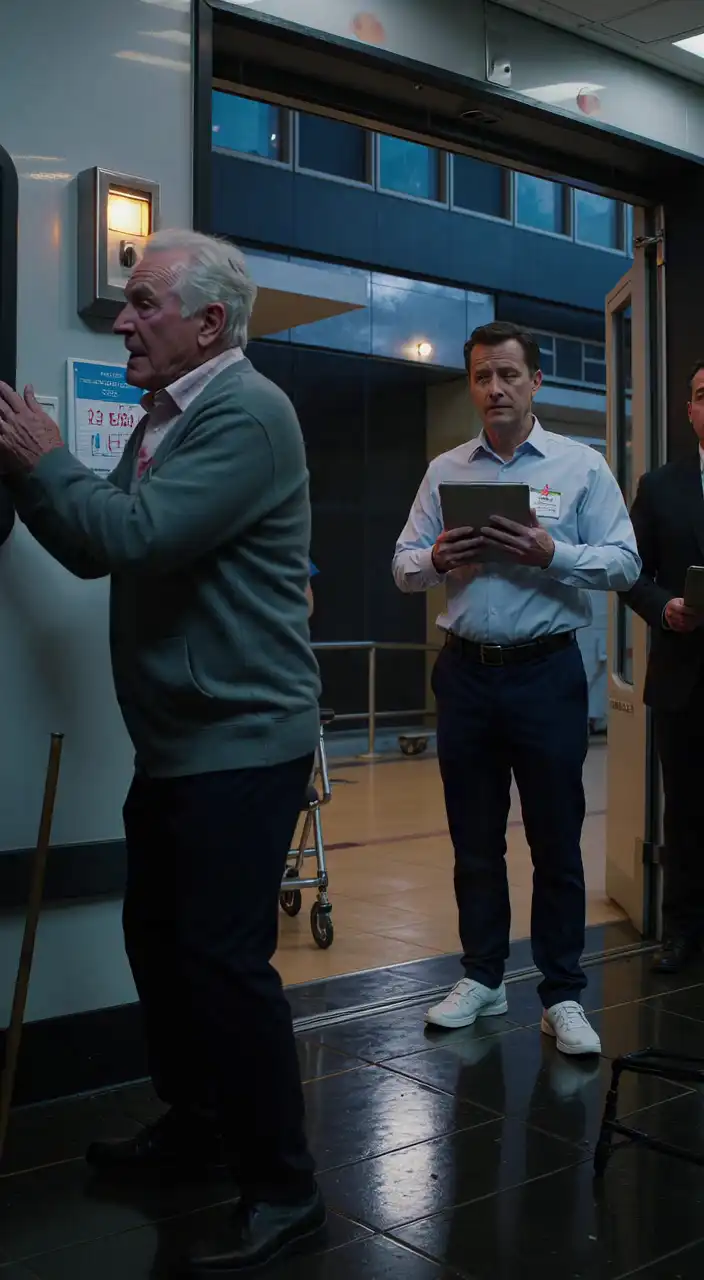
James's face didn't change right away, and that was what made the question hit so hard.
Most people flinch when they know they've been caught. They blink too much. They start explaining before anybody asks for details. James just held his tablet a little tighter and gave the kind of professional half-smile that belonged in a meeting room, not in front of an old man who was trying not to buckle to the pavement.
"Security issue?" he asked, as if Ryan had interrupted him over a parking sticker.
Ryan didn't answer that. He stepped closer, one hand already out toward Henry's elbow before Henry could sway again. "Sir, I'm Ryan Morales, hospital security supervisor. Are you able to tell me who ended the 911 call on that phone?"
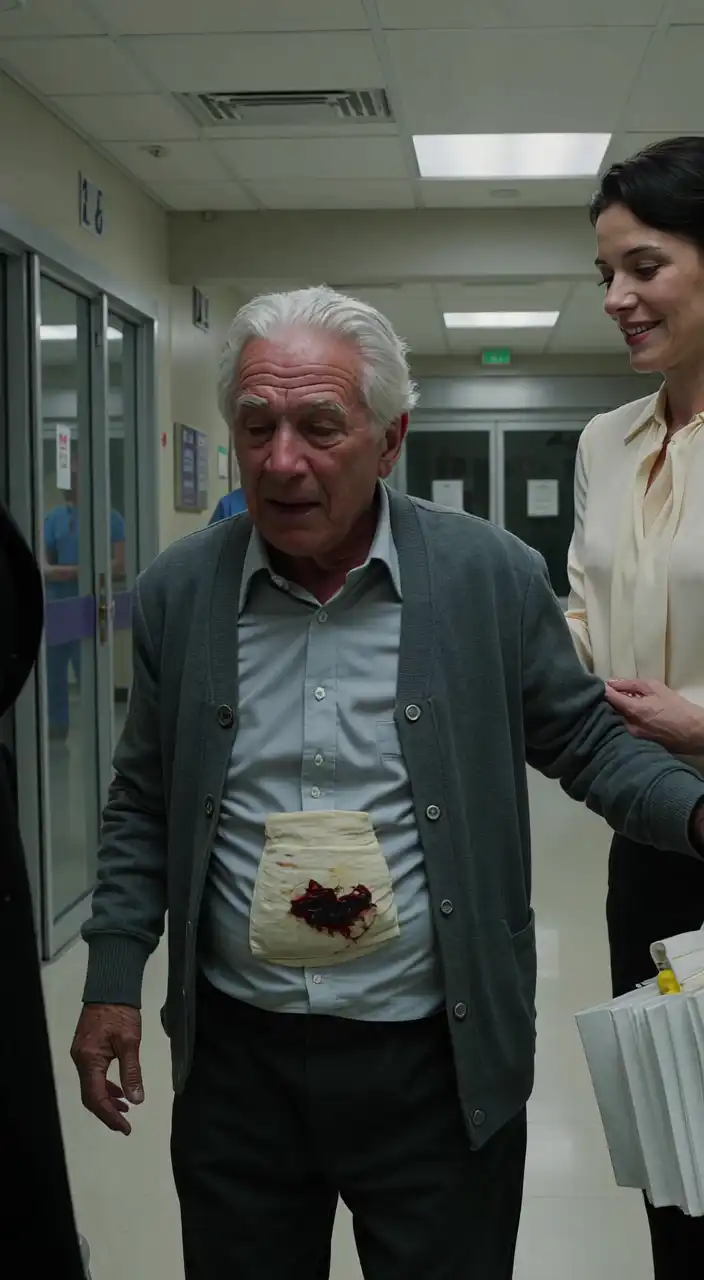
Henry opened his mouth, but what came out first was a rough breath that turned into a shiver. Up close he looked worse than he had from a few feet away. His lips were dry. His skin had that dull gray tone people get when the body is trying to fight too many things at once. The damp stain beneath the edge of his cardigan wasn't bright red; it had a darker, watered-down look, the kind that made my stomach tighten because it didn't look like a simple leak from rain.
"I didn't end it," Henry said. "I was calling because I couldn't get back from the pickup area, and then..." He glanced at James, and the sentence broke in the middle.
Ryan tracked that glance. "Then what?"
James finally moved. "This patient was discharged earlier with a family plan in place. He became agitated at the entrance and attempted to self-initiate emergency services despite having a lawful caregiver responsible for transportation and decision support. I was de-escalating."
Henry looked up with naked disbelief. "I am not confused."
"No one said you were confused, sir," James replied, smooth as silk.
But he had said it without saying it. Decision support. Family plan. Agitated. All those nice, polished words that turned a grown man into a problem charted by somebody else.
The nurse with the transport chair came the rest of the way over now that the alarm inside had pulled eyes toward the entrance. She crouched slightly in front of Henry. "Mr. Delaney? Can you sit? You're burning up."
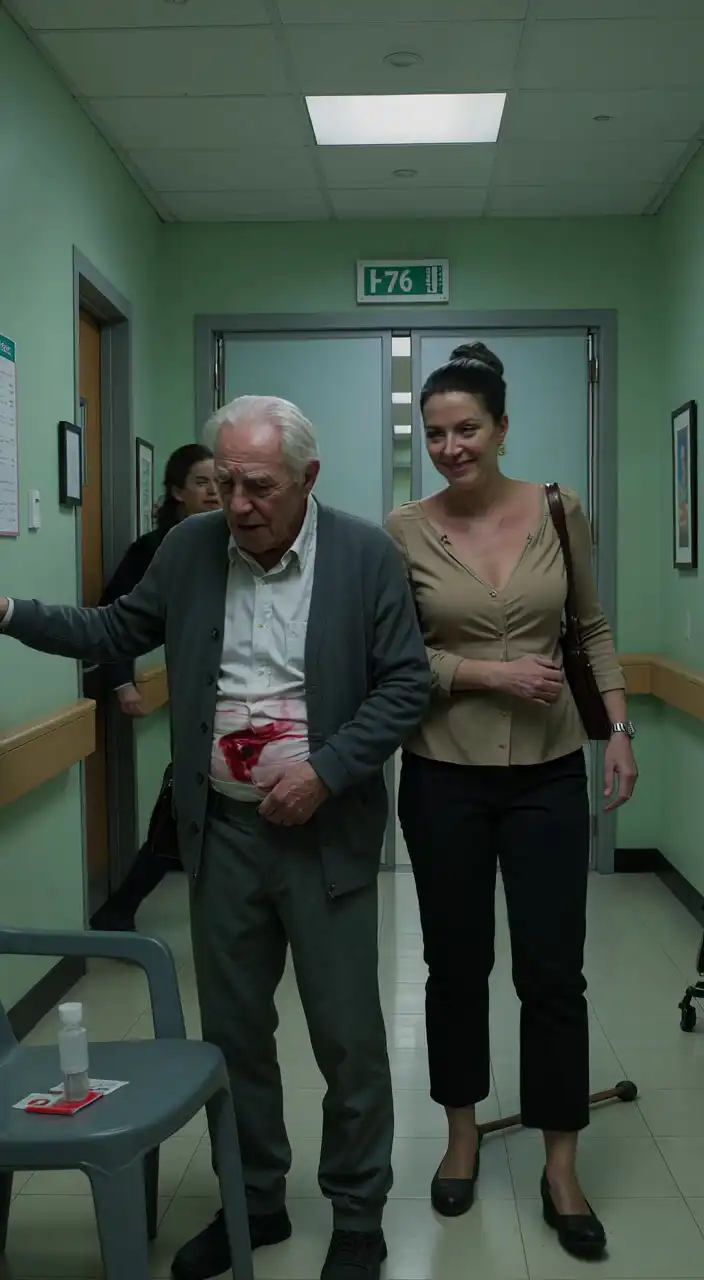
Henry tried to lower himself, but halfway down he winced sharply and grabbed at his right side through the cardigan. The movement pulled the fabric open enough to show the corner of gauze taped under his shirt and a cloudy yellow-brown stain blooming around one edge. The nurse's voice changed at once.
"When did this dressing last get checked?"
James answered before Henry could. "Home health instructions were provided."
"I didn't ask you," she said.
That should have been a small thing, just one sentence, but it cracked the atmosphere. Until then James had owned the tone of the doorway. He'd been the one defining the problem. The nurse's interruption shifted the room back toward Henry's body, where it belonged.
"I changed it yesterday," Henry said, embarrassed, as if admitting a failure. "Or I thought I did right. My son usually reads the instructions. They sent me home with papers, but I didn't have them when I got to the car."
Ryan's eyes slid to James's coat pocket. It happened so briefly I might have missed it if I hadn't been staring at everybody's hands. A folded packet corner, pale blue, was sticking out from the inside seam of James's coat. Discharge papers. The exact shade hospitals used.
Ryan saw it. The nurse saw it too.
"Sir," Ryan said to James, still calm, "please step away from the patient."
James gave a quick laugh that carried no amusement. "Let's not create theater at an ambulance entrance. The family has financial arrangements with this hospital. The son specifically requested notification before any readmission decisions."
Henry lifted his head. "Evan told you that?"
He sounded wounded in a quieter way than pain. Like the question itself cost him more than the standing.
James hesitated. It was tiny, but there it was. The first missed beat.
"Your family representative-" he began.
"My son?" Henry said again.
The nurse touched Henry's wrist, feeling his pulse. "Mr. Delaney, I need you focused on me. Did anyone tell you to wait outside if you felt worse?"
Henry shook his head, then stopped and swallowed hard. "No. They told me if I had fever or drainage I should come back. That's why I came back."
Ryan extended his hand toward me. "May I see the phone?"
I gave it to him. The screen was spidered at one corner, but the call display was still there. Emergency call. Seventeen seconds. Disconnected.
Ryan angled it away from the rain and looked carefully. "This was active recently."
James took one step forward. "That phone was on the ground in an unsecured area. We don't know who handled it."
"You handled it," I said before I could stop myself.
He turned on me so quickly that for a second I understood exactly why Henry's voice had gone thin around him. There wasn't any shouting in James. He didn't need volume. He used certainty like a door.
"Excuse me?"
"You moved toward it first," I said. "You said it wasn't relevant before anybody asked."
Ryan's gaze flicked from me to James and back. "What's your name?"
I told him, suddenly aware that I had become part of this whether I wanted to or not.
Ryan nodded once. "Stay nearby."
Inside the bay, the monitor alarm sounded again. Closer this time, joined by a nurse calling for a stretcher to clear the threshold. The doors hissed open, and cold air carrying disinfectant rolled out over the wet concrete. Henry leaned toward the opening like a plant turning toward light. Instinct. Need. He only got half a step before James shifted again, not overtly blocking now, just occupying the path in a way that forced everybody to acknowledge him first.
"Without documentation," James said, "you are exposing this facility to liability. We have a postoperative patient whose family may contest capacity and payment. We need proper authorization."
Henry's face went slack with shock. "Capacity?" he repeated. "Because I called 911?"
Ryan's controlled expression hardened. "No one needs payment clearance to be assessed in an emergency area."
"We're not in the emergency department yet," James said.
That line landed ugly because it was technically shaped and morally rotten. They were at the threshold, and he was trying to turn the threshold into a loophole.
The nurse stood up. "Then move. He's unstable."
For the first time James raised his voice, only by a notch. "I answer to administration when wealthy clients allege unauthorized admissions and elder exploitation by outside parties. Do you?"
There it was. Not procedure. Fear. Status. Money. The motive underneath the polished language.
Ryan's jaw flexed once. "I answer to abuse alerts, false restraint concerns, and any staff member interfering with access to urgent care. Last warning. Step away."
James looked past him toward the parking lane, where a black SUV had just turned under the awning. His expression changed in a way that made my neck prickle, not with relief but calculation.
Henry saw the vehicle too.
"Evan," he whispered, and his whole body seemed to fold inward, not because help had arrived but because another layer of helplessness had.
The SUV stopped hard. A man in his forties jumped out without shutting the driver's door, rain spotting his expensive coat almost instantly. He looked first at James, not at his father. That was the detail that stayed with me. The first thing he searched for was not Henry's face but the administrator's.
"What happened?" he demanded.
Henry's hand tightened on the transport chair arm. "I came back because I have a fever."
Evan moved toward him then, expression rearranging into concern so fast it was almost impressive. "Dad, why would you leave the car? James called and said you got turned around."
Ryan stepped between them before he could reach Henry. "Sir, are you the patient's son?"
"Yes. Evan Delaney."
"Did you instruct anyone to prevent your father from reentering the hospital for emergency evaluation?"
Evan blinked. "Of course not."
Henry stared at him. Rain ticked off the awning. Somewhere inside, another monitor chimed, and a nurse called out a room number. Nobody at that doorway believed the same story anymore.
Ryan held up the cracked phone so both men could see the frozen emergency timer. "Then maybe one of you can explain why a 911 call from your father's phone was interrupted at the entrance while he was trying to return for care."
Evan's eyes dropped to the screen, then lifted toward James for only a second. But that second was enough.
Henry saw it too, and whatever trust had been keeping him upright looked like it finally gave way. He didn't faint. It was worse than that. He stayed conscious and understood.
"I want a doctor," he said, voice shaking. "And I don't want either of them deciding for me."
The nurse touched Ryan's arm. "He's going to drop."
Ryan didn't wait another beat. He put a hand on the back of the transport chair and turned it toward the opening doors. "Bring him in."
James reached out, not at Henry but at the chair itself.
And when Ryan caught his wrist, a folded packet slid from James's coat and spilled across the wet concrete.
Henry's discharge papers landed faceup, with one page marked in yellow: Return immediately for fever, drainage, confusion, or increasing pain.
For one stunned second everyone could read it.
Then Henry made a sound I can still hear, not loud, just broken, because his son had gone pale instead of surprised.
The nurse drove the chair forward, and Ryan said into his radio, "Medical abuse alert at ambulance entrance. Hold family. Preserve documents. I need ER intake now."
The sliding doors opened wide.
But just before Henry crossed the threshold, Evan stepped into the path and said, "Dad, if you go in there, they're going to start asking questions you don't understand."
Henry looked up at him through the rain, dressing stain spreading, hands trembling against the armrests, and answered in a whisper that somehow cut through all of it.
"Maybe that's because you made sure I never got to read the answers."
The ambulance bay became motion all at once. The nurse pushed. Ryan shifted to block Evan. Another staff member caught the fallen papers before they soaked through. James tried to speak over everybody. Henry's monitor lead, clipped on in a rush at the threshold, flashed amber before they had even gotten him fully inside.
And as the alarm sharpened into a steady warning tone, a resident surgeon looked up from the hall, saw the drainage on Henry's side, and said, "Why was this man discharged at all?"
That question was worse than the first one, because this time nobody in the doorway wanted to answer.
They got Henry through the ambulance doors and into a curtained intake bay so fast the whole entrance scene collapsed behind him like a bad stage set. One second there had been rain, polished shoes, and people arguing about permission. The next there was fluorescent light, a monitor clipped to his finger, the smell of antiseptic, and two nurses cutting away the tape over his dressing while Henry clenched the rails and tried very hard not to cry out.
The resident surgeon who had spoken in the hall was young enough to still have the stunned honesty of someone not yet trained to hide his reaction. He read the yellow-highlighted discharge warning while a nurse lifted the soaked gauze, and his face changed.
"Temp?" he asked.
"One-oh-two point six," the nurse said.
"Pulse one-twenty-three. BP dropping."
The surgeon leaned close to Henry. "Mr. Delaney, I'm Dr. Cole. I know this is fast. I need to ask you a few questions while we get blood cultures and imaging. Did anyone tell you not to come back if you had a fever?"
Henry looked at the ceiling, breathing shallowly. "No. They told me to come back."
"Did you understand your discharge instructions when you left?"
A pause. Then, "I didn't get to keep them."
Dr. Cole's gaze flicked to Ryan, who was standing near the curtain opening with the cracked phone and the retrieved papers now in a plastic evidence sleeve someone from administration had rushed down with shaking hands. It struck me then how unusual this had become. Security didn't usually stand in a treatment bay. Papers didn't usually get bagged in front of a patient. But Ryan had switched modes completely. He wasn't just controlling a disturbance. He was preserving a trail.
A nurse hung fluids. Another started broad-spectrum antibiotics before anyone had talked about signatures. That, more than anything, seemed to settle Henry. He watched the line begin to drip into his arm, and some small part of him unclenched. Relief and terror together, just like those alarms at the door.
"Where's my son?" he asked.
Ryan answered honestly. "Outside this room."
"Is he under arrest?"
"No."
Henry shut his eyes. "Good."
That answer surprised everybody, including Ryan. Maybe especially Ryan.
Dr. Cole pressed on the edge of the incision, and a thread of cloudy fluid appeared. He did not hide his concern this time. "This looks infected. Maybe deeper than skin. Did anyone review drainage amount with you at home?"
Henry opened his eyes again, embarrassed. "My son usually reads all that. He keeps track of my insurance and medications. After my wife died, he said it was easier if he handled forms. I never minded. Until..." He swallowed. "Until today."
There it was: the plausible explanation that made the uglier possibilities less obvious at first glance. A grown son managing an aging father's paperwork wasn't suspicious by itself. It could even be loving. The problem was the contradiction blooming inside it: if Evan managed everything to help, why was Henry standing feverish in the rain without instructions he was supposed to follow?
Dr. Cole ordered a CT, more labs, and a surgical consult. He also said, "No discharge discussions with family until I finish assessing capacity myself." Another small shift. Another line taken away from people who had been using it to control him.
Outside the curtain, voices rose and fell. I couldn't see them clearly, but James's tone carried even when his words didn't. Controlled, offended, procedural. Evan's was different. Less polished. Sharper. Like a man discovering that the quiet machinery he relied on was making noise in public.
Ryan stepped out to deal with them, and for a few minutes the room narrowed to medicine. Henry answered orientation questions correctly. He knew the date, the surgery he had undergone, the reason he'd returned, and what he wanted. That mattered. Everybody in the room knew it mattered.
When the nurse asked if he wanted his son present for updates, Henry said, "Not until I understand what's happening."
No drama. No trembling declaration. Just a clean decision. It gave the room shape.
The infection workup moved quickly, but urgency doesn't stop humiliation from leaking in around the edges. When the nursing aide helped Henry change into a gown, his neat cardigan was laid over a chair, damp and small-looking. His cane, wiped dry, leaned beside it. The cracked phone sat in a clear bag on the counter. Those three items somehow told the whole story of the doorway without saying a word: dignity, frailty, interruption.
A social worker named Tasha arrived before the CT transport team. She didn't open with accusations. She pulled up a stool, sat where Henry could see her without twisting, and said, "Mr. Delaney, part of my job is making sure patients can answer for themselves about who gets information and who helps with decisions. You can change those answers anytime. Do you understand that?"
Henry blinked at her, then nodded slowly. "I thought I already had that right."
"You do. But sometimes families or staff get used to old patterns and stop checking. I'm checking now."
The words were gentle, but they carried weight. Henry turned his head toward the bagged discharge papers. "Did my son tell them I couldn't decide?"
Tasha didn't answer directly. "Did anyone ask you to sign anything you didn't understand this week?"
He stared at the blanket. "Evan said there was billing paperwork after surgery. I signed two places in the room while I was sleepy. He said he'd take care of the rest."
Another nurse in the bay looked up from charting. Nobody spoke for a second.
That was the incomplete explanation giving way to contradiction again. It was possible Henry had signed harmless forms. It was also possible those signatures had been used to create a story about him, and everyone in the room now understood that possibility at the same time.
The CT transporter came, but before they wheeled Henry away, Ryan returned with a middle-aged woman in navy scrubs and no visible patience. Her badge read Nursing Supervisor. She had one of the recovered sheets in hand and asked Dr. Cole, "Did anyone here know this patient had a post-op return warning highlighted on his discharge?"
"No," Dr. Cole said. "Because he didn't arrive with it."
She held the page higher. Near the bottom was a box with checkmarks and a signature line. One signature was Henry's shaky hand. Another line listed "family caregiver acknowledged instruction set." The initials there were not Henry's.
"E.D.," the supervisor said. "That's the son's?"
Tasha nodded once. "Likely."
The supervisor's mouth tightened. "Then why did our administrator at the entrance say emergency evaluation required family authorization?"
No one answered because the answer was standing outside the curtain, and saying it out loud would make it harder to walk back.
They sent Henry to CT. I expected to be asked to leave by then, but Ryan intercepted me in the hallway and thanked me for staying. "We may need a witness statement," he said. "You saw the phone before staff secured it?"
"Yes."
"Did you hear the patient ask for help directly?"
"Yes."
Ryan nodded. "Good. Don't talk to the family if they approach you."
That made my nerves spark. "Why would they approach me?"
"Because if this is what it looks like, then you are no longer random."
He didn't need to explain further.
From down the hall came the sound of someone arguing at a check-in desk. Evan this time, stripped of the doorway performance. "I am his son. You're making this impossible. He just gets confused when he's in pain." The old trick, now with less polish.
Ryan didn't even turn. "Capacity exam is documented. That line won't work."
He said it quietly, but there was satisfaction in it, and also anger.
When Henry came back from imaging, the first wave of antibiotics had begun to ease his shaking, but not his fear. He kept asking small practical questions that were really larger ones in disguise. Had they called his regular doctor? Could someone bring his glasses from the car? Did anyone know where his wallet was? Questions about control. Questions people ask when control has been slipping for longer than today's crisis.
Tasha stayed through all of them. She called the unit where Henry had first recovered after surgery and requested the original bedside teaching notes. She asked pharmacy for the medication reconciliation. She asked whether any patient advocate complaints had been logged from the family's account before. Each request was ordinary on paper. Together they formed a net.
Then Dr. Cole returned with preliminary results.
"Your white count is high," he told Henry. "The scan suggests a deep wound infection. You likely need admission, IV antibiotics, and maybe a return to the OR depending on what surgery says."
Henry absorbed it with surprising steadiness. "Could waiting outside have made it worse?"
Dr. Cole chose honesty. "Delay never helps with this."
Henry nodded once, as if confirming something private.
Then came the contradiction that changed everything. A unit clerk hurried in with faxed copies from the original floor and handed Tasha a stapled packet. Tasha flipped once, twice, then stopped.
"What is it?" Ryan asked.
Tasha turned the top page so he could see. "There was a patient concern note entered before discharge. Different nurse. It says the patient repeatedly asked to keep his own instruction packet and phone. Family caregiver answered most questions. Nurse documented concern that patient appeared hesitant when caregiver discussed finances."
She flipped again, face tightening. "And this addendum was canceled twenty minutes later by administrative review pending 'clarification with family liaison.'"
Ryan took the packet from her carefully, as if it might tear under the pressure in his hands.
"Who can cancel a concern note?" he asked.
The nursing supervisor gave a bitter little exhale. "Very few people."
Everyone in that bay thought the same name.
Henry looked from one face to another. "Please tell me plainly."
Tasha did. "Someone may have tried to document that your discharge didn't feel right, and that note may have been interfered with."
His eyes moved to the plastic bag holding the cracked phone. "Because I wanted my own papers?"
"Maybe because of that," she said.
"Or because of something else?" Henry asked.
No one rushed to reassure him this time, because now they had enough to know reassurance might be dishonest.
Dr. Cole went to consult surgery. The nursing supervisor left to call risk management. Tasha asked Henry if there was anyone besides Evan he trusted to be contacted. He stared at the blanket a long time before giving a name: "My daughter, Claire. We haven't been close since my wife died. Evan said contacting her would only upset things." He gave a small, painful smile. "Maybe upsetting things is overdue."
Tasha took down the number.
Outside the room, the argument changed shape again. No more loud insistence. Lower voices. Fast. Urgent. The sound of people revising a plan.
Ryan looked toward the curtain opening, then back at Henry. "Mr. Delaney, until we sort this out, I recommend we do not allow anyone to move your personal belongings or speak for you alone. Is that all right?"
Henry nodded.
"Good," Ryan said. "Because your son just asked for your coat."
At first that sounded trivial. A coat. Rain outside. A son thinking practically. But then my eyes went to the chair where Henry's cardigan still hung, and beneath it, tucked into the inner pocket by the aides, was a slim leather checkbook and a white envelope I had not noticed before.
Ryan saw me notice it. He crossed the room, lifted the cardigan carefully, and slid the envelope free.
It wasn't sealed. Inside was a photocopy of something with notary stamps.
Tasha's face lost all color as she read the heading.
Temporary Durable Power of Attorney.
Signed yesterday.
Witnessed by someone from hospital administration.
And on the line granting financial and medical decision authority, Henry's signature looked like it had been dragged downhill by a shaking hand.
By the time surgery arrived, the medical emergency and the family story were fully tangled together.
An older attending named Dr. Shah reviewed the scan and pressed the issue with the practical focus of someone who had no patience for drama when tissue and infection were involved. "There is a fluid collection near the operative site. We are going to admit you, continue IV antibiotics, and monitor closely. If you worsen, we wash this out tonight. If you hold stable, we may still take you back in the morning."
Henry nodded. "Will I be awake enough to know what I'm signing?"
Dr. Shah met his eyes. "Yes. And no one will rush you."
It was a simple answer, but Henry's expression shifted at it, part gratitude and part grief. You don't realize how much it costs someone to lose trust in ordinary forms until they ask a question like that.
Tasha photographed the power of attorney copy and called legal. Ryan requested camera footage from the ambulance bay, the discharge unit, and the surgical floor hallway. The cracked phone was logged. The canceled nursing concern note was duplicated to an incident file. It all happened around Henry's bed in low voices that were trying not to scare him while also not lying to him.
Then Claire called back.
Tasha put the phone on speaker only after Henry agreed. The first thing Claire said was not "What's going on?" It was, "Is my father safe enough to talk?"
Henry's mouth trembled. "Claire?"
There was a hard inhale on the other end, the sound of ten old grievances getting shoved aside by one immediate fear. "Dad. Tasha said you're back in the hospital. Tell me what you need."
Henry looked at the ceiling. "I need someone to tell me if I signed away my choices."
Claire was quiet for just long enough to be careful. "Maybe not. But if somebody tricked you while you were medicated, we can fight that."
We. That word did something to him.
He told her not to drive recklessly. She told him she was already on the highway.
After the call, Ryan stepped into the hall again. This time the confrontation outside did not stay outside. Evan pushed through the curtain before anyone could stop him, face flushed, voice lowered into that dangerous quiet people use when they know yelling will make them look guilty.
"Dad, you are making this into something it isn't."
Henry started to answer, but Ryan cut in. "You are not authorized to enter while the patient is under an abuse review."
Evan ignored him and spoke straight at his father. "I was trying to keep this from getting out of hand. Do you know what happens if insurance audits this admission? Do you know what they can take back? The house? The account? Mom set things up to protect you and you keep forgetting-"
Henry's whole face changed at the word forgetting. Not confusion. Recognition.
"My memory is not the problem," he said.
Evan's jaw clenched. "You signed the POA because you asked me to handle things."
"I signed what you put in front of me after anesthesia."
"You trust me."
"I did."
It was the first outright break between them, and everybody felt it.
Evan looked around the room and seemed to realize too late that witnesses made manipulation harder. He switched tactics. "James only stepped in because there's a fraud issue tied to your account. I was trying to protect you from Claire, actually. She's the one who always wanted money."
Tasha's eyes narrowed. "Interesting claim."
He turned on her. "You don't know this family."
"Maybe not," Tasha said. "But I know what canceled documentation, interrupted emergency calls, and unauthorized gatekeeping look like."
For one second Evan lost control of his expression, and something raw showed through: fear, yes, but not fear for Henry. Fear of unraveling.
Then came the planted detail paying off in a new way. Ryan's radio crackled, and a security officer at the front desk said, "Supervisor, footage request confirmed. We have visual on the entrance incident, and there is also hallway video from floor four showing the son taking the patient's discharge packet from bedside before transport out."
Evan froze.
Henry went very still.
Ryan answered into the radio without taking his eyes off Evan. "Secure the copy. No one deletes anything."
The room seemed to tip around that sentence. It wasn't proof of motive yet, but it killed the easiest lie. The papers had not simply gone missing in confusion. Someone had taken them.
Evan tried one last version anyway. "I moved them because he loses things."
"Into an administrator's coat?" Ryan asked.
That landed. Even Evan had nothing ready for it.
Henry closed his eyes. "Please take him out."
Ryan did, but not before Evan said something that almost slipped by in the rush.
"If they operate again, they'll start asking how the first discharge happened. None of you understand who approved that floor."
The statement was strange enough that even Dr. Shah, who had mostly stayed out of the family conflict, looked up sharply. Approved that floor. Not arranged. Approved.
Tasha heard it too. "Who, exactly, are you worried about?" she asked.
But Ryan had already turned Evan toward the hall.
The answer mattered because it suggested this wasn't just a son panicking over control. It hinted at a larger protection system around wealthy clients, favored administrators, and chart decisions made to keep the right people pleased.
Henry heard it as well. His breathing quickened despite the oxygen now running under his nose. "He knew before I left," he whispered. "He knew they were sending me home too fast."
Dr. Shah put a steadying hand on the bedrail. "Mr. Delaney, focus on me. We are treating what's in front of us. We can deal with the rest after."
But after is never calm when trust has just been split open.
An hour later, while Henry was being transferred upstairs for close monitoring, the next contradiction arrived. The medication reconciliation from pharmacy showed that one antibiotic prescription had been filled after discharge but never picked up at the pharmacy window.
It had been signed for as "family received."
Henry stared at the line and said, "I never saw that medicine."
The yellow highlight on the discharge warning. The missing papers. The interrupted 911 call. The canceled note. The fake urgency around family authorization. Now an uncollected antibiotic marked as received.
Each detail alone could be excused. Together they formed a story no one wanted to say too soon but everyone could feel hardening into shape.
Someone had not only blocked care at the entrance. Someone had laid groundwork before Henry ever got there.
And upstairs, as the transport monitor blinked amber by his shoulder, Henry grabbed Ryan's sleeve with surprising strength.
"If my son tells you this is about money," he said, voice thin but steady, "believe him. Just not the way he means."
Movement three began just after midnight, when hospitals become quieter on the surface and more dangerous underneath.
Henry had been admitted to a step-down room because his blood pressure stabilized enough to avoid ICU for the moment, but nobody was pretending things were safe. His fever stayed high. Cultures were pending. Surgery wanted to see whether antibiotics bought him time before they reopened the wound. Tasha had flagged the chart for restricted visitors. Ryan had stationed an officer on the floor under the neutral label of "incident follow-up." The cracked phone was in secured property. The power of attorney copy had gone to legal.
On paper, that should have contained the problem.
In reality, it changed the problem.
People who lose control quietly do one of two things. They retreat or they escalate. By midnight it was obvious Evan had chosen escalation.
The first sign was small. Henry's medication list on the room computer updated, then updated again. A bedside nurse named Marisol frowned at the screen and said, "Who entered a family-supplied supplement?" She clicked deeper. "And why is there a note here requesting sedation for agitation if family reports nighttime confusion? He hasn't been agitated."
Tasha, who had stayed far later than most social workers ever could, leaned over to look. "Can family enter that remotely?"
"No. Staff can. Maybe from a verbal request if someone decides to chart it."
Ryan, called back up from the hall, read the note and went cold. "Who has access on this floor from administration after hours?"
The answer, unfortunately, included more people than anyone liked.
Marisol deleted nothing. She printed the entry first. Another trail preserved.
"This is how it happens," she muttered, not even meaning to say it out loud. "Not dramatic. Just one extra line in a chart, and suddenly the patient is 'confused' enough for everyone to stop listening."
Henry heard her. "Am I confused now?" he asked.
Marisol turned at once and sat beside the bed. "No. And if that changes medically, it gets documented by us, not invented by somebody else."
He nodded, but the question had cost him something. You could see the humiliation trying to creep back in. Fever makes people vulnerable enough. Suggesting they can't trust their own mind turns every request into self-doubt.
Then the second sign came. Claire arrived.
She looked nothing like Evan and exactly like Henry around the eyes. She was still in highway clothes, hair flattened by rain, overnight bag hanging from one shoulder like she hadn't stopped moving since the call. The moment she saw her father she forgot the room was full.
"Oh, Dad."
Henry reached for her before she reached him. It wasn't graceful. The IV tugged. The pulse ox slipped. Marisol fixed both without interrupting. Claire bent over him carefully, one hand on his shoulder, and for a second his face lost twenty years of guardedness.
"I should have called you sooner," he said.
"You called when it mattered," she answered.
That was the emotional reversal no one could have faked. The daughter Evan had framed as a threat became the first person Henry seemed able to rest around. Not because old wounds vanished, but because she wasn't trying to manage the room. She kept asking him what he wanted. She asked if he wanted water, if he wanted the TV off, if he wanted her to repeat what the doctors had said. Every question gave choice back.
Tasha filled her in privately. Claire listened without interrupting, then asked for copies, names, and time stamps with the steady focus of someone used to handling messes professionally. She worked as a high school counselor, we learned, which explained why she understood both crisis calm and the difference between emotion and evidence.
Then she said the thing that widened the whole story.
"Evan's been under pressure for months. He said he had investors coming after him."
Henry stared. "Investors?"
Claire nodded. "He called me six weeks ago asking if Mom's trust had any clauses for accelerated access if your health declined. I told him no. The money is controlled for your care, not his debt."
The room went still.
Ryan asked, "Debt from what?"
Claire gave a humorless exhale. "A medical software startup, according to him. And a house refinance he never told Dad about. He kept insisting if Dad would just sign broader management forms, he'd be able to 'streamline the care burden.'"
The phrase hit hard because it sounded like the cleaned-up language James used. Same worldview. Same motive translated into polite jargon.
Henry looked as if someone had opened a second wound beside the first. "He said he was helping me avoid taxes."
Claire squeezed his hand. "I know."
This was the new lie forced by earlier clues. The story wasn't just that Evan wanted control because Henry was old. It was that he needed access because he was desperate, and James may have been helping because wealthy family accounts came with pressure from above. Whether they meant to endanger Henry or only thought they could manage him until paperwork settled hardly mattered now. The danger was real either way.
Dr. Shah stopped by close to one in the morning with a more direct plan. Henry's blood pressure had improved slightly, but his pain was worsening and the drainage had increased. "I don't like waiting too long," she said. "We may need to take you back tonight if your labs trend the wrong direction."
Henry glanced at Claire. "Can she stay if I go down?"
"Yes."
That answer settled him enough that he finally slept for twenty minutes.
He didn't stay asleep.
At 1:37 a.m., the amber monitor light flipped red and the tone changed. His heart rate jumped. He woke confused not mentally but physically, grabbing at his side as sharp pain rolled through him. Marisol called for Dr. Shah and another nurse. Labs had returned worse. Lactate climbing. White count higher. They were no longer discussing whether to take him back to surgery.
Then someone tried to remove Claire.
A floor administrator none of us had met came in with an apologetic smile and said there had been a "visitor designation discrepancy" because a medical power of attorney naming Evan had now been uploaded to the chart. Therefore, only the designated representative could stay overnight during pre-op transfer.
Claire didn't raise her voice. She just asked, "Who uploaded it?"
The administrator glanced at the screen. "It populated from prior records."
Ryan, who had not left the unit, stepped in before anyone else could answer. "Prior records created under current incident review do not supersede the patient's direct instruction."
The administrator stiffened at his tone. "Security doesn't decide proxy hierarchy."
"Tonight I decide whether a vulnerable patient is being isolated during an abuse review," Ryan said. "Try me."
It was the first time I saw another administrator retreat from him instead of aligning with administration instinct. Ryan was no longer just a supervisor managing a disturbance. He had taken moral ownership of the threshold he had witnessed.
Claire remained.
While Henry was being prepped, another planted detail paid off. Marisol emptied the pockets of his damp cardigan again before sending belongings to secure storage. From the inner seam, behind the checkbook slot, she found a second folded sheet stuck by moisture to the lining.
At first glance it looked blank. Then under the light you could see the imprint of writing from the page that had rested on top of it. Carbon transfer. Partial but readable in places.
"...family caregiver declined home antibiotic pickup..." "...patient asked twice for own discharge packet..." "...administrator advised direct family handoff..."
It was from a pressure copy set, likely from the discharge desk. A ghost page. An accidental witness.
Ryan actually smiled when he saw it, not because any of this was good, but because truth sometimes survives in stupid physical ways no one plans for. A hidden copy in a wet cardigan. The kind of thing a controlling person never imagines will matter.
Claire looked at the sheet and whispered, "He kept the evidence without even knowing."
Henry, hearing only part of it through fever, said, "I kept my cardigan because my wife bought it."
That sentence broke something in Claire. She pressed her lips together and looked away. Objects carry history. The cardigan wasn't just clothing. It was continuity. The one thing still chosen by someone who loved him without agenda.
At 2:10 a.m., they rolled Henry toward the OR holding area. The halls were dim, polished, almost empty. Pre-op always feels like crossing a border. He gripped Claire's fingers until the stretcher had to separate from her reach. Then he looked toward Ryan.
"Don't let him sign me out," Henry said.
Ryan answered, "He won't."
In the holding area, the anesthesiologist reviewed consent with Henry directly. Every answer was witnessed. Every line was explained. It should have been routine, but after what had happened, the care itself felt almost radical.
Then the desperate action came.
A scrub tech at the desk picked up a call, frowned, and covered the receiver. "Family rep says the patient has early dementia and gets combative under anesthesia. Wants to revoke consent until his attorney arrives."
Ryan, who had accompanied them to the restricted line and was speaking with OR security, lifted his head so fast the tech nearly dropped the phone.
Dr. Shah took the receiver. "This is attending surgeon. The patient is alert, oriented, septic, and already consented. No family member is revoking anything." She paused, listened, and then said in a voice like steel, "No. You may not speak over him because you are embarrassed."
She hung up and turned to Ryan. "Log that."
Henry gave a weak, disbelieving laugh that turned into a grimace. "I've never heard a doctor say embarrassed before."
Dr. Shah leaned over him. "You should hear what I say after washout when people delay sepsis for paperwork."
He smiled despite himself. That mattered too.
The operation lasted a little under two hours. Claire and Ryan waited in the family consult room, where hospital coffee and bad upholstery turned time thick and ugly. I would have left by then in any normal story, but Ryan had asked me to stay available for a statement and, somehow, all of us had become bound to the same moral edge of this thing. We sat there while legal called, risk management called, and one of Ryan's officers reported that Evan had left the building but not before demanding return of "his father's documents." James, meanwhile, had been escorted to an administrative office and instructed not to access records pending review.
Claire used the waiting time to say the backstory nobody had wanted to dump onto Henry at the bedside. After their mother died, Evan had taken over every practical detail under the banner of being the nearby child. Claire lived three states away. She and Henry had argued after the funeral about selling the old lake cabin. Evan had played peacemaker publicly while privately becoming indispensable. Bills, appointments, bank alerts, passwords, insurance notices. The ordinary architecture of dependence. By the time Henry noticed that all information came filtered through Evan, he no longer knew where to untangle the knot.
"I thought he was controlling because he was anxious," Claire said quietly. "I didn't see how much he needed to keep Dad dependent. Or maybe I didn't want to see it."
Ryan said, "People hide coercion in caretaking all the time."
It wasn't cynical. Just tired.
At 4:41 a.m., Dr. Shah returned in fresh gloves and a cap pushed back from her forehead. "We drained a significant pocket of infection," she said. "He came in at the right edge of things. Another delay and this gets much worse."
Claire sat down hard.
Dr. Shah continued, "He's in recovery now. We'll watch him closely, but I feel better than I did two hours ago."
That should have been the breath everyone needed. Instead she added, "Also, there is no world in which he should have been prevented from reentering care tonight."
Ryan's expression did not change, but something in the room settled into certainty. This was no longer just a family dispute interpreted through fear. A surgeon had drawn the medical line.
When Henry woke in recovery, groggy but lucid, he asked for two things before water.
"My daughter," he said first.
Then, after Claire was at his side, he whispered, "My phone."
Ryan made sure the bagged cracked phone was shown to him, even though he couldn't use it yet. Henry stared at the frozen 911 timer through the plastic for a long second.
"I thought if I got one call out, someone would have to listen," he said.
Ryan answered, "Someone did."
By morning, the larger institutional stakes began to surface.
Risk management wanted statements. Legal wanted chain of custody on the ghost copy page, the discharge packet, and the power of attorney copy. Nursing leadership wanted to know who canceled the concern note. Pharmacy wanted to know who signed for an antibiotic no one picked up. The OR note documenting sepsis risk with delayed return added weight to all of it.
That should have been enough pressure. It wasn't.
Because movement four didn't come from more evidence. It came from the moral reversal inside the institution itself.
At eight-thirty, a woman in business clothes and no badge came to the unit and asked for Ryan by full name. He met her in the hall, but voices carried. She introduced herself as counsel for a board member "concerned about reputational fallout" and suggested this matter might be better handled "without inflaming allegations while facts are incomplete."
Ryan laughed once, not kindly. "A man with sepsis was blocked from reentry while an interrupted 911 call sat on the ground. Which part needs cooler language?"
The woman replied, "I understand your feelings."
That was when the charge nurse, Marisol, came out of Henry's room and said, loud enough for everyone on the unit to hear, "These aren't his feelings. They're our documentation."
Silence followed. Then two more nurses came to stand beside her.
It was a small scene, but it changed the balance. Institutions often count on people feeling alone in what they witnessed. Now they weren't alone.
The woman in business clothes left without entering Henry's room.
Inside, Henry was stronger but not safe. The surgery had eased one danger, yet the emotional threshold had sharpened. He had to decide what he wanted done with Evan, with the questionable forms, with the practical wreckage of his life. Recovery would not be only medical. That became clear when Tasha returned with a notary and a hospital patient advocate so Henry could formally revoke any temporary authority granted under sedation until outside review verified validity.
He read every line this time. Slowly. Glasses on. Claire beside him. Dr. Cole, passing through on rounds, paused at the door and saw him doing it.
"Take all day if you want," Dr. Cole said.
Henry gave a thin smile. "I'm thinking of charging by the paragraph."
Everybody laughed, and the laugh itself was medicinal.
But the larger reversal arrived in the afternoon when the nurse who had originally entered the canceled concern note asked to meet privately.
Her name was Beth. She looked exhausted in a way that had nothing to do with overnight hours. She sat by Henry's bed and said, "I need to apologize to you for not fighting harder yesterday."
Henry looked at her carefully. "You tried to write something down."
She nodded, eyes bright. "I documented that you asked for your own papers and that your son redirected every answer. Ten minutes later James called the desk and said your family was a VIP relations case, that your son had authority, and that escalating concerns would create legal exposure because you were fatigued and embarrassed. My supervisor told me to amend the tone. I didn't cancel it myself, but I let it be canceled."
She swallowed. "Then I watched your son take the packet while I was discharging another patient."
Claire's face tightened. "Why didn't you stop him?"
Beth answered the truth nobody likes: "Because in hospitals, people with badges and people with money teach you where the invisible fences are. And because I told myself if something was seriously wrong, someone above me would catch it."
Ryan, standing near the door, said, "Now someone did."
Beth nodded, shame and relief crossing at once. "The board counsel who came this morning? She's tied to the family account. That's why James was spooked. The Delaneys donate to a surgical education fund through your late wife's trust. Evan has been representing himself as gatekeeper for months."
Henry closed his eyes. "Not all Delaneys."
"No," Beth said quietly. "Not all."
That was the larger emotional reversal. The wealthy family account James had protected wasn't a simple abstract account. It was partly funded by Henry's own late wife's charitable planning. The institution had been leaning toward the son while claiming to protect the family, all while failing the actual vulnerable person whose money underwrote the prestige.
Claire laughed once, bitter and stunned. "So Dad was denied urgent care in a hospital wing his wife helped support."
Nobody in the room had a defense for that.
The patient advocate asked Henry if he wanted to file an immediate formal grievance. He looked at the advocate, then at the bagged phone, then at the damp cardigan folded neatly now on the chair, and finally at Claire.
"I want to stay alive first," he said. "Then I want everything written down."
That became the motto for the rest of the day.
Movement five began with what should have been stability and turned into the final obstacle.
By evening, Henry's fever had finally started to break. He was more himself, hungry for the first time, irritated by broth, interested in whether Claire had eaten. Those ordinary signs felt like victory. Dr. Shah thought the washout had bought them ground. Cultures identified the infection source. Antibiotics were adjusted. The patient advocate had submitted the grievance. Legal was preparing emergency review of the questionable power of attorney. Ryan had arranged a formal interview with local law enforcement's elder abuse detective for the next morning.
It felt, dangerously, like the worst was behind them.
Then Claire went downstairs to meet a courier bringing Henry's glasses case and spare phone charger from her car, and during the twelve minutes she was gone, Evan got onto the floor by using a physician elevator with someone else's badge tailgating the door.
The officer at the unit entrance caught the breach too late. By the time Ryan was called, Evan was already inside Henry's room.
I saw him through the half-open door before anyone reached it. He wasn't shouting. That made it more chilling. He stood close to the bed, leaning in, hands open like he was pleading, using the intimate voice of a son who knew exactly how to make urgency sound like love.
"Dad, listen to me. If you let them turn this into a criminal thing, they will freeze everything. The trust, the accounts, the house maintenance. You'll lose your aide. You'll lose the rehab bed. I can still fix this if you tell them there was a misunderstanding at the entrance."
Henry looked smaller against the raised pillows, not because he was weaker but because the old emotional arrangement had returned to test him. The one where Evan translated the world and Henry felt one step behind.
"I almost didn't get back in," Henry said.
Evan's face tightened. "Because James overreacted. I didn't ask him to stop treatment. I asked him to pause until I got there. You don't understand how bad the audit risk is if they classify this as readmission fault."
Even now, there it was. Not "I was scared for you." Not "I'm sorry." Money first. Exposure first. Control first.
Henry's hand moved over the blanket, searching. Not for Evan. For the call button.
Evan saw it and caught his wrist.
Not hard enough to bruise. Hard enough to stop.
That tiny act became the final threshold.
Ryan was through the door in two strides. "Hands off."
Evan released him at once and stepped back, but Henry's monitor had already begun to climb, amber flashing into rapid warning. The room filled fast: Ryan, the officer, Marisol, then Claire behind them, going white when she understood what she had walked in on.
"It wasn't like that," Evan said.
"It was exactly like that," Claire snapped.
Henry was breathing too fast now, pain and panic feeding each other. Marisol moved to the bedside, checking the drain, checking his incision, checking the monitor. "Sir, look at me. Slow breaths."
Evan tried one last desperate pivot. "Dad, please. You know I was only trying to keep them from taking advantage. James said once you were officially readmitted under fault review, they could drag Mom's charitable fund into this and everything would go public."
Henry looked at him in a way I had not seen before. Not frightened. Not confused. Tired, yes. Heartbroken, yes. But also clear.
"So you let me stand outside with sepsis," he said.
"I didn't know it was sepsis."
"You knew it was something."
Evan opened his mouth. Closed it. Opened it again. "I knew if they documented a bad discharge and a failed pickup, the trustees would ask questions."
There it was. The final truth stripped bare enough for even he could not polish it. He had been protecting access to money and reputation from trustee scrutiny. The blocked care wasn't an accident inside concern. It was a delay calculated around exposure.
Claire made a sound between disbelief and fury. Ryan simply nodded once to the officer.
"Remove him," Ryan said.
Evan looked at his father as if expecting rescue even now. "Dad?"
Henry pressed the call button at last, his hand shaking but free. "Get him away from my bed."
The officer escorted Evan out while he kept talking, promising consequences, saying lawyers would sort this out, insisting everyone was overreacting. His voice faded down the hall and finally disappeared.
But the damage of the encounter hit Henry all at once. His heart rate kept climbing. His blood pressure dipped. Marisol checked the fresh drain and swore under her breath. New blood tinged the output. Not a gush, but enough to matter after surgery.
"Call Dr. Shah," she said. "Now."
The final obstacle was brutal because it wasn't legal or emotional only. The stress spike had triggered real physical danger. Pain, agitation, and the twisting movement as Evan grabbed him had likely strained the fresh surgical site. Suddenly all the progress of the day was fragile again.
Claire stood frozen until Ryan caught her shoulder. "He needs calm," he said.
She nodded, swallowed, and stepped to the other side of the bed. "Dad. I'm here. Stay with me."
Henry's eyes found hers. "Don't let him in again."
"Never," she said.
Dr. Shah arrived within minutes, examined the drain, ordered urgent imaging, and decided they had to watch closely for postoperative bleeding or disruption. Not necessarily another trip to the OR, but close enough that everyone felt the floor shift under them again.
As they wheeled Henry toward imaging, he reached weakly toward the chair where his cardigan was folded. Claire grabbed it and laid it across his legs.
He touched the sleeve with his fingertips. "Your mother hated hospitals," he murmured.
Claire bent close. "Then she would be proud of how much trouble you're causing in one."
He almost smiled.
In imaging, they learned the strain had not fully reopened the surgical site, but there was localized bleeding that needed intervention at bedside and strict monitoring through the night. Another delay, another chance for things to slip, another reminder that abuse doesn't stop hurting once a door finally opens.
Back in the room, after the procedure to stabilize the bleeding, Henry drifted in and out while Claire sat guard and Ryan coordinated with a deputy who had now been called in formally. Statements were taken from me, from Marisol, from Beth, from the transport nurse, from the unit clerk who heard the revocation call, and from the officer who saw Evan in the room. Every planted detail now had somewhere to land: the cracked phone's interrupted emergency timer, the yellow-highlighted discharge warning, the ghost carbon page in the cardigan, the pharmacy signature for medication never received, the canceled concern note, the hallway footage, the second-floor chart entry trying to label Henry agitated, and now the direct admission about trustees and scrutiny.
Near midnight again, Henry woke more alert than he had been since surgery. Pain showed in the lines around his mouth, but his gaze was steady.
"Did he say it in front of people?" he asked Claire.
"Yes."
"Good."
He turned to Ryan, who had stopped by one last time before shift change. "If I get tired tomorrow, don't let anyone tell the story for me."
Ryan rested a hand on the bedrail. "They won't."
Henry looked toward the window, black now except for his reflection and the amber blink of the monitor beside him. "I keep thinking about that door," he said. "How close help was."
Claire squeezed his hand. "You're past the door."
He nodded, but tears stood in his eyes anyway. "Not all the way until other people are."
That was the moral center in one sentence. This was his pain, his infection, his son. But now it was also every threshold where polished delay pretended not to be danger.
The rescue, exposure, and release began the next morning in pieces, not one grand scene.
First came medicine. Henry made it through the night without further bleeding. His pressure held. His fever continued to come down. Dr. Shah called him "annoyingly stable" in the approving way surgeons reserve for patients they are no longer afraid will crash before lunch. He hated the broth. Wanted toast. Complained that the hospital bed sounded like a shopping cart every time it adjusted. Those were all good signs.
Then came authority.
The elder abuse detective, Deputy Lena Ortiz, interviewed Henry with Claire and the patient advocate present. She did not lead him. She asked simple chronological questions and let silence do its work. Henry described the discharge, the missing papers, the way Evan always took over forms, the phone call he tried to make, the hand on the transport chair at the doorway, the pressure about family permission, and the confrontation in the room the night before. He did not dramatize any of it. That made him more credible, not less.
When Ortiz asked what he believed motivated his son, Henry looked down at his hands.
"At first I thought fear," he said. "Now I think fear of losing money can make a man call it love when it isn't."
Claire covered her mouth. Even Ryan, standing back by the wall, looked away for a second.
Next came the institutional turn.
The hospital's chief nursing officer and a compliance attorney arrived together, not with apologies polished for public relations but with two immediate actions already signed. James had been placed on administrative leave pending investigation, with access to records suspended. A preservation order had been issued on all related electronic documentation, footage, and communications tied to Henry's account, discharge, and attempted reentry. No more quiet edits. No more canceled notes vanishing into "clarification."
The compliance attorney asked Henry if he wanted to hear the preliminary findings. He said yes.
They told him the canceled concern note had been routed through a VIP relations pathway that should never have touched a bedside nursing warning. They told him the pharmacy receipt signature did not match his hand. They told him the uploaded decision-support references in the chart were being reviewed for improper authority claims. They told him James had acknowledged receiving a call from Evan before the ambulance bay encounter, though not yet the content of that call.
And then came the part that landed hardest.
The charitable fund Evan had invoked to scare people was indeed connected to Henry's late wife, Margaret Delaney. But trustees had already confirmed that a bad-faith delay of medical treatment would never protect the fund. In fact, if anything threatened it, it was concealment.
Henry let out a long breath. "So all of this," he said, "was to avoid a scandal that only existed because they created one."
"That appears to be true," the attorney said.
The social justice feeling didn't come from speeches. It came from systems finally naming what they had enabled.
By afternoon, law enforcement had located Evan through his attorney and arranged a voluntary interview that quickly stopped being comfortable for him. The hallway footage showed him taking the discharge packet. The bay footage showed James controlling the doorway and reaching for the phone. Security audio from the ambulance entrance was partial, but enough caught Henry saying he wanted a doctor and did not want either of them deciding for him. The OR desk call was logged from a number associated with a family office assistant. And the witness statements matched where liars usually fail: in the ordinary details.
James tried to defend himself by saying he had only sought to avoid improper admission under family dispute conditions. That defense collapsed under two facts: emergency assessment does not wait for billing authorization, and he had physically inserted himself between a symptomatic postoperative patient and triage after seeing the patient in visible distress. His own wording in a message retrieved from his work phone made things worse. "Need to hold father at bay until son arrives - if readmit goes direct, discharge review gets ugly."
Those eleven words broke whatever administrative shield remained.
Evan's reversal took longer because family motive is easier to hide inside concern. But the strain of evidence cornered him into honesty in pieces. He admitted he had taken the papers "to manage panic." He admitted he had delayed picking up the antibiotic because he "needed time to sort out whether the readmission would trigger review." He admitted he had sought broader authority forms because trustees were "interfering with practical family care." Underneath every excuse was the same thing: money, access, control.
Henry asked to hear none of Evan's statements directly after the first summary. "I know enough," he said.
What he did ask for was Claire's help in undoing the practical architecture that had trapped him. Together with legal, they changed passwords, redirected notices, froze unilateral access to accounts until independent review, contacted the trust manager, and designated Claire as temporary support only with clearly limited authority and written patient preference. Every form was read aloud if Henry wanted. Every line was his.
That process could have been dry. Instead it felt like rescue in a different register. Not sirens. Not antibiotics. Restoration of self.
Beth, the nurse who had written the canceled note, came back one more time before her shift ended. She stood at the door looking almost shy. "I wanted you to know I filed my own statement too. Not just what I saw. What I failed to push."
Henry motioned her in. "You came back."
"Yes."
He nodded toward the chair. "Then sit for a minute. It's tiring to be brave late."
She laughed through sudden tears and sat. Ryan, hearing that line from the hall, smiled without entering.
Claire stayed three more days while Henry improved. The worst fear ebbed slowly. He walked the hall with his cane and a therapist at first, then with Claire, then once with Ryan when the supervisor stopped by off shift in plain clothes to see how "annoyingly stable" the patient was. The cardigan became a running joke and a talisman. Claire washed it in the family room sink and hung it near the window to dry because Henry said he wanted "at least one thing in this place not issued by committee."
The cracked phone remained evidence, but before it was logged permanently, Ryan showed Henry the frozen timer one last time. Seventeen seconds. Long enough to prove he tried. Long enough to prove someone stopped him. Long enough, in the end, for rescue to find a path.
When discharge came again, it happened differently.
Dr. Shah reviewed instructions directly with Henry and Claire together, then asked Henry to repeat back the warning signs in his own words. He did. Fever. Drainage. Confusion. Increasing pain. Return immediately. No one touched his papers but him until he handed them to Claire by choice. The antibiotic was brought to the bedside and opened in front of them. The pharmacy receipt carried Henry's own signature, slow and careful.
At the ambulance bay doors, he paused.
Not from weakness this time, though he still moved cautiously. He paused because the place itself held a memory. Wet pavement. Amber light. A threshold where dignity nearly got traded for procedure.
Ryan met them there by arrangement, not in blazer and incident mode now but in shirtsleeves, coffee in hand, as if to make the moment ordinary. He wasn't good at sentiment, which somehow made what he said more valuable.
"I wanted you to leave through a door that acts like a door," he said.
Henry looked at the sliding glass, then at him. "You gave me that before anybody else did."
Ryan shook his head. "You insisted on it."
Claire hugged him. Henry, more old-school and more careful with pain, extended his hand instead. Ryan took it, but Henry didn't let go right away.
"What happens to men like James?" Henry asked.
Ryan answered plainly. "Investigation. Consequences. Maybe licensing review for others depending on what else turns up."
"What happens to sons like mine?"
A harder question. Ryan chose his words.
"That depends on what charges fit and what evidence sustains. But whatever happens legally, he doesn't get to stand in your doorway anymore."
That was enough for now.
The deeper release came two weeks later, after Henry was home with real home health support chosen by him, after Claire had arranged a short-term leave to stay nearby, after the trust manager had confirmed safeguards that Evan could not manipulate, and after hospital staff told Henry that several policy changes were moving through emergency review because of his case. VIP pathways could no longer reroute patient concern notes without nursing oversight. Security had updated abuse-alert authority at entry points. Administrators were barred from invoking payment or family permission to delay symptom-based assessment in threshold areas. Training would include his incident, anonymized in formal modules but fully alive in the people who had watched it happen.
Blocked care had become exposed care.
One afternoon, Beth stopped by Henry's house with a casserole from her church and an awkward smile. Marisol sent a card that said, "Please never make us famous again." Dr. Cole wrote, in tiny rushed handwriting, "Read your own paragraphs." Dr. Shah sent nothing and then left a voicemail saying she had no time for cards and that his labs looked excellent. Henry played it three times because it made Claire laugh.
The legal aftermath continued, of course. There were interviews, filings, and hard reckonings. Evan did not come home with a dramatic confession. Real life rarely offers that clean symmetry. He sent messages at first through attorneys, then one handwritten note asking to explain. Henry did not answer immediately. Maybe not ever. Forgiveness and contact were no longer duties somebody else could schedule for him.
What he did do was write his own statement. Longhand. Cardigan on, glasses low on his nose, phone beside him, Claire in the kitchen pretending not to hover. He wrote about the surgery, the fever, the missing papers, the doorway, the interrupted call, the hand on the chair, the first person who asked the right question, and the feeling of hearing a monitor alarm before anyone had signed consent.
At the end he added one sentence the attorney asked permission to quote in internal review.
"When a patient is sick enough to call 911 from your own entrance, the threshold is already inside your duty."
That line moved.
Months later, when he returned for a follow-up in a different clinic wing, a new security sign stood by the ambulance bay. Most people would never notice it. Henry did.
If you need urgent medical evaluation, proceed directly inside. No payment or family authorization is required for emergency screening.
He stood there looking at the sign for a long moment.
Claire touched his arm. "You okay?"
Henry nodded. "I just wanted to see if they wrote it down."
They had.
He still used the cane on long walks. The scar took time to stop aching in damp weather. He still woke some nights hearing that amber alarm and seeing James's spotless shoes at the doorway. Trauma doesn't vanish because policy changes. But the story no longer ended there.
It ended, if stories like this ever really end, with Henry carrying his own papers to the car, tucking them into his cardigan himself, and glancing back once at the sliding doors.
This time they opened before he even reached them.
Disclaimer: Mention of any brand or trademark is for identification only and does not imply partnership or endorsement
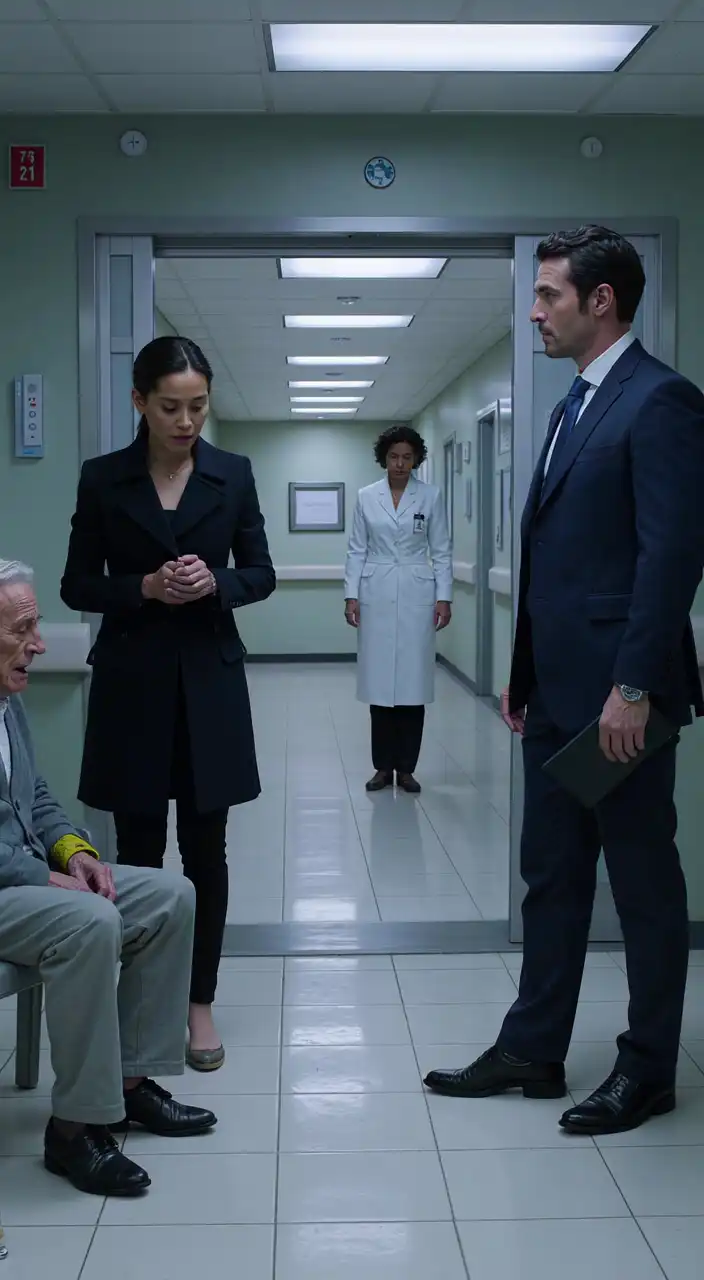
MY FATHER STARTED SHAKING OUTSIDE TRIAGE WHILE A CLINIC ADMINISTRATOR BLOCKED THE DOOR AND SAID HE NEEDED FAMILY PERMISSION FIRST.
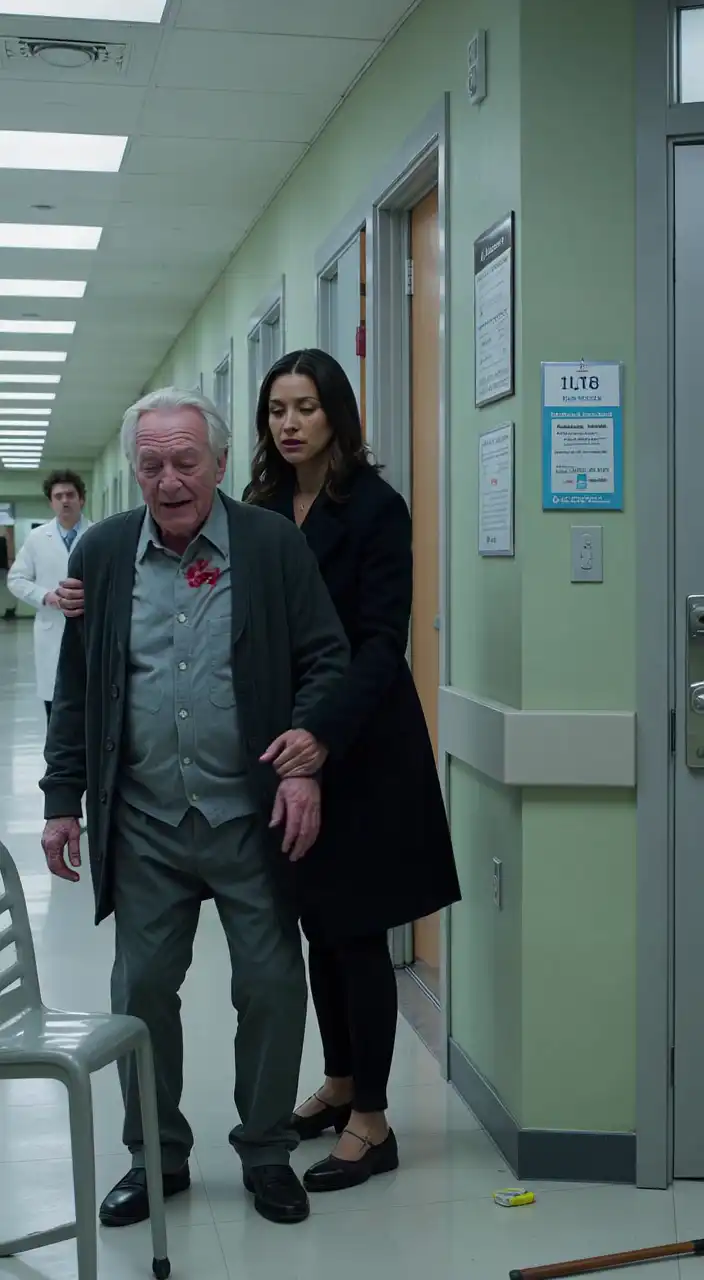
MY FATHER STARTED SHIVERING SO HARD HIS SURGICAL BANDAGE BLED THROUGH, AND THE CLINIC ADMINISTRATOR STILL BLOCKED THE TRIAGE DOOR.
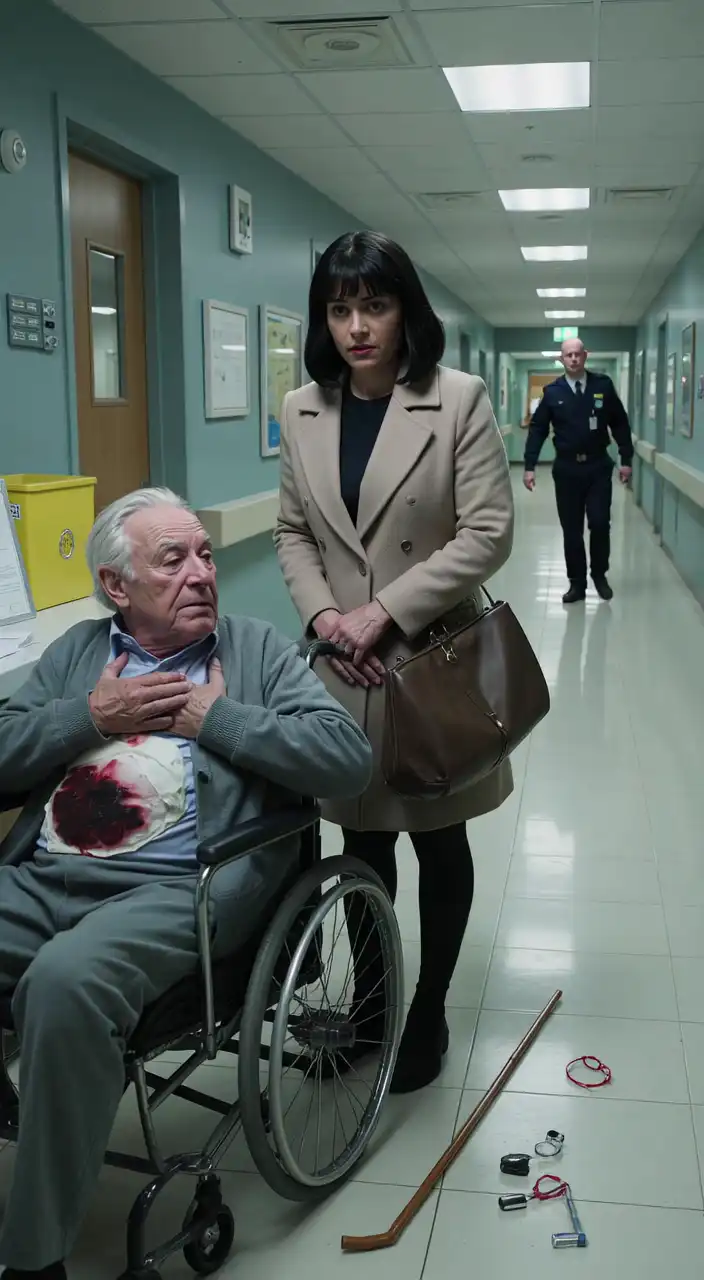
MY FATHER STARTED SHAKING IN THE HOSPITAL HALLWAY, AND THE WOMAN WHO CLAIMED TO BE HELPING HIM WOULD NOT LET TRIAGE TOUCH HIM.