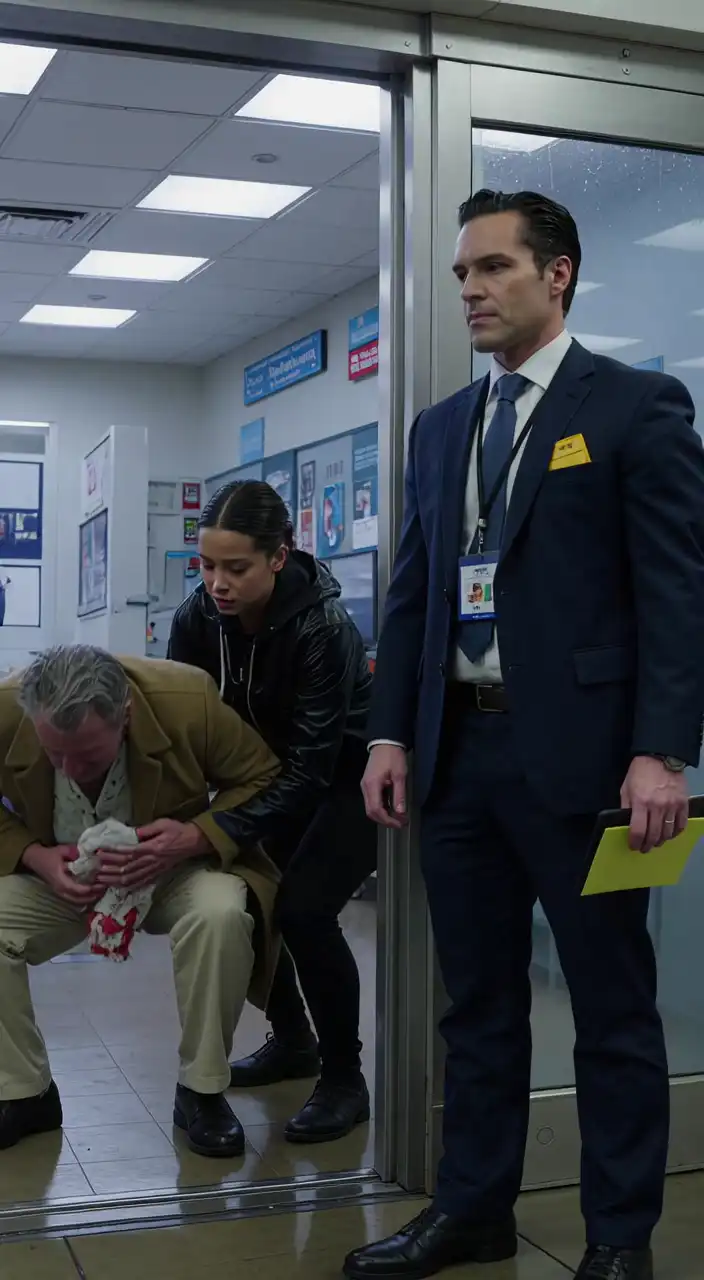
The second Michael's voice cut through the rain, everything tightened at once.
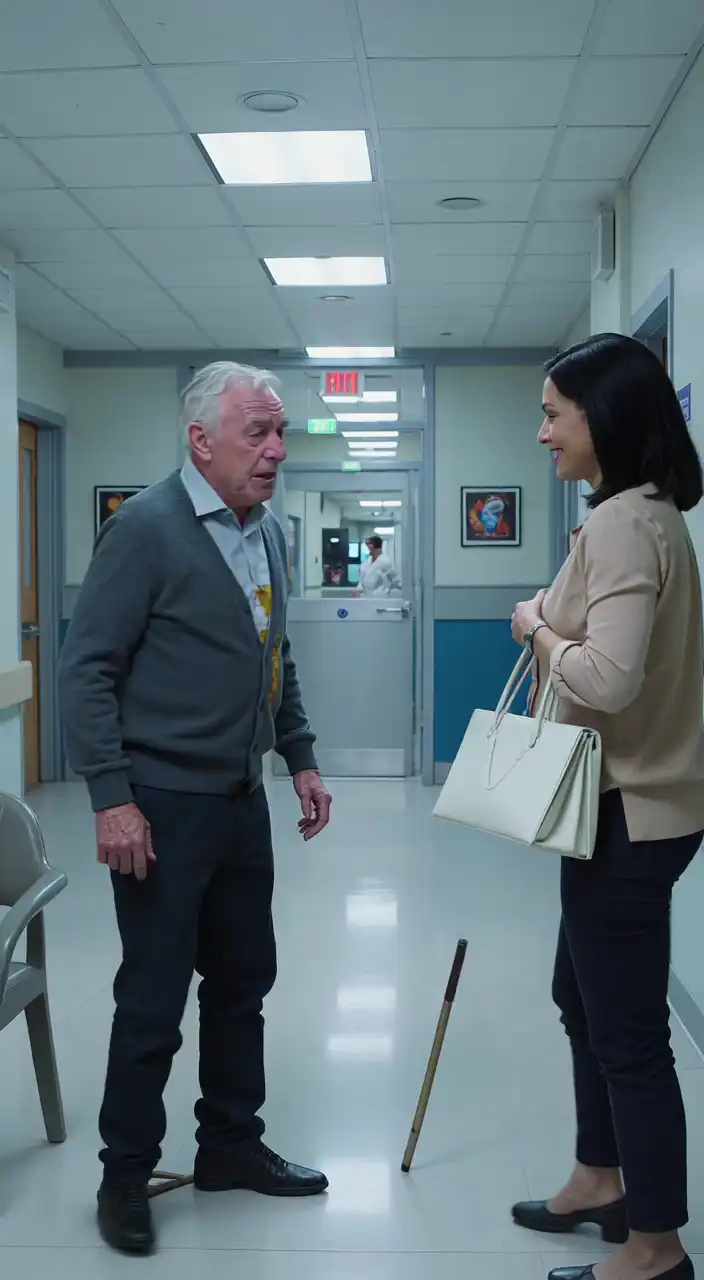
Lucas did not back away from my grandfather. He did not even look embarrassed. He turned slightly, enough to shield the yellow discharge packet with his body, and said in a measured voice, "This is a private family matter. Security does not need to escalate a misunderstanding."
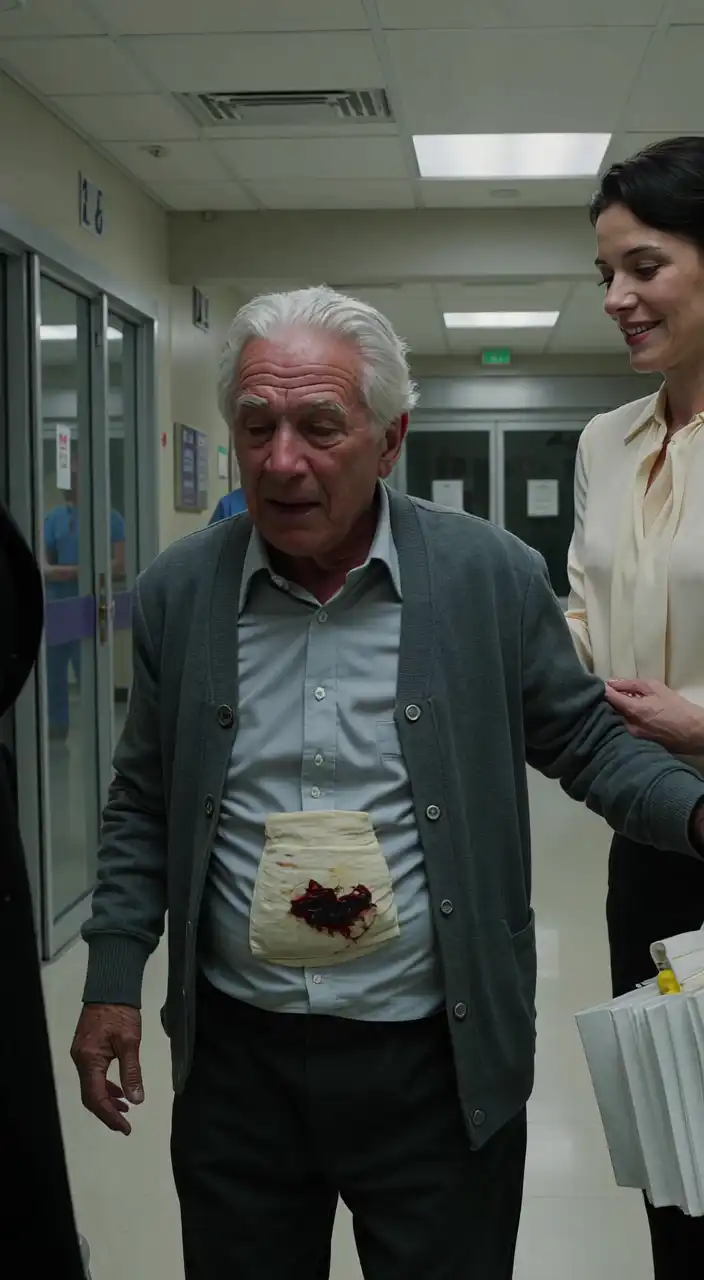
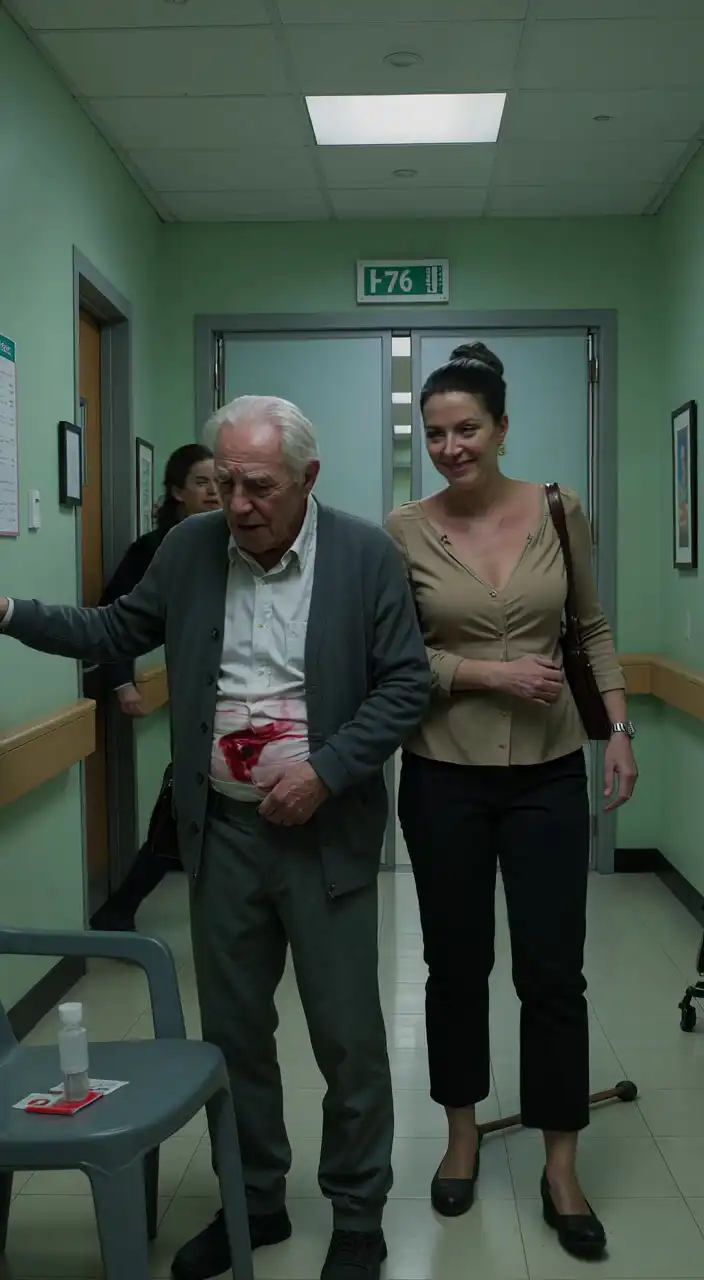
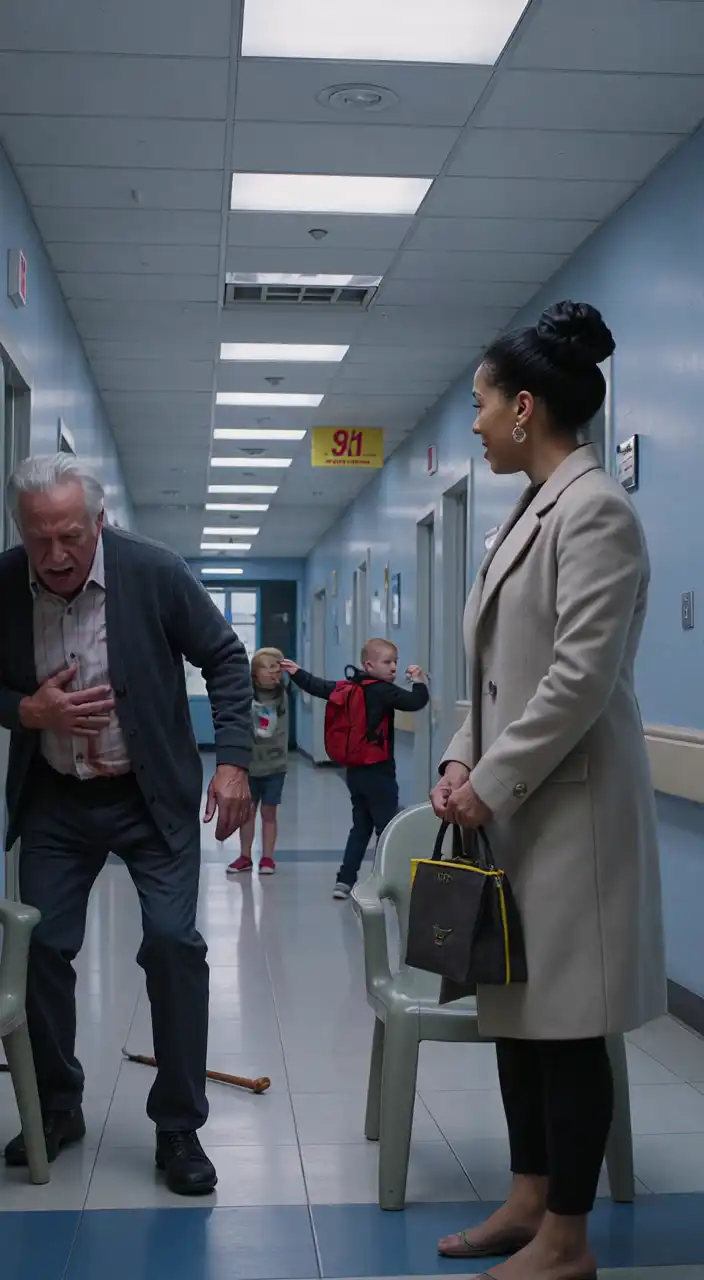
My grandfather made a low sound I had never heard from him before, not quite a groan and not quite a word. His knees buckled. I caught him under the arms, but most of his weight dropped against me, hot and shaking. The wet patch on his dressing had darkened from pink to rust.
Michael's eyes went there first, then to the phone on the pavement with the frozen emergency call still lit. He moved faster.
"It stopped being private when someone interrupted a 911 call on hospital property," he said. "And it definitely stopped being private when a post-op patient is being denied access while unstable. Step away."
Lucas's jaw flexed. "He was cleared for discharge. The daughter on file requested transfer home and no readmission without billing review."
"I'm his grandson," I snapped.
Lucas gave me the kind of glance that said he had already decided what mattered and what did not. "You're not listed."
My grandfather lifted his head with visible effort. Rain had dampened the wisps of white hair over his forehead, and his skin had gone the gray-beige color people get when their bodies are losing the fight to stay even. "Nate," he whispered. "Cold."
That one word did more than anything else. Michael touched his earpiece and spoke with a clipped calm that made everyone around us move. "Medical abuse alert at ambulance bay entrance. Post-surgical elder, possible interference with emergency contact, possible concealment of documents. Need chair, nurse, and incident camera pull now."
Lucas's composure cracked on the word concealment. "You cannot make that allegation from a doorway."
Michael ignored him. A nurse in navy scrubs who had been escorting someone toward radiology turned on her heel and grabbed a wheelchair from beside the wall. I helped lower my grandfather into it. His cardigan clung damply to his shoulders. His hands were trembling so hard he couldn't keep them in his lap.
The sliding doors opened again, and warm air from inside brushed my face for a second before Lucas shifted into the opening.
"I am telling you there are restrictions," he said, louder now, as if volume could make authority. "His account is attached to the Marrow family. They instructed us-"
Michael stepped closer. "You can finish that sentence after he is inside."
The name hit me sideways. Marrow family.
My grandfather's wife, Evelyn, had worked for the Marrows for almost thirty years before she died. House manager, personal assistant, keeper of every impossible schedule in that giant lake house thirty minutes north of town. After she passed, the family had sent flowers the size of a sofa and a handwritten note about loyalty. They had also started "helping" my grandfather with appointments, transportation, and paperwork after his surgery because Lucas's older sister, Dana Marrow, now sat on the hospital foundation board and seemed to appear wherever checks got written.
I had not liked any of it. My grandfather had liked it even less, but he was old-school proud. He kept saying they were being kind, and kind is hard to refuse when you are eighty-one and still setting one place at the table out of habit.
"I don't care whose account he is attached to," I said. "He needs a doctor."
A flash of pain crossed my grandfather's face, and he pressed one hand to his abdomen. The compression bandage under his cardigan was soaked through in one corner. The nurse saw it and swore under her breath.
"We are not standing here arguing," she said. "He's febrile and bleeding through."
Lucas held his ground. "If you roll him inside against chart instruction, this becomes a liability issue."
The nurse gave him a look that could have stripped paint. "If I leave him outside in this condition, it becomes negligence."
Michael bent, picked up my cracked phone with a gloved hand from his pocket, and looked at the screen without touching anything. The emergency timer still glowed, frozen where the call had died. At the top, one line of partial audio transcription had appeared from my phone's emergency assist app: male voice saying don't call.
Michael held the phone so Lucas could see it.
"Last chance," he said quietly. "Move."
For a beat I thought Lucas might still try to win. I could see calculation moving behind his eyes, status anxiety scrambling for a path that kept him clean. Then thunder shook the bay roof, and somewhere beyond the overhang a paramedic shouted that the east road might flood within the hour if this rain kept pounding the low crossing.
That changed my fear into something sharper. We lived east of town. If the road closed, getting my grandfather back out or to another hospital would turn from hard to impossible.
Lucas heard it too. He knew the storm mattered.
Instead of stepping away, he did something stranger. He pulled the yellow discharge papers from his coat pocket, folded them smaller, and slid them behind the tablet tucked under his arm.
My stomach dropped. People do not hide documents unless the documents matter.
Michael saw it. So did the nurse.
"Sir," Michael said, each word clipped, "hand me the papers."
Lucas smiled then, a thin professional smile that looked grotesque next to my grandfather's shaking body. "These are administrative materials."
The nurse started pushing the wheelchair. Lucas put his hand on the handle.
That was the moment Michael changed from a man asking to a man acting. He caught Lucas's wrist and removed it from the chair with precise, practiced force, not enough to make a scene, just enough to make clear that the scene was over. "You are now interfering with urgent care," he said. "Stand down."
The doors opened. The nurse pushed us through.
Lucas spoke behind us, voice rising for the first time. "You are making a serious mistake. The family will not appreciate-"
The doors shut on him.
Inside, the warmth and fluorescent light made the situation feel more unreal, not less. A triage nurse took one look at my grandfather and called for a treatment room. Someone cut away the loosened part of his dressing. The smell that came up from the wound was wrong, sharp and sickly sweet. The nurse's face changed instantly.
"When did this start leaking?" she asked.
"This afternoon," I said. "The fever started around three. By six he was shaking."
"And you brought him right back?"
"I tried."
She looked at my phone in Michael's hand, at the rainwater dripping off my jeans, then at my grandfather. She did not ask the rest.
They wheeled him into a curtained room off the emergency intake area. Monitors came out. Blood pressure cuff. Pulse ox. Temperature probe. His numbers made the nurse call a doctor before she finished attaching everything. Fever over 103. Blood pressure dropping. Heart rate racing.
My grandfather opened his eyes and searched for me. "Don't let them send me home," he whispered.
I leaned close enough to hear him over the monitor alarms. "Nobody is sending you anywhere."
His hand caught my sleeve with surprising strength. "Not her."
"Who?"
But his eyes had already drifted shut again, not unconscious, just sliding in and out under the force of pain and fever.
Michael stayed at the curtain opening while staff moved around us. He handed me my phone at last. "Do not unlock it yet," he said. "If this becomes an incident review, the call state matters. I already had cameras preserved from the ambulance bay. I also want audio from emergency dispatch if the call connected."
"It did," I said. "I heard the operator start to answer."
He nodded. "Good."
"Who is 'her'?" I asked before I could stop myself. "Lucas said the Marrow family. My grandfather just said not her."
Michael's expression stayed careful. "Right now, your job is him. My job is making sure nobody walks him out of here before medicine and facts catch up."
That should have comforted me. It did, a little. But while a resident cut away more bandage and murmured to an attending about infection risk and possible internal leak, I looked through the gap in the curtain toward the waiting area and saw Lucas still there beyond the desk, speaking into his phone with his back rigid and one hand pressed flat over his coat pocket where the discharge papers had been.
He was not waiting because he cared what happened to my grandfather.
He was waiting because he was afraid of what those papers, that interrupted 911 call, and one old man's fever might expose if he lost control of the story.
The attending surgeon on call arrived ten minutes later, looked at the wound, and stopped asking gentle questions. Orders came fast after that: blood cultures, lactate, IV antibiotics, imaging, surgical consult, no discharge under any circumstance. A tech started a second IV because the first line infiltrated when my grandfather jerked with pain.
Then the surgeon looked at me and asked, "Who signed his discharge?"
"I don't know," I said. "Nobody gave me a copy."
Michael, still at the curtain, answered for me. "We may have a concealed packet. Security is retrieving."
The surgeon's eyes hardened. "Then retrieve it now."
That was the first time I saw the shape of what this might become if anyone was willing to keep pulling.
Not just a sick old man forced to wait in the rain.
A system already preparing excuses before anybody asked the right question.
And somewhere in the middle of it, a woman my grandfather had been afraid to name.
While the IV pump started its steady ticking and thunder rolled against the hospital windows, my phone buzzed with a voicemail notification from an unknown number. Time stamp: seven minutes earlier, while we were still outside.
I played it on speaker before I could think better of it.
The first thing on the message was rain. Then my own voice, ragged and distant: "Please, my grandpa just had surgery-"
A click. A scuffle. Lucas's voice, much closer than mine: "End the call."
And behind him, almost lost under the storm, a woman's voice saying, "If he gets admitted again, everything unravels."
Nobody in the room said anything for a full second.
Then Michael straightened, looked toward the lobby, and said, "Now we have a second reason nobody leaves."
The surgeon met my eyes. "Whoever that woman is, find her before she gets to his chart."
The next hour moved in pieces that refused to stay in order.
A CT tech tried to take my grandfather for imaging, but his blood pressure dipped so low they stabilized him first. A nurse hung broad-spectrum antibiotics. Another drew blood cultures and muttered about sepsis protocols. The surgeon examined the incision again and frowned deeper at a narrow green-gray edge hidden under the folded dressing.
"That wasn't documented on the discharge summary I saw in the system," she said.
"You saw the discharge summary?" I asked.
"I saw an abbreviated note. It reads cleaner than he looks."
That sentence lodged in me like a splinter. Reads cleaner than he looks.
Michael returned twenty minutes later without Lucas, holding the yellow discharge packet inside a clear evidence sleeve. His controlled expression had thinned into something colder.
"Found this in an admin office shred bin," he said. "Top pages missing signatures. Lower pages include a medication change and follow-up instructions that never made it into the electronic chart."
The surgeon reached for the sleeve. "What medication change?"
Michael opened the top just enough for her to read without disturbing the pages more than necessary.
She scanned a line and swore. "They reduced his prophylactic antibiotic and documented 'family requests home comfort management only.' Who authorized that?"
I felt dizzy. "We never asked for that. I didn't even know he had an antibiotic."
My grandfather opened his eyes again at the sound of our voices. He looked from me to the surgeon to the yellow packet. His lips parted.
"Evelyn knew," he whispered.
Then he slipped back into the fever haze before I could ask what he meant.
Evelyn had been dead three years.
But in that room, with the storm closing roads, a hidden medication change in a shred bin, and a woman's voice on voicemail saying everything would unravel if he got admitted again, it felt like my grandmother had just reached through the dark to tell me the story had started long before tonight.
And that whatever Lucas was protecting, it was not just money.
It was history.
The surgeon did not react to my grandmother's name the way I did. She had no reason to. To her, it was one more fragmented fever statement from an unstable patient. But I saw Michael hear it, file it, and keep moving.
"Get me the full chart audit trail," the surgeon told a unit clerk outside the curtain. "Every edit on discharge, every medication reconciliation change, every user who touched this case after noon."
The clerk nodded and hurried off.
My grandfather started shivering harder. The monitor alarmed again as his heart rate climbed. A nurse pushed warmed blankets over his chest while another spiked a second bag of fluids. He looked too small in the bed all at once. This was the same man who used to lift feed sacks by himself into the back of a truck, who kept old coffee tins full of screws because throwing away a useful thing offended him. Now his fingers were bluish at the nails, and his jaw shook so hard he could not keep his teeth from clicking.
"Nate." His voice was rough and thin.
"I'm here."
He stared past me for a second as if he had to cross a long distance just to focus on my face. "Desk drawer."
"What drawer?"
"At home." He swallowed with effort. "Top. Back panel."
The surgeon touched my shoulder. "If he starts talking and can answer orientation questions, do not push him too hard. He may be septic. He may also need surgery again."
The words landed, but they did not fully register. Need surgery again. Two days after the first one. My body heard them before my brain did. My legs felt hollow.
Michael was already making calls in a voice too low for me to catch every word. I heard enough. Preserve footage. Lock admin access. Notify risk. Possible chart tampering. He did not sound like a man asking permission. He sounded like a man warning everyone that the window to clean this up quietly had closed.
The curtain shifted and a woman in registration tried to step in with a clipboard. "I just need the family representative to sign-"
"No," the surgeon snapped without even turning. "Not until treatment is underway and not from anyone associated with the flagged account. He is emergent."
The registrar froze. "The note says foundation handling-"
"The note says nothing to me right now. Put a hold on financial interference."
She backed out. Michael followed her with his eyes, then stepped into the hall after her.
That was the first new pressure point. It was not only Lucas anymore. It was the whole invisible machinery around him, each person seeing one line in a chart, one account flag, one donor note, and treating it like gravity. I suddenly understood how easy it must have been to move my grandfather through a system without him ever being the center of his own case.
A resident came in with preliminary labs. White count elevated. Lactate high. Creatinine worsening. The attending surgeon read the numbers and said, "We are behind. Page OR and page ICU. If the scan confirms an anastomotic leak or abscess, he is not waiting."
She leaned over my grandfather. "Thomas, can you hear me? I am Dr. Kelly. You may have an infection from your surgery site. We are treating that now. We may need to take you back to the operating room tonight."
He blinked slowly. "No more... home."
"No," she said firmly. "Not home."
A little of the fear left his face then, enough to break me in a way the alarms had not. He had believed they might send him back. Even after all this. Even with his body falling apart in front of them. Some part of him had believed the people with badges and forms could still push him out if the right person wanted it.
Michael came back with a different kind of tension in him. "Lucas is not in the lobby."
"What?" I said.
"I had another officer stay on him while I went to lock down records access. He took a call, asked to use the restroom, and exited through the foundation corridor."
The surgeon looked up sharply. "He is an administrator. Why is he using foundation access during an active patient incident?"
Michael's mouth flattened. "That is one of the questions."
My stomach dropped. "Can he get to the chart from there?"
"He can get to people who can get to the chart."
The CT transport team arrived then, and this time they moved my grandfather despite the unstable blood pressure because waiting looked worse. Dr. Kelly went with him. I started after the bed, but a nurse caught my sleeve.
"You need a minute," she said.
"I need to stay with him."
"You can, but not looking like you're about to black out."
I had not realized how hard I was breathing. She sat me down on a plastic chair by the curtain and handed me a paper cup of water. My hands were shaking almost as badly as his had been. Rain hammered the high ER windows in bursts, then eased, then came back louder. Through the intercom somewhere down the hall, a dispatcher voice mentioned flooding at the east low crossing. My chest tightened. Michael had not been exaggerating. If this got worse, routes in and out of town would start narrowing for everyone.
My phone buzzed again. Unknown number.
I looked at Michael before answering.
He nodded once. "Speaker."
I hit accept.
No one spoke for two seconds. Then a woman's voice I recognized only from the voicemail said, calm and expensive and furious under control, "Nathaniel, this is Dana Marrow. I think there has been a misunderstanding involving Thomas's aftercare."
My mouth went dry. She had not called him Grandpa. Not Thomas Hale, not Mr. Hale. Just Thomas, like she was already inside the boundary line where first names are power.
"There was no misunderstanding," I said. "He was bleeding and you people blocked him at the door."
A soft exhale. "You are upset. Understandably. Lucas was trying to prevent duplicate processing while the account issues were sorted. Thomas specifically wanted discretion."
Michael took one step closer to the phone.
"My grandfather wanted treatment," I said.
"He wanted privacy," she said. "And he did not want certain old allegations dragged into hospital reporting where they could be distorted. If he is admitted under emergency review, files linked to his wife's employment may be pulled into legal hold. That helps no one."
It felt as if the room tipped.
Michael held out a hand. I gave him the phone without thinking. "Ms. Marrow," he said, every word formal. "This is Michael Alvarez, hospital security supervisor. Do not contact the family witness directly again. If you have information relevant to patient care or chart access, you will provide it through incident command."
Her pause was tiny but audible. "Michael, I know your title. I also know this hospital depends on people not overreacting to emotionally charged scenes."
"And I know witness interference when I hear it."
The line went dead.
For half a second nobody moved.
Then Michael said, "She's on her way."
"How do you know?" I asked.
"Because she called instead of sending counsel. She wants to control what your grandfather says before sedation, surgery, or formal review."
A nurse popped her head through the curtain. "Security to admin workstation three. We have a chart alert and a dispute over access credentials."
Michael was gone immediately.
That was the next swing in the night. Every ten minutes the crisis changed shape. First my grandfather was just sick. Then he was being blocked. Then the block had evidence behind it. Now people were moving around his chart and a woman with influence was driving through a storm because something in his admission threatened more than a billing argument.
I sat there listening to rain and hallway wheels and muffled overhead pages until Dr. Kelly returned from CT with her mask hanging at her neck and urgency all over her face.
"Abscess and probable leak," she said. "Free fluid, significant inflammatory change. We are taking him to the OR as soon as anesthesia clears. He should never have gone home like this."
There are sentences that split your life cleanly into before and after. He should never have gone home like this was one of them.
I stood up so fast the chair skidded. "Then who signed him out?"
"That answer is coming," she said. "Right now I need consent if he loses capacity before we get upstairs. Are you legal next of kin?"
"I'm his grandson. My mother is dead. He has no spouse. My uncle is estranged in Arizona and hasn't spoken to him in years."
"Power of attorney?"
"I don't know."
Michael's voice came from the hall before I saw him. "Use emergency necessity if needed. There is active dispute on authorization documents."
Dr. Kelly swore softly. "What dispute?"
He looked at me first, then at her. "A power-of-attorney form was just uploaded to the chart at 8:12 p.m. granting temporary medical authority to Dana Marrow."
Every sound in the ER seemed to pull away from me at once. "That is impossible."
"Yes," Michael said. "It is."
Dr. Kelly held out her hand. "Show me."
He gave her a printout fresh from some back office copier. The signature line looked like my grandfather's if you had only seen him write once, years ago, and never watched his hands shake after surgery. There was a witness signature from someone named L. Chen. Not notarized. Executed this afternoon. Temporary due to post-operative incapacity.
"I did not sign that," my grandfather said from the bed in the hall where they had just parked him outside imaging.
All three of us turned.
I had thought he was barely conscious. But he had heard enough.
His face was damp with sweat. His lips were pale. He looked as if speaking cost him blood. Still, his eyes were fully open now, fixed on the paper in Dr. Kelly's hand with a hatred so clean it cut through the fever.
"I did not sign that," he said again, stronger this time. "She brought forms. I said no."
Dr. Kelly stepped to the bedside instantly. "Thomas, do you know who I am?"
"Doctor."
"Do you know where you are?"
"Hospital. Back where I should've stayed."
"What year is it?"
He answered correctly. Then he looked at me. "Nate, the drawer. Your grandma's ledger."
Michael's expression changed at that. Not surprise. Confirmation.
"What ledger?" I asked.
My grandfather swallowed. "Evelyn kept copies. For protection." He shut his eyes against a wave of pain, then forced them open again. "Marrow house. Medicine. Girls. Payments."
Dr. Kelly and I stared at him.
Michael spoke first. "Thomas, are you saying your wife kept records related to the Marrow family?"
A tiny nod.
"Did Dana Marrow know that?"
Another nod, slower.
That was the reversal. Up to that point I had assumed this was about money or donor vanity or somebody hiding a bad discharge to protect a surgeon. In one exhausted whisper my grandfather tore the walls off that idea. Medicine. Girls. Payments. It was not one bad decision tonight. It was an old structure, maybe older than my grandmother's death, and they were not trying to keep him out because he was inconvenient. They were trying to keep him from becoming a witness with sepsis.
A transport nurse appeared with OR paperwork and stopped dead at the sight of all of us around the bed.
"Can we move?" she asked.
"Yes," Dr. Kelly said. "But not before he states one thing on the record."
She looked at Michael. "Get a witness."
A second nurse came over. Michael took out his incident recorder, visibly activated it, and held it near the pillow.
Dr. Kelly said, "Thomas Hale, do you authorize Dana Marrow or Lucas Chen or any representative of the Marrow family to make medical decisions for you tonight?"
"No."
"Who do you want informed and involved in your care?"
He turned his eyes to me. "Nathaniel Hale."
"Did you sign the temporary power of attorney uploaded tonight?"
"No."
Michael ended the recording. "That is enough to freeze the document pending fraud review."
The transport nurse finally started rolling the bed toward surgery. I moved with it until the pre-op doors. My grandfather's hand found mine weakly. His skin was burning.
"Drawer," he whispered one last time. "Back panel lifts."
Then they took him through.
The waiting after the doors close is its own kind of violence. Action turns to fluorescent stillness. People stop shouting and start writing. The body that matters most disappears into rooms where love has no access badge.
Michael stayed with me, though he was being pulled in six directions by radio calls and staff questions. Twice he stepped away to handle something and came back with fresh lines in his face.
The first time, he said, "IT locked the chart and preserved the upload metadata. The POA came from a foundation office terminal, not clinical records."
The second time, he said, "Lucas is back on property with Dana Marrow."
I stood so fast again that Michael put a hand out. "Not here. You will not meet them alone and you will not meet them in front of pre-op."
"Then where?"
"Conference room by security. We keep it recorded."
"What if they get to someone first?"
"They already did. Now they have to do it under light."
He guided me down a side corridor away from the main waiting area. Rainwater streaked the narrow windows at the end of the hall. Through one glass panel in a fire door I could see the parking lot lights washed hazy by weather. The storm had deepened into that strange steady stage where it no longer looked dramatic, just relentless.
Conference Room B was too cold and smelled like copier toner. A camera sat high in the corner with a red indicator on. Michael checked that it was live, then stood by the door as Dana Marrow entered with Lucas two minutes later.
I had met her only three times before. Once at my grandmother's funeral. Once at a charity breakfast where she kissed the air beside my grandfather's cheek and asked if he was "managing." Once in the surgical waiting room two days ago, where she had appeared with flowers before I knew who had called her.
She was in her fifties, impeccably dressed despite the storm, dark coat untouched by rain except at the hem, hair pinned so neatly it made the rest of us look unfinished. Lucas came in a step behind her, his tie replaced, coat gone, tablet clutched in both hands like a shield. He would not look at me.
Dana did not sit. "Nathaniel, first, let me say I am sorry Thomas has taken a turn. He insisted on home recovery. We tried to respect his wishes."
"He said no one was to make decisions for him but me," I said. "And he said he did not sign your paperwork."
For the first time her expression altered, not much, just enough to reveal calculation updating itself. "Thomas is septic. I am not sure this is the hour to treat every statement as legally coherent."
Michael spoke from the door. "His orientation questions were answered correctly on witness audio before transport."
She turned to him. "Are you now practicing medicine, Michael?"
"No. I am preserving evidence."
Lucas finally lifted his eyes. "The temporary authorization was a contingency document. We often prepare them when elderly patients lack support."
"My grandfather had support," I said. "You took the discharge papers and blocked us at the door."
His face flushed. "I secured documents that were at risk of being lost."
"In your pocket."
Dana put up a hand, and he fell quiet.
That was answer enough.
She looked at me again, and now the warmth was gone. "Nathaniel, I think you do not understand what your grandfather has carried for years. Your grandmother involved herself in matters she only partly grasped. She copied private household records and threatened to release them after she left our employment. Thomas has been protected from the fallout of that mistake out of respect for her memory."
I laughed once, a terrible sound in that cold room. "Protected? He was collapsing in the rain."
"From scandal," she said. "From litigation. From being dragged through events that cannot be responsibly reconstructed this long after the fact."
Michael said, "You uploaded a disputed POA during an active emergency."
Dana ignored him. "If Thomas survives the night, he needs calm, not police theater. If he does not..." She paused, and for the first time something like strain showed. "Then the decent thing is to let his family grieve without turning Evelyn into a posthumous blackmailer."
There it was. Emotional reversal, clean and brutal. For one heartbeat I doubted everything. My grandmother had kept every receipt, every note, every birthday card with dates on the back. She did believe in copies. Could she have threatened them? Could this somehow be some old bitter employment fight blown poisonous by age and guilt?
Then I remembered the voicemail. If he gets admitted again, everything unravels. Not if he talks nonsense. If he gets admitted. The danger had been medical containment, not false memory.
"What were the girls?" I asked.
Dana blinked once.
"My grandfather said, 'Medicine. Girls. Payments.' What girls?"
Lucas made a tiny involuntary movement with the tablet. Dana saw it.
Michael saw it too. "Set the tablet on the table, Mr. Chen."
"It contains donor correspondence-"
"Set it down."
Lucas obeyed.
Dana's control thinned a fraction. "Thomas is confusing eras. Evelyn managed staff schedules. We sponsored treatment for one of the daughters of a groundskeeper years ago. Rural families become dependent. Stories grow."
"Then why fake a power of attorney?" I asked.
"We did not fake anything."
Michael pushed off the door and stepped closer. "The signature on the document is disputed by the patient. The upload source is your office terminal. The witness name traces to no active employee in HR. Do you want to revise your answer?"
The silence that followed was not empty. It was packed. Dana's eyes flicked once toward Lucas, and in that glance I saw the hierarchy with no polish on it. He was scared. She was deciding whether to let him absorb impact.
Before she could answer, Michael's radio cracked. "Supervisor, OR desk requests family for urgent update."
Every nerve in me fired. "What happened?"
Michael was already at the door. "Move."
I did not wait for Dana or Lucas. I ran.
Dr. Kelly met us halfway down the hall still in cap and mask. I knew from her eyes before she spoke that the news was both better and worse.
"He had a leak at the bowel connection and extensive infection in the abdomen," she said. "We washed out, repaired what we could, placed drains. He is alive, but he is very sick. He is going to ICU intubated and on blood pressure support."
Alive. The word hit first like relief so hard it hurt. Intubated came second, cold and steep. My knees almost gave.
"Can I see him?"
"Briefly once they settle him."
She noticed Dana then, because Dana had followed at a measured pace, and her face shut down into physician neutrality. "Only authorized family."
Dana smiled a small tired smile meant for bystanders. "I have been assisting the family with logistics."
Dr. Kelly did not smile back. "Not tonight."
Dana took that in, then said, "Doctor, before records become contaminated by rumor, you should know Thomas has a history of anxiety around hospitalization and often dramatizes-"
"He almost died from a post-op leak," Dr. Kelly said flatly. "I don't need your character assessment."
Dana's nostrils flared.
Then another figure came around the corner fast enough to surprise all of us. A broad-shouldered man in a sheriff's rain jacket, water still shining on the sleeves, followed by a woman in plain clothes carrying a slim case file. Michael straightened at once.
"Sheriff's office requested by risk and security," he said quietly to me. "Because of the interrupted 911 call and suspected elder abuse interference."
The deputy introduced himself as Sergeant Bell. The woman with him did not offer a handshake. "Adult Protective Services intake liaison," she said. "Rosa Medina."
Dana's posture changed almost invisibly. Not fear. Resistance.
Bell said, "We are separating witnesses. Mr. Hale, I need your account of the interrupted emergency call, the barrier to treatment, and any statements regarding unauthorized paperwork. Ms. Marrow, Mr. Chen, you are not to approach the patient or direct care staff pending review."
Dana tried to cut in smoothly. "This is absurdly premature."
Rosa Medina answered before Bell could. "A septic elder was prevented from reentering emergency care while someone interrupted a 911 call and inserted themselves into his medical authority. Premature ended at the ambulance bay."
That was the exposure consequence in motion. Not a headline yet. Not cuffs. But the protected tone was gone. The world had started naming things correctly.
Bell took Dana and Lucas one way with another officer. Rosa guided me to a small consult room with Michael staying outside the glass paneled door. I told it all from the beginning: the fever climbing at home, the missing discharge papers, the stolen phone, Lucas at the door, the voicemail, my grandfather's statements, the fake POA. Rosa wrote fast but looked at me when it mattered.
"When he said 'girls,' did you know what he meant?"
"No."
"Did your grandmother ever leave records with you?"
"No. He mentioned a drawer tonight. That's all."
Bell came in halfway through with a printout. "We pulled dispatch. The 911 call connected and open-line audio captured forty-three seconds before termination. There is a male voice matching Mr. Chen from the bay cameras. We are preserving it."
Rosa asked, "Any indication of physical contact with the caller?"
"Video shows an unidentified hand entering the vehicle and removing the phone. Angle obscured by the truck frame. But then the phone appears by the curb."
She looked at me. "Do you have access to the home tonight?"
"The east road may flood."
Michael, from the doorway, said, "Sheriff can route through county line if they move now. Maybe. If the crossing closes, not until morning."
Rosa and Bell exchanged a look. Another pressure point. Another narrowing route.
"If there is documentary evidence in that home and people here know about it," Rosa said, "we cannot assume it will remain there by morning."
I understood immediately. Dana had heard enough tonight to know there was a ledger. If she had anyone else watching the house or if Lucas had already passed that information along, the drawer might not stay secret long.
"I'll go," I said.
Michael said, "No."
Bell said, "Not alone."
Rosa said, "And not before you see your grandfather."
That nearly undid me again. Because beneath all the fraud and pressure and old secrets, there he was in ICU fighting to stay alive.
They let me in for less than a minute.
Machines made him seem unreal. Tube at his mouth. Dressings changed. Skin waxy under ICU light. Two drains from his abdomen. A nurse adjusting medication pumps with steady practiced hands. I touched his forearm because it was the only place that felt safe to touch.
"I'm going to get it," I whispered. "The drawer. I heard you."
He did not wake. But his pulse moved under my fingers, fast and stubborn.
When I came out, Michael was waiting with a county deputy and a spare rain shell.
"I arranged transport," he said. "Bell is sending a unit. I am also sending one of my officers off-duty because this started on our property and I want chain of custody clean if you find anything."
"You can do that?"
"I just did."
The drive east was a tunnel of black rain and wiper thump. Deputy Bell rode up front. The off-duty hospital officer, Jenna Ruiz, sat beside me in the back with an evidence bag kit on her lap and a flashlight clipped to her vest. Her calm helped more than she probably knew. Every so often the radio crackled with road closure updates and status checks from the hospital. Dana Marrow and Lucas Chen were still being interviewed separately. IT had frozen foundation terminal logs. ICU had stabilized Thomas on vasopressors. Each scrap of news felt like a rope I was gripping in dark water.
At the county split, the main east crossing was already under advisory. Bell took the longer farm route. Water sheeted across the asphalt in low places. Branches littered the shoulder. Once, lightning lit the fields white and I saw the old grain elevator miles off like a skeleton.
"What if someone is already there?" I asked.
Bell checked the mirror. "Then they picked a bad night."
When we turned onto my grandfather's road, his porch light was on.
My heart slammed hard enough to hurt. He never left it on unless he expected me back.
Bell killed the headlights a hundred yards short and rolled slowly. Another vehicle sat in the gravel drive, dark SUV, engine off.
Jenna's hand went to her radio. "Tag it?"
Bell nodded. She whispered the plate to dispatch.
The front door was closed. No movement in the windows. Rain ran down everything.
Bell parked offset from the drive and opened his door carefully. "Stay behind us until we clear."
We moved through the rain fast and low, flashlights dark until the porch. Bell knocked once, then harder. "Sheriff's office."
Nothing.
He tried the knob. Locked.
Jenna swept her light across the SUV's windshield. Empty front seats. A gym bag on the passenger floor. Bell circled toward the side of the house while Jenna and I took the porch. The light over us flickered.
Then from inside, somewhere near the kitchen, something crashed.
Bell shouted, "Sheriff's office! Come to the door now!"
A shadow moved behind the curtain by the den and vanished. Jenna swore and went for the lock set with a metal strip from her kit. The door popped in seconds.
The house smelled like wet wool, old coffee, and something sharp from broken wood. Bell entered first, weapon low. Jenna after him. I stayed on the threshold until Bell called, "Clear front. Come."
The den drawers had been pulled out and dumped. Cushions off the couch. My grandfather's little secretary desk stood open by the wall, top compartment exposed.
Someone had gone straight for paper.
"They knew exactly where to look," Jenna said.
I pushed past into the room despite Bell's warning. The top drawer was hanging open. I felt blindly along the back as my grandfather had said and hit a thin seam in the wood. I pried. The panel lifted.
Empty.
For a second the whole night dropped through me. Too late. We were too late.
Then Bell called from the kitchen. "Got one."
I ran in. A young man I did not know, maybe twenty-two, soaked through and mud on his shoes, was crouched by the back door with a canvas document pouch clutched to his chest. Bell had him against the wall in a heartbeat. The man looked terrified, not tough.
"I didn't take anything else," he blurted. "I was just sent to pick up papers."
"By who?" Bell barked.
He looked from the badge to me to the pouch. He knew his night had ended badly. "Mr. Chen."
That was the next hook, sharp as a nail. Not Dana directly. Lucas sending runners through a storm to my grandfather's house while Thomas lay intubated in ICU.
Bell cuffed him while Jenna took the pouch and set it on the table. "Name?"
"Eric Voss."
"Who gave you the code, Eric?"
"What code?"
"The house key under the planter's been gone a month," I said.
His eyes widened. He had not expected the grandson to know the house that well.
"I had a key," he muttered.
"From who?" Bell said.
He shut his mouth.
Jenna photographed the pouch before opening it. Inside were two spiral notebooks, one slim black ledger, several envelopes bound with a rubber band, and a flash drive taped to an index card. On the card in my grandmother's unmistakable narrow handwriting were four words: If anything happens, copy.
I sat down without meaning to. My legs had finally run out.
Rosa Medina, who had followed in another county vehicle delayed by the route, came in as Bell read the man his rights. She saw the card and looked at me once, deeply, like she understood that the dead had just entered the room.
"Do not sort anything bare-handed," she said. "We bag by category."
Jenna pulled on fresh gloves and began itemizing. Ledger. Notebooks. Envelopes. Flash drive. One folded Polaroid. One pharmacy receipt bundle. One mini cassette tape in a paper sleeve.
"Mini cassette?" Bell said.
"My grandmother saved everything," I said.
We used the dining table as a temporary evidence surface. Rain drummed the roof hard enough to blur thought. Bell had Eric in a chair within sight, cuffed to the radiator pipe, while Rosa and Jenna documented each item. I could see dates on the ledger spine. 2017-2021. The notebooks had my grandmother's little labels: staff meds, girls, west wing.
The word girls again.
Rosa looked at me. "You may not want to hear this tonight, but if these involve minors or vulnerable workers, this expands fast."
"Then expand it," I said.
She gave one small nod.
The first envelope we opened because it was already unsealed. Inside were photocopies of checks from Marrow Holdings to cash, marked with initials and dates. Several had notes in the margins in my grandmother's hand: after clinic, after bleeding, told not to tell mother, Dana approved. My mouth went numb reading that.
Bell swore under his breath. Jenna stopped writing for half a second, then resumed faster.
The slim black ledger was worse. Columns of names or initials, dates, medications, transportation, and dollar amounts. Next to one entry from four years earlier: L. P., age 16, sedation, "send to guest house nurse," no hospital. Another: T. Flores daughter, fever after procedure, Dana said private doctor only. Another had a star beside it and one word: miscarriage.
I shut the book. I could not breathe right.
Rosa put her hand flat on the cover. "This is enough to justify immediate search warrants and protective holds."
Bell's radio barked with dispatch. Plate on the SUV came back to a foundation vehicle assigned to facilities support under a shell vendor linked to Marrow charitable operations. He looked at Eric. "You want to help yourself? Start talking now."
The kid began to cry.
"I just do errands," he said. "Mr. Chen said papers had been stolen from a vulnerable client and needed secure retrieval before media found them. He said the old man was confused and his grandson was unstable."
Rosa almost laughed, but there was no humor in it. "Did he tell you the old man was in surgery while you broke into his house?"
Eric stared at the table.
Jenna found the flash drive adapter in a drawer by luck, and Bell approved a quick preview on my grandfather's old laptop only to establish urgency, not full review. The first folder that opened was scans of employment schedules and visitor logs from the Marrow estate. The second was labeled clinic. The third was labeled audio. Inside were files named by date. My grandmother had digitized more than paper.
I looked at the timestamp on one audio file from three years ago, the month before she died. Jenna clicked play.
At first there was dishes clinking and a faraway television. Then my grandmother's voice, calm and tired. "I'm recording because if you deny this later, I want my husband to know I told you no."
Dana Marrow answered, unmistakable. "Evelyn, don't be melodramatic."
"You paid that girl and sent her away bleeding. She needed a hospital."
"We handled it."
"You handled it privately."
A pause. Then Dana, colder. "You have had a good life with us. Do not confuse proximity with power."
The recording ended in a rustle.
Nobody in the kitchen moved.
Eric stared at the laptop as if he wished lightning would take the house.
Bell took a long breath. "That gets us into criminal territory in about six directions."
Rosa was already on her phone. "State APS emergency escalation. Also get me the on-call prosecutor. We need to preserve every Marrow clinic-affiliated record before sunrise."
The consequences spread outward in my head so fast they almost lost meaning. Not just my grandfather. Not just tonight. Old workers. Girls. Private treatment. Hidden payments. My grandmother had died of a stroke, but suddenly every memory around her last year felt sharpened. The tense calls she took on the porch. The locked file box she said was insurance. The way my grandfather had refused to discuss the Marrows unless he had to.
Jenna looked up from the evidence log. "There's more in the second notebook."
She turned it so Rosa and Bell could see. Names of clinic staff, dates, medication substitutions, discharge notes copied by hand. Beside one recent entry was my grandfather's name. Thomas Hale. Post-op bowel. Fever noted 4:10 p.m. Dressing seepage. D. said no admit until papers signed.
D. said.
Not Lucas. Dana.
My vision narrowed. She had known before we reached the bay. She had known he had fever and drainage and still the order had been delay.
Bell read it twice. "That makes attempted concealment during a medical emergency."
Rosa said, "And if that delay materially worsened his condition, civil becomes criminal."
My phone rang again. This time it was ICU.
For one wild second I thought he had died before I answered.
It was a nurse. "Mr. Hale? I'm calling with an update on your grandfather. He is still critical, but his pressure is responding slightly to support. Also, he became briefly more awake during repositioning and wrote something on a board before sedation was increased."
"What did he write?"
Paper rustled on her end. "It says, 'safe in blue jar.' Does that mean anything to you?"
I turned slowly and looked at the shelf above the old woodstove. A blue ceramic flour jar my grandmother had insisted on keeping even after the lid chipped sat exactly where it always had.
Bell followed my gaze.
Inside the jar, under stale clothespins and saved twist ties, we found a sealed plastic sleeve with three old photographs, a notarized letter addressed To whoever finally listens, and a memory card taped to the back of the lid.
My grandfather, even under sedation, was still rescuing the evidence.
That broke something in all of us. Not weakness. Momentum.
Rosa took the letter carefully. The notarization date was eleven months after my grandmother died. Signed by Thomas Hale. It stated that Evelyn Hale had maintained contemporaneous records of medical events involving employees, minors, and dependents connected to the Marrow estate and associated clinic referrals; that she feared retaliation; that if he ever became incapacitated or pressured to surrender the materials, copies should go to law enforcement, state health oversight, and a named journalist in the capital. At the bottom, in my grandfather's shakier hand, one more line had been added later: If I ask for Dana, I am afraid, not consenting.
Bell looked up at me with real anger now, no professional masking left. "He planned for coercion."
The photographs were old but clear. One showed the Marrow estate guest house with an unmarked medical van beside it. Another showed my grandmother standing next to a teenage girl on a porch swing, the girl's face swollen and eyes downcast. On the back my grandmother had written, Lena P. after "treatment." The third showed stacked pharmacy boxes on a laundry room shelf, all labeled to different names at the same post office box.
The memory card held scans of IDs and insurance cards, some of them clearly belonging to young women not listed in any formal staff roster.
Jenna exhaled slowly. "This is organized. He was waiting for a trigger."
"He got one tonight," Rosa said.
Bell's phone buzzed with a priority call. He answered, listened, and his expression sharpened. "When?" Another pause. "Keep them there."
He hung up and looked at us. "Dana Marrow and Lucas Chen both requested counsel after being confronted with the foundation terminal records. Lucas admitted sending Eric but claims he was securing confidential materials at Dana's instruction. Dana says she was preventing extortion and preserving donor privacy."
"Of course she does," I said.
Bell nodded once. "Also, local media monitor picked up scanner chatter about an elder abuse alert at the hospital. The journalist named in your grandfather's letter has already called the sheriff's desk asking if the Marrow family is involved."
Consequences. Exposure no longer theoretical.
Rosa closed the blue jar sleeve and sealed it. "Then sunrise is going to be very bright for some people."
She looked at me more gently. "But before the state, before media, before warrants, there is one immediate thing. Your grandfather needs an emergency protective order around his person and records. With this letter and the evidence recovered during a break-in, I can obtain one tonight. That means no unsupervised visitor access, no financial proxy contact, no chart influence from family associates, and no transfer without reviewed consent."
"Do it."
"I already am."
She stepped aside to make the call.
I walked into the den because I needed one room not full of officials and evidence and names of hurt girls. The secretary desk stood open, ransacked. Rain clicked at the windows. On the wall above the desk hung the old black-and-white photo of my grandparents in front of the feed store when they were young, both squinting at the sun, neither looking like people who expected to spend old age hiding ledgers from rich families.
I touched the edge of the frame and finally cried, hard and without dignity, for maybe twenty seconds. Jenna came to the doorway and did not say anything. She just stood there until I could breathe again.
"You okay to ride back?" she asked.
"No," I said honestly.
"Good answer. We go anyway."
By the time we left, the house was under temporary sheriff's seal. Eric Voss was in the back of a patrol car. The evidence rode separately with Jenna and Rosa. Bell insisted I keep one copy only of the notarized letter's scan on my phone in case systems failed. "Old-school redundancy," he said. "Seems fitting."
On the drive back, the rain finally began to ease. Not stop. Just loosen enough that the road reappeared as road instead of moving water. Dawn was still hours away, but the blackness had thinned at the edges.
Michael met us at a side ICU entrance when we returned, blazer gone, shirtsleeves rolled, fatigue showing at last.
"You got something," he said as soon as he saw our faces.
Bell handed him only the broad version. "Enough for warrants. Enough to justify the protective order. Enough that your foundation office is now part of a criminal evidence perimeter."
Michael closed his eyes briefly, not in surprise but in grim completion. "Good."
"Good?" I echoed.
He looked at me. "I have worked twenty-two years in hospitals. Every once in a while you can smell a pattern before you can prove it. Tonight I smelled it at the door."
The ICU nurse let me see my grandfather again near dawn. He was still ventilated, still pale, but warmer now, less gray. A different nurse had taped the small dry erase board he had written on to the counter. In thick shaky marker, before the words about the blue jar, he had written one line nobody had read to me over the phone.
Tell Nate I am sorry I waited.
I put my head down on the bed rail and stayed that way until the nurse gently touched my shoulder.
"You being here is not him waiting," she said.
Maybe not. But I understood what he meant. He had known pieces. My grandmother had known more. They had tried to outlast powerful people quietly and age had narrowed their options until tonight, when sickness did what fear had not. It forced the hidden thing into public emergency.
By seven a.m. the first visible consequences arrived.
A state health investigator appeared in ICU administration with credentials and a seizure order for relevant clinic records. Adult Protective Services served the emergency protective order. Two sheriff's deputies posted outside my grandfather's room. Foundation offices on the second floor were locked down by warrant service. Staff whispered in hallways. Someone from public affairs tried to get ahead of a rumor and failed because local news had already aired a short morning segment about an elderly post-surgical patient blocked from care during a storm while a 911 call was interrupted on hospital property.
They did not yet have the ledger story. But they had enough.
Lucas was suspended before breakfast. Dana Marrow's board privileges were frozen pending review. Her attorney released a statement about malicious misinterpretation of private caregiving efforts, which lasted less than an hour before a second news alert reported that sheriff's deputies had recovered documentary evidence from the home of the patient during an overnight break-in by a man linked to hospital administration.
Michael watched that alert on a staff room television with me and said, "There goes controlled messaging."
For the first time all night, I almost smiled.
Then Dr. Kelly found us with the morning ICU attending. "He made it through the immediate post-op period," she said. "That does not mean safe. But it means he survived the night we were most worried about."
I grabbed the back of a chair. "Can he hear me?"
"Possibly. Limited sedation this afternoon if his pressure holds."
She hesitated. "I also need to tell you something difficult and important. Based on the extent of infection, every hour of delay mattered. I cannot say yet what deficit, if any, resulted from that delay. But I can say with medical confidence that prompt readmission was indicated."
There it was in physician language: they hurt him by making him wait.
I looked through the ICU glass at my grandfather, who had once thought his best hope was to stay quiet and grateful around powerful people.
"No more waiting," I said.
Michael stood beside me, tired and fiercely still. "No," he said. "Not for him. Not for the others either."
And down the hall, beyond the locked doors and seized terminals and whispered panic of people realizing the story had escaped their hands, the hospital kept moving as hospitals do, one life after another. But this time the movement had changed direction. It was no longer carrying my grandfather out into the rain.
It was carrying the evidence in.
Disclaimer: Mention of any brand or trademark is for identification only and does not imply partnership or endorsement
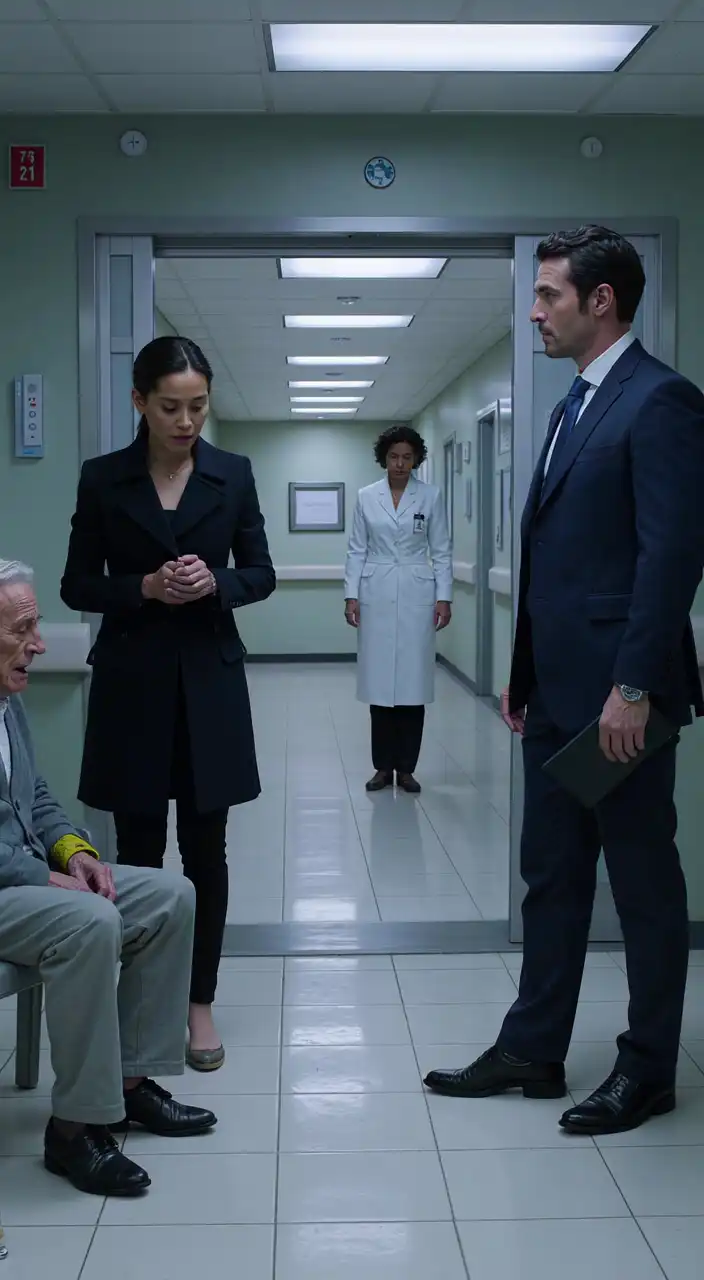
MY FATHER STARTED SHAKING OUTSIDE TRIAGE WHILE A CLINIC ADMINISTRATOR BLOCKED THE DOOR AND SAID HE NEEDED FAMILY PERMISSION FIRST.
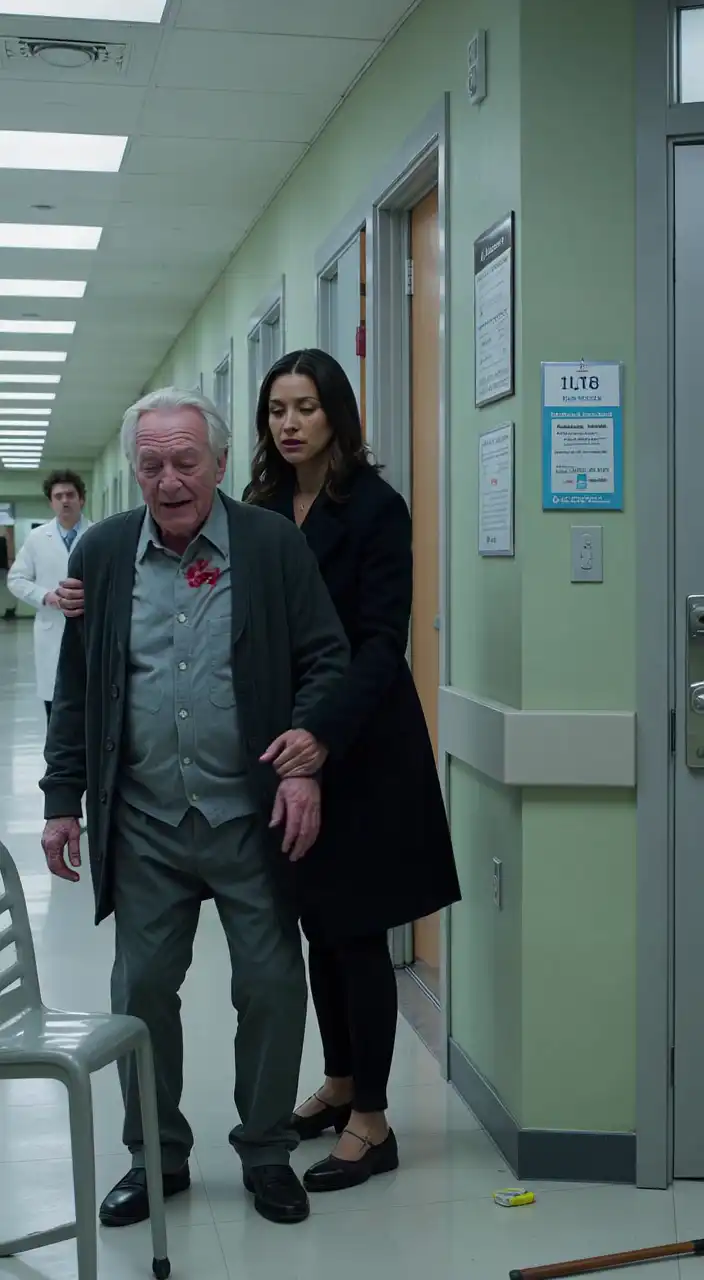
MY FATHER STARTED SHIVERING SO HARD HIS SURGICAL BANDAGE BLED THROUGH, AND THE CLINIC ADMINISTRATOR STILL BLOCKED THE TRIAGE DOOR.
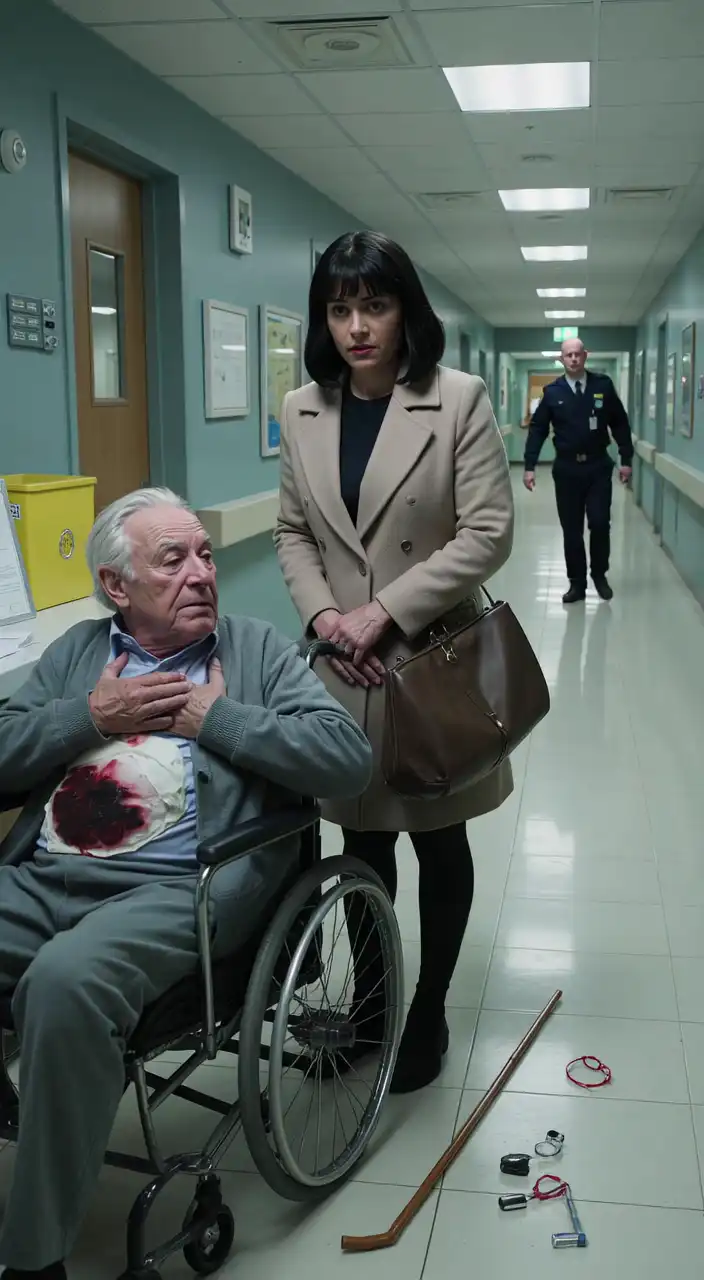
MY FATHER STARTED SHAKING IN THE HOSPITAL HALLWAY, AND THE WOMAN WHO CLAIMED TO BE HELPING HIM WOULD NOT LET TRIAGE TOUCH HIM.