
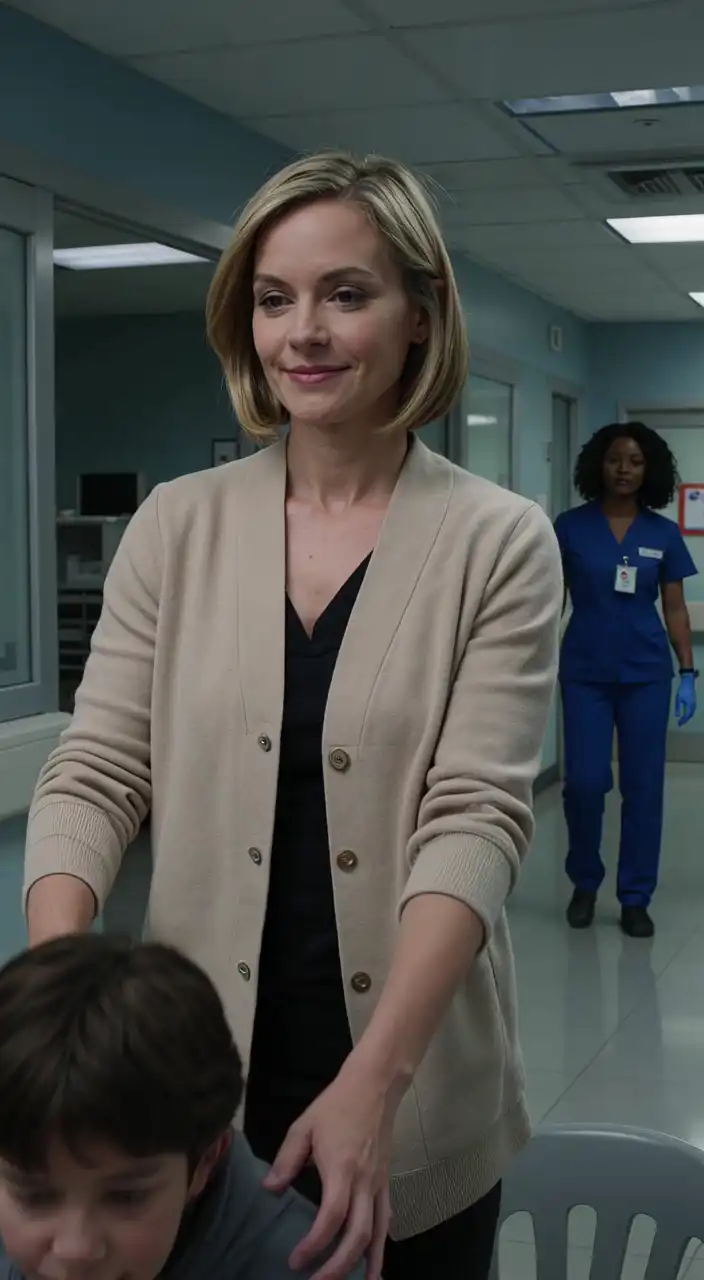
Charlotte's smile broke for the first time.
It was tiny, just the corners pulling down before she caught them, but Dr. Mia saw it. So did the nurse at the desk, whose hand froze over the keyboard. Alexander was still on the floor, one knee folded under him, his head drooping as if his neck could no longer hold it up. His whisper had been so soft I almost thought I'd imagined it.
"Not cough," he said again, lips barely moving. "The yellow one."
Mia did not look at Charlotte when she answered. She looked at Alexander. "Okay. You're doing good. Stay with me."
Charlotte moved to scoop him up. "He's confused. He gets dramatic when he's tired."
Mia stood in one smooth motion and blocked her with her own body. It was not a dramatic move. It was practiced, clean, final. "Ma'am, step back."
"He is my child."
"Then help him by stepping back."
The triage doors slid open behind Mia with that indifferent hospital hiss, and a nurse in navy scrubs came through pushing an empty wheelchair. The timing felt almost unreal, like the building itself had decided to stop pretending this was normal. Charlotte glanced once toward the exit, once toward the chair, then down at Alexander. She was calculating. Not panicking yet. Calculating.
"He spilled medicine on himself in the car," she said. "Children do that. He had a cold. I brought him because he overreacted and now everybody's acting like I poisoned him."
Mia pointed to the chair. "Get him in."
Charlotte planted her spotless handbag against her hip and didn't move. "I said we're leaving."
The nurse at the desk had finally found her voice. "Security is on the way."
That changed the air. You could feel it. Charlotte's calm didn't vanish, but it tightened into something colder. "For what? For a mother trying to take her son home after waiting two hours?"
"It hasn't been two hours," the desk nurse said before she could stop herself.
Charlotte cut her a look so flat and hard that the woman fell silent. Alexander swayed where he sat. Then he gave one dry heave onto the tile. Not much came up, just stringy saliva and a watery yellow streak that matched the stain on his sleeve too closely for anyone to miss. Mia's head snapped down.
"Don't touch that," she told the nurse. "Get a specimen cup, and page peds toxicology."
Charlotte took one fast step backward.
That was her first mistake.
The second was reaching for her bag.
Mia saw it. "Hands where I can see them."
"I need his insurance card."
"Hands up."
Charlotte froze. Then, slowly, she lifted both palms. The handbag dangled from her wrist. Security rounded the corner at that exact moment, two officers in gray uniforms moving quickly but not running, because hospital security knew panic spreads faster than speed helps. Mia didn't waste time explaining everything. She gave them the clean version.
"Minor patient with altered mental status. Caregiver attempting to remove before evaluation. Possible concealed medication. I need them separated."
The taller guard nodded and positioned himself half a step in front of the exit. The other angled toward Charlotte. "Ma'am, we're going to ask you to remain here while the doctor evaluates him."
"You cannot keep me from my son."
Mia's tone changed, deeper and harder. "I can when I believe leaving puts him in danger."
Charlotte looked around the hallway as if searching for the one person willing to agree with her. Nobody did. The fluorescent lights buzzed overhead. Somewhere behind the doors, a monitor alarm started chirping. Up close, Alexander looked younger than I first thought, maybe six or seven, swallowed inside that oversized hoodie. The bracelet on his wrist was one of those cheap braided ones kids wear until the strings fray. As Mia knelt again, the bracelet caught in her glove.
He flinched so hard it hurt to watch.
"Hey," Mia said gently. "Nobody's mad at you."
That made his eyes fill. Not because he believed her right away. Because he looked like no one had said that to him in a long time.
The wheelchair nurse crouched on his other side. "Can you tell me your full name, baby?"
"Alexander Jones."
"Good job. Do you know what day it is?"
He stared at the floor.
Charlotte answered, "He knows. He's just shy."
Mia didn't even glance up. "I asked him."
Alexander swallowed. "Wednesday?" It was Friday.
Mia nodded as if that, too, was useful. It probably was. "Okay. Do you know what you drank today?"
His eyes slid instantly toward Charlotte.
That was another answer.
Mia softened her voice even more. "Look at me, not her."
He tried. He failed. Then he whispered, "Juice."
"What color was the bottle cap?"
He blinked. Confusion crossed his face, then fear. He understood what she was asking. "White."
Mia looked toward the baseboard where the cap sat half-hidden under the chair leg. White, not yellow. Her eyes sharpened. "Did she tell you it was juice?"
Charlotte exploded then, not loud at first but viciously controlled. "This is insane. You are interrogating a sick child while he's half asleep and calling me a criminal because of cough syrup on a sleeve."
The second security officer had moved closer to the bag. "Ma'am, please set that down."
"No."
Mia rose. "Fine. Then he goes in now, and the bag stays outside with security until we sort out what he was exposed to."
Charlotte's face changed again. Not outrage. Fear.
That was the first true proof that the bag mattered.
She clutched it tighter. "It has my personal things."
"If there is medication in it, that is now part of his emergency evaluation."
Alexander's head rolled toward Mia's knee. She touched two fingers to his pulse and looked at the nurse. "He's getting more somnolent. Move."
This time the nurse did not wait for consent. She and the guard together lifted Alexander carefully into the wheelchair while Mia kept one hand under his chin to steady his head. He was frighteningly light. Charlotte lunged once, maybe to grab him, maybe to grab the bag from the guard who had finally hooked it free of her wrist. Either way, the taller officer intercepted her.
"Do not make this worse," he said.
"I want my son."
"Then stop fighting care."
The triage doors opened and swallowed Alexander, the wheelchair, and Mia. For a split second his dangling hand brushed the side of the chair, and that frayed bracelet scraped the metal rail with the same faint sound I'd heard on the tile. It lodged in my chest.
I should have left then. I was nobody. Just another person in the hallway, waiting with my own paperwork. But the desk nurse looked at me and asked, "Did you hear what he said about the yellow one?"
"Yes," I said.
She nodded once. "Stay close in case the doctor needs a witness."
So I stayed.
Charlotte started crying three minutes later.
Not real crying, not at first. Dry, furious breathing, then sharp little sobs she could turn on and off. She told security Alexander had sensory issues, that his grandmother hated her, that a school counselor once exaggerated bruises from roughhousing, that she had another child at home and couldn't be detained over "one dramatic ER misunderstanding." It was a good performance because every piece of it was almost believable.
Almost.
Then one of the guards placed her handbag on the counter and said, "Doctor requested any medications be identified."
The zipper was half open. Inside, right on top, was a folded kids' coloring sheet, a bottle of hand lotion, and an amber prescription bottle with the pharmacy label peeled halfway off.
Charlotte's face went completely blank.
The nurse didn't touch it barehanded. She pulled on gloves, tipped the bag, and let the bottle slide onto a clean blue pad. A little yellow residue dusted the plastic. Not syrup. Powder from a crushed tablet or capsule. The white cap was missing.
"Ma'am," the guard said quietly, "whose medication is this?"
Charlotte answered too slowly. "Mine."
The nurse bent closer to the bottle. "Name's torn."
A voice from behind us said, "Read the manufacturer code under the residue."
Mia had come back out, and she did not look relieved.
She looked angry.
She picked up the bottle with gloved fingers, turned it under the fluorescent light, and read the imprint through the remaining dust. Then she looked directly at Charlotte and asked a question that made the hallway go silent again.
"Why is a sedative in a child's drink cup residue?"
Charlotte opened her mouth.
But before she could answer, Mia's pager went off, and the nurse inside the doors shouted, "Doctor, his blood sugar just crashed."
Mia spun and ran back in.
Charlotte didn't cry after that. She watched the doors close and whispered, to nobody and everybody, "He wasn't supposed to react like this."
The words were soft.
The security camera over triage still caught them.
The hallway snapped into motion after that. One guard moved Charlotte farther from the triage entrance while the desk nurse picked up the phone with trembling fingers and asked for hospital administration, pediatric social work, and law enforcement all at once. I heard the words "possible intentional dosing" and "minor patient" and "doctor requesting immediate hold on discharge." Charlotte started to protest, but the sound coming from behind the triage doors swallowed her.
It wasn't screaming. It was faster and worse than that: the clipped, controlled urgency of a team that suddenly needed everything.
"Repeat the glucose."
"IV access now."
"Get him on the monitor."
"Where's the crash cart drawer key?"
Every sentence was proof this was no longer a misunderstanding about a tired child in a hallway.
Charlotte squared her shoulders and switched tactics. The tears vanished. "I want a lawyer."
"You're free to request one," the taller guard said. "You're not free to leave right now."
"You are hospital security. You don't get to arrest me."
"No," he said. "But we can detain you when a physician reports an immediate threat to a child on hospital property."
That landed. She stopped speaking for a second, maybe weighing whether to bolt anyway. Her gaze drifted to the exit sign. Then to me.
I hated that. The sudden direct eye contact, as if she were sorting the hallway into obstacles and weak links. "You don't know what you heard," she said.
It wasn't a question.
I answered because the nurse behind the desk looked like she needed somebody else to stay steady. "I heard enough."
Charlotte let out a short laugh with no humor in it. "People hear what they want when they see a Black woman with a poor-looking kid and a doctor decides she's a hero."
The desk nurse stiffened. It was not a foolish argument. It was a strategic one, and for one dangerous second it shifted the air. Because institutions fail families all the time. Because bias exists. Because she knew how to use a true thing to shield a lie.
The guard didn't engage. "Law enforcement is on the way."
Charlotte turned to me again. "Did you see me force anything into his mouth?"
"No."
"Did you see me poison him?"
"No."
She spread her hands. "Exactly."
The nurse cut in quietly. "We saw you stop him from being evaluated."
Charlotte rounded on her. "Because you people don't listen. Every kid who throws up is not abused."
The triage doors burst open. Mia came out at speed, hairline damp now, gloves changed, eyes harder than before. "Where is the cup he came in with?"
The desk nurse blinked. "The cup?"
"The one she said had juice."
Charlotte answered first. "He threw it away in the car."
Mia didn't even look at her. "Did anyone see a cup?"
I did then. Not because I'd been paying special attention before, but because stress has a way of preserving odd details. In the row of plastic chairs, under the one nearest where Alexander had been slumped, there was a crumpled kids' drink cup with cartoon astronauts on it. The foil seal had been punched through and bent back. I pointed.
"There."
Mia crossed the hall in three strides and stopped before touching it. A yellow ring stained the rim. "Bag it," she told the nurse. "And call environmental, but nobody dumps that trash can."
Charlotte closed her eyes for one second. Just one. If you weren't watching for weakness, you'd miss it.
Mia turned back to security. "Police need to know the child reports a yellow medication, we have sedative residue, and he arrived hypoglycemic with depressed responsiveness. Also note caregiver statement just now."
Charlotte snapped, "I didn't say anything."
The tall guard answered, "Camera audio may disagree."
That was the first time fear moved across Charlotte's face without disguise.
Mia's pager vibrated again. She checked it, exhaled once, and looked at the nurse. "Blood sugar's coming up. He's more responsive. But tox wants timing, quantity, and prior symptoms. We need history."
Charlotte folded her arms. "Then ask his father."
"Gladly," Mia said. "What's his number?"
Charlotte hesitated.
Too long.
The desk nurse had already started entering demographics from the intake screen. "Emergency contact listed is grandmother. No father on file."
Mia's head lifted. "Grandmother."
Charlotte recovered fast. "Because she helps with school pickup."
Mia held out her hand to the nurse. "Print the registration page."
The paper came out warm and curling from the machine. Mia scanned it. "You checked 'no medications at home.' Yet your bag contains a peeled prescription bottle and your child has residue on his clothing and cup. You checked 'no previous episodes.' Yet he flinches at contact, can't tell the day, and knew enough to whisper it wasn't cough medicine. Is there anything on this form that's true?"
"I was rushed."
"Answer the question."
For a second I thought Charlotte might finally say something real. Her mouth trembled once. Then she set her jaw. "His grandmother has been trying to take him from me since he was a baby. She fills his head with lies. If he said something against me, that's where it came from."
A social worker arrived then, a woman in a burgundy blazer carrying a legal pad and the calm face of someone who has walked into too many disasters. She introduced herself as Denise and took in the scene with one sweep: security, doctor, crying-not-crying caregiver, witness at the wall, bagged bottle, bagged cup.
"Child's status?" Denise asked.
"Stabilizing, not cleared," Mia said. "Suspected nonaccidental ingestion or inappropriate medication administration. Caregiver obstructed evaluation."
Denise nodded and turned to Charlotte. "I'm going to need to speak with you."
Charlotte lifted her chin. "Without a lawyer, I don't answer social workers."
Denise didn't blink. "That's your choice. It does not stop the medical team from treating him or us from notifying child protective services."
The phrase hit like a struck match. Charlotte inhaled sharply. "You can't take him based on a spill."
Mia's voice stayed level. "This stopped being about a spill when his glucose dropped and your medication didn't match your story."
Denise's phone buzzed. She glanced down, then at Mia. "Officer is two minutes out. Also..." Her voice lowered. "Grandmother is on the phone with registration. She says she got a missed call from this number because the child used to memorize emergency numbers when he was scared."
Mia stared at her. "What missed call?"
The desk nurse turned pale. "I didn't call."
Neither did I.
The guard looked toward the handbag on the counter. "Check the phone."
Charlotte moved so suddenly both guards had to block her. "Do not touch my things."
Mia was already opening the side pocket of the bag with gloved hands. Inside was a cheap smartphone with a cracked corner and a dead-looking black screen. She pressed the side button. It lit up at once.
On the lock screen was an active emergency call attempt, not connected now but logged twelve minutes earlier, one missed tap from completing to 911.
The name on the wallpaper made Mia go still.
It wasn't Charlotte and Alexander.
It was Alexander with an older woman in church clothes, both smiling straight at the camera, his same frayed bracelet bright on his wrist.
Under the photo, the notification banner showed one more thing:
Voicemail from Nana Ruth: "Baby, if you get scared, press call and don't hang up."
Mia looked at Charlotte.
This time when she spoke, the anger was gone. What replaced it was colder.
"He tried to call for help before he collapsed, didn't he?"
Charlotte didn't answer.
But from inside triage, Alexander's small, hoarse voice suddenly carried through the partially opened doors.
"Nana."
Everything in the hallway changed direction at once. Denise moved toward registration to get the grandmother transferred and verified. Mia turned to the phone and opened the recent calls with the guards as witnesses. There were six attempts to one saved contact labeled Nana Ruth over the last three days, all under a minute, all ending before connection or cut off within seconds. One completed call sat in the middle of the list from late the previous night, forty-seven seconds long.
"Can we pull audio?" Denise asked.
"From his phone, maybe voicemail if it hit," Mia said. "From hallway camera if she spoke near it, yes."
Charlotte found her voice again. "He misses his grandmother. That proves nothing."
Maybe it should have. Maybe in another case it would have. But then Mia flipped the phone over and a smear of yellow dust streaked her glove.
Not from the bottle.
From the seam of the phone case itself.
Charlotte had hidden crushed medication there too, maybe to dose without carrying a full bottle in plain view. A plant detail nobody would have noticed if the emergency call had not forced the phone into evidence.
Mia held the phone up so Denise and the guard could see the residue. "Chain of custody now."
Charlotte's shoulders dropped a fraction. Not surrender. Recognition.
The police officer arrived while the grandmother was still crying through speakerphone from registration, begging them not to let "that woman" leave with Alexander. And right before the officer could begin, Denise covered the phone and told Mia, "Grandmother says the school called her twice this month because he kept falling asleep in class and once because he told the nurse juice made his legs feel far away."
Mia shut her eyes for one beat. Then she opened them and said, "We're not looking at one bad dose."
Charlotte whispered, "You don't know what it's like."
No one answered her, because from the triage bay came a new call for the doctor, and Mia ran back through the doors with the phone and the evidence bag while the officer finally stepped in front of Charlotte and began asking questions she could no longer dodge.
The first answer she gave was still a lie.
But the second was stranger, and far more dangerous.
Officer Ramirez was younger than I expected, maybe early thirties, compact, alert, with a voice that stayed calm even when other people wanted to throw gasoline on every sentence. He listened to Mia's rapid summary, accepted the evidence bags from security, and then asked Charlotte for her ID.
She handed over a license with a hand that trembled just once.
"Ms. Charlotte Greene," he said. "Relationship to Alexander Jones?"
"My son."
"Biological mother?"
"Yes."
Denise watched her. The desk nurse watched her. I watched her. There was a tiny pause before the answer, not enough to accuse someone over by itself, but enough to file away.
Ramirez wrote something in his notebook. "Who prescribed the medication in that bottle?"
"My primary care doctor."
"Name?"
"I don't remember."
He looked up. "You don't remember the doctor who prescribed a controlled sedative?"
"It's old."
"Then why is there fresh powder residue in the bottle and on the child's cup and phone case?"
Charlotte pressed her lips together. "Because I crushed one for myself and it spilled."
"On his drink?"
"I said it spilled."
"How did his glucose crash?"
"I don't know. He barely ate today."
Mia's voice came from the triage doorway behind us. "He's awake enough to follow simple commands now. Pupils still sluggish. Tox wants exact timing of ingestion. We may have to transfer if his neuro exam worsens."
Charlotte twisted toward her. "Can I see him?"
"Not right now."
"You can't keep me away from my child."
Mia met her stare. "Watch me."
That was when Charlotte changed from defensive to strategic again. "Ask him about his grandmother. Ask why he says Nana for everything. Ask who tells him bedtime stories about bad mommies."
Ramirez did not rise to it. "We'll gather family history. For now, answer my questions."
Denise stepped aside to take another call, then came back with a look that shifted the ground again. "School nurse faxed records. There were four visits in six weeks for unusual sleepiness, shaking, and one vomiting episode. Caregiver explanation each time was skipped breakfast, growth spurt, seasonal allergies, then motion sickness."
Mia held out her hand and Denise gave her the fax. Even from where I stood I could see yellow highlighter across one line. Student reports drink tasted bitter. Mia tapped that line with one gloved finger.
"That's our contradiction," she said to Ramirez. "Repeated symptoms. Repeated minimization."
Charlotte's jaw tightened. "Kids say stupid things."
Denise answered softly, "Kids also tell the truth when nobody teaches them the adult version first."
Ramirez turned another page. "Who is Nana Ruth?"
"My husband's mother."
"Your husband is Alexander's father?"
There it was again, that tiny hitch. "He raised him."
Not yes.
Mia and Denise exchanged a quick look. Ramirez caught it too. "Where is your husband now?"
"Working."
"Name and number."
Charlotte gave both. Ramirez stepped away to run them. While he did, Denise got permission from administration to remain with the witness pool and asked if I was willing to give a statement. I said yes. So did the desk nurse, whose name turned out to be Elena. She looked sick with anger, less at the possibility of abuse than at how close Charlotte had come to walking Alexander back out the door.
"I almost let her," Elena whispered when Denise wasn't listening. "I thought she was just one more impatient parent."
"You didn't," I said.
"Because Dr. Mia looked up."
There was gratitude and guilt in equal amounts in her face. Hospitals are full of almosts. Almost discharged. Almost overlooked. Almost too late. You could feel all those ghosts in the hallway with us.
The grandmother arrived twenty-two minutes later, and every person there knew who she was before she reached the desk.
She was a short Black woman in a church dress and orthopedic shoes, hair wrapped in a scarf that had come loose on one side from rushing. She looked like she'd left somewhere important mid-sentence and never looked back. Her purse was unzipped. Her hands shook. But her eyes when they found Charlotte were steady and blistering.
"Where is he?"
Denise intercepted first. "Ms. Ruth Jones? I'm Denise from pediatric social work. The doctors are treating Alexander now. We need to verify some information before we discuss contact."
Ruth's gaze never left Charlotte. "Is he alive?"
Mia had just stepped back out after speaking with tox and answered directly. "Yes. He is stable at this moment."
Ruth closed her eyes and said, "Thank you, Jesus," with such raw force that Elena had to look away.
Charlotte folded her arms. "You shouldn't be here."
Ruth turned then. "I should've come sooner."
It was not said to Charlotte alone. It was said to the whole terrible timeline that had led here.
Denise guided Ruth to a chair and started asking questions. How often did she see Alexander? Had there been prior concerns? Was there any legal custody arrangement? Every answer seemed to peel away another layer of the story Charlotte had built.
"Three months ago he spent a weekend with me and slept almost fourteen hours after breakfast," Ruth said. "Charlotte said he'd had a virus. But he woke up scared and asked if I had the yellow medicine too."
Mia leaned forward. "You remember the exact phrase?"
Ruth nodded. "Yellow medicine."
That planted phrase came back like a blade finding the same cut.
"Did he describe it?" Mia asked.
"He said it made his legs float and his mouth forget how to ask for water."
No one in that hallway spoke for a second.
Charlotte finally broke it. "Children talk nonsense."
Ruth stood up so fast the chair legs scraped. "That baby has been asking for help in baby language and grown people kept translating it into excuses."
Security shifted, ready in case the confrontation turned physical, but Ruth didn't move toward Charlotte. She didn't need to. Her voice was enough.
"I told my son she was drugging him to keep him quiet."
Charlotte barked a laugh. "Your son is dead. He can't back your lies."
Another silence. Denser this time. Ruth's mouth trembled once.
Then the first major reversal landed.
Mia looked up sharply. "Dead?"
Ruth stared at Charlotte, not the doctor. "Terrence is not dead."
Charlotte's face emptied.
Ruth turned to us all, and her next words rearranged the entire case. "He left Charlotte two years ago after he found out she was using his name to keep the boy. She tells people he's dead because it's easier than admitting he took a paternity test and learned Alexander isn't biologically his."
Even Ramirez, returning from his call, stopped in mid-step.
Charlotte's voice came out thin. "Shut up."
Ruth didn't. "Terrence still sends money because he loves Alexander. He wanted to file for visitation. Charlotte told the school he was deceased. Told the landlord. Told church folks. Told everybody."
Ramirez looked from one woman to the other. "So legal parentage is disputed?"
Ruth gave a bitter little laugh. "Everything with her is disputed."
Denise moved quickly now, because this changed protective pathways. "Do you have any documentation? Messages, support transfers, anything showing ongoing contact from Terrence?"
Ruth already had her phone out. "I brought screenshots, because nobody believes old women until paper shows up."
She wasn't wrong. She opened a chain of texts. Terrence's name at the top. Photos of wire transfers. A message from last week: She said Alex is sick again and too tired to talk. I'm driving up next month whether she likes it or not.
Mia's eyes narrowed at sick again.
Ramirez took photos of the screen with evidence protocol. "I just called the number Ms. Greene gave as her husband. It belongs to a warehouse supervisor named Darnell Cole, who says he has never met Alexander."
Charlotte looked at the floor.
Another lie gone.
Mia asked Ruth the question that mattered medically. "Has Alexander ever been diagnosed with anything? Seizures, diabetes, developmental issues?"
"No. Healthy little boy. Too healthy, if you ask me. That's why this..." She stopped and swallowed hard. "He got sleepy after visits back home. More and more this year."
Denise looked at Mia. "Patterned dosing?"
"Possible," Mia said. "Tox screens will tell us some. Repeated low-dose sedation can hide in plain sight if no one connects the episodes."
Ruth covered her mouth. "Dear God."
Charlotte burst out, "You all act like I beat him. I was trying to make him rest."
The sentence hung there.
Nobody moved.
Ramirez stepped closer. "Explain that."
Charlotte looked startled, as if she hadn't meant to say it out loud. "He doesn't stop. He talks and paces and asks and cries and he won't sleep and I work nights and then school calls me like I'm some monster because he's tired in class."
Mia's face hardened. "So you medicated him to keep him manageable."
"I gave him something to calm down."
"Whose prescription?"
Silence.
"How much?"
Silence again.
Ramirez said, "Ms. Greene, this is the time to start helping yourself by telling the truth."
Charlotte laughed once, shaky now. "Helping myself? Nobody helps me. Nobody comes at 2 a.m. when he's still awake. Nobody pays the bills except me. Nobody sees how hard he is."
Ruth whispered, "He is six."
That cracked something.
Charlotte's shoulders slumped, then jerked back up. "You wanted him because Terrence loved him. That's all. You all love him because he looks sad. Try living with him."
Mia took one step forward. "A child being exhausting is not a medical justification for sedating him with someone else's controlled medication."
Ramirez asked, "Was it your medication or not?"
Finally Charlotte said, "My sister's."
"Name."
She gave it. Ramirez wrote it down.
"Did your sister know you were using it on the child?"
Charlotte didn't answer. Which was answer enough.
Denise's phone buzzed again. She listened, then looked at Mia. "Lab says preliminary toxicology is consistent with sedative exposure. More specifics pending."
Ruth made a sound I never want to hear again, part sob, part rage, part guilt.
Mia crouched in front of her. "Listen to me. He's awake. He asked for you. We are treating the immediate danger."
"Can I see him?"
"Soon. But we need to keep his environment controlled right now."
Ruth nodded, crying openly now. "He kept calling me from odd numbers. Little silent calls. I thought she was taking the phone when she caught him. I didn't know..." She pressed her fist to her mouth. "I didn't know he was trying to call from inside the house when she dosed him."
The phone. The missed emergency tap. The Nana Ruth voicemail. Detail after detail, paying off into a pattern no one could call accidental now.
Ramirez finished his notes. "Ms. Greene, based on the medical findings and the statements gathered so far, I am detaining you pending further investigation into child endangerment and possible poisoning."
Charlotte jerked upright. "Poisoning? I gave him a sleep pill, not rat poison."
The word sleep pill was another confession.
Ramirez signaled the guard. "Turn around."
She didn't at first. She stared straight at the triage doors as if willing them to open and produce a different reality. Then she said something so quiet I barely heard it.
"He wasn't supposed to wake up before school."
Ruth gasped.
Ramirez's whole posture changed. "Repeat that."
Charlotte clamped her mouth shut.
"Did you intend for him to be unconscious overnight?" Ramirez asked.
She said nothing.
Mia was already backing toward triage again, hearing what the sentence meant before the rest of us fully did. If the dose was meant to last through the night and into morning, then tonight might not have been an escalation. It might have been a routine that suddenly went wrong.
A chill moved through everyone at once.
Denise said, "Doctor?"
Mia answered without stopping. "I need a full skin check, nutrition assessment, old injury screen, and mandatory report expanded. If this has been ongoing, there may be more than sedation."
Ruth stood. "I'm coming."
"Not yet," Mia said, then softened. "Soon. I promise."
The triage doors closed behind her.
Ramirez secured Charlotte's wrists. She didn't fight then. She looked almost relieved, and that frightened me more than the anger had. As he read her rights, Elena quietly picked up the frayed bracelet bead that had fallen near the wheelchair track. She held it in her palm like a relic.
Twenty minutes later, a second reversal arrived.
Not from Charlotte.
From Alexander.
The child advocate assigned to sit with him came out and asked Denise, "Who is Marcus?"
Ruth blinked. "Marcus who?"
The advocate checked her notes. "He keeps saying, 'Don't tell Marcus I spilled it.' Over and over."
Ruth's face went blank. "Marcus is Charlotte's nephew. Seventeen. He stays with her sometimes."
Ramirez looked up sharply. "Does he help care for the child?"
Ruth nodded slowly. "Too much, if you ask me."
Now the case was widening again, not away from Charlotte's guilt but around it. Another person in the home. Another witness. Maybe another participant. Maybe the one who bought time, cleaned cups, or coached stories. Denise was already dialing for a welfare check on the address.
And inside triage, the little boy who had been called dramatic in the hallway had just given them the name of the next danger.
By the time CPS supervisor Laura Kim arrived in person, the hallway had transformed from ordinary hospital waiting space into a live command center held together by clipboards, evidence bags, and sheer moral adrenaline.
Laura was not physically imposing. Petite, neat bun, sensible flats, dark blazer over a floral blouse. But she carried the kind of authority that changes how everyone else stands. She took the briefing in under four minutes, asked for timelines, clarified who had seen what firsthand, and then did the one thing nobody else had yet done.
She asked, "Who has legal standing to consent if the caregiver is removed and the mother-child relationship is under investigation?"
The question cut through all the outrage and brought us back to the practical edge where rescue either advances or stalls. Alexander needed ongoing care tonight, and maybe admission. Someone would have to authorize things. Someone safe.
Ruth straightened. "I will."
Laura didn't promise. "We need to determine if you're a legally recognized kinship option or emergency contact only."
Ruth bristled. "I have his school pickups, his dentist rides, half his clothes at my house."
"Do you have documentation?"
Ruth's silence hurt. Love and paperwork are not the same thing, and systems punish that gap.
Denise interjected. "Grandmother is listed on intake as emergency contact. We also have probable involvement from Terrence Jones, nonbiological but financially supportive, pending confirmation."
Laura nodded. "Get me anything with signatures, school records, prior addresses, texts acknowledging caregiving. Tonight I can seek an emergency protective hold, but placement still needs a safe release path."
Ruth dug through her purse with frantic hands. Out came crumpled receipts, tissues, a church program, and finally a laminated school pickup card on a split key ring. Alexander Jones. Authorized pickup: Ruth Jones. It wasn't custody. But it was something.
Laura took a photo. "Good. Keep going."
Meanwhile, Ramirez had officers dispatched to Charlotte's apartment for the welfare check tied to Marcus. He stepped aside to take updates, then came back grim. "Neighbor reports hearing vomiting and crying from the unit more than once at night. No prior calls made. Nephew not at the residence currently."
Mia emerged again, this time with a chart and a look that told us medicine was no longer the only crisis in that room. "His vitals are more stable. He can answer simple questions in short bursts. Tox screen supports sedative exposure, likely not a cough formulation. We also found healing irritation at the corners of his mouth and patchy bruising on one upper arm."
Ruth closed her eyes.
Mia continued, careful and clinical because that's how doctors survive fury. "None of that alone proves intent. Together with the repeated school episodes and cup residue, it's highly concerning."
Laura asked, "Can he safely speak with me briefly for immediate protective assessment?"
"For a few minutes, with child life present. No leading questions."
Laura nodded. "And no caregiver contact."
Charlotte, seated now with her wrists cuffed in front under watch, suddenly leaned forward. "You all are making him scared of me."
Ruth turned on her. "He was already scared of you."
Charlotte's voice rose. "Because you told him to be!"
"Enough," Ramirez said.
But the deeper problem wasn't the argument. It was that Alexander was now the hinge point for both medical urgency and legal safety, and he was six years old and exhausted. Any wrong push could muddy everything. Any delay could let a bad adult regain control later.
Laura asked Elena if there were cameras covering the hallway before triage. Elena confirmed yes, with audio near the desk and silent coverage by the chairs. Mia immediately requested preservation. The white bottle cap, the yellow cup, the dust in the phone case, the missed emergency call, Charlotte's hallway statements, Alexander's whisper, school nurse records, grandmother texts, all the planted fragments were becoming one chain.
Then the chain stretched.
Ramirez got another call and his face changed. "We found Marcus."
"Where?" Laura asked.
"At the apartment complex dumpster enclosure."
Ruth gripped the edge of the chair.
"Alive," Ramirez added quickly. "Agitated. Trying to throw away kitchen trash bags after hearing officers were coming."
Mia's eyes narrowed. "Trash bags from today?"
"Looks like it. Officers recovered disposable cups, pill fragments, and..." He checked the note. "A child-sized bedsheet with yellowish stains."
Laura exhaled slowly. "So the house was being cleaned."
Charlotte spoke before anyone asked her to. "He panics. He always overreacts."
Ramirez looked at her. "You called him?"
"I told him to tidy up."
The words dropped like stones.
"While your son was in triage?" Denise said.
Charlotte said nothing.
Marcus was being brought in, not because he was injured, but because the apartment search was moving fast and officers wanted hospital staff to assess him if he had been exposed or if he was under the influence too. He was seventeen, legally still a minor in some contexts, adult-sized in others, and according to the first officers, more scared than defiant. That shifted the shape of the danger again. Was he an accomplice, a controlled kid doing what an adult told him, or both?
Laura made a quick decision. "We separate his interview from hers immediately. He may become either witness or secondary victim."
Charlotte laughed hoarsely. "Victim? He eats all my food and sleeps all day. Try rescuing me for once."
No one took that bait.
Mia looked at Laura. "Alexander asked for Nana. If protective hold is in process, I can support a supervised bedside contact for stabilization. He's afraid."
"Do it," Laura said. "With staff present and no discussion of allegations."
Ruth's whole body sagged with relief so sudden it was almost collapse. "Thank you."
Mia held up a hand. "One rule. He leads. If he wants you to just sit there, you just sit there."
"I understand."
As Ruth disappeared through the triage doors, Charlotte made a small broken sound that might have been jealousy, grief, or the first crack of conscience. It didn't matter yet. The child mattered.
I expected the hallway to quiet while we waited, but stories like this don't loosen. They cinch.
Marcus arrived ten minutes later between two officers. Tall, thin, acne along his jaw, hoodie zipped to the throat despite the heat. His eyes darted to Charlotte first, then away so hard it was as good as a confession that she still held power over him.
"Auntie," he said.
Laura stepped in front of that line of sight. "My name is Laura Kim with child protective services. Before anyone else talks to you, I need to know if you need medical care, if you ingested anything, and if you understand where you are."
"I'm fine."
Mia, who had been about to head back to Alexander, stopped anyway. "Fine kids aren't found dumping pill trash behind an apartment building."
Marcus looked at the floor.
Ramirez asked, "Did Charlotte tell you to throw those bags away?"
Long pause. Then a nod.
"Did you know what was in them?"
Another pause. "Cups."
"What kind of cups?"
"The little foil ones. The juice ones."
The same astronaut cup pattern, then.
Mia took over because the medical clue was still driving the rescue. "Did you ever see her put medication in them?"
Marcus's throat worked. "Sometimes."
"How often is sometimes?"
He whispered, "When Alex wouldn't sleep. Or when she had doubles. Or if school was calling too much."
Charlotte shouted, "Don't you start lying too."
Marcus flinched like he'd been hit. Laura noticed. So did Ramirez.
"Separate her farther back," Laura said.
Security obeyed. The increase in physical distance let Marcus breathe half an inch deeper.
"Did she tell you what it was?" Mia asked.
"'Calm medicine.' Sometimes from a crushed pill. Sometimes from a bottle. She said if he slept, he wouldn't get into trouble and neither would I."
Ruth was not there to hear that, which might have been mercy.
Laura kept her voice neutral. "Did you ever give it to Alexander yourself?"
Marcus covered his face. "Once. Maybe twice. I thought it was like melatonin."
The sentence broke on the last word.
This was the emotional reversal the case needed and feared: another child tangled in the abuse, not innocent of all action but not the architect either. His independent position made the story truer and uglier. Charlotte hadn't just silenced Alexander. She had recruited the nearest vulnerable person to help maintain the silence.
Mia asked, "What happened today?"
Marcus lowered his hands. "He spit some out. That's why his sleeve got yellow. She got mad and made another cup. But he wouldn't drink all of it. Then he started shaking in the car and she said we were going to the hospital but only to get a paper saying he had a virus." He swallowed hard. "When we got there, she told me to stay home and clean up if she texted the word laundry."
Ramirez checked the phone extraction note. "She texted you Laundry. 5:47 p.m."
Marcus nodded, crying now without trying to hide it. "I thought if I cleaned it, she'd stop yelling. I didn't know he was dying."
Mia's jaw flexed. "He's alive."
Marcus nodded repeatedly, as if he needed that sentence delivered over and over to keep from collapsing.
Then the final obstacle rose where no one wanted it: Laura came back from triage with a different kind of urgency.
"Alexander wants Ruth, but he gets frightened every time anyone says home. He also says there is a baby."
The hallway went still.
Marcus looked up in pure confusion. "What baby?"
Laura's eyes moved to Charlotte.
For the first time all night, Charlotte looked genuinely cornered.
"There is no baby," she said too fast.
Marcus stared at her. "You watch Ms. Tiana's baby some mornings."
Charlotte snapped, "Shut up."
Laura didn't. "Alexander says the baby gets the sleepy juice when she cries."
Mia's entire posture changed. "Whose baby?"
Marcus shook his head frantically. "No, no, Auntie just babysits, she doesn't-"
"Answer," Ramirez said.
Charlotte stood so violently her chair screeched. "He doesn't know what he's saying!"
"Sit down," the officer ordered.
Instead she lunged toward the counter where the evidence sat, not to grab the bottle this time but the phone. Maybe to erase messages. Maybe to call someone. Maybe to warn the mother of that baby. Security caught her halfway.
Mia was already moving. "Get me that address now."
Marcus started sobbing. "It's in the building next door. Apartment 3B. Ms. Tiana works nights. Auntie watches the baby at six."
Ramirez was on his radio before the last word landed.
Now the rescue widened beyond Alexander. If the little boy's half-drugged fear had named another child correctly, there might be an infant at immediate risk a hundred yards away while everyone here was still treating this as one-family abuse. The case cracked open into a possible pattern of convenience sedation for any child Charlotte controlled.
Laura gripped the back of the chair so hard her knuckles blanched. "This is why he couldn't just go home."
Mia didn't answer. She was already sprinting to speak with administration about sending paramedics and notifying pediatrics for possible second intake.
And inside triage, Ruth was holding Alexander's hand while he fought sleep hard enough to keep whispering one thing over and over, the one phrase no one in authority could afford to ignore now:
"Not the yellow one. Not the baby."
The next thirty minutes tore in two directions at once.
One team stayed with Alexander because his body was still paying for every lie told around him. Another moved on the apartment next door because a six-year-old under sedation had named an infant danger with the desperate clarity children only use when no one has listened the first ten times.
Paramedics were dispatched to 3B. Ramirez sent officers with them and kept one ear on the radio while Laura coordinated emergency hold paperwork at a speed that looked almost inhuman. Denise was pulling every childcare-related detail she could out of Marcus, who was shaking so hard she had to get him water he barely touched.
"What baby?" she asked again, not because she hadn't heard but because details save lives.
"A little girl," Marcus whispered. "Maybe eight months. Tiana drops her off before sunrise sometimes. Auntie says she cries for no reason."
"How often?"
"I don't know. A lot when rent's due. Tiana pays cash."
Mia came back from Alexander's bay long enough to add the medical urgency. "If there has been any sedative exposure in an infant, they need to know what formulation and timeline. Did you see Charlotte give anything to the baby?"
Marcus covered his face again. "I saw a bottle in the formula sink cup once. I thought it was gripe water."
"What color?"
His answer came out like he hated himself for it. "Yellow."
That sent everyone moving harder.
Charlotte was no longer trying to perform innocence. She was cursing now, low and constant, at Marcus, at Ruth, at the hospital, at "snitches," at "people who never had to do everything alone." But under the rage was something more telling: she kept demanding her phone. Not Alexander. Not a lawyer anymore. Her phone.
Messages mattered.
Ramirez had already placed it into evidence. "Not happening."
Laura stepped toward Charlotte and spoke in the flat, careful tone professionals use when they want every word remembered later. "If another child is hurt because you delayed information now, that will matter."
Charlotte stared back. "You think you save kids. You just move them from one hell to another."
A cruel line because sometimes it's partly true. Laura didn't flinch. "Tonight we are making sure they live long enough to face whatever comes next."
The radio on Ramirez's shoulder crackled. We all heard enough to understand before the code was finished.
"Infant located, responsive but unusually lethargic. Medics evaluating on scene. Caregiver mother states child was left with neighbor several times this month. Requesting transport."
Mia exhaled through clenched teeth. "There it is."
Ruth emerged from triage just in time to hear that and had to grab the wall. "Another baby?"
Laura guided her back to the chair. "Do not take this onto yourself. What matters now is Alexander is speaking, and because he spoke, that baby is being seen."
Ruth cried openly then, not only from relief but from the unbearable knowledge that a little boy had been carrying enough fear to protect someone even while his own body was failing.
Mia checked her watch, then looked at Denise. "I need to brief Tiana personally when she arrives. If she gave consent for childcare without knowing this, she's going to walk into hell."
"She's on the way?" Denise asked.
"Officers notified her at work. She's meeting the ambulance at the ER entrance."
Another front opening.
I kept thinking the story had reached its sharpest point, and it kept finding a sharper one.
Elena took my statement in fuller form while Denise arranged for a formal recorded version later. I described the yellow sleeve stain, the cap kicked under the chair, Charlotte speaking over Alexander, the exact moment Mia lifted the sleeve, the security call, the whispered "The yellow one," and Charlotte's "He wasn't supposed to react like this." Every detail felt both tiny and massive. That's how threshold cases work. The whole truth hangs from small physical things adults thought no one would bother noticing.
Mia returned to Alexander briefly, then came back out with an update for Laura and Ruth. "He asked if he was in trouble for telling."
Ruth folded in on herself.
"What did you say?" Laura asked.
"I said no one gets in trouble for helping doctors keep babies safe."
Ruth whispered, "Thank you."
Mia looked tired then, finally, but she didn't soften. "He also asked whether Charlotte would be mad if he got hungry. So this isn't only sedation. Food control may be part of it."
Laura wrote that down immediately. "That affects placement recommendations and trauma intake."
Marcus heard it and started crying harder. "She said if he ate after medicine he'd throw up and make everything harder."
Mia turned to him. "Did he often skip breakfast before school?"
Marcus nodded. "She said the medicine worked better if his stomach was empty."
The phrase made Elena swear under her breath.
The medical clue mattered causally now in full view. Sedation on an empty stomach. Crashes mistaken for behavior. Bitter drinks. Repeated school episodes. A system of control disguised as care.
Ramirez got another update. "Apartment search found multiple emptied yogurt drinks with yellow residue, one notebook with times written next to the child's name, and messages from Charlotte to Tiana saying 'she slept so sweet after her bottle' and 'I have a trick for fussy mornings.'"
Mia looked physically sick. "Save everything."
"Already done."
Tiana arrived before the infant ambulance, and no one could have prepared her. She was maybe twenty-four, still in fast-food uniform, visor shoved into one pocket, face ruined by the drive before anyone had even told her all of it. She kept repeating, "My baby was fine this morning," like if she said it enough the sentence would become a shield.
Denise met her first and walked her into a private consult room off the ER entrance, but the walls in hospitals are not designed to protect pain. Through the half-closed door I heard the first broken "What do you mean lethargic?" and then a second later, louder, "With Charlotte? No, she's watched her before."
Mia went in after the medics wheeled the infant through. Tiny, pink blanket, oxygen sat monitor clipped to one foot, eyes half-open but not tracking normally. A second vulnerable body on a hospital threshold because a six-year-old had not fully surrendered to sleep.
This should have shifted all focus away from Alexander, but somehow it deepened his rescue instead. What he had whispered became morally undeniable. He had not only survived; he had warned.
Laura came back out of the consult room with Tiana's written childcare texts already photographed. "Mother confirms cash babysitting arrangement. No knowledge of any medications. States child had been sleeping unusually long after visits but thought it was developmental."
Another almost.
Ruth stood and touched Laura's arm. "Can I see him again?"
Laura checked with Mia, who nodded. "Briefly."
This time I asked if I should leave. Denise looked at me and said, "Not yet. Witnesses help when stories get rewritten."
She was right. Even now, with evidence piling around her, Charlotte was trying to rewrite. She told a second officer that Marcus stole pills. Told another that Ruth planted the idea of Nana calls. Told anyone who'd listen that the infant case was unrelated, that she only gave "herbal calm drops," that Alexander's biological mother had used substances while pregnant, that school staff had always hated her.
Every lie had a motive. Not random panic. A lifelong habit of moving blame toward absent people, overworked institutions, dead ends.
Then the final pressure point arrived from inside triage.
Mia stepped out and called for Laura, Ramirez, and Ruth together. Her voice was low but urgent. "Alexander says he knows where Charlotte hides the bottles."
Ramirez reached for his radio.
"Listen first," Mia said. "He says not the bathroom, not the kitchen. In the stuffed bear with the blue bow."
Ruth stared. "His bear?"
Marcus looked up in horror. "Mr. Pilot."
The name hit Elena too. "The astronaut bear?" she asked before she could stop herself.
She had seen the cup with astronauts. I had too. Suddenly the pattern clicked in all our heads. Charlotte wasn't improvising containers. She was building a routine around things children trusted: little juice cups, a toy, familiar colors, bedtime objects. The yellow medicine wasn't only hidden. It was domesticated. Made normal.
Ramirez was already relaying the search detail to the apartment team. He listened, frowned, then covered the radio. "They found the bear in the child's room. Seam recently restitched by hand."
Ruth made a strangled sound.
"Open it with evidence tech present," Laura said.
A minute later the answer came back through static.
Inside the bear were three pill bottles, one syringe without needle for measuring liquid, and folded papers.
"What papers?" Ramirez asked.
He listened longer this time. "Photocopies of school notices. One pediatric urgent care discharge. And..." His expression changed. "A draft notarized statement naming Ruth Jones an unsafe relative due to hallucinations and alcohol use."
Ruth went white. "I've never touched alcohol in my life."
Laura's face hardened. "She was preparing a preemptive narrative in case he disclosed."
The hidden secret was no longer hidden. The blocker had not only dosed and delayed care; she had been building paperwork to destroy the one adult Alexander trusted if anyone ever believed him.
Mia looked toward the room where Tiana sat waiting for news about her baby. Then toward triage, where Alexander was trying to stay awake because the adults were finally listening. "We're done calling this stress," she said.
That was movement five's edge. The final obstacle wasn't whether there was evidence. There was too much of it now. It was whether the rescue path could hold: medical stabilization for Alexander, protection from Charlotte's counterstory, safe placement tonight, support for Marcus, and immediate intervention for the infant before another "fussy morning trick" became a funeral.
Then Alexander spiked a fever.
It wasn't catastrophic, but in a body already destabilized it was enough to delay any simple plan. Mia swore under her breath and turned back. "Pediatrics wants admission. Overnight observation minimum. We are not moving him anywhere except upstairs under full protective hold."
Ruth grabbed her purse. "Then I stay."
Laura nodded. "You stay, but on our terms. Staff supervised until paperwork clears."
"And if paperwork doesn't clear tonight?" Ruth asked.
Laura met her eyes. "Then I clear a temporary pathway before dawn."
For the first time all night, someone made a promise that sounded stronger than hope.
By midnight the hospital had become the place where Charlotte's version of reality finally ran out of hallway.
Alexander was admitted to pediatric observation under a protective hold signed in real time by the on-call juvenile judge after Laura and Ramirez presented the emergency facts by speakerphone from a conference room outside the nurses' station. No court montage, no distant summary, just exhausted adults leaning over bad coffee and legal pads while one child's monitored breathing carried through a cracked door nearby.
The judge asked pointed questions. Did the physician believe discharge to the caregiver posed imminent danger? Yes. Was there preliminary toxicology? Yes. Was there corroborating witness testimony and physical evidence? Yes. Was there a kinship option present pending full review? Possibly, yes. The order came through before 12:20 a.m.
Temporary no-contact.
Emergency protective custody.
Supervised family access for Ruth pending daytime verification.
It wasn't a forever ending. It was the first locked gate between Alexander and the person who had been deciding how sleepy he was allowed to be.
When Laura relayed the order, Ruth sat down hard in a vinyl chair and cried the kind of crying that empties years. Not victory. Release. Grief with room around it.
Charlotte heard the words too. Her face did something strange then. Not outrage, not collapse. Something like offense, as if the world had finally become unfair to her personally after all the unfairness she had outsourced to a six-year-old.
"You act like I wanted him dead," she said.
Mia, passing with updated labs in hand, stopped. "Whether you wanted silence, obedience, sleep, or control doesn't change what his body paid."
Charlotte looked away first.
Marcus, after a juvenile officer and child advocate spoke with him, agreed to a recorded statement and to let medical staff screen him for exposure, sleep deprivation, and neglect. He wasn't arrested that night. Laura argued he was a manipulated minor witness whose disclosures materially protected younger children. Ramirez agreed, while making clear that the full investigation would sort responsibility later. Marcus accepted that with a numb little nod, as if consequences sounded almost comforting compared to Charlotte's house rules.
The apartment team found the notebook from the radio call. Not just times, but marks next to names. A for Alex. B for baby. Short notations: half, slept, no breakfast, fussy, worked. The ordinary shorthand of repeated harm. Enough to turn suspicion into pattern.
The infant, Tiana's daughter Nia, was admitted too. She had mild sedative exposure and dehydration but responded well to monitoring and fluids. When Mia came out of that room after speaking with the pediatrician, she let herself lean against the wall for one second before straightening again.
"She should be okay," she told Tiana.
Tiana made a broken sound and grabbed Mia's hand with both of hers. "If he hadn't said something..."
Mia nodded. "He did."
Later, with Laura's permission and a nurse present, Ruth finally sat beside Alexander's bed for more than a minute.
I saw them from the doorway because Elena had asked if I wanted to say goodbye before giving my contact info and leaving. Alexander looked impossibly small against the hospital sheets, an IV taped to his hand, monitor light blinking green and gold in the dim room. The oversized hoodie had been removed. In its place was a pediatric gown with cartoon rockets on it, and for one painful second the rockets echoed the astronaut cup and the hidden bear and all the trusted things turned dangerous.
Ruth didn't flood him with questions. She did exactly what Mia told her. She sat.
After a while he opened his eyes and looked at her properly. "You came."
"Every road I had," she said.
His small fingers worried the edge of that frayed bracelet. One bead was missing where it had scraped off on the wheelchair rail. Elena had brought it up in a specimen bag after asking permission, and now the nurse had set it on the bedside table. Ruth saw him looking at it.
"I'll fix it," she whispered.
He gave the tiniest shake of his head. "Leave it."
She understood before I did.
Leave it as proof.
Leave it as the mark of the night he was finally heard.
He swallowed and asked the question that had been waiting underneath all the others. "Am I bad?"
Ruth bent over as if the sentence had struck her physically. But she answered steady. "No, baby. You were brave."
He looked toward the door. "She said doctors get mad."
Mia had come in quietly behind us, chart in hand. "I know she did," she said. "She was wrong."
Alexander studied her for a long second, then reached one hand toward the blue evidence bag on the counter where the bracelet bead sat beside his labeled clothing. "Yellow one?"
Mia crouched so she was eye-level. "We found it. It's not getting near you again."
Only then did some inner muscle let go in him. His eyes filled, then closed.
He slept after that, but not the frightening limp sleep from the hallway. Real sleep. Monitored sleep. Sleep with adults taking notes for his safety instead of his silencing.
I thought that was where my part ended.
It didn't, not entirely.
The next morning Denise called to ask one follow-up about my witness statement and then, unexpectedly, gave me an update because "you stayed when most people wouldn't." Charlotte had been formally charged. Additional charges were under review after the evidence from the apartment and the infant case. Marcus had been placed with his older sister while juvenile services evaluated him. Tiana refused to let shame bury her and had already agreed to cooperate fully. Ruth had produced enough school, church, and support records overnight to secure provisional kinship placement once Alexander was medically cleared.
And Terrence had arrived at the hospital at dawn.
Not dead. Not absent by choice. Just too far, too manipulated, and too late until someone in an ER hallway stopped accepting Charlotte's version. Denise said he sat outside the room for ten full minutes before asking if Alexander wanted to see him. "He didn't want to crowd him," she said. "That's how scared everyone is of making one wrong move now."
I asked, "Did Alexander want to?"
Denise laughed softly, tired and relieved. "He asked if Terrence still tells the dinosaur voice."
That was yes.
A week later, Elena texted from the number she'd used for my formal statement follow-up. She'd gotten permission to share one nonconfidential thing. A photo of a little repaired bracelet on a tray table beside a carton of apple juice and crackers. No yellow anywhere. Just a note in childish block letters that must have been dictated or copied:
I can ask for water now.
That line wrecked me more than all the sirens and accusations had.
Because that was the true rescue. Not the cuffs. Not the evidence bags. Not even the charges, though those mattered. The rescue was that a child who had learned to fear hunger, doctors, and his own words had begun to believe that asking was allowed.
Months later, when the hearings started, I wasn't in the room. But Denise told me enough to know the planted details kept doing their work. The hallway camera caught Charlotte's "He wasn't supposed to react like this." The phone logs proved repeated blocked calls to Ruth. The yellow residue in the phone case matched the bottle contents. The astronaut cup and hidden bear supported patterned concealment. School records established repeated episodes. Marcus's testimony, painful and partial, filled in the routine. Tiana's infant case sealed the moral center of it all: this was not one accidental overmedication. It was a system of convenience built on other people's helplessness.
Mia testified too. Calm, exact, impossible to rattle. She described the tremor, the somnolence, the hypoglycemic crash, the contradiction between the caregiver story and the clinical picture. She brought medicine back to where it belonged: as truth, not cover.
Ruth eventually got formal kinship placement while longer-term custody was sorted. Terrence remained in Alexander's life under the new legal structure, no longer erased by a lie about death. They both attended trauma counseling. So did Marcus. That mattered to Mia, Denise later said. Rescue without repair just leaves children standing in the doorway of the next emergency.
The last thing I heard was almost simple. Alexander had started school again. The nurse kept juice boxes in her drawer, but he didn't panic around them anymore. On his intake form for the new grade, under trusted adults to call if child is scared, there were three names.
Nana Ruth.
Mr. Terrence.
Dr. Mia.
That was enough to tell me the hallway did not win.
The doors finally opened. The right people walked through. And the yellow one never got the last word.
Disclaimer: Mention of any brand or trademark is for identification only and does not imply partnership or endorsement
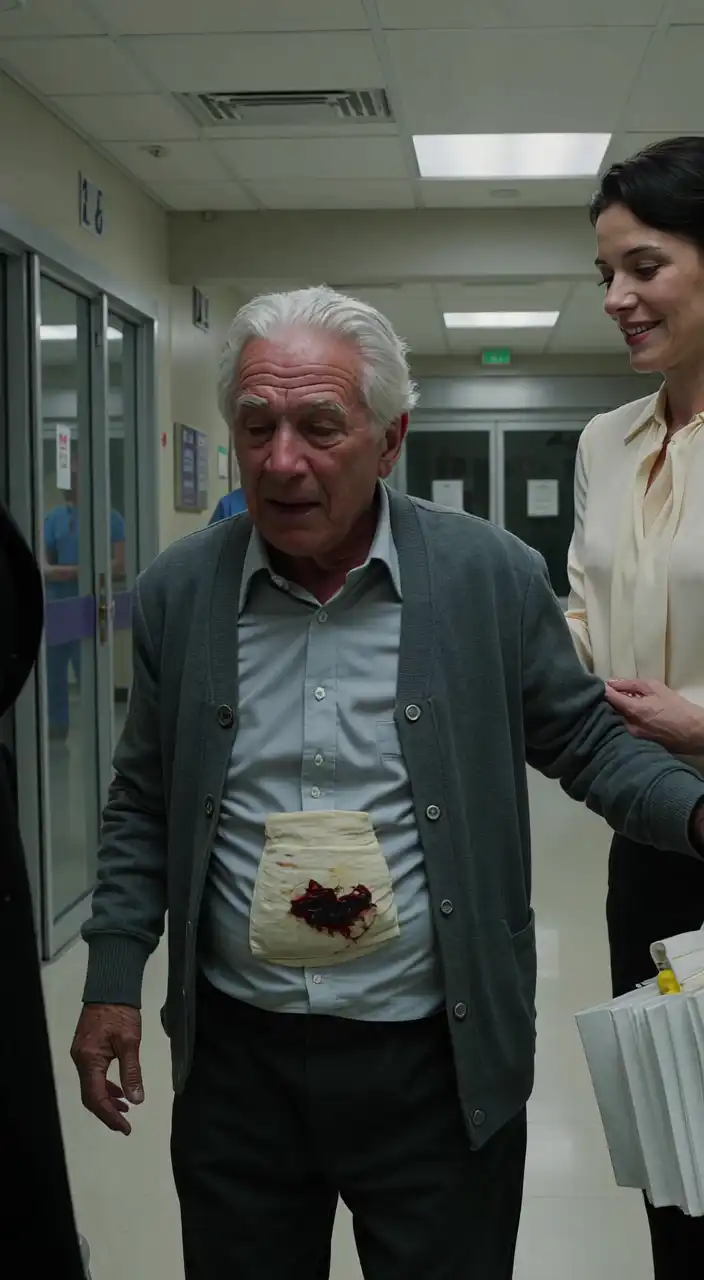
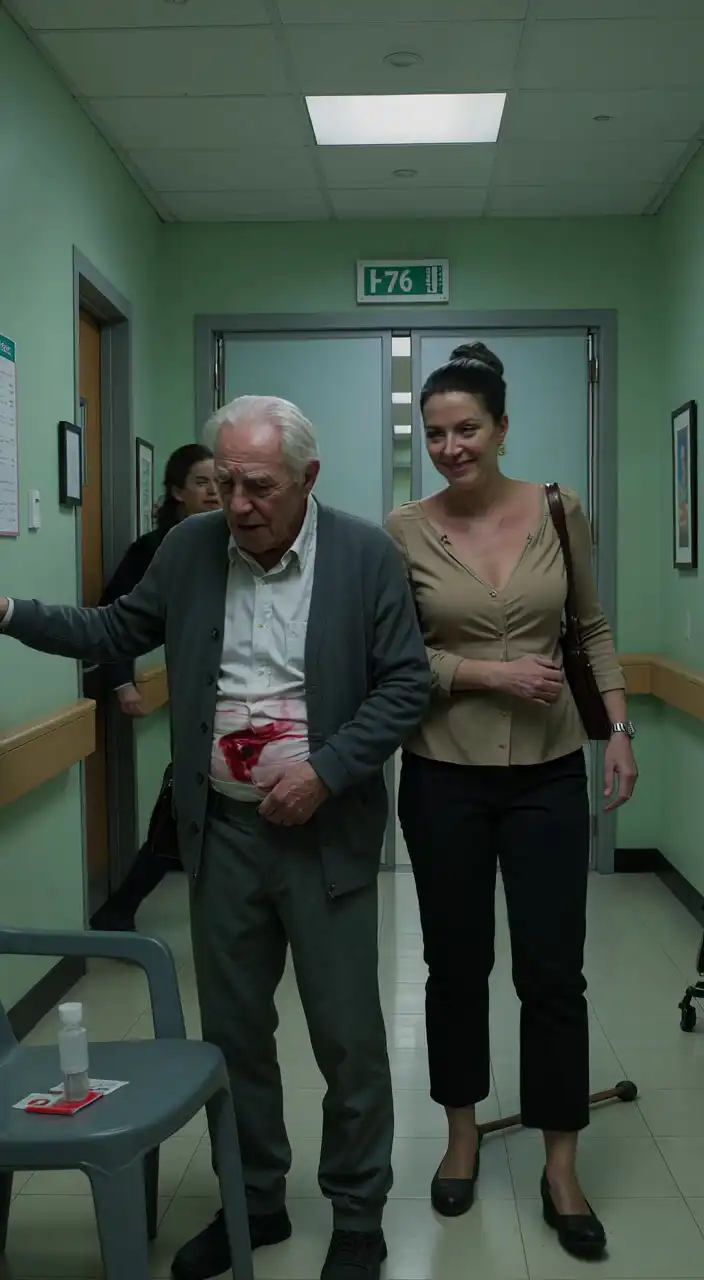
MY FATHER STARTED SHAKING OUTSIDE TRIAGE WHILE A CLINIC ADMINISTRATOR BLOCKED THE DOOR AND SAID HE NEEDED FAMILY PERMISSION FIRST.
MY FATHER STARTED SHIVERING SO HARD HIS SURGICAL BANDAGE BLED THROUGH, AND THE CLINIC ADMINISTRATOR STILL BLOCKED THE TRIAGE DOOR.
MY FATHER STARTED SHAKING IN THE HOSPITAL HALLWAY, AND THE WOMAN WHO CLAIMED TO BE HELPING HIM WOULD NOT LET TRIAGE TOUCH HIM.