
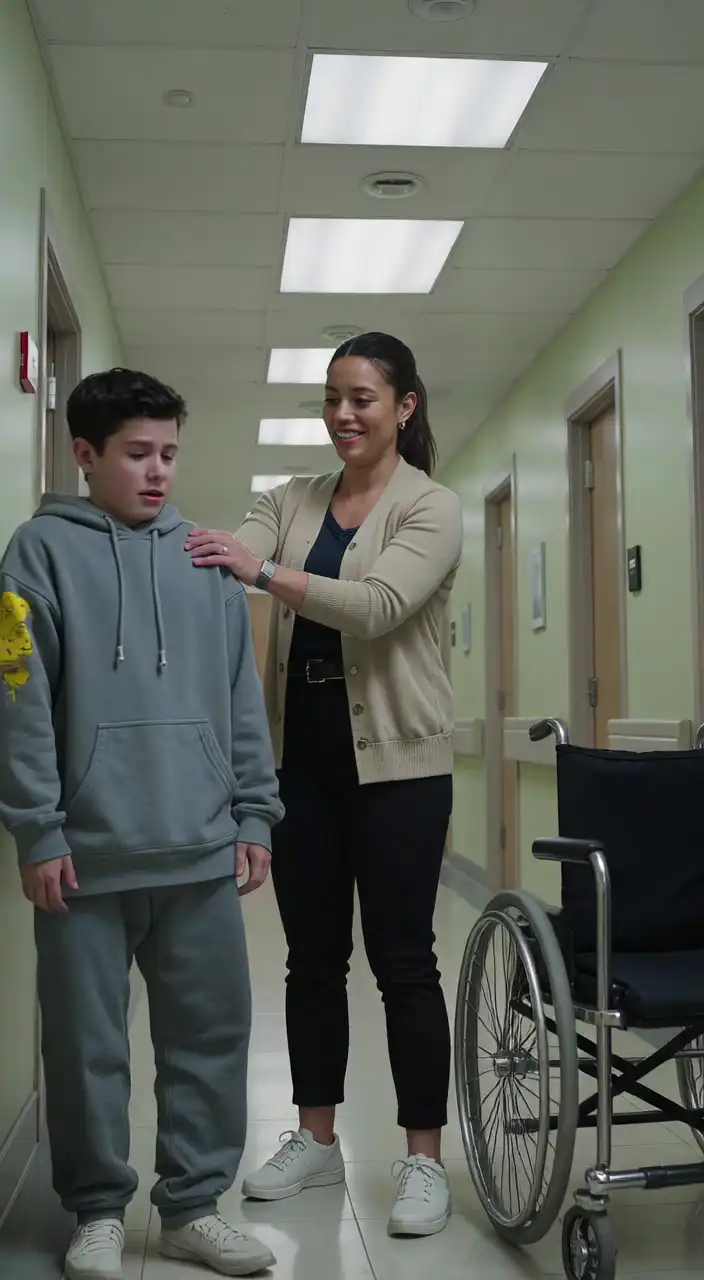
Harper's fingers dug into Ethan's hoodie so hard the fabric twisted at his shoulder.
For the first time, Ethan lifted his eyes.
He didn't look at Harper. He looked at Victor.
It was the kind of look children gave when they had already learned that the truth could make things worse unless the right adult was standing there. His mouth opened, then closed again. His lower lip trembled once. The doctor was beside him now, crouching low enough to meet his eyes.
"Ethan," he said, calm and even. "My name is Dr. Leland. I need to check your breathing and your heartbeat. Can you tell me if you took any medicine today?"
Harper answered before Ethan made a sound.
"I told you, he didn't. He spilled children's vitamins on himself in the car, that's all. He has sensory issues and acts out when strangers talk to him."
Victor never took his eyes off her. "Ma'am, let go of his shoulder."
Harper smiled at him again, but the smile had gone thin and brittle. "I am his caregiver."
"And he is at a hospital asking for help with his body," Victor said. "Let go."
She hesitated a beat too long. Dr. Leland saw it too. So did the intake nurse, who had already abandoned the computer and wheeled the chair forward. When Harper finally released him, Ethan folded sideways instead of sitting up straight. The nurse caught him under the arms and eased him into the wheelchair. His head lolled once before he struggled to hold it up, ashamed even then, as if collapsing had been a manners problem.
The amber alarm sounded again from the monitor clipped onto the wall just inside triage. Another nurse appeared with a pulse oximeter and a blood pressure cuff, moving fast but not frantically. Hospital people had a way of making urgency look organized, which was either the most comforting thing in the world or the most terrifying.
Harper stepped toward the chair. Victor shifted once, barely, but enough to block her path.
"You can't take him back without me," she said. "He'll panic."
Ethan flinched so visibly at the sound of her voice that the second nurse looked up.
Dr. Leland saw that too. "We'll help him through that," he said. "Right now I need space."
He touched Ethan's wrist and frowned. "How long has he been weak?"
"A little while," Harper said immediately.
Ethan swallowed. His voice came out cracked. "Since lunch."
Harper snapped her head toward him. It was a tiny movement, but hot with warning. Victor stepped closer.
Dr. Leland caught the answer. "Lunch today?"
Ethan nodded once.
"Vomiting?"
A pause. Ethan looked at Harper again.
Victor's voice changed, not louder, just firmer. "You can answer him."
Ethan whispered, "Twice."
Harper drew in a sharp breath through her nose. "He threw up because he worked himself up. He lies when he's scared."
Dr. Leland's eyes moved to the yellow stain on the sleeve. Up close, the color looked too saturated, too chemical to be vitamins crushed in a car seat. He pinched the fabric gently between gloved fingers and lifted it toward his nose without touching his face. His expression did not harden. It sharpened.
"What exactly spilled?"
"I said cough syrup," Harper shot back, forgetting she'd said vitamins a second earlier.
Nobody in the hallway missed it.
The intake nurse glanced at Victor. Victor marked something on his clipboard.
Dr. Leland did not challenge Harper yet. He just said, "Get him into bay three now."
The hallway broke into motion. The nurse pushed Ethan through the triage doors. Dr. Leland walked beside them, one hand on the chair, asking quick questions. "Any stomach pain? Dizziness? Ringing in your ears?" Ethan nodded at dizziness. He was trying hard to stay awake now, blinking slow and heavy. On the way in, his right hand slipped from his lap and hung at the side of the chair.
A thin plastic bracelet slid into view from under the cuff of his hoodie.
It wasn't a hospital bracelet.
It was one of those cheap paper wristbands from a walk-in clinic, creased and damp, with part of the printing rubbed away. Dr. Leland put two fingers on it and stilled the chair for half a second.
"Ethan," he said, very gently, "were you seen somewhere else today?"
Harper spoke over him from behind Victor. "No."
Ethan's eyes fluttered. "Yesterday."
Dr. Leland looked up. So did the nurse. Victor turned fully toward Harper now.
Harper's whole posture changed. Not panic exactly. Calculation. "An urgent care for a cough. They said he was fine."
"Do you have discharge papers?" Victor asked.
"I threw them away."
The lie landed heavy because she answered too fast.
Inside bay three, the monitor leads went on Ethan's chest. The oxygen clip pinched his finger. The machine gave a short warning chirp, then another as numbers appeared. Dr. Leland read them and his face lost the last of its neutrality.
"Heart rate one-forty-three," the nurse said. "Pressure low for age."
Ethan gagged dryly and grabbed at his stomach.
Harper took another step forward, but this time two things happened at once. Victor raised his hand to stop her, and the second nurse reached down near the wheelchair footrest and picked something up from the blanket that had slid off Ethan's knees during the transfer.
A small dosing syringe.
Sticky. Yellow at the tip.
The nurse looked at it, then at Harper.
"I don't know what that is," Harper said.
Victor spoke into his earpiece. "Need pediatric charge to bay three and social work notified for a possible medical abuse hold."
That was the moment Harper stopped pretending to be offended and started sounding frightened.
"You can't do that. I brought him here. Good people don't get treated like criminals for bringing a child to the hospital."
Victor's expression didn't change. "Good people don't stop a child from answering basic medical questions."
Dr. Leland had one hand on Ethan's shoulder and one on the monitor cable, but his attention remained split cleanly between the body in front of him and the adult behind Victor. "Has he had acetaminophen? Diphenhydramine? Cold medicine? Anything for sleep? Anything at all?"
Harper crossed her arms like she was enduring nonsense. "He's dramatic because his grandmother spoils him. You're building a fantasy from a spill stain."
The word grandmother made Ethan's eyelids twitch.
Dr. Leland noticed. "Who usually takes care of him?"
This time Ethan answered immediately, almost by accident. "Nana."
Harper's head snapped toward him again. "Not anymore."
The room held still for half a heartbeat. There it was: not just a bad dose, not just a panicked adult, but a fight over who controlled his body and his story.
A social worker named Denise arrived at the doorway with a badge, a legal pad, and the focused face of someone who had walked into too many rooms where a child's silence mattered as much as the monitor. Behind her, Victor quietly closed the sliding glass panel so the hallway couldn't hear every word.
Denise crouched near Ethan's left side, staying below eye level. "Hi, baby. I'm Denise. Nobody's mad at you. We just need to know what got into your body."
Ethan stared at the pulse oximeter light glowing red through his fingertip. His voice was so faint they all leaned in.
"She said it'd help me sleep."
Harper's hand flew to her chest. "Melatonin. I gave him melatonin. That's normal."
Dr. Leland held out his hand for the syringe. The nurse passed it over. He turned it under the light, reading the faint black measurement marks. "Melatonin doesn't stain like this."
Denise shifted her gaze to Ethan's sleeve, then to the bracelet at his wrist. "Who took you to urgent care yesterday?"
Ethan swallowed again. "Mr. Bell."
Harper said, "The neighbor. He overreacts to everything."
Victor wrote that name down too.
The pieces were not complete, but they were no longer random. Yellow stain. Hidden clinic bracelet. Contradictory story. Child too scared to speak until physically separated. A dosing syringe. A caregiver blocking triage. A child who said someone else usually cared for him.
Dr. Leland ordered bloodwork, a tox screen, IV fluids, and an EKG. The nurses moved quickly. Ethan winced when they tightened the tourniquet on his arm. Harper took a half step forward at the sight of the needle, not from concern but from urgency, as if the blood itself might tell on her.
"Can I at least go with him?" she asked, suddenly softer. "He's all I have."
Denise didn't answer right away. She was watching Ethan. Watching where his eyes went.
He had turned his face toward Victor.
Not toward Harper. Not toward the nurse. Toward the one person standing between him and the exit.
That was enough for Denise.
"For now," she said carefully, "you need to stay right here while we sort out some conflicting information."
Harper's voice cracked. "You can't keep me from my own child."
Ethan whispered without looking at her, "You're not my mom."
No one in the room moved.
Not because they were shocked by the possibility. Because Ethan had spent every ounce of courage he had left to say it, and the fact that he said it now meant the danger behind his silence had been bigger than the danger of speaking.
Harper recovered first.
"He says that when he's mad at me," she said quickly. "I've raised him for a year. His mother is gone and his grandmother is unfit."
Denise's face remained blank in the practiced way of professionals who never wanted a liar to know which sentence had mattered.
But Victor heard one word in that scramble and came alive in a different direction.
"Gone how?" he asked.
Harper blinked. "Excuse me?"
"Gone how?" Victor repeated. "Dead? Missing? Terminated rights? What?"
Harper opened her mouth and closed it again.
The monitor alarm chirped louder.
Ethan's heart rate climbed on the screen, amber light pulsing over his pale face while Dr. Leland stared at the numbers and then at the stain, as if a connection had just locked into place.
He looked up at the nurse and said, "I want poison control on speaker right now."
And Ethan, barely conscious, tightened his fingers around the cheap paper clinic bracelet like it was the only proof he had left.
By the time poison control came on speaker, Ethan's hands were shaking too hard for him to hold the emesis bag steady.
A nurse named Marisol took it from him and braced it against his chest while Dr. Leland gave the fastest clean summary he could. "Male child, approximately seven, altered, tachycardic, tremulous, low blood pressure, possible repeated ingestion of unknown liquid medication. Bright yellow residue on clothing and dosing syringe. Caregiver giving inconsistent history."
The specialist on the line asked for weight, symptoms, timing, and visible packaging. At the word packaging, every eye moved to Harper.
She folded her arms tighter. "You all are insane. There is no poison. He had a cold."
Victor stepped nearer to the wall but not to her, the posture of a man making sure one door stayed closed while another opened.
Poison control asked if there were signs of antihistamine overdose: sleepiness, fast heart rate, flushed skin, dilated pupils. Dr. Leland checked Ethan's eyes with a penlight. Ethan whimpered and turned away. "Pupils enlarged."
Marisol slid the blood pressure cuff off and replaced it for a repeat. "Still low."
The specialist said a lot of over-the-counter nighttime cold medications for children were dyed bright colors, and accidental or repeated dosing could cause exactly this pattern, especially if mixed or given inappropriately. Then she asked the question that changed the room.
"Was he seen recently somewhere else for similar symptoms?"
Dr. Leland looked at the bracelet. "Yes. We believe yesterday."
Victor was already on that thread. He stepped out into the hall for fifteen seconds, returned with a portable phone, and quietly asked Harper, "What urgent care?"
She glanced at the door, at Ethan, at Denise. "I don't remember the name."
"Address then."
"I was upset. I wasn't looking at signs."
Denise made a note. "You remember enough to say they told you he was fine."
Harper glared at her. "They did."
Ethan retched dryly again. Marisol rubbed his back in slow circles until the spasm passed. When she spoke, her voice was the soft voice of women who had cleaned children up after too many emergencies. "Do you remember the flavor, sweetheart? Cherry? Grape? Orange?"
He swallowed with effort. "Banana."
Dr. Leland and Marisol exchanged a look. Banana wasn't a color, but some liquid medications with antihistamines and sedatives had that artificial smell, and yellow dyes often matched fruity labels. Dr. Leland leaned closer to Ethan's sleeve and then to the syringe tip again.
"Banana," he repeated. "Did she give it in a spoon or a syringe?"
Ethan's eyes drifted toward Harper before he caught himself. "Syringe."
Harper threw up her hands. "Yes, because children don't drink medicine from cups when they're difficult."
"He wasn't difficult," Ethan whispered, so low only the people closest heard it. "I said it made my legs weird."
Marisol stopped rubbing his back. Not because she didn't care, but because those words needed room in the air.
Dr. Leland asked, "You told her that?"
A tiny nod.
"And she gave you more anyway?"
This nod was slower.
Denise's pen paused over the page.
Harper's voice rose. "He is confused. He has a fever."
"He doesn't," Marisol said. She had just checked. The answer came out before she could smooth it into neutral.
The false normal Harper had worn in the hallway was gone now. "My god, one of you says poison and now everyone's trying to make me some monster."
No one answered because the room was finally busy with Ethan, not with her. The IV line was in. Fluids started. The lab runner came for blood tubes. Another nurse brought the EKG machine. Sticky leads went over Ethan's narrow chest while he shivered under warm blankets. Marisol tucked one around his stained sleeve and stopped when she saw that the yellow on the fabric wasn't one spill. There were older faded streaks near the cuff.
She touched Dr. Leland's elbow and pointed.
He saw it immediately. Not one event. More than one.
The doctor straightened and looked at Denise. Denise saw it too.
That old stain was a seed from before today.
Victor used the portable phone to call the local urgent care centers one by one, giving Ethan's first name, age range, and the partial clinic wristband number that Dr. Leland read aloud from the damp paper. On the third call, his expression changed.
"Yes," he said. "Yesterday. Child brought in by neighbor, last name Bell? Understood. Can you fax the intake note to pediatric emergency now? We have a medical abuse concern. Yes, security hold active."
Harper took one involuntary step forward. "What note?"
Victor ignored her and scribbled the fax number on his incident sheet.
Ethan heard the words neighbor and note, and some of the iron tension in his face loosened. Not relief exactly. Recognition that one adult outside the house had believed him enough to take him somewhere.
Denise used that opening. "Ethan, can you tell me about Mr. Bell?"
"He lives downstairs," Ethan said. "He heard me throw up."
Harper cut in. "That nosy man is obsessed with our apartment."
Victor turned toward her. "Why did your neighbor take a child to urgent care instead of you?"
Harper lifted her chin. "Because I had to work."
Denise asked, "What kind of work?"
That should have been easy if it were true. Harper took too long. "Home care."
Marisol's eyes flicked to the nurse-style cardigan Harper had put on like a costume. Dr. Leland seemed to have the same thought, because he asked without looking up from Ethan's tracing, "Are you licensed?"
Harper gave a brittle laugh. "Now my sweater is a crime too?"
Before Victor could answer, the fax machine at the nurses' station outside the room began to whir.
No one had to say anything. Everyone felt it.
Evidence had just become paper.
Victor stepped out and returned less than a minute later holding three curled sheets. He didn't read them dramatically. He scanned them the way trained people did when they were trying to build a safe sequence of actions instead of winning an argument.
First line: brought in by neighbor after repeated vomiting and excessive sleepiness.
Second line: child reports caregiver gave "sleep medicine" for behavior.
Third line: patient advised transfer to emergency department if symptoms recur or worsen.
Fourth line: caregiver unavailable by phone.
And attached to the intake summary was a line from the urgent care physician assistant: yellow residue noted on child's cuff and around mouth, substance not confirmed.
Victor handed the pages to Denise first, not to Harper.
Denise read fast, jaw tightening only once. Then she placed the pages on the counter out of Harper's reach and asked the next necessary question.
"Ethan, where is your grandmother?"
His eyelids fluttered with exhaustion. "At church yesterday. Then work. Harper said not to call her."
"Why?"
He looked at the blanket. "She said Nana would lose me if people thought she couldn't handle me."
That landed harder than the toxicology concern because now the motive began to show itself. This was not just a bad judgment call in a tired household. It sounded like control. If the child looked unstable, if the grandmother looked negligent, if the caregiver positioned herself as the calm capable adult, then access and authority could shift quietly around a child too weak to fight.
Harper heard the same thing in the room's silence and lunged for a new story.
"His grandmother asked me to help. She begged me. She can't keep up with him. I have done everything for that boy."
Victor said, "What's the grandmother's full name?"
Harper pressed her lips together.
Denise asked, "Do you know it, Ethan?"
He nodded. "Loretta Green."
Victor wrote it down and moved for the door. "I'm getting registration to verify legal guardian and emergency contacts."
Harper's voice sharpened. "You can't call her before I explain this."
Victor looked back at her over his shoulder. "That is exactly why I can."
He left.
Inside the room, the EKG paper fed out in a pale ribbon. Dr. Leland studied it with narrowed eyes. "Nothing catastrophic, but enough to support ingestion. We treat the child in front of us and keep her away from him."
Harper laughed once, ugly and disbelieving. "You think she is going to march in here and save him? She left him with me."
Ethan's fingers closed around the paper bracelet again.
Denise noticed and gently touched the edge of it. "Can I see this?"
He didn't let go at first. She waited.
When he finally loosened his hand, she read the faded print and turned the band over. On the inside, written in blue pen, were two words small enough to miss.
Call Nana.
Not printed. Handwritten.
Not by a machine. By a person who had seen enough yesterday to know this child might need another adult to notice him.
Denise looked up slowly.
Harper saw the look and blanched.
"Who wrote that?" Denise asked Ethan.
"Lady at the desk," he whispered. "She said if Harper got mad, I should keep it on."
The room changed again.
The bracelet was no longer just proof of prior treatment. It was a tiny rescue attempt already in progress, hidden on a child's wrist by someone who knew danger rarely announced itself with bruises or broken doors. Someone had looked at Ethan yesterday, seen the fear in how he waited to answer, and planted a lifeline.
Marisol adjusted the blanket higher over Ethan's chest. "You did good keeping it on."
Tears leaked out of his closed eyes. "She tried to cut it off."
Harper hissed, "That is a lie."
Dr. Leland put the EKG down. "Enough."
He didn't shout. He didn't need to. It was the first time his voice carried open anger, and it hit Harper harder than Victor's formal authority had. "You have changed the story four times in twenty minutes. He has objective signs of ingestion. He has prior care from yesterday. He has evidence of repeated dosing on his clothing. And he is terrified of you. Stop talking."
For one second, it looked like Harper might finally stop.
Instead, she made a choice born from desperation, not reason. She reached into her spotless handbag.
Victor was not in the room to intercept her.
Denise rose so fast her chair legs scraped. Marisol grabbed Ethan's bed rail with one hand and raised the other instinctively, as if Harper might be pulling a weapon.
Harper didn't pull a weapon.
She pulled out a bottle.
Small. Bright label. Childproof cap.
Banana nighttime cough relief.
Half empty.
And before anyone could cross the space between them, Harper twisted the cap and dumped the remaining liquid onto the floor.
The chemical yellow spread across the tile, sharp and sweet.
"I guess now you can't test it," she said.
But Marisol had already seen the lot number on the label before the bottle hit the ground, and Ethan, flinching at the smell, turned his face into the blanket and whispered one sentence that made Denise move straight for the emergency custody paperwork.
"That's not the one she gives me at night."
Victor came back through the sliding door in time to hear it.
He had Loretta Green on speakerphone.
And the first thing Ethan's grandmother cried when she heard his voice was, "Baby, did she make you take the yellow medicine again?"
Loretta Green did not sound like a woman who needed the facts explained to her.
She sounded like a woman who had been trying to make people listen for weeks.
On speaker, over the soft hiss of Ethan's IV and the squeak of wet shoes around the spilled medicine, her voice came ragged and breathless. "I told her not to be alone with him. I told her. Is he breathing? Put somebody on that line and tell me if he's breathing."
Marisol leaned to the phone. "He's breathing, Ms. Green. He's with medical staff."
A sound came from Loretta then, half sob and half prayer. "Thank you, Jesus."
Harper lunged toward the phone. Victor blocked her with one forearm and guided her back against the wall without grabbing hard enough to escalate. "You do not get to coach this witness," he said.
Denise took the phone from Victor. "Ms. Green, this is Denise with pediatric emergency social work. We need to verify your relationship and understand who currently has legal authority for Ethan."
"I do," Loretta said at once. "I have him. Temporary custody from family court after my daughter went into treatment. Harper is my niece. She was supposed to help after school and weekends only."
That single sentence rearranged almost everything Harper had been trying to build. Not Ethan's mother. Not legal guardian. Not sole caregiver. A relative with limited access who had been speaking like ownership was already hers.
Denise asked for the case number. Loretta had it. Asked where the papers were. Loretta knew exactly: top drawer of the dining room cabinet, blue folder, copies in her church tote. A liar improvises in fog. A guardian speaks in drawers, folders, and dates.
Harper pushed away from the wall. "She is old and confused. She begged me to take over because she can't control him."
Ethan opened his eyes long enough to say, "Nana don't say control."
It was such a small sentence, but it hit with startling force. Children knew the exact words adults used around them. A single phrase could mark a whole household's power line. Control was Harper's word, not Loretta's.
Denise heard it the same way. "What does Nana say?"
Ethan swallowed. "She says help."
Marisol looked down to hide the sudden heat in her eyes.
Victor kept one hand near his earpiece while registration and legal started moving in parallel. In hospitals, the practical machinery of rescue often sounded dull from the outside: verify guardian, lock chart, alert attending, document chain of evidence. But inside a room like this, every one of those steps was an act of protection. Every call prevented the wrong adult from signing the wrong paper, removing the wrong child, or rewriting the story in the parking lot.
Dr. Leland reviewed the initial labs as they populated on the screen. "No acetaminophen spike. Glucose okay. Electrolytes not terrible. Tox is pending, but this still fits sedating antihistamine or mixed cold medication exposure, especially repeated." He looked at Ethan, then at the old yellow streaks on the cuff. "Repeated being the key word."
"Can that hurt him long term?" Loretta asked through the phone.
"It depends on what and how often," Dr. Leland said honestly. "Right now our focus is stabilizing him and identifying the substance."
Harper folded her arms again, but the performance was failing. Her voice had become clipped and restless. "This is ridiculous. A teaspoon of nighttime medicine does not trigger a criminal trial."
Denise answered without looking at her. "Giving a child sedating medicine to manage behavior can. Lying to prevent treatment can. Repeated administration against symptoms can. We are well past ridiculous."
Victor received a text on his work phone and glanced at it. "Registration confirmed Loretta Green as guardian. Mother listed as emergency contact secondary, rehab facility out of county. Harper is not listed anywhere."
Harper laughed, but it cracked in the middle. "Of course I'm not listed. Loretta thinks paperwork is love."
"No," Denise said. "Paperwork is how children don't disappear between adults with stories."
That shut the room still for a second.
Ethan's monitor alarm chirped again, not as wildly as before but enough to keep urgency alive. Marisol adjusted the IV flow and asked him if he could sip water. He managed a little and coughed. She watched how he protected his stomach, how he tensed at sudden noise, how he tracked Harper's location even when his eyes were closed.
Trauma didn't always look dramatic. Sometimes it looked like a child keeping one ear open while pretending to rest.
Victor asked Loretta, "Has he had symptoms like this before?"
"He got sleepy and shaky three times in the last month," she said. "Always after Harper watched him. Twice she told me he skipped lunch, and once she said he was trying to get out of homework. Yesterday he was so limp Mr. Bell carried him upstairs. I wanted to call 911 then, but Harper said urgent care had cleared him and threatened to leave me without help if I kept accusing her."
There was the second layer of motive. Not just access to Ethan, but leverage over Loretta. Caregiving dependency. An overworked grandmother could be controlled by the person who filled the after-school gaps.
Denise wrote it down. "Why would she want him sleepy?"
Loretta went quiet.
When she spoke again, shame weighted every word. "Because if he looked wild, if he looked hard to handle, she could say I wasn't fit. She started talking about schools, evaluations, state help, group homes. Like he was a case, not my baby."
Harper snapped, "You work double shifts and fall asleep in the chair. He needs structure."
Ethan whispered, "You lock me in your room."
The room went dead silent.
Marisol froze with the water cup halfway to the tray. Denise slowly lowered her pen. Even Dr. Leland turned fully away from the monitor.
Harper's face changed so quickly it was almost a separate expression laid over the first. "For ten minutes. When he throws fits. So he doesn't run."
Denise asked, voice measured to the millimeter, "What room?"
"Mine. At our apartment."
Loretta made a strangled sound on speaker. "What apartment? He does not stay overnight with you."
Victor was already moving. "Ms. Green, has Ethan stayed nights there?"
"No. No. Not unless..." Loretta's breathing hitched. "Unless after my late shift. Harper kept saying he'd already fallen asleep and not to wake him."
The pieces clicked together in a way that felt both sickening and inevitable. Sleep medicine. Overnight access. Secrecy. A child too groggy to report clearly. An exhausted guardian being persuaded that difficult behavior explained every symptom.
Victor touched his earpiece. "I need local patrol notified for a welfare evidence preservation check at Harper Bell's residence." He looked at Denise. "Do we have enough for a joint response?"
"We have enough to protect the child and enough concern to preserve medication evidence before it disappears," Denise said.
Harper barked out a laugh. "You need a warrant for my home."
Victor did not argue law with her. He simply said, "We need officers to decide next steps before you warn anyone."
Harper went very still.
There it was. Another clue hidden inside a reaction. Anyone. As if someone else needed warning.
Denise heard it too. "Who would she warn?"
Harper looked away.
Dr. Leland had no patience left for the room's psychological chess. He focused on the one person whose body could not wait. "Ethan, buddy, I need one more thing. When she gave you the yellow medicine, did it come from that bottle she dumped?"
Ethan pressed his cheek into the blanket. "Sometimes. Night bottle says cough. Day bottle in the bathroom cabinet don't got a label."
Marisol and Denise exchanged a look.
An unlabeled bottle.
That changed the medical problem and the evidence problem together.
"What color is the day bottle?" Dr. Leland asked.
"Brown."
"Glass or plastic?"
"Plastic. Sticky."
Harper said, "He's making stories because he hates me."
Ethan's eyes filled but he kept going, as if speaking had become easier now that adults were finally treating his words like objects that could hold weight. "You say if Nana asks, I napped."
Loretta cried openly on speaker.
Victor stepped into the hall again to update responding officers: unlabeled medication bottle, possible repeated administration, child disclosure of confinement, false custody claims. When he came back, he carried a sealed evidence bag from supply and handed it to Marisol for the dumped bottle and cap. Even ruined, the label, lot number, and residue mattered.
Harper stared at the bag like it had teeth.
"You really think this proves anything?" she said.
Denise met her eyes. "It proves you destroyed potential evidence in front of hospital staff."
For the first time, Harper did not have a ready answer.
Instead she turned toward Ethan, and her voice dropped into a soft pleading tone that felt somehow more chilling than the shouting. "Baby, tell them I take care of you. Tell them I was helping you sleep because your nana was too tired. Tell them."
Ethan curled inward so fast the monitor leads tugged.
Victor crossed the room in two strides and stood where Ethan could no longer see Harper unless he chose to. "Do not address him."
Denise signaled to Marisol, who moved the portable privacy screen between Harper and the bed. It was only canvas and wheels. It should not have mattered much. But Ethan's shoulders loosened a fraction as soon as he was visually cut off from her.
A planted detail paid off right there: not a big legal revelation, just the simple truth of where safety began. Sometimes rescue started with a screen and a sentence.
The phone in Denise's hand buzzed with an incoming transfer from the family court clerk line. She stepped outside to verify custody. When she came back, the look on her face was tight with purpose.
"Temporary guardianship to Loretta Green is active," she said. "Review hearing scheduled in six weeks. There is no petition naming Harper as substitute caregiver. There is, however, a prior complaint."
Victor looked up. "Against who?"
"Against Harper, by the school counselor. Excessive sedation concern after she picked Ethan up twice from aftercare and he came back the next morning barely staying awake."
Harper's head jerked up. "That was nonsense. Kids get sleepy."
Denise continued as if she hadn't spoken. "Complaint was screened out for insufficient evidence because no one could confirm the source."
No one needed it explained. The child had been sleepy. The adult had been calm. The grandmother had been exhausted. Evidence had been thin.
Until now.
Marisol peeled the old clinic bracelet fully free to place a fresh hospital band on Ethan's wrist. The paper crackled in her fingers. On instinct, perhaps because she'd heard enough to know this mattered emotionally as much as medically, she asked, "Do you want me to save this for your nana?"
Ethan's eyes opened. He nodded hard.
She tucked it into a clear specimen bag and wrote his name on a label.
Another small thing preserved. Another bridge back to the adult who had been kept out.
Then Dr. Leland's phone rang with poison control calling back after checking product dyes against common OTC formulations. He put it on speaker just long enough for the crucial line.
"The yellow residue and current symptom pattern are consistent with some nighttime antihistamine products, but repeated dosing would not fully explain prolonged episodes unless there was either overconcentration, co-administration, or substitution. If there's an unlabeled bottle in the home, assume mixed or transferred contents until proven otherwise."
Substitution.
The word moved through the room like cold air.
That meant the bright children's cough bottle Harper dumped might be camouflage, not source.
Dr. Leland looked at Victor. Victor looked at Denise.
The rescue had become harder.
Not because Ethan wasn't being treated. He was.
Because the real danger might still be sitting in a bathroom cabinet where another child could reach it, or where Harper had used it often enough to perfect a script.
And because if officers went to the apartment too late, that unlabeled bottle would vanish the minute Harper got a call out.
Harper understood the same thing from their faces.
She reached for her handbag again.
This time Victor got there first.
"Phone," he said.
She clutched the bag to her chest. "Absolutely not."
Victor's voice was level. "If you contact anyone to destroy medication or remove evidence related to a child endangerment investigation, you deepen your situation."
"I need my lawyer."
"Then ask for one through responding officers. Right now, you are not using your phone in this room."
Denise added quietly, "And if there is another child at that apartment, this becomes more urgent than your convenience."
Harper's eyes widened in pure reflex.
She caught herself too late.
Victor saw it. Denise saw it. Dr. Leland looked up sharply.
There might be another child.
No one said the words at first because saying them would make them real.
Ethan beat them to it.
In a thin exhausted voice from behind the privacy screen, he whispered, "Kiki drinks from cups she finds."
Victor was already on his radio before the sentence finished.
By the time officers reached Harper's apartment, everyone in bay three was operating on two tracks at once: keeping Ethan stable and racing an invisible clock toward whatever was in that bathroom cabinet.
Victor had patrol on speaker through his work phone, volume low but audible enough for Denise and Dr. Leland to hear. The officers were en route with lights but no siren. They had an address from Harper's intake forms, apartment number confirmed by registration. Loretta, still connected by phone from the bus she had boarded in a panic, was giving landmarks between gasps. "Third floor. Red door wreath even in summer. Bathroom off the hall. If she changed anything, check under the sink too."
"Who is Kiki?" Denise asked Ethan gently.
He was drifting now, the fluids and exhaustion pulling him under in waves, but he forced his eyes open. "Her little girl."
Harper made a sound of frustrated disbelief. "Now he's dragging my daughter into this because all of you are feeding him."
It was the first direct confirmation she had given. Victor turned away slightly and relayed it to officers. "Possible second minor in residence, female, nickname Kiki."
Dr. Leland's face hardened. "How old?"
Harper stared at him, jaw set.
Ethan whispered, "Three."
Marisol muttered, "Oh, God," under her breath and immediately looked sorry for saying it out loud. But everybody in the room felt the same drop in the stomach. A three-year-old and an unlabeled bottle.
If Ethan's body had endured repeated sedation, a toddler could stop breathing.
The emotional center of the room shifted again. Ethan was still the child in danger, but now his weak voice might be rescuing someone else too. That kind of responsibility should never sit on a seven-year-old, yet there it was, trembling on his dry lips.
Denise moved to the head of the bed so Ethan would see her first, not Harper, not the phones, not the faces changing around him. "You are helping people by telling the truth," she said. "That is the adults' job to handle now."
He searched her face like he needed to know whether helping people would get him punished later.
"Will she be mad?" he asked.
The question punched straight through professional language and into the oldest fear in the room.
Denise answered carefully. "She may be mad. But she will not be allowed to hurt you for telling the truth."
It was not a promise she offered lightly. Victor heard it, and something in his posture shifted from containment to commitment.
Outside the bay, pediatric charge had arranged a sitter and restricted visitor flag. The chart now glowed with warnings: no discharge to Harper, social work hold, security alert. Sometimes bureaucratic text was the difference between safety and a child being wheeled into the wrong elevator by the wrong smiling adult.
Harper sensed power leaving her by the minute and did what desperate people often did when deception cracked: she reached for pity.
"My daughter has asthma," she said, tears springing up so abruptly they looked almost painful. "If she's there without me, she needs her nebulizer. You are wasting time humiliating me while my baby is alone."
Victor didn't miss the pivot. "Who is with her?"
Harper hesitated.
Denise asked, "You said there might be someone to call."
"I didn't say that."
"You implied someone could be warned."
"I was upset."
Victor's phone crackled. Officers had arrived at the building. No answer at the door. A downstairs neighbor, Mr. Bell, was outside in socks, saying he'd heard a child crying upstairs ten minutes earlier.
Ethan turned his face toward the sound of that name. Even half-conscious, he knew that meant one thing: the neighbor who had helped before was there again.
Loretta heard it too and burst into fresh tears. "Mr. Bell. Thank God."
Harper closed her eyes for one second, and when she opened them she was no longer trying to look innocent. She looked furious. "That man has been stalking my family."
Victor relayed to officers, "Neighbor known, prior transport witness. Continue welfare check."
On speaker came the muffled sound of police knocking hard and announcing themselves. Then a sharp little bark of a child crying from somewhere inside. Not infant crying. Frantic preschool crying.
Every adult in bay three went still.
"Forced entry approved by exigent welfare concern?" one officer asked.
Denise answered before Victor could. "Yes. Child at risk, potential accessible toxic substance."
A crash sounded over speaker. Door.
Harper jerked so hard against the wall that Victor had to step directly in front of her. "No," she said, voice breaking open now. "No, she'll be scared."
Marisol whispered, "Good. Let her be scared around safe people."
No one corrected her.
Through the speaker came the messy sounds of entry: boots, a man's voice saying, "Police, show me your hands," another voice calling, "Bedroom clear," then, "Got a little girl, conscious, crying, no obvious distress." Relief hit the room for exactly one second.
Then another officer shouted, "Bottle in bathroom cabinet. No label. Sticky residue. Also multiple OTC containers emptied into one trash bag."
Victor closed his eyes briefly. Not from surprise. From the exhaustion of hearing the feared thing become real.
Dr. Leland asked the immediate question. "Is the child symptomatic?"
An officer in the apartment answered after a moment. "Sleepy but arousable. Neighbor says that's not normal for this time of day. We need EMS."
Victor relayed the need instantly. Harper let out a low sound that was almost animal.
Ethan heard enough to whisper, "Kiki?"
"She's alive," Denise said at once. "They're with her now."
His shoulders dropped into the pillow. Tears slid silently into his hairline.
Planting and payoff ran silently through the chaos. The yellow stain had opened the door. The bottle cap had drawn the doctor's eye. The clinic bracelet had protected Ethan long enough to connect him to yesterday's urgent care note. Mr. Bell's name had linked the prior episode. Now the unlabeled bottle in the apartment turned suspicion into a pattern.
Harper finally said the truth nearest the center of all her lies, though even now she wrapped it in self-defense.
"I was trying to keep things calm," she said to no one and everyone. "Do you know what he is like after school? Do you know what it's like with my mother texting me, Loretta crying, bills due, Kiki climbing everything, that boy whining and whining until your skin feels electric? One dose and everyone could rest."
Dr. Leland did not let the confession soften into explanation. "One dose against medical advice after he said it made his legs weak. Repeated. Hidden. Then you blocked care."
Harper looked at him with naked resentment. "You people act like poor families don't improvise."
There it was: motive laced with grievance. Exhaustion, control, resentment, and the poisonous belief that because life felt unmanageable she was entitled to manage children's bodies.
Denise answered in a voice stripped of all cushion. "Improvising dinner is different from drugging children."
Officer audio crackled again. "Found handwritten dosing notes inside kitchen drawer. Times only. No drug names. Multiple nights. Also found cut paper wristband in bathroom trash."
Everyone in the room looked at the specimen bag holding Ethan's intact clinic bracelet.
Harper had tried to cut it off before and maybe succeeded once before. That tiny strip of paper had not just been sentimental proof. It was part of a pattern of erasing medical trails.
Victor asked the officers to preserve everything. Then he muted the speaker and turned to Denise. "This is beyond visitor restriction now."
Denise nodded. "Law enforcement child endangerment and probable assault by poisoning. CPS emergency response for both children. We need formal separation."
Harper laughed once through tears. "Poisoning? Listen to yourselves. It was medicine."
Dr. Leland's voice came low and flat. "Medicine given secretly, repeatedly, and in unknown amounts to make a child sleep while he became weak enough to collapse is poisoning."
That sentence landed with finality because it named the moral center without legal fog. Not overreaction. Not bad parenting. Poisoning.
Ethan was fading again. Marisol adjusted his blanket and clipped a warmer around the IV line. "Stay with me a little, honey."
He opened his eyes and looked around the room until he found Victor. "Nana coming?"
"She's on her way," Victor said.
"Can Mr. Bell tell Kiki I didn't mean to tell?"
The question stunned them all for its shape. He was still protecting the other child, still worrying truth had betrayed someone instead of saved them.
Denise touched his hand. "You did exactly what you needed to do."
He nodded weakly, but his face pinched with a different fear now. "If Nana cries, that's not bad, right?"
Marisol smiled with tears standing in her eyes. "No, sweetheart. Sometimes crying means somebody finally got there in time."
That should have been the downward slope into rescue, but crisis stories rarely release that gently. The fifth pressure point arrived with brutal timing.
The tox screen preliminary came back.
Negative for the common substances everyone had been discussing.
For one breathless second, the room destabilized.
Harper saw it and straightened like a drowning person catching a floating board. "There. There you go. All this drama and your little test says nothing."
Dr. Leland didn't relax. He narrowed in. "Preliminary screens miss plenty."
But a negative result changed the immediate certainty. If it wasn't a standard sedating antihistamine, the unlabeled bottle in the apartment mattered even more. It meant transfer, mixture, or another agent altogether. It meant Ethan's symptoms fit poisoning better than the convenient story did.
And it meant Harper might try to weaponize the negative to regain ground before confirmatory testing and home evidence caught up.
Denise heard the danger. "Document that preliminary is non-exclusionary."
Victor was already unmuting speaker to the apartment. "Officers, do not rely on hospital prelim. Preserve all substances for lab."
From the apartment came another new complication. "We found nebulizer meds for the little girl and an oral syringe with residue in a kitchen cup. Also an envelope addressed from family court, opened."
Harper closed her eyes.
Denise saw it. "What was in the envelope?"
Silence.
Victor asked the officers to read the return address only. County family division.
Loretta gasped on speaker. "My hearing notice."
A final motive emerged from under the medical one. The custody review in six weeks. If Loretta looked overwhelmed and Ethan looked unstable, if Harper looked indispensable, if enough episodes made enough paperwork, then the child could be repositioned through concern masquerading as help.
Denise asked the question plainly. "Were you trying to build a case that Loretta couldn't care for him?"
Harper did not answer.
She didn't have to.
The opened family court envelope in her apartment answered for her.
And when Ethan, barely audible now, said, "She said if Nana lost me I could stay where it's quiet," every adult in the room knew they had reached the threshold beyond which no one would ever hand him back casually again.
The rescue was almost there.
But first they had to make sure Harper could not touch either child, call anyone, or shape another word into a lock.
Disclaimer: Mention of any brand or trademark is for identification only and does not imply partnership or endorsement
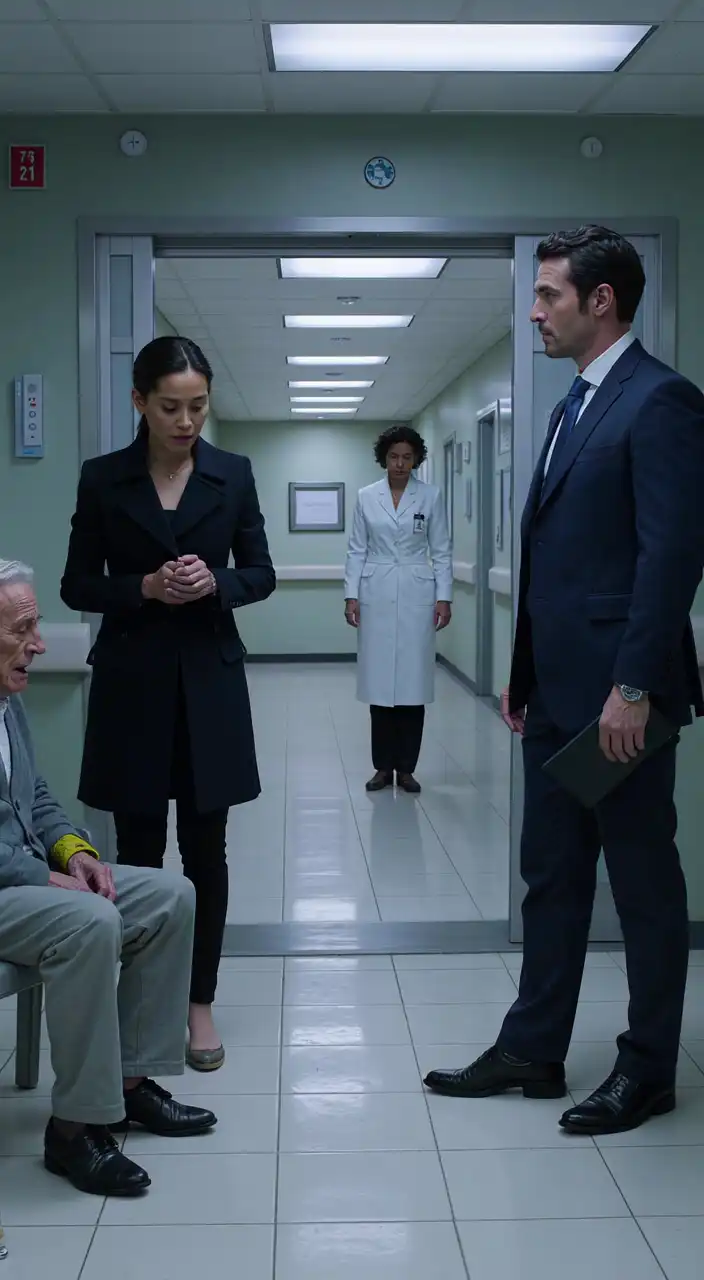
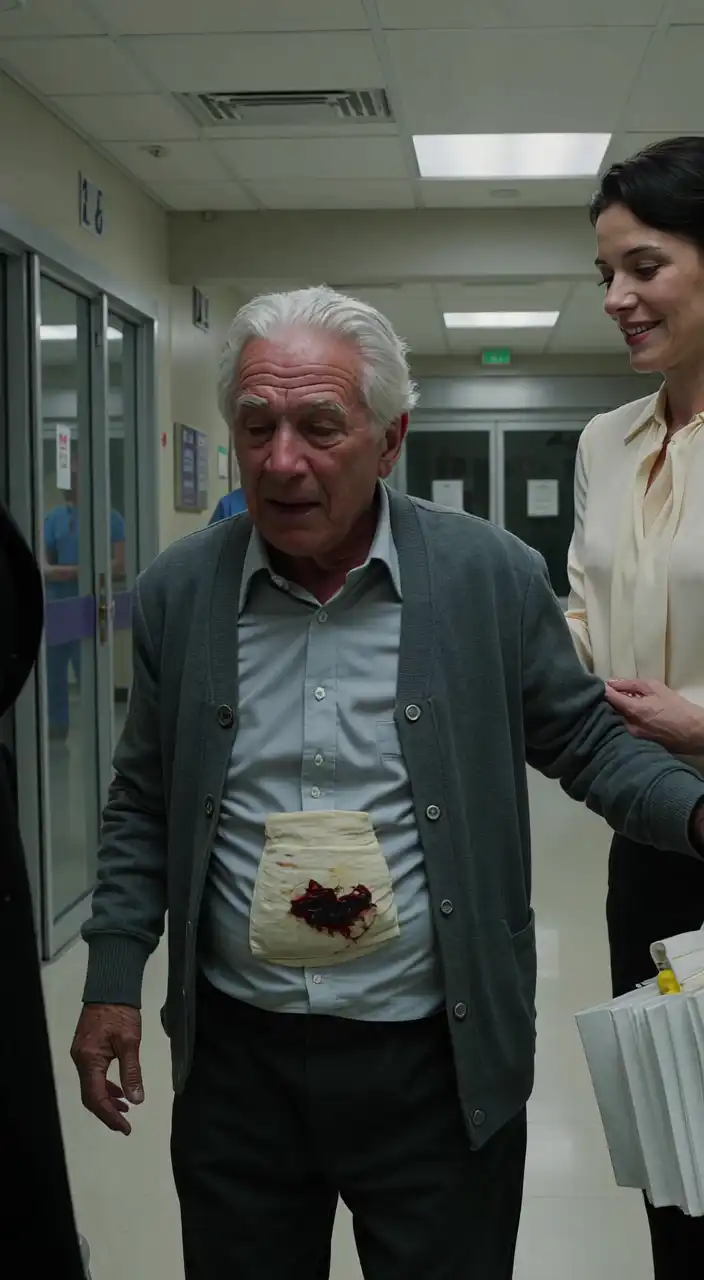
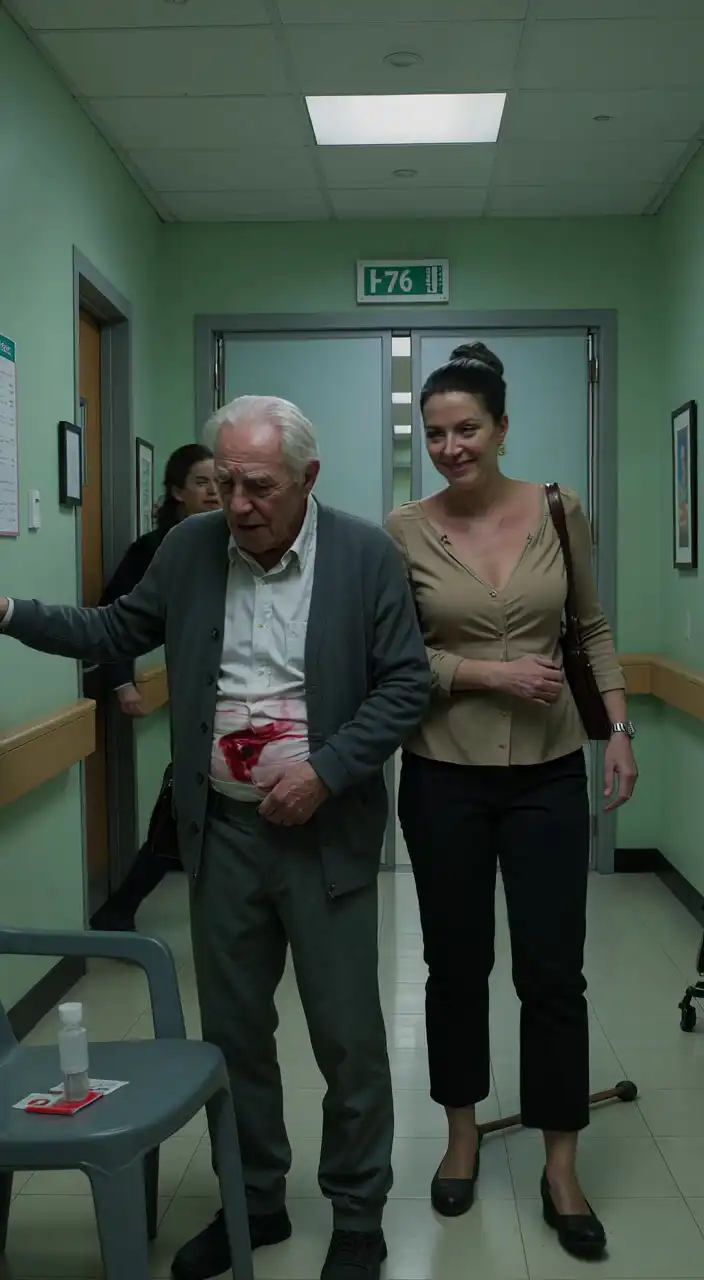
MY FATHER STARTED SHAKING OUTSIDE TRIAGE WHILE A CLINIC ADMINISTRATOR BLOCKED THE DOOR AND SAID HE NEEDED FAMILY PERMISSION FIRST.
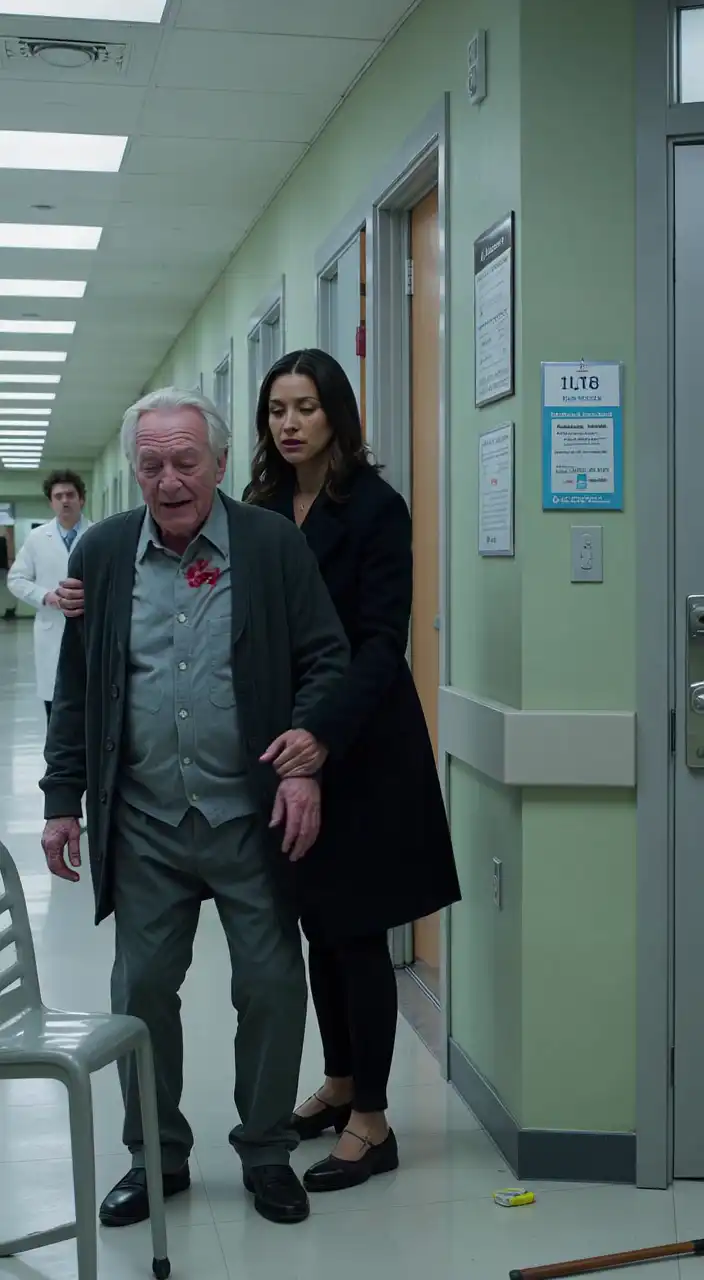
MY FATHER STARTED SHIVERING SO HARD HIS SURGICAL BANDAGE BLED THROUGH, AND THE CLINIC ADMINISTRATOR STILL BLOCKED THE TRIAGE DOOR.
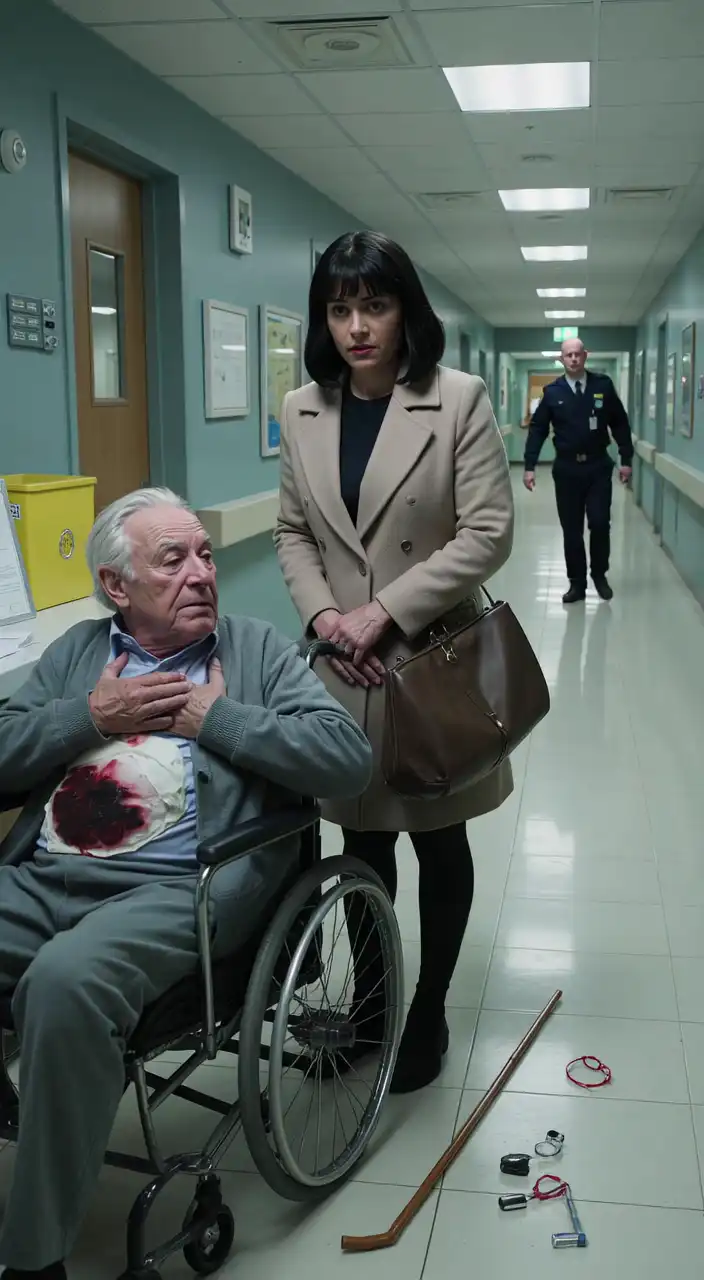
MY FATHER STARTED SHAKING IN THE HOSPITAL HALLWAY, AND THE WOMAN WHO CLAIMED TO BE HELPING HIM WOULD NOT LET TRIAGE TOUCH HIM.