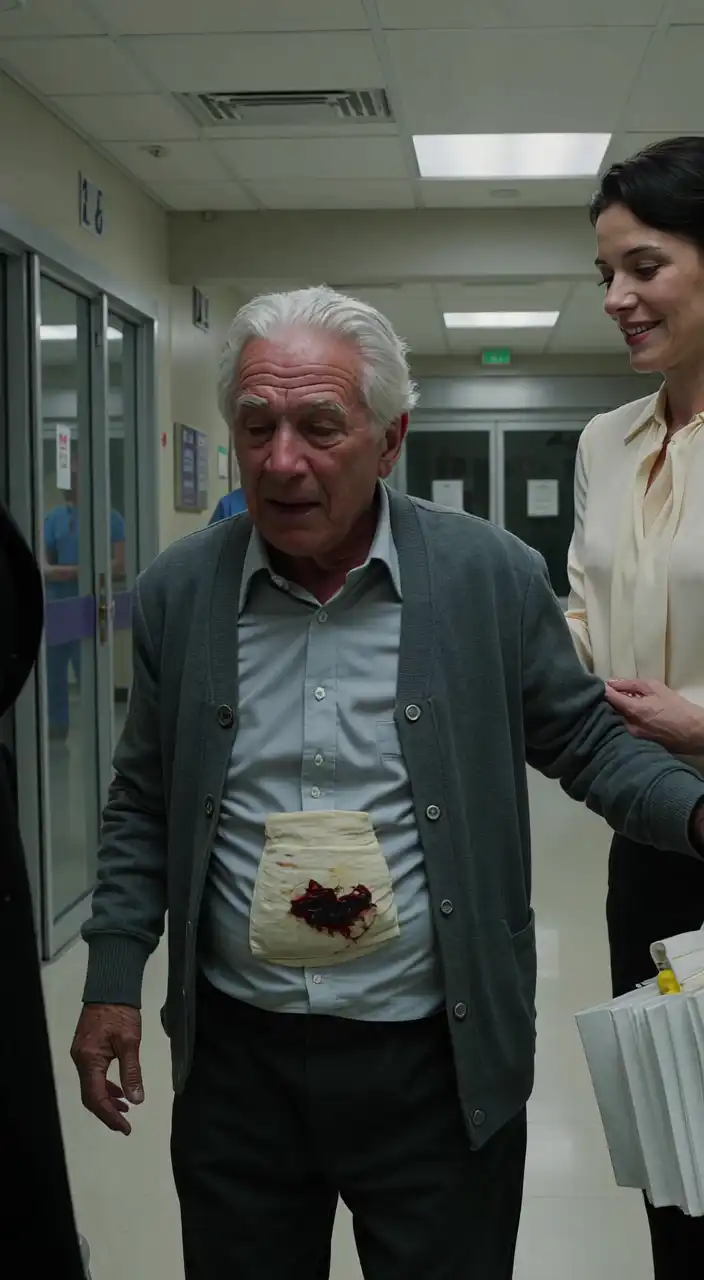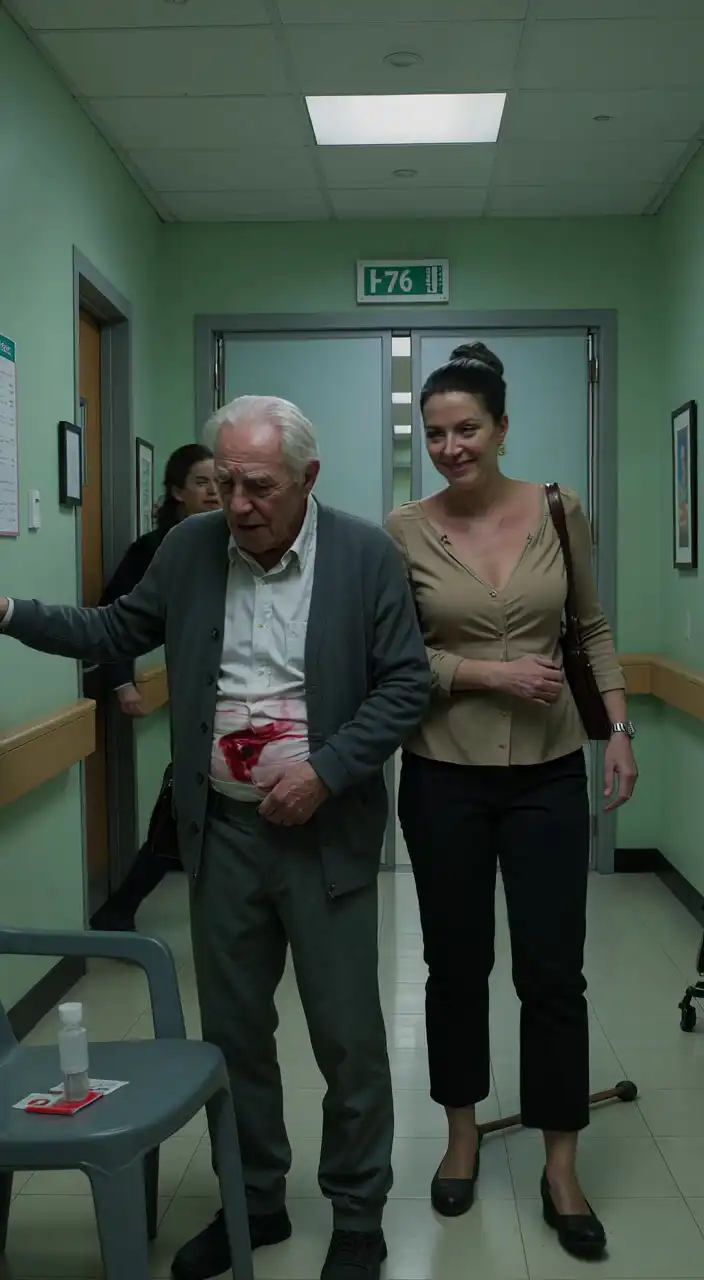
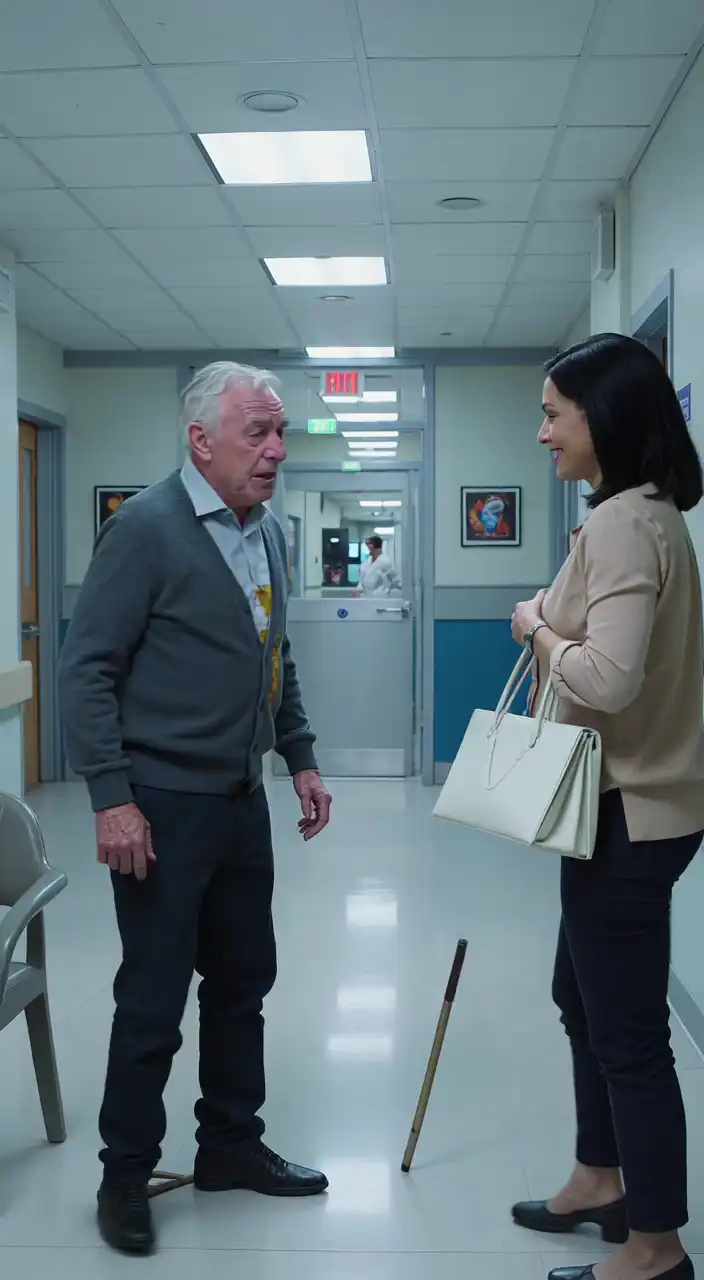
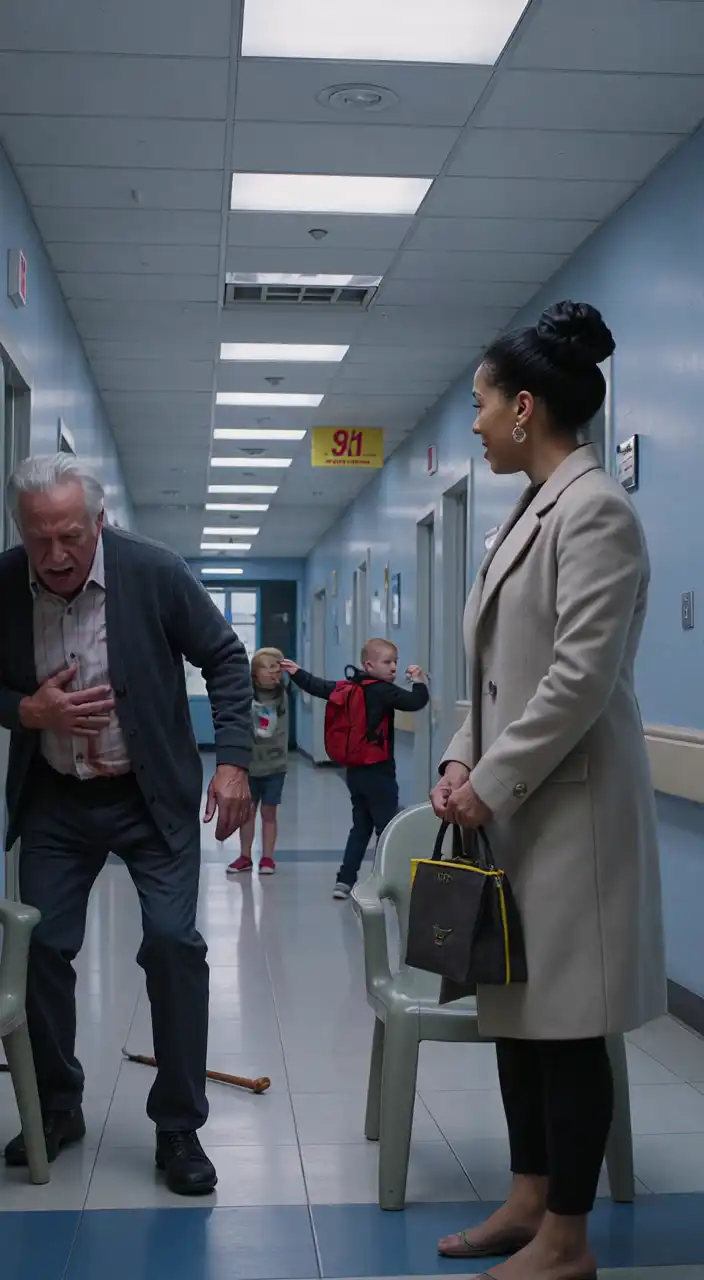

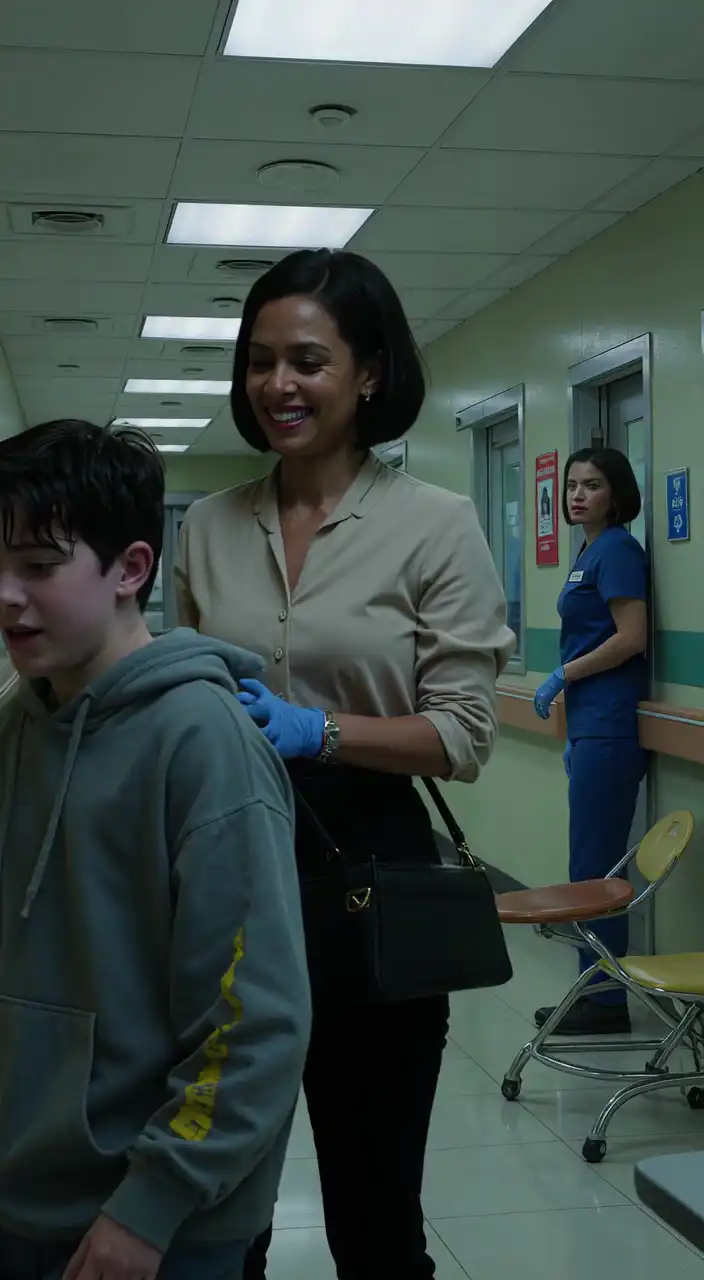
Scarlett's smile vanished so fast it looked like something had been wiped off her face.
For one second she just stood there, hand locked around the purse strap, eyes moving from Dr. Valerie to the security guard coming down the hall and back to Peter, who was now bent forward with his forehead almost touching his knees. The monitor on his finger gave another warning tone, not loud but sharp enough to cut through the hallway chatter. The nurse at triage stopped calling names. My mother gripped my wrist without realizing it.
"You're not searching my property," Scarlett said. She had lowered her voice, but it came out tight and brittle. "And you are not touching him without my authorization. I'm his caregiver."
Peter tried to inhale and made a dry, catching sound that turned every head toward him. Dr. Valerie did not look away from Scarlett. "A child in respiratory distress does not wait for a power struggle in my hallway," she said. "Nina, call respiratory. Marcus, bring the crash cart closer. Security stays here."
A nurse was already kneeling beside Peter. "Honey, can you lift your chin for me?" she asked gently.
Scarlett took a step forward like she meant to pull him up herself. "Peter, stand up. You're embarrassing me."
That sentence changed the room more than the alarm had. Peter's shoulders tightened in a way that did not look like a child being dramatic. It looked like reflex. Shame before fear. He tried to obey and nearly collapsed.
Dr. Valerie moved then, fast and without asking again. She put one arm between Scarlett and the boy and another under Peter's shoulder. "Emergency exception. I am evaluating him now."
Scarlett reached for the purse zipper. Security saw it too. "Ma'am," one guard said, palm up, "take your hands off the bag."
"It's just his things."
"Then you'll have no problem setting it down."
She didn't. Instead she clutched it to her side and said the kind of sentence people say when they know exact words might save them. "He has behavioral episodes. His chart will show that. He's always short of breath when he gets worked up. I was bringing him in myself."
Dr. Valerie glanced toward the desk. "Pull any prior records under Peter Hall. Also search under school clinic contacts." Then she looked back at the stain on his sleeve. "And someone get me a blood glucose, pulse ox repeat, and a tox screen kit."
"Tox screen?" Scarlett repeated, too sharp.
Peter's lips moved. The nurse leaned in. "What was that, baby?"
He swallowed hard. "She said not to tell."
Scarlett snapped, "He's confused."
Peter's eyes squeezed shut. A tear slipped down his cheek, and his hand twitched toward the purse before dropping weakly to the floor. That tiny gesture landed on Dr. Valerie like evidence in plain sight.
"What's in the bag?" the doctor asked.
"My medication. My wallet."
"Is his rescue inhaler in there?"
"No."
"Then why did he look at it when we asked?"
Scarlett did not answer. Instead she tried a different approach, outrage replacing control. "This is exactly what low-income families get in hospitals. Suspicion. Accusations. You people see a Black child and a caregiver and decide abuse before you even know us."
It was a smart move because it forced everyone to slow down and think. I felt it, even standing there. But Dr. Valerie didn't flinch. "Then help me help him," she said. "Open the purse and let me rule out the simplest explanation."
Peter gagged dryly and coughed against his sleeve. The yellow stain looked brighter where the hallway lights hit it. Not orange like juice. Not brown like old spit-up. Thick. Syrupy. My mother whispered, "Why is that on his cuff?" I didn't answer because the triage clerk suddenly called out, "Doctor, we found a clinic note from two weeks ago. Asthma plan. Rescue inhaler to remain with child at all times."
A beat of silence followed.
Dr. Valerie held out her hand. "Bag."
Scarlett's eyes sharpened. For a second I thought she might run. Instead she said, "That inhaler's empty. I took it because he abuses it when he wants attention."
Peter's whole body made a faint, miserable recoil at the word abuses, and Dr. Valerie heard it. "Children don't abuse breathing," she said.
Security stepped in closer. "Ma'am, place the purse on the chair."
She set it down slowly, but not before her thumb pressed something at the side. Later I would remember that exact motion. At the time, all I knew was that she had touched the lock. The guard took the purse, and Dr. Valerie unzipped it herself. On top was a wallet, a hairbrush, and a packet of wipes. Under that lay a rescue inhaler, a small pharmacy bottle with sticky yellow residue around the cap, and folded clinic papers shoved deep into the lining.
The nurse beside Peter swore under her breath. "His sats are dropping. Eighty-eight."
Everything accelerated. Respiratory arrived with a mask. Dr. Valerie handed the inhaler to the resident. "Prime and deliver now." Then to security: "Do not let her leave." Then to another nurse: "Photograph the medication bottle and the stained sleeve before we bag them."
Scarlett raised her voice. "You can't just decide I poisoned him because of cough syrup in my purse."
"What medicine is it?" Dr. Valerie asked.
Scarlett didn't answer.
The resident checked the label and looked up. "Promethazine syrup. Prescribed to Scarlett Coleman."
Dr. Valerie's expression changed in a way I still remember. Not shock. Not anger. Recognition. "How much did he get?"
"I told you, none."
Peter was trying to pull the mask off, panicked and weak at once. The nurse held his hands softly. "It's okay. This helps." His eyes darted to Scarlett again, then to the folded papers as if something in that pile mattered as much as air. Dr. Valerie noticed.
"What are those documents?" she asked.
Scarlett lunged toward the chair. Security caught her elbow before she got there.
The triage printer started spitting out old records from a nearby pediatric clinic. The clerk scanned them and frowned. "Doctor, there's more. Three urgent visits this spring for wheezing at school. Note says caregiver repeatedly failed to send inhaler. School nurse documented child reporting 'Auntie keeps it in her purse.'"
Scarlett's face went from defensive to furious. "That school nurse has always had it in for me."
A second alarm came from the monitor, faster this time. Peter's head rolled back against the wall, eyes half-open, and Dr. Valerie's voice cut across the hallway. "We're done talking out here. Move him now."
Scarlett tried one last command, not to the staff but to Peter. "You tell them you did this to yourself."
His lips trembled. He looked at her, then at Dr. Valerie, and for the first time his voice came out clear enough for all of us to hear.
"It was in the applesauce."
That sentence broke the hallway open. Nurses moved. Security tightened around Scarlett. And Dr. Valerie snatched the folded papers from the purse just before Scarlett shouted, "Those are private," because the top sheet had a name on it that didn't match Peter at all.
The trauma doors swung wide as they rushed him through, and Dr. Valerie looked down at the paper in her hand with a stunned, hard focus that said Peter's breathing crisis was only the first thing Scarlett had lied about.
My mother finally let go of my wrist. "We're not leaving," she whispered.
Neither was I.
The doors closed behind the gurney, but the hallway did not settle.
Security guided Scarlett to a chair and told her to keep her hands visible. She switched from fury to tears in a blink, shoulders shaking, breath catching, voice softening into a wounded caregiver's whisper. "He has trauma," she said to anyone who would listen. "He lies when he's scared. His mother abandoned him, and I've been the only one taking care of him."
A lot of people are vulnerable to that kind of performance because sometimes it's true, and sometimes the truth is ugly and complicated and still not criminal. Even now I can admit that if Peter had not said those six words about applesauce, she might have bought herself more time.
But Dr. Valerie had gone through those trauma doors with the folded papers, the inhaler, the syrup bottle, and a child whose oxygen saturation had dropped in front of witnesses. Time had stopped belonging to Scarlett.
The nurse at triage looked at the copied records and murmured, "This doesn't line up." My mother asked quietly if there was someone we should talk to because we had heard the exchange. The clerk said risk management and social work had already been paged.
Scarlett heard that and immediately straightened. "I want to make a complaint. That doctor assaulted me and took my purse."
The security guard beside her said, "Ma'am, the physician acted under emergency doctrine. Sit back."
She sat back, but her eyes never stopped moving. Hallway. exit sign. receptionist. purse. printer. It was the look of somebody counting paths.
Ten minutes later a hospital social worker arrived, a compact woman with tired eyes and a badge that read Elena Ruiz. She crouched so she and Scarlett were almost level. "I'm going to ask some questions about Peter's medical history, legal guardianship, and who can consent for treatment."
Scarlett reached for the easiest answer. "I'm his aunt."
"Maternal or paternal?"
A pause. "Maternal."
"Do you have guardianship paperwork with you?"
"It's at home."
Elena nodded once as if not judging yet. "Then tell me his date of birth."
Scarlett gave one.
The triage clerk looked up from the chart. "That's not what the clinic records show."
Scarlett snapped, "Then their records are wrong."
Elena didn't rise to it. "Okay. What school does he attend?"
Scarlett named one in another district.
Again the clerk looked up. "School nurse records in our fax are from Langley Elementary."
The silence that followed was not dramatic. It was worse. It was administrative. Factual. A net tightening one knot at a time.
Scarlett pressed fingers to her temples. "I've had no sleep. He's been sick for days. I mixed things up."
That sentence hit my mother hard. She whispered, "Sick for days?" because no caregiver should wait days if a child is that pale and shaky and gasping. Elena heard it too.
"Days?" she repeated. "What symptoms?"
"Coughing. Wheezing. Throwing fits. Not eating."
"Vomiting?"
"No."
"Any fever?"
"No."
"Any medications given at home besides prescribed albuterol?"
Scarlett hesitated again. "Maybe a teaspoon of cough syrup."
"The bottle in your purse is promethazine with codeine."
Scarlett looked up sharply. "I didn't say codeine."
Elena wrote that down.
Through the trauma doors we could hear muffled movement, a cart rolling, clipped commands. Then the doors pushed open and a respiratory therapist hurried out for something called a nebulizer backup. Dr. Valerie followed seconds later, stripped off one pair of gloves, and walked straight to Elena with a sealed clear evidence bag in one hand. Inside was Peter's hoodie, sleeve stained yellow. In the other hand she held the folded papers from the purse.
"He's stable enough for the moment," she said, voice low but carrying. "Bronchospasm improved after albuterol, but he's sedated beyond what simple distress explains. Pupils pinpoint. Blood sugar normal. We are treating possible ingestion. And these documents are not guardianship papers."
She handed them over.
Elena unfolded the stack. The first page was a pediatric discharge summary for another child entirely. Different name, different birthday. The second was a medication instruction sheet with the child's identifying sticker partly peeled off. The third was a note from a family clinic stating "Do not administer sedating cough medications to minors without physician direction, especially with respiratory symptoms."
Scarlett spoke before anyone else could. "Those got mixed in by accident."
Dr. Valerie looked at her. "The note is underlined."
That detail landed because it was true. Even from where I stood, I could see two hard pen strokes under the warning line. Someone had marked it to be remembered.
Elena turned the page over. "And this one has your signature."
Scarlett's voice rose. "Because they gave me the papers by mistake."
Security shifted their stance. They had heard enough lies now that each new one sounded thinner.
Dr. Valerie continued, "We also found dried residue in the inhaler mouthpiece cap. Lab can test it. If anything but albuterol is in there, that becomes a different conversation."
That was the first major turn, though we didn't know how big yet. Scarlett's eyes widened just enough to betray fear before she recovered. "You're reaching. He chews everything. He's a child."
A police officer arrived then, not lights-and-sirens dramatic, just a county deputy taking quick notes with the patience of someone used to lies. His name tag said C. Benton. He asked Scarlett to state her relationship to the child again. She said aunt. He asked for ID. She produced it after a pause. Coleman. No shared last name, maybe not unusual, but he wrote it down.
Elena asked if there was any parent or legal guardian who should be notified. Scarlett crossed her arms. "His mother is unstable."
"Name?"
"Monique."
"Last name?"
Another pause. Longer this time.
Dr. Valerie watched that pause with cold attention. "Get registration to pull emergency contacts from every prior visit," she told the clerk.
The deputy asked, "Do you have a phone number for the mother?"
Scarlett gave one. The clerk dialed. Disconnected.
"He changes schools a lot," Scarlett said quickly. "His mother moves around. I take over when things get messy."
Not long after that, a nurse came out with Peter's empty inhaler spacer in a specimen bag. Elena noticed something I wouldn't have. A strip of faded cartoon tape wrapped around one side, as if a child had decorated it. "Was that his?" she asked.
Scarlett nodded cautiously.
The school nurse records faxed from Langley included a note: Child identifies spacer by blue rocket sticker. Missing on multiple school days after caregiver visit.
This one had no blue rocket sticker. Just old tape residue where something had been ripped off.
Dr. Valerie took the bag and turned it in her hand. "This isn't the same spacer from the school records."
Another contradiction.
Scarlett's jaw set. "Children lose things."
"Yes," Elena said softly, "and adults replace them. Where is the original?"
No answer.
At that exact moment, Peter's weak voice floated through the partially opened trauma door. He wasn't calling for Scarlett. He was crying for "Ms. Janie."
The name changed the room again.
Elena looked up. "Who is Ms. Janie?"
Scarlett's shoulders stiffened. "No one. Some teacher."
The triage clerk searched the incoming school records and found it. Janie Walters. School nurse, Langley Elementary. She had documented repeated concerns: daytime sleepiness, missed inhaler, unexplained yellow residue on lunch napkin after snacks sent from home, and one sentence in capital letters after a recent conference: CHILD FEARS CAREGIVER'S PURSE.
Deputy Benton asked for that file to be printed.
Then came the plausible explanation Scarlett had been building toward, the one that almost made me doubt myself despite everything. She let tears roll and said, "Fine. I lock up his inhaler because his mother used to sell prescriptions. I don't trust what he's around. And yes, I've given him cough medicine so he can sleep because he panics and keeps us up all night. I've been trying to keep him out of the system."
For a second, even Elena looked torn. Because that story had fragments of real life in it. Exhausted kinship caregivers do make imperfect decisions. Children with trauma do panic. Families do fear systems that separate them. A bad choice is not always abuse.
Dr. Valerie was silent for a beat too long, and Scarlett saw hope in it.
Then the doctor said, "If that were true, you would have led with fear and mistakes. Not denial. Not hidden paperwork. Not taking his rescue inhaler into your locked purse while he told us he couldn't breathe."
She held up the underlined medication warning. "And not this."
The deputy's radio crackled. He stepped away, listened, came back with a changed expression. "We reached Langley Elementary. Nurse Janie is on her way. She says Peter's legal emergency contact is not Scarlett Coleman."
Elena looked at him sharply. "Who is it?"
He checked his notes. "A woman named Renee Hall. Mother. And there's an alert in the school file: If caregiver Scarlett attempts withdrawal or medical consent alone, verify identity with school nurse due to prior concerns."
Nobody spoke for a moment.
Scarlett broke first. "That school nurse has been trying to destroy me."
Deputy Benton asked the next question very carefully. "Then why was she the one Peter cried for when he came out of panic?"
Scarlett looked toward the trauma doors, and for the first time I saw not control, not calculated grief, but something harsher: resentment. Not at the hospital. At Peter.
The doctor saw it too.
The nurse from inside came out again, carrying a little plastic cup sealed with a label. Tox screen sample. Her face was pale. "Doctor, Peter asked if he's in trouble for spitting out some of the applesauce today."
Dr. Valerie's voice softened instantly. "No. He's not in trouble."
Then she turned to the deputy and said, "Whatever this is, it has been happening more than once."
The next pressure point came with speed. Registration found that Peter had been seen at a different urgent care last month under a slightly different birthday and his middle name as a last name. Similar symptoms. Same caregiver. Left before full evaluation.
Scarlett heard that and made her move.
It started with a wobble, a hand to her forehead, a whispered "I can't breathe" in cruel imitation of Peter's own plea. Elena rose to steady her, and Scarlett used the shift in bodies to shove sideways, slam the chair into one guard's knees, and bolt down the hallway toward the exit.
She almost made it past the vending machines before a second guard caught her arm.
Almost.
By then the lies had turned into flight, and everything after that was going to get worse.
Scarlett twisted so hard trying to break free that one of her shoes skidded off and slid under a plastic chair. She was stronger than she looked, fueled by the kind of panic that appears only when excuses stop working. One security guard pinned her against the wall without striking her, repeating, "Stop resisting." The deputy was there in seconds, taking control, voice steady, hands practiced.
The hallway had become a live wire. Parents pulled their children closer. A volunteer wheeled an old man the long way around. My mother told me not to stare, but none of us could look away because this was no longer a private family mess. It was a child trying to breathe a few doors away while the adult responsible for him fought to get out.
Scarlett started shouting now, not crying, not explaining. "He's a liar. He lies because his mother lies. Ask him. Ask him what he does at night. Ask him how he screams and hits and throws things. Ask what I've put up with."
It was such a naked pivot from caretaker to accuser that even the people who had still looked uncertain went quiet in a different way. Deputy Benton cuffed one wrist, then the other, and read out that she was being detained pending investigation. She kept talking over him.
"I fed him. I clothed him. Nobody else wanted him."
That one landed hard because it was the kind of sentence some adults use like a bill a child must keep paying. Elena wrote it down too.
The school nurse, Ms. Janie, arrived carrying a canvas bag and breathing hard like she had run from the parking lot. She was a white woman in her late fifties, no drama in her clothes or hair, but she came into that hallway with more force than anyone except Dr. Valerie had brought. She saw Scarlett in cuffs, saw the deputy, saw Elena, and then looked straight through the trauma door window.
"Is he alive?" she asked.
"He's stable right now," Dr. Valerie answered from behind her. "You know him well?"
Ms. Janie's eyes filled, but she kept her voice level. "Well enough to know when he's too scared to ask for help. Better than I wanted to."
Dr. Valerie led her a few steps away and asked for everything. Not a summary. Everything. And Ms. Janie gave it.
Peter had come to school wheezing more times than the official chart reflected because some days she had managed him with the office nebulizer under standing protocol and sent urgent notes home that never got answered. He often arrived sleepy, limp, or strangely flat after weekends with Scarlett. He hoarded crackers in his desk. Once he had whispered that his applesauce "tastes sleepy" at home. Another time he had asked whether inhalers can be locked because "grownups get to lock your air if they bought it."
That sentence made Deputy Benton close his notebook for a second and press his thumb between his eyes.
Ms. Janie went on. Two weeks earlier, Peter had had a wheezing spell during recess. He reached into his backpack for his inhaler and found only the empty spacer. He cried, not because he couldn't breathe at first, but because he said Scarlett would be mad if the school called his mother. Ms. Janie had documented it and filed a concern report through the district social services liaison. The case had not yet reached a full investigation. "I knew we were behind him," she said bitterly. "I just didn't know how far behind."
Elena asked the practical question. "Who is Renee Hall?"
"His mother. She works nights. She missed a lot of school calls because Scarlett screened them." Ms. Janie reached into her bag. "I brought copies from our office, including the contact card Peter helped me rewrite when he said the first number 'goes to Auntie first.'"
She handed over a stack of papers. The top one had a blue rocket sticker at the corner, the same design that had once marked Peter's missing spacer. It was a small thing, almost childish, but Dr. Valerie noticed immediately.
"Blue rocket," she said.
Ms. Janie nodded. "He puts it on anything that helps him not be scared. His folder. His reading notebook. His inhaler spacer."
The planted detail snapped into place. The spacer from Scarlett's purse had no rocket sticker because it likely wasn't the one Peter used and trusted. The one she had provided in the hallway was a substitute, maybe emptied, maybe cleaned, maybe planted to support her story. The original mattered because it might show tampering or repeated withholding. And the sticker meant Peter could identify it himself if he was stable enough.
Dr. Valerie said, "If he asks for his rocket spacer, tell us immediately."
A nurse emerged and spoke quietly to the doctor. Tox screen was preliminarily positive for an opioid-class substance and a sedating antihistamine. Not enough yet for legal certainty, but enough for medical urgency. Dr. Valerie's jaw tightened. "Any blood gas?" The nurse nodded. "He's retaining CO2 but improving."
Ms. Janie put a hand over her mouth. "Dear God."
Scarlett, still by the wall with the deputy, laughed once, a hard ugly sound. "He's dramatic. You all want a villain because it makes your little jobs feel important."
Ms. Janie turned and faced her. There was no shouting in her voice, which somehow made it worse. "He fell asleep in my office while trying not to. That's not drama. That's a child trying to stay conscious because he was afraid of what would happen if he looked weak in front of you."
Scarlett looked away.
Deputy Benton got word from dispatch that the number Scarlett had given for Renee was false. But Ms. Janie had two others. One belonged to a warehouse break room where Renee had listed emergency messages during night shifts. The other belonged to an older woman named Mrs. Hall, Peter's grandmother. Calls were placed.
While those calls were happening, Dr. Valerie asked for Peter's clinic chart to be fully reconciled across systems. That produced another contradiction: two near-identical visits in neighboring counties under slightly altered demographic data, both with complaints of wheezing, lethargy, and "caregiver concern for attention-seeking behavior." In one case the child had improved before labs could be drawn because the waiting time was long and the caregiver left. In the other, an urgent care provider had documented "strong odor of syrup" on clothing. No follow-up.
The hidden pattern was no longer hidden.
And then came the major reversal none of us had expected.
Registration finally reached Peter's grandmother. She arrived before the mother did, moving with the unsteady speed of someone older than crisis should force her to be. She was small, silver-haired, and furious in the clean, focused way some grandmothers can be when fear burns all softness off. Her name was Denise Hall. The moment she saw Scarlett, she stopped like she had hit glass.
"Why are you here?" Denise asked.
Scarlett stared at the floor.
Deputy Benton answered first. "Ma'am, do you know this woman?"
Denise's face changed from confusion to disbelief. "Know her? That's my daughter Renee's old friend from church. She used to babysit. We cut her off last year."
The hallway went still again.
Not aunt. Not guardian. Not legal caregiver. An old family friend who had somehow positioned herself close enough to control access. Elena asked carefully, "Then why did the child arrive with her today?"
Denise shook her head slowly, horror dawning as she assembled facts she did not want. "Renee works double shifts. Scarlett started helping with school pickup after the bus route changed. Then Peter kept saying he liked going to Auntie's because she gave him quiet time and snacks. Then he started getting sleepy. Wheezy. We thought maybe mold at her apartment. Lord help me."
Ms. Janie looked at Elena. "Did anyone verify pickup permissions?"
Elena answered grimly, "We will."
Denise's hands were trembling. "I told Renee to stop letting that woman keep him. Then Scarlett told us Peter needed structure and medicine and accused Renee of neglect. She kept saying she'd help us keep CPS away."
There it was: motive beginning to emerge. Control through fear. Positioning herself as the competent savior while making the child sicker and the mother look unstable.
Dr. Valerie asked, "Did Peter ever improve when away from her?"
Denise said yes immediately. Weekends with Grandma were better. Breathing better. Appetite back. More energy. Then Mondays after Scarlett's "help" he came in droopy and pale. Denise had wanted to believe it was asthma, stress, poor sleep. Anything simpler.
The deputy asked the next necessary question. "Did Scarlett have any reason to seek custody or authority over Peter?"
Denise shut her eyes for a second. "Renee was behind on rent last month. Scarlett told her she knew a family court advocate. Said if Renee couldn't keep up, maybe temporary kinship placement would protect Peter from foster care."
Kinship placement. The phrase from the fake paperwork now made sense. Scarlett had been collecting discharge papers, school records, anything she could use to build a case that Peter's mother was failing him, perhaps even while creating the very symptoms that made the home look unsafe.
Elena's expression hardened. "She was manufacturing a narrative."
Dr. Valerie nodded once. "And maybe the illness."
Inside the trauma bay, another alarm sounded, followed by a quick burst of activity. Dr. Valerie turned immediately and went back through the doors. That was the fourth movement's hook, though at the time it just felt like more terror arriving.
Minutes crawled. Denise sat with both hands clenched around Ms. Janie's canvas strap because there was nothing else steady to hold. Scarlett said nothing now. The deputy spoke quietly into his radio about false statements, child endangerment, and obtaining records from pharmacies and school transport.
Then Dr. Valerie returned with something wrapped in a clear bag.
The original spacer.
Blue rocket sticker still on the side.
"We found it in the bottom compartment of the purse lining," she said. "Separate from the inhaler she showed us."
Everyone looked at Scarlett.
Dr. Valerie held the spacer up to the fluorescent light. There was yellow residue dried along the inside rim.
"Lab will test this too," she said. "But I don't think she was only hiding his medicine. I think she was putting something where he trusted it most."
The moral center of the whole story sharpened in one brutal instant. Peter had not only been denied rescue. The object meant to save his breathing may have become part of what harmed him.
And he was still not out of danger.
Because the nurse behind Dr. Valerie spoke up next, voice thin with urgency. "He just asked if Auntie gets mad when he tells about the juice in the inhaler, and then he started to crash again."
Everything that had been building became immediate. The final obstacle was no longer whether adults believed him. It was whether his body could hold long enough for the truth to matter.
Dr. Valerie turned on her heel and said, "I need pharmacy, PICU on alert, and poison control now."
Movement five began with fluorescent lights, a half-open trauma door, and every adult in that hallway understanding that Peter was closer to the edge than we'd realized.
The call to poison control went on speaker inside the bay, not for drama but because Dr. Valerie needed both hands free. From the hallway I could hear fragments through the moving staff: likely mixed exposure, possible opioid and sedative ingestion, maybe through food, maybe inhalation route or contaminated device, persistent respiratory suppression. Pharmacy came with reversal medication. PICU was alerted. The words were clinical, but the feeling was raw: if they missed one variable, Peter could slide backward faster than he had improved.
Denise wanted to run into the room. Elena held her gently but firmly. "Let them work."
Ms. Janie stood by the door window and cried without making a sound.
Deputy Benton asked Scarlett one more time if she wanted to explain the residue in the spacer. She stared ahead and said, "I want a lawyer."
That answer closed one path and opened another. Search authorization for the purse and vehicle would need formal steps, but the immediate medical evidence was already moving. The deputy began the paperwork while another officer arrived to assist. They asked Scarlett where she had parked. She refused to say. Hospital security had camera coverage of the lot. That was being pulled.
Inside, Dr. Valerie gave naloxone. There was a tense pause that felt like the whole building holding its breath with Peter. Then a nurse said, "He responded." Not fully. Not safely. But enough. Enough to prove another thing. Enough to show this was not ordinary asthma, not mere panic, not a child's performance.
That should have brought relief. Instead it sharpened the danger because if Peter responded to reversal medication, then whatever had reached him was serious, and maybe repeated. Dr. Valerie came out for half a minute to update the adults who mattered.
"His breathing improved after reversal," she said. "He still needs close monitoring, repeat treatment, and pediatric ICU observation. He is asking coherent but frightened questions. I need the family line sorted now because I need legal contacts and safe discharge planning before she invents another role."
Denise nodded wildly. "I'm his grandmother. I'll sign anything."
"We still need the mother reached."
The warehouse break room had finally delivered the message. Renee was on her way from the night shift, forty minutes out and breaking every speed limit in her fear if her supervisor's report to the deputy was any indication.
In the meantime, poison control advised broad toxicology confirmation and preservation of every possible contact surface: spoon, food container if any arrived with them, spacer, inhaler, sleeve, bottle cap. The yellow medicine stain mattered not just as visual shock now, but as sample evidence. It linked what Peter wore, what he ingested, and what Scarlett carried.
Then came the fifth movement's hardest turn.
A parking lot officer radioed in: Scarlett's car had a child booster seat in back, a lunch cooler on the passenger floor, and in the front console, visible through the window, another pharmacy bottle with yellow residue and a pack of applesauce pouches.
Denise made a broken sound. Ms. Janie went white. Deputy Benton moved immediately to secure a warrant based on exigent circumstances and visible evidence.
Scarlett finally lost her stillness. "Those are mine," she said. "I babysit other children. You can't pin everything on me because one sick kid had a panic attack."
But even that defense cracked under its own weight. Other children. More exposure. More possibility. Elena made another call, this time not just child protective services but the after-hours emergency investigator with urgency in every word.
Dr. Valerie heard enough from the doorway to ask, "How many other children has she had unsupervised access to?"
No one knew. That uncertainty raised the moral stakes beyond Peter, but the story's engine stayed with him because each new discovery also explained his fear: the locked purse, the applesauce, the odd sleepiness, the inhaler as both promise and threat.
When Renee finally arrived, she came into the corridor still wearing a warehouse reflective vest over her T-shirt, hair flattened from a cap, face ravaged by the drive and the guilt of every missed call she now understood. She saw Denise first, then Scarlett in cuffs, then Dr. Valerie.
"Where is my baby?" she said, and no one in that hall doubted she was his mother.
Dr. Valerie took her into the consultation alcove and asked the questions she had to ask with painful speed. Asthma history? Yes. Prescribed albuterol only? Yes. Any codeine syrup at home? No. Any reason Peter would have opioid medication in his system? No. Had Scarlett been authorized to consent to care? "No. Never. She helped with pickups because I was drowning."
Renee broke on that last word. Drowning. There was the real family truth: not neglect, not indifference, but exhaustion. An overworked mother, a grandmother with limits, a child with asthma, and a manipulative helper who turned their vulnerability into access.
Renee admitted the worst of it through tears. Scarlett had begun positioning herself months ago as the one adult who "understood systems." She offered rides to clinic, help with forms, after-school care. Then she started criticizing Renee's housekeeping, lateness, and fatigue. She hinted that school staff were documenting concerns. She said if Renee did not let her help more, someone might call CPS. When Peter became sleepy or wheezy after being with Scarlett, she blamed his mother: "You don't control him. He gets into things. He needs structure."
Every planted detail now threaded together. The underlined warning sheet wasn't random; Scarlett had studied what not to do and apparently done it anyway. The locked purse wasn't simple privacy; it was control. The missing inhaler beside the clinic chart wasn't forgetfulness; it was contradiction made visible. The yellow stain on the sleeve wasn't mess; it was proof of contact. The blue rocket sticker on the hidden original spacer mattered because Peter trusted that device, which made any contamination there especially cruel.
Renee asked the question only a mother would ask first. "Did he think I sent him with her to do this?"
Dr. Valerie answered honestly. "He was afraid to tell on her. He has not blamed you."
Renee folded in half with relief and pain at once.
Then the trauma bay alarm sounded again, louder, sustained.
Everyone in the hallway froze. Dr. Valerie was already moving. Through the glass I saw staff cluster tighter around the bed. A nurse called for another dose. Another said his breathing effort had dropped. Poison control had warned this could happen if exposure was staggered or if material remained in his mouth or device. The contaminated spacer theory suddenly became not just evidence but active risk: if he had used it during the episode, he might have taken in more than one route of harm.
Renee tried to follow. Dr. Valerie stopped her with both hands on her shoulders. "Let me bring him back."
That sentence was the threshold of the whole story.
The next ten minutes felt longer than the whole night. Denise prayed under her breath. Ms. Janie pressed her palm to the wall. Deputy Benton took two steps away and quietly arranged immediate seizure of the car contents. Elena stayed with Renee, not talking too much, just keeping her upright.
Then the trauma door opened.
A nurse stepped out first carrying used packaging and empty syringes. Behind her came Dr. Valerie, mask hanging loose around her neck, eyes tired and fierce.
"He's breathing on his own again," she said.
The release hit the hallway like a wave. Renee sobbed so hard her knees buckled, and Denise caught her. Ms. Janie put both hands over her face and laughed once through tears. Even the deputy's shoulders dropped.
"Can I see him?" Renee asked.
"In a minute. We are transferring him to PICU for overnight monitoring, repeat labs, and observation. He asked for his mom."
Renee made a sound I will never forget and followed the nurse inside when they let her.
What happened after that was not one neat ending but a chain of exposed care finally replacing blocked care.
The car search produced more evidence: applesauce pouches with tiny pinholes near the seams, extra cough syrup bottles, one unfilled but forged-looking medication form, and a folder of copied school and clinic documents with notes in Scarlett's handwriting about "proof of mother's instability" and "temporary placement." There were also texts on her phone, later recovered under warrant, to someone asking how long sedating syrup stayed detectable and whether repeated wheezing could "support emergency guardianship."
That was the full reversal. Scarlett had not only withheld rescue in the moment. She had been curating Peter's illness as leverage.
Hospital staff did what good institutions should do when the fog lifts: they moved fast and visibly. Risk management preserved camera footage of the hallway. The lab prioritized the spacer residue and syrup comparison. Social work arranged for Renee and Denise to remain with Peter and initiated an immediate safety plan barring Scarlett from contact. The school district sent its liaison before dawn. Child protective services, this time forced by clear medical evidence and witness accounts, treated the family not as suspects first but as a vulnerable unit requiring protection from an outside manipulator.
And Peter, once the medications wore down enough for him to stay awake, started answering in fragments.
He said Scarlett told him the syrup was "for calm lungs." He said sometimes his applesauce tasted bitter. He said she kept the "rocket breather" in her purse and gave him a different one when he was "bad." He said if he told his mom, Scarlett warned he would get taken away because his mother was tired and "the hospital likes clean homes."
That sentence broke Renee again when Elena repeated it later. Not because it was true, but because it had used her deepest fear against her child.
By morning, Peter was no longer in immediate respiratory danger. He looked small in the ICU bed, sticker leads on his chest, oxygen tubing in place, blue rocket spacer sealed in an evidence bag on the counter where he could see it but not touch it. When Ms. Janie visited with permission, she brought his reading folder with another rocket sticker at the corner. He smiled weakly for the first time.
"You're not in trouble," she told him.
He looked at his mother before answering. "For telling?"
"No," Renee said, climbing carefully into the chair beside him. "For telling, you were brave."
He held out his hand, and she took it with both of hers as if anchoring herself to something solid after months of being made to doubt every instinct.
Deputy Benton later informed the family that Scarlett was being held on charges related to child endangerment, obstruction, false statements, and pending additional charges awaiting toxicology and document findings. More children might need to be identified. That part widened beyond Peter, but in our minds the story remained fixed on one hallway and one child on cold tile.
The final payoff came from the simplest detail of all: the open chart and the purse side by side in Dr. Valerie's line of sight. If she had not looked from the yellow sleeve to the empty spacer to the bag in one fast sweep, Scarlett might have signed him out against advice or delayed long enough for his breathing to fail somewhere less visible. One doctor noticing a contradiction turned a private danger into exposed care.
A week later, my mother and I returned to the hospital for her follow-up, and I asked the triage clerk if Peter had made it. She recognized us and smiled in the weary, grateful way hospital workers do when one child gets to leave. "He went home with his mom and grandmother," she said. "And the school nurse sent him a new spacer case with rockets all over it."
I didn't see him then. But months later, at a community asthma education fair the hospital hosted with local schools, I did.
Peter stood beside a table of inhaler demos wearing a clean hoodie and a paper badge sticker shaped like a star. He looked stronger. Not transformed into a movie ending, not magically untouched, just lighter in his own body. Renee was with him, and Denise, and Ms. Janie was helping at the sign-in table. Dr. Valerie passed through in scrubs, and Peter spotted her.
For a second he hesitated, the old fear flickering through habit more than threat. Then he walked over and held up the new spacer clipped to a little carrying case on his belt loop. Blue rockets everywhere.
"I keep it with me now," he told her.
Dr. Valerie crouched to his level, the same way she had in the hallway, but this time there was no alarm sounding and no locked purse between them. "Good," she said. "That is where your air belongs."
He nodded like he was accepting something larger than an asthma instruction.
Renee thanked the doctor, then thanked Ms. Janie, then thanked the social worker, and finally, in a voice that shook, thanked the staff for believing her son before they believed the smoothest adult in the room. That was the real social justice in it. Not applause. Not spectacle. Just the right people refusing to let practiced calm outrank visible distress.
Blocked care became exposed care because enough small details were treated as truth: a yellow stain, a missing inhaler, a blue rocket sticker, an underlined warning sheet, a child looking at a locked purse when he said he couldn't breathe.
Sometimes rescue starts exactly there. Not with certainty. With someone noticing what doesn't fit and deciding a vulnerable child gets help first, explanations later.
And Peter got to go home breathing.
Disclaimer: Mention of any brand or trademark is for identification only and does not imply partnership or endorsement
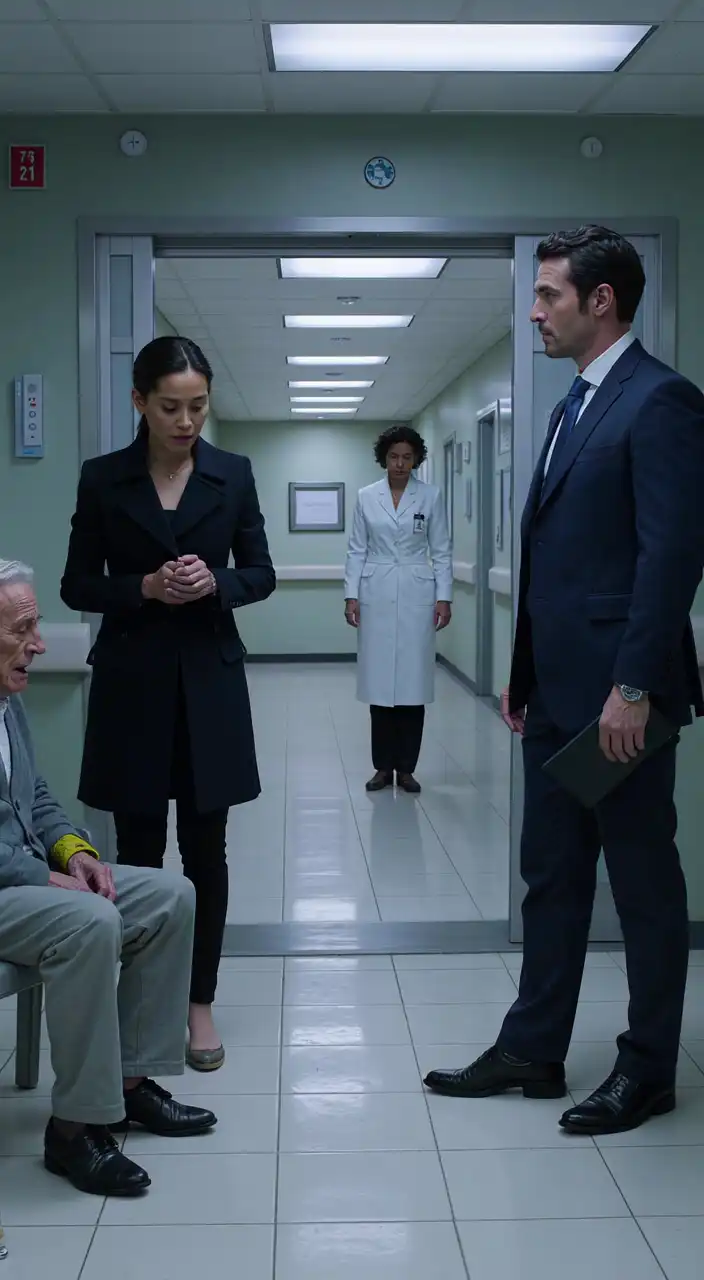
MY FATHER STARTED SHAKING OUTSIDE TRIAGE WHILE A CLINIC ADMINISTRATOR BLOCKED THE DOOR AND SAID HE NEEDED FAMILY PERMISSION FIRST.
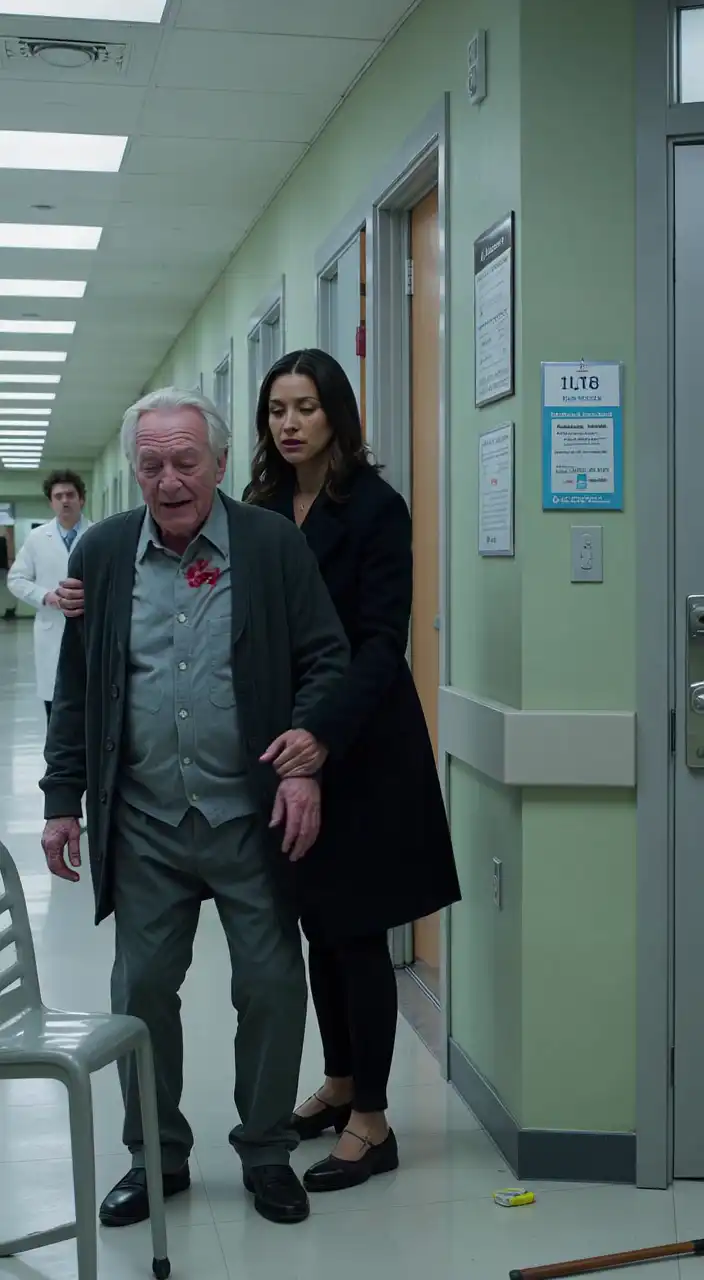
MY FATHER STARTED SHIVERING SO HARD HIS SURGICAL BANDAGE BLED THROUGH, AND THE CLINIC ADMINISTRATOR STILL BLOCKED THE TRIAGE DOOR.
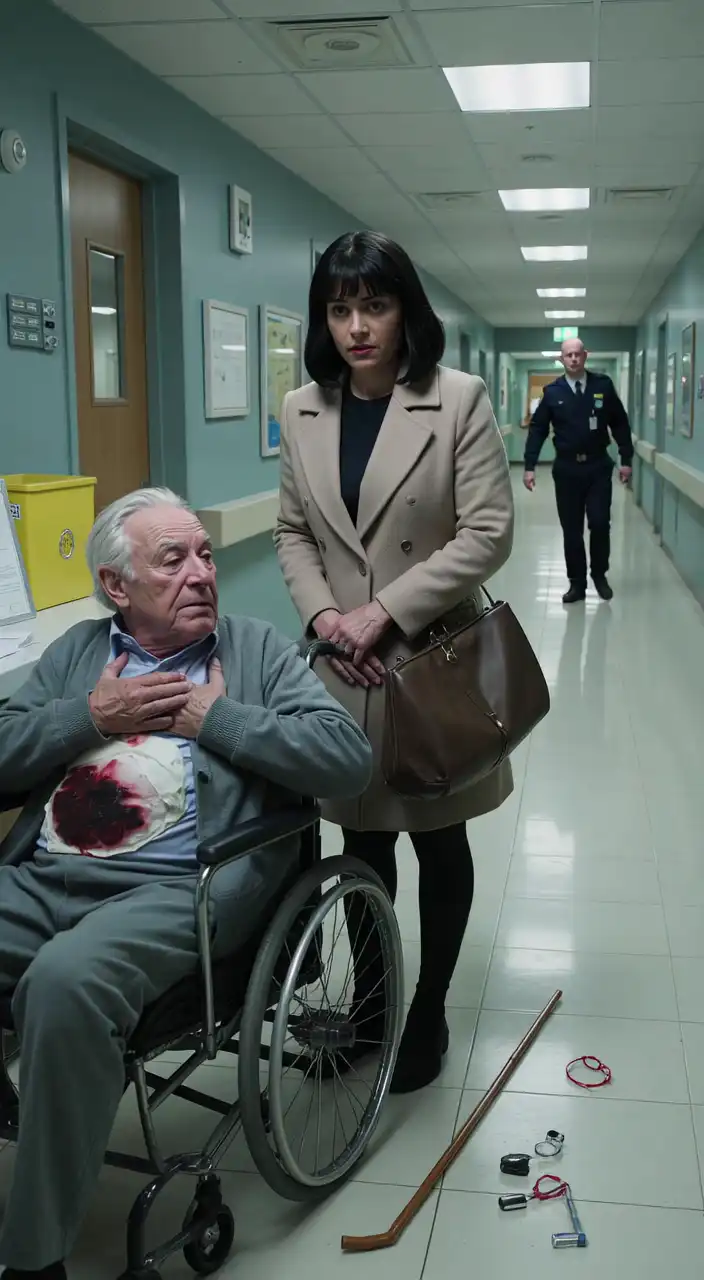
MY FATHER STARTED SHAKING IN THE HOSPITAL HALLWAY, AND THE WOMAN WHO CLAIMED TO BE HELPING HIM WOULD NOT LET TRIAGE TOUCH HIM.