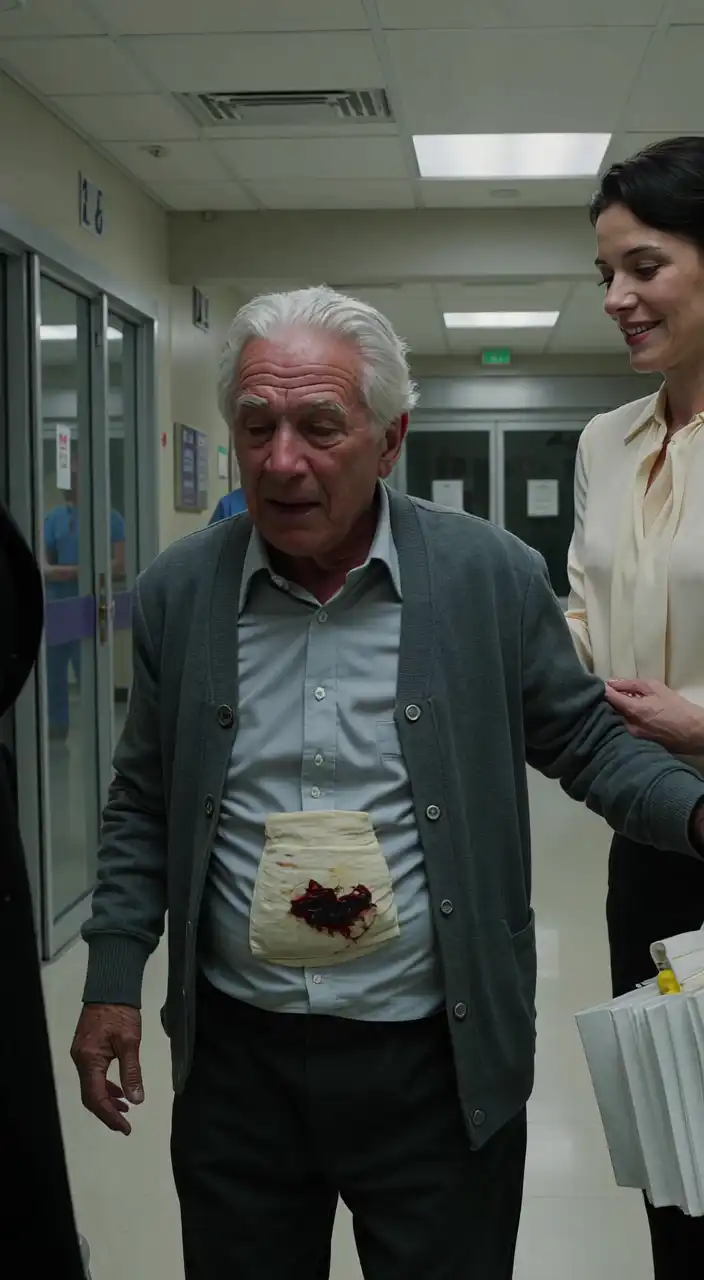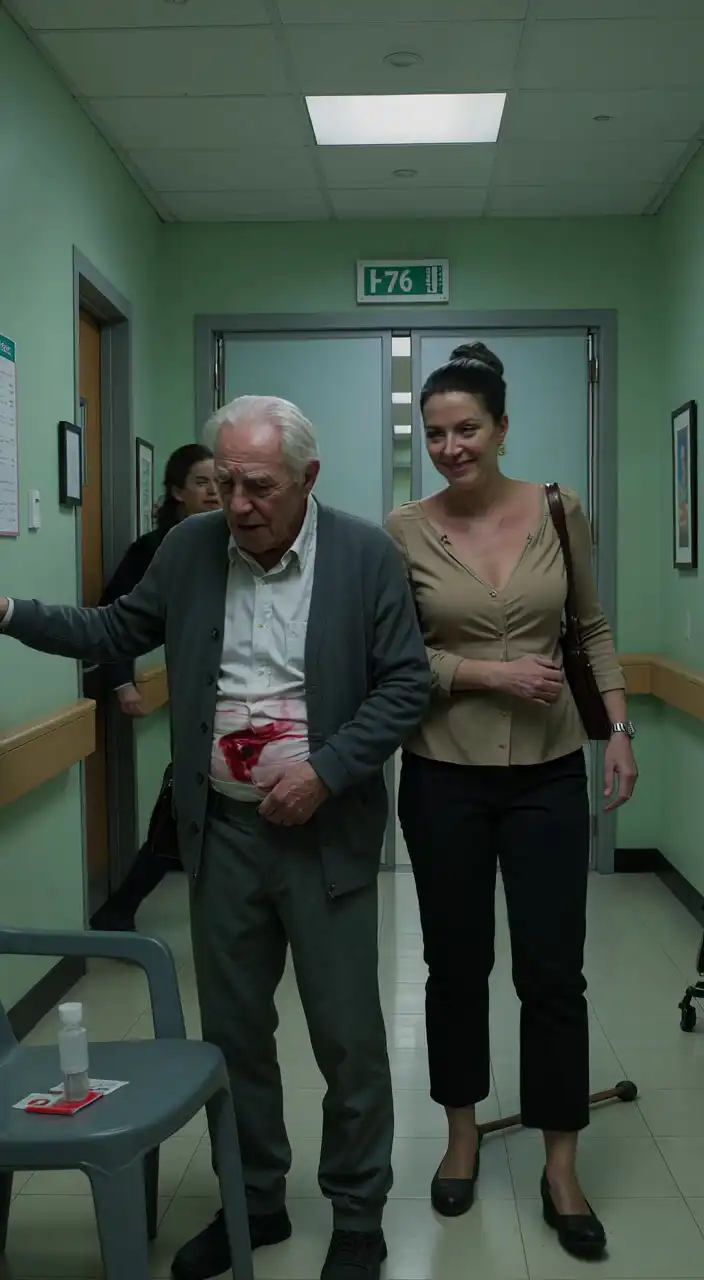
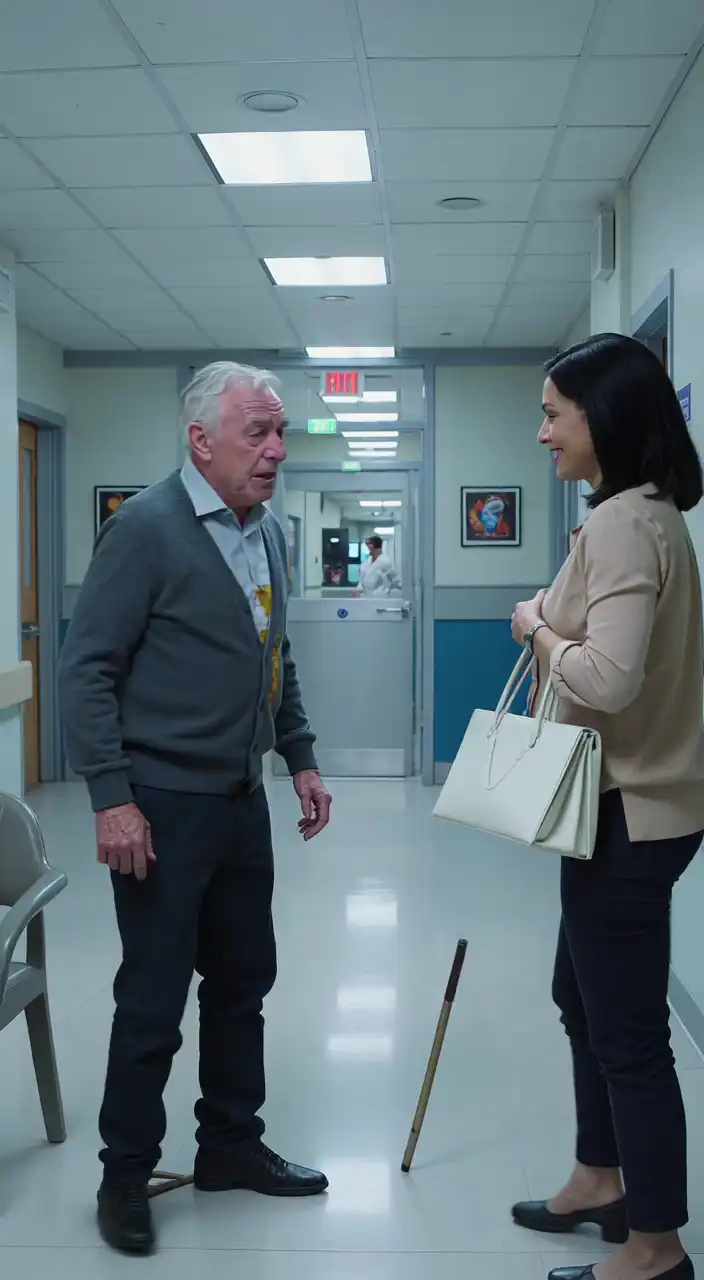
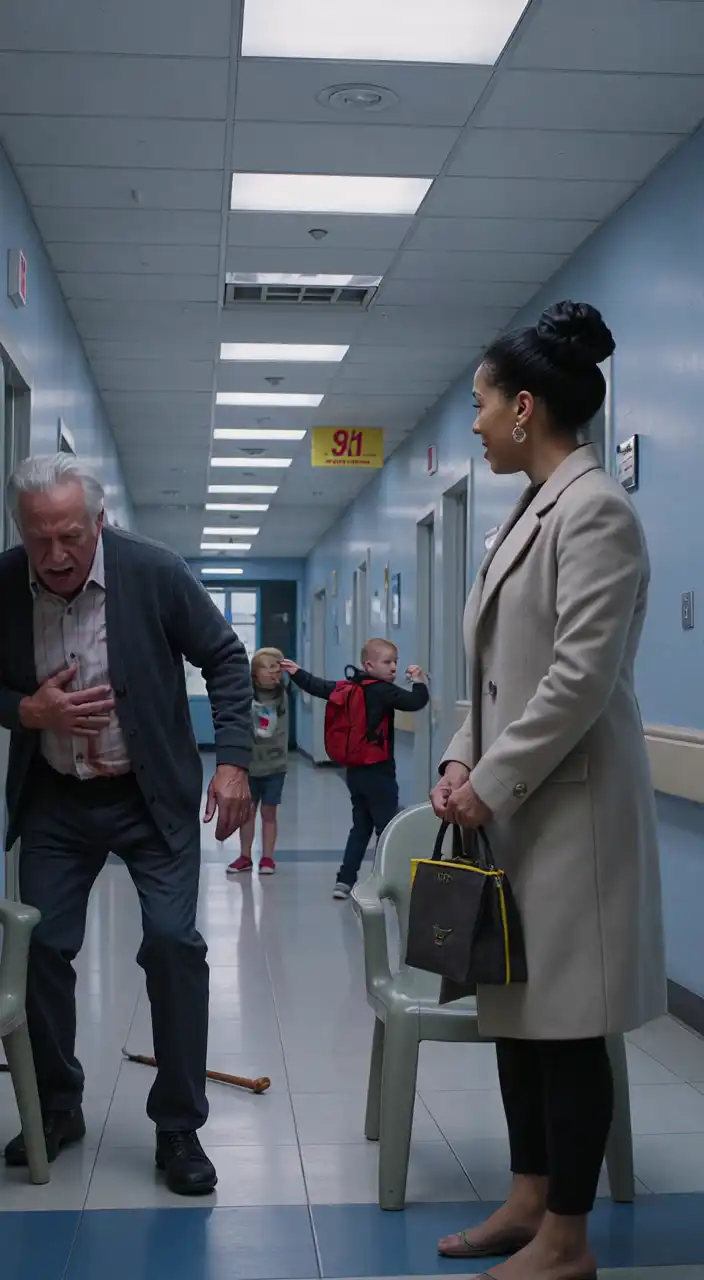

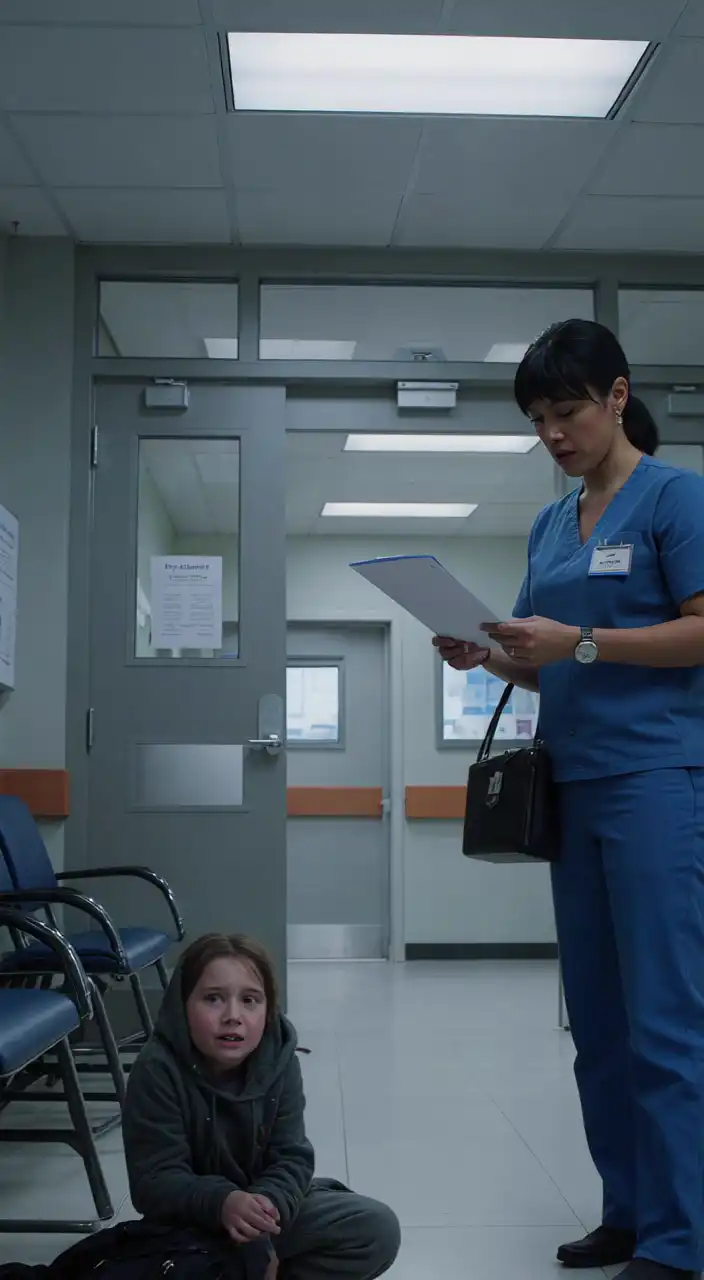
Nathan's eyes narrowed for one sharp second, then he turned his body sideways between Sophia and the triage exit.
"Call pediatric triage now," he said into his shoulder mic. "Possible medication withholding. Possible toxic exposure. Child cannot leave this corridor."
Everything moved at once after that, but not in a clean heroic way. Ryan tried to push himself up and couldn't. His arm slid out from under him, and his cheek hit the cold tile with a dull little sound that made two women in the waiting area stand up so fast their chairs scraped the floor. The nurse nearest the desk dropped to her knees. Sophia stepped forward like she was reaching to help him, but Nathan put out one arm and stopped her without touching her.
"Back up, ma'am."
"That is my son," she snapped. The calm smile was gone now. "He has panic attacks. You're making this worse."
Ryan made a wet choking noise that did not sound anything like panic. The nurse unzipped the front pocket of his backpack and pulled out the empty spacer. She looked toward the purse. Sophia caught that look and tucked the bag behind her leg.
"Where is his rescue inhaler?" the nurse asked.
"I told you. At home."
Ryan's fingers moved across the floor as if he was searching blind. His hand stopped against Nathan's shoe. He didn't look up, but his lips moved. The nurse bent close.
"What, baby?"
He took two tries to get the words out. "Purple... purse."
Sophia's whole body changed when he said it. That was the first honest thing she had shown all night. Fear flashed through her face so naked and fast it silenced even the people in the chairs. Then she covered it with outrage.
"He is confused," she said. "He takes too much cough medicine and says anything."
Nathan's eyes dropped to the dried yellow stain on Ryan's sleeve. "Did you give him cough medicine tonight?"
Sophia folded one arm over her purse. "I am not answering security questions without a doctor."
"Good news," the nurse said, already lifting Ryan with another staff member. "You're about to get one."
The triage doors slid open. The nurse who had first called "next patient" was back with a pediatric resident and a respiratory therapist carrying a nebulizer setup. Sophia lunged, not at Ryan but at the backpack. Nathan caught the strap before she could yank it away.
"Let go," she hissed.
"No."
Ryan was carried inside. The doors started to close. Sophia twisted to follow him, and Nathan blocked her path completely this time.
"You can come after the physician clears immediate treatment and after we document the belongings."
She stared at him like he had slapped her. "You cannot separate me from my child."
The pediatric resident, a young woman with tired eyes and no patience left in her voice, said, "A child who cannot breathe goes before your feelings. Sit down."
The hallway went silent again except for Ryan's ragged coughing behind the doors. Nathan held out his hand. "The purse."
Sophia's chin lifted. "No warrant."
"Then don't hand it to me. Hand it to the police officer who is already on the way because of the abuse alert attached to that chart."
That was when I saw the scribble Nathan had seen. The intake clipboard had slipped sideways on the counter, enough for the side note to show in block handwriting: Child reports aunt hides inhaler. Observe caregiver interactions if returns.
Aunt. Not mother.
Sophia saw me see it. She saw the nurse see me seeing it. Her face hardened, and for a second she looked less like an overwhelmed caregiver and more like someone whose mask had split down the middle.
"He says stupid things when he's upset," she muttered.
Nathan spoke into his mic again. "Add law enforcement. Prior clinic warning confirmed."
The next five minutes were ugly in the ordinary human way, not cinematic. Sophia cried loudly, accusing the hospital of profiling her, kidnapping her nephew, humiliating a family already under stress. Some people in the waiting area looked uncertain. A man in work boots even said, "Maybe just let her bring his medicine in?" Nathan didn't bite. He stayed planted in front of the triage doors, one hand open, one at his radio, while another nurse quietly moved the backpack behind the desk.
Then the doors opened and the respiratory therapist stepped out long enough to ask, "Did anyone find albuterol?"
No one answered fast enough.
Sophia's gaze flicked to the purse again.
Nathan saw it. So did the officer coming around the corner.
The officer was a deputy sheriff assigned to the hospital at night, a middle-aged woman with a blunt ponytail and the settled calm of someone who had heard every kind of lie. Her name tag said M. Reeves. She did not begin with threats.
"Ms. Sophia Bennett?"
"I don't have to talk to you."
"That's your right. What I do need to know immediately is whether there is life-sustaining medication in that purse that belongs to the child behind those doors."
Sophia swallowed. "No."
Reeves nodded once. "All right. Because if there is, and you delay care, you are creating an additional charge on top of interference."
"Charge?" Sophia laughed, but it came out thin. "For disciplining a dramatic kid?"
The triage doors opened again before Reeves could answer. The respiratory therapist's voice was sharper now. "He's not moving enough air. We need his current med history. We found residue in his mouth. Has he been given promethazine, codeine, anything sedating?"
That yellow stain on Ryan's sleeve seemed to brighten under the fluorescent lights.
Reeves extended her hand toward the purse. "Last chance to help the child voluntarily."
Sophia clutched it tighter. "He had a spoonful of cold medicine. That's normal."
"How much is a spoonful?" Nathan asked.
She turned on him. "Why do you care? You are security."
"Because I have seen kids die in hallways while adults argued."
That landed. For a second she seemed to deflate, and I thought she might finally hand it over. Instead she spun, maybe to bolt, maybe just from panic, but Reeves was ready. She caught Sophia's wrist, guided her against the wall, and took the purse without drama. No one shouted except Sophia.
"You people are ruining my life!"
Reeves opened the purse right there because the respiratory therapist was standing in front of her waiting.
Inside were a wallet, tissues, two lipstick tubes, a bottle of grape children's nighttime cough syrup with sticky yellow drips on the cap, and a blue inhaler with Ryan's pharmacy label still attached.
The hallway changed when everyone saw it. Not because the inhaler proved everything. It proved enough.
The respiratory therapist snatched the inhaler and disappeared through the doors. Reeves held up the cough syrup bottle and read the back. "Not for children under twelve without physician direction." Then she looked at the label on the inhaler. "Filled four days ago."
Sophia stopped fighting and started crying for real. "He wheezes on purpose when he wants to stay home. My sister lets him control everything. I was trying to get him to stop."
Nathan's jaw tightened, but he said nothing.
Reeves asked, "Where is his mother?"
The answer came too fast to be fully prepared. "Working nights."
"Phone number."
"I don't know it by heart."
"Then unlock his phone."
"He doesn't have one."
A unit clerk behind the desk spoke up softly. "There is a contact card in the backpack."
Nathan retrieved the card from the desk but did not hand it to Sophia. He passed it to Reeves. The card was creased, like it had been handled often by small nervous fingers. On one side in marker: Ryan Bennett - asthma action plan. On the other: Mom - Tasha, Grandma Louise, Dr. Avery clinic.
The planted details were gathering now: the empty spacer, the yellow medicine stain, the locked purse. None of them alone would have forced the truth open. Together they made a shape.
Reeves called the mother first. No answer. Then grandma. She answered on the second ring, breathless and frightened before Reeves had even finished identifying herself.
"Ryan? Did something happen? He was supposed to be with his aunt till morning. My daughter is on shift."
Reeves moved a few steps away, but in the bright hallway every word still felt loud. "Ma'am, your grandson is receiving emergency treatment. He appears to have been denied access to his inhaler and may have been given an inappropriate dose of medication."
There was a sharp cry on the phone, then a different voice, older, rougher. "Put me on speaker."
A man introduced himself as Louise's husband, not Ryan's blood grandfather but the one who had raised his mother. They were twenty-three minutes away.
"Tell him Grandma's coming," Louise said, voice shaking. "Tell him I told him to keep his blue bracelet on."
Blue bracelet. Nathan looked toward the triage doors. "He was wearing one?"
The nurse at the desk nodded. "Hospital ID bracelet from the clinic? No. Wait. No, woven bracelet. On his left wrist."
I remembered it then, barely visible under the oversized hoodie sleeve before he collapsed. A cheap braided blue bracelet, frayed almost white at one edge.
"Why does that matter?" Reeves asked.
Louise answered in a rush. "Because if he's scared, he rubs the knot with his thumb. And because there's a phone number stitched inside if he gets separated." Her breathing hitched. "And because he told me last week his aunt kept taking his inhaler and putting it in her purse when he 'acted spoiled.'"
Reeves' expression flattened into that cold professional anger some people earn from years of hearing the same pattern in different voices. "Did you report that?"
"We told the clinic. My daughter was afraid to start a family war until she could move out of Sophia's apartment. She just started getting night shifts again. We were trying to save for a place."
There it was: motive not evil in the movie sense, but suffocatingly real. Poverty, cramped housing, dependence, pride, fear, and a child stuck inside it.
When the triage doors opened next, Dr. Avery himself stepped out. Not a resident this time, but the pediatrician from the clinic note, summoned from upstairs because someone had attached his prior warning to the hospital chart. He was still in a white coat over scrubs, gray at the temples, eyes already fixed on Sophia.
"I remember this child," he said.
Sophia looked away.
Dr. Avery held up the cough syrup bottle between two fingers. "And if I remember correctly, I specifically told this family no sedating cold preparations because they suppress respiratory effort and mask distress. I also documented concern about medication control in the home."
Nathan's voice stayed even. "Can he hear you from inside?"
Dr. Avery glanced through the doors. "Not yet. He's on oxygen and nebs. We're stabilizing him." Then he looked back to Sophia. "What else did you give him?"
Sophia's lips parted.
For a moment, it looked like she might answer.
Instead she whispered, "You don't understand what he's like at night."
And Dr. Avery said, "Then help me understand before your silence does more harm."
The silence that followed was worse than shouting, because everyone knew the next answer was going to change what happened to Ryan after he could breathe again.
Sophia stared at the floor, at the scuffed gray tile near Reeves' boots, like the answer might be written there if she waited long enough.
Dr. Avery did not move. "What else did you give him?"
Her shoulders rose once, then dropped. "Just what the bottle says."
"That is not an answer."
She pressed her lips together.
Behind the triage doors, a monitor alarm chirped three rapid notes and stopped. Every person in the hallway heard it. The respiratory therapist reappeared, hair slipping from her clip, one glove on, one off.
"Doctor, sats are climbing but he's still drowsy. We need to know if there was diphenhydramine, promethazine, melatonin gummies, adult meds, anything."
Sophia looked at her and said, with almost childish stubbornness, "He fights sleep."
Reeves took one step closer. "Ms. Bennett, this has moved beyond argument. If you know what is in his system and you keep it from the medical team, you are risking that boy's brain, not your pride."
The waiting area was no longer pretending not to listen. The man in work boots had gone quiet. One of the women who had stood earlier was crying openly now, hand over her mouth. The fluorescent lights hummed over all of us, indifferent and bright.
Sophia's chin trembled. "I gave him cough medicine."
"How much?" Dr. Avery asked again.
"Two caps."
The therapist swore under her breath.
Dr. Avery's expression sharpened. "How many times?"
Sophia hesitated.
"How many times?"
"Three."
Reeves closed her eyes for half a second. "Over what period?"
"Since dinner."
Nathan's jaw flexed. "He is seven."
"I know how old he is." She snapped it, then heard herself and sagged against the wall. "He would not stop coughing. He would not stop pacing. He kept saying he couldn't breathe and wanted the hospital and my sister was at work and I had an early shift and he gets everybody spun up and then they all look at me like I did something wrong."
The therapist had already turned and was halfway through the doors by the time Sophia finished. Dr. Avery followed her in two hard strides, taking the bottle with him.
That should have been the end of the hallway scene. It wasn't. The medical emergency had crossed a line, and now the evidence was starting to move in all directions at once.
Reeves took the purse and set it on the intake counter. "Bag this. Full contents photographed before transfer."
The desk nurse nodded and pulled a clear evidence pouch from a drawer I had not noticed before.
Nathan pointed to the backpack. "Bag that too. Do not separate the spacer, the contact card, or any medication instructions inside."
Sophia looked up sharply. "You can't take his stuff."
Reeves answered without heat. "I can secure items tied to delayed care and potential poisoning. And right now that's exactly what this is."
Poisoning. The word landed in the hallway like a dropped weight.
Sophia flinched. "I didn't poison him."
"No?" Reeves said. "Then help us rule out what did."
That changed something in Sophia's face. Until then she had looked angry, defensive, cornered. Now a thin thread of fear, different from fear for herself, pulled across her expression.
"What do you mean?"
Nathan noticed it too. "You tell us."
She shook her head too fast. "Nothing. I mean nothing."
Reeves was watching her hands. "You reacted to that."
"I said nothing."
The triage doors opened again. A second nurse came out carrying a zip bag with a tiny emesis basin inside and a used wipe stained yellow. "Lab wants chain of custody because of the syrup and residue. Also they found pill fragments in the hoodie pocket."
Everyone froze.
Sophia blinked. "What?"
The nurse looked at her. "Small white fragments. Dissolving. We sent them."
Dr. Avery's voice carried from inside. "Get toxicology on standby."
Reeves turned back to Sophia slowly. "Now would be an excellent time to stop lying."
"I didn't put pills in his pocket." She sounded shocked enough that even Nathan tilted his head.
"Did anyone else have access to him tonight?" Reeves asked.
"No."
"Who lives in the apartment?"
"Me. My sister when she's not staying with our mother. Ryan when she works. Sometimes my cousin Darnell crashes on the couch."
Nathan's eyes narrowed. "How old is Darnell?"
"Twenty-one."
"Drug history?"
Sophia glared. "We're not all criminals."
Reeves cut in. "That was not the question."
Sophia swallowed. "He smokes weed. I don't know about anything else."
The desk clerk, still handling the contact card, said softly, "Officer, there are notes written on the back under the emergency numbers."
Reeves took the card. She read, then handed it to Nathan. In small, cramped pencil, almost erased by pocket wear, were four words: Check hoodie pocket if sleepy.
Nathan looked at Sophia. Then at Reeves. Then toward the doors.
Sophia stared at the card as if she had never seen it before. "He wrote that?"
"No," Reeves said. "Someone wrote it for him."
The first real reversal hit then. Until that moment the scene had looked like one adult withholding an inhaler and overdosing a child with cough medicine. Ugly, serious, direct. But the pencil note and the pill fragments cracked the story open wider. Either someone else had suspected more than inhaler hiding, or Ryan had been carrying evidence around in his own pocket because he had learned adults would deny what happened to him.
Reeves touched her radio. "I need CPS notified, not just on-call. Immediate response. Also request local PD narcotics consult if the lab flags those fragments."
Sophia's voice rose. "CPS? For cough syrup?"
"For a child on a hospital floor with a hidden inhaler, possible oversedation, and undocumented pills in his clothes, yes."
She pushed off the wall then, all tears gone, fresh fury replacing them. "You don't understand how families work. You hear one thing and decide you know everything. He lies because his mother babies him. He makes himself sick. He hyperventilates. He scratches his throat till he gags. Nobody sees what I deal with."
Nathan's answer came cold. "A seven-year-old should not be something you 'deal with.'"
She pointed toward the doors. "He acts like he can't breathe whenever he doesn't want to sleep."
"Children with asthma often do struggle at night," the desk nurse said quietly. "That's in every parent education packet."
Sophia whipped toward her. "I am not his parent."
No one missed that.
Reeves did not pounce, but her voice changed. "You were willing to claim him as your son when it blocked intervention. Now you want distance."
Sophia realized the trap too late. "I just meant-"
"I know what you meant."
A phone rang from inside the evidence bagging area. Another clerk picked it up, listened, and called out, "Ryan's mother is on line two. She says she's leaving work now and wants someone medical, not police."
Dr. Avery emerged again, pulled off one glove, and took the call at the desk. We could hear only his side.
"Ms. Bennett, this is Dr. Avery. Ryan is receiving treatment. He is breathing better than when he arrived... no, he is not fully stable yet... yes, there are concerns about what he was given... I know... listen to me, I need exact medications in the home. Send photos of every bottle near his bed, the bathroom, kitchen counter, your sister's purse if you know it, everything."
His pause was long.
"Because there are pill fragments in his clothing."
Sophia made a strangled sound. Not anger this time. Panic.
Dr. Avery listened another moment, then looked up sharply at Reeves. "Mother says Sophia called her at eight and said Ryan was already asleep. Mother says he never sleeps before ten unless he's sick."
Reeves held out her hand. Dr. Avery passed her the receiver.
"Ms. Bennett, this is Deputy Reeves. Did your son ever tell you anyone gave him pills?"
A tinny voice answered loud enough for us to hear pieces of it from where we stood. Fast, breathless, furious. Reeves' face hardened with each fragment.
"He said... yes... in applesauce?... who gave them... did he say what they looked like... all right, slow down."
Nathan moved closer, not intruding, but ready.
Reeves covered the mouthpiece. "Mother says he told her twice this month that Aunt Sophia gave him 'crumbly sleep sugar' in applesauce and then hid his inhaler when he got scared."
Sophia's knees buckled enough that she had to catch the wall. "That is ridiculous."
Reeves went back to the phone. "Did you report that to anyone besides clinic?... yes... yes, I understand why you were afraid... no, ma'am, I am not promising anything except that your child is not leaving with the person who brought him."
Sophia lunged not toward the door but toward the desk phone. Nathan intercepted her, open hands, no theatrics, but immovable.
"You don't get to do this to me," she said, voice breaking.
"Too late," Reeves said into the receiver. "Ma'am, where are you now?... Good. Drive safe. Do not speed. Security will meet you at the entrance."
Then she hung up and looked straight at Sophia. "You had warnings. The clinic had warnings. Family had warnings. You are standing in the middle of a pattern, not a misunderstanding."
Sophia's breathing got faster. For one dangerous second it looked like she might bolt again. Her eyes skittered down the hall, calculated the exit, then snapped back to the triage doors. Maybe she understood running would look like guilt. Maybe she was just exhausted. Instead she whispered, "I never wanted to hurt him."
Dr. Avery's expression did not soften. "Intent matters in court. It matters much less in the lungs."
He disappeared back inside.
Around then, the first wave of authority pressure arrived in person.
A woman in a county badge and plain blazer came down the hall at a pace that was almost a run. She had no dramatic entrance, just the alert stride of someone summoned from another crisis into this one. "Elena Cruz, child protective services," she said, flashing ID to Reeves and Nathan in one practiced motion. "Who has eyes on the child, who has custody claims, and what is the current medical threat?"
Reeves answered in clipped order. "Child in triage treatment, possible toxic ingestion and medication withholding. Caregiver is aunt, not mother, falsely presented relationship initially. Inhaler recovered from caregiver's purse. Cough medicine found. Potential pills in pocket. Mother en route from work. Grandmother and grandfather also en route."
Cruz looked at Sophia once, read her almost instantly, and said, "Do not let her near the family members alone when they arrive."
Sophia gave a short bitter laugh. "Like I'm some monster."
Cruz did not react. "Monsters are easy. Most child harm is done by ordinary adults who decide a child's distress is inconvenient."
That shut the hallway down again.
A lab tech arrived to collect the evidence bags. Nathan signed one line, Reeves another. The movement of the objects became strangely ceremonial. Purse. Syrup bottle. Inhaler logged and transferred back to medical after photo capture. Backpack. Spacer. Hoodie bag requested after clothing change. Emesis sample. Wipe. Pill fragments pending chemistry. Every item that, an hour ago, had looked like random clutter around a tired child now moved under signatures and times and initials.
Evidence had a way of making a private cruelty public.
Sophia watched it happen like someone watching furniture carried out of her house after a fire.
Then came the next turn.
Dr. Avery returned, but this time his face had changed from focused anger to a more complicated urgency. "We need to know whether Ryan could have been exposed to blood pressure medicine, sleep aids, or diabetic drugs in the home."
Sophia stared. "What? No."
"What do you mean no? You haven't even thought."
"I keep my meds in my room."
"What meds?" Reeves asked.
Sophia looked trapped.
Cruz stepped in. "Answer him."
Sophia crossed her arms tight over herself. "Clonidine."
Dr. Avery's head snapped up. "Dose?"
"Point one milligrams."
"Tablet?"
"Yes."
"When was your last refill?"
"I don't know."
"Where do you store it?"
"In my dresser. Sometimes my purse if I forget."
Reeves and Nathan exchanged a look. The purse.
Dr. Avery held out his hand. "Did you have it tonight?"
Sophia didn't answer.
He took a breath he clearly regretted needing. "Clonidine can sedate a child, drop blood pressure, and make it harder to interpret respiratory distress. If those fragments are clonidine and you are just now telling us, every minute matters."
Her voice came out tiny. "I don't know if it was tonight's purse."
Nathan unsealed the outer evidence pouch enough for Reeves to inspect under chain protocol. She moved the wallet, tissues, lipstick, sticky syrup bottle, and then her gloved fingers found an orange pharmacy vial lodged in the lining seam.
She held it up.
Sophia shut her eyes.
Reeves read the label aloud. "Sophia Bennett. Clonidine 0.1 mg."
Dr. Avery's voice went flat. "Count the tablets."
Reeves opened the vial. "Prescription says thirty. Remaining... nineteen."
"When filled?"
"Six days ago."
Dr. Avery did a rapid calculation in the air. "Could still be normal adult use. Could also not be." He reached for the bottle. "I need this documented and sent to tox now."
Sophia suddenly spoke with frantic speed. "I only use one at night, sometimes two if I can't sleep. Sometimes I lose them in my bag. I did not mean- I never crushed-"
She stopped herself. Too late.
Cruz's eyes sharpened. "Never crushed what?"
Sophia's mouth opened and closed.
Reeves said softly, "There it is."
For the first time since security stepped out of those doors, Sophia looked directly afraid of prison.
She tried another direction. "He wouldn't settle. He was coughing and rubbing his eyes and saying he wanted his mother and I had to be up at five and my sister always dumps him and then acts like I owe her because she helped me last year when I couldn't pay rent and everybody acts like I'm cruel if I say he manipulates. I just wanted him to sleep. Just sleep. I gave him a little. That's all."
No one answered immediately, because there was no answer that would make any of that smaller.
The conflict shifted again when Ryan crashed.
Not into full cinematic arrest. Something worse in a way because it was all too believable. An alarm sounded from inside triage, sustained this time. Staff voices rose. A nurse ran to the supply cart. The respiratory therapist shouted, "Doctor now." Dr. Avery was gone before the second syllable.
Sophia made a sound I had not heard from her yet, not outrage, not defensiveness, but a raw animal moan. "Ryan."
She tried to push past Nathan. He stopped her again. This time she hit his chest with both fists, weakly at first, then harder. "Let me see him. Let me see him. I said let me see him."
Cruz and Reeves moved in together. Reeves caught her wrists. Cruz's voice was low and controlled. "Do not make this harder for him."
"He needs me."
Cruz stared at her. "No. He needed you an hour ago."
That was the emotional reversal. Until then, some sliver of the scene had still been about Sophia's explanations, Sophia's motives, Sophia's unraveling. The alarm inside erased that. Now every adult in the corridor understood that Ryan might still lose the fight that had been delayed in front of all of us.
Minutes stretched.
No one sat down. No one checked a phone. Even the desk clerk stood still with one hand pressed against the edge of the counter.
A resident emerged briefly asking for pediatric intensive care to be alerted. My stomach dropped when I heard that. Sophia heard it too and went white under the hallway lights.
"PICU?" she whispered to no one. "No. No. It was cough medicine."
Nathan did not answer her. But I saw his expression change, a rare crack in his professionalism. Controlled anger was still there, but beneath it lived fear.
Then came a clue no one expected.
The grandmother arrived before the mother.
Louise was small, gray braids escaping a scarf, house shoes shoved into the wrong feet as if she had dressed while running. The man with her, broad-shouldered and breathing hard, had one hand under her elbow but looked more ready to charge a wall than support anybody. Security from the entrance trailed them by three steps.
"Where is he?" Louise cried.
Cruz intercepted gently, identifying herself. Reeves identified herself. Dr. Avery was still inside. Nathan pointed to the doors and said, "They're treating him now."
Louise saw Sophia and stopped moving.
The older man's face darkened instantly. "You."
Sophia said, "Mama Louise, listen-"
"Don't call me that."
The force of it silenced the hall.
Louise's gaze fell to the evidence bag on the counter, to the familiar blue inhaler visible through plastic, to the syrup bottle, then to Sophia's face. Some people collapse when the truth arrives. Louise hardened.
"He told me," she said. "He told me you made him earn air."
Sophia started sobbing. "That is not what happened."
Louise reached into her coat pocket with shaking fingers and pulled out a folded paper so worn it nearly split. "I wrote down every date. Every time he came back from your place too sleepy. Every time the inhaler was 'missing.' Every time he woke up dry heaving or wet himself because he was too sedated to get up. My daughter said we needed proof because nobody listens if poor people come in saying family is dangerous."
She thrust the paper at Cruz.
Cruz took it carefully. Dates. Times. Symptoms. Notes from school. "Said aunt gave pink applesauce." "Could not wake for school." "Inhaler missing again." "Clinic visit advised." "Video? ask Tasha to save."
Reeves looked up. "Video?"
Louise nodded, furious tears in her eyes. "Tasha set an old phone on the kitchen shelf two weeks ago when Sophia was supposed to watch him while she showered before work. Ryan started wheezing. He kept pointing at Sophia's purse. It's on that phone if she didn't erase it."
Sophia stopped crying.
That was all the answer anyone needed.
Cruz turned to Reeves. "Secure the residence before anyone can tamper."
Reeves was already on the radio requesting a unit for the apartment and authorization for exigent preservation pending warrant.
Sophia's voice came out hoarse. "You don't have that video."
Louise took one step toward her, not enough to threaten, enough to condemn. "If God is kind, we do."
The older man beside her, Louise's husband, looked at Nathan instead of Sophia. "Can I see the boy?"
Nathan's voice softened by a degree. "As soon as the doctor clears visitors."
The triage doors opened. Everyone turned.
It was not Dr. Avery. It was the resident from earlier, face drawn, mask hanging loose at her neck. "Family for Ryan?" she asked.
Louise's hand shot up. "Grandmother."
"Mother is still coming?"
"Yes."
The resident nodded. "He had a significant desaturation episode. We supported his breathing and he's responding, but we are moving him upstairs for closer monitoring. He is not out of danger until we know what all he took."
Louise covered her face and cried into her palms. Her husband wrapped one arm around her but kept his eyes on the resident. "Can he hear us?"
"Maybe. He's sleepy. But yes, talk to him if you go in calm."
Sophia tried to step forward. "I need to go."
The resident looked at Reeves, then Cruz, then at Sophia's restrained posture and tear-swollen face. "No," she said simply. "Not right now."
Sophia folded in on herself as if struck.
The mother arrived seconds later, almost colliding with the transport team bringing up a gurney. Tasha was younger than I expected, still in work scrubs with a name badge from a nursing home, hairnet shoved halfway off, eyes wild from the drive. She did not first look at Sophia. She looked at the child on the bed.
Ryan was tiny under the blankets. Oxygen tubing looped over his cheeks. A neb mask rested askew near his chin. His hoodie was gone, replaced with a hospital gown. His left wrist wore the frayed blue bracelet Louise had described, and his thumb, even half-conscious, moved once against the knot.
Tasha let out a broken sound and went to him. "Baby. Baby, Mommy's here."
Ryan's eyes fluttered but did not fully open. His lips moved around dry breaths.
Dr. Avery walked beside the gurney now, one hand on the rail, giving quick updates to transport and the floor nurse receiving him. "Possible mixed ingestion. Responsive but lethargic. Reactive airway flare. Continue bronchodilator protocol. Tox pending. Watch pressure."
Then Ryan whispered something.
Tasha bent low. "What, honey?"
Again, softer.
Dr. Avery paused the moving bed with one palm. "Can anyone hear him?"
Tasha put her ear almost to his mouth. When she straightened, she was crying harder.
"He said, 'Don't let her take my air.'"
The hallway broke.
Louise sobbed out loud. Her husband swore and turned away, hand over his eyes. Even the resident looked gutted. Nathan's stare fixed somewhere beyond the far wall. Reeves' face shut down into pure procedure because that was the only armor left. Cruz wrote something on her pad with deliberate pressure.
Sophia whispered, "Ryan," as if his name alone might undo what he had said.
Tasha turned then.
I will remember that turn longer than anything else. Not because she screamed. She did not. She looked at her sister with such stripped, disbelieving betrayal that the absence of volume was worse.
"You did that to him?" she asked.
Sophia reached out. "Tasha, listen to me. He gets worked up and I thought if he slept-"
"You did that to him?" Tasha repeated.
"I was tired."
Tasha laughed once, a cracked impossible laugh. "So was he."
Security moved the gurney on. Tasha went with it, one hand on Ryan's ankle under the blanket as if she refused to lose contact again. Louise followed. Her husband followed. Dr. Avery followed.
Sophia tried to go after them and Reeves stepped in front of her. "No."
Sophia collapsed into a chair at last, all the fight gone. For a minute nobody addressed her.
Then another officer arrived with news from the apartment.
"Entry made by consent from building manager after emergency welfare concern," he reported to Reeves. "Kitchen trash has a spoon with pink residue, applesauce cups, and pediatric med syringes. Bedroom dresser open. Missing tabs from multiple prescriptions unknown yet. Also found an old smartphone taped under an upper cabinet facing the table."
Louise, halfway to the elevator, turned back at that. "The phone."
The officer nodded. "Sending digital crimes to preserve it."
Sophia put both hands over her face.
The rescue had become exposure completely now. Not just a child pulled over a threshold into treatment, but a whole hidden pattern dragged under institutional light.
Cruz crouched in front of Sophia, not kind, not cruel. "You need to hear the next part clearly. Ryan is under protective hold. You will not visit him without authorization. You will not contact him directly. You will not contact family to shape statements. If your concern right now is yourself, you are late. If your concern is him, the best thing you can do is tell the full truth before lab results tell it for you."
Sophia spoke through her fingers. "I never wanted this."
Cruz stood. "Children almost never do."
Another conflict rose before the corridor could settle: the mother wanted immediate charges; the grandmother wanted immediate surgery on the family itself; the officers needed facts, not just heartbreak.
Tasha returned from the elevator alone after the transport left, because Ryan was being admitted upstairs and only one caregiver could ride with him. She was shaking so hard she had to hold the wall. Reeves met her halfway.
"I need your statement."
Tasha wiped her nose with the back of her hand. "Take it now."
Sophia stood. "Tasha, please. Tell them I love him."
Tasha rounded on her. "Love is not hiding a rescue inhaler in your purse."
"It was one time."
Nathan made a small sound through his nose. He had heard enough lies tonight to recognize a reflex one.
Tasha heard it too. "Do not. Do not insult me with that. He told me you did it before. He started hiding notes in his things because he thought nobody believed him."
Sophia looked stunned. "Notes?"
Louise held up the folded symptom paper. "He learned from us because we were trying to keep him alive."
That sentence landed even harder than Ryan's whisper.
Reeves guided Tasha to the side desk for the statement. Cruz took Louise aside to start emergency placement paperwork in case the hospital required legal authorization for a non-parent overnight stay. Nathan coordinated access logs and camera pulls from the corridor. The little bureaucracy of rescue expanded outward, each person taking a slice of what had happened and locking it into records that would outlast memory.
I thought then that things might finally slow.
They did not.
A call came from the lab.
The nurse at the desk took it, listened, and paled. "Doctor? Security? They prelim'd one fragment."
Reeves was nearest. "What is it?"
"Clonidine. Consistent with the bottle from the purse."
Sophia made a soft choking noise.
"And?" Reeves prompted.
The nurse looked stricken. "Tox says the syrup residue also shows diphenhydramine concentration higher than expected from the label. They think another liquid may have been mixed in the bottle."
Tasha stood up so fast her chair tipped backward. "Mixed with what?"
The nurse swallowed. "They don't know yet."
Reeves was already writing. "So the child was not only oversedated by multiple capfuls. The bottle itself may have been altered."
Sophia shook her head violently. "No. No. I didn't- I only put the clonidine in applesauce once. Maybe twice. I didn't mix the bottle."
Once. Maybe twice.
Her own correction convicted her.
Every face in the hallway turned to her.
Tasha looked like she might faint, but anger held her upright. "You drugged my son."
Sophia cried, "I was desperate."
Louise said, voice suddenly dead flat, "And he was seven."
The unknown mixture changed the pressure again. This was bigger than one aunt making bad choices to force sleep. Either Sophia had done more than she admitted, or someone else in that apartment had access to the medications and to Ryan. The possibility of another hand in it brought fresh danger.
Reeves asked sharply, "Who else handles that cough bottle?"
"No one."
"Think."
Sophia stared at the floor. "Darnell grabs anything. He takes cough syrup when he can't get pills."
There it was.
Nathan looked at Reeves. "Apartment scene needs expansion."
Reeves was already relaying it.
Cruz muttered, "So now we may have neglect, physical abuse, and environmental drug exposure."
Tasha sank back into the chair, suddenly looking very young. "I left him there because I had to work." She was not talking to anyone in particular. "I left him there because rent was due."
Louise knelt in front of her daughter. "No. We are not doing that tonight. She did this. Not you."
"But I knew."
"You feared. That's not the same as doing."
Emotional reversal again. The accusation had shifted from Sophia to Tasha for one cruel second in Tasha's own mind, and Louise would not let it settle there. That mattered. You could feel it. In that corridor full of paperwork and evidence bags and legal language, one grandmother was fighting to keep the mother from collapsing into self-blame so deep she could not advocate for her child.
Dr. Avery came back down from the floor after settling Ryan in pediatric intensive monitoring. He had changed gloves and scrub top, and his face carried that post-crisis fatigue doctors get when adrenaline fades before the danger does.
"He is more stable," he said.
Tasha stood immediately. "More stable means what?"
"It means his oxygen is holding with support. His blood pressure dipped but is responding. He is not intubated. I want to be very clear: that is good news. But we still do not know the full ingestion profile, and clonidine can have delayed effects in children."
Tasha nodded too quickly, trying to breathe.
Louise asked, "Can I see him now?"
"One at a time for a few minutes. Keep it calm."
Then Dr. Avery turned to Reeves and Cruz. "I also need to report a physical finding."
Everyone went still.
"He has healing bruises on the upper arm, fingerprint pattern, not consistent with routine play. Older than tonight."
Sophia whispered, "He bruises easy."
Dr. Avery looked directly at her. "Then it's unfortunate for you that these are hand-shaped."
Reeves wrote more. Cruz closed her eyes briefly, then reopened them with renewed purpose. "Hospital photographs before marks change."
"Already ordered," Dr. Avery said.
The rescue consequences kept unfolding, layer after layer. It was not one dramatic save and a clean ending. It was systems engaging, medicine uncovering, family redefining itself in public.
Nathan approached Tasha then, surprisingly gentle for a man who had spent the night as a wall. "We pulled corridor footage. It shows Ryan reaching for the backpack and Ms. Bennett moving it away with her foot. It also shows him looking at her purse when asked for the inhaler. If you need to know whether anyone believes what happened, they do."
Tasha's eyes filled again, but this time with something steadier than shock. "Thank you for not letting her take him."
Nathan nodded once. "I was late enough."
He meant the clinic warning, the hallway delay, the fact that it took a collapse to trigger the code. The guilt sat on him even though he had been one of the people who intervened. In a threshold rescue, everybody arrives feeling late.
A detective from the city finally appeared, summoned by the poisoned-bottle possibility. He took the clonidine prelim, the altered syrup note, the apartment evidence report, and began the hard practical questions that would carry this beyond the hospital.
"What brand applesauce? Anyone else feed him? Any history of accidental ingestion? Has the child ever been treated elsewhere for unexplained lethargy?"
Louise answered some. Tasha answered some. Dr. Avery supplied clinic records. Cruz requested school attendance logs and nurse notes. Reeves arranged for formal arrest processing if probable cause held. Nathan provided camera preservation numbers. The evidence was moving from hallway gossip to a case file.
Sophia sat in the chair and shrank with every document.
At one point she said, very softly, "Can I at least tell him I'm sorry?"
No one answered right away.
Then Dr. Avery said, "An apology is for the person harmed, not the person afraid."
She started crying again.
The detective asked if she wanted to make a statement with counsel. She nodded. Then shook her head. Then nodded again. "I don't know."
"Then don't speak until you do," he said.
For a while the hallway became procedural. Sign here. Initial there. Confirm date of birth. Verify relation. Spell the cousin's name. List medications in the apartment. The hum of a machine larger than any single person's emotion.
But human cracks kept appearing through it.
Louise came back from seeing Ryan with fresh tears and a strange little smile. "He squeezed my finger."
Tasha almost folded in relief.
"Did he wake up?" Dr. Avery asked.
"Only a little. He asked if the blue bracelet stayed on."
Dr. Avery's own mouth softened at that. "Tell him yes."
Tasha whispered, "He thinks if the bracelet stays on, Grandma can find him."
Louise touched her daughter's cheek. "Tonight she did."
Near midnight, an update from the apartment came through. The smartphone video had been recovered. Not deleted. Low battery, poor angle, but usable. No one played it in the waiting area, but the officer summarized: Ryan at the table coughing and crying. Sophia saying, "You are not doing this all night." Sound of spoon against cup. Child saying, "I need my pump." Sophia replying, "You get it when you calm down." Purse on the counter within frame.
That was enough.
Reeves informed Sophia she was being detained pending formal charges related to child endangerment, obstruction of emergency medical care, and possible poisoning subject to toxicology confirmation. She did it respectfully, but there was iron in every word.
Sophia did not fight this time.
As Reeves guided her up, Tasha turned away. She could not watch. Louise could. She watched every second.
Sophia looked at Nathan once as she was led down the hall. "I was trying to stop a scene."
Nathan answered, "You caused one."
Then she was gone around the corner with the detective and Reeves.
The aftermath should have felt victorious. It didn't. It felt expensive. Rescue often does.
The waiting area slowly emptied. The woman who had cried earlier came over to Tasha and pressed a card into her hand. "My church helps with rides and meals," she said awkwardly. "Use it or don't. I just... use it if you need."
The man in work boots mumbled an apology for speaking up for Sophia before. Tasha only nodded. She had no room left to comfort strangers.
Nathan retrieved his clipboard at last and looked older than he had at the start of the night. Cruz stood beside him, comparing notes for the court hold that would keep Ryan protected through discharge. Dr. Avery ordered a full social work consult, home safety review, and prior-record retrieval from the clinic and school. Every institution that had brushed against Ryan's life was now being asked what it had seen and whether it had looked away.
Around one in the morning, Ryan woke enough to answer questions.
I did not hear them directly. But the information flowed back through the staff in pieces.
Yes, Aunt Sophia had hidden the inhaler before. Yes, she told him he was "acting dead for attention." Yes, she sometimes put "sleep crumb" in applesauce. No, he did not know about the cough bottle. Yes, Cousin Darnell had once called his inhaler "baby crack." Yes, he wrote little notes because "grown-ups say maybe later."
That last line traveled through the floor and down into the hallway like a blade.
Maybe later.
Maybe later was how kids ended up on tile staring at closed triage doors.
The medical part still was not over. Ryan's blood pressure needed monitoring through the night. The toxicology screens broadened. They eventually found clonidine and antihistamine exposure, but not opioids, which was one blessing. The altered cough bottle was thought to be due to mixed dosing with another over-the-counter sleep liquid rather than something more sinister from the cousin, though the apartment search kept going. Darnell was located and questioned. He was sloppy and selfish and useless, but not the primary actor in Ryan's sedation. The primary actor had been the woman who wanted the child quiet.
By dawn, the corridor looked ordinary again. Chairs reset. Desk restocked. Shift change murmurs replacing crisis voices. If you had walked through then, you might never have guessed what had happened against those same walls hours earlier.
But the consequences were real and moving.
CPS obtained emergency protective custody while leaving room for immediate placement with Tasha under a safety plan once housing could be stabilized away from Sophia. The hospital social worker arranged a temporary sleep room for Tasha and Louise near PICU. Nathan filed his incident report with attached camera stills. Reeves forwarded charges. Dr. Avery added a flagged safeguarding note to Ryan's medical record so no future visit could bypass the concern. The clinic would be notified. The school nurse would be notified. The chain around Ryan was being rebuilt, this time to hold danger out instead of trapping him in.
The last thing I saw before I left was Tasha coming back from Ryan's room with his blue bracelet in her hand.
My heart jumped until I realized she was only adjusting it. The knot had loosened. She asked the nurse for a safety pin, then changed her mind and tightened it with her own fingers, carefully, the way someone repairs trust by touch because words are not enough yet.
Louise sat beside her and said, "He asked if his pump is safe."
Tasha closed her eyes and nodded. "Tell him yes."
"And he asked if he was bad."
That almost knocked the breath out of her.
"What did you tell him?" Tasha asked.
Louise's answer was immediate. "I told him air belongs to him. So does help."
Tasha bent over and wept, but quietly now, from somewhere deeper than panic. Not broken. Released.
Nathan, passing with a fresh shift supervisor, heard that line and stopped. He looked toward the triage doors where the whole thing had begun, then toward the elevator to pediatrics.
"Good," he said, almost to himself. "He needs to hear that more than once."
He was right. Ryan would need to hear it in hospital rooms and follow-up visits and maybe court waiting areas and therapy offices and at home on nights when coughing woke him and fear came with it. He would need people to repeat that rescue was not something he had to earn by collapsing in public.
By morning, there would be paperwork, arraignment, family arguments, questions from administrators, and all the ordinary brutal aftercare that follows exposure. There would be consequences for Sophia, and consequences for everyone who had known enough to worry but not enough to stop it sooner. There would be practical problems too: where Tasha would live, who would watch Ryan safely, how to pay for missed work, whether the old apartment could ever feel livable again. Rescue does not end the story. It only ends the immediate danger.
But that night, in the fluorescent corridor where urgent care had been close enough to see and still almost lost, the threshold finally broke the right way.
A nurse no longer called, "Next patient," while a child sat blocked outside.
A doctor had his medication history. Security had his footage. Police had the purse, the bottle, the fragments, the video. CPS had the pattern. His mother had him upstairs breathing. His grandmother had the bracelet knot in place. And the woman who had controlled the doorway no longer could.
Somewhere above us, in a monitored room that smelled like saline and warm plastic and dawn coming through blinds, Ryan slept under watch with his inhaler locked in a medication bin no one could hide in a purse.
For the first time that night, the air around his story belonged to him.
Disclaimer: Mention of any brand or trademark is for identification only and does not imply partnership or endorsement
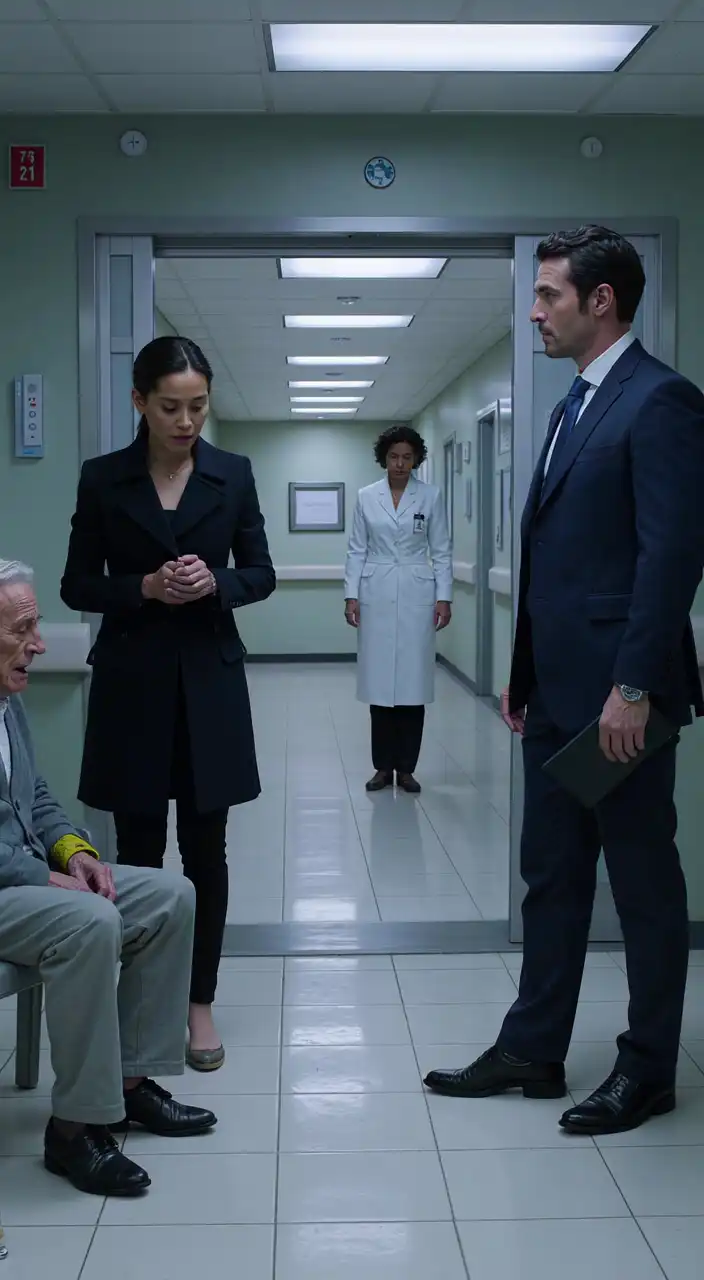
MY FATHER STARTED SHAKING OUTSIDE TRIAGE WHILE A CLINIC ADMINISTRATOR BLOCKED THE DOOR AND SAID HE NEEDED FAMILY PERMISSION FIRST.
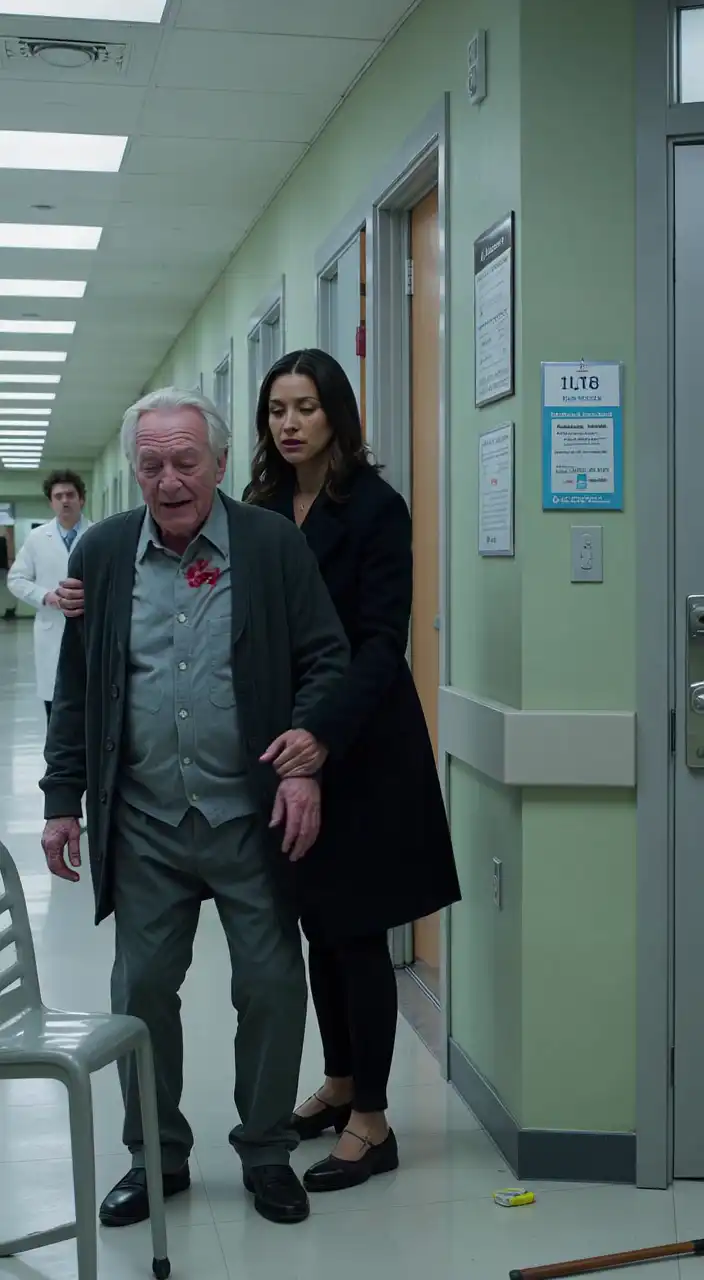
MY FATHER STARTED SHIVERING SO HARD HIS SURGICAL BANDAGE BLED THROUGH, AND THE CLINIC ADMINISTRATOR STILL BLOCKED THE TRIAGE DOOR.
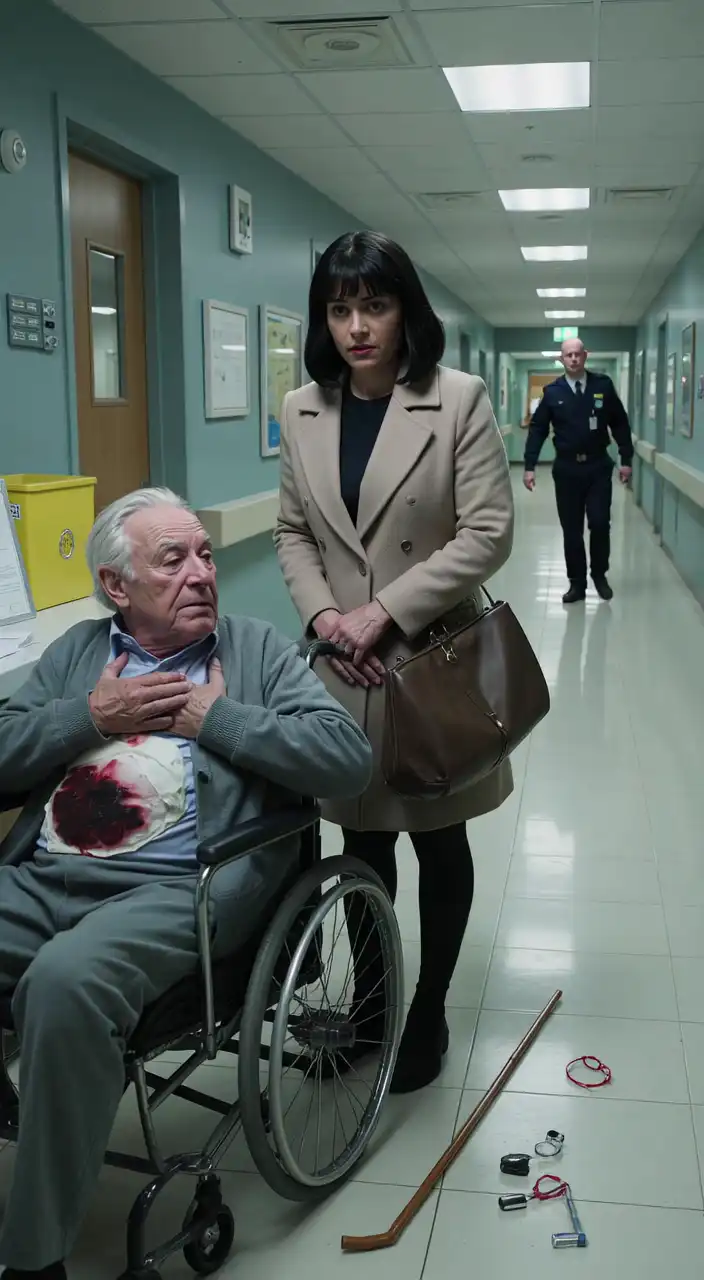
MY FATHER STARTED SHAKING IN THE HOSPITAL HALLWAY, AND THE WOMAN WHO CLAIMED TO BE HELPING HIM WOULD NOT LET TRIAGE TOUCH HIM.