
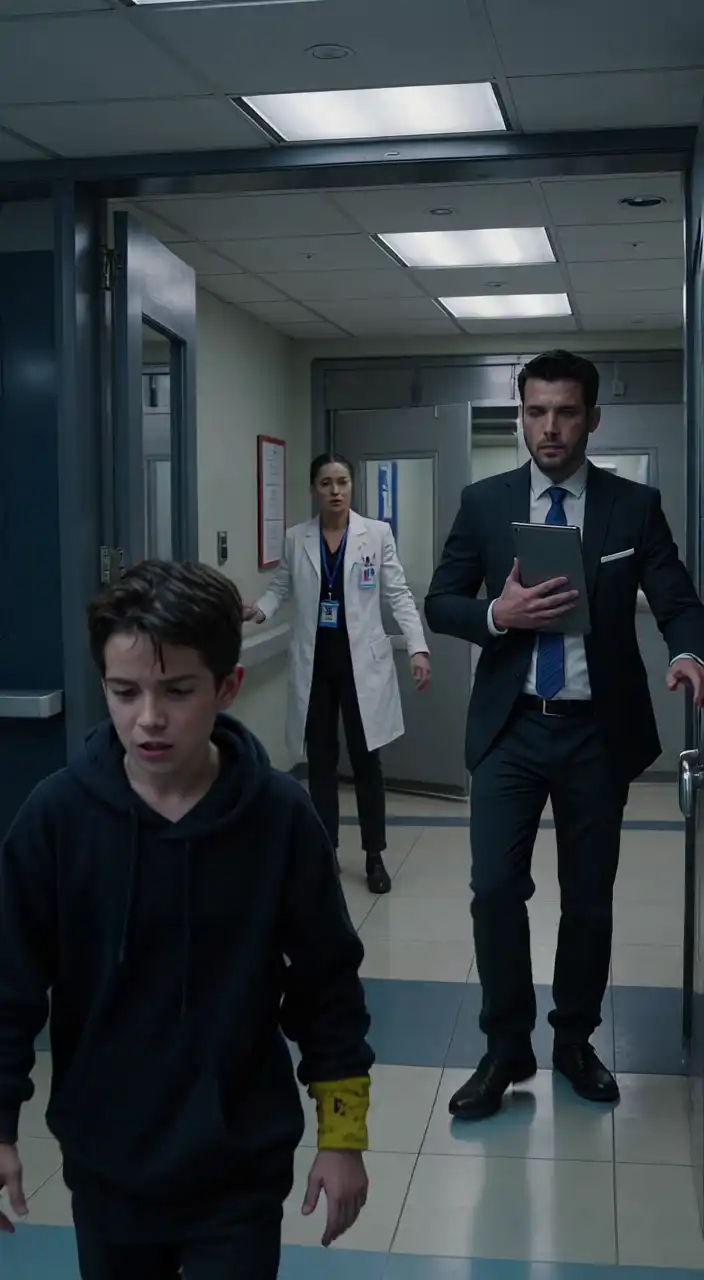
Dr. Diana Jackson did not even look up when the alarm chirped a second time. She put two fingers against Benjamin's neck, counted, then pressed the back of her hand to his forehead and said, "Get me a pediatric bay now."
Elijah stepped closer. "Doctor, this minor is not cleared for treatment."
Now she looked at him.
It was not a loud look. That was what made it land. Her eyes moved from his badge to the child on the floor and then to the yellow stain on the sleeve she still held between gloved fingers. "He is altered, tremulous, and unstable," she said. "Under EMTALA, this child gets a medical screening exam before your paperwork gets to have feelings about it."
A nurse with a portable monitor was already kneeling on Benjamin's other side. She clipped a pulse ox to his finger. The screen flashed a pulse too fast for a child who was barely sitting upright. Benjamin flinched when the cuff went around his arm, then looked at me in that old-man way sick kids sometimes do, as if he was apologizing for needing help.
Elijah did not move.
"I am telling you," he said, pitching his voice low and controlled for the hallway, "the guardian has a standing instruction for outside parties not to intervene. There is a family physician. They handle his episodes privately."
"Then they can explain that to me after I keep him from crashing," Diana said.
She nodded to the nurse. "Bring the stretcher."
Benjamin's hand tightened on my jeans. "Don't let him call her."
His words came slurred, but not confused. Fear sharpened them. I leaned down. "Who?"
His eyes slid past me toward Elijah, then toward the end of the corridor as if someone else might appear any second. "Mara."
The name hit me because that was the woman who had dropped him at my apartment three hours earlier. She was not kin to me by blood, but she floated around our family whenever money or favors were involved. She had shown up at my door saying Benjamin had a "stomach bug" and asking if I could keep him till evening because she had an emergency errand. He could barely hold his head up then. By the time I saw the tremor in his hands and the yellow smeared on his sleeve, she had stopped answering her phone.
Elijah heard the name too. His jaw tightened for half a second before he put the smooth expression back on. "Doctor, I know this family," he said. "The aunt tends to exaggerate. There are custody complications. Security should be present before this escalates."
Diana rose to her full height. "Good. Call security. And call pediatrics. If you delay transport one more second, I will include your interference by name."
That did it. The nurse snapped the stretcher brakes, and together we got Benjamin onto it. He whimpered when they lifted him. A little plastic thing clicked against the rail and dropped to the floor. I looked down. It was the bottle cap from my car, bright yellow, sticky inside.
I picked it up instinctively.
Diana saw it in my hand. "Keep that," she said. "Don't wipe it."
Elijah opened his mouth again, maybe to object, maybe to issue one more polished threat, but security had already turned the corner. Two officers in gray uniforms came fast, led by a charge nurse whose face said she had heard enough hallway politics for one shift.
The older officer, a broad woman with silver hair braided tight against her scalp, looked from Benjamin to Elijah. "Problem?"
"Potential obstruction of emergency care," Diana said. "And preserve that item as possible evidence." She pointed at the cap in my fingers.
Benjamin's monitor numbers jumped as they rolled him. The alarm changed from a chirp to a repeating tone that made every head in the corridor turn. For one terrible second he seemed to fold inward, eyes half-closing, lips going grayer than before.
Diana pushed the stretcher herself through the triage door.
I tried to follow, but Elijah put one hand out across my chest. Not hard. Just enough to remind me that people like him had practiced blocking people like me their whole lives. "Family only beyond this point."
The older security officer caught his wrist before I had to decide whether to shove him. "Not you," she said. "You stay where you are."
His face went flat with outrage. "Do you understand who I am in this facility?"
She did not blink. "A man standing between a sick child and an ER physician. That's enough for me."
The doors swung shut behind Benjamin and Diana.
Suddenly the hallway felt too bright. My hands started shaking now that his had stopped clinging to me. I looked down at the cap in my palm. Sticky yellow residue coated the inside lip. Not cough syrup yellow. Brighter. Artificial. Thick.
The charge nurse guided me to a plastic chair. "Sit. Breathe. Tell me your name and how he got here."
I did, in pieces. My name. My relation, if "cousin's boy by family tangle" counted. Mara dropping him off. The weakness. The sleeve. The whisper not to let him go home. The cap in my hand. Elijah hearing the name and trying to freeze the whole hallway with policy language.
The charge nurse wrote fast. "Legal guardian?"
"I don't know if Mara is even legal," I said. "His dad's gone. His mom died when he was little. People just say Mara takes care of him."
The silver-haired officer and her younger partner exchanged a look. The older one took out a small evidence bag from somewhere on her belt and held it open. "Put the cap in here by the edge only."
I did. My fingers felt clumsy. "Is he going to be okay?"
She did not make the mistake of lying. "They're moving fast. That's good."
Elijah had stepped back near the wall, but he was not defeated. He was already on his phone, speaking in a low voice. I only caught fragments. "Yes... no, Diana intervened... no, not yet... security is overreacting..." Then his eyes cut toward me and he turned away.
The charge nurse noticed too. "Officer."
The younger guard moved closer to Elijah. "Sir, I need you to end the call for now."
"This is administrative communication."
"It can wait."
He held the phone tighter. "You are making a very serious mistake."
From behind the triage doors came a burst of activity I couldn't see: feet moving fast, a drawer slammed open, Diana's voice calling for a tox screen and glucose, another nurse repeating numbers back. Then, underneath all of it, a child cried once and stopped. My stomach dropped so hard I thought I might faint right there in the plastic chair.
The charge nurse touched my shoulder. "Listen to me. If there was something in that bottle cap, the doctor will know soon."
I looked down the hallway, at fluorescent light reflecting on Elijah's spotless shoes, at the place on the tile where Benjamin's sleeve had left a faint yellow smear. There it was again, that ugly bright proof sitting in a place nobody could explain away anymore.
Ten minutes later Diana came back through the doors, pulling off one glove. "He is hypoglycemic, sedated beyond what the history supports, and showing signs consistent with medication exposure," she said. "We're stabilizing him, but I need a clean timeline right now."
Elijah spoke first. "Doctor, before this gets framed irresponsibly-"
Diana cut him off without turning. "Not one more word from you unless it's your full name for my note."
The charge nurse almost smiled.
Diana crouched in front of me. She did not talk down to me, which made me trust her more than reassurance ever could. "The stain and the cap matter," she said. "Do you know what medication he might have gotten into?"
"No. But Mara had a big tote bag with pill bottles knocking around inside. No labels facing out. She kept saying he 'never sleeps when he should.'"
Diana's expression sharpened. "Did she say he was on any prescribed medication?"
"No."
"Did he vomit?"
"Not with me. He drooled some. And his hands kept jumping."
She nodded once. "Okay. Pediatric toxicology is being looped in. Security needs to hold that hallway footage. And I need registration to stop treating this like a family billing issue."
At the words "hallway footage," Elijah finally lost a shade of control. "There is no reason to preserve footage over a misunderstanding."
The older officer folded her arms. "Funny. Usually innocent people love cameras."
His phone buzzed again. He glanced down before he could stop himself. The screen lit up with a name I could read even from the chair because he had tilted it toward the fluorescent light.
Mara.
He rejected the call so fast it was almost a slap.
Diana saw that too.
And when she stood up, the whole hallway seemed to realize at once that this was no longer just a sick child getting rushed inside. Someone had tried very hard to keep a doctor from seeing him first.
The next hour should have felt like relief because Benjamin was finally behind monitored doors, but it got harder instead.
A social worker named Lena met me in a small consult room off the pediatric station. She had a legal pad, soft voice, and that tired, alert look people get when they spend their careers hearing ugly things at the exact moment families are trying not to collapse. Through the window in the door I could see part of the nurses' station and, beyond it, Diana moving from computer to room and back again.
Lena folded her hands. "Dr. Jackson asked me to help gather background while they stabilize him. I need to ask direct questions. If you don't know, say you don't know."
I nodded.
"Has Benjamin had prior episodes like this?"
"I've seen him too sleepy before. Thought he was sick. Thought he was exhausted."
"Any bruising? Weight loss? Fear of specific people?"
The answer came out before I could soften it. "He was more scared of being sent back than of being in the ER."
Lena wrote that down.
I told her about the way Benjamin never finished full sentences around Mara, how she answered for him even when no one had asked, how she always had some story about his behavior: too dramatic, too clingy, too lazy, too hard to manage. I admitted what made me feel ashamed too, because it mattered now. We had all half-believed her at times. She had money from some trust connected to Benjamin's late mother, and she wore exhaustion like a badge. Plenty of people took her side because she sounded organized and we didn't want trouble.
Lena's pen paused. "A trust?"
"I don't know details. Just that there was money left for Benjamin's care."
She looked up. "Do you know who manages it?"
"No."
A knock sounded, and Diana stepped in. She closed the door behind her with the quiet care doctors use when the news is not all bad but not safe yet either.
"He's more stable," she said. My lungs finally released one breath. "He's awake in brief stretches. We're running labs. Preliminary concern is ingestion of sedating medication, possibly repeated dosing over time, not just today."
Repeated.
The room got colder.
Diana sat on the edge of the counter. "There are patterns in his chart that concern me too. He's had three prior urgent visits in the last eight months at affiliated clinics for falls, excessive sleepiness, and one episode documented as 'behavioral noncompliance with school fatigue.' No full toxicology workup was done."
Lena's head came up. "Same guardian bringing him each time?"
"Mostly. Sometimes an administrator note appears before the physician note saying the family requested discreet handling." Diana did not say the next part immediately. She did not need to. Elijah's role had already started filling itself in around us.
"Can he do that?" I asked.
Lena gave a careful answer. "Administrators can communicate family preferences. They cannot block emergency evaluation."
Diana looked directly at me. "His glucose was dangerously low. That is not drama. And the residue color is consistent with some compounded liquid medications, but we won't guess until tox runs."
There was a knock at the door again, sharper this time. The silver-haired security officer stepped in. "Doctor, we have an issue."
Diana stood. "What issue?"
"Mr. Elijah Chen requested release of hallway footage under internal review protocol. IT flagged it because you had just asked to preserve it. Also, someone from executive administration is asking whether this needs to remain a security matter."
For one second nobody spoke. Then Lena let out the kind of breath you hear from people who have just had their suspicion confirmed.
Diana's face hardened. "Yes. It remains a security matter. And no footage gets touched."
The officer nodded. "I thought you'd say that. Also, the man has been trying to contact the guardian repeatedly."
"Did he reach her?"
"Unknown. But we may have a bigger problem. Registration says there is no valid custody paperwork scanned for the current guardian assignment. Just an emergency contact packet and a financial authorization tied to a trust disbursement."
Lena was already standing. "Then if there is no verified legal guardian on file, no one takes that child anywhere until child protective services and law enforcement sort authority."
My mouth went dry. "Law enforcement?"
Diana answered me with the same steady honesty as before. "If someone intentionally gave him medication to make him compliant or appear ill, yes."
A tiny sound came from the hall then. A monitor tone, higher than before, followed by quick footsteps. Diana was out the door before I could rise. Through the small window I saw nurses turning toward Benjamin's room all at once.
I stood anyway.
Lena put a hand out. "Stay here."
"I can't."
"You need to let them work."
The silver-haired officer looked past us into the hallway, hand near her radio. "That's not all. A woman just entered through pediatrics claiming she's the aunt, and she's demanding discharge."
Mara.
Lena's hand tightened on my arm. "Do not engage her alone."
But I was already at the door, because through the glass panel I saw Mara in a cream coat and heeled boots that clicked too loudly for a pediatric wing. She looked put together, almost elegant, and that made the scene uglier somehow. She was talking with her whole body toward Elijah while pretending to address the charge nurse. Elijah had moved closer to her than any neutral staff member should have. He was not calming her down. He was briefing her.
The charge nurse blocked the doorway to Benjamin's room. Mara pointed down the hall, sharp and offended. "He has a documented sensory panic response to hospitals. You are making him worse. Bring him out now."
The nurse did not move. "Ma'am, the physician has him under evaluation."
Mara's eyes landed on me, and the softness vanished from her face so completely it looked rehearsed. "You," she said. "You had no permission to bring him here."
I took one step into the hall. "He asked me not to let you take him home."
For the first time since she arrived, something real flickered in her expression. Not grief. Not fear for Benjamin. Fear of the wrong sentence being said in the wrong place.
Elijah cut in instantly. "This is exactly why I advised we control hallway access."
Lena came out behind me. "And this is exactly why you don't get to control it."
Mara drew herself up. "I am his guardian."
"Show me the order," Lena said.
Mara looked at Elijah.
That glance was small. Most people in the hallway probably missed it. But once you saw it, you couldn't unsee the shape of the truth inside it. She was not checking with a friend. She was checking with the man who had been helping her keep the story straight.
Her phone started vibrating in her hand. She ignored it. Then it vibrated again, screen lighting up with one word visible from where I stood because she had no case privacy shield on it.
School.
She silenced the call.
Lena's eyes narrowed. "Why is the school calling during an emergency?"
Mara snapped, "Because unlike everyone else here, I actually handle his life."
The answer was too quick. Too angry. Too practiced.
Before anyone could push further, Diana came out of Benjamin's room with a printout in one hand and said, very clearly, "No one is discharging that child. His tox screen is positive for promethazine and a benzodiazepine that has not been reported in his medication history."
The hallway went still.
Mara recovered first. "That is impossible."
Diana held up the paper. "Then you can help explain it."
Mara's face drained, but only for a second. "He could have gotten into something anywhere. He's impulsive."
Diana took one step closer. "The residue on his sleeve and the cap suggest a liquid preparation. The benzo level does not suggest one accidental sip."
Mara's voice sharpened. "You are accusing me of poisoning a child because he spilled medicine?"
"I am saying this child is medically sedated," Diana said. "And I am saying your first concern was removing him before evaluation."
Elijah stepped in as if he could still manage the room. "Doctor, until there is a verified chain of evidence, that conclusion is inflammatory."
Diana turned her head slowly toward him. "You tried to stop a screening exam."
The silver-haired officer keyed her radio. "I need local law enforcement to pediatrics, possible child endangerment and evidence preservation issue."
Mara's composure cracked then, not into tears but into fury. "You have no idea what that boy is like when he is awake," she said. "You have no idea what it takes to keep him calm."
The sentence hung there.
Lena said quietly, "Did you hear yourself?"
Mara heard it too. She pressed her lips together and looked away.
That would have been enough to chill me, but the school kept calling. Again. Again. On the fourth vibration, she shut the phone off entirely.
Diana's eyes went to the darkened screen. "I think we need to know why the school is trying so hard to reach you right now."
Mara snapped, "This is harassment."
But the charge nurse had already handed Lena a desk phone. Lena called the elementary school listed in the chart while we all stood there inside that buzzing fluorescent corridor that had somehow become the narrowest courtroom in the world.
She identified herself, gave the hospital and her title, then listened.
Her face changed by degrees.
"When was this?" she asked.
A pause.
"Did staff witness it?"
Another pause. She wrote fast.
When she hung up, she looked at Diana first, then security. "The school nurse documented that Benjamin was repeatedly falling asleep in class for weeks. Today he arrived so groggy he couldn't hold his pencil. They called Mara to pick him up and recommended urgent evaluation. She said she had medication guidance from a family administrator and would handle it privately."
Family administrator.
Elijah's mouth tightened.
Lena went on. "The school also says a teacher photographed a yellow spill on Benjamin's sleeve because they thought he had vomited medication on himself. The nurse wanted EMS. Mara refused and signed him out."
There it was, the contradiction opening wider under everyone at once. This had not started at my apartment. It had started while people with titles and forms had already been trying to get him help.
Mara looked toward the elevators.
The silver-haired officer saw it too and shifted half a step to block. "Don't."
For the first time, Mara looked trapped.
And behind the door to Benjamin's room, his monitor alarm began sounding again.
The alarm was not the same this time. It was faster, angrier, enough to pull every nurse at the station upright. Diana turned and ran back into the room with two others behind her. I heard her call for suction, then blood pressure, then "stay with me, buddy," in a voice that made my chest cave in.
Mara moved the instant the room's attention shifted.
Not toward Benjamin.
Toward the side hallway leading to staff exits.
The younger security officer lunged, but Elijah stepped into his path just enough to slow him. It looked accidental if you wanted to be generous. Nobody was feeling generous.
"Sir!" the officer barked.
By the time he got around him, Mara had made the corner.
I ran too. I did not think. I just moved.
The side hallway was narrower, lined with supply closets and a crash cart parked crooked against the wall. Mara was fast in those heeled boots, but anger made her clumsy. She yanked at the badge-protected exit bar, found it locked to staff access, and spun toward the stairwell instead. I reached the stair door at the same moment she did and caught the sleeve of her cream coat.
She whipped around. "Get off me."
"What did you give him?"
Her face twisted. "You think I wanted this?"
The question hit me harder than denial would have. "Then why was he begging not to go home?"
She tried to wrench free. "Because he hates the medicine. Because without it he climbs walls, breaks things, screams all night. Do you know what no sleep does to a person? Do you know what it's like when everyone pities the child and nobody asks how the caregiver survives?"
It was the first honest thing she'd said, and that made it worse, not better. Real resentment sat inside it. Real exhaustion too. But under that exhaustion was something colder: she had crossed from overwhelmed into entitled. Benjamin's body had become a solution to her inconvenience.
The younger security officer reached us then and took her wrist gently but firmly. "Ma'am, you're coming back."
She went still in a way I had already learned to fear. Stillness meant calculation. Her eyes flicked past me toward the row of cabinets. One supply closet door was not fully latched. She noticed things like exits and weak points in a room because she had practice.
So did someone else.
The silver-haired officer came from behind us and positioned herself between Mara and the whole hallway. "End of the road."
Mara laughed once, dry and broken. "You all think this is simple."
"No," the older officer said. "I think a child is unstable and you tried to leave."
When they brought her back to pediatrics, a uniformed city police officer was just arriving with another close behind. Not dramatic, not TV-style. Just two people with clipboards, radios, and the expression cops get when they know they are stepping into a story already halfway on fire.
Diana was still inside Benjamin's room. The charge nurse stood at the door, one hand braced against the frame, listening to instructions inside while keeping the hallway from collapsing into chaos. Elijah had drifted toward the nurses' station computers, no doubt looking for some angle left to him.
Lena intercepted the police. "Possible chemical restraint of a minor, interference with emergency care, uncertain guardianship, and attempted flight."
One of the officers, a woman named Serrano, nodded and went straight to Mara. "Ma'am, I need your full name and your relationship to the child."
Mara gave both, crisp and offended. She had switched back to her public face.
Serrano wrote it down. "Do you have legal guardianship documents with you?"
"They are on file."
Lena answered before Mara could build momentum. "Registration cannot verify that."
Mara shot her a look that could have cut drywall.
Officer Serrano shifted to Elijah. "And you are?"
"Elijah Chen. Clinic administrator."
"Did you attempt to prevent this child from being medically screened?"
"I followed family directives pending documentation."
"You blocked the triage threshold?" Serrano asked.
"I enforced policy."
The silver-haired security officer spoke from the wall. "I witnessed him physically obstruct the escort to treatment."
Serrano wrote that down too.
Then Diana emerged, pulling her mask down under her chin. "He had an aspiration event but recovered. He's still unstable, still requires monitoring, and no one is removing him." She looked at the officers. "I need chain of custody on the cap, the clothing, and the hallway footage preserved immediately."
The second officer went to arrange that. Serrano stayed.
"Doctor," she said, "do you have probable concern this was intentional?"
Diana took a breath. "I have probable concern that repeated unreported sedating exposure occurred and that adults prioritized controlling access over care."
Mara snapped, "He needs sleep. He gets impossible."
Serrano's pen stopped. "What exactly did you administer to make him sleep?"
Mara blinked. Too late, she heard the trap in her own words.
"I didn't say I administered anything."
"You just implied he was impossible unless sedated," Serrano said.
Elijah cut in. "Officer, with respect, the child may have neurobehavioral issues being crudely interpreted by nonfamily."
Diana turned on him with a force I had not seen yet. "Then where in his chart is the diagnosis? Where is the prescription? Where is the consent? Where is the report to a pediatric specialist after repeated sedation-level presentations?"
Elijah had no answer. He had language. Language was not enough anymore.
Lena's phone rang. She glanced at the screen and answered immediately. "Yes... yes, this is she."
As she listened, her eyes sharpened. "Can you email that now? Secure line."
She hung up and looked at all of us. "The school sent the photograph."
The image came up on her screen a minute later, and even from where I stood I could see enough. Benjamin at a school desk, head tilted, eyes glazed. A vivid yellow stripe down his sleeve. In the corner of the desk tray, half hidden under a worksheet, a small medicine cup.
Diana leaned in. "Can you zoom?"
Lena did.
There, printed faintly on the side of the cup in black marker, was one word.
Benji.
A pet name.
Not clinic-issued. Not school-issued. Something handwritten by someone who prepared that dose before he ever got to class.
Mara went gray.
Serrano held out her hand. "Ma'am, I need your phone."
"No."
"Now."
Mara clutched it tighter. "You can't just take-"
"You can surrender it voluntarily, or I can seize it under exigent child-endangerment circumstances while we seek the warrant. Choose."
Elijah's voice slipped in, quick and quiet. "Do not consent."
That was when the major reversal began showing its shape. Officer Serrano turned to him. "You seem unusually invested in whether she consents."
He lifted his chin. "I understand procedure."
Lena looked from him to Mara, then to the school photo. "Who labels medicine cups with a nickname in marker at school pickup? Not a random child. Not a school nurse."
Diana's gaze dropped to Mara's hand, then back to the photo. "And if she was dosing him herself during school hours, why did the school nurse note that she referenced guidance from an administrator?"
Silence.
Serrano said, "Mr. Chen, did you advise this caregiver about administering sedating medication?"
"Absolutely not."
The denial came too fast.
Lena stepped to the station terminal. "Can hospital admin pull outbound calls from his extension to the school today?"
The charge nurse had already called IT for footage preservation. "On it."
Elijah's control cracked for the first time into anger. "You are all crossing institutional lines you do not understand."
Diana said, "The line was crossed when a child was chemically managed for convenience."
Inside Benjamin's room, the monitor settled into a steadier rhythm. That sound, simple and regular, steadied me enough to notice something else. On the edge of Mara's tote bag, peeking from an unzipped side pocket, was a laminated card with a cartoon rocket and a red lanyard clip.
School visitor badge.
She had gone straight from sedating him at school to signing him out against advice.
I pointed. "Her bag."
Serrano saw it. "Set it down."
Mara hesitated.
"Now."
When she did, the younger security officer carefully removed the visible items one by one onto a counter while Serrano watched: wallet, makeup pouch, receipts, the visitor badge, three granola bars, a half-full bottle of hand lotion, and then two pharmacy bottles with altered labels peeled halfway off.
The room changed temperature.
Diana stepped closer without touching them. "Don't open those yet."
One bottle had sticky yellow residue dried around the threads. The other was clear amber with no readable patient name left, only a pharmacy barcode and the corner of a warning sticker: may cause drowsiness.
Mara closed her eyes.
Serrano's voice stayed level. "Ma'am, you are being detained while we sort the medical and custodial facts."
Elijah took one step backward.
The silver-haired officer noticed. "Stay right there."
He gave a short incredulous laugh. "You're detaining me too because I tried to maintain order?"
"No," she said. "Because every time the truth moves an inch, you try to step in front of it."
If that had been all, maybe he could still have fought from inside procedure. But IT called back within minutes, and the charge nurse put the call on speaker at Lena's request.
"Outbound call log from Mr. Chen's office line shows three calls to Roseview Elementary nurse station this morning and one to caregiver Mara Lin at 11:14 a.m."
Everyone looked at him.
Elijah went very still. "There are harmless explanations."
Lena asked the obvious one. "Why were you calling the school nurse station about a child who was not your patient?"
No one answered because there wasn't a harmless answer, not anymore.
Then the final pressure point landed from the direction none of us expected. A thin man in a wrinkled blue button-down hurried off the elevator asking for Benjamin by full name. He looked frightened enough to be running on instinct. In one hand he held a folder stuffed with papers; in the other, a dead phone charger cable trailing from his pocket.
"School counselor called me," he said breathlessly. "I'm his mother's brother. They said he was here."
Lena stepped forward carefully. "Sir, your name?"
He gave it. Maurice Turner.
My heart skipped. I had not seen Maurice in years. Family stories said he lost a custody fight after his sister died. Other stories said he disappeared. In families like ours, lies and failures often wear the same coat.
Mara's head snapped up. "He has no rights."
Maurice looked at her with a fury so old it had gone quiet. "Because you made sure of that."
He held out the folder. On top was a custody petition stamped but never granted, then a stack of letters, school notices, and one document Diana noticed before anyone else.
A pediatric sleep specialist referral from six months ago.
Not completed.
Benjamin had been referred for unexplained sedation episodes before. Someone had intercepted the path to a specialist.
And the referral, in the upper corner, carried an internal routing notation signed by Elijah Chen.
By then the truth had enough pieces to stand up by itself. But the hardest part was still ahead, because Benjamin finally woke enough to speak, and what he said put everyone on a knife edge.
They let me stand in the doorway when Benjamin opened his eyes again. He looked smaller in the hospital bed than he had on the floor, swallowed by white sheets and wires and the too-big cuff around his arm. The yellow-stained hoodie was gone. Someone had put him in a pediatric gown with cartoon bears. The stain was bagged somewhere now as evidence, but I could still see it in my head like a warning flag.
Diana stood on one side of the bed, Lena on the other. Officer Serrano waited just outside with a recorder, not running yet. Nobody wanted to push him hard. They just needed enough to know what danger still existed.
Benjamin blinked, saw me, and tears spilled from the corners of his eyes without any sound. I took his hand carefully around the IV tape.
"You're safe," I said.
He looked at Diana's badge. "Am I in trouble?"
That nearly broke me.
"No," Diana said. "You are not in trouble. I need to ask one thing. Did someone give you medicine today before school?"
His fingers twitched in mine. Then he nodded once.
"Who?"
He swallowed. "Aunt Mara."
"Did she tell you what it was for?"
"To help me be good."
Lena's jaw tightened.
Diana kept her voice even. "Did she ever tell you not to tell doctors?"
He closed his eyes. Another tiny nod. "Said they don't understand our family."
That phrase mattered. It had the ring of something repeated often enough to become household law.
Diana asked, "Did anyone else ever give you the medicine?"
Benjamin hesitated so long I thought he might shut down entirely. Then he whispered, "At the office."
Lena leaned in. "What office, sweetheart?"
"The place with fish on the wall." His breathing sped up. "Where Mr. Eli says if I sleep quiet, everybody gets less mad."
A children's waiting area at one of the clinic offices, I guessed. Fish mural. Play corner. The kind of place designed to calm parents while systems sorted them.
Diana and Lena exchanged a look that was both confirmation and dread.
"Did he give it to you?" Lena asked softly.
Benjamin shook his head. "He put it in the cup. Mara made me drink."
There it was. The second major reversal, but one built from everything already there: Elijah wasn't only protecting a wealthy account after the fact. He had participated in maintaining the sedation pattern.
From the hall came a muffled burst of voices. Maurice. Mara. Serrano trying to keep them separated. Benjamin flinched at the sound and gripped my hand so hard his knuckles whitened.
Diana immediately looked to the nurse. "No more hallway noise. Move anyone not essential."
As the nurse went to shut the room more fully, Benjamin said one more thing in a rush, the way kids confess when they think the chance may vanish. "She said if I tell, they put me somewhere bad and nobody visits."
Lena bent her head for one second, collecting herself. Then she asked, "Did she tell you that today?"
He nodded.
That changed the timeline from general coercion to immediate witness intimidation.
Outside, matters were unraveling fast. Maurice had recognized Elijah from the referral paperwork and was accusing him of blocking specialty care. Mara had started crying now, loudly, not out of remorse but because the shape of custody and money and criminal exposure had finally touched her skin. Elijah kept insisting all communications were in service of "family stability." Serrano was no longer treating this like a contained medical inquiry. She had called for a detective from the child abuse unit.
I stayed with Benjamin while Lena and Diana stepped out to coordinate. He drifted in and out, waking enough once to ask if he could have water. Another time he murmured about his school backpack. "My bracelet's in there."
"What bracelet?"
"The blue one. Mom's."
The detail landed with me because I had seen that bracelet before, braided blue cord with a tiny silver bead. His mother had worn the matching one at church years ago. "Why does it matter?"
He looked scared again. "Mara gets mad if I wear it. I hid it in the backpack."
A planted detail I hadn't understood before suddenly mattered. On the ride to the hospital I had grabbed his backpack too, more from habit than thought. It was still under the consult room chair where I'd dropped it.
I found Lena in the hall and told her. She brought the bag into a staff workroom with Serrano present. Inside were crumpled worksheets, one inhaler long expired, a flattened juice pouch, and the blue bracelet tucked into the smallest zipper pocket. Wrapped around it was a folded paper so many times it looked like a tiny square of trash.
Lena unfolded it carefully.
It was a note in a child's uneven print.
If I get too sleepy call Uncle Maurice not Mara.
A phone number followed.
The room went silent.
Maurice, when shown the note, covered his mouth with one hand and turned away. "My sister taught him my number as a game before she died," he said hoarsely. "Mara cut me off later. Said I upset him."
Serrano asked, "Did you ever seek custody?"
"Twice. I couldn't match her lawyers. Then I got hit with supervised contact only after she claimed I was unstable. She had paperwork from clinic people saying Benjamin was dysregulated after seeing me." He looked straight toward Elijah in the hall. "Clinic people."
Motive stacked itself now: trust money, control over Benjamin, use of medical language to undermine the one relative who might challenge custody, and sedation as management.
But stories like this do not resolve the moment the truth becomes obvious. Systems still have to decide who is allowed to act before the child gets swept back into the same danger by technical delay.
That final obstacle came in the form of hospital counsel and executive administration.
A woman in a navy suit arrived with a badge clipped to her waistband and the strained smile of someone summoned to a mess she wished was abstract. She requested to speak privately with Diana, Lena, and security. Through the workroom window I could see Elijah trying to regain posture, trying to become a colleague under review rather than a man in the middle of a child endangerment scene.
Lena came back twenty minutes later furious in the calm, professional way that is more dangerous than shouting. "Administration wants to avoid overstepping until legal verifies guardianship. They are worried about liability if we bar Mara completely before CPS placement papers."
I stared at her. "They think liability is the problem?"
"They think several things at once," she said tightly. "Some of them are wrong."
Diana came in behind her. "I wrote a hold order based on medical necessity and safety risk. He stays. But if CPS doesn't get here fast and if administration caves to pressure from trust attorneys, we could be fighting discharge demands all night."
Maurice stepped closer. "What do you need from me?"
"Every document you have," Lena said. "Everything showing prior concern, blocked referrals, denied contact, and financial control."
He handed over the folder.
Inside was a copy of Benjamin's mother's will summary, not enough to settle probate but enough to show that trust funds were designated for Benjamin's care, with discretionary distributions overseen through an account manager connected to a philanthropic health board. Elijah's name was not on the trust. But one of the board names on old correspondence matched a donor plaque outside the clinic wing.
The wealthy family account he had been protecting was not Mara's. It was the donor network tied to the trust and to his career.
Status anxiety masked as procedure. Exactly that.
Diana scanned the papers and said, "So if this breaks publicly, it doesn't just hit a guardian. It hits the institution that let a donor-connected child get waved around normal safeguards."
Lena nodded. "Which means some people will suddenly become very concerned with language."
Another nurse stuck her head in. "CPS en route. Detective too. Also, Mr. Chen requested counsel and refuses further statements."
"Fine," Serrano said from the doorway. "He can explain the school calls later."
Then the charge nurse added one more complication: Mara's attorney had called demanding access and threatening an emergency injunction if the child was held unlawfully.
The whole room seemed to brace. Technical pressure. Exactly the kind that lets vulnerable kids disappear back into private abuse while adults fax one another.
Benjamin chose that moment to vomit.
Not much, because there wasn't much in him. But enough yellow-streaked fluid came up on the towel that every remaining debate about haste versus caution ended. Diana took one look and said, "Save sample. This is ongoing exposure, not resolved exposure."
Mara had dosed him recently enough for active residue still to be present.
That gave Serrano and the detective, once he arrived, what they needed for immediate protective action. It also gave hospital administration something harder to soften with donor language.
Detective Holloway, child abuse unit, was a compact man with a notebook and a face that never seemed surprised because surprise was a luxury in his line of work. He listened to Diana's summary, reviewed the school photo, the note from the backpack, the call log, and the altered pharmacy bottles, then asked to speak to Maurice separately and to me after.
When it was my turn, I told him every small thing I could remember. Mara's tote bag. Benjamin's cold fingers. The cap in my car. Elijah's exact words about private arrangements. The way Mara had reacted not to Benjamin being unstable, but to losing control of where he was seen.
Holloway wrote all of it. "You did right bringing him in."
I almost laughed at the strange ache that sentence caused. Because part of me had been carrying the opposite fear: that I should have acted sooner, seen more, doubted harder.
The longest hour of the day followed while CPS delayed in traffic and everyone worried about the legal gap. Mara was separated from the pediatric unit now, but still in the building under watch. Elijah sat in an interview room with counsel on speaker. Administration circulated. Phones rang. Nurses kept working around all of it because children still spiked fevers and broke bones and needed stitches regardless of any one family's disaster.
Near midnight, Benjamin woke enough to ask if he could keep the blue bracelet. I tied it carefully around his wrist above the pulse ox.
He looked at it, then at me. "If I sleep, will they take me?"
"No," I said, and this time I could say it as a promise, not a hope, because Lena had just stepped in with the final paper in her hand.
Emergency protective custody.
The ending, once it came, did not arrive as one dramatic explosion. It came as a series of doors closing in the right direction at last.
CPS interviewed Benjamin at bedside with Diana present and Lena nearby. They accepted the emergency hold immediately based on the tox findings, witness statements, evidence of repeated unexplained sedation, attempted removal from care, and absence of verified lawful guardianship documentation. Detective Holloway informed Mara she was under arrest pending charges related to child endangerment, unlawful administration of medication, obstruction, and possibly more once pharmacy records were traced. She tried one last turn toward performance, sobbing that she had only ever done what she had to do.
Nobody in pediatrics answered that.
Elijah was not arrested that night, but he was escorted from the unit, badge suspended, pending investigation into interference with care, unauthorized school contacts, chart routing, and potential conspiracy. As he passed the waiting area, his shoulders looked smaller without the lanyard authority he had hidden behind. He glanced once toward Benjamin's room. Not with concern. With calculation even then, trying to estimate how much had already reached beyond his control.
Diana saw the look and said to security, loud enough for him to hear, "Make sure all affiliated records on this child are locked from modification."
That was the social-justice feeling the heart waits for in stories like this: not revenge, not spectacle, but the sound of systems finally choosing the vulnerable person over the polished one.
By morning, toxicology had provisionally linked the yellow residue to a compounded promethazine mixture, and the unlabeled amber bottle to a benzodiazepine prescribed not to Benjamin but to Mara months earlier. Pharmacy records started showing refill patterns too frequent for the claimed household use. The school nurse sent over prior notes. One teacher provided the original time-stamped photo. The fish-on-the-wall office was identified as a satellite clinic play area where Elijah had occasionally "helped coordinate family comfort plans." That phrase would not survive investigation.
Maurice remained in the hospital all night, sleeping not at all, just sitting with the folder in his lap like proof he had been trying to reach this child through a locked window for years. CPS did not hand Benjamin over to him immediately; real life is slower and more careful than wishful endings. But they did approve supervised family presence while expedited kinship review began, and that meant something important in the moment: when Benjamin woke after dawn, the first familiar face he saw besides mine was his uncle's.
Maurice stood at the foot of the bed, afraid to come closer without permission.
Benjamin blinked at him, then at the blue bracelet on his wrist, then back again. "You came."
Maurice covered his mouth, nodded, and managed, "I kept trying, baby."
Benjamin held out his hand.
That was the warm relief point. Not because all damage was fixed. It wasn't. Children do not come out of hidden sedation and controlling care untouched. There would be interviews, trauma assessment, custody hearings, medical follow-up, school support, and the slow work of helping him learn that sleep did not have to mean danger. But in that room, with the monitor light steady and no one blocking the door, rescue had finally become real.
Before she left her shift, Diana stopped by one last time. She checked Benjamin's pupils, asked if his stomach still hurt, then turned to me and Maurice.
"He's going to need follow-up with pediatric neurology, toxicology, and trauma counseling," she said. "And someone will try to make pieces of this sound administrative. Don't let them. It started with a child needing care."
I thought about the hallway tile, the yellow smear, the polished voice saying not to create an incident. I thought about how close Benjamin had been to being wheeled back out under some private arrangement no one was supposed to question.
"We won't," I said.
She nodded and finally let herself look tired. "Good."
Later that afternoon, when sunlight started reaching even the far end of the pediatric corridor, the silver-haired security officer came by to return my car key. They had searched the back seat under warrant and found one more thing under the floor mat where Benjamin had been slumped: a tiny paper medicine cup with a black marker line around the dose level.
Another planted detail. Another piece that had almost been thrown away as trash.
"Good eye bringing him in," she said.
I looked through the glass at Benjamin coloring weakly in bed while Maurice helped him choose crayons one by one like each color required respectful discussion. The oversized fear was gone from his face for the first time. In its place was exhaustion, yes, but also the first cautious shape of trust.
"I almost waited," I admitted.
The officer shook her head. "But you didn't."
Weeks later, there were hearings. Investigations. News, though not much and not enough. The hospital placed Elijah on administrative leave and then terminated him after record audits and external review widened. The donor family board issued statements full of concern and distance. Those mattered less to me than the simple practical outcomes: the preserved footage held, the chart notes held, the school photo held, the altered bottles held, and because they held, the story could not be rewritten back into "an overreacting relative" and "a difficult child."
Mara took a plea months later rather than risk trial on a case where a doctor, a school nurse, security officers, and a child himself all lined up against her version of care. In court she called herself overwhelmed. That was true. It also wasn't enough. Being overwhelmed did not entitle her to turn a little boy into a quieter object.
Benjamin did not stay in the hospital long once the medications cleared and his levels normalized. The first day he walked the corridor again, still thin and unsteady, he stopped near the exact patch of hall where he had been on the floor and looked at the double doors to triage.
"You came through there," he said to me.
"Yeah."
He thought about it for a second. "I thought nobody would."
I touched the blue bracelet on his wrist. "I know."
Then he took my hand and kept walking, past the plastic chairs, past the bright lights, past the place where help had once been close enough to see and still blocked, and all the way to the elevator that opened this time without anyone standing in front of it.
Disclaimer: Mention of any brand or trademark is for identification only and does not imply partnership or endorsement
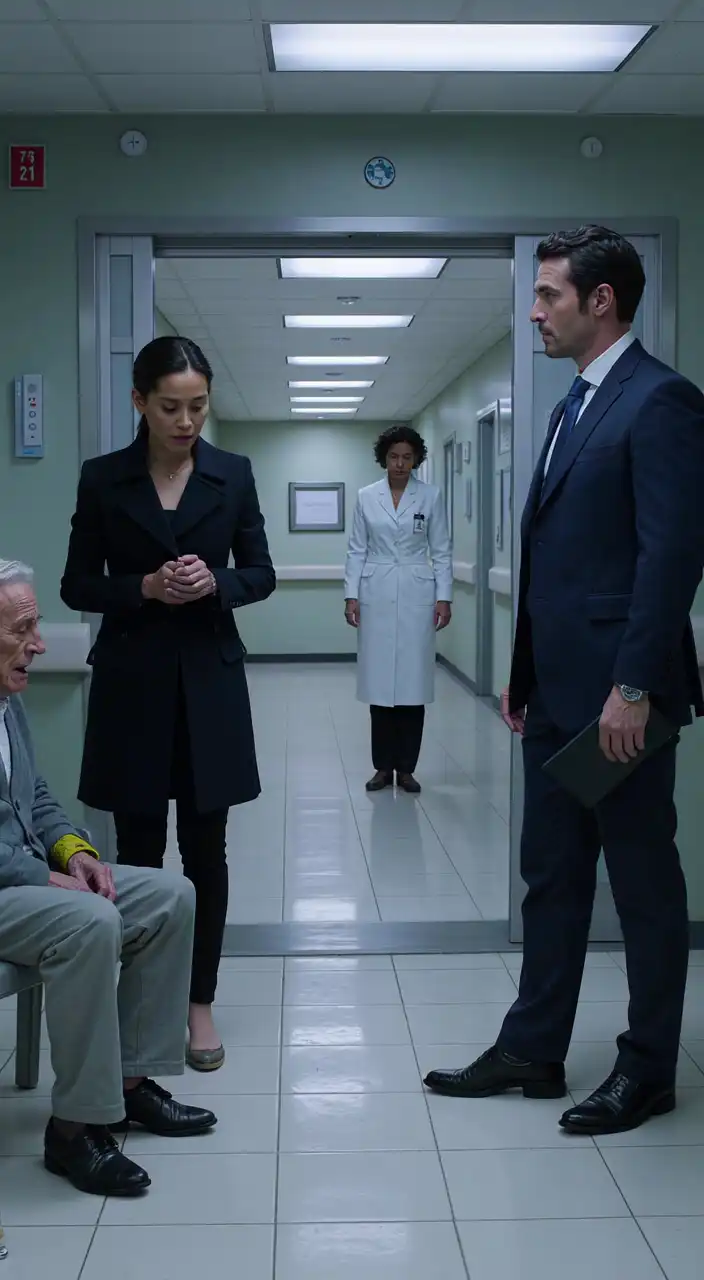
MY FATHER STARTED SHAKING OUTSIDE TRIAGE WHILE A CLINIC ADMINISTRATOR BLOCKED THE DOOR AND SAID HE NEEDED FAMILY PERMISSION FIRST.
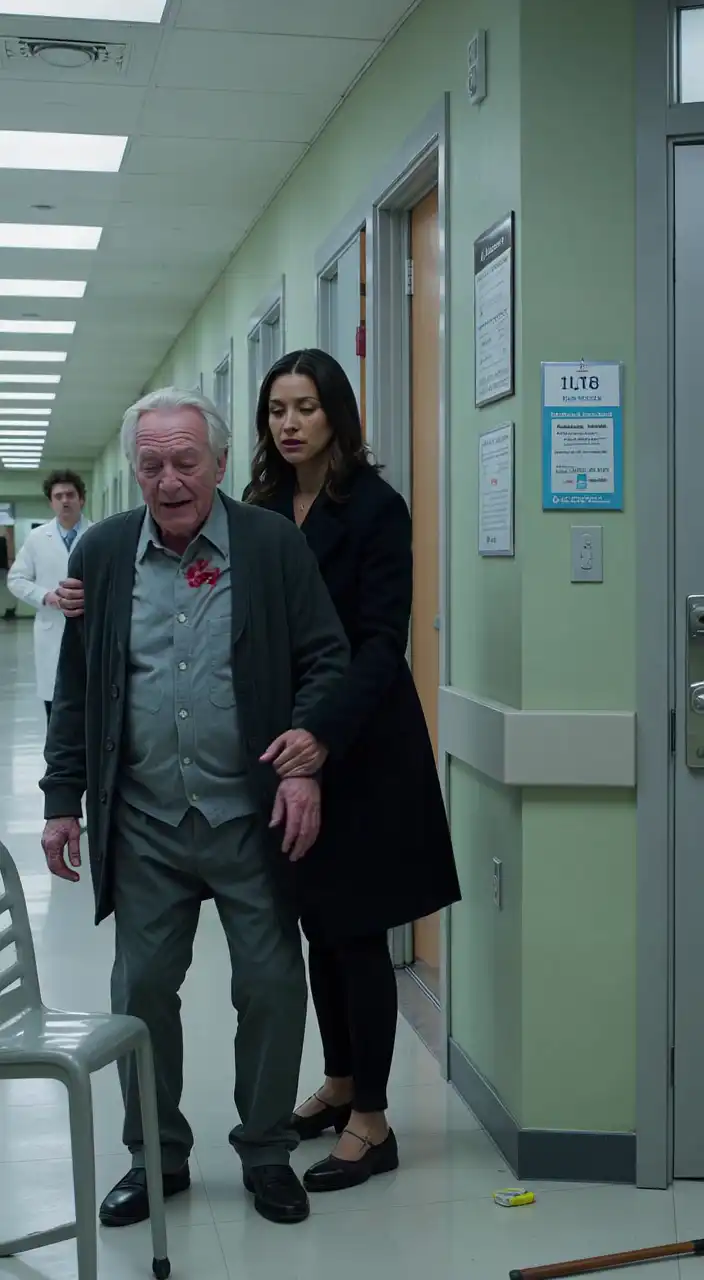
MY FATHER STARTED SHIVERING SO HARD HIS SURGICAL BANDAGE BLED THROUGH, AND THE CLINIC ADMINISTRATOR STILL BLOCKED THE TRIAGE DOOR.
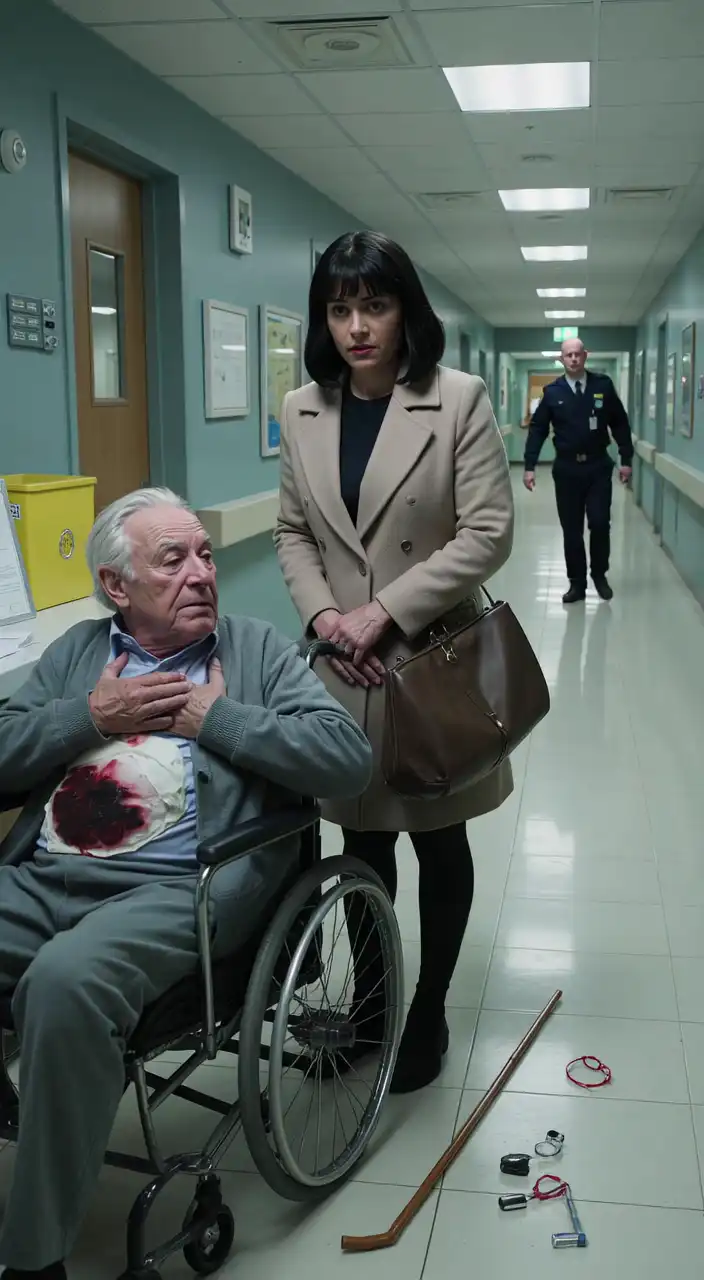
MY FATHER STARTED SHAKING IN THE HOSPITAL HALLWAY, AND THE WOMAN WHO CLAIMED TO BE HELPING HIM WOULD NOT LET TRIAGE TOUCH HIM.