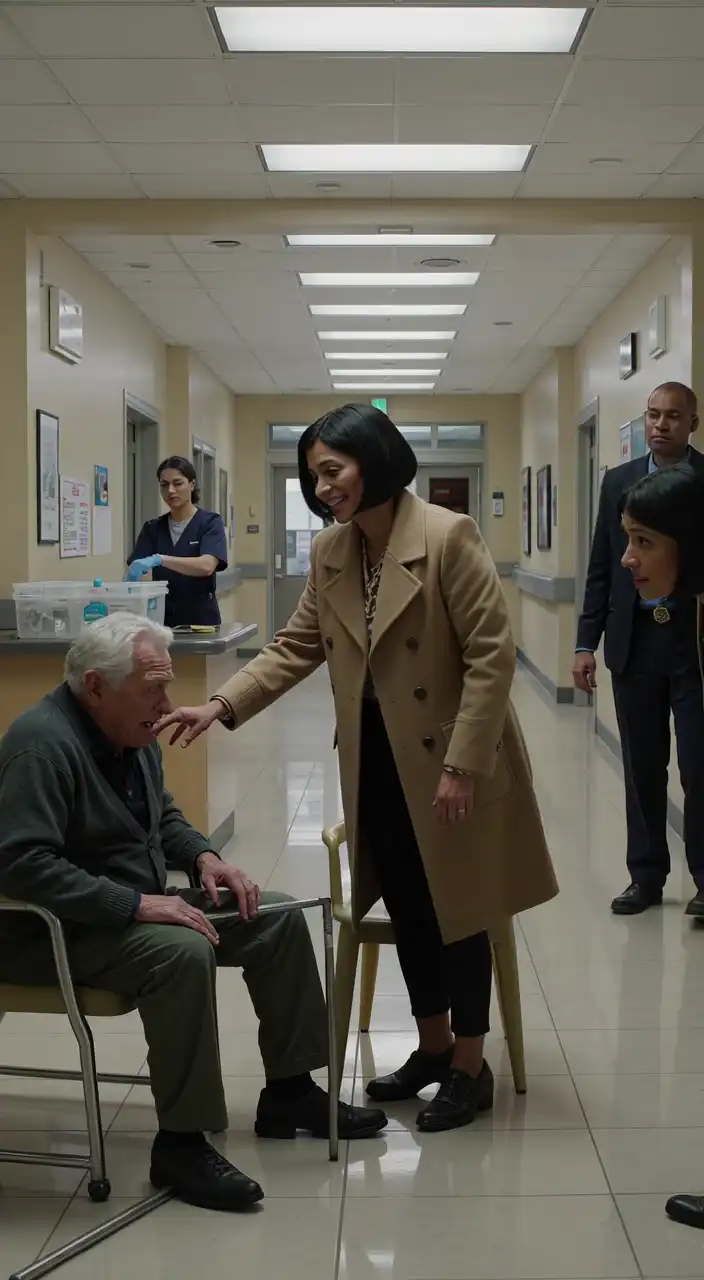

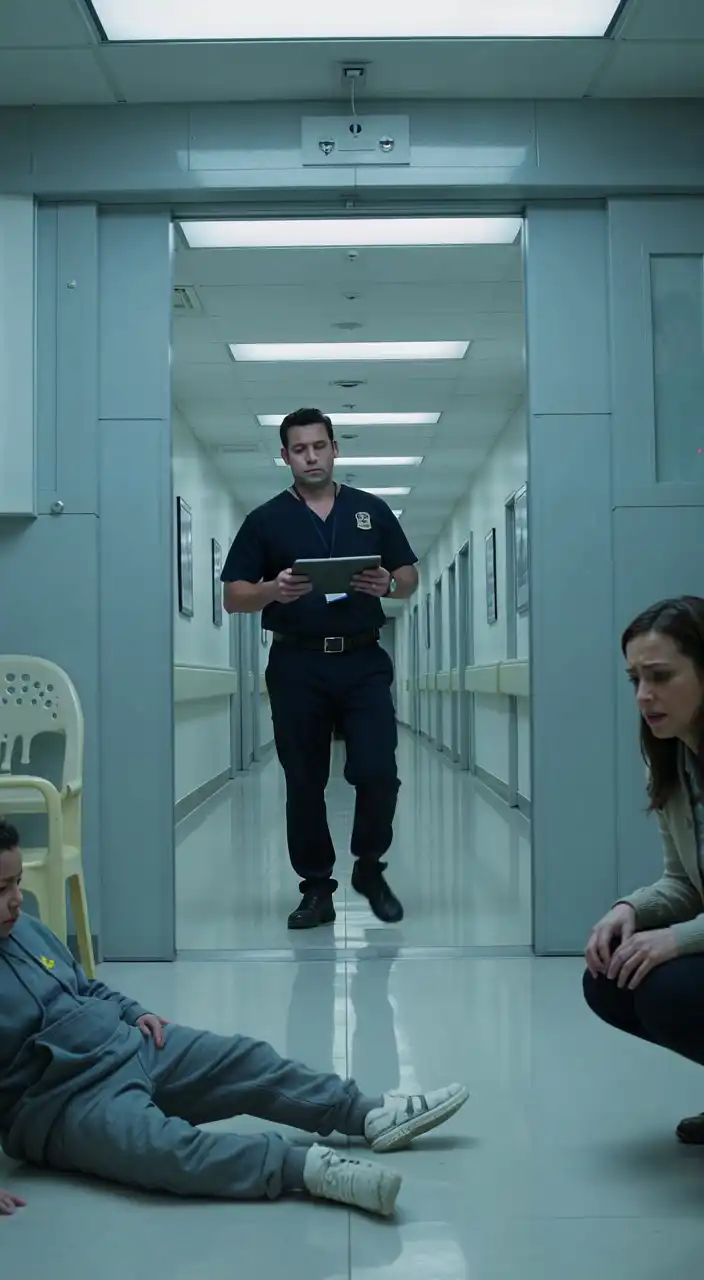
Noah did not touch the cap with his bare hand. He pulled a glove from his pocket, crouched beside the baseboard, and lifted it carefully between two fingers while keeping his eyes on Oliver.
"Sir," he said again to Michael, still calm, still controlled, "move away from the doorway now."
Michael did not move. Up close, his spotless shoes looked absurd on that dirty tile, polished enough to reflect the fluorescent strips overhead while a child trembled at his feet. He angled his body wider, half screening Oliver from the triage nurse as if the boy were a billing dispute instead of a patient.
"I am acting under standing administrative instruction," Michael said. "There is a custody sensitivity around this family and a funding dispute attached to prior services. We need legal authorization."
Noah looked past him. "The child can barely sit upright."
"The child has a history of coached presentations," Michael replied. "The guardian reported attention-seeking behavior, fabricated symptoms, and unauthorized attempts to access controlled medication."
Oliver flinched at the words coached presentations, like he had heard them before.
His aunt, Daniela, took one step forward and then stopped so fast her purse slid off her shoulder. "That isn't true," she said, but she said it to Noah, not to Michael. She sounded like someone who had learned there was no use arguing with the man in front of her.
The triage doors slid open again. Another nurse called, "Next patient," then saw the scene and cut her eyes to Noah. He held up one hand without turning. Wait.
Oliver's head dipped. His palm skidded on the floor. The yellow stain on his sleeve was brighter under the hall lights than it had first looked, thick around the cuff as if liquid had run downward and dried there. Noah noticed it. So did the nurse.
"What is on his sleeve?" she asked.
Daniela opened her mouth. Michael answered first. "Vitamin suspension. The guardian already disclosed it."
Oliver shook his head once. Tiny movement. Barely there. But it was a no.
Noah saw that too.
He shifted his stance, making a quiet adjustment that placed his body between Michael and the child. "Ma'am," he said to Daniela, "I need you to tell me whether this child was given any medicine before arriving here."
Daniela looked at Oliver and then at the triage desk and then down the hallway behind her, like she expected someone worse to come around the corner at any second. "I don't know exactly what was in it," she said. "His sleeve got soaked because he spit some out."
Michael snapped, "Do not speculate."
Noah stood up slowly. He was not a large man, but authority sat on him in a way that changed the air. "You're done talking over them."
Michael's jaw hardened. "You are security. This is an administrative and family issue."
"No," Noah said. "This is a child in visible distress being prevented from evaluation. That makes it a safety issue."
The nurse had already backed through the triage doors. A second nurse appeared beside her with a wheelchair. Michael saw it and stepped sideways to block the opening more completely.
"You cannot admit him without guardian consent," he said.
Daniela's eyes filled. "His mother is in rehab in El Paso. Her sister has been keeping him. She told me to bring him if he got worse. I have texts. I have the bracelet from his last ER visit in my bag. They said to bring him right back if the shaking started again."
The word again hit like a dropped tray.
Noah turned to her. "Again?"
Michael cut in. "Previous workup was negative."
Oliver made a choked sound and folded forward. Not vomiting, not crying. Just his body suddenly giving way. The nurse with the wheelchair abandoned it and dropped to one knee beside him. "Honey, can you look at me?" she asked. Oliver blinked at her but his eyes did not seem to hold focus. His hand opened and closed on empty air.
Noah's earpiece crackled. He touched it once and said, "Code Safeguard, hallway outside triage. Possible pediatric medical neglect. Need charge nurse now."
That changed everything.
The phrase landed on the nurses like a switch. The second nurse came through the doors with gloves already on. Michael started talking louder, the way people do when they feel power slipping and think volume can save it.
"This is improper. I need Risk Management present. This family has documentation on manipulative episodes. The child was removed from a private school after repeated behavioral incidents. His guardian specifically instructed that no one separate him based on false claims made by extended relatives."
Oliver whispered something. The first nurse lowered her ear close to his mouth.
"What did he say?" Noah asked.
She looked up. "He said, 'Don't let him call Ava.'"
Daniela made a broken sound. "Ava's the sister. The one he's staying with."
Noah's face flattened into something colder. "And why would he be afraid of that call?"
Daniela wiped her face hard with the heel of her hand. "Because whenever she comes, he changes his story."
Michael laughed once without humor. "Or because this aunt has been trying to undermine lawful guardianship for months."
Noah ignored him. "Ma'am, are you the legal guardian?"
"No," Daniela said. "I'm his mother's younger sister. I clean houses. I don't have money for lawyers. I only had him this afternoon because Ava said she had a donor lunch at the hospital and couldn't deal with him shaking again. She dropped him at my apartment with a bag and said he was faking to get attention."
The donor lunch. The family account. Standing instructions.
The pieces began to line up in ugly ways.
Noah held out his hand for Daniela's phone. "Show me the texts."
Michael stepped toward them. "You cannot collect personal devices from family members."
"I can preserve immediate evidence tied to child safety while clinical staff evaluate the patient you are obstructing," Noah said. "And if you come one step closer, I will remove you from this hallway."
For the first time, Michael looked uncertain. His status had always worked here. The badge, the language, the confidence that nobody wanted trouble attached to a wealthy donor family. But a Code Safeguard in a public corridor was a different terrain.
Daniela dug through her bag with shaking hands and pulled out a cracked phone, a laminated pediatric wristband, and a folded discharge paper stained at one corner. The wristband dropped into Noah's palm. Oliver's name. Last week's date. Return immediately for worsening tremor, confusion, or suspected ingestion.
The first nurse read it over his shoulder and swore under her breath.
Michael lunged verbally before he did physically. "That discharge referred to accidental overuse of prescribed cough medication."
"There was no prescribed cough medicine," Daniela said, voice suddenly sharper because truth had finally found a place to stand. "I checked the bag. There was only a toothbrush, two shirts, and that hoodie."
Noah looked at the folded paper. The stain at the corner was faint yellow.
Same color.
He gave the wristband to the nurse. "Take him."
Michael put out an arm. Noah caught the wrist, turned him cleanly aside, and said in a voice low enough that only the nearest few of them heard, "If this child crashes while you are performing donor service, your lanyard won't save you."
The nurses moved fast then, one under Oliver's shoulders, one guiding his legs into the wheelchair. Oliver's eyes opened wider in panic as the chair turned toward the triage doors. "Tia," he whispered.
"I'm here," Daniela said, gripping the handles as if she could hold him to life with her bare hands. "I'm right here."
But as they crossed the threshold, Michael called after them, "That aunt has no authority. The guardian is on hospital property. She will demand discharge."
Noah did not look back. "Then she can do it in front of pediatrics, social work, and law enforcement."
That should have been enough to settle the hallway.
It was not.
Because while the nurses wheeled Oliver through triage, Noah glanced down at Daniela's phone screen and saw a text thread full of clipped orders from Ava: If he starts the shaking, do not let them test him before I get there. Tell them he does this for attention. Do not mention the syrup. Michael already knows.
And beneath that, one unopened voicemail notification from an unknown number marked 911 callback.
Noah looked up at Daniela. "Who called 911?"
Daniela stared at the screen like she had forgotten that notice was there. "I didn't. I thought... maybe he did?"
Oliver was six years old.
And somehow there was a 911 callback waiting on a phone that had been in Daniela's purse all afternoon.
Noah's controlled anger sharpened into something more dangerous. "We need that audio. Right now."
He signaled to a deputy at the far desk just as the triage doors began to close, and from inside the room beyond them, they heard a nurse say, "His sugar is dropping. Get the pediatrician."
That was the first moment anyone in that hallway understood this might not be attention-seeking, overmedication, or even one bad caregiver decision.
It might be deliberate.
Noah walked Daniela toward a small consult room off the corridor, not because he wanted privacy for her but because he needed the door between her and whatever family influence was already racing this way. The deputy followed. Michael stayed in the hall, blocked now by a second security officer who had arrived at Noah's call. He was still arguing, but the sound dropped away as the consult room door shut.
Daniela sat down and looked as if she might fold in on herself. Her hands were small and rough, nails cut close, wrists marked with faint bleach irritation from cleaning products. There was no performance in her fear. It was old fear, practiced fear, the kind that knows who gets believed and who does not.
Noah pulled a chair across from her, not behind the desk. "Take a breath. Start with the voicemail."
She unlocked the phone twice before getting it right. Her fingers kept slipping. The 911 callback had come forty minutes earlier, while she had been on the bus heading to the hospital. Beneath it, tucked between Ava's texts, was an outgoing call to 911 from the same afternoon.
"Did you make that call?" the deputy asked.
Daniela shook her head. "No. I swear I didn't even know. I was cooking when Ava dropped him off. He was sleepy. Too sleepy. I took him to the bathroom to wash his face and found that stain on his sleeve, and he said not to tell because he'd get in trouble. Then he started shaking. I grabbed my bag and got him on the bus. I never touched 911."
Noah pressed play on the voicemail. A dispatcher's voice filled the room.
"This is Metro 911 returning a call from this number. We heard a child requesting help and an adult instructing him not to say he felt sick. If this is an emergency, call us back immediately or remain on the line."
For one second nobody moved.
The deputy was first. He took out his notebook. "Do not delete anything."
Noah replayed it, listening not to the dispatcher this time but to the spaces inside the message, hearing what it implied. A child requesting help. An adult telling him not to say he felt sick. The call had connected long enough for dispatch to hear it, then been cut off before intervention.
Daniela put both hands over her mouth. "Oh God. He called from my phone. He must have taken it from the counter while I was packing his bag."
"Did he know how?" Noah asked.
"He watches cartoons on it. He knows the green button. He likes the siren sound in the emergency game app." Her voice broke on the last word. "He was trying to get help."
The deputy left to request the audio preservation. Noah stayed with Daniela. That was part of his training, but only part. The rest was that if he walked back into the hall too soon, he was going to say something to Michael that would end his shift and possibly his job.
"Tell me about Ava," he said.
Daniela stared at the phone screen. "Ava is not family by blood. She's Oliver's mother's older half-sister. When Marisol went into treatment, she said Ava could keep Oliver for a little while. Ava has money now because she married into money. Big house. School fundraising boards. Photos with doctors at charity events. Everybody says she saved him." Daniela gave a short, ugly laugh. "Saved him from what? His mother was sick, yes. But she loved him."
"And Michael?" Noah asked.
"I only know him from today by name. But Ava said at least the hospital would not embarrass her family over every little thing." Daniela looked up slowly. "I thought she meant billing. I did not know she meant this."
Noah thought of the text: Michael already knows.
He had seen versions of this before. Not identical, but close enough. Families with money and language and institutional comfort could turn concern into inconvenience with a few calls and the right tone. Staff heard "custody issue," "behavior problem," "family conflict," and reflexively slowed down. On a good day, that delay was insulting. On a bad one, it was lethal.
A knock hit the door once. Charge nurse Elena stepped in without waiting.
"His blood sugar is low, but not critically low. He's got tremor, drowsiness, constricted attention, and possible ingestion. We found residue under his fingernails and in the cuff. Pediatrician ordered tox screen, labs, IV, continuous monitoring. He keeps asking if he's in trouble."
Daniela's face collapsed.
"Can I see him?" she asked.
"In a minute," Elena said gently. "First I need to know if he has any known meds, allergies, or prior episodes."
Daniela rubbed her forehead hard. "No meds with me. No known allergies. But last week he had one shaking spell and Ava said he took cold medicine on purpose because he likes hospitals. Marisol cried when she heard that. She said he hates doctors. He only goes quiet."
Elena exchanged a look with Noah. Children who "like hospitals" usually did not whisper, Don't let him call her.
"What exactly was in his bag?" Elena asked.
"A toothbrush, two shirts, the hoodie, one little toy car, and..." Daniela stopped.
"And what?"
"A spoon. Wrapped in a napkin."
Noah sat forward. "What kind of spoon?"
"Just a regular spoon. Sticky. I left the bag under the triage chair because they rushed him in."
Elena was already backing toward the door. "Don't touch anything out there," she told Noah. "I'll have it sealed."
The spoon mattered. Residue mattered. The cap mattered. The discharge paper stain mattered. Tiny ugly pieces, each one small enough to ignore alone. Together they formed shape.
As soon as Elena left, Noah's phone buzzed. The deputy had gotten the preliminary dispatch note. Open line lasted twenty-one seconds. Child voice stated, "My hands won't stop." Adult female voice responded, "Stop that right now. You're not sick." Call disconnected. Callback unanswered.
Adult female voice.
Not Daniela.
Ava.
Noah stood. "Stay here. Lock the door if anyone but me or the deputy comes."
Daniela grabbed his sleeve before she could stop herself. "Is he going to die?"
Noah wanted to say no. Training told him never to promise what medicine had not yet secured. "The doctors are with him now," he said instead. "And he is not going back into that hallway."
That was enough to make her let go.
Outside, the corridor had changed from bureaucratic delay to quiet storm. Staff moved around Michael without engaging him. He was on his phone, speaking in low urgent tones. The second security officer watched his hands. At the far end of the hall, a woman in a cream suit moved fast in expensive heels, face set with offended certainty before she even reached them.
Ava.
She was beautiful in the polished way money protects, hair smooth, makeup clean, handbag worth more than Daniela probably made in a week. She looked first at Michael, then at Noah, and finally at the triage doors.
"Where is my nephew?" she demanded.
Noah stepped into her path. "Being evaluated."
She smiled tightly. "Not without my consent."
"That ship sailed when he presented in distress."
Her eyes sharpened. "You must be security."
"Supervisor."
"Then supervise your lane," she said. "Michael informed me that my unstable sister's relative caused a scene and manipulated staff into admitting a child with behavior problems. Oliver has trauma-based episodes. He performs illness under stress."
Noah had heard smooth cruelty before too. It was often more dangerous than shouting.
"He called 911 today," Noah said.
Ava's expression did not fully change. But it changed enough.
"No, he didn't."
There it was. Not confusion. Denial.
Noah let the silence hang. Michael looked at Ava, and for a fraction of a second the relationship between them became visible: not administrator and difficult guardian, but co-defenders of a script they had rehearsed too many times.
Then Ava recovered. "Children press buttons. It means nothing."
"The dispatcher heard him ask for help," Noah said. "And heard an adult female voice tell him not to say he felt sick."
Michael cut in too quickly. "This is exactly why these matters require discretion."
Noah turned his head and looked at him as though he had become interesting for all the wrong reasons. "Did you know there was a 911 call when you blocked triage?"
Michael said nothing.
That was answer enough.
Before Noah could push further, Elena emerged from triage with a sealed clear evidence bag in one hand. Inside were the wrapped spoon, the bottle cap, and the hoodie cut from Oliver for treatment. Yellow smears marked all three.
Ava's eyes landed on the bag and hardened into fear before she could disguise it.
Noah saw it. Elena saw it. Michael saw that they saw it.
And that was the moment the story Ava had been controlling began to fracture.
But fracture was not collapse. Not yet.
Because Elena's next words changed the stakes again.
"The pediatrician wants to know," she said, looking directly at Ava, "why this child has the same sedating compound in his preliminary screen that appears in an old-school antihistamine syrup no one disclosed at intake."
Ava lifted her chin. "Because he steals medicine."
Elena did not blink. "Then why is he terrified of going home?"
Ava opened her mouth.
Nothing came out.
Noah thought that was the break point. It wasn't. The real break came when a tiny voice from inside triage carried into the hall, thin and panicked through the partly opened door:
"Please don't let her say I asked for it."
Ava went white.
And Michael took one sudden step backward, as if for the first time he understood this was no longer a hallway problem he could bill, stall, or redirect. It was a record.
Oliver's room was small and too bright, one of those pediatric observation spaces designed to look less frightening with cartoon stickers on the cabinets and soft-colored curtains that never softened anything. He looked even smaller in the narrow bed, blanket over his legs, IV taped to his hand, heart monitor tracing green light across the wall. The tremor had lessened, but it had not gone. Every few seconds his fingers twitched against the sheet as if his body remembered danger even when he was still.
Daniela stood near the head of the bed, not touching him until he lifted his hand toward her. Then she held it with both of hers and bent low enough that he could see her face without moving.
Noah remained by the door with Elena and the deputy. They had made the decision together: Oliver would not be interviewed like a witness. He would be spoken to like a child in a hospital bed whose body had finally stopped fighting enough to let words out. But his words mattered now, and everyone in the room knew it.
"Buddy," Elena said gently, "I'm Nurse Elena. You did a good job coming here. You're safe right now. Nobody in this room is going to make you leave with someone before the doctor says you're okay. Do you understand?"
Oliver's eyes flicked to Noah, then to the deputy's badge, then back to Daniela. "Will she be mad?" he whispered.
Daniela's face twisted. "Not at you. Never at you."
He considered that like it was a math problem too difficult to solve quickly.
Elena crouched closer. "Can you tell us about the yellow medicine?"
Oliver's lips pressed together. He looked down at the tape over his IV. "It tastes bad."
"Who gave it to you?" Elena asked.
He did not answer. The monitor sped up.
Noah spoke for the first time, and he kept his voice low. "You don't have to look at me, Oliver. Just listen. The man outside can't stop the doctors now. The lady in the cream jacket can't stop them either. We already know you called for help."
Oliver's eyes snapped to him.
That was the planted detail Noah had chosen intentionally. Not We think. Not Maybe. We know.
The boy's shoulders dropped one inch, and in that inch was trust trying to happen.
"She said they don't believe kids who lie," he whispered.
"Who said that?" asked the deputy.
"Ava." His voice almost disappeared on the name. "She said if I told the wrong story, Mama would never get better and it would be my fault because everybody already spent a lot of money on me."
Daniela covered her mouth and turned away, crying silently.
Elena kept steady. "Did Ava give you the medicine?"
Oliver nodded.
"How often?"
His brow furrowed. Counting was hard through fear and fatigue. "When I had to go places. Church. School thing. Lunches. One time picture day. Sometimes at home when her friends came. She said it helps my nerves."
The deputy wrote without looking up. Noah felt something cold settle in him. Not one emergency. Pattern.
"What kind of bottle?" Elena asked.
"Yellow label. Brown bottle. She hides it in the pantry behind tea." He swallowed. "Sometimes she puts it in juice."
Daniela made a soft broken noise. "God."
Elena touched the blanket near Oliver's knee. "Did anyone else know?"
Oliver hesitated. Then another small reversal entered the room.
"Michael."
All three adults at the foot of the bed looked at each other.
"What makes you say that?" Noah asked.
"He was there one time when I got sleepy in his office." Oliver's eyelids drooped; the memory itself seemed to tire him. "He told Ava she used too much because I couldn't walk straight. He said if she kept doing drop-offs at the clinic she had to make me look normal before the teachers noticed."
Nobody moved for a full second.
Michael had not merely taken Ava's side when trouble started. He had prior knowledge.
The monitor ticked on. The green line rose and fell.
The deputy stepped out to relay that immediately. Noah stayed. He had seen false starts before, children saying names because they feared someone else. But this fit the text thread, the standing instructions, the hallway obstruction, the donor lunch, the confidence with which Michael had deployed family-language to deny care. It fit too well.
Elena changed approach. "Do you know what medicine it is? Did you ever see the box?"
Oliver nodded weakly. "Blue letters. Starts with D maybe. Sometimes spoon, sometimes cup. She says, 'Open, Ollie, or I'll tell them what you do when your mom calls.'"
"What do you do when your mom calls?" Daniela asked before she could stop herself.
He looked confused by the question. "I cry."
That broke her.
Noah glanced toward the door and saw the pediatrician waiting there, a woman in navy scrubs with test printouts in hand. She entered only when Elena signaled.
"Mr. Ramirez?" she said to Noah.
He stepped closer.
"Preliminary panel suggests a sedating antihistamine, likely diphenhydramine or a related product, plus possible adjunct cold medicine. Not a lethal level at this point, but enough to cause drowsiness, tremor, confusion, and worsen with repeat dosing in a child his size. Given the low blood sugar and timing, if he had been delayed longer or sent home and redosed, he could have deteriorated significantly."
Delayed longer.
Noah looked at the bed and then at the monitor light crawling across the wall. A few more minutes in the hallway. A successful discharge. Another ride back to that house. The phrase settled heavily.
The pediatrician continued. "His records from last week describe similar symptoms but rely heavily on guardian report. No one documented concern for intentional administration because the guardian denied home medications beyond vitamins and staff apparently accepted the explanation of accidental access."
Apparently accepted. Everyone in the room heard the institutional accusation under the clinical wording.
Noah thought of the previous wristband in Daniela's purse and the yellow stain at the corner of the discharge papers. Plant, repay. The signs had been there.
The deputy returned. "Child Protective Services and responding officers are on the way. I also pulled camera review request for the hallway and administrative wing. We need to keep Ava onsite if possible."
"Possible how?" Noah asked.
The deputy gave a grim smile. "By letting her think she can still control the room."
That was the next pressure point. If Ava bolted, she might destroy evidence at home. If Michael panicked, he might scrub records or call ahead. They needed them contained, calm, and overconfident.
Noah understood the role immediately. He was good at calm.
He looked to Daniela. "Stay with him. If anyone asks you to step out without Elena, the doctor, or me saying so, say no."
Daniela nodded fiercely.
In the hall, Ava was pacing in a tight furious line. Michael stood near the window alcove, phone no longer at his ear, face closed. The deputy took position where both could see him but not yet read his purpose.
Ava turned as Noah approached. "Well?"
"The doctor says he needs observation."
She exhaled in irritated relief, as though this were still a temporary inconvenience. "Fine. Then I will take over from here and have the aunt removed."
Noah let his expression stay neutral. "There are intake inconsistencies that need clarification."
"Which means?"
"Which means social work is coming."
Her eyes flashed. "Because my nephew got overtired and my sister's family made a scene? This is absurd."
Michael entered smoothly, trying to reclaim ground. "Noah, if this is heading toward a formal neglect allegation, the hospital needs internal coordination before staff make defamatory assumptions against a donor family."
Donor family.
The phrase itself was a confession of motive.
Noah folded his hands in front of him. "Good thing we're not making assumptions. We're preserving evidence."
For the first time, Michael's composure cracked at the corners. "What evidence?"
Noah did not answer.
That silence was strategic, and it worked best on Ava. Her gaze darted not toward Oliver's room but toward the evidence bag on the counter by the nurses' station. Spoon. Cap. Hoodie. Yellow.
She moved before she had time to think better of it.
It was not a run. Just a quick controlled stride toward the station, hand already opening as if she had every right to pick up whatever belonged to her nephew. Noah intercepted her at the counter.
"Don't," he said.
"I was only checking his clothes."
"No."
The charge nurse had seen it too. She pulled the evidence bag farther back without a word.
Ava's voice dropped to a hiss. "Do you have any idea who supports this hospital's pediatric wing?"
Noah met her stare. "Today? A child who called 911 from a borrowed phone."
That landed. Michael looked at Ava with the first clear sign of fear, not for Oliver, not for truth, but for fallout. Rich families survived scandal all the time. Employees attached to their scandals often did not.
He changed tactics.
"If there is a medication concern," he said, "it may involve a misunderstanding around therapeutic dosing. The family does use over-the-counter sleep aids during severe adjustment periods. The child's mother consented verbally months ago according to my understanding."
Ava whipped toward him. She had not expected him to drift from total denial to partial framing.
Noah noticed.
There was the second reversal beginning to surface: when pressure rose, Michael would not protect Ava out of loyalty. He would protect himself by adjusting the story first.
"Interesting," Noah said. "A minute ago he was fabricating symptoms. Now there's a therapeutic dosing explanation."
Michael opened his mouth. Closed it.
Ava's face sharpened into pure contempt. "Say less if you're going to be stupid."
The words hung in the corridor.
The deputy took one half step closer. He didn't need more than that to remind them this was no longer private family argument. It was documented speech in a monitored hospital hall.
A social worker arrived then, followed by a CPS investigator carrying a slim laptop bag and a legal pad. Introductions were made. Ava immediately shifted into polished grievance, speaking about her unstable half-sister, her burden, Oliver's trauma, the aunt's jealousy, the dangers of overreacting around children with attachment issues. She was good. She had practice. For a moment, any outsider who had not seen the floor, the stain, the cap, the texts, the 911 callback might have felt the pull of her certainty.
Then the pediatrician stepped out with a printed medication information sheet.
"One more thing," she said. "The compound in his system does not match a one-time accidental swallow. It is more consistent with repeated dosing over time."
Ava went still.
CPS looked up from her notes. "Repeated by whom?"
Noah answered before anyone could redirect. "The child named Ava and Michael separately."
Silence.
Michael snapped first. "A six-year-old under stress is not a reliable source."
Noah's controlled anger returned full force. "Neither is a hospital administrator with standing instructions to deny a sedated child triage because a donor family asked for discretion."
The CPS investigator's head turned sharply. "Standing instructions?"
Michael realized too late what he had walked into.
He tried to recover. "Administrative flags exist to ensure proper consent pathways in complex custody scenarios."
"Written where?" the investigator asked.
"Internal notes."
"Accessible to whom?"
"Limited staff."
"Added by whom?"
That was the fatal question.
Michael hesitated one beat too long.
Noah knew then there would be records. Maybe not of the drugging. But of the system wrapped around it. Flags. Notes. Delays. Warnings to staff. A bureaucratic shield built around one family's convenience.
And once records exist, institutions cannot pretend they were only dealing with emotion.
But before they could push deeper, Elena came out again, and her face had changed.
"He wants to use the bathroom," she said to Daniela from the doorway, then looked to Noah. "And he just told me there is something hidden in the little red car from his bag."
The toy car.
The planted detail Daniela had mentioned like an afterthought.
Noah felt the story tilt.
"What is hidden in it?" he asked.
Elena looked directly at Ava when she answered.
"He says recordings."
The red toy car sat on a clean towel in the pediatric consult room like something too small to matter. Bright plastic. Scuffed wheels. One sticker half peeled from the hood. Daniela kept saying she thought it was just his favorite car, the one he carried everywhere and rolled along windowsills when he was anxious.
Oliver, pale but steadier after fluids and glucose, sat propped against pillows while Elena held the toy where he could see it.
"Can you show me?" she asked.
He nodded and made a weak twisting motion with his fingers. "The back part comes off."
The deputy used a pen cap to pry gently at the rear bumper. It popped free with a soft click. Inside, wrapped in tissue, was a tiny digital voice recorder no bigger than a stick of gum.
No one spoke.
Then Daniela whispered, "Marisol."
Noah looked at her. "What?"
"My sister used to hide recorders in cleaning carts when clients accused her of stealing tips," Daniela said, eyes filling. "She told Oliver once that if grown-ups lied and he was scared, machines could remember for him."
A child had carried evidence in a toy car.
Not because he wanted revenge. Because he wanted someone to believe him.
The deputy set the recorder on the towel like it might break under shame alone. "Can we access it?"
Oliver nodded. "You hold the silver button."
Noah did. The device beeped once. A file list appeared on the tiny screen. Dates. Several.
Ava made a sound in the hallway before anyone called her in. Not words, just a strangled breath of recognition. She had seen the car a hundred times and never understood what it had become.
The deputy looked at Noah. "We need chain of custody."
"We also need to know whether there's immediate evidence of current harm," Noah said.
CPS agreed. The first file they played began with cartoon audio and muffled movement, then shifted into a room tone that sounded domestic and close. Dishes. A cabinet. Ava's voice, crisp and impatient.
"Open, Ollie. Don't make this dramatic."
A smaller voice: "It makes me sleepy."
"That's the point. We have people over."
A spoon clinked against glass. A swallow. Then coughing.
Another voice entered. Male. Distinct even through the cheap recorder.
Michael.
"If he presents like this at school again, they're going to start asking questions."
Ava: "Then tell them trauma. You said that works."
Michael: "It works if you don't overdo it."
The room in the hospital froze around the cheap speaker.
The deputy stopped playback and marked the file.
"Enough for probable cause?" CPS asked.
"Enough to start handcuffing before they coordinate stories," the deputy said.
Noah stepped into the hall immediately. Ava saw his face and knew.
She backed one step, then another. "That child is sick. He invents things."
The deputy followed, reading the room and then reading her rights. Michael raised both hands instinctively before anyone touched him. Interesting, Noah thought. Innocent people protested first. Guilty ones often calculated.
Ava did protest. Loudly. About defamation, about misunderstanding, about therapeutic intent. She called Michael a liar, then called Oliver confused, then called Marisol an addict, then called the entire hospital ungrateful for what her family had donated. The unraveling was fast and ugly because it was built on class certainty: she had never really imagined the small people in the room would become witnesses with documents.
Michael tried to save himself by sprinting toward cooperation.
"I warned her," he said. "I told her the dosing was risky. I have texts."
Ava turned on him with such naked hatred that even the officers paused. "You told me exactly how to flag his chart so nobody tested him without calling me."
There it was.
Noah felt that sentence land in every corner of the hall. Administrative conspiracy no longer implied. Spoken.
The officers separated them. Michael went quiet after that, maybe because he realized the best story available to him was now partial confession framed as concern. Ava kept talking until the elevator doors closed on her.
Only then did Noah let himself lean once against the wall.
Elena came beside him. "You okay?"
"No," he said. "But I'm where I need to be."
Inside Oliver's room, the boy had fallen asleep with Daniela's hand over his. Sleep this time looked different. Not drugged. Not collapsed. Just exhausted. The monitor light washed his face green, then normal, then green again.
The pediatrician returned with more complete tox results and a concern nobody had wanted but everybody expected. "Repeated sedating doses, yes. Also signs of poor nutrition and intermittent low sugar. Nothing irreversible from what we can see right now, but he has likely been managed around adult convenience for a while."
Managed around adult convenience. Clean words for dirty harm.
CPS began emergency placement discussions in the room next door. Daniela was not legal kin on paper in any easy sense, but Marisol had named her in old school forms and there were messages supporting trust. The problem was immediate release. Daniela lived in a one-bedroom apartment, worked nights, and had no prepared space for a child. The system loves children in theory and paperwork in practice. Rescue was not over just because the guilty adults were separated.
That was Movement Five's obstacle and everybody felt it.
When Oliver woke near midnight, his first words were not for juice or cartoons or pain medicine.
"Do I have to go back?"
Daniela looked at CPS with raw panic. "Tell him no."
The investigator crouched by the bed. "We are trying very hard to make sure that doesn't happen."
Children hear trying very differently from adults. Oliver heard uncertainty. His mouth trembled. "If I go back I'll be good. I won't call."
Noah was at the door and hated how familiar that sentence was across too many cases. Good. I won't call. Children bargaining for smaller harm.
"You did the right thing by calling," Noah said.
Oliver's gaze moved to him slowly. "Even if people get in trouble?"
"Especially then."
The CPS investigator stepped into the hall with Daniela and the pediatrician. Noah stayed near enough to hear but far enough to let them talk. Placement barriers piled up fast: home inspection, emergency kinship paperwork, Daniela's work hours, Marisol's current treatment status, Oliver's school district, transport, medical follow-up. Every real-life rescue ends up wrestling a machine.
Daniela cried once, angrily, and wiped it away. "So because I am poor and don't have a second bedroom, he goes to strangers after all this?"
"No one is saying that yet," CPS replied.
"But you're thinking it."
The investigator did not lie. "I'm thinking about what keeps him safest tonight."
Noah had no formal place in that conversation. Security supervisors do not decide kinship placements. But institutions are made of people making calls, and he knew where some doors opened.
He called the hospital's on-call family advocacy director, then the pediatric social work manager, then the deputy to confirm that law enforcement could support emergency protective hold language if kinship paperwork needed stronger ground. Elena called the child abuse pediatric specialist. The pediatrician documented the risk of return in language so clear no after-hours judge could pretend confusion. One by one, the machine got nudged toward the child instead of away from him.
At 1:15 a.m., another complication hit.
Marisol called from rehab.
The number came through on Daniela's phone. Everybody froze. Daniela answered on speaker because her hands were shaking.
Marisol sounded thin, tired, and instantly terrified. "Is he alive?"
That was her first question.
Daniela burst into tears. "Yes."
Marisol cried too, but only for a second. Then her voice hardened with the kind of sobriety that comes when love has finally outrun shame. "I knew it. I knew something was wrong every time he got too sleepy on video. Ava said I was paranoid because of withdrawal and guilt."
CPS asked if Marisol would consent to emergency placement with Daniela pending formal review.
"Yes," Marisol said immediately. "A thousand times yes. Put whatever you need in front of me. I signed temporary care because I thought Ava had stability. I did not sign for this."
Then she said something that shifted the legal pressure one more notch.
"I sent Oliver a bracelet after the first ER trip. Blue beads with a little ambulance charm. I told him if he got scared, show it to a nurse and say call my mom's sister."
The bracelet.
Noah remembered Daniela digging through her bag earlier, pulling out the old wristband and phone. No bracelet. "Did he have it today?" he asked.
Daniela covered her eyes. "It was on his wrist when Ava dropped him off. I didn't see it at the hospital."
Search. Nurses checked the bedding, the cut hoodie pocket, the evidence bag tray. Nothing.
Oliver heard them and touched his bare wrist. Panic flared instantly. "She took it."
"Who?" Daniela asked.
"Ava. In the car. She said that bracelet makes me act sick."
The child abuse specialist arrived at 2:00 a.m. and reviewed not only the tox results and recordings but also the significance of removed identifying objects, coached language, repeated sedation, and chart flag interference. Her note was devastating in the precise way only a good medical note can be. It turned pain into undeniable chronology.
Still, one last obstacle remained. The overnight judge needed direct confirmation from Marisol for emergency kinship release, and the rehab facility's phone policy complicated live connection after hours. If they missed the window, Oliver would stay under hospital hold until morning and likely transfer temporarily to a county foster placement before Daniela could be cleared.
Noah watched Daniela pace the family room in socks, praying in Spanish under her breath. He watched Oliver in bed trying not to ask again where he would sleep. He watched overworked staff keep pushing because some nights decency survives only by refusing to clock out.
At 2:37 a.m., the rehab counselor finally joined the call, Marisol confirmed identity, the judge listened to the physician's statement about risk, CPS documented emergency kinship placement, and the order came through.
Daniela sank into a chair like her knees had stopped belonging to her.
Noah exhaled for what felt like the first time all night.
But the deepest release came an hour later, when the dawn shift started coloring the high window at the end of the hall and Elena walked into Oliver's room holding a sealed property bag.
Inside it was a blue bead bracelet with a tiny ambulance charm.
A housekeeper had found it tucked beneath the edge of the plastic triage chair where Ava must have yanked it free in the hallway and let it fall when everything started spinning out of her control.
Elena opened the bag and slid the bracelet carefully over Oliver's wrist.
He stared at it like proof had become touch.
"Can I keep it?" he asked.
"It belongs to you," Daniela said, crying again but smiling this time.
He looked at Noah by the door. "Does this mean they believed me?"
Noah nodded. "Yes."
That was the word the whole night had been chasing.
Yes.
The ending did not arrive all at once. Real endings almost never do.
Ava was charged. Michael was suspended before noon and later fired when the internal audit uncovered exactly what Noah had suspected: chart flags entered under vague consent language, alerts to delay outside evaluation until guardian contact, donor-family escalation notes routed away from standard safety review. He had not created Ava's cruelty, but he had built it cover.
The recorder files multiplied the case. Earlier incidents. Earlier dosing. Earlier lies. Teachers were contacted. Previous clinic visits reopened. Last week's discharge was formally reviewed. The hospital had to confront the fact that a child had returned with the same symptoms and left again because wealth had translated neglect into credibility.
Noah sat through one of those review meetings days later and watched executives use careful language around exposure, optics, trust restoration. He said one sentence that shut the room up.
"A six-year-old had to hide a recorder in a toy car because adults with badges were easier to fool than one little boy was to protect."
After that, policy changed faster than policy usually changes. Any active pediatric safety concern now overrode donor escalation notes automatically. Security got expanded authority to trigger medical abuse review at triage thresholds. Chart flags tied to custody conflicts required second-level clinical approval. Training was rewritten around exactly the kind of hallway Oliver almost died in.
That mattered. Not because policy is a happy ending, but because it keeps one child's terror from becoming only a story people cry over and then forget.
As for Oliver, he stayed two more nights for observation, nutrition support, and interviews done carefully, with toys on the floor and breaks whenever his eyes clouded. He talked more when Noah was not in the room, which Noah considered healthy. Children do not need heroes. They need safety.
Daniela's apartment was still one bedroom when they discharged him, still too small by a thousand official standards and somehow wide enough for him to breathe. Social work found a bed frame through a church network. Elena donated a set of dinosaur sheets her son had outgrown. The deputy brought a locked medication box because Daniela asked for one even though she had nothing to lock up yet. "I just want him to know medicine doesn't have to be secret," she said.
Marisol stayed in treatment. That was its own hard road, and the story did not pretend otherwise. But she called every night. The first video call after discharge, Oliver showed her the bracelet, then the toy car, then the corner by Daniela's couch where his new bed was going. Marisol cried openly. He cried a little too. Then he asked if the hospital had apple juice again, and everybody laughed in that cracked relieved way families do when survival comes before repair.
Noah saw him once more about three weeks later.
He was walking through the pediatric lobby when Daniela called his name. Oliver stood beside her in clean sneakers and a backpack almost bigger than his torso, the blue bracelet peeking from under his sleeve. No yellow stain. No tremor. He looked wary in the way some children always will after adults teach them too much too early, but there was something else there too: room.
"School meeting," Daniela explained. "They wanted the hospital records for accommodations."
Oliver held up the red toy car. "It doesn't record anymore," he said. "Tia says toys can just be toys now."
Noah smiled. "That's a good rule."
Oliver thought about that. Then, in a voice still small but no longer ashamed, he said, "I wasn't faking."
"No," Noah said. "You weren't."
The boy nodded once, as if setting that truth in its proper place at last.
Then he took Daniela's hand, and together they walked past the sliding doors that had almost stayed closed to him.
Disclaimer: Mention of any brand or trademark is for identification only and does not imply partnership or endorsement
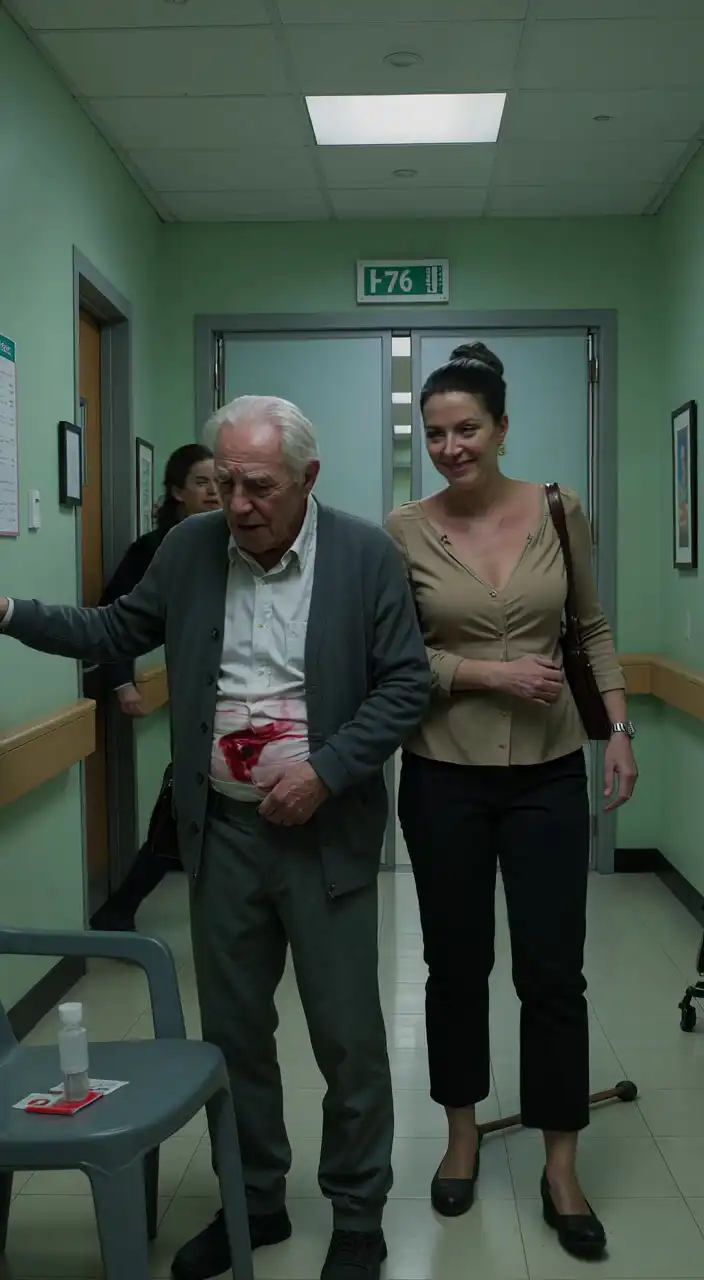
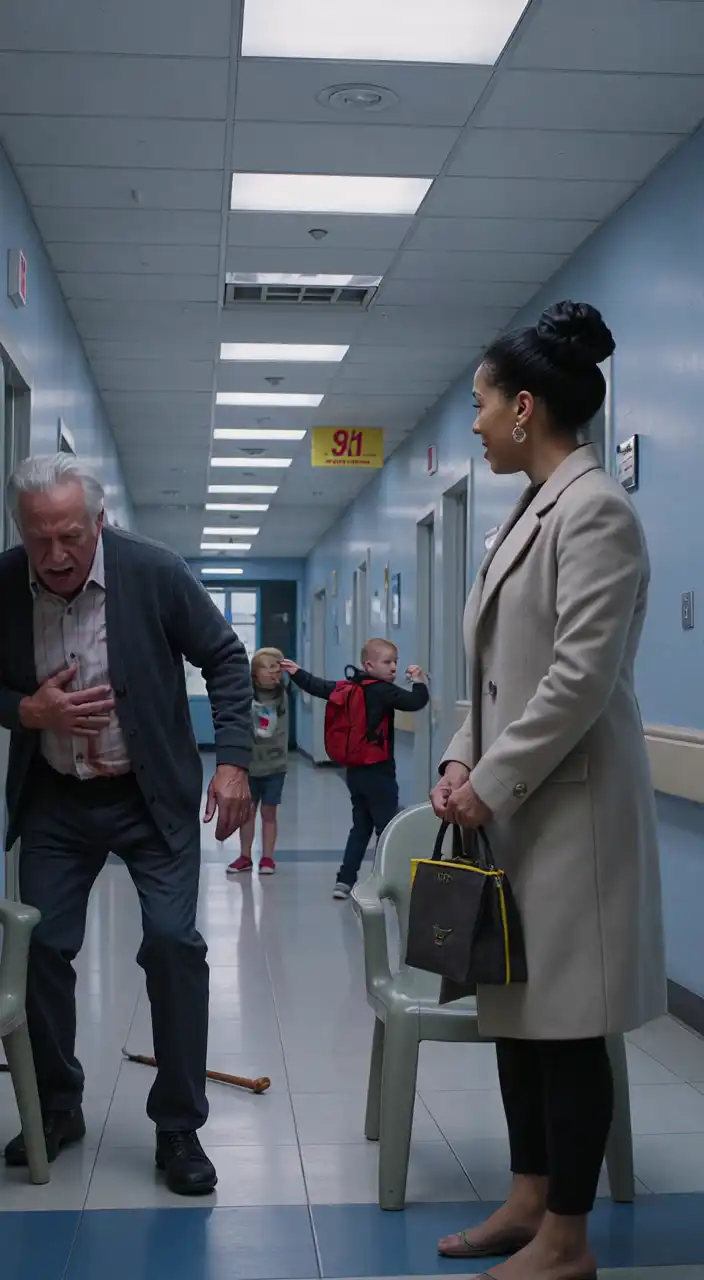
MY FATHER STARTED SHAKING OUTSIDE TRIAGE WHILE A CLINIC ADMINISTRATOR BLOCKED THE DOOR AND SAID HE NEEDED FAMILY PERMISSION FIRST.
MY FATHER STARTED SHIVERING SO HARD HIS SURGICAL BANDAGE BLED THROUGH, AND THE CLINIC ADMINISTRATOR STILL BLOCKED THE TRIAGE DOOR.
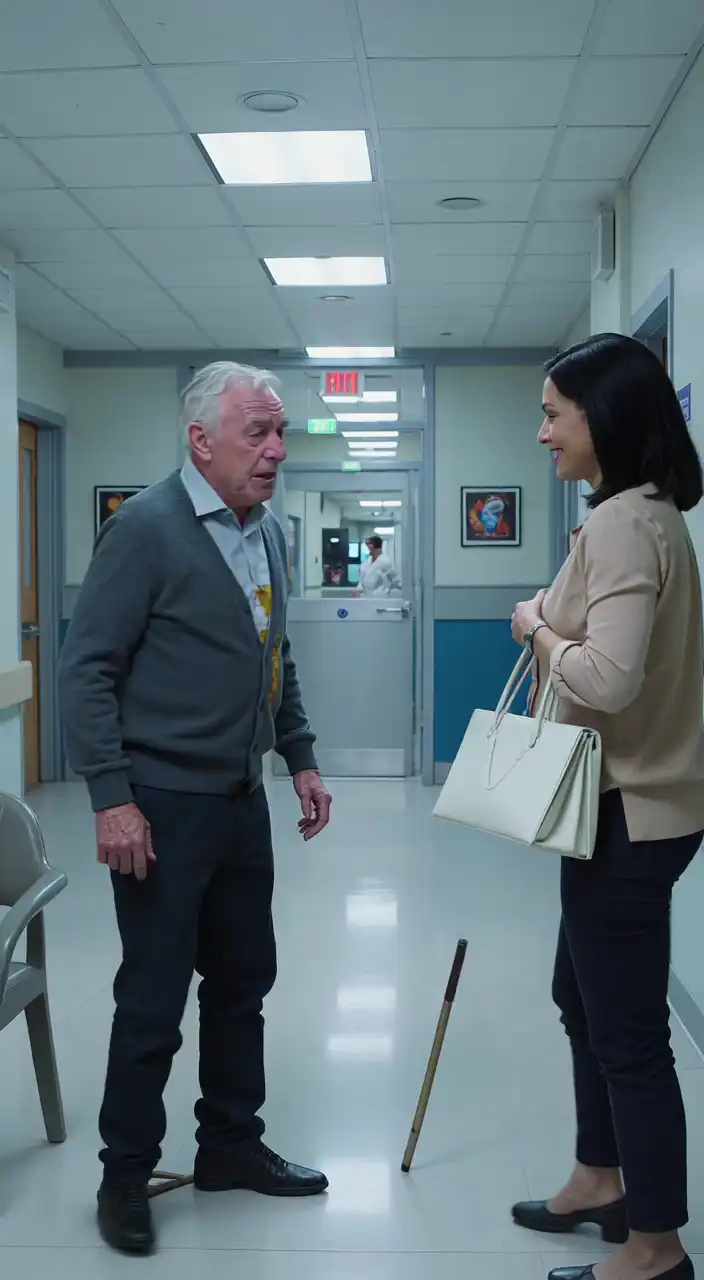
MY FATHER STARTED SHAKING IN THE HOSPITAL HALLWAY, AND THE WOMAN WHO CLAIMED TO BE HELPING HIM WOULD NOT LET TRIAGE TOUCH HIM.