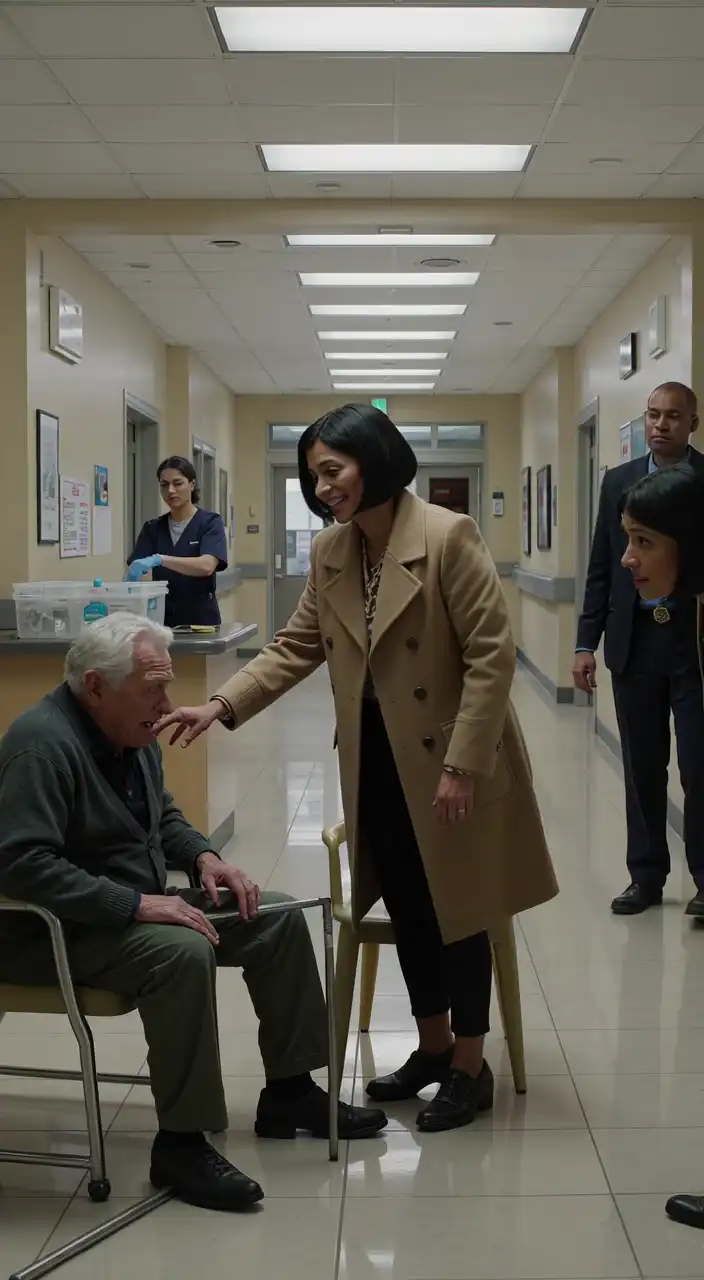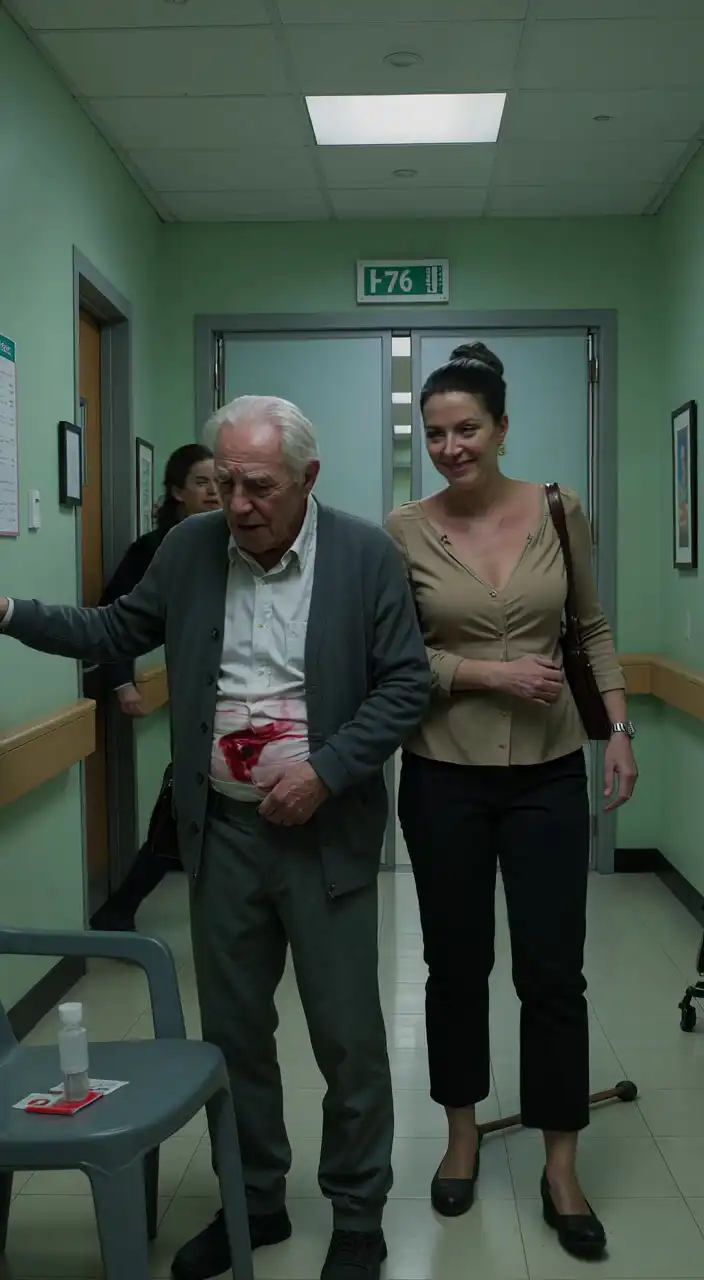
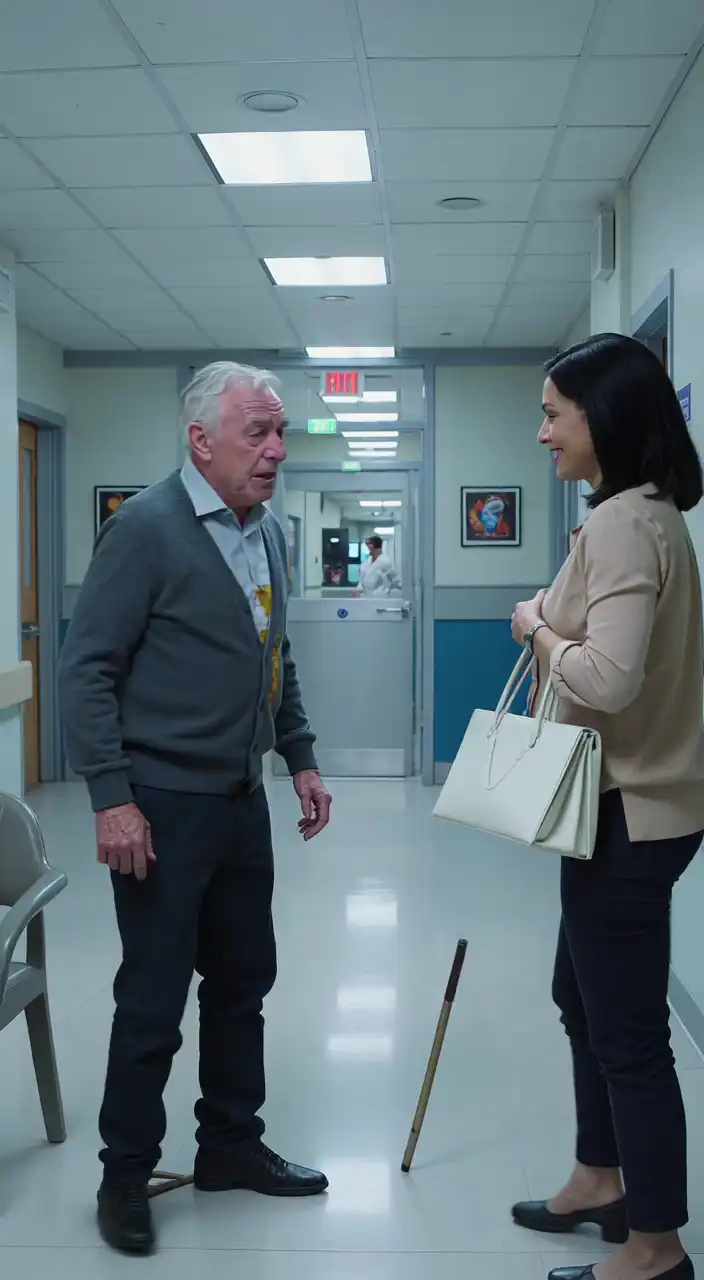
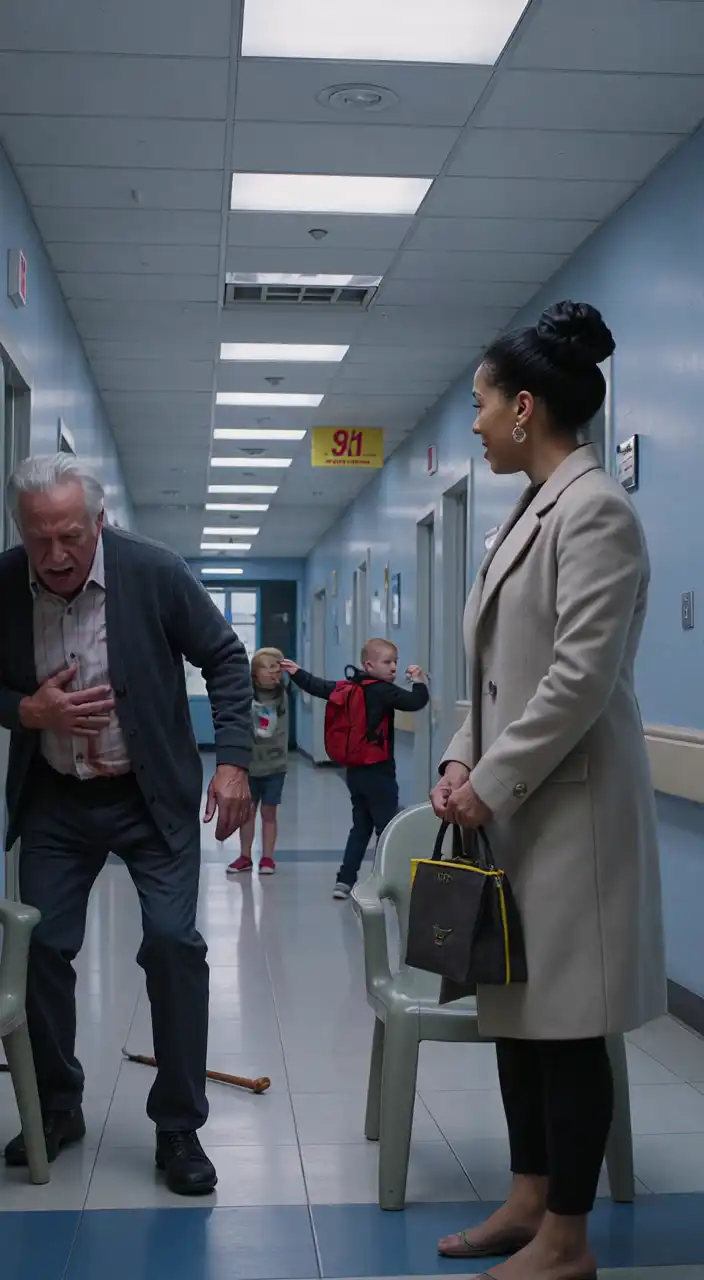

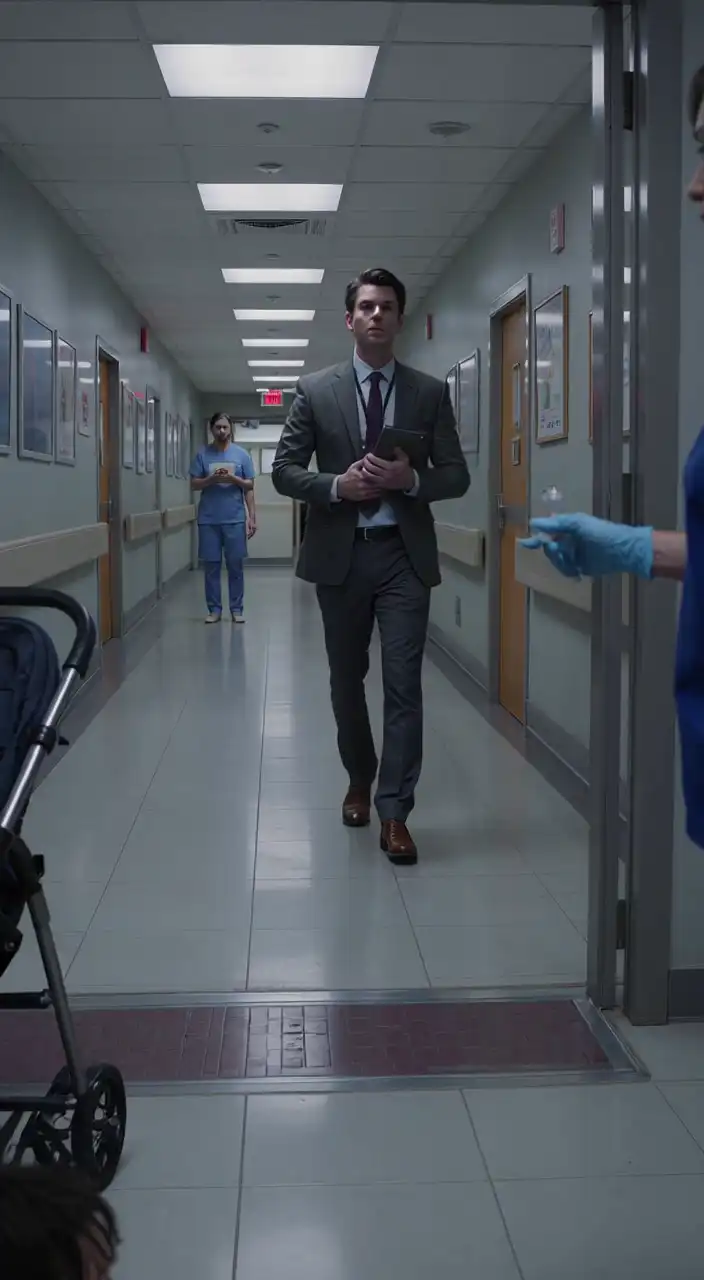
Dr. Carter took the paper from Matthew before it slid out of his shaking hand and onto the floor.
He had enough strength left to clutch one corner, like he was afraid even that torn sheet would be taken from him too. Her eyes moved once across the page. Then again, slower.
Asthma. Underlined three times.
Below it, in a different hand, was a note that made the back of her neck tighten: administer rescue inhaler immediately at onset of distress. Another line lower, half hidden by a thumbprint smear, read parent requests no sedating cough syrup due to prior reaction.
She looked at the empty spacer in the purse pocket and then at the yellow stain darkening the cuff of his sleeve.
"Matthew, can you hear me?" she asked.
He nodded once, but it was weak, delayed. His chest fluttered in quick little catches. Children in real respiratory distress often looked noisy in movies. In hallways like this, the dangerous ones could get terribly quiet.
David saw the shift in her face and changed his tone. It happened so smoothly she knew he had done it before. "Doctor, you are missing context. The child's aunt checked him into our outpatient clinic this morning. She was advised to complete authorization paperwork before emergency escalation. We are waiting for family. If we violate the account restrictions-"
"This is an emergency department," Evelyn said. "There are no account restrictions on oxygen."
She handed the chart to the triage nurse through the open door. "Get respiratory here now. Also security."
David took one step closer, lowering his voice as if courtesy could erase obstruction. "I am the administrator managing this family's care arrangements. The guardian made explicit instructions that no treatment be given without consent. There are custody issues. The aunt is unstable. If you intervene outside protocol, legal will be involved."
The housekeeping woman near the chairs made a sharp sound under her breath. The nurse behind glass had stopped pretending to focus on the screen.
Evelyn had worked trauma long enough to know the difference between a complicated family and a manufactured delay. She crouched again in front of Matthew. "Where is your inhaler?"
His eyes slid toward the locked purse.
"Who has the key?"
He swallowed hard. No answer.
David answered for him. "The guardian. She stepped out to take a call."
Matthew's hand moved, barely, toward his own throat. Evelyn saw his fingertips trembling against the hoodie string. She also saw the medicine stain closer now, not bright like children's antibiotics, not red or blue like OTC syrup. A thick yellow residue. Bitter smell. Too medicinal for juice, wrong for inhaled albuterol.
Respiratory rounded the corner with a portable nebulizer and oxygen tubing. Behind them came a security officer who looked more irritated than alarmed until he saw the boy on the floor and the doctor kneeling there.
David straightened and put professional concern back on his face. "Thank you. This child is not yet registered for ER care. There is a family dispute. We need to avoid a scene."
Evelyn did not even look up. "Move him to bed three now."
When the respiratory therapist reached for Matthew, David blocked the path with his tablet. It was subtle enough that he might have denied it later, but everyone in that fluorescent hallway saw it.
"For liability reasons," he said, "I cannot authorize transfer."
The security officer looked from the badge to the child to the doctor. He hesitated one fatal second too long.
Evelyn stood. "Officer, if you don't clear this doorway right now, I am documenting that you delayed emergency care after direct physician order."
That cut through whatever uncertainty David's lanyard created. The officer stepped in, took David by the elbow, and moved him back. It wasn't dramatic. No shouting. Just a practiced pivot and a firm arm that broke the line he had been holding at the threshold.
Matthew sagged the instant the path opened. The therapist scooped him up with the nurse's help, and the boy was shockingly light for his size. His head knocked softly against the therapist's shoulder. Evelyn took the purse herself as they moved, ignoring David's protest.
"You cannot seize personal property."
"I can secure evidence attached to a medical emergency."
They crossed into triage just as the sliding doors started to close. David followed until the security officer stopped him outside.
Inside bed three, everything compressed into purposeful motion. Pulse ox clipped on. Mask. Stethoscope. Blood pressure cuff too large at first, replaced with pediatric size. Evelyn cut the stained sleeve back another inch and smelled it again. Definitely not standard pediatric syrup. She asked for charcoal only to have pharmacy tell her over the speaker to hold until they identified the substance and assessed his airway. Good. That meant the system was awake.
"Matthew," she said, keeping her voice low and even. "Did someone give you medicine?"
His eyes were watery, unfocused, but he was watching her. He looked once toward the purse on the counter. Once toward the closed triage doors. Fear, not confusion.
"Did it come from the purse?"
His lashes fluttered. He gave a tiny nod.
"Who gave it to you?"
His mouth moved. She leaned close enough to feel the dry heat of his breath. "Ms. Celia," he whispered.
Not David. Not the administrator. A woman not present.
The respiratory therapist glanced up. "Poor air movement. Wheezing lower than I expected."
Evelyn checked his pupils. Sluggish. His hands were trembling, but his body looked drained, almost sedated beneath the panic. Asthma flare alone did not explain the stain, the silence, the weakness, the odd mismatch between his effort and his energy.
She opened the locked purse after asking the nurse to witness. The latch had not actually needed a key. It had been snapped through with a tiny luggage lock attached to the zipper pulls, more symbolic than secure. Inside she found a wallet, a makeup bag, two crumpled receipts, a child-size inhaler canister without its cap, and a pharmacy bottle with the label half peeled off. Thick yellow liquid coated the neck.
The nurse read the print where it remained. "Promethazine syrup."
Evelyn's jaw tightened.
Promethazine had legitimate uses. It could also make a wheezing child dangerously sleepy, hide symptoms, and complicate respiratory distress if used wrong. The note on the chart specifically warned against sedating cough syrup because of a prior reaction. If Matthew had been given that anyway, and then kept from his inhaler, this was no paperwork problem. This was obstruction with a child in the middle of it.
She asked the nurse to page pediatrics and social work immediately and to contact poison control. Then she looked at the receipts. One was from the outpatient clinic pharmacy downstairs. Time-stamped one hour earlier. The second was from the hospital cafe, two drinks, one muffin, purchased twelve minutes before Matthew hit the triage floor.
If Ms. Celia had stepped out for a phone call, she had also had time for coffee.
Outside the curtain, David's voice rose through the triage doors. Calm words, hard edge. "You need to call the family office now. This is being mishandled."
Matthew flinched at the sound even through the nebulizer mask.
Evelyn touched his shoulder. "No one is taking you out of here."
That was when his fingers caught at her wrist and held with surprising urgency. He looked at her like he was trying to force enough air and courage into one sentence.
"Don't let her say I lied again," he whispered.
There it was. Not just distress. Shame. Rehearsed fear. The emotional truth of children who have been trained to doubt what their bodies are doing.
Evelyn leaned in. "I won't."
Poison control called back while she was listening to his lungs. Promethazine could absolutely worsen sedation and mask worsening respiratory trouble in a child. Depending on dose, weight, and whether anything else had been given, monitoring was critical. They recommended labs, airway vigilance, and immediate history gathering.
History was the thing she did not trust anyone in that hallway to tell straight.
The social worker arrived first, a compact woman named Jen with tired eyes and a notebook always half open. She took in the scene in one sweep: stained sleeve, purse, chart note, boy too frightened to relax under treatment. Then she asked the right question.
"Who has legal custody?"
David answered from outside the curtain before anyone invited him in. "The maternal aunt. Temporary. Complicated. The family office has all documentation."
Jen pushed the curtain aside and faced him. "Then the family office can produce it. Until then, this child is under emergency evaluation."
David's smile did not reach his eyes. "You don't understand the donor implications here."
Evelyn actually laughed once, without humor. "Say that again slower so everyone hears you."
He realized too late how it sounded. He corrected quickly. "I meant the family's philanthropic relationship with the hospital. We need to coordinate appropriately."
The nurse at the workstation looked down to hide her expression. The housekeeping woman was still hovering outside triage with a mop she had forgotten to use.
Then Matthew's monitor alarm changed. Oxygen saturation dropped two more points. He slumped sideways, eyes half-closing under the mask.
Everything else stopped mattering.
"Evelyn-"
"I see it. Increase support. Get me a line. Labs now."
As the room tightened around the immediate work of keeping him stable, Jen stepped back and dialed someone from the wall phone. Evelyn heard only fragments while she focused on the boy's breathing.
"Possible medical neglect... maybe intentional medication misuse... yes, child says prior accusations of lying... no guardian present... administrator interfering..."
The words settled into the room like a second diagnosis.
By the time Matthew's oxygen nudged back upward, the first of the larger consequences had started moving toward them. Security had requested full camera pull for the hallway. Risk management was suddenly interested. And somewhere in the building, a woman named Celia had learned her child was no longer being quietly delayed outside the door.
Movement came in waves after that, but not the kind that relieved anyone.
Pediatrics agreed with the emergency assessment and recommended admission for monitoring. Poison control stayed on the line long enough to make it clear that dose mattered, and no one yet knew how much promethazine Matthew had swallowed. The lab tech got blood on the second try because his veins were small and he jerked when the needle touched skin. He apologized afterward in a whisper so soft Evelyn almost missed it.
"You don't apologize for that," she told him.
He looked embarrassed by her kindness, which told her too much.
Jen pulled a stool near the bed and started with simple questions. School. Who he lived with. What he called the adults in the house. He answered in fragments. Aunt Celia. Sometimes David. Sometimes "Mr. Thomas" on the phone, which turned out to be not a relative but "the office." He had a mom, but he had not seen her in "a lot of sleeps." The only thing he said quickly, before fear could stop him, was that his inhaler was "for when my chest gets tight, but Aunt Celia says I use it to get attention."
That matched the chart note and complicated everything.
Because one story was easy for a blocker to tell: difficult child, overanxious family, misunderstanding. Two stories started to create a pattern. Three made a report.
Jen asked when he got the yellow medicine. Matthew frowned like he was trying to count backward through panic. "Before the car. She said it would calm my cough."
"Did it help?"
He gave the smallest shake of his head.
"What happened when you asked for your inhaler?"
His eyes went to the curtain. He did not answer.
The curtain itself answered a second later when David's voice returned, now accompanied by another, sharper one. Female. Controlled. Angry, but the kind of angry practiced in private offices.
"I want to see my nephew right now."
Celia.
She came through triage in cream slacks and a fitted jacket that still smelled faintly of perfume and outside air, carrying a coffee cup and a phone in the same hand. Her face was beautiful in a brittle, expensive way. Not old, not young, the sort of woman people made room for because she behaved as if space already belonged to her. She saw Matthew in the bed, the mask, the IV, the monitor, and for one honest second panic cracked through her polish.
Then she saw the open purse on the counter.
"What have you done?" she asked.
Evelyn didn't bother with rank introductions. "Your child had respiratory distress, was denied immediate evaluation, and appears to have been given a sedating medication despite charted warning. Sit down and answer questions."
"He is not my child," Celia snapped automatically, then seemed to regret the speed of it. "I mean, I am his guardian. Temporary guardian. His mother is impossible. This happens all the time. He spirals, he hyperventilates, he milks it because she taught him to. I gave him what the clinic nurse said might help his cough."
"No clinic nurse told you to give promethazine to a child with active breathing distress and a documented prior reaction," Evelyn said.
Celia's eyes flicked to David. There. A planted detail paid in real time: the glance of co-authorship. They had prepared a version together.
David stepped in smoothly. "Doctor, the aunt has been under tremendous pressure. The family has been managing Matthew's care privately due to false allegations from the mother. We are trying to protect the child from chaos."
Jen asked, "Do you have custody papers on you?"
"They're in the family office."
"Then your legal authority is not established here."
Celia set down her coffee so hard the lid popped. "This is absurd. I brought him here, didn't I? If I wanted to hurt him, why would I bring him to a hospital?"
Because people who need a public alibi often bring someone right up to the threshold of help and stop there, Evelyn thought. But she didn't say it yet.
Instead she lifted the clinic chart. "Why does this note say no sedating cough syrup due to prior reaction?"
Celia froze a fraction too long. "I never saw that."
The nurse at the station spoke up before she could stop herself. "It was clipped to the outside when they arrived."
Celia's jaw tightened.
"And why," Jen asked, "was his inhaler in your purse while he was reaching for it on the floor?"
"He loses things."
Matthew made a sound from the bed. Not loud. Just a broken little exhale through the mask. Every adult turned. His eyes were open, fixed on Celia now, and there was more terror in that look than in all his labored breathing.
That changed the room again.
Children who fear discipline look one way. Children who fear not being believed look another. But children who fear the person with legal power over them becoming angry while they are helpless had a distinct, terrible stillness.
Celia saw everyone see it.
So she pivoted to offense. "This is exactly what his mother does. She poisons him against me. She sends him in sick, then blames me when he crashes. Ask for tox. Ask for a full screen. I have begged people to listen. You think I am the villain because I wear heels and know how billing works."
That was the first plausible but incomplete explanation.
It landed because it was not impossible. Children did get pulled through adult wars. Parents did sometimes coach illness, withhold information, weaponize systems. If Evelyn had not smelled the syrup on the boy's sleeve, seen the inhaler hidden, heard the shame in his whisper, she might have had to hold that possibility longer.
Instead she asked, "Then why was David preventing treatment?"
David answered before Celia could. "Because this child's mother has made prior false emergency claims at our affiliated clinic. We were advised to verify before admission."
"By whom?" Jen asked.
"Administration."
"You are administration."
He said nothing.
Evelyn held up the pharmacy receipt. "And who purchased the syrup one hour ago?"
Celia's face did not change. "I did. For his cough."
"After the chart warning?"
The second too-long pause was worse than the first.
Then Matthew reached clumsily toward the side rail and touched something hanging from his own wrist. During intake the nurse had placed a temporary paper ID band there. He thumbed it with weak little motions like he was checking it still existed. Evelyn noticed because frightened children often latched onto small objects when they needed proof of where they were. The bracelet became another planted detail she stored away without yet knowing how it would matter.
A lab result pinged into the chart. Not complete toxicology, but enough to deepen the case: elevated markers consistent with promethazine exposure, not yet catastrophic, but medically significant given his symptoms and size.
Evelyn turned the monitor toward Jen.
Jen nodded once and stepped into the hall to make a second call, the one that changed tone when she spoke. "Yes. I need CPS intake now. And I need them to understand this child cannot be released back to the current guardian pending investigation."
Celia stood up so fast her chair scraped. "You do that, and I will have every one of you disciplined."
David moved in beside her, no longer pretending distance. "Doctor, I strongly advise you to think strategically. This family funds your pediatric wing."
"Then they should be grateful it exists," Evelyn said.
Security returned with another officer and a supervisor. David's composure wavered for the first time.
The supervisor addressed him by name. "We need you away from triage while we review camera footage."
"This is ridiculous."
"So is blocking an ER doorway."
The officer did not touch him, but the request carried the weight of an order. David left only after Celia hissed, "Fix this."
Matthew tracked them until they were gone. Then his eyes slid shut, not in peace but in sheer exhaustion. The medication, the fear, and the breathing treatment were all pulling him in different directions.
Evelyn adjusted the blanket over his legs and heard something crinkle in the bed.
At first she thought it was the chart paper. It wasn't. The nurse reached under his hoodie and found a folded napkin taped flat against the inside hem with two strips of clear tape.
Inside the napkin was a single inhaler puff counter cap and a tiny handwritten note in blocky adult letters: IF THEY SAY HE IS FAKING, CALL HIS SCHOOL NURSE.
No name. No explanation. Just that.
The room went completely still.
A child doesn't tape a note into his own hoodie.
Someone had known this exact argument would happen.
And someone inside his daily life had tried to leave a trail without being seen.
Jen came back through the curtain as Evelyn unfolded the note again. She read it once and exhaled hard.
"That gives us another witness," she said. "If we can reach her before they do."
Evelyn looked toward the hall where David had disappeared and understood the new shape of the race. This was no longer just treatment. It was treatment plus information control. Whoever had hidden that note knew powerful adults were going to move fast.
She asked the clerk for the school number.
The clerk was already dialing.
The school nurse answered on the third ring, listened for twenty seconds, and said something that made Jen grab a pen.
Then Jen looked up, face gone tight.
"She says Matthew isn't supposed to be with Celia this week," she said. "And last month he came to school wheezing without his inhaler three different times. Every time, the aunt said he was being dramatic. The nurse filed concerns. She also says Matthew's mother called the school yesterday crying because she hadn't been allowed to talk to him in six days."
That was the contradiction becoming a map.
Celia had claimed chaos from the mother. The school nurse was describing isolation from the child.
The charge nurse pushed through the curtain then, eyes on Evelyn. "You need to come to the desk. Security pulled hall footage. And you need to see what David did with the bag before you got there."
The screen at the desk showed grainy overhead video from the hallway outside triage.
Matthew on the floor. Celia pacing. David arriving at a fast walk from the clinic corridor. He takes the purse from her, kneels, appears to remove something small from Matthew's hand, puts it into the purse, zips it, and then nudges the purse behind his leg. Thirty seconds later the child reaches for it, and David blocks him.
The inhaler.
But that wasn't the part that made Evelyn's stomach drop.
Ten seconds before David took the purse, Celia tipped the coffee cup toward Matthew's hoodie sleeve and pressed the wet cuff against his mouth while he turned away.
The yellow stain had not spilled by accident.
And while the video had no audio, Matthew's recoil said enough.
When Jen saw it, she whispered, "Oh my God."
Then the clerk covered the phone receiver and said, "CPS is sending an emergency worker. Also... someone claiming to be Matthew's mother is downstairs with a deputy, and administration is trying to keep them out of pediatrics."
The race had just split in two directions.
One child in a bed. One mother at the door.
And a whole building about to decide which story it believed first.
I’ll continue the story from that exact moment and keep it as plain fulltext only.Evelyn did not waste even a second asking which administration office had decided to play gatekeeper this time.
"Jen, stay with him," she said. "No one moves this child without my order. Chart every interruption, every demand, every name."
Jen nodded and pulled her stool closer to Matthew's bed. The little boy's fingers were still curled around the paper ID band as if it were the only thing in the room that could not be argued away.
The charge nurse was already moving with Evelyn toward the elevators. "Deputy is with the mother," she said. "Front desk says administration told security she was disruptive."
"Was she?"
The nurse gave her a flat look. "She was crying."
That answered enough.
They reached the pediatric elevator bank just as a man in a suit with an administrator badge stepped out from behind a decorative plant wall, as if he had been stationed there for the specific purpose of intercepting them. He had the rigid expression of someone who preferred decisions to happen in conference rooms, not hallways.
"Dr. Carter," he began, "before this escalates any further, risk management requests-"
Evelyn kept walking.
He matched her pace. "There are serious allegations from multiple parties. We need to limit access to the minor until custody is confirmed."
"Good," Evelyn said. "Then stop limiting access to the one person who arrived with law enforcement and start limiting access to the people seen on video blocking treatment."
His jaw tightened. "You have not personally reviewed all legal documents."
"I have personally reviewed a child who almost lost his airway outside my triage doors while one of your people argued donor relations."
That landed. Hard.
The charge nurse added, "And we have video."
The suit's face changed in a very particular way then. Not moral alarm. Damage assessment.
"Who else has seen it?"
"Enough," Evelyn said.
Downstairs, the front corridor outside pediatrics looked like every public crisis in a hospital always looked: too bright, too polished, too ordinary for the amount of fear packed into it. A deputy sheriff stood near the security podium with one hand resting lightly on his belt. Beside him was a woman in a wrinkled gray sweatshirt and jeans that looked slept in. Her braids were half loose, as though she'd tied them back in a car mirror while driving too fast. Her eyes found Evelyn before anyone introduced them.
"My son," she said. "Where is my son?"
Not polished. Not strategic. Not composed. Just carved open by six days of panic.
The deputy spoke first. "She identifies herself as Tonya Brooks, mother of Matthew Brooks. She says she has no active order removing her rights. Security says there's a private guardianship issue."
"Temporary guardianship," the administrator in the suit inserted. "We are trying to confirm scope."
Tonya rounded on him. "Scope? My baby called me from a borrowed phone whispering he couldn't breathe and they took his inhaler. I got here and your people told me I needed authorization from the woman hiding him from me."
The deputy looked at Evelyn. "Doctor, is the child in emergency care?"
"Yes."
"Is there an immediate need to speak with a parent for history?"
"Yes."
That was all he needed. He turned to the security desk. "Then she goes up."
The suited administrator tried once more. "Deputy, if there are competing custody claims-"
The deputy cut in without raising his voice. "Then family court can untangle them after the child isn't crashing."
Tonya pressed a shaking hand over her mouth and inhaled like she was trying not to break apart before she reached him.
Evelyn led them upstairs.
On the way, she asked only what mattered fastest. "When did you last speak to him directly?"
"Last night for maybe thirty seconds. He called me from a laundromat number. He said Aunt Celia kept saying I made him weak. Then someone took the phone."
"Any allergy or reaction history besides the chart warning?"
Tonya nodded too quickly. "He got promethazine once when he was five and slept so hard they thought he was passing out. His pediatrician wrote no more. It's on every clinic note. I know it is."
Evelyn glanced at the deputy. He caught that detail and filed it away.
"When did Celia get guardianship?"
"Two months ago. Temporary, while I fought an eviction and went back to night shifts. She said she wanted to help. Said Matthew deserved stability, a better school district, breathing specialists, all of it. Then she started controlling everything. Missed calls. Changed his clinic. Told people I was unstable. She has money, and she knows how to talk."
The charge nurse muttered, "Yeah. We've met the type."
When they entered Matthew's room, Tonya stopped dead.
The first sight of your child in a hospital bed reorganizes every bone in your body. She took one step, then another, then crouched beside him so slowly it was like approaching a frightened animal.
"Baby?" she whispered.
Matthew's eyes opened.
Fear came first because he was still halfway inside the pattern of the day, still expecting the wrong adult to be at the edge of the bed. Then recognition hit him like warmth after cold. His mouth twisted under the oxygen tubing and tears spilled before sound did.
"Mama."
The word cracked the whole room.
Tonya folded carefully over the rail without disturbing the IV. "I'm here. I'm here. I know. I know."
Matthew reached for her with both hands, then winced because the monitor leads pulled at his chest. She kissed his forehead, his cheek, the back of his hand, every place she could reach without getting in the way of the tubing. He started crying the way exhausted children do after danger changes shape from active to survivable: small, stunned sobs that seem to hurt.
Jen took the deputy aside to summarize. Evelyn watched Tonya and Matthew for the span of three breaths and knew, clinically and humanly, that this was not a reunion being staged for effect. Matthew's shoulders had dropped for the first time. His pulse on the monitor eased almost immediately.
Tonya noticed the cut sleeve and yellow stain and went white. "She gave it to him anyway."
"You knew she might?" Evelyn asked.
Tonya shut her eyes a moment. "I knew she said he was dramatic. I knew she hated the inhaler because it made him look sick. I didn't know she'd risk this."
Matthew tugged weakly at her sleeve. "I told the doctor. I didn't lie."
Tonya bent until her forehead touched his. "You never lied."
There was the emotional reversal, and it hit harder than the oxygen alarms had. Shame leaving the child did not make him suddenly well, but it changed the air around the bed.
Then conflict returned with perfect bad timing.
The pediatric unit doors opened down the hall, and voices rose. One sharp, one smooth, one official. Celia had not gone home.
Jen peered through the curtain gap. "She's back, and she brought a lawyer."
Of course she had.
The lawyer entered first after security reluctantly permitted a controlled approach. Mid-fifties, navy suit, silver hair, expensive calm. Celia followed close behind with her phone in hand and David two steps back looking less certain than before but still trying to inhabit authority by posture alone.
"This is inappropriate," the lawyer said to no one and everyone. "My client holds temporary guardianship documentation and has been denied access to her dependent while being accused without due process."
The deputy moved nearer the foot of the bed. "This is a medical room. Keep your voice down."
Celia did not. "Matthew, sweetheart, tell them I brought you here because I was helping you."
Matthew flinched so hard the oxygen cannula shifted.
Evelyn stepped between them. "Do not question him."
Tonya rose from the bedside with a stillness more dangerous than shouting. "You don't call him sweetheart after what you did."
Celia's polish came off in strips. "What I did? You dumped him on everyone else and want to act motherly in an emergency. Classic."
Tonya started forward and the deputy caught her arm before the fight became physical. Not rough, just enough.
"Ma'am. Not here."
The lawyer produced a sheaf of papers. "Temporary guardianship signed and notarized. My client retained authority for medical coordination."
Jen took the documents but did not hand them over to anyone else yet. "Coordination isn't obstruction."
David finally tried to recover the narrative. "Matthew's mother has a history of instability and making allegations against caregivers. Celia was trying to avoid a scene and ensure proper approval."
"By hiding an inhaler?" the charge nurse asked from the doorway.
He ignored her.
Evelyn turned to the deputy. "We have video showing the child reaching for the bag, Mr. David moving it away, and Ms. Celia pressing a liquid-wet sleeve to his mouth. We have charted warning against this medication. We have school witness concerns and current toxicology consistent with exposure."
The lawyer's face became very still. He had come prepared for custody chaos, maybe for class tension, maybe for a threatened complaint. He had not come prepared for evidence movement inside a hospital.
Celia sensed the shift and rushed to outrun it. "That video doesn't have sound. You don't know context."
"No," Evelyn said. "We know enough context to keep him alive and not release him."
Matthew made a small choking sound, not from his lungs this time but from panic. Everyone turned. He was staring at David, not Celia.
David noticed and smiled the old polished smile as if they were sharing a private understanding. "Matthew, buddy, tell them no one was hurting you. Tell them we were trying to calm you down."
Matthew's entire body tightened.
Tonya moved to shield the bed, but Evelyn held up a hand. Something was happening behind Matthew's eyes, some internal balance tipping. He looked at his mother, then at the ID band on his wrist, then at Jen, then at the deputy. He was assembling a ladder out of human faces.
"Did he say I was dramatic?" Matthew asked no one in particular.
Silence.
Then Tonya answered carefully. "Who?"
"Mr. Thomas. On the phone."
David's smile slipped.
Jen brought the stool closer. "Can you tell me about Mr. Thomas?"
Matthew swallowed. His voice was raspy, but clearer than before. "He called Aunt Celia last night. He said if I keep getting sick around school people ask questions. He said take the pump and don't let him make a scene at the hospital because his mother will use it."
Every adult in the room went motionless.
The lawyer turned slowly toward Celia. "Who is Thomas?"
Celia opened her mouth, closed it, and shot David a look so nakedly accusatory it might as well have been a confession.
David recovered first. "He's a family advisor."
Tonya gave a hard, stunned laugh. "A family advisor? My child is not a hedge fund."
The deputy stepped fully between the adults now. "Nobody says another word to the child except medical staff and his mother."
David changed tactics again, the way cornered people do when strategy narrows. He pointed at Matthew with offended professionalism. "This is unreliable. The child is medicated and distressed."
Matthew's face changed.
Until then he had been afraid. Now another emotion appeared under the fear, tiny but hot. Anger. Not grown anger, not loud anger. The fragile outrage of a child who realizes the adults are running on familiar script and that script is still trying to erase him.
He reached with shaking fingers toward the oversized hoodie pooled beside him.
"Matt?" Tonya said.
He pulled at the inner hem where the taped napkin had been found. "There was another thing."
Jen and Evelyn exchanged a look. Another clue.
The nurse helped lift the hoodie. Sewn crudely into the side seam near the pocket was a loose patch of thread. Not professional. Hand done. Jen found a pair of trauma shears and clipped the stitches carefully.
Out slid a flattened prepaid flip phone no larger than a palm, battery almost dead.
Nobody spoke.
Tonya covered her mouth again.
Matthew looked terrified now that it was visible. "School Miss Renee put minutes on it. She said hide it if Aunt Celia takes mine."
The deputy took one step closer. "Can it turn on?"
The nurse pressed the button. Black screen. Then a weak glow. Six percent battery.
Jen asked softly, "Matthew, is there anything on here we need to see before it dies?"
He nodded once. "Videos."
Celia lunged.
The move was wild, desperate, and catastrophic. She reached not for Matthew but for the phone in the nurse's hand, and security was on her before she got half a step. The deputy caught her wrist, the security supervisor blocked her body, and coffee from her still-carried cup splashed across the floor like another stain.
"Do not touch evidence," the deputy snapped.
The word evidence changed everything in the room.
Not concern. Not misunderstanding. Evidence.
The phone opened to a lock screen with a photograph of Matthew and another woman in scrubs and a school lanyard, both making exaggerated fish faces. Miss Renee.
Jen tapped the recent files. Three short videos.
In the first, shaky and dim, Celia's voice said from off camera, "If you wheeze in front of your mother she'll take you from this house and you'll go back to roaches, do you hear me?" Matthew's small voice answered, "I need my inhaler." A drawer slammed.
In the second, David stood in what looked like a clinic exam room, smiling at somebody not visible. "No, chart him as mild cough. If you document respiratory distress every time, insurance flags patterns and school gets leverage."
The person filming had hidden the phone low, maybe in a pocket. David had no idea he was on camera.
In the third, filmed the night before, only audio was clear at first. A man's voice through speakerphone: deep, impatient, practiced. "This boy is becoming a liability. Keep him quiet till transfer papers are signed." Celia answered, "He gets panicky." The voice replied, "Then medicate him and do not bring him through emergency unless absolutely necessary."
Tonya made a sound like she had been punched.
The deputy held out his hand. "I am taking that as evidence now."
The lawyer, to his credit, stepped away from Celia at once.
David's composure finally broke. "This is taken out of context."
The charge nurse actually said, "Oh, for God's sake."
Then Matthew's monitor alarmed again.
Everyone's heads snapped back to the bed. Stress had driven his heart rate up; his breathing had gone shallow and fast. He was trying to sit up against the pillows, eyes huge, watching the adults fracture the room around him.
"Too many people out," Evelyn ordered.
Security cleared them in a rush. Deputy with the phone, lawyer pale and silent, Celia protesting, David starting to speak then stopping when the deputy told him he was not free to leave the floor. The suited hospital administrator disappeared entirely, likely sprinting to whatever office now held the least risk.
Tonya stayed. Jen stayed. The nurse stayed. Quiet returned in ragged pieces.
"Look at me, Matthew," Evelyn said, one hand steady on his shoulder. "Slow. In through your nose if you can, out through your mouth. You're safe right now."
"I made it worse," he gasped.
"No." Tonya was crying openly now. "Baby, you made it stop."
That line settled into him more effectively than any sedative ever could have.
Respiratory came back to reassess. The doctor from pediatrics returned with a decision that had been building toward itself since the first oxygen drop: he was going to a higher monitoring bed, step-down level, because they still did not know whether delayed respiratory depression from the promethazine would deepen overnight.
When they rolled him upstairs, Tonya walked beside the bed with one hand on the rail and one finger hooked lightly under his paper ID band, mirroring the way he had kept checking it. A tiny human tether.
In the step-down room, more machines appeared. Cardiac monitor. Capnography. Tighter nurse checks. An IV pump that clicked like a second heartbeat. Matthew looked around with frightened exhaustion.
"Am I in trouble?" he asked.
Three adults answered at once.
"No."
That almost made him smile.
By evening, the hospital had become a machine processing fallout.
CPS arrived in the form of an emergency caseworker named Alma Ruiz with sensible shoes and a face that did not scare children. She interviewed Tonya first, then Jen, then the school nurse by phone, then the deputy, then Evelyn. She reviewed the hallway footage twice and asked for a copy of the clinic chart and medication bottle chain-of-custody log. She did not waste words.
At the bedside she crouched to Matthew's eye level. "You don't have to tell me everything tonight. But I need you to know something important. Grown-ups can have big titles and still be wrong. If you tell the truth, my job is to listen."
Matthew studied her like he was waiting for the trapdoor.
Then he asked, "If I sleep, will they take me back?"
Alma shook her head. "No."
"Promise?"
"Yes."
He held out his wrist. "Can I keep this on?"
The paper band. Alma looked at Tonya, then at Evelyn.
"Unless it bothers his skin," Evelyn said, "he can keep it."
Matthew nodded as if a treaty had been signed.
Conflict came again around hour three of relative calm, just as the night shift was settling in and everyone hoped the worst was over.
Lab called with a more complete tox interpretation. Promethazine, yes, at a level concerning for his weight. But also trace diphenhydramine. Not huge. Enough to matter.
Two sedating agents.
Evelyn felt the back of her neck tighten all over again. One wrong syrup could be bad judgment. Two agents suggested either layering over time or deliberate compounding. The case deepened from reckless to potentially intentional in a way no hospital administrator could spin into a family misunderstanding.
Tonya looked sick when she heard. "She used to say Benadryl helps all kids sleep."
Alma wrote that down.
Then came the clue buried inside the first clue.
Pharmacy called back after reviewing the bottle lot number. The promethazine bottle from the purse had not been dispensed from the outpatient clinic that day after all. The receipt was for a refill request initiated but never completed because the medication required pharmacist counseling due to the chart warning. The bottle in the purse came from an older fill, likely transferred from another location, and the half-peeled label suggested someone had tried to obscure the date and instructions.
So the cafe receipt had been current. The pharmacy receipt had been staged.
Evidence movement.
David had used a meaningless piece of paper to create the appearance of medical legitimacy if anyone looked quickly.
Alma called the deputy back to the unit.
When he arrived, she laid it out with brutal clarity. "We now have probable cause to examine intent, obstruction, and falsified medical context. I need you to secure the clinic records before anyone edits them."
The deputy was already on his radio before she finished.
That launched the next race through the building. IT preservation orders. Badge access review. Pharmacy audit. Security escort to the affiliated outpatient clinic on the lower floor where David had started his day with a tablet and a script.
At 9:12 p.m., word came up that David had attempted to log into the clinic system from a workstation after being told to remain available. He had been stopped before he could access anything.
At 9:24, another message: an employee from the clinic nursing desk had asked to speak confidentially. She wanted assurance she would not lose her job.
By 9:40, Alma and the deputy returned from that interview carrying enough new information to change the emotional weather again.
The clinic nurse, a young woman named Priya, had told them David routinely flagged certain families as "reputation sensitive." Staff were instructed to reroute crises through private channels, minimize documentation that could trigger mandated reports, and call him before sending children to the ER if wealthy guardians were involved. Priya also said she had not recommended promethazine. She had specifically told Celia to avoid it and to use the rescue inhaler if Matthew wheezed.
She had texted that instruction to Celia.
And she still had the text.
Tonya sat down hard when she heard it. Not because it was shocking anymore, but because each new confirmation made the betrayal less deniable and more real.
"What kind of people do this to a little boy?" she asked no one.
The answer came from the bed, where Matthew was drifting in and out under close watch.
"The kind that smile first," he murmured.
Every adult in the room went silent.
He had not been fully asleep after all.
Evelyn checked his pupils, his breathing, his monitor. Stable for the moment. Sedation was not worsening. Good. But the room had entered that late-night threshold where bodies begin to reveal whether they are turning a corner or preparing a surprise. She had seen too many children look better just before they slid.
At 10:17 his breathing changed.
Not dramatic. No blue lips, no collapse. Just a subtle slowing paired with deeper drowsiness, end-tidal CO2 creeping upward on the monitor. The kind of shift you miss if you want the story to be over.
"He's retaining more," the step-down nurse said.
Evelyn was already at the bedside. "Stimulate him."
Matthew roused sluggishly when she called his name. Too sluggish.
The room tightened again with medical escalation. More oxygen support. Repeat blood gas. Respiratory at bedside. Pediatric ICU fellow consulted by phone, then in person. Tonya backed into the wall to stay out of the way, hands pressed together so tightly her knuckles blanched.
"Is he crashing?" she asked.
"Not if we stay ahead of it," Evelyn said, though the answer depended on the next fifteen minutes.
Matthew blinked up at the lights, confused and heavy. "Mama?"
"I'm here."
They kept him awake through the worst of the dip with constant stimulation and monitoring, and the gas came back showing elevated CO2 but not enough yet to force intubation. Borderline. The most exhausting word in medicine.
The ICU fellow, Dr. Singh, decided to keep him in step-down only because the trend improved after support, but he ordered one-to-one observation and no transfer, no discharge, no private conversation with unauthorized adults, not tonight, not under any circumstances.
Tonya cried afterward in the bathroom where she thought no one could hear.
Evelyn let her have two minutes before knocking softly.
Tonya opened the door with wet cheeks and a furious kind of shame. "I should never have signed anything."
"You thought you were getting help."
"I thought he would get specialists and a room with clean air and fewer stairs and adults who didn't work doubles. I thought rich people meant safer."
Evelyn leaned against the wall. "Predators love that assumption."
Tonya laughed once, bitter and broken. "You say that like you've seen it before."
"I work in a hospital," Evelyn said. "I've seen people use money as a weapon and manners as camouflage."
When they returned to the bedside, Matthew was awake again, watching the darkened window. The city lights reflected over his face in broken yellow bars.
"Did I make the school nurse in trouble?" he asked.
"No," Alma said from the chair near the door. She had stayed longer than most caseworkers probably would have, notebook closed now. "She helped protect you."
He absorbed that.
Then: "Will Aunt Celia go to jail?"
No one answered immediately because children can hear lies even when adults wrap them gently.
The deputy, who had come back with another update and now stood by the foot of the bed, answered best. "Adults are asking very serious questions about what happened. My job is to follow facts."
Matthew nodded. "I hid the phone because Miss Renee said if nobody believes me, phones remember."
The deputy looked like that line would stay with him.
Near midnight, the first exposure consequence hit publicly.
A local reporter called the hospital media line after hearing police were on site regarding a child-care obstruction incident tied to a donor family. Someone in administration had already started sweating enough for leaks to happen. Security tightened. Legal locked down. Risk management transformed from obstructive to suddenly cooperative, which was how institutions often apologized before using the word.
By 12:30 a.m., the hospital CEO herself called the unit asking for a clinical update and an incident summary. Not the administrator in the suit. The actual CEO.
Evelyn gave the clinical update and a very cold version of the summary. She ended with, "If anyone below your level tries to interfere with this case again, I will say so on the record."
The CEO said, after a pause, "Understood."
Another reversal.
Power had finally decided which way it was safer to lean.
At 1:10 a.m., the deputy returned with the largest development yet. "Judge signed emergency protective hold. Child is not released to Celia. Temporary custody pending review returns to mother under agency supervision when medically cleared. Also, David is being detained for interview, and there is an order preserving all affiliated clinic records."
Tonya sat down and covered her face. This time when she cried, relief was mixed in.
Matthew heard only one phrase. "I go with Mama?"
"When the doctors say you're ready," Alma told him.
He looked at Evelyn for confirmation.
She smiled, tired and real. "When your lungs agree."
That got the ghost of another smile from him.
Around 2:00 a.m., with monitors quieter and the storm of officials thinning, the school nurse herself appeared at the unit door.
Miss Renee was shorter than her lock-screen photo had suggested, with scrubs under a winter coat and eyes red from either lack of sleep or crying in the car. She held her badge like it might not be enough to let her in.
"I just needed to know if he made it through tonight," she said.
Matthew saw her and lifted a hand.
That was enough for the nurse at the desk to wave her in.
Miss Renee crossed to the bed and kept exactly the right distance, close enough to reassure him, far enough not to crowd the tubing. "Hey, fish-face."
Matthew's mouth twitched.
"I charged another phone for you," she said softly, then looked embarrassed. "I know you don't need one right now. I just... habit."
Tonya stood and took her hand with both of hers. "Thank you."
Miss Renee shook her head. "I should have pushed harder sooner. I filed concerns, but every time the aunt showed up polished and prepared and he got quiet. You start to fear making it worse."
Evelyn said, "You hid him a lifeline. That mattered."
Miss Renee looked at Matthew. "You did the brave part."
He frowned faintly. "I was scared."
She smiled through tears. "That's usually when brave happens."
There it was again, the emotional reversal completing a circle. The same child who had whispered don't let her say I lied again was now being told, repeatedly and by different people, that his fear and his truth could coexist.
The night did not become easy after that. Medicine rarely grants emotional closure and bodily recovery on the same schedule. Matthew woke twice coughing and once disoriented enough to think Celia was in the corner until Tonya turned on a light. He needed another treatment near dawn. His IV infiltrated and had to be restarted, which made him cry in exhausted protest. He asked for his hoodie, then panicked when he remembered what had been hidden in it. The nurse brought it washed and bagged as secured property after evidence photos were complete, and he only wanted to hold the cuff seam in his fingers, like proof that hidden things could become visible.
By morning, the formal consequences were fully unfolding.
David had lawyered up and stopped talking, but not before asking whether the hallway cameras had audio. They didn't. His question alone told investigators where his hope still lived.
Celia gave a statement claiming she was manipulated by David and the unnamed "Mr. Thomas," then refused further questions when shown the video of her pressing the medicated sleeve to Matthew's mouth. Her lawyer requested immediate release from detention. The deputy said that was above his desk now.
"Mr. Thomas" turned out to be Thomas Vale, director of a private family office connected to multiple donors and several board relationships. The minute his name entered a written law-enforcement memo, three phones started ringing in three different parts of the city. Pressure would get bigger before it got smaller. Everyone in the hospital felt it.
At 8:15 a.m., a board member actually arrived in person and was politely denied access to the unit.
The charge nurse came back grinning grimly. "Told him pediatrics was full of children, not influence."
Matthew slept through that victory.
Late morning brought the final major scene of the ordeal, and it came quietly.
Evelyn entered his room to find him awake, watching sunlight move across the blanket. The oxygen was lower now. His breathing still sounded rough but no longer fragile in that terrible way from the hallway floor. Tonya dozed in a chair with her chin to her chest. Alma had left for court filings but promised to return.
Matthew held something in his hand.
The paper ID band had finally loosened enough that the edges curled.
"You can take it off if it scratches," Evelyn said.
He looked at it. "Not yet."
"Okay."
He hesitated, then asked, "When they watch the videos, are they gonna think I stole the phone?"
Evelyn sat.
The question was so child-sized and so devastatingly logical that for a second she could only look at him. In his world, adults had made wrongdoing feel transferable. Evidence might condemn him for surviving.
"No," she said. "They are going to think someone helped you stay alive long enough to be heard."
He turned that over.
"Did I almost die?"
She considered the easiest lie and set it aside. "You got close enough that we are all glad you were here when you were."
He nodded once. Honest answer accepted.
Then he asked the thing beneath the thing. "If I said I couldn't breathe sooner, would people have listened?"
Tonya woke at that, straightening in the chair, but Evelyn answered first because this belonged to the threshold where the story had started.
"They should have listened the first time."
Matthew's eyes filled, but he did not cry. Not because he was numb now. Because something steadier had arrived in him: the first outline of belief that the failure belonged to the adults, not his body.
Outside the room, hospital life resumed its usual disguises. Carts rolled. Announcements chimed. Families asked for directions. But inside, consequences continued moving outward from a child on cold tile to systems that had expected silence.
The clinic was placed under emergency review. The nursing texts and chart timestamps exposed edits and omissions. Several staff came forward once they knew there was already video and a police case. The donor family issued a statement distancing itself from Thomas Vale before noon. Reporters gathered downstairs by early afternoon. The hospital drafted a public line about patient safety and cooperation with authorities. It was bloodless and careful and nowhere near enough, but it was a start.
By the second evening, Matthew no longer needed constant oxygen. He ate half a popsicle and declared the red side better than the purple. He let Miss Renee visit again, this time with a workbook from school and a stuffed octopus from the front desk volunteers. He asked Alma whether judges wore robes every day. He asked the deputy if police radios ever got annoying. He asked Tonya if their apartment still had the leak over the stove.
Life was re-entering in pieces.
Before transfer from step-down to a regular pediatric room, the nurse asked if he wanted the ID band replaced with a fresh one.
Matthew looked at the frayed paper on his wrist and then at his mother. "Can I keep this one in my pocket?"
"Sure," the nurse said.
He slipped it carefully into the clean hoodie they brought him, not hidden now, just his.
When orderlies rolled him down the hall, they passed the same triage doors where he had been blocked the day before. The doors slid open and shut with their indifferent mechanism, but the geography had changed. Nurses knew his name. Security nodded to him like he had done something worthy. The housekeeping woman who had first whispered that he needed a doctor saw him from the far end, pressed a hand to her heart, and called, "You keep breathing, baby."
He lifted two fingers in a shy wave.
Tonya walked beside the bed again.
Evelyn met them halfway and checked his chart one last time before sign-out. "Improving. Another night for monitoring, maybe home tomorrow if lungs stay cooperative."
"Home home?" Matthew asked.
Tonya squeezed the rail. "Home home."
He looked at Evelyn. "Can they stop us at the door?"
"No," she said.
And this time, in this bright hallway that had almost swallowed him, the answer held.
Disclaimer: Mention of any brand or trademark is for identification only and does not imply partnership or endorsement
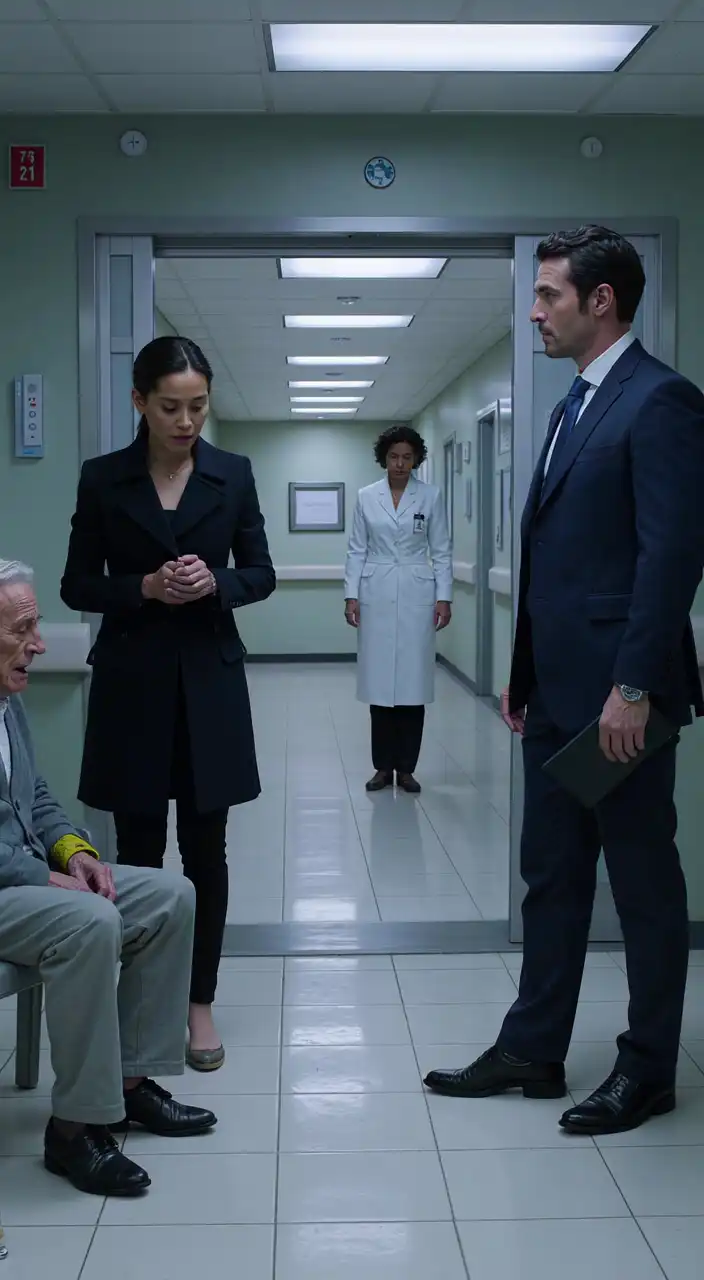
MY FATHER STARTED SHAKING OUTSIDE TRIAGE WHILE A CLINIC ADMINISTRATOR BLOCKED THE DOOR AND SAID HE NEEDED FAMILY PERMISSION FIRST.
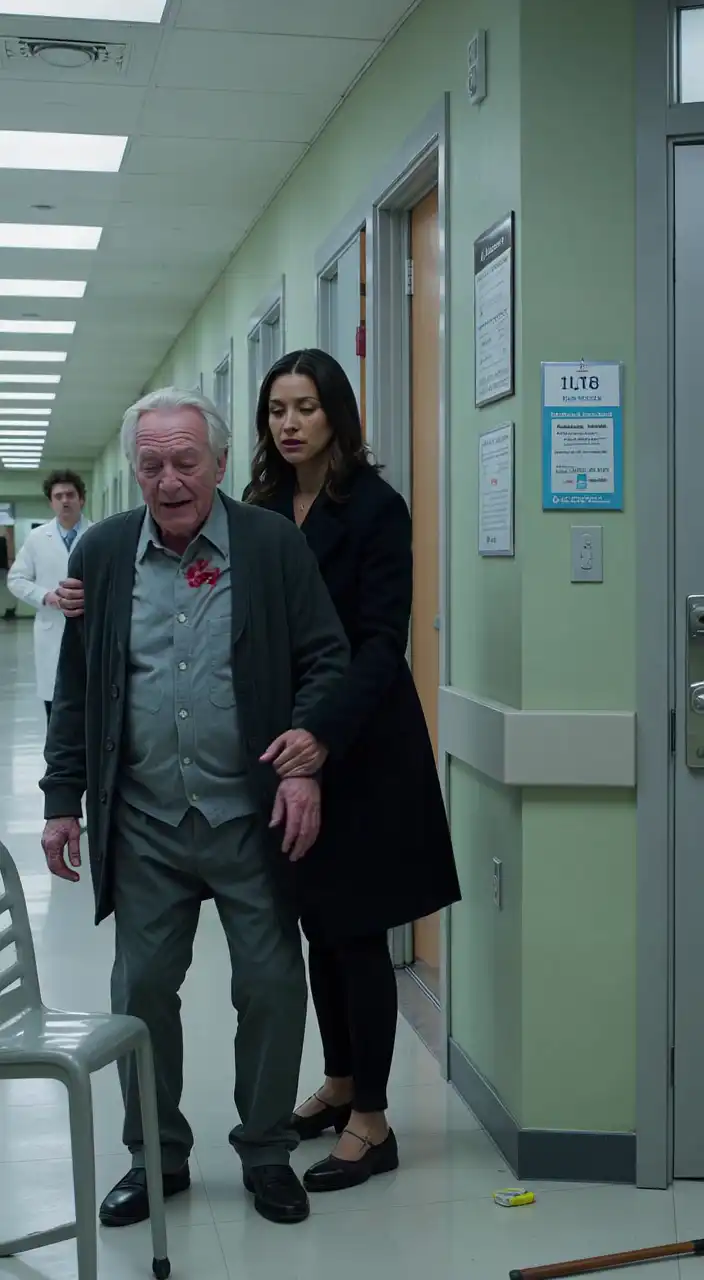
MY FATHER STARTED SHIVERING SO HARD HIS SURGICAL BANDAGE BLED THROUGH, AND THE CLINIC ADMINISTRATOR STILL BLOCKED THE TRIAGE DOOR.
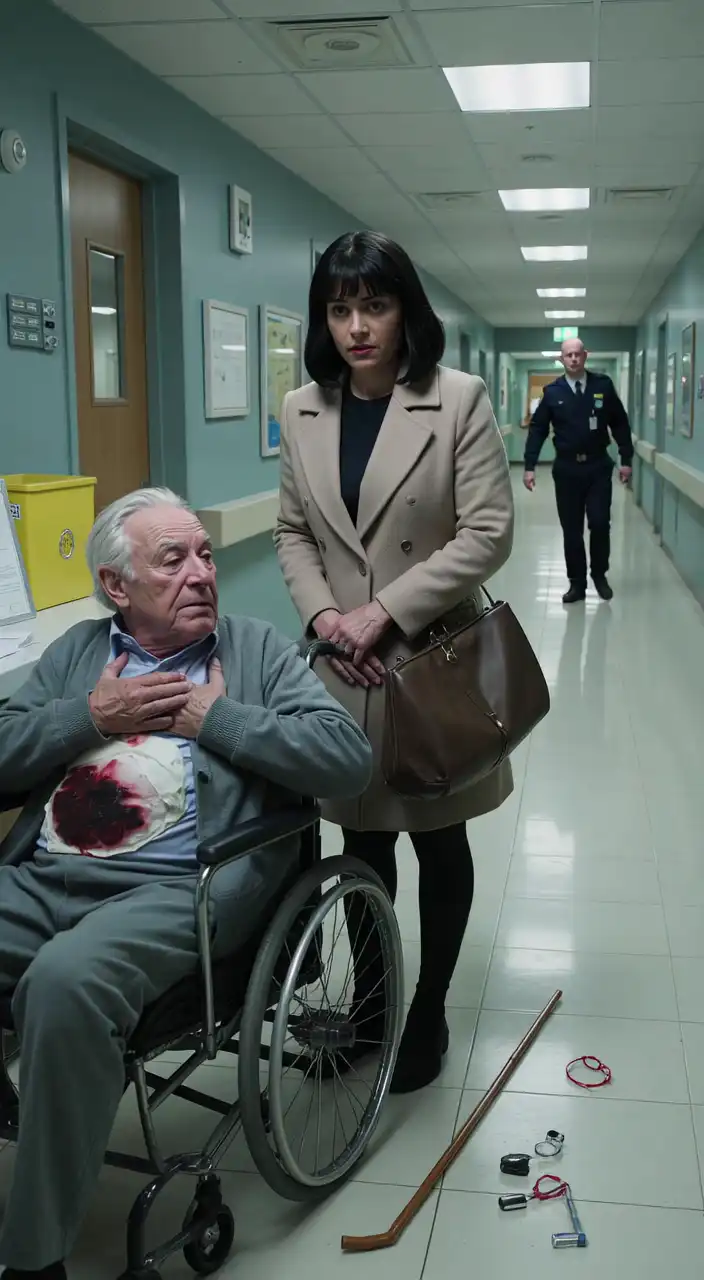
MY FATHER STARTED SHAKING IN THE HOSPITAL HALLWAY, AND THE WOMAN WHO CLAIMED TO BE HELPING HIM WOULD NOT LET TRIAGE TOUCH HIM.