
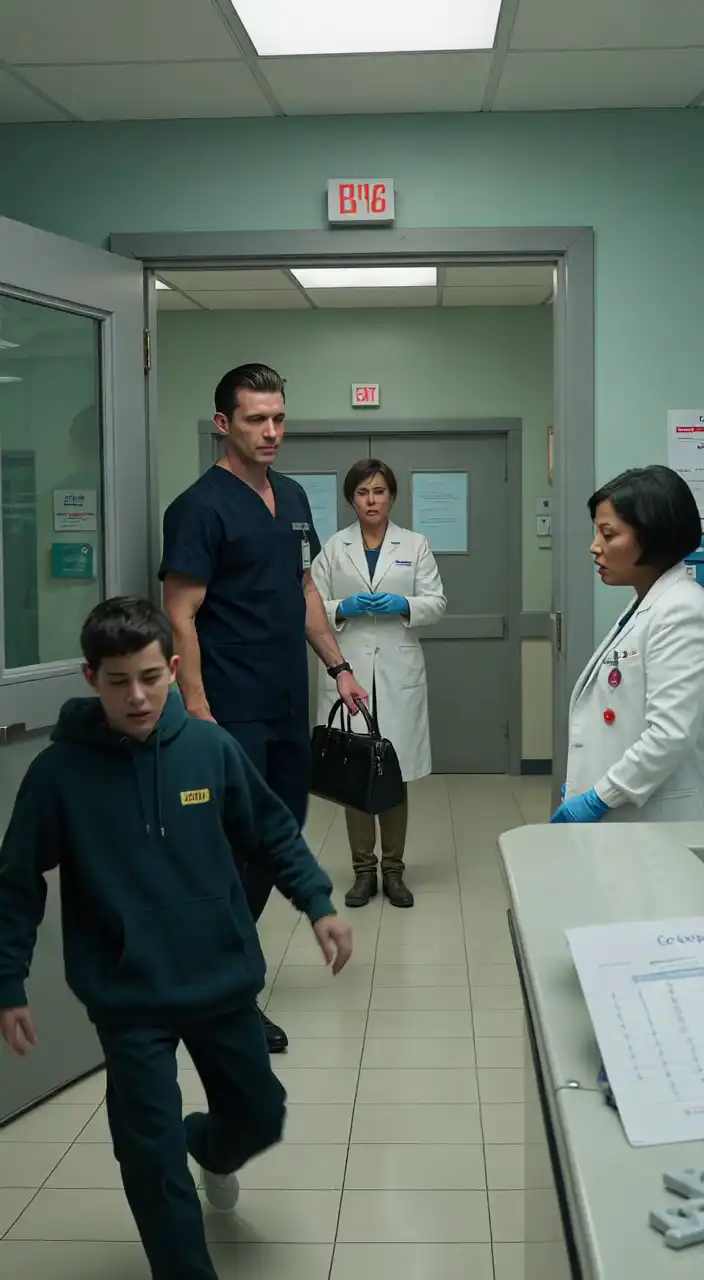
Henry's hand closed over the purse strap so hard his knuckles blanched. "Doctor, you don't understand the family arrangement," he said, trying to keep his smile in place even as the alarm kept pulsing from inside triage. "This child is not my patient until consent is documented."
"He is my patient the second he cannot breathe in my hallway," Elizabeth said.
She did not raise her voice. She did not need to. The nurse at the desk had already turned, and another tech farther down the corridor froze with a blood pressure cuff in one hand. Henry shifted his body to block her path again, but now everyone could see what he had been shielding: Oscar curled on the tile with one hand over his stomach and the other reaching weakly toward that purse.
"He needs to stop acting out," Henry said. "His aunt specifically instructed us not to reward these episodes with unnecessary meds."
Elizabeth looked at Oscar, not Henry. "Oscar, can you hear me?"
His eyelids fluttered. "Blue one," he whispered again. "Please."
Elizabeth extended her hand to the nurse. "Peds crash bag. Pulse ox. Now."
Henry stepped in, trying one more time for procedure. "You cannot touch him without authorization."
At that exact moment Oscar's body gave a small, involuntary tremor. It was not dramatic. It was worse than dramatic because it was real, the kind of tremor children get when they are running out of reserve. Elizabeth dropped to one knee and clipped a pulse oximeter onto his finger while the nurse slid a bag down from the crash cart. The tiny monitor lit amber and then began its insistent beeping. Low oxygen. Fast pulse.
The sound broke the last thin layer of hallway politeness.
"Move," Elizabeth said.
Henry did not. He started tapping his tablet as if enough documentation might put reality back in order. "The guarantor requested all treatment decisions go through me. There is a private family office. There are prior behavioral flags. This is exactly how he manipulates staff."
Oscar's eyes widened at that word, manipulates, and then shut tight as he coughed. A bitter medicinal smell lifted off his sleeve when he did. Elizabeth leaned in, sniffed once, and looked at the stain again.
"That's not juice," she said. "What was on his arm?"
I had been so focused on the breathing that I had not trusted my own nose, but now I caught it too. Sweet and chemical, like cough syrup but sharper. Oscar tried to pull his sleeve down over the stain as if he were ashamed of it.
Henry saw Elizabeth notice. His expression changed for the first time. Not concern. Calculation.
"He spilled medicine on himself at home," Henry said quickly. "Another reason this should go through the family. He's unsupervised too much."
The nurse with the crash bag cut him a look. Elizabeth held out her hand toward the purse. "Give me the inhaler."
"There is no inhaler in there."
"Oscar says you took his."
"He says many things."
Elizabeth rose. "Security is on the way. If you make me wait to retrieve prescribed rescue medication from a child in respiratory distress, I am documenting every second."
That landed. Henry was used to controlling desks, schedules, signatures, all the soft barriers that stop poor families cold. He was not used to a physician saying out loud what his delay was becoming. He unclipped the purse from his arm with visible reluctance and held it just out of reach.
"This belongs to his aunt," he said. "I cannot release her personal items to unauthorized parties."
The nurse muttered, "Unbelievable."
Oscar made a small sound in his throat. Elizabeth did not bother arguing anymore. "Open it."
A uniformed hospital security officer rounded the corner at a brisk walk, summoned either by the nurse or by the alarm and raised voices. He took in the scene in one sweep: child on floor, doctor gloved, administrator blocking, purse clutched like contraband.
"Problem?" he asked.
"Yes," Elizabeth said. "Potential medication withholding, active respiratory compromise, and obstruction of care."
Henry turned immediately toward the officer, grateful for a new audience. "This is a misunderstanding. I am the authorized administrator for a donor family account. The child was brought in under special handling instructions. We are waiting for proper consent."
The officer looked at Oscar's pulse ox monitor and then at Elizabeth. "Doctor?"
"He needs immediate evaluation. The purse may contain his rescue inhaler. He also has an unexplained medicine stain, tremor, and altered presentation inconsistent with 'faking.'"
The officer held out his hand. "Sir."
For one absurd second it looked like Henry might still refuse. Then his shoulders dropped a fraction, and he unzipped the purse with the kind of tight, angry precision of a man who hated losing control in public. He reached inside and pulled out a blue rescue inhaler attached to a spacer tube.
Oscar's whole body reacted before anyone said a word. He reached for it with both hands.
Henry pulled it back.
"He overuses it," Henry said. "His aunt told me if he panics, he hyperventilates and begs for this. The family pulmonologist is reevaluating whether he needs it at all."
The hallway went dead quiet except for the monitor alarm.
Elizabeth took one step forward, and for the first time Henry looked actually afraid of her. "If you deny that child his prescribed bronchodilator one more second, I will have you removed in restraints if necessary," she said.
The security officer took the inhaler from Henry's hand and passed it directly to Elizabeth.
She checked the label. Oscar Bennett. Albuterol. Prescribed use as needed for acute wheezing. She gave two puffs through the spacer while the nurse steadied Oscar upright. He shook so badly the first breath barely sealed. The second one caught. The third, with coaching, went deeper. His shoulders loosened just enough to show how hard he had been fighting.
"Again," Elizabeth said gently. "Good. Stay with me."
His oxygen climbed by two points. Not enough, but movement.
"Let's get him inside."
Henry tried a last procedural stand. "There are financial and liability implications if--"
Elizabeth turned on him with such contained fury that even the officer straightened. "A child nearly collapsed in front of triage while you withheld his rescue medication under donor instructions. There are implications, yes."
As they wheeled Oscar through the triage doors, his fingers caught at my wrist. His skin felt cool and damp.
"Don't let him call her first," he whispered.
"Who?" I asked, bending close.
But the nurse was already steering us into a room, and Elizabeth was ordering nebulized treatments, tox labs, and stat pediatric consults. The monitor alarm changed tempo as leads were applied to Oscar's chest. His hoodie was unzipped. Under the bright exam light the yellow stain spread across the cuff and lower sleeve in dried streaks, and Elizabeth's face hardened all over again.
"This wasn't one spill," she said quietly. "Something's been given more than once."
Henry was still in the doorway arguing with security about policies when Oscar, half hidden by the raised bedrail, pressed two trembling fingers to the clinic chart at the end of the gurney. Then he moved those fingers weakly toward the locked purse now held by the officer and mouthed one word that changed the whole direction of the room.
"Paper."
Elizabeth heard him. So did I. And when she pulled the chart closer, a folded discharge note slid halfway out from underneath the payment form, as if someone had tried very hard to make sure nobody saw it until it was too late.
Elizabeth opened the note, scanned the first two lines, and said, "Oh no."
The note was from urgent care three days earlier. Oscar had been seen for wheezing, dizziness, and unusual sedation. The clinician had documented concern about possible medication misadministration and had circled, in heavy pen, "Child must keep rescue inhaler accessible at all times. If caregiver interferes, notify ER and social work immediately."
Henry lunged toward the chart before he seemed to realize what he was doing. Security caught his forearm mid-reach.
"I need to explain that," Henry said.
"No," Elizabeth said. "You need to stop talking long enough for me to hear this child breathe."
She ordered the door shut, but the damage to Henry's control was already done. The nurse had seen the note. The officer had seen Henry try to snatch it. And Oscar, eyes half-lidded behind the neb mask, was still staring at the purse like it held the part nobody was supposed to find next.
Elizabeth noticed. She did not ask permission this time. She took the purse from security, reached into the side compartment, and pulled out a second folded document and a small amber bottle with the label peeled halfway off.
Henry's face went white.
"Doctor," he said, and now there was no smoothness left in him at all, "that doesn't belong to the child."
But Elizabeth had already read the pharmacy sticker fragment and turned the bottle toward the light. The room smelled faintly sweet again, the same smell from Oscar's sleeve.
And before she could say the name on the bottle, Oscar started retching into the side basin, too weak to sit up on his own.
Elizabeth caught his shoulders and barked for anti-nausea meds and a toxicology page. Then she handed the bottle to the nurse without taking her eyes off Henry.
"Lock the door," she said. "Nobody leaves until I know why a child in respiratory distress has someone else's sedative all over his clothes and hidden in the same purse as his inhaler."
Oscar's breathing improved enough for him to cry.
It was a thin, embarrassed sound, like he was apologizing for causing trouble even now. Elizabeth lowered the nebulizer mask just long enough to let him cough and swallow. "You don't need permission to be sick," she told him. "And you don't need to protect anybody in this room."
His eyes darted toward Henry at the door.
The security officer shifted his stance, making it impossible for Henry to move closer. The nurse took the amber bottle and sealed it in a clear evidence bag usually kept for patient belongings and sharp-object incidents. Even through the plastic, the sticky residue on the cap looked yellowed.
Oscar saw the bag and squeezed his eyes shut. His fingers started picking at the cuff of his hoodie.
Elizabeth noticed that too. "Oscar," she said softly, "did somebody put that on your sleeve today?"
He did not answer.
She tried again, more specific. "Did somebody make you drink medicine that was not yours?"
His lower lip trembled. The monitor showed his heart rate jump. Elizabeth stopped before she pushed him into panic. "Okay. You don't have to answer me yet. Just blink if you want me to keep Henry away from you."
Oscar blinked hard, once.
That was enough.
Elizabeth turned to the officer. "Call house supervisor, risk management, and social work. Also page pediatrics and poison control. This is now a protected evaluation."
Henry straightened with a flash of offense, grabbing at status like a life raft. "You are overreacting based on a frightened child and an incomplete file. I represent the family. The aunt entrusted me because she pays for half this wing through her foundation. If this turns into a scene, you have no idea what kind of call your administration will get."
The nurse, whose badge said M. Santos, let out one short disbelieving laugh. "A kid almost coded in the hall and you're worried about a donor."
Henry ignored her. His focus stayed on Elizabeth. "The note from urgent care was precautionary. The boy has behavioral episodes. He seeks medication for attention. His aunt warned us his mother used to stage illness."
That landed in the room with the ugly force of a rehearsed story.
Elizabeth did not answer right away. She looked down at Oscar, whose shoulders had caved inward at the mention of his mother. Then she looked at the urgent care note again, at the inhaler label, at the half-peeled bottle sticker. "Who prescribed this sedative?" she asked.
"It's not a sedative."
"What is it then?"
"I don't know. It belongs to his aunt."
"Convenient."
Henry's jaw tightened. "His aunt has legal temporary care authority. She asked us to prevent unauthorized interventions because the child's father is unstable and his school has overreported minor issues before. There is context."
"Then give me the custody papers," Elizabeth said.
For the first time, Henry hesitated without words.
The purse. Oscar had said paper.
Elizabeth took the cue and searched the inner pocket. She found a folded packet, not notarized custody orders but photocopies clipped together. On top was a school medication authorization form. It had Oscar's name, his rescue inhaler listed in blue ink, and a signature line for parent or guardian. The signature looked shaky, almost traced. Below that was another page: a typed letter on the letterhead of Henry's private family office stating that all medical decisions for Oscar were to be routed through "administrative liaison H. Chen" until further notice due to family privacy concerns.
"It has no court seal," Elizabeth said.
"It doesn't need one for administrative guidance."
"It does if you're using it to interfere with emergency treatment."
Henry opened his mouth, then stopped. His eyes flicked toward the top page as if remembering too late what was under it. Elizabeth pulled the next sheet free.
It was a school incident report from two weeks before. Teacher observed Oscar unusually sleepy during reading circle, difficult to wake after lunch, slight wheeze after recess, no inhaler available in backpack despite documented asthma plan. School nurse called listed caregiver and was instructed not to "indulge dramatics." Mandated report considered if pattern continued.
M. Santos swore under her breath.
Elizabeth held the page where Henry could see she had it. "This child has been symptomatic in multiple settings. Someone keeps removing his inhaler. Someone keeps minimizing it. And now someone has a bottle with a damaged label in the same purse."
Henry switched tactics. The smooth administrator vanished, revealing a man who had probably spent years surviving powerful people by becoming useful and ruthless on their behalf. "You have no proof who put the bottle there. This woman beside him came in with the child. Security saw her near the purse."
I took an involuntary step back. It was so sudden and so plausible in structure that I felt the stab of how often lies work when said confidently in official spaces.
The officer looked at me, then at Henry. "I took possession of the purse before she touched it."
Henry pivoted. "Then perhaps the bottle was always there for the aunt's own use. That proves nothing."
"Then why was the child's sleeve soaked with it?" Elizabeth asked.
He had no answer ready. He hated not having one. His eyes cut toward Oscar with a flash so cold that the boy shrank under the blanket.
That was answer enough for everyone in the room.
Poison control came on speaker first, a calm voice asking for symptoms, estimated weight, timeline, and suspected substances. Elizabeth listed wheezing, tremor, sedation, nausea, low oxygen improved with albuterol, unknown sweet medicinal residue on clothing, possible access to a sedating liquid. She asked for immediate guidance on common pediatric sedatives and antihistamines that could present like this.
The specialist asked, "Any pupil changes? Any paradoxical agitation? Was there intentional withholding of prescribed respiratory medication?"
"Possibly yes," Elizabeth said. "Very possibly yes."
The phrase changed the room again. It gave a medical frame to what had felt unspeakably personal. If there was intentional withholding, then the blocked rescue was not confusion. It was evidence.
Oscar's labs were drawn. He whimpered when the needle went in but did not pull away. M. Santos found a thin hospital bracelet on the bed and fastened it around his wrist. He stared at it with weird intensity, as if seeing a bracelet meant somebody had finally admitted he belonged here.
Elizabeth noticed his fixation. "That means we're keeping you safe and keeping track of your medicine," she told him.
His fingers touched the plastic band once. "He always takes stuff away," he whispered through the remnants of the mask.
Elizabeth leaned close. "Who takes stuff away?"
He swallowed hard. "If I tell, she says Dad won't find me."
That was the first contradiction.
Everything Henry had said suggested a wealthy aunt trying to manage a difficult child and an unstable father. But children do not accidentally say a sentence like that. It came from repetition. Threats. Training.
Elizabeth's eyes sharpened. "Who says that? Your aunt?"
Oscar shut down instantly, turning his face toward the rail.
The social worker, Nia, arrived before anyone could push him further. She was in her forties, hair pulled back, no nonsense in her expression and kindness in the way she lowered herself to Oscar's eye level instead of standing over him. Elizabeth gave her the compact version at the bedside while Henry, now just outside the closed door with another security officer posted, argued in a hiss with somebody on his phone.
Nia listened without interruption, then asked one question that surprised me. "Where is his father in all this, exactly?"
Henry had framed the father as the danger. But the school report, the urgent care note, Oscar's terror around the inhaler, and that line about Dad not finding him all pointed another way.
Elizabeth handed Nia the copied family letter. "Supposedly unstable and excluded."
Nia scanned it and frowned. "This isn't legal authority. This is rich people stationery."
She sat beside Oscar and spoke so gently I almost missed the steel under it. "Hi, Oscar. My name is Nia. I help kids when grown-ups make medical things confusing. I am going to ask very simple questions, and you only answer if you want. Is the person in the hallway family?"
Oscar took a long time. Then he whispered, "No."
"Does he live with you?"
"No."
"Does the person you live with tell him what to do?"
A tiny nod.
"Is that your aunt?"
Another pause. "She says say aunt."
Nia and Elizabeth exchanged a look.
That was reversal number one, and it made every page in the purse more dangerous. The aunt might not be an aunt at all, just the story. If so, the person controlling Oscar had built a paper shell around him: donor influence, fake authority, removed inhaler, hidden report, maybe someone else's medicine being used to keep him quiet.
The monitor settled into a steadier rhythm as the treatment worked. But the room itself became more volatile. Because if the family story was false, then whoever had sent Henry here was not simply delaying care. She was hiding the child.
Nia asked no more. She knew when a small opening is enough. "Okay," she said. "You did good. We are not sending you back into that hallway."
As if the room heard her promise and objected, Henry's voice rose outside the door. "Put me through to administration now. If Dr. Elizabeth thinks she can detain a donor family representative over a misunderstanding, she is making the biggest mistake of her career."
Elizabeth did not flinch. But M. Santos muttered, "So he thinks this is still about careers."
Then Oscar grabbed Elizabeth's sleeve with surprising force and whispered the most urgent thing he had said yet.
"He's calling her to move me."
Elizabeth straightened immediately. "Security at the door," she called. "No one takes this child anywhere without my direct order."
Nia was already on her own phone to child protective intake and hospital legal. The atmosphere compressed into action. The purse contents were photographed. The bottle was sent for rapid pharmacy identification. The school report was copied. The urgent care note was scanned into Oscar's chart under restricted documentation. Every planted detail was becoming a line someone could not erase.
Then the nurse from triage knocked and slipped in looking rattled. "Doctor, front desk just got a transfer request from another facility asking if Oscar Bennett has been admitted and whether he's fit for transport. Caller says it's from the aunt's office."
Oscar's hand tightened on the blanket until his knuckles showed.
Elizabeth took the phone from the nurse and put it on speaker without saying who she was. A polished female voice came through. "This is Mara Lin for Mrs. Vale. We are arranging discreet continuation of care elsewhere. Please release the child to Mr. Chen and note that no emergency interventions were authorized."
Elizabeth looked at Oscar.
He looked like a child hearing a lock turn.
"No," Elizabeth said into the phone. "This is Dr. Elizabeth Warren in the ER. Your child is under active emergency evaluation, and if anyone attempts removal before clearance, security and law enforcement will be involved."
The line went silent for one heartbeat.
Then the woman answered, no polish left at all. "He is not my child."
And she hung up.
For half a second nobody in the room moved.
Then Nia said, very quietly, "Did everyone hear that?"
M. Santos was already nodding, eyes wide. "I heard it."
The security officer at the door lifted his radio. "I heard it too."
Elizabeth handed the phone back to the triage nurse. "Save the incoming number. Do not let anyone delete that call log. Send it to IT and risk management now."
The nurse turned and hurried out.
Oscar had gone very still. Not calmer. Still in the way children do when the worst thing has finally been spoken aloud by an adult. He stared at the blanket over his knees, mouth open slightly under the oxygen tubing.
Nia leaned in. "Oscar, listen to me. You are not in trouble. That phone call helped us."
He blinked once, but he did not look up.
Outside the room Henry was speaking faster now, voice clipped, the careful administrator tone gone entirely. Through the door we could hear fragments.
"...not what she meant..." "...private matter..." "...you are escalating this beyond reason..."
Elizabeth stepped to the door and opened it just enough to address the two officers outside. "He does not leave. His phone stays with him. If local police are in-house, I want them here. If not, call them."
Henry's head snapped toward her. "Police? On what grounds?"
"Possible child endangerment, obstruction of emergency care, and possible unlawful custodial misrepresentation," Elizabeth said. "We can add attempted patient transfer under false authority if you'd like."
His expression flickered through outrage, calculation, and something closer to panic. "You are basing all of this on a garbled phone statement from a stressed family employee."
"You took a prescribed inhaler from a child in respiratory distress," Elizabeth said. "That part isn't garbled."
She shut the door again.
Inside, Oscar suddenly gagged. M. Santos got the basin under his chin just in time. He retched up a small amount of thin yellow fluid that smelled sharply medicinal. Elizabeth's eyes narrowed at once.
"Save it," she said.
The nurse capped the specimen container without comment. Everything had become evidence now. Not just the bottle. The sleeve. The chart note. The call log. Even his vomit.
Poison control called back after conferring with pharmacy references. The specialist's voice came through speaker, calm but faster this time. "Based on the sweet odor, sedation, tremor, and possible repeated exposure, you should consider promethazine syrup, diphenhydramine, or another sedating antihistamine, but the respiratory picture and paradoxical weakness are concerning. Keep him monitored, get glucose if not already done, and watch for aspiration. If there is concern for repeated dosing with withheld rescue inhaler, that pattern itself is medically dangerous independent of exact toxin."
"Glucose is normal," Elizabeth said. "Albuterol improved the wheeze, but he's still intermittently sedated and nauseated."
"Then continue support and document chain of custody on all substances. If this is chronic or repeated administration, labs may lag behind the story. The pattern matters."
The pattern matters.
That sentence seemed to settle over the room and lock into place all the stray fragments nobody had wanted to say out loud.
Oscar was not a dramatic child manufacturing attacks. He was a child whose symptoms appeared where his inhaler disappeared, whose school had noticed, whose urgent care clinician had noticed, and who had still been dragged back under the same control. Someone had learned that a sedated child is easier to move, easier to shame, easier to call manipulative.
Nia crouched next to the bed. "Oscar, I need to ask one question, and you can answer with your fingers if you want. How many times has somebody given you that yellow medicine?"
Oscar looked at his stained cuff. Very slowly, he held up three fingers. Then after a moment, he lifted a fourth halfway, uncertain, and let it fall.
M. Santos closed her eyes briefly. Elizabeth wrote it down.
"Today?" Nia asked.
He nodded.
"At home?"
A nod.
"Before school too?"
Another tiny nod.
That was enough to escalate everything from hallway cruelty to a sustained pattern.
A police officer arrived first, then a second one, both hospital detail from the city precinct. They entered with the particular alertness of people who knew they were stepping into a room where medicine and law were about to collide. Elizabeth gave them the direct summary without embellishment: respiratory distress, withheld inhaler, suspicious medication residue, inconsistent caregiver story, donor pressure, and a phone caller disclaiming maternity or guardianship. She handed over copies of the urgent care note and school report only after legal approved release.
Henry demanded to speak for himself immediately. The officers allowed him to, but only in the hall and only after one officer photographed the contents of the purse in place.
The room became quieter once he was physically farther away. Oscar seemed to hear the difference. His shoulders dropped a fraction into the pillow.
Elizabeth listened to his lungs again. "Still tight. Let's run another neb."
When the mask went back on, he obeyed without protest. He looked exhausted enough to float away.
Then came the next reversal.
Hospital registration called in with a chart issue. The child had two existing records under similar names. Oscar Bennett, date of birth matching today's bracelet. And an older one from another county under Oscar Bell, same birthday, same immunization pattern, same scar over the left eyebrow, but flagged for address mismatch and "custody documentation pending" nearly eight months ago.
Nia took the printout and stared at it. "They've been moving him through aliases."
Elizabeth held out her hand. Nia passed it over.
The older chart had one more thing. A contact listed and then crossed out in red: Father, Malik Bell. Multiple call attempts unsuccessful. One notation from an ER social worker months earlier read, Child reports father says use this number if scared. Number later disconnected. Caregiver refused alternate family contacts.
Oscar saw them reading and began to cry again, this time harder, though still silently at first. Nia offered a tissue. He did not take it. He just whispered through the mask, "She said if I say Bell they send me where bad kids go."
"Who said that?" Nia asked.
He swallowed. "The lady house."
"The lady at the house?"
A nod.
"What's her name?"
He pressed his lips together, afraid.
Elizabeth did not push the name. "Okay. You already told us enough to keep helping."
Police came back in after hearing Henry's version. One of them looked unimpressed. "He says he was acting under instructions from a woman named Celeste Vale, temporary caregiver arranged through family friends. No court order. No notarized medical power. Says he was told the boy fabricates attacks and self-administers too much inhaler."
Elizabeth replied, "Then he accepted a child's airway as collateral for somebody else's reputation."
The officer gave a tiny grim nod. "We're detaining him pending statements."
"Good," M. Santos said under her breath.
As if on cue, Henry started pounding once on the closed door. Not wildly. Just one hard, furious strike from a man who wanted the room to know he was still there. Oscar jerked so violently that the pulse tracing spiked.
The officer at once stepped back out and the hallway erupted in sharp commands.
"Hands visible." "Step away from the door." "Now."
Oscar clutched Elizabeth's sleeve like a much younger child. "Don't let him come in."
"He is not coming in," she said.
The certainty in her voice worked. Not instantly, but enough. His breathing stayed ragged yet did not collapse.
A lab tech rushed in with preliminary bloodwork. Nothing dramatic yet, but enough dehydration and stress markers to support the clinical picture. Pharmacy identified the bottle within minutes after examining the residue under the peeled label. Promethazine with codeine. Adult prescription. Not his. Not remotely his.
The room changed for the third time.
Before that moment, there had still been little pockets where an administrator, a lawyer, a donor office, or a manipulative caregiver could call this a misunderstanding. But an adult sedating cough syrup with codeine, hidden beside a child's rescue inhaler, with matching residue on his clothes and a pattern of sedation, blew a hole through that fiction.
Elizabeth read the pharmacy note twice as if to contain her own anger. Then she looked at Nia, then at police.
"Document this exactly," she said. "Unknown frequency of administration, suspected repeated nonprescribed dosing to a minor with asthma, contemporaneous withholding of bronchodilator, resulting in respiratory compromise and altered mental status."
One officer exhaled slowly. "Understood."
Nia's face had gone cold. "That woman is not picking him up tonight. Or any night until a judge says so."
Oscar must have understood enough from tone if not vocabulary. He whispered, "I don't have to go back?"
"No," Nia said. "Not tonight."
That was the emotional reversal the room had been straining toward, and it hit him so hard he did not look relieved at first. He looked confused. Suspicious. Like a child who had been promised things only to be handed back. Tears slid sideways into his hair.
"Really?" he asked.
"Really," Elizabeth said.
The police officer's radio crackled. He listened, frowned, and looked up. "We've got another problem. A black SUV just pulled into ambulance receiving. Driver asking for Mr. Chen. Passenger identifying herself as Celeste Vale. She wants immediate release of the child."
Oscar made a choking sound behind the mask. M. Santos moved to lower the curtain at the glass panel in the door.
Nia stood. "Can she see this room from the hall?"
"No," Elizabeth said. "But she's here fast."
Too fast, I thought. Which meant Henry's call had reached her before police isolated him. Or she had already been on the way to move Oscar exactly as he had warned.
The officers stepped out to intercept her. Through the door we heard heels on tile and a woman with the kind of voice expensive people use when they think rules are optional.
"I am his guardian for practical purposes." "I don't care what the chart says, this is a private family matter." "Where is Mr. Chen?"
Then louder, sharper, "Open this door. He has panic episodes around strangers."
Oscar curled sideways, trying to fold himself into the bed.
Elizabeth moved to the bedside and lowered her voice. "Oscar. Listen. Nobody opens this door unless I say so."
He stared at her, terror huge in his eyes. "She'll smile."
It was such a strange sentence that for one second none of us answered.
Then he added, "When she smiles they believe her."
Nia's expression broke for just a moment. There was too much lived knowledge packed into one child's warning.
Outside, Celeste's tone shifted from polished concern to contempt when the officers blocked her path. "I have funded your pediatric asthma initiative for three years. If some resident doctor thinks she can weaponize a fainting spell into an accusation, she is done."
Elizabeth opened the door before anyone could stop her.
She did not step all the way out, but enough that Celeste could see the white coat, the trauma badge, the absolute refusal in her face.
"I am not a resident," Elizabeth said. "And your child is under emergency protection."
Celeste was in her fifties, immaculate, expensive coat, controlled hair, no visible panic at all. Only annoyance. Her gaze flicked over Elizabeth's shoulder, seeking the bed. "He is not my child," she said coolly, as if correcting a clerical error.
"Interesting choice of words," Elizabeth replied.
Celeste recovered instantly. "Meaning not biologically mine. I have been caring for him during a difficult family situation. Mr. Chen may have overstepped. I am here now."
"With no legal paperwork."
"With means, influence, and actual concern."
Elizabeth did not budge. "He arrived hypoxic after his inhaler was taken and an adult codeine-containing syrup was found in your representative's possession with residue on his clothes."
For the first time, Celeste's eyes changed. Not guilt exactly. More like irritation that the hidden mechanism had been named in public.
"That syrup is mine," she said. "He gets into things."
Nia came to stand beside Elizabeth. "Repeatedly? While his inhaler repeatedly disappears?"
Celeste looked at her as if she were furniture. "And you are?"
"Hospital social work."
"Of course." Celeste let out a tiny breath of scorn. "This is what happens when people with no family context overinterpret. Oscar has trauma-linked attention behaviors. His father weaponizes illness, and the boy copies him. We have spent months trying to stabilize routines."
From the bed came a hoarse voice, small but clear enough that everyone heard it.
"She says Dad's dead but I heard him on the phone."
Silence detonated through the hall.
Celeste turned toward the room in one involuntary motion, all poise shattered. "Oscar."
He flinched at the sound of his name from her mouth, but he kept going because something had broken open in him now.
"He called one night. You took my tablet. You said if I talk to him I go away."
Celeste's face did the opposite of Henry's. Henry had panicked messily. Celeste almost became more composed, as if she knew this was the moment when rich people survive by becoming elegant. "He dreams. He confabulates under stress."
"Stop," Elizabeth said. "Do not diagnose him in my doorway."
One officer lifted a hand toward Celeste. "Ma'am, step back."
She did not. "The father is dangerous. He lost access for reasons you do not understand. If the boy has said anything about him, it is because he has been manipulated."
Nia said, "Then you'll have no objection to us contacting him through formal channels."
There. The clue became a weapon.
Celeste's composure cracked at the edges. "Absolutely not."
"Why?" Nia asked.
"Because he is unstable."
"Or because he is looking for his son," Elizabeth said.
Celeste's eyes snapped to hers with sudden hatred. "You have no idea who you are dealing with."
"Actually," Elizabeth said, "I'm starting to."
Security escorted Celeste away from the doorway when she tried to step around them for a line of sight into the room. She protested all the way back toward the consult area, demanding administration, legal, and a private conference room. The officers allowed that much, but not access.
The second they turned the corner, Oscar sagged as if strings had been cut. His oxygen dipped again, pulse racing. Relief was not simple. It was hitting his body like delayed shock.
"Another set of vitals," Elizabeth said. "Keep him warm."
M. Santos tucked heated blankets around him. He shivered under them anyway.
Then the front desk sent through one more piece of evidence, and this one made Nia sit down.
The call log from earlier had been matched to a number from a prior emergency contact attempt in the older Bell chart. Not Celeste's line. Not Henry's. A prepaid number that had texted the old hospital months ago after a missed call with one message: Do not contact father. Child safe with aunt.
That phrase again. Safe with aunt.
But metadata from IT showed the same prepaid number had just pinged off a tower near the hospital garage the moment Henry called out.
Celeste had likely been managing the false aunt story through burner communication.
Police took the phone records to their sergeant. One officer came back grim. "If this links to concealment from a lawful parent, we may be crossing into custodial interference territory."
Nia nodded once. "Then find the father."
Hospital legal moved faster now that donor pressure had become legal exposure. Within twenty minutes, administration stopped asking Elizabeth to "keep notes objective" and started asking whether media risk existed if security footage showed a child being denied triage. M. Santos, hearing that on a side call, nearly laughed from disbelief.
"They're worried about video now," she said.
Elizabeth was less amused. "Good. Let them be worried for the right reason for once."
Oscar drifted in and out while treatment continued. During one quieter stretch, when the hallway had moved its conflict down the corridor to conference rooms and officer statements, he opened his eyes and looked at me as if finally remembering I was there.
"You stayed," he whispered.
"Yes."
"People don't."
I did not know what to say to that without making promises I could not personally enforce. So I said the truest thing available. "They are listening now."
He thought about that. "Because Dr. Elizabeth got mad."
A ghost of a smile touched Elizabeth's mouth from the foot of the bed. "Accurate."
He watched her with something approaching wonder. "She didn't ask the purse lady."
"No," Elizabeth said. "I did not."
A tiny, tired breath escaped him that might have been the beginning of a laugh.
Then came the suspense hook none of us expected.
One of the officers returned holding a photocopy found in Henry's tablet case, not the purse. He laid it on the counter for Elizabeth and Nia. It was a pediatric appointment schedule from a concierge clinic across town. Oscar's name appeared on it under yet another variation, "O. Vale," with a note in the margin: discuss taper off rescue dependence, avoid ER triggers, sedation plan for transport if dysregulated.
Nia's face went flat with fury. "Sedation plan for transport."
The officer nodded. "There's more. Upcoming flight reservation attached. Private terminal tomorrow morning. Child passenger under companion waiver."
Oscar was supposed to be gone by tomorrow.
The room felt colder though the blankets were hot. He had collapsed not on some random day, but on the edge of disappearance. Another dose, another removed inhaler, another private transfer, and every concerned teacher or urgent care clinician might have lost him completely under a new name and a new city.
Elizabeth set the paper down very carefully, as if not trusting her hands. "Call detectives. Now. Not just patrol. This is bigger."
Nia was already dialing child protective emergency response a second time with new urgency. "And issue a hospital no-discharge protective hold in writing. If some administrator gets weak under donor pressure, I want hard paper to stop them."
From down the hall came raised voices again, louder than before. Not Celeste this time. A man. Deep, frantic, impossible to mistake for polished money.
"I got a call from a social worker. Where is my son?"
Every head in the room lifted.
Oscar's entire body locked.
Then he began to sob. Not from fear. Not only. Something else had broken through the terror at last.
Nia went to the door first, cautious. The officers outside were containing a tall black man in wrinkled work clothes, breathless, eyes wild with panic and hope. He looked like he had driven too fast and run the last block. One officer kept a hand up to stop him from rushing the room.
He was shaking. "My name is Malik Bell. Somebody said Oscar is here. Please."
Celeste, from farther down the hall where security had held her, shouted immediately, "Do not let him near that child."
Oscar cried harder. "Dad."
Everything stopped.
Malik heard it and nearly folded where he stood. His hand hit the wall to steady himself. "Oscar?"
Elizabeth looked at Nia. Nia looked at Oscar. "Do you want him in here?" she asked gently.
Oscar could barely get words out. He nodded over and over.
The officer stepped aside.
Malik entered like a man crossing a border he had been told no longer existed. He took one look at Oscar in the bed, tubing on his face, yellow stain on his sleeve, hospital bracelet on his wrist, and all the control drained out of him. He dropped to the bedside and covered his mouth with his hand.
"Oh baby," he said, voice breaking clean open. "Oh God. Oscar."
Oscar reached for him with both arms. The oxygen tubing tangled, the blanket slipped, monitors protested. None of it mattered. Malik gathered him carefully anyway, trying not to dislodge anything, crying openly into his son's hair while Oscar clung to him with a desperation so complete it answered a hundred paperwork questions at once.
"You found me," Oscar kept saying. "You found me."
"I never stopped looking," Malik said. "I never stopped."
In the hall, Celeste started yelling about staged scenes, manipulation, dangerous reunification. Nobody listened now. Not the same way.
Because the consequences had arrived in flesh and tears. The hidden child had a father. The father had a name that matched the old chart. The child knew him instantly. The room knew the truth before any judge stamped it.
Malik pulled back enough for Elizabeth to intervene clinically. "Sir, I need to ask some quick questions while we keep treating him. Are you his biological father?"
"Yes."
"Do you know what medicine he takes for asthma?"
"Blue rescue inhaler, orange controller sometimes when insurance covered it. Peanut allergy. He throws up with codeine." Malik froze, eyes widening. "Why?"
Elizabeth and Nia exchanged a grim look. The answer fit too neatly. Of course he knew about the codeine. Of course a real parent would.
"He may have been exposed to codeine syrup," Elizabeth said.
Malik's face transformed into something I had no easy word for. Horror, yes. But also vindication so bitter it hurt to witness. "I told them," he said hoarsely. "I told the court investigator Celeste was drugging him to make him sleep on drives and saying his asthma was behavior. Nobody believed me because her lawyers said I was unstable after my accident. She had money. She had people."
Nia leaned in. "What court investigator?"
"There was supposed to be a temporary placement while I recovered and got housing straight after the warehouse collapse. She was a friend of Oscar's mother's employer. She offered help. Then she filed emergency guardianship papers saying I disappeared and Oscar was medically fragile and unsafe with me. I fought it. Hearings got delayed. Then they moved counties. Then schools stopped calling me back."
He looked at Oscar's sleeve, at the stain, and his whole body shook with rage. "I never stopped trying."
This was the exposure consequence widening beyond one hallway. Wealth had not just delayed care tonight. It had built a system around disbelief.
One of the detectives arrived at that exact point, summoned from the child crimes unit after the transport note and codeine ID. He walked in carrying a plain notebook and the kind of attention that made even police officers straighten. He listened to the room for less than a minute before making a decision.
"Mr. Chen and Ms. Vale are both staying," he said. "Nobody leaves this floor. Get me every document, every recording, every chain-of-custody item. And preserve the hallway camera from the fall onward."
The hallway camera.
We all looked up at once, as if realizing an extra witness had been on the ceiling the whole time.
M. Santos almost smiled for the first time. "It got the collapse. It got Henry blocking triage. It should have audio on the desk side too."
The detective nodded. "Then it got him taking the inhaler out of the purse, and maybe when he arrived with the child."
Celeste's voice rose again down the hall, suddenly less controlled. "You cannot seize private property without counsel."
The detective did not even turn. "Watch me."
That should have felt triumphant. Instead it felt like the beginning of a much longer fight. Oscar was still sick. Malik was still only one voice against a machine Celeste had been building for months. Administration was still nervous. Lawyers would still come. Every truth had to be secured before power reassembled itself.
Elizabeth seemed to know that too. She touched Malik's shoulder. "Stay focused on him. Let us do the rest."
Malik nodded, breathing unevenly, and stroked Oscar's hair back from his damp forehead. "I'm here," he said. "You don't have to save your puffs anymore. You hear me? No more saving."
Oscar gave a shaky nod.
That line pierced even Elizabeth. Because children who have their inhalers taken learn to ration air itself.
The detective began formal interviews in shifts. He recorded Henry first. We could not hear words now, only tone through the walls: defensive, then angry, then cornered. After fifteen minutes an officer came in to ask Elizabeth one precise question.
"Doctor, when he said the child overuses the inhaler, is there any safe basis for taking it away during wheezing?"
"No," she said. "Not remotely. The opposite. Restricting access during acute symptoms can escalate respiratory distress rapidly."
The officer wrote it down and left.
Next they questioned Celeste. That took longer. She requested counsel, then tried to give a statement anyway, then withdrew parts of it when told the call log, bottle, and clinic schedule existed. Detectives love contradictions the way surgeons love clean planes. Every new sentence she made likely cut against the last.
Inside the room, with the door finally quieter, Oscar fell asleep against Malik's chest while a lower-flow treatment ran. It was not peaceful sleep. His fingers twitched. Once he startled and muttered, "No yellow." Malik held him tighter and murmured until he settled.
Nia stepped aside with Elizabeth and spoke low, but I still caught enough.
"If father can verify pending custody litigation and we confirm he was excluded without lawful basis, CPS may place directly with kin or protective medical hold with supervised reunification."
Elizabeth asked, "Do you think administration will back that if Celeste threatens the board?"
Nia looked toward the hall where detectives now stood. "After tonight's video? They'd be insane not to."
Conflict, reversal, clue, pressure. They kept arriving in waves, and each wave changed the balance.
The biggest clue of all came just before dawn.
Hospital IT recovered deleted emails from Henry's work account using the donor office server link he had accessed on hospital Wi-Fi. One of the detectives brought in a printout, face hard. He handed it to Nia and Elizabeth.
From: Celeste Vale To: Henry Chen Subject: Tomorrow logistics
If he starts the breathing performance, withhold the blue unless visibly cyanotic. He calms once drowsy. Do not let ER social workers isolate him. Transfer before any mandated report nonsense. Papers in purse.
Nobody spoke for a full five seconds.
Then Malik made a sound that was almost a groan and almost a growl, the noise of a father reading the sentence that nearly cost his child oxygen.
Elizabeth closed her eyes once, opened them, and said, "That's it."
The detective nodded. "That's it."
There would still be process after that, but the moral argument was over. The email dragged intent into daylight. Not a misunderstanding. Not overprotective caregiving. A plan.
Outside, the sun had not yet risen, but the fluorescent hallway no longer felt like an in-between space where anything could be delayed forever. It had become the place where the barrier failed.
Henry was arrested first, hands visible, expression hollow now that the status armor had cracked completely. He did not look at the room as they led him past.
Celeste fought harder. She demanded counsel, threatened trustees, named senators, claimed stolen communications, accused Malik of coaching the child. But anger had replaced elegance, and anger reveals class lies badly. By the time detectives walked her by, the floor had heard enough. Nurses at stations looked up from charts with cold faces. Security watched without deference. Even administration no longer rushed to soothe her.
Oscar woke as she passed.
He did not cower this time.
He looked through the glass panel with reddened eyes and saw her between officers, no smile on her face now, no purse, no Henry, no doorway she could control. The consequence reached him in a way explanations never could.
"She can't take me?" he asked.
Malik kissed the top of his head. "No."
"Not at school either?"
"No."
"Not if she says stuff?"
"No."
Oscar turned to Elizabeth, needing the answer from the person who had first broken the block. "Really no?"
"Really no," Elizabeth said.
Only then did his body believe it. He started shaking, not from low oxygen now but from release. M. Santos added another blanket. Nia stayed close. Malik held him and cried again because relief can hurt almost as much as fear when it arrives after too long.
As morning light finally edged faintly through the far corridor windows, the rescue's cost and consequence spread in every direction. Security footage was flagged for permanent preservation. Risk management opened an internal obstruction review. The triage nurse wrote a statement about Henry answering for Oscar and refusing the wheelchair. School contacts were requested formally. The older county hospital was notified that its crossed-out father contact had become active evidence. CPS emergency leadership approved a protected placement conference before any discharge. The detective asked for a warrant on donor office communications. Administration, terrified now for entirely different reasons, offered a private room upstairs and immediate ethics oversight.
Elizabeth declined transfer until Oscar was medically stable. "He stays where my orders stay attached to him," she said.
No one argued.
By then his wheezing had softened, oxygen was improving, nausea controlled, and the color was finally returning to his lips. He looked wrung out and small in the big bed, but undeniably more present. He tracked voices. He asked for water. He let M. Santos clean the dried yellow residue from his wrist with warm cloths, wincing at the smell.
"Throw it away," he whispered, meaning the cloth.
She did. Right into a sealed bag first.
When the detective returned for one last bedside question, he knelt so he would not tower. "Oscar, you don't have to answer now if you're tired. But do you want us to know anything else that helps keep you safe today?"
Oscar thought for a long time. Everyone waited.
Then he pointed weakly toward the evidence envelope containing the school report and fake papers.
"She changes my last name when people ask too much," he said.
The detective wrote it down.
That sentence would travel farther than this room. To courts. To child protection. To every prior school and clinic where somebody had felt a wrongness but lacked the piece that joined it all. It was simple enough for a child to say and devastating enough to expose the method.
A changing name. A hidden inhaler. A yellow sleeve. A blocked hallway. A donor lie. A father erased on paper but not in the child.
The threshold had nearly closed over him. Instead, because one alarm sounded, one doctor looked twice, one nurse moved, one social worker listened, one officer took the purse, and one frightened boy said "paper" before he disappeared, the whole structure burst open.
And in the exhausted quiet after sirens of authority had become protection instead of threat, Oscar finally let his head rest against his father's shoulder and sleep like someone who no longer had to keep watch on the door.
Disclaimer: Mention of any brand or trademark is for identification only and does not imply partnership or endorsement
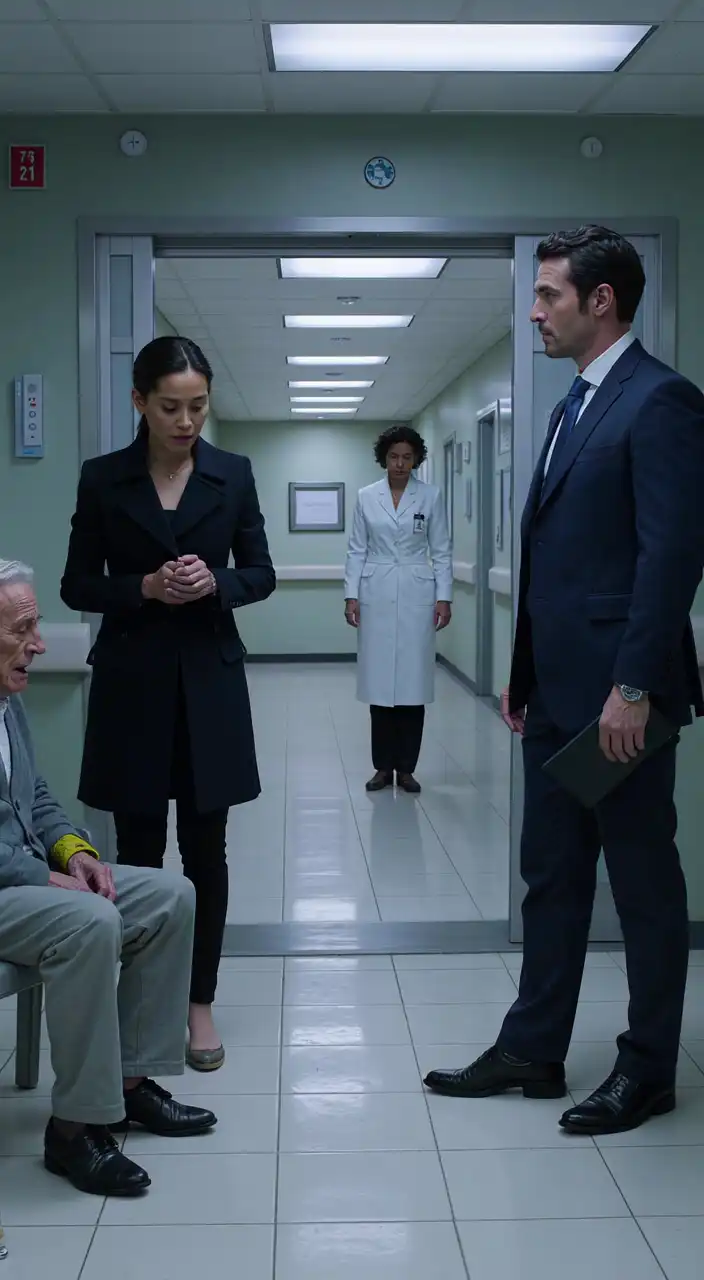
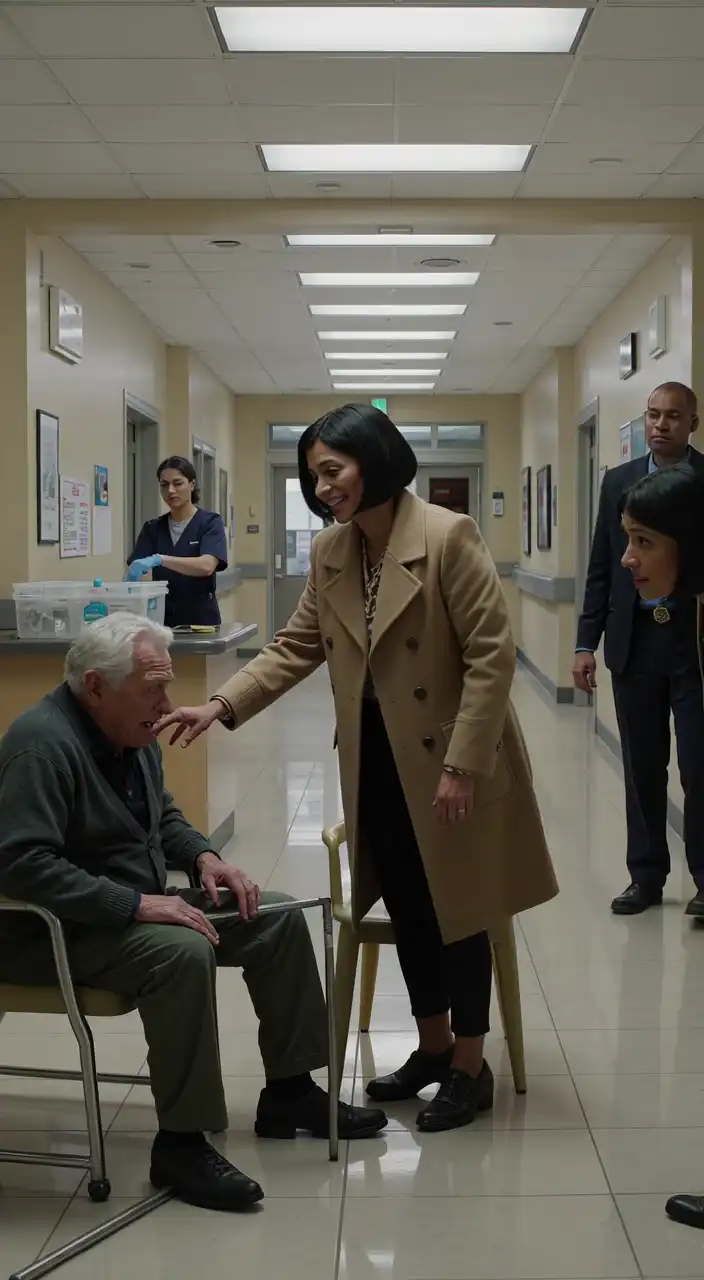
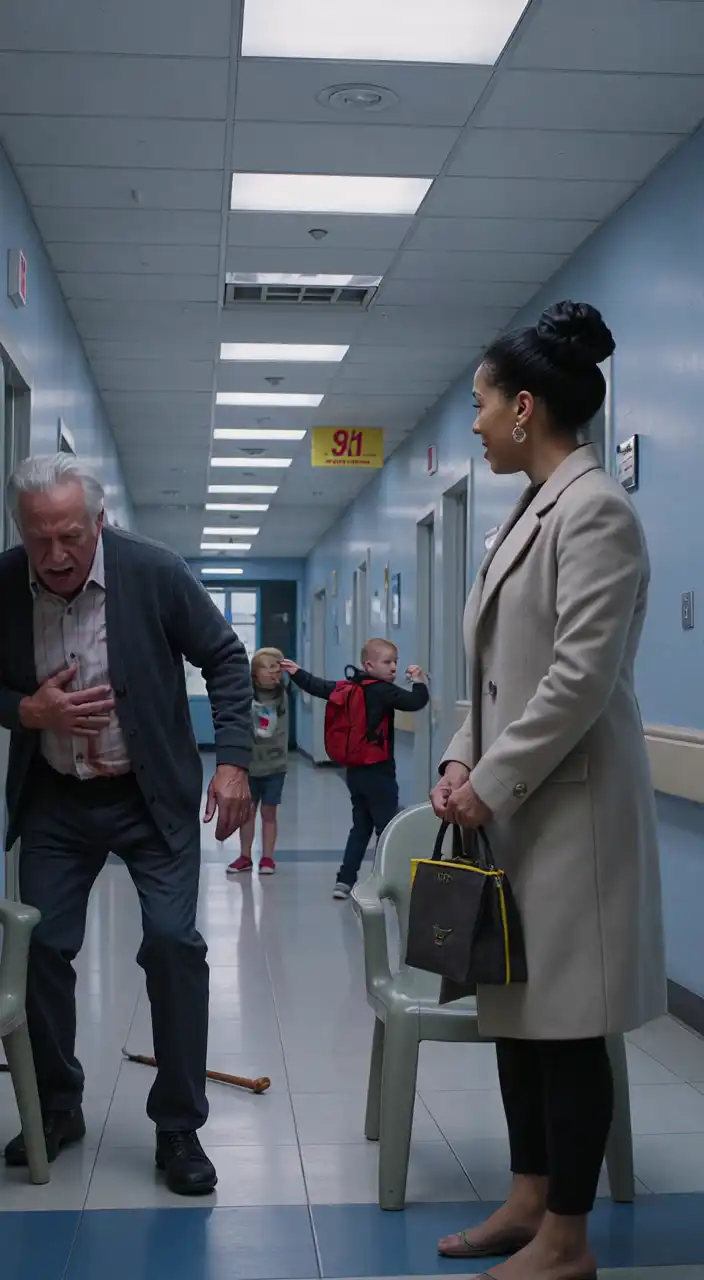
MY FATHER STARTED SHAKING OUTSIDE TRIAGE WHILE A CLINIC ADMINISTRATOR BLOCKED THE DOOR AND SAID HE NEEDED FAMILY PERMISSION FIRST.
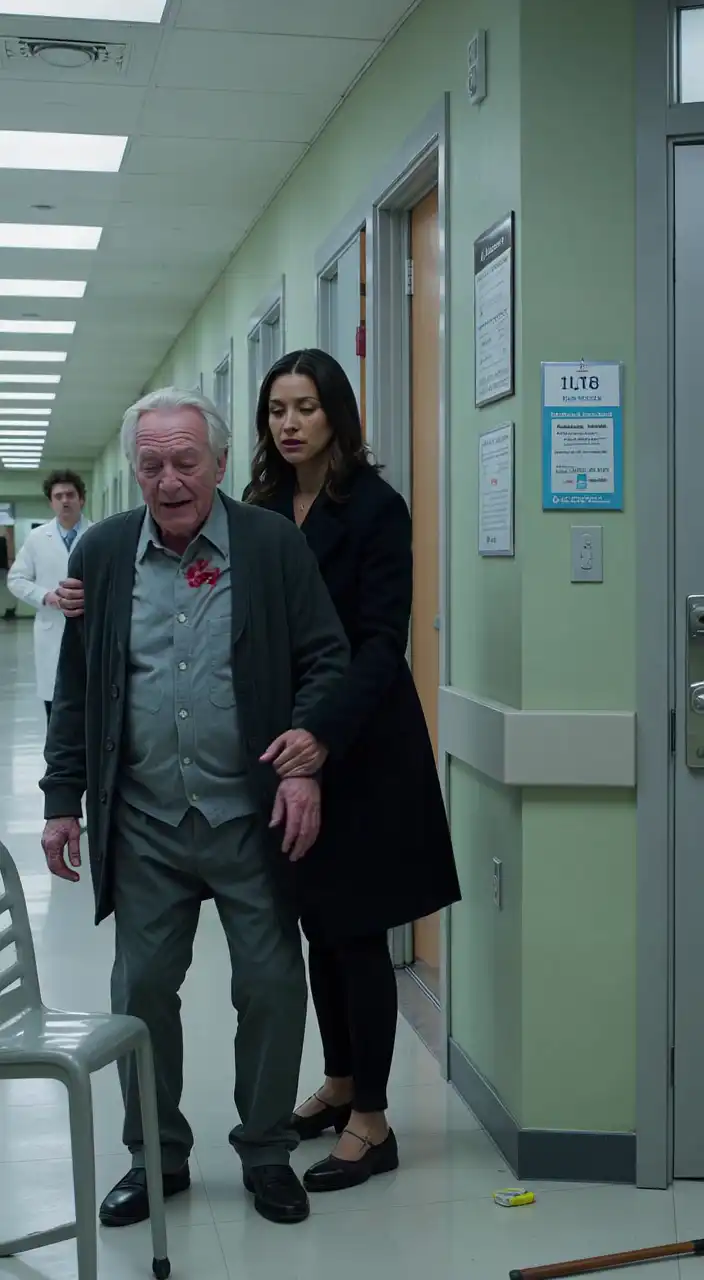
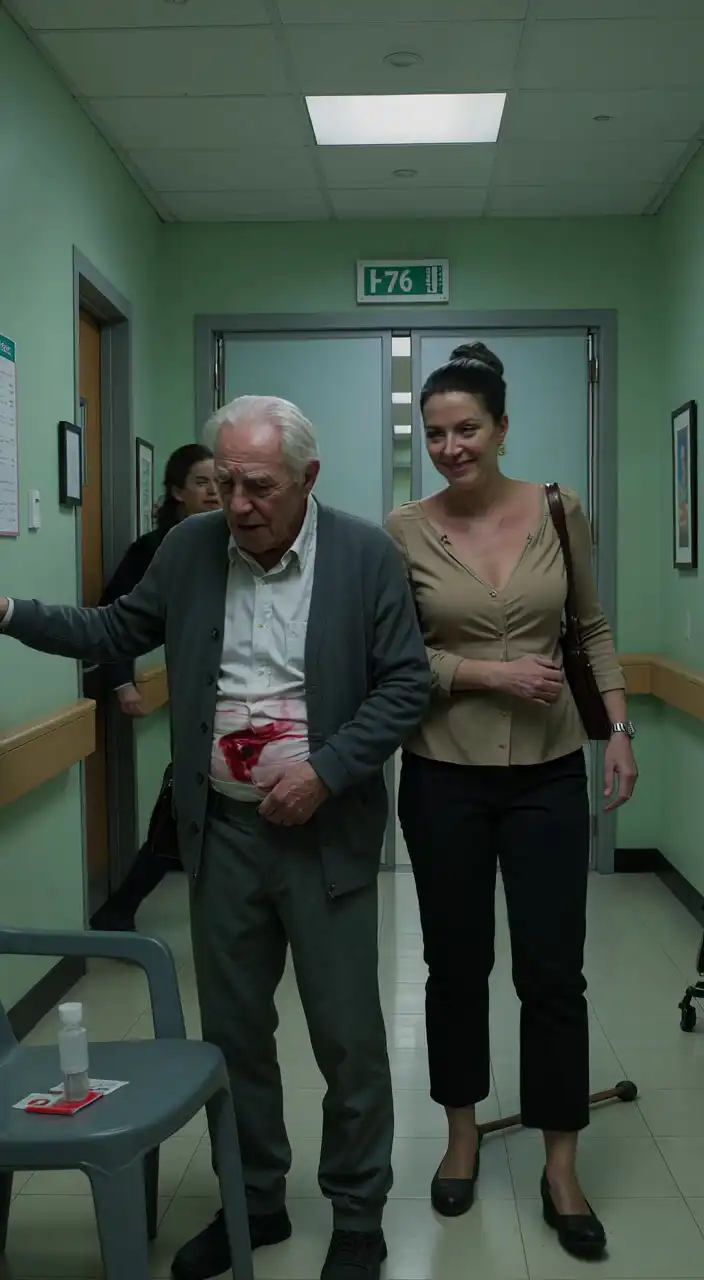
MY FATHER STARTED SHIVERING SO HARD HIS SURGICAL BANDAGE BLED THROUGH, AND THE CLINIC ADMINISTRATOR STILL BLOCKED THE TRIAGE DOOR.
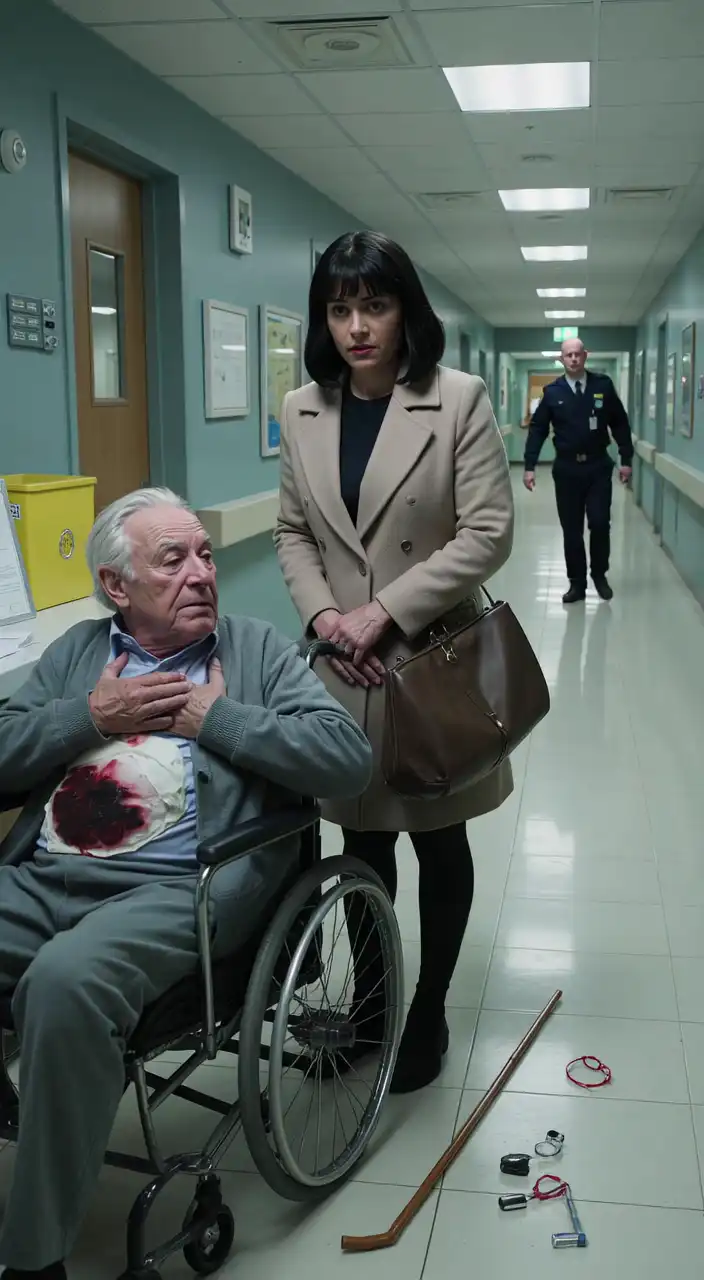
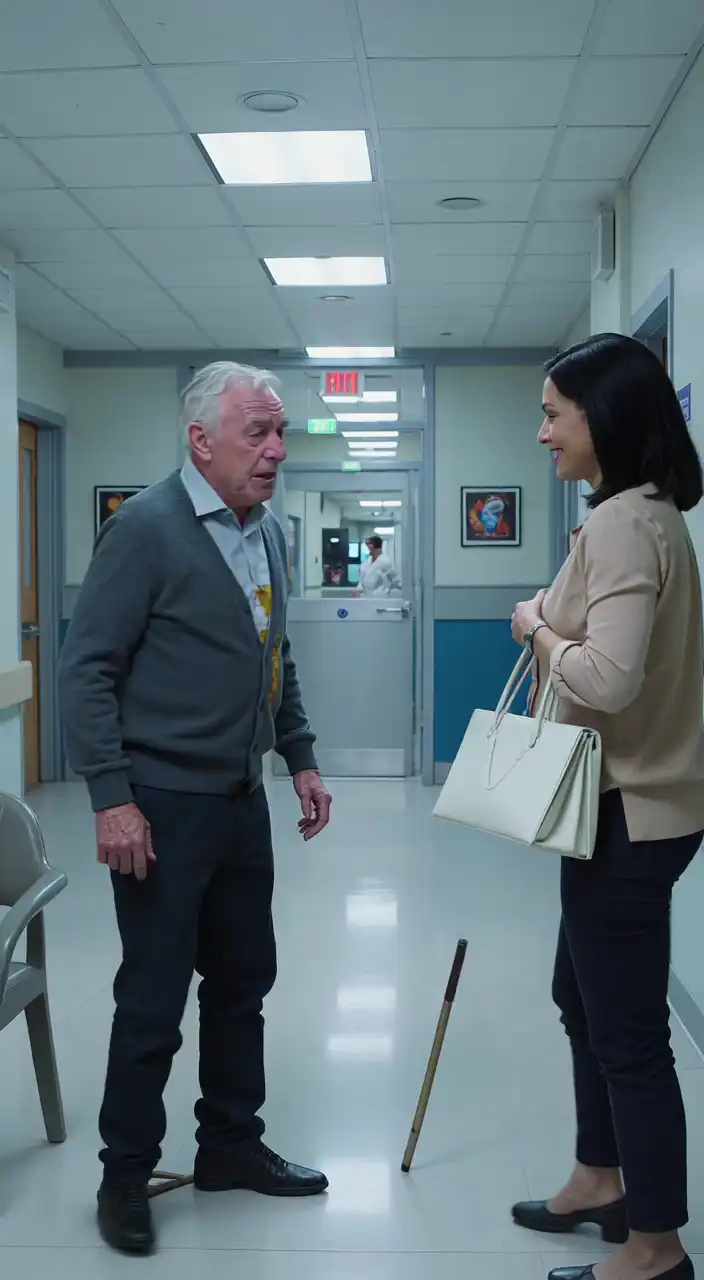
MY FATHER STARTED SHAKING IN THE HOSPITAL HALLWAY, AND THE WOMAN WHO CLAIMED TO BE HELPING HIM WOULD NOT LET TRIAGE TOUCH HIM.