
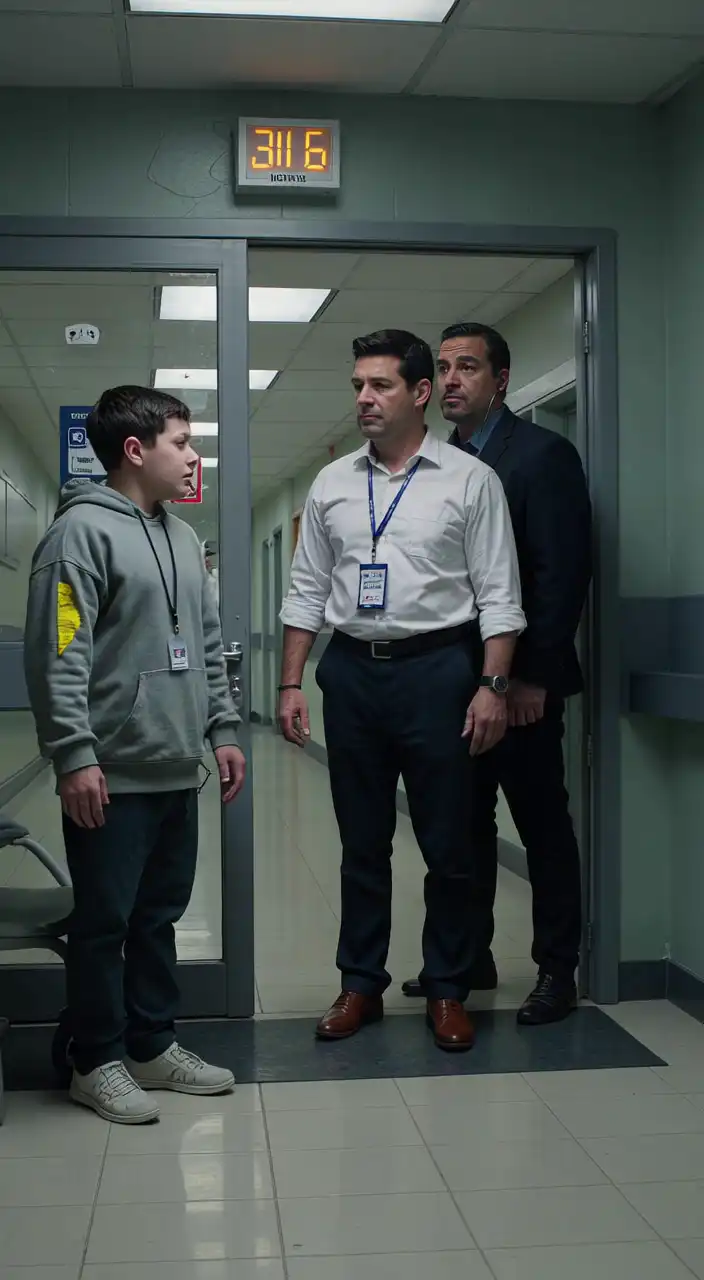
Owen turned toward the voice with that brittle kind of confidence people use when they think the badge on their chest outranks the human body in front of them.
"This is a family account issue," he said. "The caregiver is on the way back. The child is known to exaggerate symptoms."
Nathan did not lower his eyes to the badge, the tablet, or the polished shoes. He looked at Lucas.
"Son, can you tell me your name?"
Lucas's chest jerked with the effort of breathing. "Lu...cas."
That was enough. Nathan stepped around Owen and dropped to one knee on the tile. "Lucas, I'm Nathan. Look at me, not him."
The nurse from intake reached us at the same moment, pulling a pulse oximeter from her scrub pocket. Owen shifted again, not enough to touch her, just enough to remind everyone he had been controlling the doorway. "You cannot put him into triage without consent documentation," he said. "And security does not override registration."
The nurse ignored him, clipped the sensor onto Lucas's finger, and swore under her breath when the number flashed. "Get him inside now."
Nathan stood and put one flat hand against Owen's chest, not hard, just final. "You can explain policy after he has oxygen."
For one second I thought Owen might actually stop them anyway. His face tightened, not in concern, but in calculation. Then he angled his body as if he had been about to help the whole time. "Fine," he said. "But note that I objected due to liability."
Nathan gave him a look I would remember for a long time. "I am noting far more than that."
The nurse and I helped lift Lucas. He was so light I felt anger before pity. His sleeve brushed my wrist and the yellow stain was sticky, sweet, medicinal. Not juice. Not food. Something dosed and drying there. Lucas made a weak motion toward the stroller. "My bag."
"What bag?" the nurse asked.
He pointed at the locked purse hanging from the stroller handle.
Owen said quickly, "That belongs to his caregiver."
Nathan heard the speed in his answer. "Bring the stroller too."
We moved through the triage door at last. It felt obscene that ten feet of linoleum had been treated like a border crossing. Inside, everything sharpened at once: bright bay light, the smell of sanitizer, the snap of gloves, the nurse calling for a pediatric room, the monitor alarm rising from warning into insistence. They got Lucas onto a bed and slid oxygen under his nose. He still kept glancing toward the purse.
A respiratory therapist asked, "Where's his inhaler?"
"He had a spacer," I said. "It rolled under the chair."
Nathan had already sent another guard for it.
The intake nurse, whose name badge read Tasha, opened a quick chart shell on the computer. "Last name?"
Lucas swallowed. "Green."
"Mom's name?"
He hesitated.
That hesitation was ugly in a way numbers and alarms are not. It said training. It said consequences. It said somebody had taught him that every answer came with danger.
Tasha softened her voice. "You are not in trouble."
He whispered, "Marlene."
"Is Marlene your mom?"
A tiny shake of his head.
Owen, who had followed us to the threshold despite Nathan's glare, jumped in. "His legal guardian's family handles all communication. We should wait for them before documenting statements."
Nathan turned. "Step back from that doorway."
"I'm an administrator."
"Right now you're a witness."
That landed. Owen's mouth closed, but his eyes stayed active, flicking from Lucas to the chart screen to the purse. That purse mattered. He knew it.
The respiratory therapist fitted a pediatric mask and listened to Lucas's chest. "He is tight. Very tight. Where's the rescue inhaler? Why is he this far gone before arrival?"
No one answered. Tasha was scanning the old chart as it populated from the system. Her expression changed. "He has asthma. Recurrent ER visits up to age six. Then nothing for almost a year."
"Families move, miss follow-up," the therapist said.
Tasha shook her head. "No. There are refill requests. Multiple denied pickups. Notes from school nurse about no inhaler on file. And..." She leaned closer. "A flagged social work note from three months ago. 'Caregiver reports dramatic behavior. Child states medicine locked away because he overuses it.'"
The room got still in a different way.
Nathan heard it too. "Save that note."
Owen spoke from the doorway again. "Those comments are unverified. We should not build a narrative before family is present."
Nathan didn't even look at him this time. "You keep helping."
The guard returned with the spacer. It was cracked at the mouthpiece, empty, and had a strip of pharmacy label still clinging to one side with Lucas's first name half visible. Tasha took it in a gloved hand and put it on the counter. Lucas saw it and reached weakly.
"That yours?" she asked.
He nodded.
"Where's the inhaler that goes with it?"
His eyes went to the purse again.
The nurse and Nathan followed the same line of sight. Owen saw them see it and said too casually, "We cannot open personal belongings without the caregiver."
Lucas started to cry without sound, shoulders twitching under the oxygen tubing. Not loud. Not dramatic. The kind of crying that had learned to hide itself.
Tasha crouched by the bed. "Lucas, if your medicine is in there, I need you to tell me."
He looked at the doorway where Owen stood. Nathan noticed and moved, planting himself directly between the bed and Owen. It was a small thing, but the effect was immediate. Lucas's next breath came easier, not because of the mask, but because the line of fear had been blocked.
"It's in there," he whispered. "She said only when he says."
"Who is he?" Tasha asked.
Lucas's eyelids fluttered. "Mr. Owen."
The room changed.
Even the monitor seemed louder.
Owen let out a sharp laugh that sounded practiced. "That is absurd. He's confused and hypoxic."
Nathan faced him at last. "Did you control access to this child's medication?"
"I did not."
"Did anyone tell the caregiver to wait on treatment until payment or account approval?"
"Absolutely not."
"Then why does a child on oxygen know your name and think you decide when he gets his inhaler?"
Owen's answer was delayed by exactly one beat too many. "I oversee administrative procedures. Families often misunderstand."
The automatic doors at the far end opened hard enough to slap the wall, and a woman rushed in pushing past registration. Mid-thirties, expensive coat over wrinkled clothes, phone still in her hand, panic already turning to offense when she saw security.
"Marlene?" Tasha asked.
"Where is he?" she snapped, then saw Lucas on the bed. "I was gone five minutes. Why is he in here? He was fine."
Lucas flinched so sharply the oxygen mask shifted.
Nathan caught that too. "Ma'am, stop there."
She did not stop. She went straight toward the bed and the purse swung against her hip. I saw the tiny metal lock on it glint under the lights. Lucas stared at it like a person stares at a door in a fire.
Tasha reached for the purse. "If his inhaler is inside, I need it now."
Marlene yanked it back. "No one touches my bag."
And when the monitor alarm climbed and Lucas made a choking sound through the mask, she looked at Owen before she looked at the child.
Nathan's voice dropped low and dangerous. "Open the purse."
Marlene's fingers tightened around the strap. "I need to call his father first."
The reversal came from somewhere no one expected. Lucas, who had barely been able to answer his name, grabbed Nathan's sleeve with surprising force and rasped, "Not my father."
The room fell dead silent around that one sentence.
Marlene's face drained. Owen's tablet slipped a little in his hand. And Tasha, still crouched beside the bed, looked up at Nathan and said, "We need that purse open right now, and we need to know who exactly has been making decisions for this child."
Nathan held out his hand to Marlene. "Either you open it, or I detain it pending a medical abuse alert."
For a second I thought she might surrender. Instead she took one step back toward Owen, like she had been doing it for much longer than tonight, and said the strangest thing possible while Lucas fought for breath.
"If you open that bag, he'll ruin all of us."
Nobody in the room missed the pronoun.
Nathan's eyes narrowed. "Who's he?"
Marlene pressed her lips together too late. Tasha was already calling for the attending, and somewhere behind me another nurse said, "Get social work now."
Lucas's hand slipped from Nathan's sleeve, but he kept staring at the locked purse as if the answer to whether adults would save him or hand him back was zipped inside it.
Nathan did not reach for the bag yet. He looked straight at Owen instead.
And Owen, who had spent the last ten minutes talking like policy was a wall no child could cross, finally looked afraid.
The attending physician, Dr. Patel, entered fast enough that her coat was still half unbuttoned. She took in the scene in one sweep: frightened child, oxygen, administrator at the threshold, security supervisor squared up, caregiver clutching a locked purse like evidence.
"Status?" she asked.
"Tight lungs, low sat on arrival, delayed triage, missing rescue inhaler, possible withheld medication," Tasha said. "Child identifies admin by name as deciding when medicine is allowed. Caregiver refuses to open bag."
Dr. Patel's eyes cut to Marlene. "If there is a prescribed inhaler in that purse, I need it this second."
Marlene lifted her chin with a kind of brittle indignation. "He's manipulative. He panics when he doesn't get his way."
"He's seven," Dr. Patel said. "He's retracting."
Marlene's gaze flicked to Owen again. "I was told not to let anyone override the account notes until Daniel arrived."
There it was. Not an apology. Not confusion. Instruction.
"Who is Daniel?" Nathan asked.
Marlene hesitated. "His father."
Lucas turned his face away so hard the oxygen mask shifted sideways. "No."
Dr. Patel fixed the mask while watching him. "Lucas, who is Daniel?"
His breathing hitched. He looked between the adults as if choosing who could survive the truth. "My mom's boss."
That sentence opened a second crisis under the first one.
Tasha was already writing. Nathan signaled the guard at the door. "Nobody leaves. Not the administrator, not the caregiver."
Owen straightened. "This is becoming inappropriate. You're escalating based on a sick child's confusion."
"And you're still trying to manage the room," Nathan said.
Dr. Patel stepped into the center of it. "Enough. Marlene, open the purse. Right now."
"I can't."
"Can't or won't?"
Marlene's eyes filled instantly, but not with the clean fear of a parent watching a child in distress. This was fear of consequence. "You don't understand."
"Then help us understand while your child breathes," Dr. Patel said.
Marlene flinched at the word child. That bothered me more than her delay. It suggested distance, ownership, maybe even script.
She fumbled with the lock and failed twice before Owen said sharply, "Marlene."
That one word came out like a warning, not comfort. Nathan stepped toward him. "Do not coach her."
The third try opened the purse. Tasha took it and dumped the contents onto a tray.
A wallet. Phone. Makeup. Crumpled receipts. A folded clinic chart printout with Lucas's name visible. A small bottle of cough syrup with sticky yellow residue around the cap. And an inhaler.
Tasha grabbed the inhaler, checked the label, then stopped. "This isn't albuterol."
Dr. Patel took it from her. "This is a steroid maintenance inhaler. Not rescue."
Lucas watched their faces and started crying harder because he understood enough to know they had found the wrong thing.
"Is there another one?" Dr. Patel asked.
Marlene shook her head.
"There has to be," Tasha said. "He came in with a spacer."
Dr. Patel looked at Lucas. "Did you have a blue inhaler?"
He nodded.
"Where is it?"
His eyes closed. "At home. Locked."
"Who locked it?"
He whispered through the mask, "Daniel."
Marlene made a tiny sound like a protest, but she did not say the word no. She said, "He said Lucas wastes it. He said too much makes him shaky."
Dr. Patel stared at her. "Shaky is better than dead."
Nathan picked up the folded chart printout from the tray. It was from the clinic network's billing and risk screen, not a medical plan. A red note had been highlighted: HOLD NON-AUTHORIZED SERVICES PENDING RESPONSIBLE PARTY APPROVAL. Under it, someone had handwritten, If Marlene presents alone, contact O. W. before treatment.
Nathan unfolded it completely and read it again.
Owen saw the paper and color left his face. "That is an internal routing note taken out of context."
"There is no context where this belongs in front of a breathing child," Dr. Patel said.
The yellow bottle bothered Tasha. She uncapped it and smelled the residue. "This isn't just cough syrup."
Dr. Patel took a cautious sniff and frowned. "Sweet antihistamine. Sedating."
Marlene started shaking. "Daniel told me it calms him so he doesn't hyperventilate before appointments."
Tasha said, "How much did he get?"
Marlene looked at the stain on Lucas's sleeve, then away. "A spoonful in the car. Maybe two. He spit some out."
That explained the sticky yellow sleeve. It also explained why his fear had looked muffled, like panic wrapped in exhaustion.
Dr. Patel ordered a nebulizer treatment immediately and told Tasha to call poison control for pediatric dosing guidance on the antihistamine. While respiratory set up the treatment, Lucas clutched the cracked spacer until Tasha gently traded it for the mask. Nathan remained at the door, making sure Marlene and Owen were separated.
When the first round of albuterol hit, Lucas coughed so hard I thought he would vomit. Dr. Patel nodded grimly. "That's okay. Come on, buddy. Let your lungs open."
He squeezed his eyes shut and held on.
The medical emergency finally had center stage, but the human one kept pressing at the edges. Nathan asked Marlene quietly, "Who told you to deny treatment until Daniel arrived?"
She stared at the floor. "Owen said the account had to be protected. Daniel pays everything. He said if I made another scene at the hospital, Daniel would stop helping us."
"Helping how?" Nathan asked.
She laughed once, bitter and exhausted. "Rent. Food. School. Everything."
Tasha looked up from the chart. "Are you Lucas's mother?"
Marlene hesitated too long. "I'm his aunt."
That landed almost as hard as Lucas's earlier "Not my father."
"Where is his mother?" Nathan asked.
Marlene swallowed. "Dead."
The room went still again.
Dr. Patel did not turn from Lucas, but her voice changed. "Cause?"
"Car wreck," Marlene said too quickly.
Nathan heard the speed. So did I.
He held up the chart note. "And Daniel is your late sister's boss who became responsible party for her son?"
Marlene whispered, "He said he was protecting us."
From the hall, I heard another pair of footsteps approach at speed. Social worker, I guessed, maybe risk management. But before anyone else arrived, Lucas pulled the mask aside just enough to whisper, "Mama worked for him at the house."
Marlene made a desperate move toward the bed. "Lucas, stop."
Nathan blocked her with one arm. "No. He talks now."
Lucas looked so tired he seemed to be speaking from a deeper place than fear. "Mama said if we left, he would take my medicine."
Tasha's fingers froze over the keyboard.
Dr. Patel set the mask back properly and said very calmly, "Lucas, did someone ever stop your medicine to make you sicker?"
He nodded once.
Marlene covered her mouth. Owen looked at the door as if measuring exits. Nathan noticed and touched his earpiece. "Lock the hall cameras from registration to pediatric triage and preserve the last forty-five minutes. Also flag all footage if any adult tries to leave."
Owen snapped, "You have no basis-"
"I have a child in distress, a route note ordering administrative interference, sedating medication in a purse, and a caregiver admitting instructions from a financially interested adult. Sit down."
For the first time, Owen obeyed. He lowered himself onto a plastic chair by the wall, but he did not relax. His gaze kept moving to the chart printout. To the purse. To Lucas. As if he knew the danger was no longer the child's lungs. It was what the child might survive long enough to say.
The social worker arrived with another nurse and introduced herself as Renee. She did one quick lap of the room with her eyes and went straight to Lucas, not the adults. "Hi, honey. I'm Renee. I'm here because grown-ups around you are acting confusing, and I don't like that."
Despite everything, one corner of Lucas's mouth twitched. Tiny. Real. It was the first sign that the room no longer belonged to the people who had controlled him.
Renee then turned to Marlene. "I need your full name, your legal relationship to the child, and whether any court papers exist."
Marlene's shoulders slumped. "There are papers at home."
"Guardianship papers?" Renee asked.
"No. School papers. Insurance cards. Daniel keeps the other file."
"What other file?" Nathan said.
Marlene shut her eyes.
Owen, from the chair, said too fast, "This is spiraling into gossip."
Renee gave him a look sharp enough to cut glass. "Then you'll be thrilled when the facts clear you."
She asked Lucas if he had any medical bracelet, ID card, or school emergency tag. He lifted his wrist weakly. Hidden under the sleeve was a frayed blue bracelet woven from yarn and plastic beads. On one side, in child letters, it said LUCAS. On the other, a phone number was threaded in white beads.
Tasha blinked. "Whose number is that?"
Lucas touched the bracelet with shaking fingers. "Miss Elena."
"Who is Miss Elena?" Renee asked.
"My school nurse."
A planted lifeline nobody else had noticed.
Renee was already dialing from the room phone. "If school personnel have prior concerns, I want them now."
Owen stood up halfway. "School staff can't disclose without authorization."
Nathan pushed him gently back into the chair. "You really do not know when to stop."
The call went to voicemail, then clicked over to an emergency forwarding line. Renee introduced herself as hospital social work, gave the code words for urgent pediatric safety, and waited. When the callback came less than two minutes later, everybody in the room could hear the voice because Renee put it on speaker.
"This is Elena Ruiz, school nurse. Is Lucas safe?"
Safe. Not "What happened?" Not "Who is this?" Safe.
Renee glanced at Nathan. "He's receiving treatment. We need background. Any concerns about withheld medication or unauthorized caregivers?"
The answer came without hesitation. "Yes. I documented repeated days he arrived wheezing with no rescue inhaler. His aunt said they forgot it. Lucas said he wasn't allowed to carry it anymore because Daniel said he pretended to be sick. I made a hotline report six weeks ago after he told me medicine was kept in a locked office at home. Nobody followed up with me."
Dr. Patel stopped charting and looked up. Tasha looked furious. Nathan's jaw hardened.
Renee asked, "Did you ever speak to his father?"
"No father was listed. Emergency contact changed three times this semester. Last one was Daniel Kessler, listed as family sponsor."
Sponsor. Not parent. Not guardian.
Renee wrote the name. "Did you ever meet him?"
"Once. He came to school in a suit and told me Lucas's episodes were behavioral after bereavement. He knew enough chart language to sound convincing. He also asked for copies of my notes. I refused."
Marlene broke then. She sat down abruptly and started crying into both hands. "He said everyone would believe him over us."
Nathan's voice was quiet. "He might have been right for a while."
Lucas's breathing improved enough between nebulizer breaths that he could watch the adults without panic swallowing every expression. When Elena asked if she should come in, Renee said yes.
The first incomplete explanation had cracked open. A wealthy employer "helping" a grieving family. An aunt dependent on him. A child labeled dramatic. An administrator protecting an account. It almost formed a story of misguided control.
Then Dr. Patel opened the clinic chart printout fully and found the back page.
Stapled behind the billing note was a scanned medication list from another visit. In the margin, beside albuterol, someone had written in pen: limit use before assessments - D.
"What assessments?" she said aloud.
No one answered.
But Lucas did. So softly that I nearly missed it.
"The shaking videos."
Every adult in that room turned to him at once.
Renee bent close. "What videos, sweetie?"
He looked at Marlene, then at Nathan, then at the beaded bracelet as if the nurse's number there had become permission. "When I cough bad or shake, Daniel records me. He says people send money when they see how hard he works."
That was the moment the story changed shape entirely.
Not just neglect. Not just delayed care. Exploitation.
Owen's face went blank in the dangerous way of someone abandoning one defense to search for another. "Children fabricate under stress," he said.
Renee pointed at him without taking her eyes off Lucas. "If that man speaks to the child again, remove him."
Nathan answered into his earpiece before she finished. Two more security officers appeared in the hall.
Then Tasha, sorting through the purse for medication history, found a second phone underneath the folded chart.
It was small, cheap, and still recording.
The red timer on the screen was climbing.
For one stunned second nobody moved. The camera lens was pointed outward through the open purse flap, aimed directly at Lucas's bed.
Nathan took the phone in his gloved hand and turned the screen so everyone could see. The running video had captured the oxygen mask, the adults, the crisis, all of it.
Renee whispered, "He was still making content."
Marlene made a broken sound. "He told me to keep it on if Lucas got bad before he arrived."
Nathan stopped the recording and said, "Now we are preserving a crime scene."
He handed the phone to Tasha for bagging, then looked at Owen.
"Tell me exactly when you started helping Daniel Kessler bypass pediatric care."
Owen stared back with the last bits of his composure peeling away. "You have no idea what kind of donor he is."
Nathan's expression did not change.
"No," he said. "But I'm starting to get a very good idea what kind of man he is."
Lucas was moved to a monitored pediatric room because Dr. Patel wanted closer observation after the antihistamine exposure and delayed breathing treatment. By then the immediate terror had shifted into a more complicated kind of pressure. He was improving, but the room had become a magnet. Charge nurse. poison control callback. risk manager. social work supervisor. another security officer collecting names. Everyone trying not to crowd the child while understanding something much bigger had just broken open.
Nathan insisted that Owen be kept outside the unit and separated from Marlene. He also ordered the stroller, purse contents, cracked spacer, chart printout, and recording phone all logged in chain-of-custody bags. That phrase sounded severe and cold until I realized cold was exactly what had allowed adults like Owen to hide behind "procedure" while a child lay on tile.
Renee asked me if I would stay a little longer as an independent witness. My daughter had finally fallen asleep against my shoulder, and I said yes without even checking the time.
Inside Lucas's room, the oxygen had come down. His lips were less pale. He still looked breakable, but no longer like someone drifting away while adults debated paperwork. Dr. Patel listened to his lungs again and said, "Better. Not where I want him, but better."
Lucas watched her face. "Am I in trouble?"
Dr. Patel put the stethoscope aside. "No. The adults who made this hard are in trouble."
That seemed to confuse him more than comfort him.
Renee began carefully. "Lucas, I need to ask some questions. If you need a break, we stop. Okay?"
He nodded.
"Who lives in the house with you?"
"Marlene. Me. Daniel. Sometimes his son."
"What son?"
"Ben."
"How old is Ben?"
"Big. High school."
Renee glanced at Tasha, writing everything down. "Does Ben take your medicine?"
Lucas looked puzzled. "No. He says his dad is weird."
That was unexpected. A secondary character with his own position. Renee caught it instantly. "Has Ben ever tried to help you?"
Lucas nodded. "He gave me my blue inhaler once. Then Daniel found out and got mad."
A planted detail clicked into place: the locked office at home. The hidden inhaler. Not every person in that house had gone along with it.
Renee asked, "Why does Daniel record you?"
Lucas pressed his fingers into the blanket. "He says people care more when kids look sick. He says if I breathe normal nobody donates."
Dr. Patel exhaled slowly. "Donates to what?"
Lucas shrugged, exhausted. "My care fund. Mama's memorial page. Stuff like that."
Marlene, in the chair across the room under supervision, started crying again. This time there was no performance left in it. "He said it was for the bills after my sister died. Then for Lucas's therapies. Then for school. I never saw the accounts."
Renee turned to her. "Did you know he was restricting medication to make symptoms worse on video?"
"No." The answer came fast, then slower. "No... not at first. He said Lucas overused the inhaler. He said too much would damage his heart. He said doctors write things to avoid liability. He always had paperwork."
"From Owen?" Nathan asked from the doorway.
Marlene gave the smallest nod.
So that was the mechanism: a wealthy man leveraging administrative language and one willing insider to create a wall of plausible sounding lies around a poor child and his dependent aunt.
Then the contradiction arrived.
Risk management sent over a printed packet of account notes linked to Daniel Kessler's profile because Nathan had pushed for a full audit. Tasha sorted through the pages, then frowned. "These timestamps don't make sense."
Nathan came in. "What do you mean?"
"This note says family declined social work consult three months ago, same day as the school nurse concern. But the digital signature attached isn't Marlene's. It's a proxy authorization from... Owen."
Owen had not just blocked tonight. He had been editing the historical path.
Renee looked up sharply. "Can an administrator sign a family decline on a pediatric social work alert?"
Tasha's face hardened. "Absolutely not."
Nathan called for copies immediately. That was the first concrete reversal that moved blame from broad family chaos toward coordinated obstruction.
The second came from the second phone.
Forensics from security could not unlock everything yet, but the lock screen previews were enough to chill the room. A text from "D.K." had arrived while the phone sat bagged: Keep him there till I get there. Do not let them dose too much before I see him. Another, earlier: If he starts shaking, turn camera horizontal.
Nathan read the previews aloud. No one spoke for three long seconds.
Then Marlene whispered, "He said the shaking proved the inhaler side effects."
Dr. Patel said, "No. The shaking proved air hunger, panic, and maybe sedatives. He was staging symptoms around withheld treatment."
Renee asked Lucas whether tonight had happened before. He nodded. "At home. At school. In the car. Daniel says wait and see if I calm down."
"Did you ever pass out?"
"One time in the garage."
Marlene lifted her head in horror. "You never told me that."
Lucas looked at her the way neglected children often do, with practical resignation instead of accusation. "You were at work."
That one sentence made her fold into herself.
A knock sounded, and a teenage boy stepped uncertainly into the doorway flanked by a security officer. Tall, black hoodie, frightened eyes trying to look detached. "I'm Ben," he said. "I got a call from my dad's assistant that security was here. Is Lucas okay?"
Nathan did not let him approach until Renee assessed him. Lucas saw him and reached out at once. "Ben."
That mattered.
Ben came to the bedside slowly, like someone entering a room where one wrong move could count as betrayal. "Hey, buddy."
Renee asked, "Did you know his medicine was locked up?"
Ben looked straight at her. "Yes."
Marlene made a wounded sound. "Why didn't you say something?"
"To who?" Ben snapped, then immediately looked guilty for snapping in front of Lucas. "Sorry. But seriously, to who? My dad gets believed. Always."
The line echoed Marlene's earlier collapse and strengthened it. This wasn't one woman's weakness. It was a system of intimidation around one man's money.
Ben admitted he had once taken the blue rescue inhaler from Daniel's office and hidden it in Lucas's backpack, but Daniel found it after school and accused Lucas of stealing. After that, Daniel switched to keeping both the inhaler and nebulizer ampules in a lockbox inside his office closet. Ben knew the code used to be 0411, his dead mother's birthday, but Daniel changed it last month.
Nathan asked, "Would there still be medication there now?"
"Probably. Unless he moved it after school called last week."
"School called last week?" Renee asked.
Ben nodded. "Miss Elena threatened to report him again. Dad was furious."
There was your larger emotional reversal. The school nurse had tried. The system had been bent around the report.
Nathan requested police response and child protective services directly through the hospital abuse protocol instead of ordinary nonurgent channels. His tone changed when he used the phrase "ongoing medical abuse and evidence tampering." Those words mobilized people.
Owen, meanwhile, was in a separate office under supervision. But his influence had not vanished. Tasha got a call from registration saying someone from executive administration wanted clarification before the incident was coded as abuse involving a donor family. Nathan took the receiver from her and said, "Clarification is simple. A child nearly lost air in our hallway because your administrator blocked emergency care. If anyone downgrades this code, put your name on it." He hung up before they answered.
That was another kind of rescue: not medical, but institutional.
Miss Elena arrived twenty minutes later still in her school cardigan, hair pulled back, face set with fury and relief. The second Lucas saw her, his whole body softened. He held up his wrist with the beaded bracelet like proof that she had come.
She touched his hand gently. "I told you if you needed me, I would answer."
Renee noticed the significance. "Did you give him that bracelet?"
Elena nodded. "After he told me he couldn't always use the phone at home. I said if he ever got scared at school or a clinic, show a safe grown-up the number."
Planted detail, paid off at exactly the point the child needed another adult in his corner.
Elena also brought something else: copies of her school incident reports because she had started keeping duplicates at home after getting no response to the hotline report. She laid them on the counter one by one. Dates of wheezing episodes. Notes that Lucas arrived sedated and sleepy on days of medical appointments. Documentation that Daniel requested the nurse stop "encouraging dependency on rescue medication." An email from the school's attendance clerk noting an online fundraiser posted after one severe school episode.
Renee read each page as if assembling a bridge out over a drop.
"Do you have screenshots of the fundraiser?" Nathan asked.
Elena pulled out her phone. "I thought you might ask."
There he was on the screen: Daniel Kessler, one hand on Lucas's shoulder, captioned as grieving guardian and sole advocate for a medically fragile child failed by the system. Video thumbnails below showed Lucas coughing, trembling, crying. The dates matched multiple documented episodes where medication had been withheld or delayed.
Marlene turned away, humiliated and sick. "He said it was to pay for specialists."
Ben muttered, "He bought a boat."
No one laughed. It wasn't the kind of greed that felt theatrical anymore. It felt routine. Familiar. Maybe practiced.
Renee needed a formal forensic interview later, but for now she asked the key immediate question: "If Daniel comes here tonight, who will Lucas willingly go with?"
Lucas did not hesitate. "Miss Elena."
Not aunt. Not household. Not any "responsible party" on the account.
Elena looked startled, then steady. "If that's allowed, I will stay."
"It's not a discharge decision tonight," Renee said, "but it tells us who he trusts."
The movement toward rescue was finally real. And that was exactly when the blocker made his desperate new move.
A security officer rushed in with an update: Owen had requested to use the restroom, then tried to text from a hidden smartwatch before it could be confiscated. The outgoing message had been partially captured by camera zoom: Move the box. Basement office. Now.
Ben went white. "The lockbox."
Nathan was already moving. "Who has access to the house?"
Ben answered instantly. "House manager. Maybe my dad's driver."
Nathan called patrol to secure the residence and requested exigent entry based on ongoing child endangerment and active evidence destruction. Whether they would get there before the box vanished was uncertain.
Lucas, hearing only fragments, started to panic again. "My blue inhaler-"
Dr. Patel leaned over him. "We'll get you medicine here. Breathe with me."
But the fear wasn't just about one inhaler. It was about proof. Even at seven, he understood that if the hidden things disappeared, adults might turn slippery again.
Nathan saw it. He came back to the bedside long enough to say, "Listen to me, Lucas. We already have enough to keep you here safe tonight. The rest is to stop them from hurting you again."
Lucas searched his face as if testing whether this was another adult sentence that sounded good but meant nothing. Then he gave one small nod.
A detective from the special victims unit arrived with a CPS emergency worker. Formality entered the room, but Nathan and Renee kept it human. The detective, Alvarez, read the key evidence quickly: delayed triage, chart manipulation, sedating medication, recorded exploitation, school reports, witness statements, donor pressure, possible hidden medical supplies, and an unidentified custodial arrangement. CPS worker Dana took one look at Lucas and said, "He is not leaving with any adult from that household tonight."
Marlene broke into fresh tears. "Please don't send him with strangers."
Dana's answer was blunt but not cruel. "Then help us tell the truth."
Marlene finally did.
She admitted Daniel had never adopted Lucas, never formalized guardianship, and only inserted himself after Lucas's mother died in a crash while driving home from Daniel's property. He was her employer, wealthy, connected, and quick to present himself as savior. He paid funeral costs and moved Marlene and Lucas into a detached guesthouse on his estate "for stability." Then he took over school paperwork, insurance, social media fundraising, and medical scheduling. Marlene had signed forms she did not understand because he framed them as temporary support. When Lucas had attacks, Daniel insisted on filming "for specialists" and reduced his rescue inhaler use before appointments so doctors would "see the real baseline." If Marlene objected, he threatened eviction.
Dr. Patel closed her eyes briefly. "He engineered severity."
Renee asked the hardest question. "Did you ever help him withhold care?"
Marlene shook so hard she had to grip the chair. "I gave the syrup when he told me. I waited when he said wait. I believed him, then I was scared not to believe him. I know that sounds the same."
It did, and it didn't. Human weakness did not erase harm. But it mattered for what came next.
Dana said, "Then your next decision matters more than your excuses."
Marlene looked at Lucas on the bed, at Elena standing near his wrist bracelet, at Ben staring at the floor in sick shame over his father, and finally at Nathan.
"What do I do?"
Nathan answered like a man who had asked that question of many people too late. "Tell us where the house is. Tell us how to get into the office. Tell us every place medication or paperwork might be hidden."
She did.
The house search happened offsite, but it was not treated like a summary. We heard pieces of it in real time through calls to Nathan and the detective. Basement office locked. Driver detained near garage with duffel bag. Lockbox recovered from rear service stairwell before it could leave. Inside were rescue inhalers with Lucas's name, sealed nebulizer ampules, a pulse oximeter, copies of fundraiser records, and USB drives labeled with dates.
Then came the pressure point no one in the room wanted and everyone expected.
Daniel Kessler was ten minutes out and trying to bypass the front desk through the executive entrance.
The final obstacle walked on two polished shoes and decades of being obeyed.
Nathan's whole posture changed. He assigned one officer to Owen, another to the donor entrance, and told Alvarez, "He will come in talking like he owns the building. He doesn't get near the child."
Lucas heard enough to understand. His hands started shaking again, not from albuterol this time. "Don't let him talk for me."
Elena moved beside the bed. "He won't."
Dana asked whether Lucas would tolerate moving rooms for safety. He shook his head hard. This room had become his first defended space. So they held it.
The hallway outside tightened with personnel. Through the glass pane I saw suited irritation arrive before the man himself. Daniel Kessler was silver-haired, controlled, expensive in the way that tries not to look expensive. He smiled at the wrong person first, the kind of reflex that gives away habit. Then he saw uniformed officers, Nathan, and the posted restriction on the room door.
"What is this?" he asked.
"Restricted access," Nathan said.
Daniel took in the scene with astonishing speed. "I'm the responsible party for Lucas Green. Step aside."
"You are not entering that room."
"I think there has been a misunderstanding. Lucas has complicated behavioral responses around medical settings."
Nathan's voice stayed level. "We've heard that phrase."
Daniel shifted to charm. "Then you've likely also heard from our administrator that the family has ongoing consent complexities."
"Yes," Nathan said. "We have his messages too."
For the first time, Daniel's eyes sharpened.
He adjusted course instantly and looked toward Marlene through the glass. "Marlene, tell them."
Marlene did look up. For a heartbeat I feared she would collapse back into him. Dependency is a powerful leash.
Then Lucas whispered from the bed, loud enough for all of us close by to hear, "Please don't."
That child's voice outweighed the donor's entire performance.
Marlene stood. She was shaking, but she stood. "No."
Daniel's face didn't explode with rage. That would have made him easier to understand. It did something colder. It withdrew warmth and showed contempt. "You are making a catastrophic mistake."
Ben came into the hallway then, because he'd been with Dana down the corridor. "No, Dad. You did."
Daniel's control cracked at his son, not at the police. "You have no idea what you've involved yourself in."
Ben laughed once with raw disgust. "I know you hid a seven-year-old's inhaler in a lockbox."
The detective stepped forward. "Daniel Kessler, we need to talk about child endangerment, fraud, and evidence tampering."
Daniel held up a hand. "You need a warrant and an attorney."
Alvarez nodded. "We have one in progress for the devices. As for talking, that's your choice."
Nathan added, "You also attempted entry through a restricted access point after a medical abuse alert."
Daniel's attention snapped to Owen's absence, maybe just then realizing his inside ally could not rescue him. He recovered enough to try one more angle. "This child has significant anxiety after his mother's death. We sought every intervention available. If some timing decisions were misread by hysterical staff-"
The room door opened before he could finish. Dr. Patel stepped out.
She was not security, law enforcement, or administration. She was worse for him in that moment: a physician with the child's current lungs in her ears.
"Mr. Kessler," she said, "I have treated children whose parents were poor, frightened, disorganized, ill-informed, and overwhelmed. None of that looks like what happened here. What happened here looks managed."
Even Daniel went quiet for that.
Dr. Patel held up the chain bag containing the cheap recording phone. "You had a camera running while a child you control struggled to breathe."
His answer came smooth but thinner. "For medical documentation."
She lifted the chain bag containing the internal routing note. "Then why did your administrator order treatment delays pending your approval?"
He did not answer.
She held the lock screen printout of his text preview. "And why did you instruct someone not to let us 'dose too much' before you arrived?"
Still nothing.
It was not dramatic because of volume. It was dramatic because for once, his language had no place to stand.
Inside the room, Lucas had been listening. He called out, voice small but clear, "You said shaking makes people give more."
That sentence traveled through the open doorway and struck every adult present with different force. On Daniel's face, for one naked second, I saw not remorse but annoyance that the child had spoken at the wrong time.
That was enough for everyone who still needed convincing.
Alvarez said, "You're done speaking to the child tonight."
Daniel looked past all of them, seeking the old channels. Influence. hierarchy. fear. Maybe Owen. Maybe Marlene. Maybe procedural delay. But the chain had broken in too many places.
He tried one final desperate action. He pivoted as if to walk away, likely toward a phone call or a waiting attorney, but Nathan had anticipated flight. Two officers closed in and stopped him before he cleared the hall turn.
Daniel did not resist theatrically. He simply said, "You are ruining reputations over misunderstanding."
Nathan answered, "No. We're protecting a child you were willing to keep sick."
As officers escorted Daniel away, he looked at Marlene with the same punishing contempt he'd used on everyone dependent on him. "You think they will take care of you?"
Marlene cried but did not step toward him. Ben turned his own body between his father and Lucas's doorway, a son making a line where an adult man should have years before.
When the hallway finally emptied, the whole unit seemed to exhale.
That should have been the release, but stories like this have one more threshold: where safety has to feel real to the person who almost lost it.
Dana sat with Elena and Lucas to discuss emergency placement options in words a child could understand. Hospital policy could not simply hand him to the school nurse, but CPS could use a temporary protective decision while kinship options were reviewed. Marlene, to her credit, did not demand immediate custody. She asked whether she could tell the truth in a formal statement and whether that would help Lucas stay safe. Dana said yes.
Ben asked if his statement could include the lockbox, the videos, and his father's fundraising accounts. It could. He looked sick but relieved, as if betraying a father and finally defending a child had landed in the same act.
Renee then did something wise. She asked Lucas not who he wanted to live with forever, but who he wanted in the room when he fell asleep.
"Miss Elena," he said immediately.
Then, after a long pause, "And Aunt Marlene if she doesn't make me wait anymore."
Marlene collapsed in quiet tears at that. Not because she had been forgiven, but because the child had given her a condition instead of a goodbye. Sometimes that is the narrow bridge people get.
Dana approved supervised presence for the night while protective orders were initiated. Elena stayed. Marlene stayed under terms. Security remained on the floor. Nathan did not leave until every access note in the system was rewritten to block Daniel, Owen, and any proxy from the chart.
Before my daughter and I finally left, Lucas was drowsy from medication and exhaustion, a stuffed dinosaur from pediatrics tucked under one arm. The blue bracelet rested on top of his blanket where everyone could see the phone number that had mattered. The cracked spacer sat bagged on the counter, ugly and small and suddenly important as a witness to every denied breath. The yellow stain on his hoodie had already been photographed and tagged. The monitor light glowed steady green now.
Nathan came by the waiting area later to thank me for staying as a witness. I asked, "Does this really hold? Cases like this?"
He paused before answering. "Tonight held. That's where they start."
Weeks later, I learned more because Renee called to tell me my statement had helped establish the timeline in the hallway. The search of Daniel's house recovered not only Lucas's inhalers and medication logs, but donation records tied to multiple viral sympathy campaigns. Some videos had been edited to intensify coughing sounds. Owen's account access showed he had inserted and altered administrative notes to delay services and suppress social work review. The school nurse's reports, once ignored, became key evidence showing a pattern instead of an isolated crisis.
Marlene entered a cooperation agreement with investigators and a court-ordered caregiver program. That did not erase what she had allowed, and no one pretended it should. But she kept showing up, telling the truth each time, which turned out to matter to the boy who had spent too long learning adults only protected themselves.
Ben gave statements against his father and moved out. The first time he visited Lucas in a supervised setting, he brought a brand new blue rescue inhaler case shaped like a cartoon shark. Lucas laughed so hard he had to stop and breathe, and everyone in the room froze for one terrified second until he took a clean, easy breath on his own and grinned.
As for Owen, the hospital terminated him before the criminal case matured. Nathan testified at the internal review that no donor, no account, and no institutional anxiety could ever again be allowed to stand in a doorway while a child decompensated on tile. Tasha and Dr. Patel pushed for a revised emergency override protocol and mandatory abuse escalation when an administrator attempts to delay pediatric treatment. The policy now carries Nathan's incident code.
And Lucas?
He spent three nights in the hospital, one more than Dr. Patel first expected, because she wanted his breathing stable, the sedative exposure monitored, and his discharge impossible to intercept. He left with inhalers in hand, a real asthma action plan, school copies, backup copies, and one locked note in the electronic chart requiring direct clinical review if any non-parent attempted to alter access. Dana arranged a temporary kinship placement that included daily contact with Elena and closely supervised contact with Marlene while the court sorted longer-term custody.
On discharge morning, I happened to be back at the same hospital for my daughter's follow-up. I saw them by the elevators: Lucas in a clean sweatshirt, Elena beside him, Marlene carrying the paperwork instead of hiding it, Dana at the desk confirming transport, and Nathan passing through on another shift.
Lucas spotted him first and lifted the old blue bracelet from his wrist.
Nathan smiled. "Keep that one anyway."
Lucas nodded seriously. "But now I got my own phone number card too."
He patted the pocket where the laminated asthma plan was tucked like treasure.
Then he did something that stayed with me longer than the arrests, the texts, or the exposed donor fraud. He looked down the bright hospital hallway toward the triage doors that had almost stayed closed to him, then back at the adults around him, and asked, "If I can't breathe again, I don't have to wait, right?"
Every one of them answered at once.
"No."
And this time, the child believed them.
Disclaimer: Mention of any brand or trademark is for identification only and does not imply partnership or endorsement
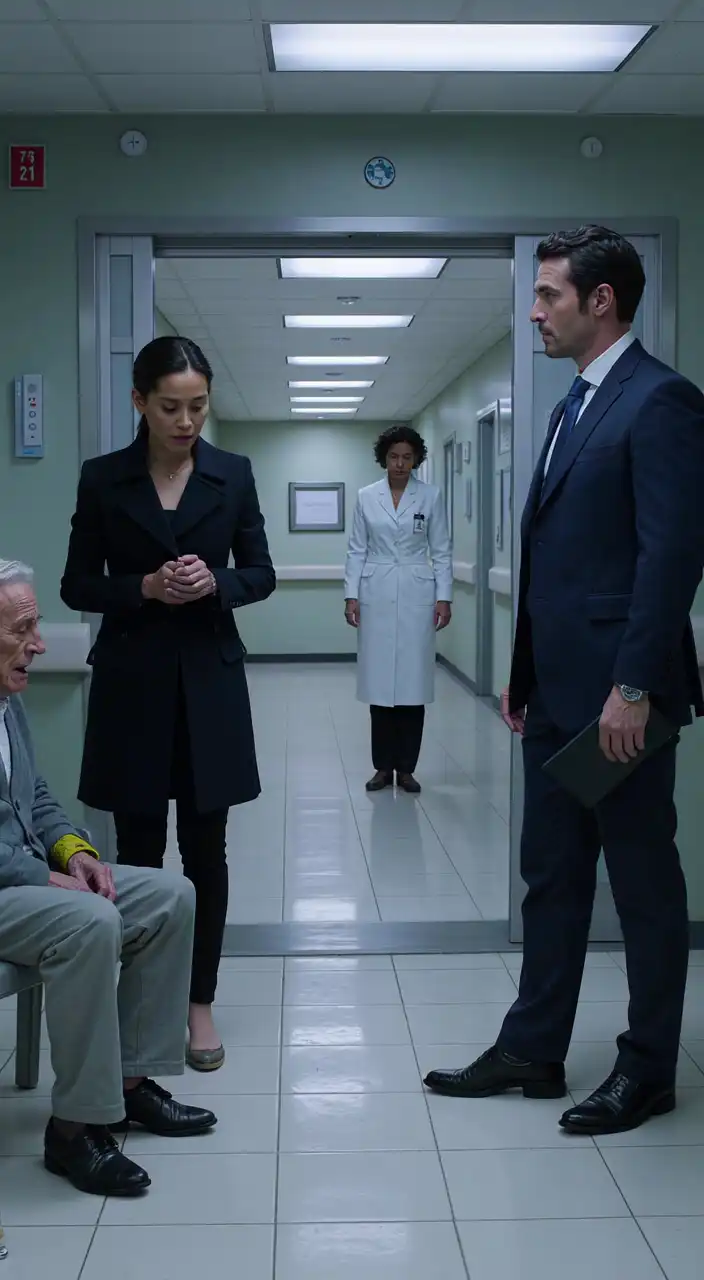
MY FATHER STARTED SHAKING OUTSIDE TRIAGE WHILE A CLINIC ADMINISTRATOR BLOCKED THE DOOR AND SAID HE NEEDED FAMILY PERMISSION FIRST.
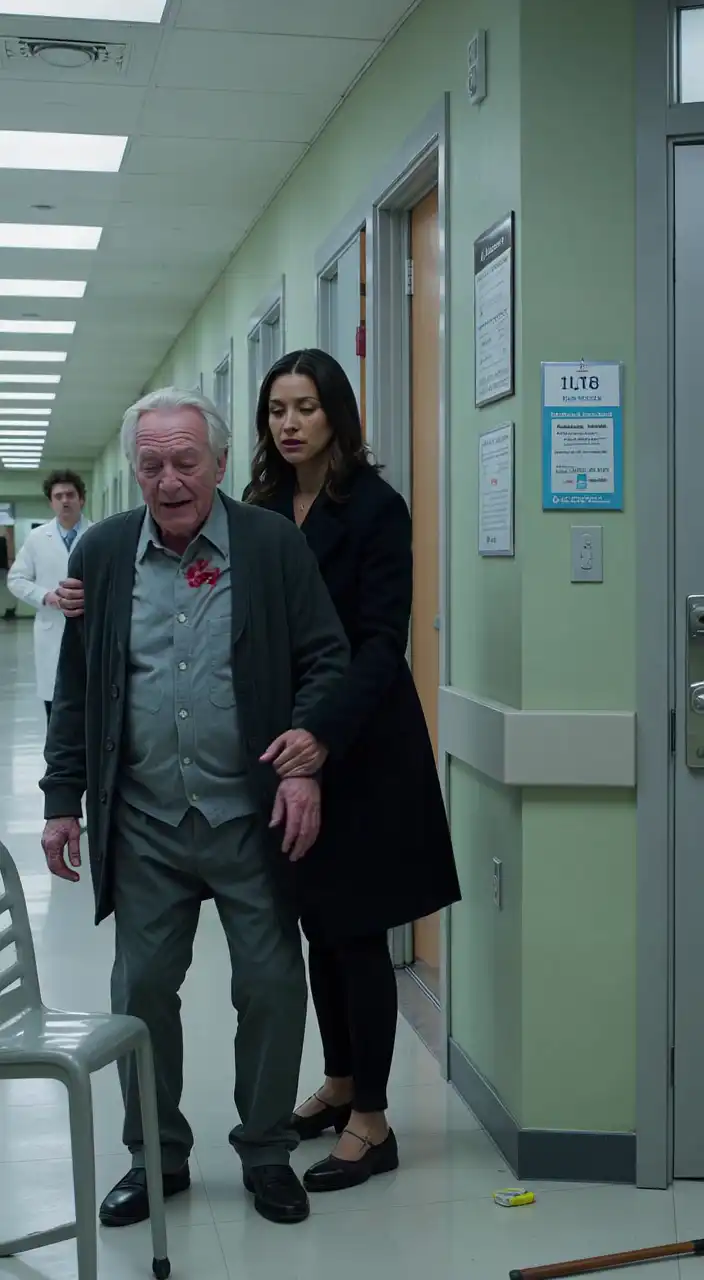
MY FATHER STARTED SHIVERING SO HARD HIS SURGICAL BANDAGE BLED THROUGH, AND THE CLINIC ADMINISTRATOR STILL BLOCKED THE TRIAGE DOOR.
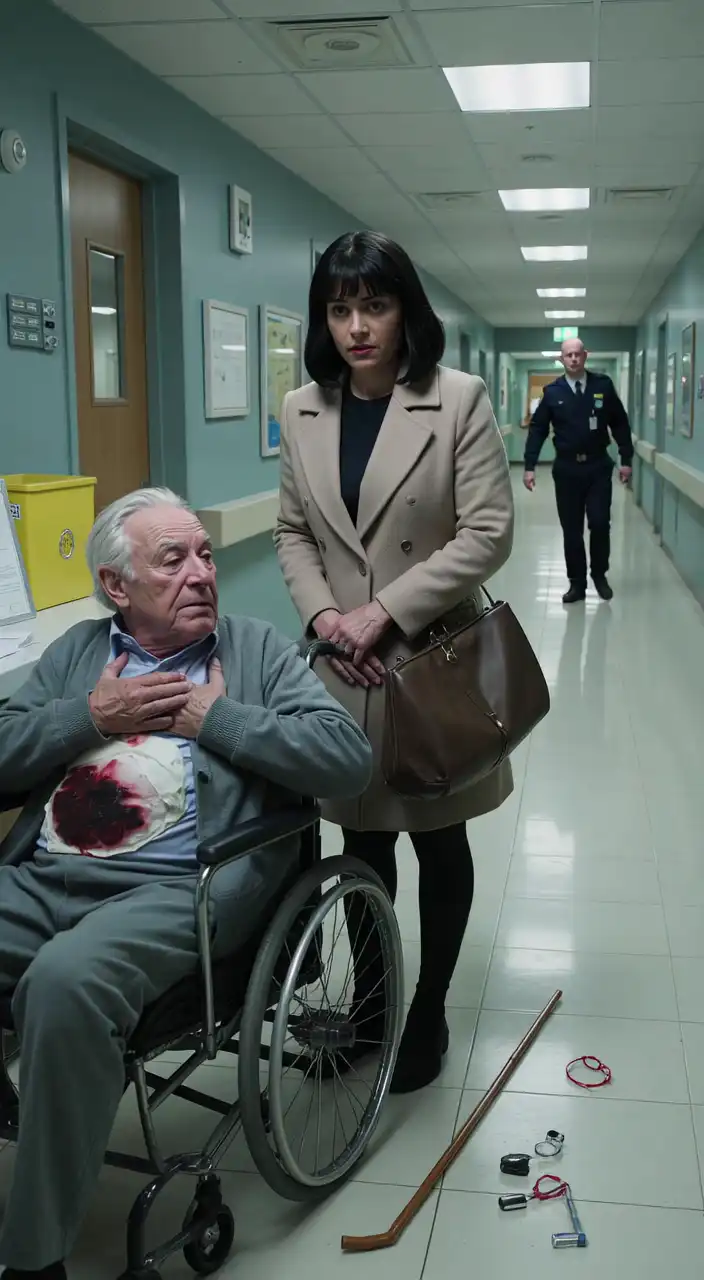
MY FATHER STARTED SHAKING IN THE HOSPITAL HALLWAY, AND THE WOMAN WHO CLAIMED TO BE HELPING HIM WOULD NOT LET TRIAGE TOUCH HIM.